BMW 1 Series (2011-2019) review | A family hatchback that’s great to drive
BMW 1 Series cars for sale
4.0
Expert review
Pros
Fantastic rear-wheel-drive handling balance
Classy and well built cabin
The ED diesel is very efficient
Cons
Not very roomy in the back
Timing chain wear can lead to a big bill
Three-door models are less practical and harder to sell
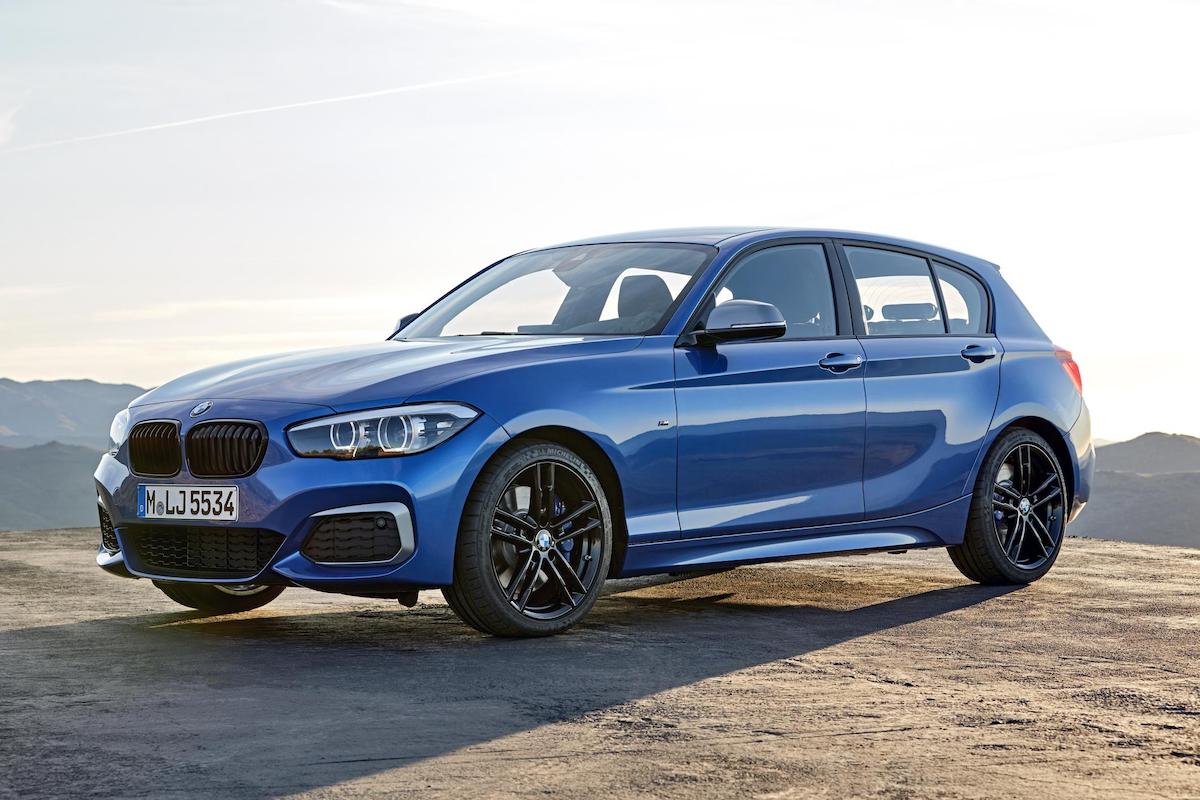
The CarGurus verdict
Key to buying a good BMW 1 Series is finding a later example that’s been serviced regularly and by professional garages. Do that, and you should be able to avoid the timing chain issues that are a concerning factor with this car.
And if you can do so, you’ll get a family car that really feels upmarket, and throws in a more responsive and more enjoyable driving experience than most hatchbacks can offer.
True, the payoff is that a 1 Series isn’t quite as spacious as some of its more mainstream rivals. But it’s still practical enough for many buyers’ needs, and given its aspirational image, efficient engines and entertaining drive, that’s a downside you might be more than happy to put up with.

What is the BMW 1 Series
The BMW 1 Series has been enormously popular in the UK, and it doesn’t take a genius to work out why. It offers the engaging driving experience for which BMW has become renowned, but it’s practical enough for a young family, and compact enough to be wieldy around town. No wonder it’s popular with young buyers looking for a bit more space without compromising on driving enjoyment.
And that’s without mentioning the prestige that comes with the badge on its nose. Of course, the 1 Series isn’t alone in that regard – Mercedes-Benz and Audi offer similarly covetable hatchback rivals, and the Audi A3 in particular is a terrific all-rounder. The Volkswagen Golf, meanwhile, might not offer the same badge cachet, but it’s a high-quality alternative that bests its premium rivals on practicality.
In 2020, the rear-wheel drive mk2 was replaced by the more conventional mk3 BMW 1 Series, which features either front-wheel drive or four-wheel drive.
How practical is it?
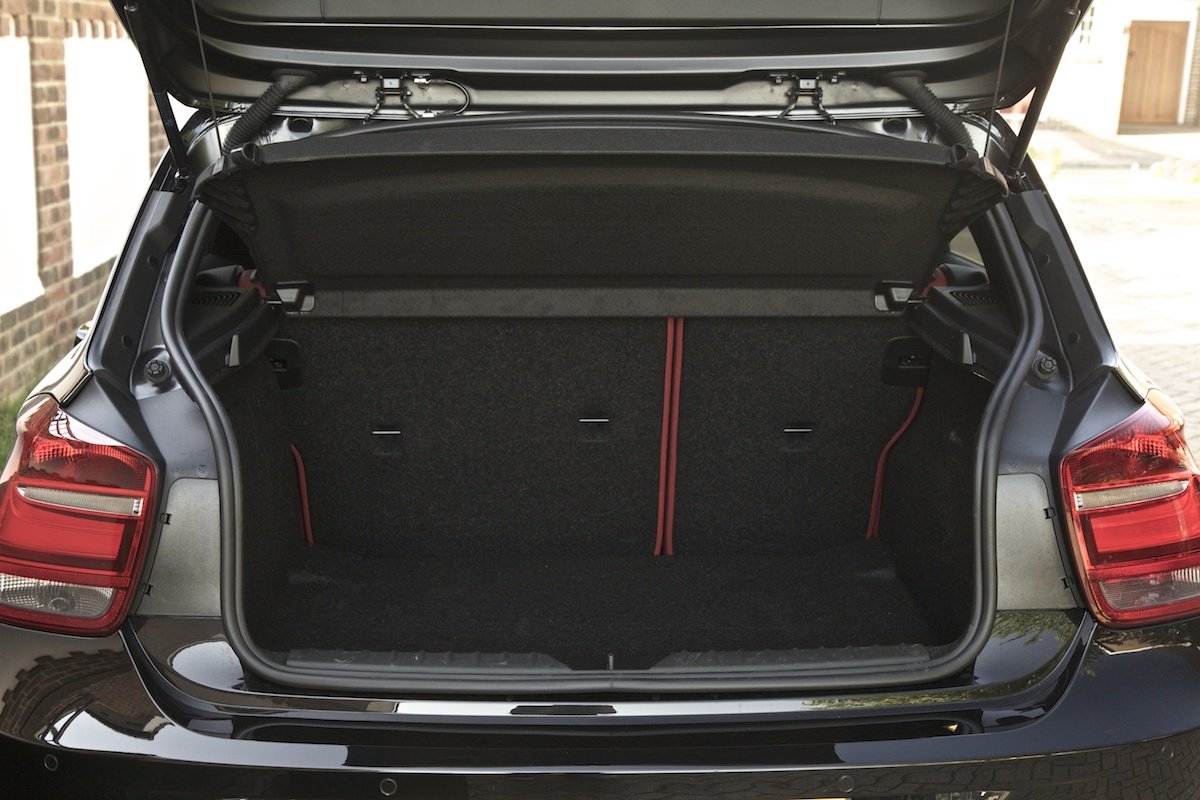
While this second generation 1 Series improved on the original model’s cramped rear quarters, it still isn’t the most spacious family car around. The rear seats are a little tight, and climbing in is difficult through the narrow door aperture. You’ll notice this restricts access when it’s time to buckle children into their car seats, too.
Up front, things are better, with plenty of room for driver and passenger. The low driving position is sporty, but it can also mean you feel as though you aren’t sitting up very high, and as a result, it’s harder to tell where the nose of the car ends than in some less rakish rivals.
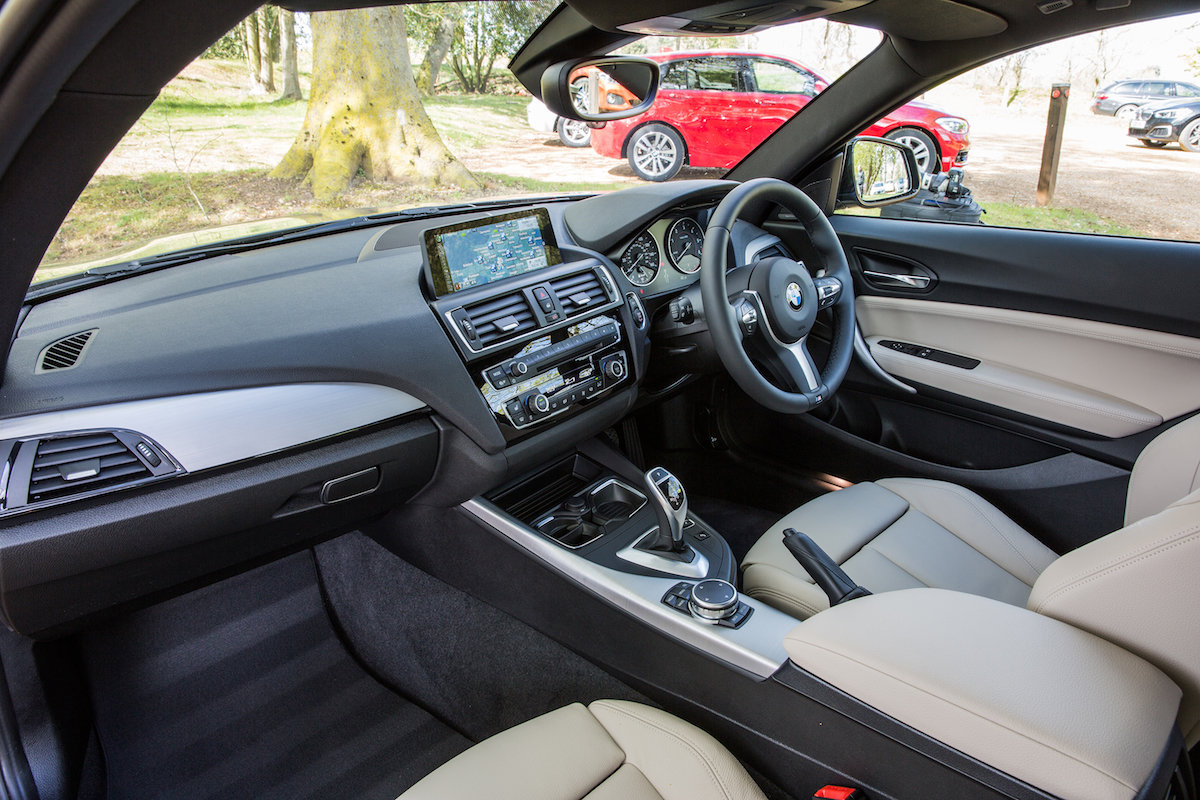
It does feel classy inside, though, with a well-built, smartly finished interior that’s intelligently laid out so that all the major controls are right where you’d hope to find them. And while the infotainment system’s menu layout takes a bit of learning – you access it using the rotary controller between the seats, which can sometimes be fiddly – it’s easy to use once you’ve got to grips with it.
Boot space is reasonable for the class at 360 litres, too. For comparison, both the Audi A3 and VW Golf of the same era have 380-litre boots.

What’s it like to drive?
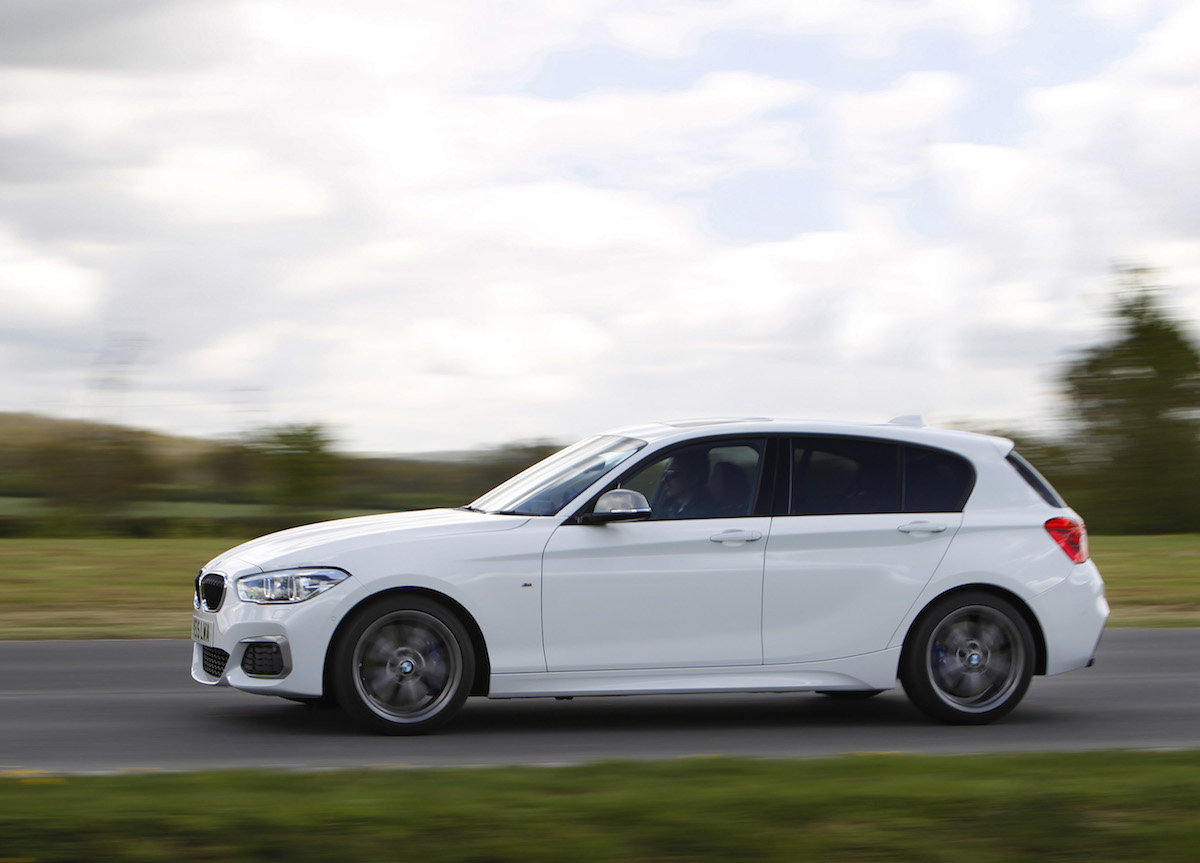
The involving handling of the 1 Series lends it a unique appeal for those who like something that feels a little more sporty to drive. It’s the only car of this type to be rear-wheel drive, and that means the front wheels are free to steer without having to deal with getting the power down onto the road at the same time – and as a result, the 1 Series steers sharply and crisply, and you don’t have to change your steering angle if you apply more power.
Thankfully, you don’t have to tolerate a bone-shaking ride as a trade-off, either. That said, the 1 Series is a little firmer than most family cars, in M Sport form in particular; a Volkswagen Golf will be more comfortable.
There was a wide range of engines available right through the life of this second-generation 1 Series. The spectrum of petrol engines stretched from a fuel-sipping 1.6-litre four-cylinder with 100bhp (later replaced by an even more parsimonious 107bhp 1.5-litre three-cylinder) right up to a fire-breathing, six-cylinder turbocharged 3.0-litre with 335bhp.
In a similar vein, diesel engines ran the gamut from a 101bhp 1.6-litre right up to a 221bhp twin-turbo 2.0-litre. As a result, you can choose a 1 Series that’ll sprint to 62mph in just 4.6 seconds, or one that’ll potter its way there in 10.7 – sipping fuel while it does so – and all else in-between.
Technology, equipment & infotainment
When the mk2 1 Series was first launched, the entry-level model was the ES. This was fairly basic, but you did at least get keyless start, a CD player, air conditioning, and alloy wheels.
Upgrading to an SE is worth doing, if you can, because it adds a bigger central screen, Bluetooth connectivity, front fog lights, a central arm rest, and a multi-function leather steering wheel.
Shortly after the launch, these two models were reshuffled slightly, so that the ES got the upgraded central screen, while the SE gained automatic headlights and wipers.
Above this level the range effectively branched into three alternative options that sat alongside each other, rather than above one another, in the pecking order.
Urban models were slightly more luxurious, with chrome trim, part-leather upholstery, and orange or blue ambient lighting. Sport models were… well, sportier, with blacked-out trim, sports seats, and orange or white ambient lighting.
Then, slightly confusingly, there was the M Sport version – not to be mistaken for the Sport – which was even racier, with a sporty bodykit, lowered and stiffened suspension, and sports seats with faux-suede upholstery. The M Sport also got dual-zone climate control.
ES and Urban models proved unpopular, and so they were dropped at the facelift in 2015. At the same time, the rest of the range got a notable boost in equipment: SE and Sport gained single-zone climate control and satnav, while the M Sport got LED headlights. Also added to the range was the M Sport Shadow Edition, which featured darker alloy wheels, black mirror caps, and blacked-out chrome trim.
The interior of the 1 Series is a smart place to be. It’s well laid out, with switchgear divided into sensible sections and therefore very easy to understand, and the central capstan controller for the touchscreen is easy to get to grips with. Plastics are high-quality, meanwhile, and the design is easy on the eye.
BMW 1 Series running costs
The most efficient version of the 1 Series is the 116d EfficientDynamics, or ED. With its plethora of fuel-saving tweaks, it should be able to achieve around 60mpg in day-to-day driving
If you’d rather have a petrol, the most parsimonious model is the 114i, which should be able to get around 50mpg day-to-day. However, the more powerful 116i isn’t really that much less efficient in the real world, and it’s much more responsive to drive, which is why we prefer it.
If you want a 1 Series with a bit of pep, the 118i and 120i are also worth considering, and while they’re less economical, you should still see around 40mpg in day-to-day driving, with more achievable on longer runs.
If saving money on car tax is really important to you, the 116d ED emits just 99g/km of CO2, which means it will be super-cheap to tax. But remember that if you buy a 1 Series registered on or after 1 April 2017, you might pay slightly more or slightly less tax, depending on which model you’re going for.
Cars registered before that date were taxed based on their CO2 emissions, which favours the less powerful petrol and diesel variants; after that date, you’ll pay a flat annual rate no matter which engine you choose, and cars priced at £40,000 or more when they were new will attract a surcharge.
The 1 Series uses what’s known as condition-based servicing, which means the car monitors how tired its oil, filter and other service parts are, and tells you when you need to take it to the garage for a service via an indicator on the dashboard. As a result, there are no fixed service schedules, though you can expect a car used mainly for short journeys to need servicing around every 10,000 miles, while cars driven mostly on motorways will be able to go further between services.
BMW’s servicing generally costs slightly less than that of its premium rivals, but with a 1 Series of this age, you’re better off taking it to an independent specialist instead. Fortunately, there are plenty of BMW specialists dotted around the country, so one should be easy to come by.
All 1 Series engines come with a timing chain. In theory, that shouldn’t need replacing for the life of the car, as opposed to a timing belt which does. However, some 1 Series engines have been known to suffer from problems with their timing chains which cause expensive problems – see ‘Reliability’ for more on this.
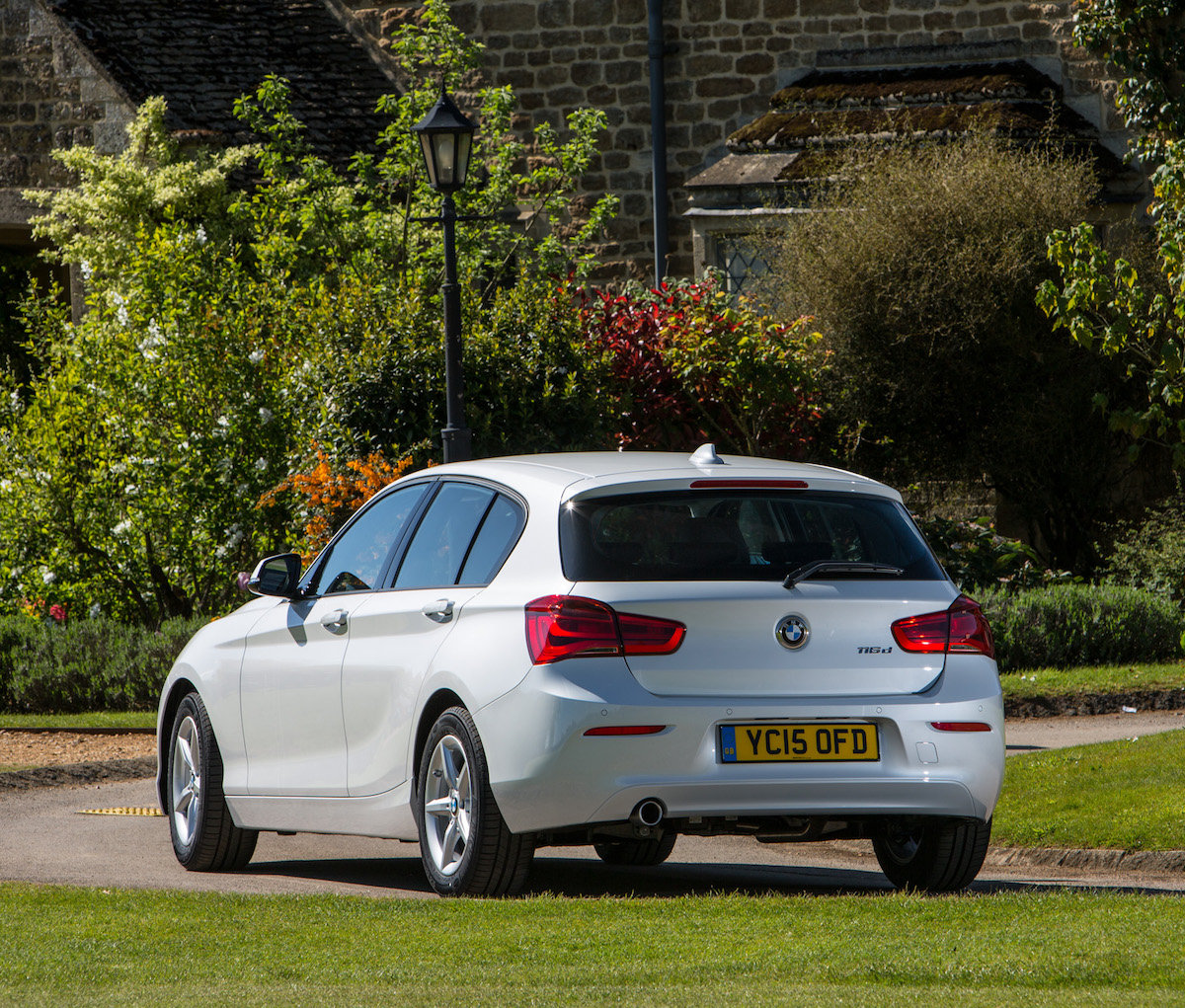
BMW 1 Series reliability
Almost all early 1 Series can suffer from timing chain wear if they aren’t serviced correctly. The timing chain is essential for the correct running of the engine, and if it wears and stretches, colossal engine damage can occur, usually requiring a whole new engine to fix.
Therefore it’s crucial that any 1 Series you buy has been well maintained. You can find a record of the servicing that’s been carried out within the car’s on-board computer – search online to find out how to access it and make sure you check the car’s been serviced regularly. A stash of invoices to back that up is always a good sign.
Avoid any 1 Series with an engine that sounds rattly, especially on start-up, as this could be a sign the timing chain is worn. Facelifted 1 Series seem to be far less prone to this problem, so if you can stretch to it, it’s worth going for one of these instead.
The M140i is also known for problems with its radiator, as it’s prone to be punctured by stones and other road debris. Keep an eye on the temperature gauge on your test drive, therefore, and check the car can maintain temperature when it’s left running for a while.
- The 1 Series received a facelift in 2015, which gained it a sleeker nose and larger rear lights. Under the skin, the new car also got a selection of new diesel and petrol engines, all bringing greater efficiency and punchier performance. The automatic gearbox was also tweaked.
- At the top of the range when the second-generation 1 Series was launched sat the M135i. With its big, 316bhp straight-six engine and rear-wheel drive, it was an unusual take on the traditional hot hatch recipe, but became much-loved for its balanced chassis and thumping power. It was upgraded to 322bhp in 2015, and then in 2016, to 335bhp, this last revision bringing with it a name change to M140i.
- Most 1 Series are five-doors, but BMW did make a three-door version. Not many were sold, and these days it remains unloved, so it’s much cheaper to buy than the equivalent five-door. If you don’t plan to use the rear seats much and can therefore live with the reduced practicality, that makes it a tempting buy, but be warned that selling it on later won’t be as easy, because most buyers will be looking for a five-door.
- If you need cheap fuel costs: 116d EfficientDynamics SE. It might not be the quickest 1 Series money can buy, but that’s not to say the 116d isn’t without appeal. Notably, it can do around 60mpg in normal driving, making it a great option for those who want to minimise their fuel costs while still getting the BMW driving experience.
- If you want the best all-rounder: a post-facelift 118i SE offers a good blend of performance and fuel economy, and comes with enough toys to keep most buyers happy.
- If you want an automatic: 120i SE auto. A post-facelift 120i automatic in SE trim can make for a smooth and punchy pairing in the 1 Series. Bear in mind tax costs will be much higher than for the equivalent diesel model.
- If you fancy something sporty: M135i/M140i: These flagship performance versions of the 1 Series are truly entertaining small hot hatches. The combination of six-cylinder power under the bonnet and a rear-wheel-drive setup makes for a truly engaging driving experience. Just mind how you go in the wet, and don’t skimp on costs when it comes to replacement tyres.


