Nissan X-Trail Review (2014-2021)


Pros and cons
What we like
Roomy interior with five- and seven-seat versions
Comfortable ride
Generous equipment, even on lower trim grades
What to consider
Not as much fun to drive as a Mazda CX-5
DPF prone to clogging
Don't expect to chase Land Rovers off road
The CarGurus verdict
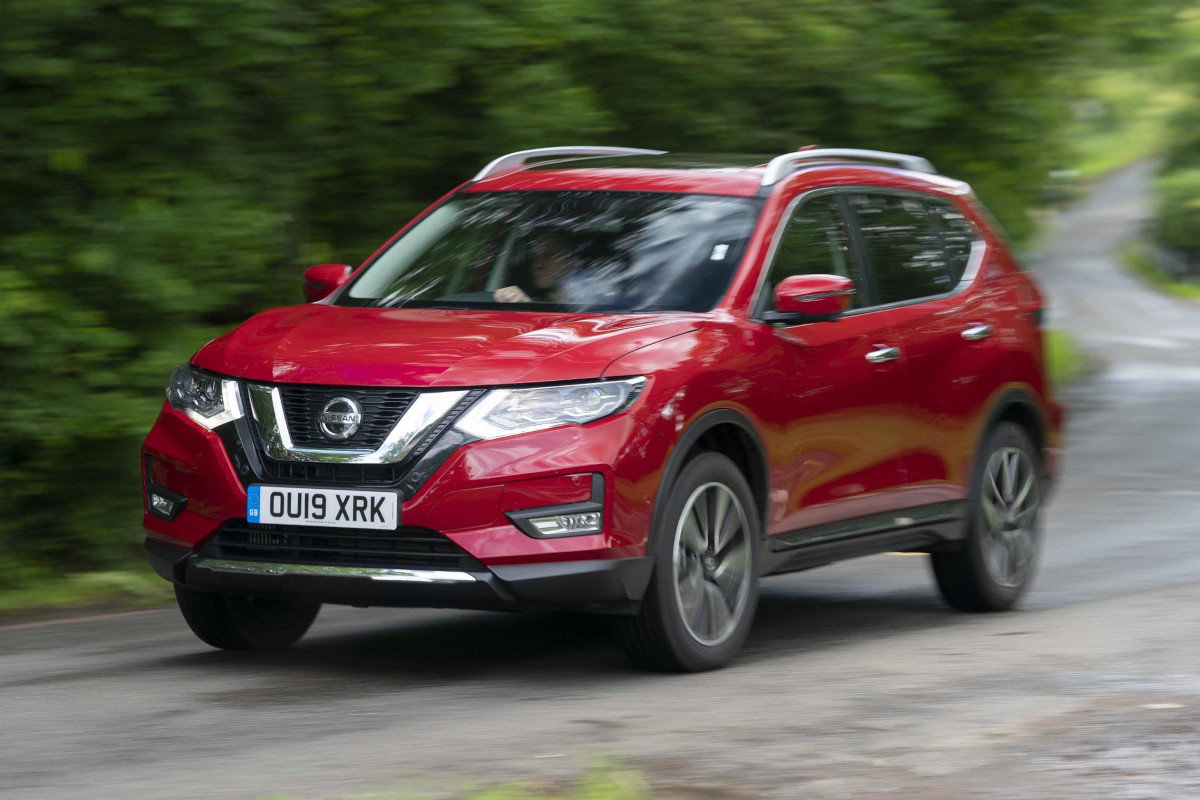
Attractive, roomy, versatile, well-equipped and comfortable, the Nissan X-Trail makes a strong case for itself as an accomplished family workhorse that has the benefit of an optional seven-seat configuration. And although it’s not really up for a serious off-road expedition, the car’s optional four-wheel drive system is handy for negotiating muddy paddocks at your local gymkhana, or for staying mobile during those occasional snowy winter days.
Some of its rivals have the edge for dynamic performance, interior space and fuel consumption, and yet if you admire the X-Trail’s styling and have a nearby Nissan dealer to look after it, then you’re unlikely to feel short-changed if you choose one.
out of 5 expert review

Practicality
The X-Trail is spacious and comfortable, and while adults won’t want to travel any further than back from the pub in the third row of seats, they’re just fine for kids.
The middle-row seats split 60/40, rather than all three seats folding independently as they do in some seven-seat rivals, which reduces flexibility, though the rear seats do slide, so that you can increase boot space or legroom in the third row, at the expense of that of the second row.
The boot itself is an average size with the rearmost seats folded down, and very small with them flipped up. On the plus side, the boot’s false floor can be lifted up and slotted in vertically, to form a divider, preventing smaller items from sliding around or bags from colliding with each other.

Driving
Engine- and road noise are well suppressed, while the suspension is calibrated to favour ride quality over pin-sharp handling: after all, this is a family wagon.
Available with both front-wheel-drive and four-wheel-drive transmissions, and manual and automatic gearboxes, the X-Trail was initially available with just one engine, a 129bhp 1.6-litre turbodiesel. In July 2015, a 1.6-litre 161bhp petrol turbo motor joined it, and then a 2.0-litre turbodiesel with 169bhp completed the line-up in November 2016.
Tech and equipment

Running costs
Official consumption figures say that the 1.6-litre dCi turbodiesel engine is capable of 57.6mpg with a manual gearbox and front-wheel drive, and although this isn’t a figure many owners will regularly achieve, several claim that 48mpg is perfectly feasible in everyday motoring. The 2.0-litre turbodiesel isn’t quite so miserly with fuel, but its 50.4mpg isn’t bad: the 1.6 petrol turbo manages 45.6mpg. Most X-Trails cost £145 annually to tax, but the spread ranges from £125 to £200.
If you run a diesel model almost exclusively in an urban environment then the Diesel Particulate Filter may choke up. Getting a dealer to perform a ‘static regeneration’ of it costs about £300, and this has been known to be required at 8,000-mile intervals.
Insurance groups range from 15 to 23, which are lower than those of key rivals. Nissan dealers run fixed-price servicing packages for the X-Trail and they’re in the region of £17 per month for a petrol model, £19 for a diesel, both on a two-year contract and excluding wear-and-tear items. Nissan also pledges to match competitors’ service quotes if they’re lower, and you get free roadside assistance with every service.
Fixed-price repair packages are available, too, and include front discs and pads for £260, a stop/start battery for £120, and a pair of front wiper blades for £25.
The biggest and most consistent gripe about the third generation X-Trail concerns its Diesel Particulate Filter (DPF) and its propensity to clog up at comparatively low mileage when the car is being driven around town more than on dual-carriageways and motorways. See if you can discover how the car you are considering was driven by its previous owner, as dealers charge around £300 to purge the DPF.
DAB radio reception is sometimes poor, and there have been instances of a radio fault that causes the system to reboot itself, which simultaneously reboots the satnav mid-trip: have a play with the radio and satnav to be sure both are working as they should. Some cars built between April and June 2016 suffered from an electrical short on the rear oxygen sensor causing its failure, leading to rough running and the engine management system switching to limp-home mode with greatly reduced power.
Although not exactly commonplace, there are several reports of warped front brake discs at mileages as low as 10,000, so on your test drive feel for wobble through the steering as you’re braking. Premature clutch failure – at as little as 13,000 miles – has also been reported, as well as intermittent hesitation from the CVT automatic gearbox, an issue that should, by now, have been addressed with a software update. Rattling trim has exorcised some owners, but if the problem was bad enough then it should have been sorted under warranty.


What owners say
"The Nissan X-Trail has garnered praise for its comfortable interior, enjoyable driving experience, and great features like a solid sound system. Owners also appreciate the spacious cargo area, making it practical for families or trips. However, some have expressed a desire for improvements in engine performance. Overall, the X-Trail is seen as a reliable and family-friendly choice, although preferences vary with different model years."
Great S U V, DRives like a car. Good value for the money.
22 July 2026There are lots of safety features good value heated steering wheel is missing I would compare it to a Volvo cx60
29 January 2026Great pulling power for caravan towing still comfortable, spacious and good looking car
29 October 2025What owners say
Great S U V, DRives like a car. Good value for the money.
22 July 2026There are lots of safety features good value heated steering wheel is missing I would compare it to a Volvo cx60
29 January 2026Great pulling power for caravan towing still comfortable, spacious and good looking car
29 October 2025I have the Tekna, has wonderfull features, very comfortable, and great Bose sound system.
24 March 2021In very good condition for the year. Could do with automatic folding mirrors.
6 July 2022This car has almost everything a driver can dream of. It was a peasant surprise to me. It has all I wanted: 7 doors, black, four wheel drive, back camera, leather seats etc. This car compares very well to Mercs GLA 250 Formatic. I know this because my wife drove this and I drove it too..
22 February 2021I really do like these cars. I have just purchased my 4th model . The standard features are good and the higher spec model are fantastic if I thought that they were no good I wouldnt have had 4 different models
4 July 2021Love the big boot. I drive a 04 xtrail and love it and these new ones are even better all round
8 July 2021Good interior, & light engine. Enjoyable to drive
1 February 2021Three things to know
- Four-wheel drive versions are reasonably capable on mildly muddy tracks and snow-covered back roads, but they’re not really ‘off-roaders’.
- The X-Trail’s panoramic glass roof – monoroof, in Nissan language – eats up some of the headroom, but unless you’re way over six feet tall, it shouldn’t be an issue.
- Active Ride Control (it reads the road surface and adjusts the damper settings accordingly) and Active Trace Control (automatically reduces understeer slides) are extra safety features worth keeping an eye out for.
Which one to buy
- Best of the bunch: The 129bhp 1.6-litre dCi turbodiesel engine is just about punchy enough for most folk, and its 57.6mpg capability is compelling. Team it with Acenta trim, which has plenty of goodies and smaller 16-inch alloys for better ride quality.
- If most of your miles are urban: Any model with the 1.6-litre DiG-T petrol turbo engine. The Diesel Particulate Filter (DPF) on diesel versions is prone to choking up if all your trips are short ones.
- For people who tow: The 2.0-litre turbodiesel derivative has 169bhp and 236lb ft of torque at 1,750rpm, yet is still capable of a claimed 50.4mpg.
- If your kids like to bring friends home for tea: The seven-seat option cost £700 when the X-Trail was new, and is worth seeking out should you occasionally need to accommodate a couple more (small) bodies in the rear.


Pricing trends
Starting RRP
£17,167
Current avg. market price
£9,488
Trending down by 7.0% this month
April 2026 - October 2026
Compare 2021 Nissan X-Trail Trims
The 2021 Nissan X-Trail offers a range of trims from budget-friendly options to fully loaded models, all with efficient fuel economy.
- Starting at £9,990
- Most Popular: 1.3 Dig-t N-connecta 5dr Dct
Trim Overview
Prices updated weekly from CarGurus listings.
| 1.7 Dci N-connecta 5dr | 1.3 Dig-t Nconnecta 5dr Dct (Most Popular) | 1.7 Dci Tekna 5dr | 1.3 Dig-t Tekna 5dr Dct | 1.7 Dci Tekna 5dr [7 Seat] | |
|---|---|---|---|---|---|
| Starting MSRP | £29,710 | £29,745 | £31,810 | £31,845 | £32,470 |
| Avg. Market Price | £12,400 | £14,473 | £9,990 | £14,473 | £14,473 |
| Positioning | Best value | Standard | Standard | Standard | Fully loaded |
| Standout Features | Keyless Entry, Parking Assist | Panoramic Roof, Alloy Wheels | Bluetooth, Navigation System | Heated Seats, Parking Assist | Heated Seats, Parking Assist |
| Drivetrain | FWD | FWD | FWD | FWD | FWD |
| Listings Available | 10 | 11 | 10 | 11 | 10 |
Quick Compare Table
Listing prices sourced from CarGurus — updated weekly. OEM specs from manufacturer data.
| 1.7 Dci N-connecta 5dr | 1.3 Dig-t Nconnecta 5dr Dct | 1.7 Dci Tekna 5dr | 1.3 Dig-t Tekna 5dr Dct | 1.7 Dci Tekna 5dr [7 Seat] | |
|---|---|---|---|---|---|
| AI Summary | Best value for budget-conscious shoppers | Popular choice with great features | Lowest-cost option in the lineup | Well-equipped with tech features | Spacious and fully loaded |
| Avg. Market Price | £12,400 | £14,473 | £9,990 | £14,473 | £14,473 |
| MSRP | £29,710 | £29,745 | £31,810 | £31,845 | £32,470 |
| Engine | 1749.0cc 150 hp I4 | 1332.0cc 159.0 hp I4 | 1749.0cc 150 hp I4 | 1332.0cc 159.0 hp I4 | 1749.0cc 150 hp I4 |
| Drivetrain | FWD | FWD | FWD | FWD | FWD |
| MPG/MPGe (City/Hwy) | 47.9/58.9 | 38.2/49.6 | 44.8/57.7 | 37.2/47.9 | 44.8/57.7 |
| Keyless Entry/Start system | ✓ | ✓ | ✓ | ✓ | ✓ |
| Parking Assist | ✓ | ✓ | — | ✓ | ✓ |
| Bluetooth | ✓ | ✓ | ✓ | ✓ | ✓ |
| Navigation System | ✓ | ✓ | ✓ | ✓ | ✓ |
| Cruise Control | ✓ | ✓ | ✓ | — | ✓ |
| isofix | ✓ | — | — | ✓ | — |
| Privacy glass/Tinted windows | ✓ | ✓ | ✓ | ✓ | ✓ |
| AUX/USB connectivity | ✓ | — | ✓ | ✓ | — |
| Air Conditioning | ✓ | ✓ | ✓ | — | ✓ |
| Alarm/Immobiliser | ✓ | ✓ | ✓ | — | — |
| DAB Radio | — | ✓ | ✓ | ✓ | ✓ |
| Heated Seats | — | — | — | ✓ | ✓ |
| Active Listings | 10 | 11 | 10 | 11 | 10 |
Missing data displayed as "—".
Trim Deep Dives
1.7 Dci N-connecta 5dr — "Who It's For"
The 1.7 Dci N-connecta is the pick for shoppers who want a well-equipped SUV without breaking the bank. It offers a solid balance of features and price.
- Avg. market price: £12,400 (updated weekly)
- MPG/MPGe: 47.9 city / 58.9 hwy
- Inventory: 10 listings — lower availability; may limit negotiating room
- View 1.7 Dci N-connecta listings
1.3 Dig-t Nconnecta 5dr Dct — "Who It's For"
The 1.3 Dig-t Nconnecta is the pick for shoppers who want a blend of modern features and performance without a hefty price tag. It's also the most popular trim in the lineup.
- Avg. market price: £14,473 (updated weekly)
- MPG/MPGe: 38.2 city / 49.6 hwy
- Inventory: 11 listings — lower availability; may limit negotiating room
- View 1.3 Dig-t Nconnecta listings
1.7 Dci Tekna 5dr — "Who It's For"
The 1.7 Dci Tekna is the pick for shoppers who want a spacious SUV with essential tech features without overspending. It stands out as the most affordable option in the lineup.
- Avg. market price: £9,990 (updated weekly)
- MPG/MPGe: 44.8 city / 57.7 hwy
- Inventory: 10 listings — lower availability; may limit negotiating room
- View 1.7 Dci Tekna listings
1.3 Dig-t Tekna 5dr Dct — "Who It's For"
The 1.3 Dig-t Tekna is the pick for shoppers who want a tech-forward SUV with premium features without going for the highest price.
- Avg. market price: £14,473 (updated weekly)
- MPG/MPGe: 37.2 city / 47.9 hwy
- Inventory: 11 listings — lower availability; may limit negotiating room
- View 1.3 Dig-t Tekna listings
1.7 Dci Tekna 5dr [7 Seat] — "Who It's For"
The 1.7 Dci Tekna [7 Seat] is the pick for shoppers who need extra space and features without sacrificing comfort. It's ideal for families needing more room.
- Avg. market price: £14,473 (updated weekly)
- MPG/MPGe: 44.8 city / 57.7 hwy
- Inventory: 10 listings — lower availability; may limit negotiating room
- View 1.7 Dci Tekna [7 Seat] listings
Trim Recommendations
Most Popular — 1.3 Dig-t Nconnecta 5dr Dct
With 11 active listings, the 1.3 Dig-t Nconnecta is the clear volume leader in the lineup.
Browse 1.3 Dig-t Nconnecta listings
Best Budget Option — 1.7 Dci Tekna 5dr
At £9,990 avg market price — below the lineup median of £14,473 — it's the most accessible entry point.
These recommendations are based on CarGurus' proprietary market data from October 22, 2026, CarGurus experts' opinions, and generative AI.

