Ford Galaxy Review (2015-2023)

Pros and cons
What we like
Rewarding to drive and comfortable to travel in
Plenty of space in all three rows of seats
Decent boot, even when all seven seats are in use
What to consider
Not quite as sharp to drive as a Ford S-Max
Powerful petrol models are thirsty
Lacks sliding rear doors
The CarGurus verdict
Ford had the MPV market pretty well sussed by the time the Galaxy mk3 came along in 2015. This is a very capable people carrier with few weaknesses.
Practicality is a strong point, with a roomy cabin, lots of storage and flexible seating. It may lack the sliding doors of a Seat Alhambra or Volkswagen Sharan, but otherwise you get most of the features you might want from an MPV.
We'd probably steer clear of the most powerful petrols and diesels, because they cost more to fuel and insure than the rest of the Galaxy line-up. But otherwise the big Ford combines respectable performance with modest running costs.
While not as sharp or agile as an S-Max, the Galaxy is enjoyable to drive. What's more, it's very quiet at speed and it rides comfortably.
The car buying public tends to prefer SUVs to MPVs. But if you ignore this trend the Galaxy makes a very fine seven-seat family car.
out of 5 expert review
What is the Ford Galaxy?
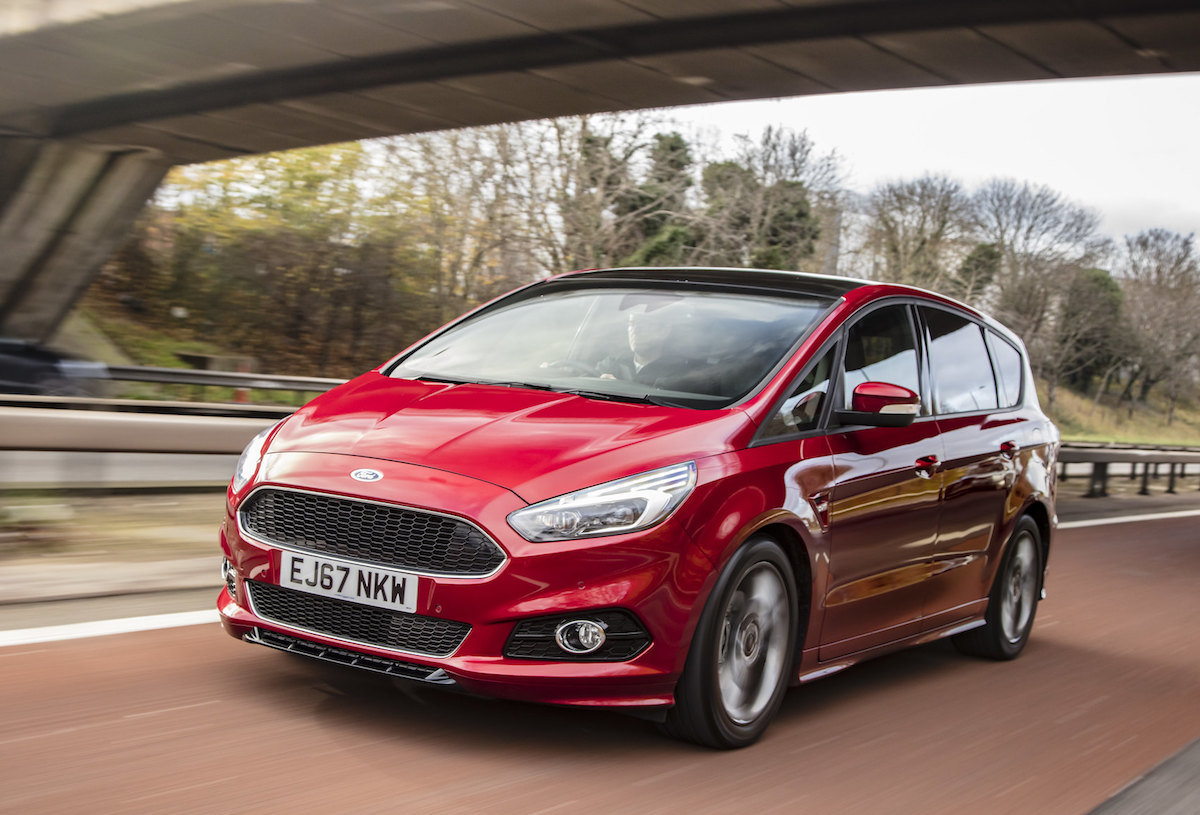
The Ford Galaxy is a large MPV or people carrier, the sort of car that used to be the de facto choice for growing families before their heads were turned by more rugged and fashionable SUVs.
Ford brought two decades of MPV know-how to the third-generation Galaxy. With the same wheelbase as the previous model, interior space was much the same as before. Instead, Ford finessed the details with a quieter cabin, lower emissions, better economy, and the ability to raise and lower the middle row and third row of seats at the push of a button.
Originally launched in 2015 alongside the slightly smaller and sportier S-Max, the Galaxy has remained largely unchanged over the years, with only a subtle facelift in 2019 that included refreshed looks and enhanced equipment levels. Ford also gradually trimmed the back the petrol and diesel engine choice, and by the end of 2021 the 2.5-litre petrol-electric hybrid was the only option.
In 2022, Ford announced that production of the Galaxy would end during the year and that it was unlikely to launch a direct replacement.

Practicality
How practical is it?
Unsurprisingly, the Galaxy is one of the most versatile family cars money can buy, its roomy seven-seat interior up to almost any challenge an activity you can throw at it.
There's lots of space for passengers in the middle row, where the three individual rear seats slide, recline, fold, and perform all the usual people-carrier tricks. Each chair also has an Isofix mounting point, meaning that it was one of the few family cars that can accommodate three child seats.
Space in the third row isn't quite so generous, but it's roomier back there than most rivals. If you want to regularly carry adults in the third row, however, you might want to think about a van-based MPV like the Mercedes V-Class or Peugeot Traveller instead. That said, it’s only on longer journeys that taller occupants will feel hemmed-in.
With all seats upright, there's 300 litres of boot space, plenty for a typical weekly shop, and exactly the same space you'll find in a Volkswagen Sharan. With the third row in the floor there's 965-litres of luggage space, and if the middle seats are folded away there's a massive 2,339 litres to fill. Better still, in all configurations the load area is well-shaped with minimal instructions, plus there’s a low load lip. What’s more, lowering the seats is a doddle, particularly the third row, which is powered and drops into the floor at the touch of a button.
As you’d expect, there’s loads of family-friendly storage, including deep door bins that’ll take a 1.5-litre bottle, a large cubby between the front seats and shallow lidded trinket tray on top of the dashboard. There are even fold-out picnic tables for those sitting in the second row, while those in the rearmost seats get their own cupholders.

Driving
What's it like to drive?
You don't associate seven-seater MPVs with driving enjoyment, but Ford has a knack of making everyday cars drive really well, and the Galaxy is a good example. It's not quite as sharp as the slightly smaller Ford S-Max, and you're aware that it carries its weight a little higher from the ground than a Ford Mondeo. But the Galaxy is way more fun than a Citroen Grand C4 Picasso or a VW Sharan.
Just as importantly, Ford hasn't kept the driver happy at the expense of passenger comfort. The Galaxy rides smoothly, coping well with rough road surfaces. It's quiet as well as comfy, thanks in part to the acoustic glass Ford fits to filter out noise. Whether you're using your Galaxy to plod around town or blast down the motorway, life will be as civilised and as serene as any family could want it to be.
When you are carrying a full load of people and luggage, you'll want a punchy engine under the bonnet. From launch, the range-topping diesel was a bi-turbo TDCi engine that offered 210hp. There was also a 240hp EcoBoost petrol.
That kind of power is overkill for most needs, and engines lower down the range have proven more popular. Back in 2015, the Galaxy had 2.0-litre TDCi diesel engines with 120hp, 150hp, or 180hp. Anyone looking for petrol power but not wanting to spend big on the 240hp EcoBoost could opt for the 160hp 1.5-litre EcoBoost instead. The latter petrol was uprated to 165hp in 2018. However, in 2019 Ford slimmed down the range and, perhaps surprisingly given diesel power's declining popularity, there it actually dropped the petrol engines. Instead, buyers could choose between a pair of 2.0-litre EcoBlue diesels with 150hp or 190hp.
The less powerful diesel comes with the choice of a six-speed manual or an eight-speed automatic. The higher powered diesel has the auto 'box as standard. Both are refined and punchy performers that suit the Galaxy’s hard working character.
The final engine option, and the only one left to buy new, is the 2.5-litre petrol-electric hybrid. It’s smooth enough and can deliver decent fuel efficiency, but with 190hp and a sluggish CVT automatic gearbox it struggles a little in a car the size of the Galaxy.
Tech and equipment
Technology, equipment & infotainment
Ford kept it simple with the Galaxy line-up, allowing owners to choose between Zetec, Titanium and Titanium X models. In fairness, you’re unlikely to need anything more than the entry-level model, but if your budget stretches then some of the luxurious touches of the pricier models will be appreciated.
In the past, the Zetec would be called a ‘bottom-of-the-range’ model, but with 17-inch alloy wheels, front and rear parking sensors, powerfold door mirrors and climate controlled air-conditioning it feels anything but.
The next rung up the ladder is the Titanium, which adds features such as keyless entry and privacy glass for the rear windows, while the Titanium X throws in a panoramic roof, powered tailgate and leather seat trim. From the end of 2021, however, Ford cut back the Galaxy range to include just the Titanium model, which was available exclusively with the hybrid engine.
In terms of infotainment, most versions of the Galaxy are fitted with the firm’s excellent and easy-to-use SYNC 3 set-up, which features an eight-inch colour touchscreen, Bluetooth connectivity and DAB radio. Titanium models and above added sat-nav to the list, while the latest examples will also have Apple CarPlay and Android Auto for straightforward syncing of a smartphone.

Running costs
Ford Galaxy running costs
Most Galaxy models should prove affordable to run, but there are exceptions.
The most obvious is the 237bhp 2.0-litre EcoBoost. There's something appealingly bonkers about a high-performance MPV with a turbocharged petrol engine, but frequent stops for fuel will soon wipe the smile from your face. Expect fuel economy in the mid 20s, possibly worse if the car is fully loaded or you have a heavy right foot. Insurance costs will also be higher if you pick this model over the more humble models the Galaxy line-up, since it sits in group 26 of 50.
If you really must have a quick MPV, the bi-turbo diesel is slightly more sensible. Officially, it's capable of 51.4mpg. However, this car was tested to the old NEDC standard, which tends to give over-optimistic fuel economy figures. Around 35-38mpg is more likely. It's two groups higher than the quick petrol model for insurance, so premiums are likely to be higher.
The price of strong performance is less high if you choose the 178bhp 2.0-litre TDCi. With a manual gearbox, this has a combined figure of 56.5mpg. In fact, the official economy is identical to the less powerful 118bhp and 148bhp versions. Economy in the high 30s or low 40s is more realistic in reality.
The EcoBlue engines, which have been fitted to the Galaxy since 2018, offer lower emissions and improved economy compared with the older TDCi engines. The 148bhp version with a manual gearbox can manage up to 46.3mpg according to official figures, and shouldn't be too far off that in reality. Cars with an automatic gearbox will be a couple of mpg worse, as will the more powerful 188bhp auto. The 4x4 auto will be able to achieve around 40mpg.
If you really must have a petrol but want sensible running costs, the 158bhp 1.5 EcoBoost has an official combined figure of 43.5mpg, based on the NEDC test. Mid 30s mpg should be achievable.
Most of the range has affordable car tax bills. Even the highest-emitting petrol costs £265 per year in Vehicle Excise Duty.

Ford Galaxy reliability
Ford tends to finish midfield in reliability and owner satisfaction surveys. So while there may be the odd problem with a Galaxy, don't expect regular or serious difficulties.
As with any MPV, many cars will have been used for the school run, and parked in busy car parks. There's lots of scope for scuffed bodywork and kerbed alloy wheels with this type of use, so check the panels and wheels carefully for any damage.
Make sure the seats all fold away and lift up again as they should, with no broken levers or sticky mechanisms.
The Galaxy has been recalled a few times. For example, some early cars had trouble with sumps overheating and cracking, leading to a loss of engine oil. This affected diesels made between 25 May 2015 and 19 October 2015. You can check if any Galaxy you are thinking of buying has this or any other recall work outstanding by entering the reg number in the recall checker on the gov.uk website.
If you are planning to buy a used Ford Galaxy, it's worth knowing that the Ford Direct approved used programme offers a two-year warranty. That's a year more than most similar schemes from rival car makers.
On the other hand, if you are shopping for a new Ford Galaxy, the car comes with a three-year/60,000-mile warranty. That's the same length of cover Volkswagen provides to Sharan buyers.


What owners say
These cars are ok but unfortunately not as good as the first generation. Seating is ample but even the front seats are not that comfortable especially on long distance journeys. The seats are not as padded in previous versions. The rear 2 seats are more like children’s. Although the rear 5 seats fold into the floor so you do not have to take them out there’s less boot/ carrying space and the change of shape makes it difficult to put larger items in as the rear boot access isn’t square like the mark 1. Driving position is ok but again not as high up as the former model. The doors catch on higher pavements. Servicing is difficult. Oil change if DIY is problematic. You have to raise front end to drop under trays. Oil sump plug then easy to access and open. However oil filter you have to remove the oil filler pipe which needs either a special tool or creativity with what you have. Fuel filter once fitted even my garage has issues bleeding through. Also so many with gear box faults particularly the automatic where regular transmission fluid changes are required. Most people don’t realise this. Again a specialist job. Manual version better with better fuel consumption. Diesel fuel consumption a little down on earlier models. Petrol will always be more thirsty but will satisfy ulez requirements. New + 2016 diesel’s will probably be ulez compliant but check before buying as dependent in those wonderful Europe ratings. Summary probably would rate it closer to 4 if I hadn’t driven the bigger mark 1 version that converts more like a small van.
7 February 2026It was what I was looking for. Good clean car at a reasonable price
4 April 2021great size for many children. runs well even at 19 years old
2 March 2022What owners say
These cars are ok but unfortunately not as good as the first generation. Seating is ample but even the front seats are not that comfortable especially on long distance journeys. The seats are not as padded in previous versions. The rear 2 seats are more like children’s. Although the rear 5 seats fold into the floor so you do not have to take them out there’s less boot/ carrying space and the change of shape makes it difficult to put larger items in as the rear boot access isn’t square like the mark 1. Driving position is ok but again not as high up as the former model. The doors catch on higher pavements. Servicing is difficult. Oil change if DIY is problematic. You have to raise front end to drop under trays. Oil sump plug then easy to access and open. However oil filter you have to remove the oil filler pipe which needs either a special tool or creativity with what you have. Fuel filter once fitted even my garage has issues bleeding through. Also so many with gear box faults particularly the automatic where regular transmission fluid changes are required. Most people don’t realise this. Again a specialist job. Manual version better with better fuel consumption. Diesel fuel consumption a little down on earlier models. Petrol will always be more thirsty but will satisfy ulez requirements. New + 2016 diesel’s will probably be ulez compliant but check before buying as dependent in those wonderful Europe ratings. Summary probably would rate it closer to 4 if I hadn’t driven the bigger mark 1 version that converts more like a small van.
7 February 2026It was what I was looking for. Good clean car at a reasonable price
4 April 2021great size for many children. runs well even at 19 years old
2 March 2022Had previous Galaxy for over 10 years ... great workhorse . Really impressed with running costs and reliability . Hope this next one is the same .
2 February 2021Exterior excellent , interior not good, seats comfy but impractical colour .Not enough spec for us ,and overpriced for the year
24 March 2024Three things to know
- Unusually for an MPV, the Galaxy has a 4x4 version. You don't get a raised ride height or any styling changes to give the game away; the all-wheel-drive Galaxy is just as mild-looking as any other. But you do get much improved wet-weather traction. From launch, AWD was offered with the 148bhp 2.0-litre TDCi with a six-speed manual gearbox and the 178bhp 2.0-litre TDCi with a six-speed Powershift automatic transmission. Today, there's just one 4x4 model, the 187bhp 2.0-litre EcoBlue with an eight-speed automatic.
- Like its close relative, the S-Max, the Ford Galaxy MPV has a five-star safety rating from the experts at Euro NCAP. There's a long list of safety equipment fitted as standard, including second-row seat side airbags, and first and second row seatbelt pre-tensioners. Autonomous emergency braking also features in every Galaxy (Ford calls its system Pre-Collision Assist). It's able to detect pedestrians as well as other vehicles, and will prevent or reduce the severity of front-end impacts if the driver doesn't react in time. Lots of other driver aids are either standard, or available at extra cost.
- Ford offers several option packs with the Galaxy, bundling together several bits of kit. The Driver Assistance Pack currently includes Adaptive Cruise Control, Active Park Assist with parallel and perpendicular parking, Park-out assist, front and rear cameras, a Blind Spot Information System, and an upgrade to the Sync 3 satnav and touchscreen infotainment system. The Winter Pack has heated seats and a heated steering wheel. The Titanium Lux Pack includes adaptive LED headlights, leather seats, eight-way powered adjustment of the front seats, heated front seats and a powered tailgate.
Which one to buy
– If you want an affordable all-rounder: choose the 148bhp 2.0-litre diesel. Whether you opt for the older TDCi engine or the more recent EcoBlue, you are hitting the bullseye for performance, price and fuel economy. These engines have enough pulling power to cope when the family car is fully loaded, but are more affordable than the more powerful models. Fuel economy is also very good for a car as big and as roomy as the Galaxy. – If you want to tow a caravan: pick the 180hp 2.0-litre TDCi AWD automatic. Four-wheel drive is a definite plus while towing a caravan or trailer, making it much easier to pull away on damp Tarmac or wet grass. And the extra weight of the components needed to send power to the rear wheels as well as the fronts helps make the car more stable. If you are looking for a new Galaxy rather than a used car, we'd recommend the 190hp 2.0 EcoBlue AWD auto. – If you want a petrol: go for the 160hp 1.5-litre EcoBoost. It's clearly nothing like as quick as the 240hp model, but then a performance MPV is a bit of a niche. The 160hp car is all you really need, with respectable mid-range muscle for a petrol engine. It's quieter than the diesels, although it can't match them for fuel economy. – If you want your MPV fully loaded: go for the Galaxy Titanium or Titanium X. These have lots more kit than the entry-level Style and Zetec trim levels, especially if you choose one with some of Ford's option packs fitted. A DAB radio, sat nav, Bluetooth, 17-inch alloys, LED daytime running lights, a digital display in place of conventional dials, and powered folding of the third row of seats are all standard on the Titanium.


More on the Ford Galaxy (2015 - 2023)



Compare 2021 Ford Galaxy Trims
The 2021 Ford Galaxy offers a blend of practicality and comfort, with a choice between a budget-friendly option and a fully loaded hybrid variant.
- Starting at £16,076
- Most Popular: 2.5 Fhev 190 Titanium 5dr Cvt
Trim Overview
Prices updated weekly from CarGurus listings.
| 2.0 Ecoblue Titanium 5dr Auto | 2.5 Fhev 190 Titanium 5dr Cvt (Most Popular) | |
|---|---|---|
| Starting MSRP | £36,300 | £40,400 |
| Avg. Market Price | £16,076 | £19,795 |
| Positioning | Best value | Fully loaded |
| Standout Features | Keyless Entry/Start, Navigation System, Air Conditioning | Keyless Entry/Start, Leather Seats, Navigation System |
| Drivetrain | FWD | FWD |
| Listings Available | 17 | 19 |
Quick Compare Table
Listing prices sourced from CarGurus — updated weekly. OEM specs from manufacturer data.
| 2.0 Ecoblue Titanium 5dr Auto | 2.5 Fhev 190 Titanium 5dr Cvt | |
|---|---|---|
| AI Summary | Best value option for budget-conscious buyers | Premium features for a comfortable ride |
| Avg. Market Price | £16,076 | £19,795 |
| MSRP | £36,300 | £40,400 |
| Engine | 1997.0cc 150 hp I4 | 2.5l I4 Petrol/electric Hybrid |
| Drivetrain | FWD | FWD |
| Keyless Entry/Start system | ✓ | ✓ |
| Air Conditioning | ✓ | ✓ |
| Navigation System | ✓ | ✓ |
| Cruise Control | ✓ | ✓ |
| Privacy glass/Tinted windows | ✓ | ✓ |
| Parking Assist | ✓ | ✓ |
| Bluetooth | ✓ | ✓ |
| isofix | ✓ | ✓ |
| DAB Radio | ✓ | ✓ |
| Alarm/Immobiliser | ✓ | ✓ |
| Android Auto | ✓ | — |
| AUX/USB connectivity | — | ✓ |
| Leather Seats | — | ✓ |
| Active Listings | 17 | 19 |
Missing data displayed as "—".
Trim Deep Dives
2.0 Ecoblue Titanium 5dr Auto — "Who It's For"
The 2.0 Ecoblue Titanium is the pick for shoppers who want essential features and value without the higher price of hybrid options.
- Avg. market price: £16,076 (updated weekly)
- Inventory: 17 listings — lower availability; may limit negotiating room
- View 2.0 Ecoblue Titanium listings
2.5 Fhev 190 Titanium 5dr Cvt — "Who It's For"
The 2.5 Fhev 190 Titanium is the choice for buyers seeking a fully equipped family vehicle with hybrid efficiency and luxury features.
- Avg. market price: £19,795 (updated weekly)
- Inventory: 19 listings — lower availability; may limit negotiating room
- View 2.5 Fhev 190 Titanium listings
Trim Recommendations
Most Popular — 2.5 Fhev 190 Titanium 5dr Cvt
With 19 active listings, the 2.5 Fhev 190 Titanium is the clear volume leader in the lineup.
Browse 2.5 Fhev 190 Titanium listings
Best Budget Option — 2.0 Ecoblue Titanium 5dr Auto
At £16,076 avg market price — below the lineup median of £17,935 — it's the most accessible entry point.
Browse 2.0 Ecoblue Titanium listings
These recommendations are based on CarGurus' proprietary market data from October 29, 2026, CarGurus experts' opinions, and generative AI.

