Hyundai Tucson Review (2015-2020)
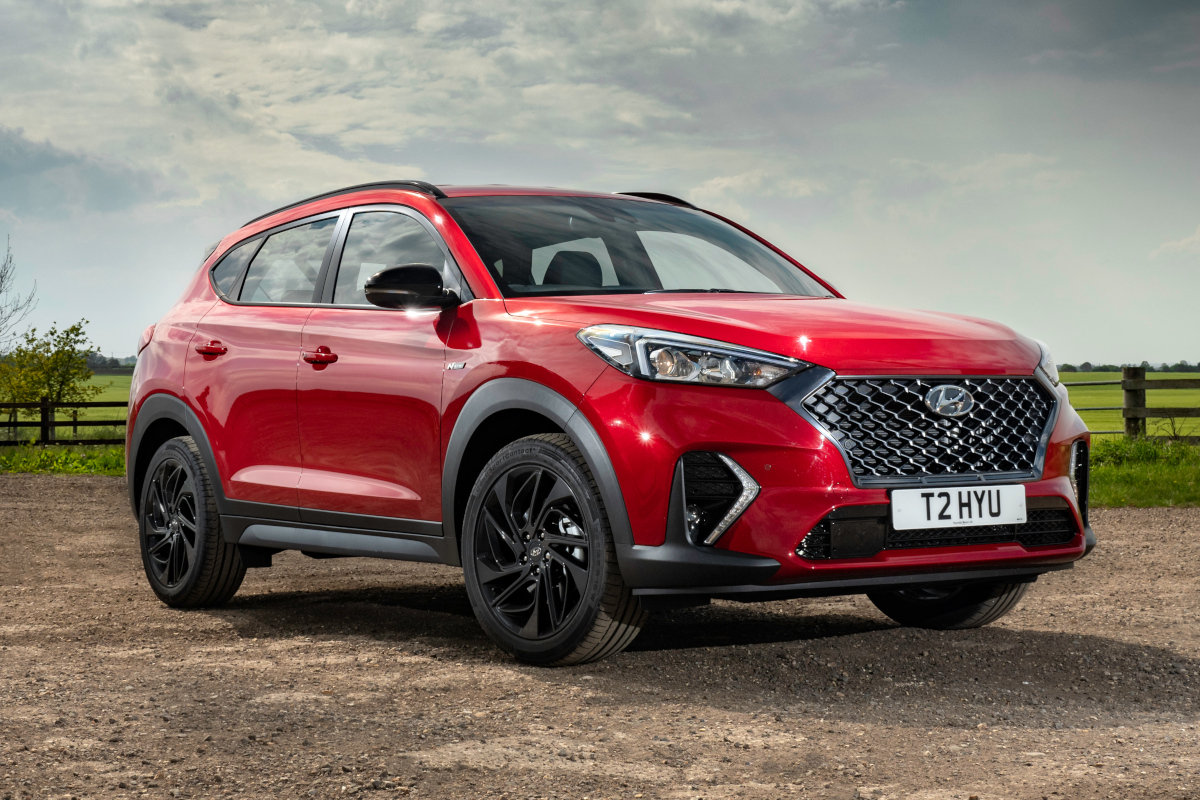
Pros and cons
What we like
Lots of room for passengers and luggage
Good value for money
Strong on reliability
What to consider
No better than average to drive
Dull interior design
Only the most powerful diesel has four-wheel drive
The CarGurus verdict
A spacious interior, a useful boot, an impressive reliability record, low running costs, a long warranty and competitive value-for-money: on the face of it, the Hyundai Tucson has it all. No wonder it’s proven so popular with British buyers.
It’s a bit of a shame that it’s let down by a fairly average driving experience. That slightly dull interior won’t win it many fans, either, and its styling is a bit bland. But then again, you probably won't care too much about those flaws: after all, few family SUV owners will really mind if their car doesn't have red-carpet glamour or hot-hatch driving manners.
If that sounds like you, this seriously sensible SUV might be right up your street. While not perfect, it has an awful lot going for it, and should fit into family life with a minimum of fuss.
out of 5 expert review
What is the Hyundai Tucson?
So you’ve decided you want to buy a medium-sized, family-friendly SUV. You’re not the only one; this type and size of car has become one of the most hotly sought-after in the country in recent years, and consequently, the market has become saturated with such a huge choice of options from so many different manufacturers, it’s hard to know where to start.
On paper, the Hyundai Tucson looks like a very good place. Its biggest draw as a new car was the five-year warranty, and although that will have now expired on used examples of this generation, it still indicates that Hyundai was confident enough in the reliability of its cars to put its money where its mouth is. You also get a spacious, solidly built cabin and plenty of equipment for a very attainable price, making the Tucson excellent value for money.
Practicality
How practical is it?
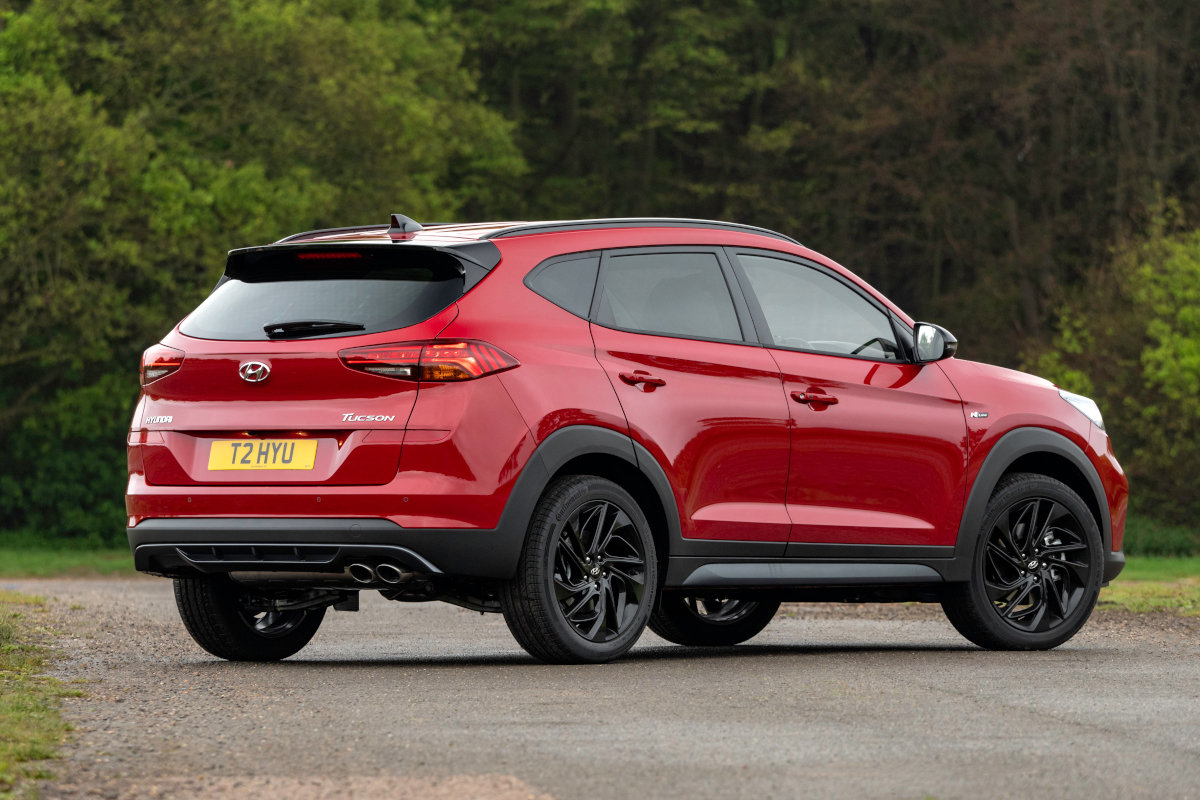
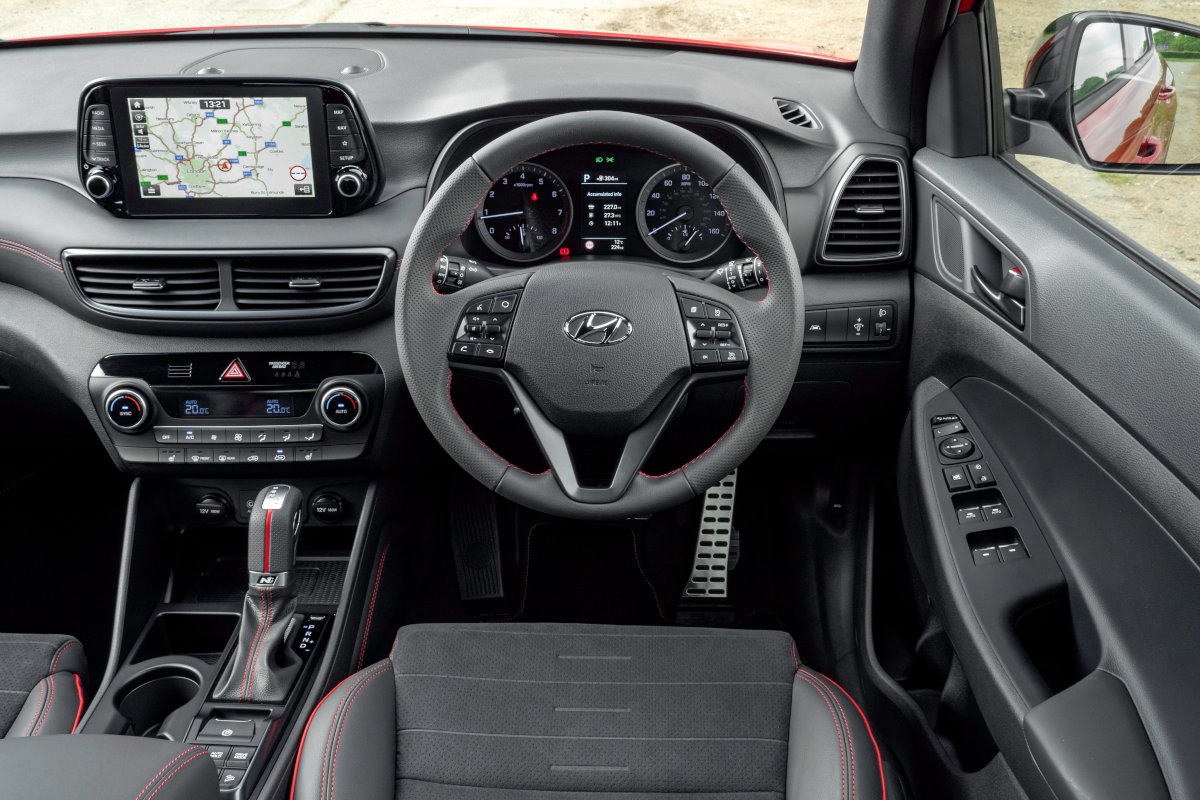
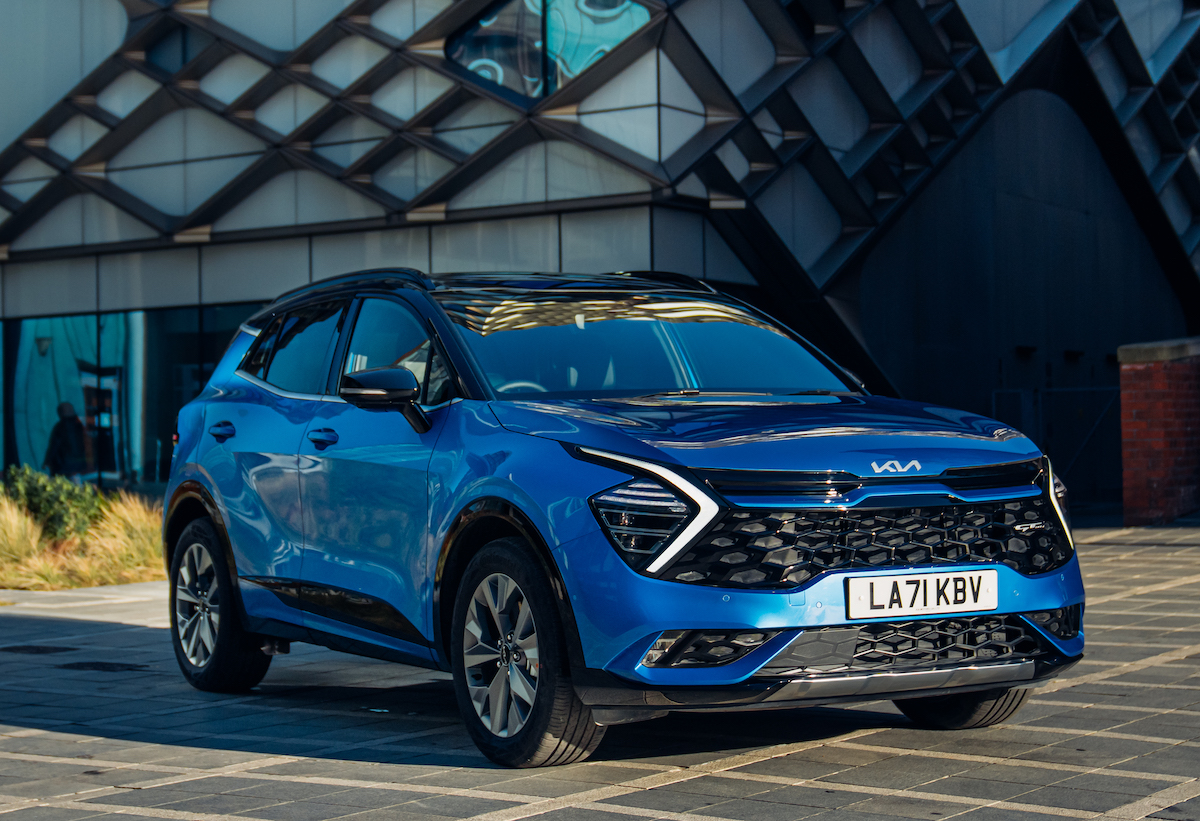
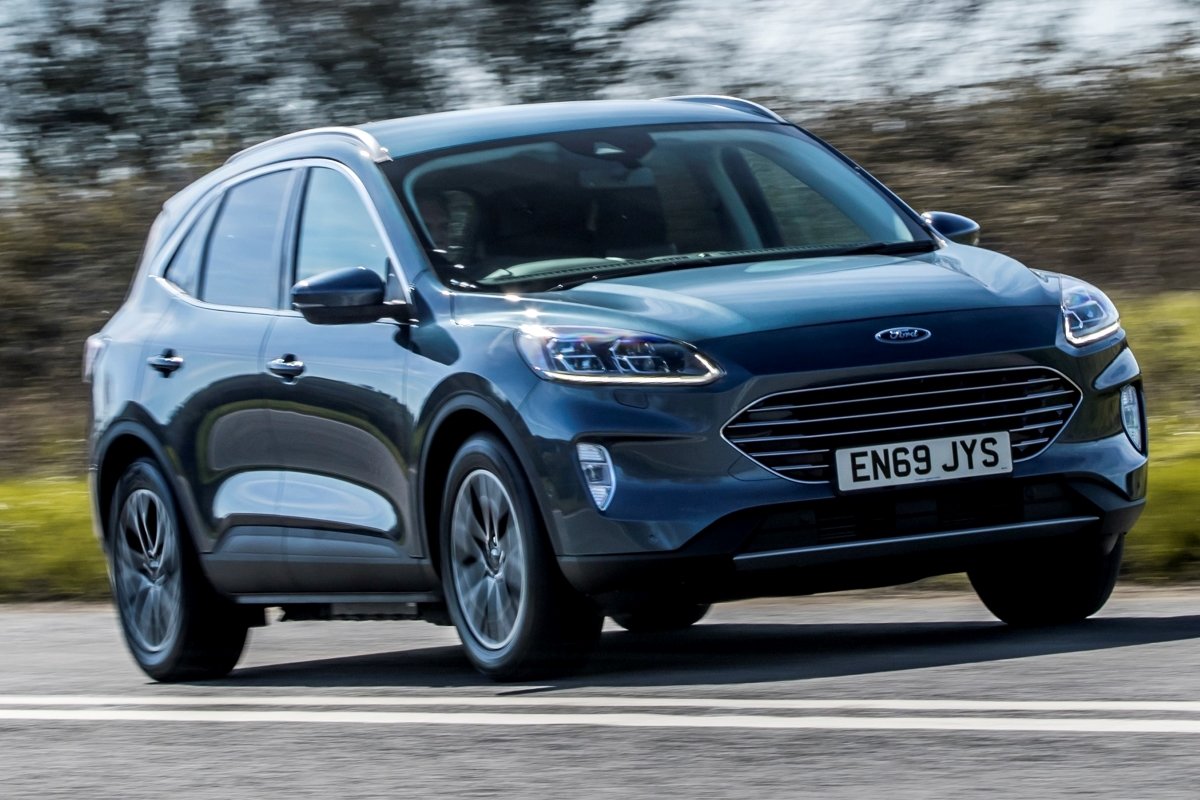
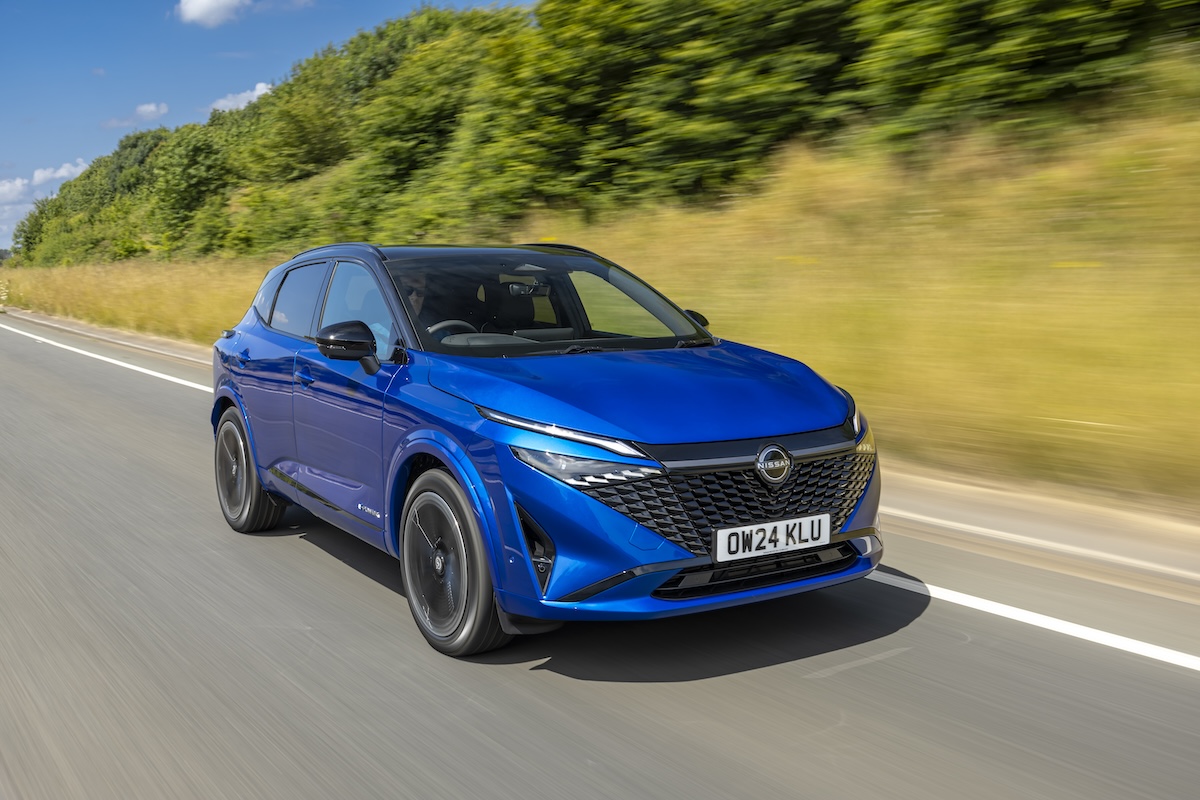
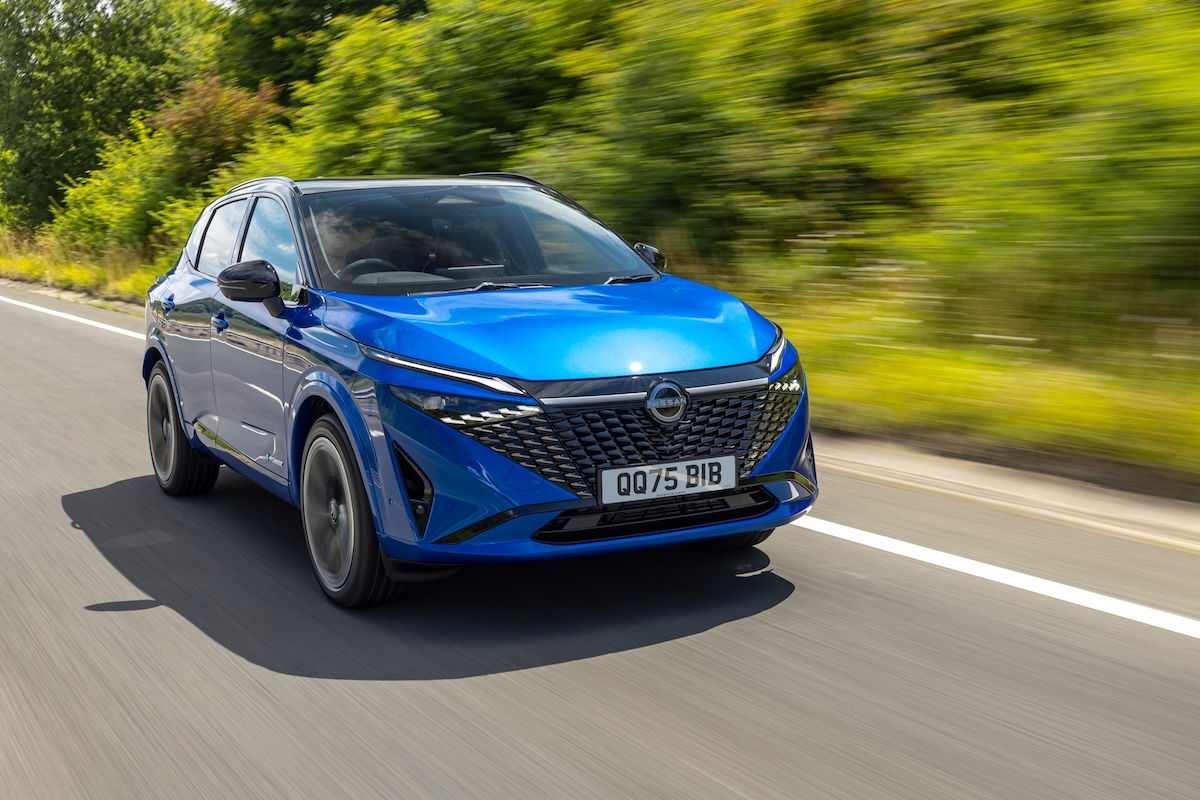
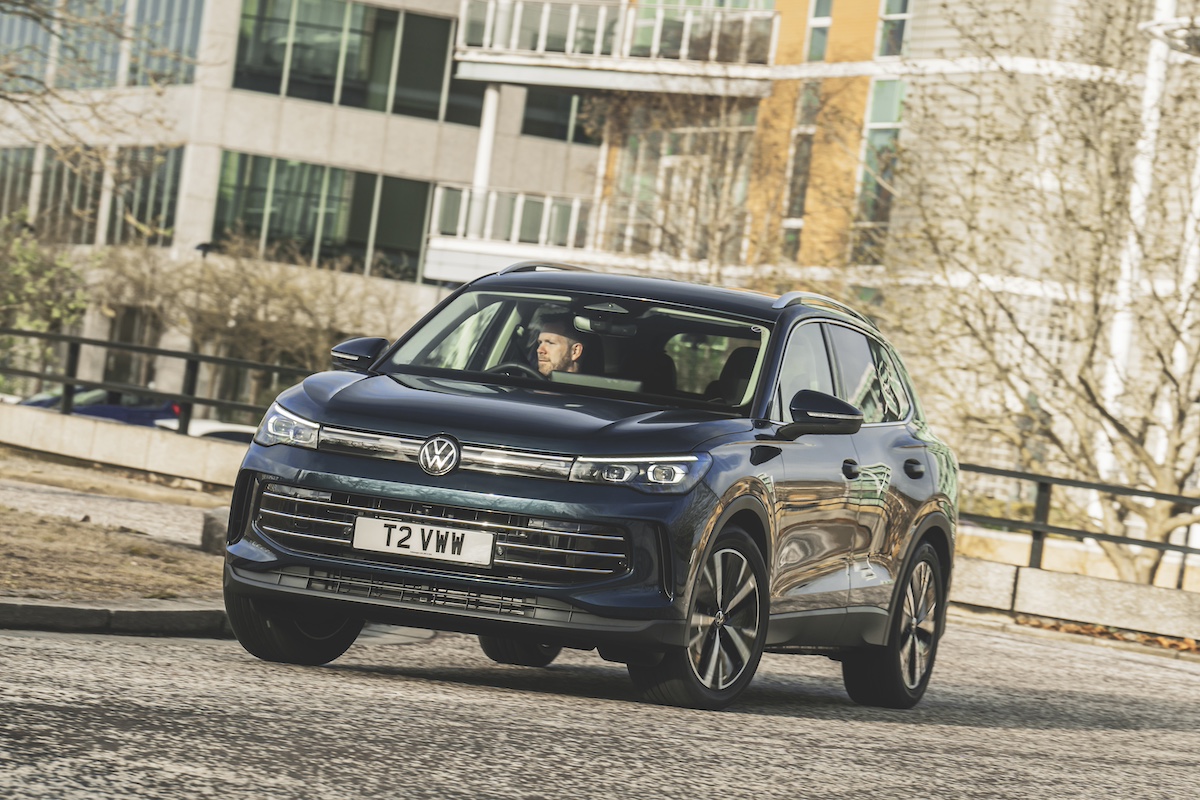
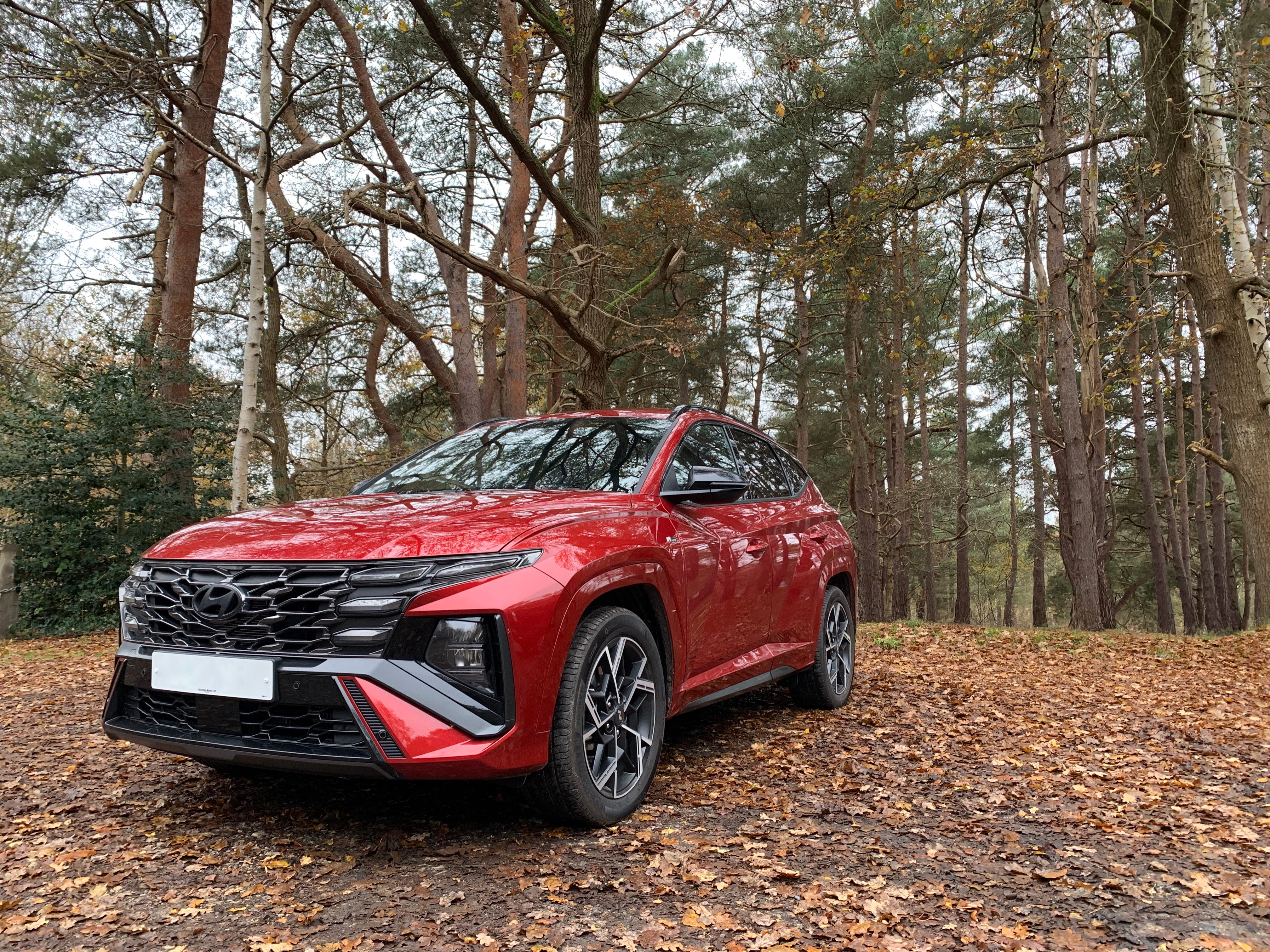
Clamber aboard – the Tucson sits slightly higher off the ground than rivals like the Nissan Qashqai, Volkswagen Tiguan, Ford Kuga and Seat Ateca – and you’re greeted by a dashboard that’s topped off by a responsive, easy-to-use touchscreen. The cabin is maturely styled, if a little dour, with a busy-looking steering wheel and monotone dark grey plastics everywhere, some of which feel a little on the cheap side. It feels robustly built, though, and if you opt for the racy-looking N-Line version, you get red contrast stitching, which adds some much-needed interest.
In the front seats, space isn’t quite as plentiful as in some of the best SUVs, but you’re unlikely to feel short-changed as there’s still more than enough room for both driver and passenger. In the back, meanwhile, there’s even more room, so nobody will feel cramped.
You can’t slide the rear seats fore and aft like you can in some rivals, and they only fold in the standard 60/40 configuration – the middle seat can’t fold independently – but the seat backs can be reclined to improve comfort, or placed in a more upright position to improve practicality and create more boot space.
Not that you’ll need it, mind you; while the Skoda Karoq offers more luggage space, the Tucson’s is still one of the larger boots compared with its rivals, and it’s a good, square shape, which means you can use all the space underneath the tailgate efficiently.

Driving
What's it like to drive?
The diesels were the most popular versions of the Tucson. Initially, there were four: 1.7-litre units with either 114bhp and a manual gearbox or 138bhp and a dual-clutch automatic, or a 2.0-litre with either 134bhp or 182bhp. The 134bhp version could be had with manual or automatic transmissions, and front-wheel drive or four-wheel drive. The 182bhp version, meanwhile, could be had with either transmission type, but were four-wheel-drive only. A little while later, the 1.7s were replaced by 1.6-litre units with very similar power outputs. A little while later still, these 1.6s were themselves upgraded to feature mild hybrid technology. Whichever of the diesel engines you choose, they’re a little more noisy than those in their rivals, and never really feel as strong as their power figures suggest.
Two petrol engines were offered throughout, both 1.6-litres, one with a turbo and one without. The 130bhp non-turbo engine, which came exclusively with a manual gearbox, feels rather strained unless you really thrash it. The 175bhp turbocharged version, which can be had with manual or automatic, gives gutsy mid-range performance that’s much more useful. It’s relatively smooth, too, and while it isn’t all that economical compared with rivals, it’s barely any less so than the non-turbo 1.6-litre.
Few Tucson buyers will ever drive their cars rapidly down a back road, and that’s probably for the best, because it’s a mixed bag if you try. Vague steering means you never really have full confidence in where the front end is going, but at least there’s plenty of grip, and the suspension keeps the body from leaning over too much if you enter a corner a bit too quickly, and as a result the Tucson feels safe and predictable, if not really much fun.
The payoff for that good body control is a ride that’s stiffer than would be ideal, which means the Tucson feels just a little too unsettled on the road for comfort, a characteristic that’s exacerbated if you choose the big 19-inch wheels with their bone-shakingly slim tyres. It calms down a little on the motorway, but there’s always a background fidgetiness that grows tiresome on longer journeys.
Tech and equipment
Technology, equipment and infotainment
All the Tucson's trim levels are pretty well equipped compared with rivals. Even the most basic S Connect version gets dual-zone climate control, Bluetooth, automatic lights, Apple CarPlay and Android Auto on the infotainment system, and a reversing camera. And while it doesn’t come with satnav, you do get smartphone integration so that you can use your favourite navigation app instead.
If you want integrated satnav however, you’ll have to upgrade to the SE Nav model, although this also brings a better choice of engines and smarter looks, with 17-inch alloy wheels as standard. N-Line adds sporty looks, while the top-flight Premium and Premium SE bring niceties like automatic wipers, front- and rear parking sensors, leather seats and – in the case of the Premium SE – adaptive cruise control.
Running costs
Hyundai Tucson running costs
The most economical Tucson of all in the real world is the 114bhp 1.6 CRDI diesel engine, which should be able to achieve somewhere in the region of 50mpg. However, you’ll have to put up with glacial performance, and given that the gutsier 134bhp version should be barely any less economical in the real world, we’d recommend that instead.
The most economical petrol model, meanwhile, is actually the turbocharged 175bhp version. With a manual gearbox, it should be no less economical in the real world than the 130bhp manual, and when equipped with the DCT automatic version, it should actually get a couple of mpg more; expect around 35mpg.
Tax on late-run diesel-powered Tucsons will cost you slightly less than on most of their rivals, because their mild hybrid tech means they’re classified as an alternative fuel vehicle by the Government. That means you’ll pay £10 less each year than the equivalent conventional diesel rival. Petrol-powered Tucsons will still have to pay the normal rate.
You’ll need to get your petrol Tucson serviced every year or 10,000 miles, whichever comes soonest, though for diesel models that interval changes to every year or 20,000 miles. Hyundai’s servicing costs are usually pretty good value compared with those of rival manufacturers, so maintenance should be pretty cheap, What's more, Tucsons over five years old qualify for Hyundai’s Essentials servicing programme, which offers very good deals on servicing for older cars. You can also opt for a service plan if you wish to, which will spread the cost of your annual servicing out over a series of monthly payments.
Rather than the older-style rubber timing belts, which have to be changed after a certain amount of time, all Tucsons are now fitted with metal timing chains, which should last the lifetime of the car.

Hyundai Tucson reliability
An impressive score of 96.6% landed this generation of the Tucson in fifth place out of the 21 SUVs of its size included in the 2019 What Car? Reliability Survey. Even in the latest version of the study, this generation of Tucson still ranks 8th out of the 15 cars in its class, despite its more advanced years. That same study placed Hyundai in 10th place (out of 31) in the list of the UK's most reliable manufacturers.
One of the biggest draws for buyers when this generation of the Tucson was sold as a new car was its generous five-year, unlimited-mileage warranty. The car is now sufficiently old that the warranty will no longer be valid, but the fact that Hyundai has the continued confidence in the reliability of its cars to invest in providing such generous cover is a really good sign for long-term reliability.


What owners say
"The Hyundai Tucson is well-regarded by owners for its comfortable ride, spacious interior, and reliability. Many appreciate its good driving experience and great fuel economy, along with the value it provides with various extras. However, some drivers wished for additional features like a sunroof and noted a limited selection of body colors. Overall, the Tucson is seen as a practical and economical choice for car shoppers."
Great value and the Ultimate is well equipped with everything that will ever be needed. Hyundai quality has developed and now competes alongside other more costly brands. The 5 year warranty is a big plus. Looking forward to some economical and practical motoring in the Tucson
22 January 2025Good car for local errands, but consume fuel in motorway journeys since it doesn't have Turbo,
22 December 2025Great value for this car, it drives smoothly so far so good it’s still in perfect condition.good features on it inside out.
26 May 2025What owners say
Great value and the Ultimate is well equipped with everything that will ever be needed. Hyundai quality has developed and now competes alongside other more costly brands. The 5 year warranty is a big plus. Looking forward to some economical and practical motoring in the Tucson
22 January 2025Good car for local errands, but consume fuel in motorway journeys since it doesn't have Turbo,
22 December 2025Great value for this car, it drives smoothly so far so good it’s still in perfect condition.good features on it inside out.
26 May 2025If you get the Ultima spec it's loaded and worth getting, only just started using but all good so far
10 June 2025Really enjoyed the test drive, automatic hybrid very smooth comfortable & spacious boot area ideal for golfers🏌🏾♂️ hybrid N line was my preferred model, they are bigger than the Qashqai similar size to Ford Kuga.
4 May 2025Electric boot is not available, I wish it was part nevertheless it ok
27 January 2026This car is good value, drives well, and I personally like the seats, as I find them really comfortable.
6 April 2021Purchased car based on good, accurate information posted. Would recommend purchase via this site
18 April 2021Comfortable, reliable, good driving experience, good fuel usage, loads of extras, not expensive to run, an all round good car.
3 September 2022Great car with lots of advanced features And Great value only missing sunroof
11 September 2024Three things to know
- Later diesel versions of the Hyundai Tucson are mild hybrids, which means they use a small additional battery and a clever starter motor that can harness the energy lost while the car is decelerating, and use it to power the car both when it’s stationary and as you move off again. This clever system means diesel Tucsons are pretty efficient, although they aren’t the smoothest to drive, and some rival models offer similar or better fuel consumption without the added complication of mild hybrid gubbins. If you want a full hybrid instead, you'll have to look at the Toyota RAV4 or Honda CR-V.
- The 182bhp diesel might sound like a tempting option, with plenty of punch on offer and four-wheel drive as standard, but be warned that that the four-wheel drive system saps fuel, resulting in considerably lower fuel economy than in other models. This version is, unfortunately, the only four-wheel-drive Tucson, so if that’s what you want, you’ll have to make do, but if you can get by with a front-wheel-drive version, you’ll be much better off.
- Safety is of critical importance in a family car, and the good news is that this generation of the Tucson was awarded the full five-star rating in Euro NCAP crash tests. Do be aware, though, that Euro NCAP's testing standards get more stringent each year, and this car was tested back in 2015, so it won't be as safe as a five-star car of today. Automatic emergency braking wasn't standard, for example, and today, that's pretty much a must for a five-star score.
Which one to buy
- If you’re a private buyer: We reckon the 1.6 T-GDI SE Nav is the best of the lot. The turbo petrol engine is quite thirsty, but barely any more so than the non-turbo petrol, and it’s smoother and cheaper to buy than the diesel models. Meanwhile, this SE Nav trim gets all the equipment you could need, with small-ish wheels that provide reasonable ride quality.
- If you’re planning to do lots of miles each year: You'll be better off with the 1.6 CRDi 136 SE Nav instead. It’s quite a bit more expensive to buy, but if you’re doing a high enough mileage, the fuel savings you’ll make should mitigate that extra cost. It’s at least worth doing some sums to work it out.
- If you’re planning to tow a caravan: The 2.0 CRDi Premium is the best model for the job. Its high towing capacity and standard four-wheel drive should give it the gumption to deal with all but the heaviest of rigs, but as we’ve already mentioned, it’s particularly thirsty, so the rest of the time you’ll pay the price at the pumps.


Pricing trends
Starting RRP
£17,243
Current avg. market price
£9,628
Trending down by 10.9% this month
May 2026 - October 2026
More on the mk3 Hyundai Tucson (2015 - 2020)
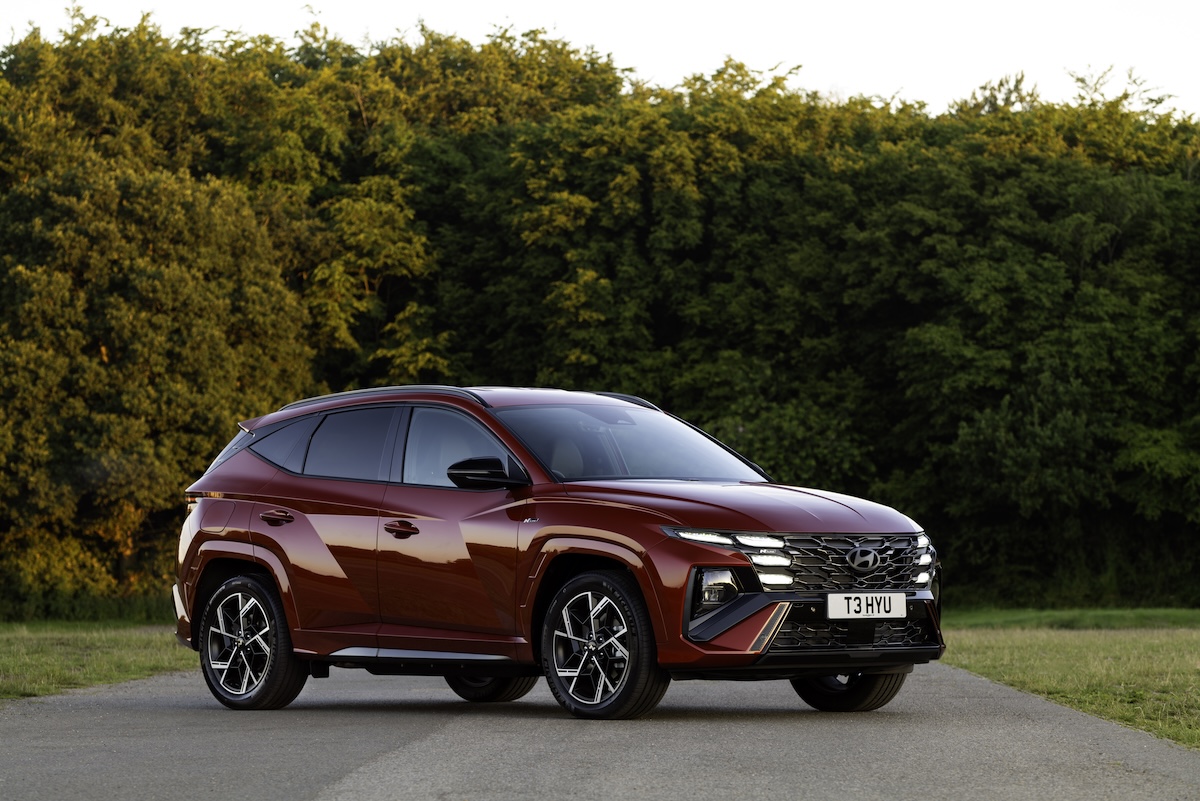



Compare 2020 Hyundai Tucson Trims
The 2020 Hyundai Tucson offers a range of trims from budget-friendly options to more feature-rich models, ensuring there's something for every shopper's needs.
- Starting at £10,494
- Most Popular: 1.6 Gdi Se Nav 5dr 2wd
Trim Overview
Prices updated weekly from CarGurus listings.
| 1.6 Gdi S Connect 5dr 2wd | 1.6 Gdi Se Nav 5dr 2wd (Most Popular) | 1.6 Tgdi 177 N Line 5dr 2wd | 1.6 Gdi Premium 5dr 2wd | 1.6 Crdi 48v Mhd Se Nav 5dr 2wd | 1.6 Tgdi 177 Se Nav 5dr 2wd Dct | 1.6 Tgdi Plug-in Hybrid Premium 5dr 4wd Auto | 1.6 Tgdi Plug-in Hybrid Ultimate 5dr 4wd Auto | |
|---|---|---|---|---|---|---|---|---|
| Starting MSRP | £21,641 | £23,141 | £25,576 | £25,641 | £26,221 | £26,661 | £41,150 | £43,850 |
| Avg. Market Price | £10,574 | £10,527 | £13,513 | £14,200 | £10,494 | £11,329 | £11,947 | £11,947 |
| Positioning | Best value | Standard | Standard | Standard | Standard | Standard | Sport + AWD | Trail-ready |
| Standout Features | Android Auto, Bluetooth, Backup Camera | Navigation System, Backup Camera, Cruise Control | Navigation System, Heated Seats, Keyless Entry | Backup Camera, Heated Seats, Navigation System | Navigation System, Bluetooth, Parking Assist | Navigation System, Apple CarPlay, Backup Camera | Heated Seats, Adaptive Cruise Control, Navigation System | Panoramic Roof, Heated Seats, Navigation System |
| Drivetrain | FWD | FWD | FWD | FWD | FWD | FWD | AWD | AWD |
| Listings Available | 25 | 219 | 24 | 21 | 25 | 33 | 41 | 87 |
Quick Compare Table
Listing prices sourced from CarGurus — updated weekly. OEM specs from manufacturer data.
| 1.6 Gdi S Connect 5dr 2wd | 1.6 Gdi Se Nav 5dr 2wd | 1.6 Tgdi 177 N Line 5dr 2wd | 1.6 Gdi Premium 5dr 2wd | 1.6 Crdi 48v Mhd Se Nav 5dr 2wd | 1.6 Tgdi 177 Se Nav 5dr 2wd Dct | 1.6 Tgdi Plug-in Hybrid Premium 5dr 4wd Auto | 1.6 Tgdi Plug-in Hybrid Ultimate 5dr 4wd Auto | |
|---|---|---|---|---|---|---|---|---|
| AI Summary | Best value option for budget-conscious shoppers | Most popular choice with essential features | Sporty trim with added horsepower | Premium features for comfort seekers | Best fuel economy in the lineup | Solid performance with tech features | Sporty hybrid with AWD capability | Top-tier hybrid with luxury features |
| Avg. Market Price | £10,574 | £10,527 | £13,513 | £14,200 | £10,494 | £11,329 | £11,947 | £11,947 |
| MSRP | £21,641 | £23,141 | £25,576 | £25,641 | £26,221 | £26,661 | £41,150 | £43,850 |
| Engine | 1591.0cc 132 hp I4 | 1591.0cc 132 hp I4 | 1591.0cc 177 hp I4 | 1591.0cc 132 hp I4 | 1598.0cc 115 hp I4 | 1591.0cc 177 hp I4 | 1.6l I4 Petrol Parallel Phev | 1.6l I4 Petrol Parallel Phev |
| Drivetrain | FWD | FWD | FWD | FWD | FWD | FWD | AWD | AWD |
| MPG/MPGe (City/Hwy) | 34.4/44.1 | 34.4/44.1 | 29.4/44.8 | 34.4/44.1 | 61.4/67.3 | 33.2/45.6 | — | — |
| Android Auto | ✓ | ✓ | ✓ | ✓ | ✓ | ✓ | ✓ | ✓ |
| Apple CarPlay | ✓ | ✓ | ✓ | ✓ | ✓ | ✓ | ✓ | ✓ |
| Bluetooth | ✓ | ✓ | ✓ | ✓ | ✓ | ✓ | ✓ | ✓ |
| Backup Camera | ✓ | ✓ | ✓ | ✓ | ✓ | ✓ | ✓ | — |
| DAB Radio | ✓ | ✓ | ✓ | ✓ | ✓ | ✓ | — | ✓ |
| Climate control | ✓ | ✓ | — | ✓ | ✓ | ✓ | — | — |
| AUX/USB connectivity | ✓ | ✓ | ✓ | — | ✓ | ✓ | — | — |
| Privacy glass/Tinted windows | ✓ | ✓ | — | ✓ | ✓ | ✓ | ✓ | ✓ |
| Air Conditioning | ✓ | — | — | — | — | ✓ | — | — |
| isofix | ✓ | — | — | — | — | — | — | — |
| Parking Assist | ✓ | ✓ | ✓ | ✓ | ✓ | ✓ | ✓ | ✓ |
| Navigation System | — | ✓ | ✓ | ✓ | ✓ | ✓ | ✓ | ✓ |
| Cruise Control | — | ✓ | ✓ | ✓ | ✓ | — | ✓ | ✓ |
| Heated Seats | — | — | ✓ | ✓ | — | — | ✓ | ✓ |
| Keyless Entry/Start system | — | — | ✓ | — | — | — | — | — |
| Heated Steering Wheel | — | — | — | — | — | — | ✓ | — |
| Adaptive Cruise Control | — | — | — | — | — | — | ✓ | — |
| Active Listings | 25 | 219 | 24 | 21 | 25 | 33 | 41 | 87 |
Missing data displayed as "—".
Trim Deep Dives
1.6 Gdi S Connect 5dr 2wd — "Who It's For"
The 1.6 Gdi S Connect is the pick for shoppers who want essential features at a budget-friendly price without paying for extras.
- Avg. market price: £10,574 (updated weekly)
- MPG/MPGe: 34.4 city / 44.1 hwy
- Inventory: 25 listings — lower availability; may limit negotiating room
- View 1.6 Gdi S Connect listings
1.6 Gdi Se Nav 5dr 2wd — "Who It's For"
The 1.6 Gdi Se Nav is the pick for shoppers who want a well-rounded SUV with navigation and safety features without stepping up to a higher price point.
- Avg. market price: £10,527 (updated weekly)
- MPG/MPGe: 34.4 city / 44.1 hwy
- Inventory: 219 listings
- View 1.6 Gdi Se Nav listings
1.6 Tgdi 177 N Line 5dr 2wd — "Who It's For"
The 1.6 Tgdi 177 N Line is the pick for shoppers who want a sportier driving experience with more power without sacrificing practicality.
- Avg. market price: £13,513 (updated weekly)
- MPG/MPGe: 29.4 city / 44.8 hwy
- Inventory: 24 listings — lower availability; may limit negotiating room
- View 1.6 Tgdi 177 N Line listings
1.6 Gdi Premium 5dr 2wd — "Who It's For"
The 1.6 Gdi Premium is the pick for shoppers who want added comfort and tech features without going for the highest trim level.
- Avg. market price: £14,200 (updated weekly)
- MPG/MPGe: 34.4 city / 44.1 hwy
- Inventory: 21 listings — lower availability; may limit negotiating room
- View 1.6 Gdi Premium listings
1.6 Crdi 48v Mhd Se Nav 5dr 2wd — "Who It's For"
The 1.6 Crdi 48v Mhd Se Nav is the pick for shoppers who prioritize fuel efficiency and want a reliable SUV without a hefty price tag.
- Avg. market price: £10,494 (updated weekly)
- MPG/MPGe: 61.4 city / 67.3 hwy
- Inventory: 25 listings — lower availability; may limit negotiating room
- View 1.6 Crdi 48v Mhd Se Nav listings
1.6 Tgdi 177 Se Nav 5dr 2wd Dct — "Who It's For"
The 1.6 Tgdi 177 Se Nav is the pick for shoppers who want a blend of performance and technology features without going for the top-tier options.
- Avg. market price: £11,329 (updated weekly)
- MPG/MPGe: 33.2 city / 45.6 hwy
- Inventory: 33 listings — lower availability; may limit negotiating room
- View 1.6 Tgdi 177 Se Nav listings
1.6 Tgdi Plug-in Hybrid Premium 5dr 4wd Auto — "Who It's For"
The 1.6 Tgdi Plug-in Hybrid Premium is the pick for shoppers who want a sporty hybrid with all-wheel drive capability for varied driving conditions.
- Avg. market price: £11,947 (updated weekly)
- Inventory: 41 listings — lower availability; may limit negotiating room
- View 1.6 Tgdi Plug-in Hybrid Premium listings
1.6 Tgdi Plug-in Hybrid Ultimate 5dr 4wd Auto — "Who It's For"
The 1.6 Tgdi Plug-in Hybrid Ultimate is the pick for shoppers who want the most luxurious features and advanced technology in a hybrid SUV.
- Avg. market price: £11,947 (updated weekly)
- Inventory: 87 listings — lower availability; may limit negotiating room
- View 1.6 Tgdi Plug-in Hybrid Ultimate listings
Trim Recommendations
Most Popular — 1.6 Gdi Se Nav 5dr 2wd
With 219 active listings, the 1.6 Gdi Se Nav is the clear volume leader in the lineup.
Browse 1.6 Gdi Se Nav listings
Best Budget Option — 1.6 Crdi 48v Mhd Se Nav 5dr 2wd
At £10,494 avg market price — below the lineup median of £11,638 — it's the most accessible entry point.
Browse 1.6 Crdi 48v Mhd Se Nav listings
These recommendations are based on CarGurus' proprietary market data from October 22, 2026, CarGurus experts' opinions, and generative AI.

