Mitsubishi L200 Review (2015-2019)
Mitsubishi L200 cars for sale
3.0
Expert review
Pros
Affordable running costs
Lots of toys if you choose Warrior or Barbarian spec
Strong 2.4-litre diesel engine
Cons
Some rivals have bigger load beds
Needs more frequent servicing than some competitors
A Ford Ranger is better to drive
The CarGurus verdict
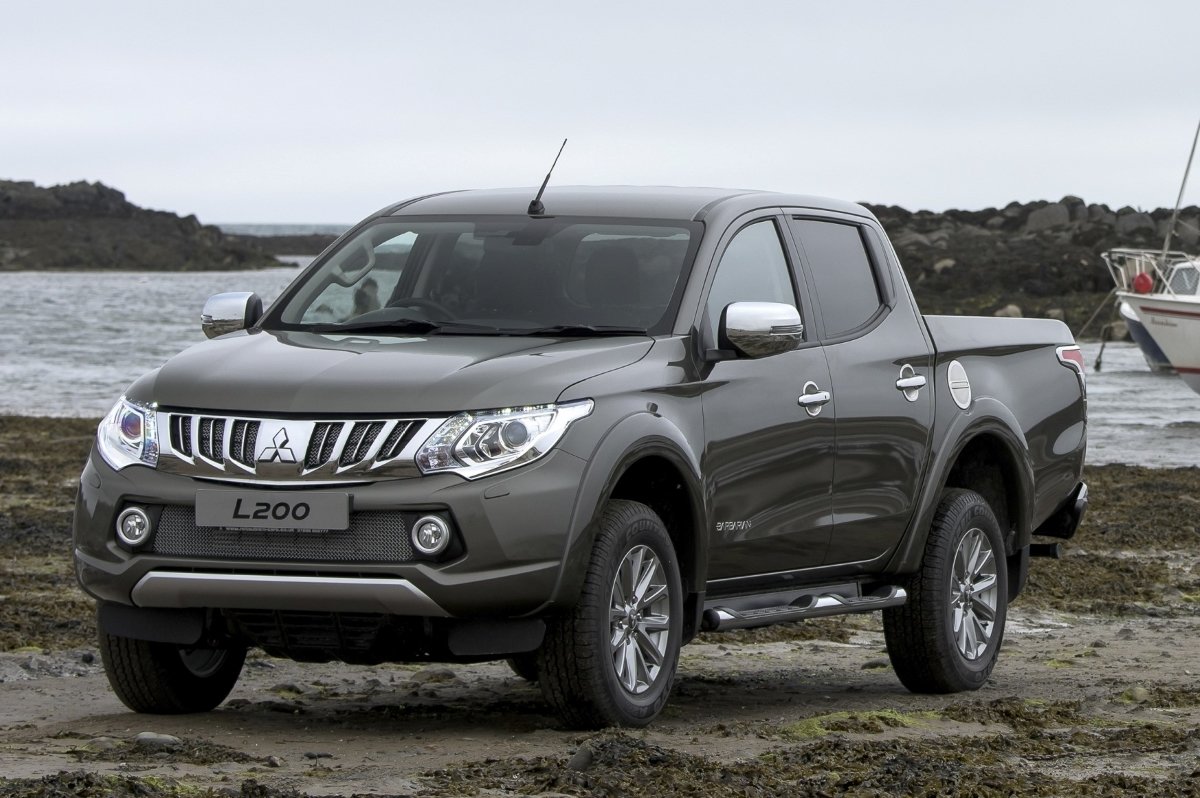
You can buy bigger pickups, and some rivals have roomier load beds. Even so, the L200 makes a smart buy if you are looking for a pickup which combines affordable running costs with practicality and a high level of standard equipment. Most owners will choose a double cab for its dual-purpose abilities. Although not as good to drive as a conventional SUV, for a pickup the L200 Series 5 double cab drives well. The engine has enough poke to cope with heavy loads and towing, but it's fuel-efficient with it.
Go for a high-spec model like the Warrior or Barbarian, and you'll have lots of toys as standard. What's more, there's more safety kit than some rivals provide, which is a big consideration if the L200 is to be your family car as well as a work vehicle. The latest Ford Ranger is quicker and better to drive than the L200, but the Mitsubishi can still hold its own against newer pickups.
The Mitsubishi L200 is one of the cornerstones of the UK’s pickup market: a bit like the Ford Focus or the Volkswagen Golf is to family hatchbacks. And with good reason. It’s well-equipped, cheap to run and decent to drive.
With each generation, pickup manufacturers strive to make these tough vehicles more refined and car-like without compromising their practicality. When the L200 Series 5 launched in 2015, Mitsubishi was at the forefront of pushing pickups to be more pleasant to drive, safer and more fuel efficient.
From the outside, the fifth generation of the L200 looked like an evolution of the Series 4. But beneath the chunky, bulging bodywork the Series 5 had a new engine, new suspension, new steering and new transmissions.
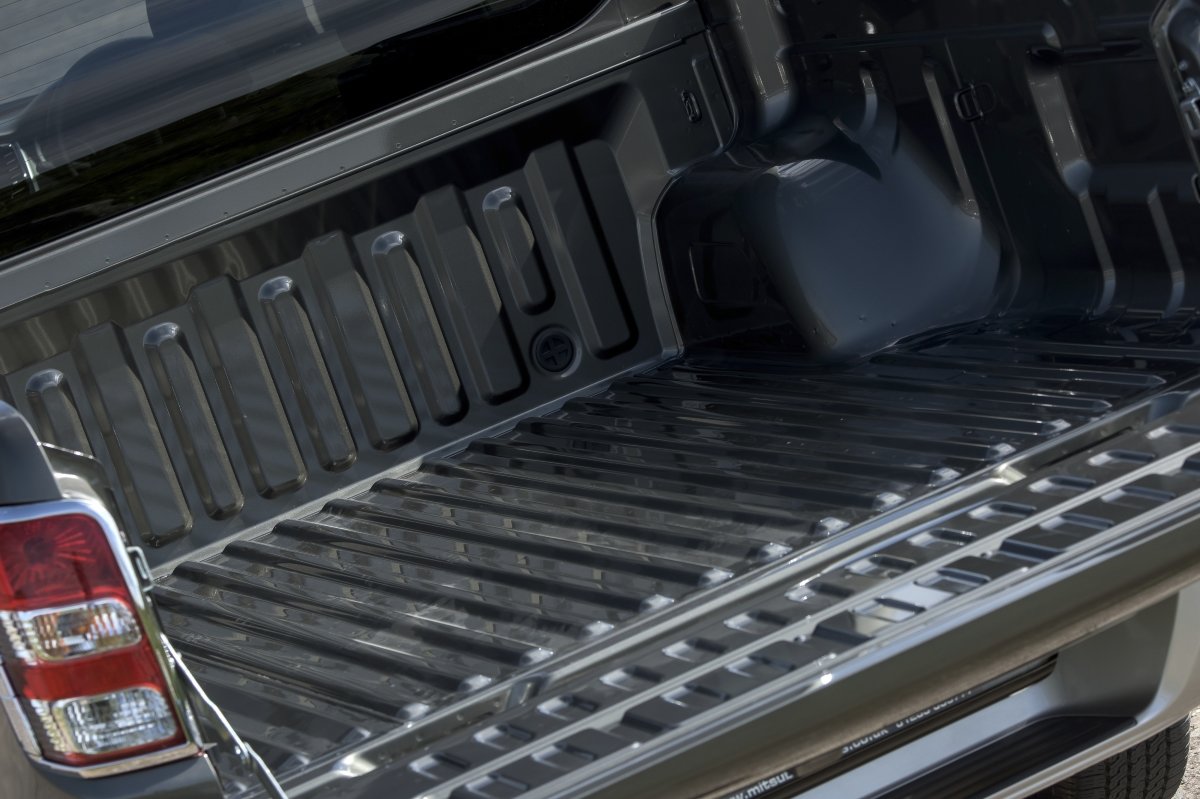
As a workhorse, the L200 fares well, but not as well as some. Early versions of the Series 5 had a payload of just over a tonne and a 3.1-tonne towing limit, both of which lagged behind the Ford Ranger of the time, for instance. However, an update in 2018 brought additional chassis reinforcement and raised the towing limit to 3.5 tonnes.
Initially, the L200 Series 5 was only sold as a double cab, with four doors and a second row of seats for workmates or family members. From 2016, Mitsubishi introduced single cab and club cab variants, trading space for people for a larger load bed. These are the purest workhorses in the range, sacrificing dual-purpose appeal for greater practicality. The single cab in particular is a pure commercial vehicle rather than an adventurous-looking alternative to a regular SUV.
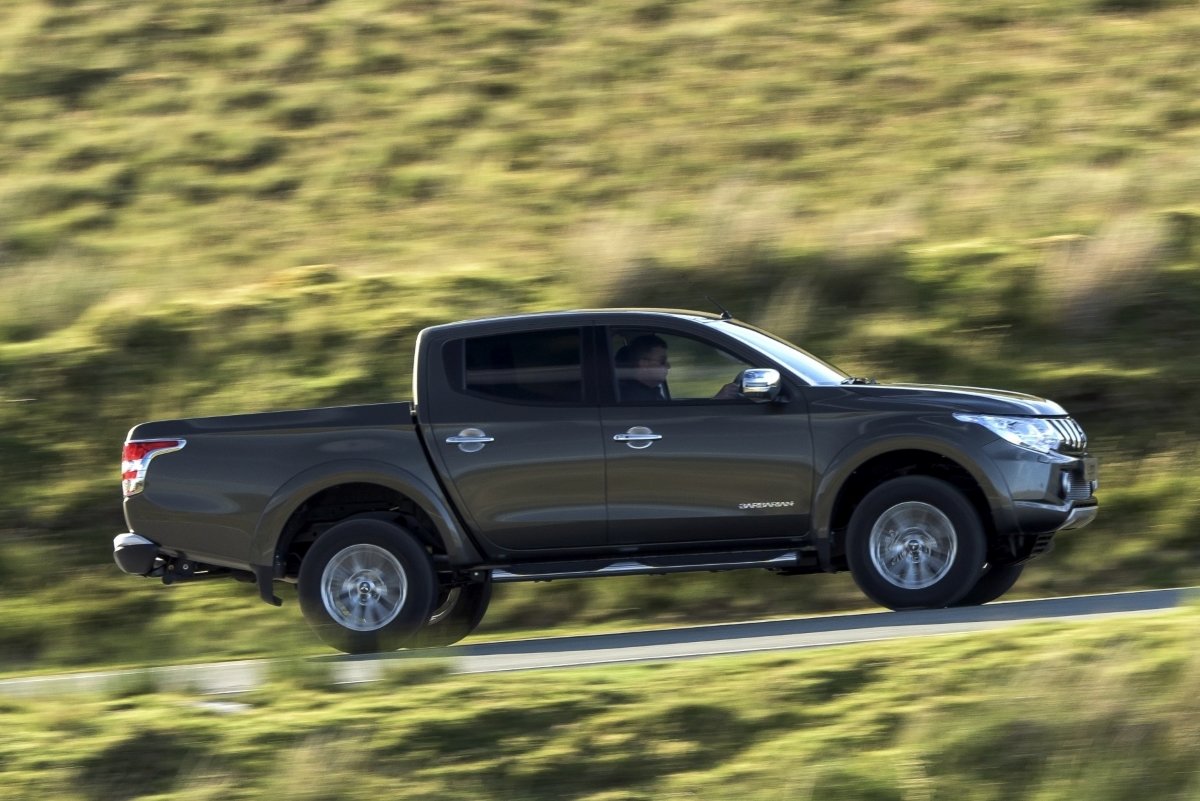
L200s are becoming increasingly popular with outdoor enthusiasts who might previously have bought a family SUV. By those standards, the pickup feels predictably agricultural. The ride is quite bouncy, there’s a fair amount of body roll, and the steering isn’t especially sharp.
Within its class, however, the L200 is respectable, although not outstanding, to drive. It helps that new suspension for the Series 5 brought improved ride comfort without compromising the L200's payload, although it's still rather bouncy without a decent weight in the back.
The 2.4-litre MIVEC engine in particular was a big step forward. At the time, Mitsubishi claimed this 2.4 diesel was significantly more economical than the engines in any rival pickup, although the competition soon caught up. It was offered in two states of tune, with either 151- or 178bhp. We'd go for the higher powered engine, as it has more mid-range pull as well as top-end power, which makes it better at pulling heavy loads.
Mitsubishi matched the diesel engine to a choice of six-speed manual or a five-speed automatic gearbox, all with four-wheel drive. The more basic 4Life model had the Easy Select 4x4 system. Step up from the entry-level vehicle to the Warrior, Titan or Barbarian and the vehicle came with the more sophisticated Super Select 4x4 system. This makes it one of the more capable pickups when it comes to off-road use, so it’s well worth bearing in mind if you plan to head off the beaten track.
Other improvements included a much reduced turning circle, down to 11.8 metres. This helped the L200 feel much less cumbersome to manoeuvre. It also helps that the L200 is relatively compact for a pickup, and nothing like as intimidatingly large as the Volkswagen Amarok.
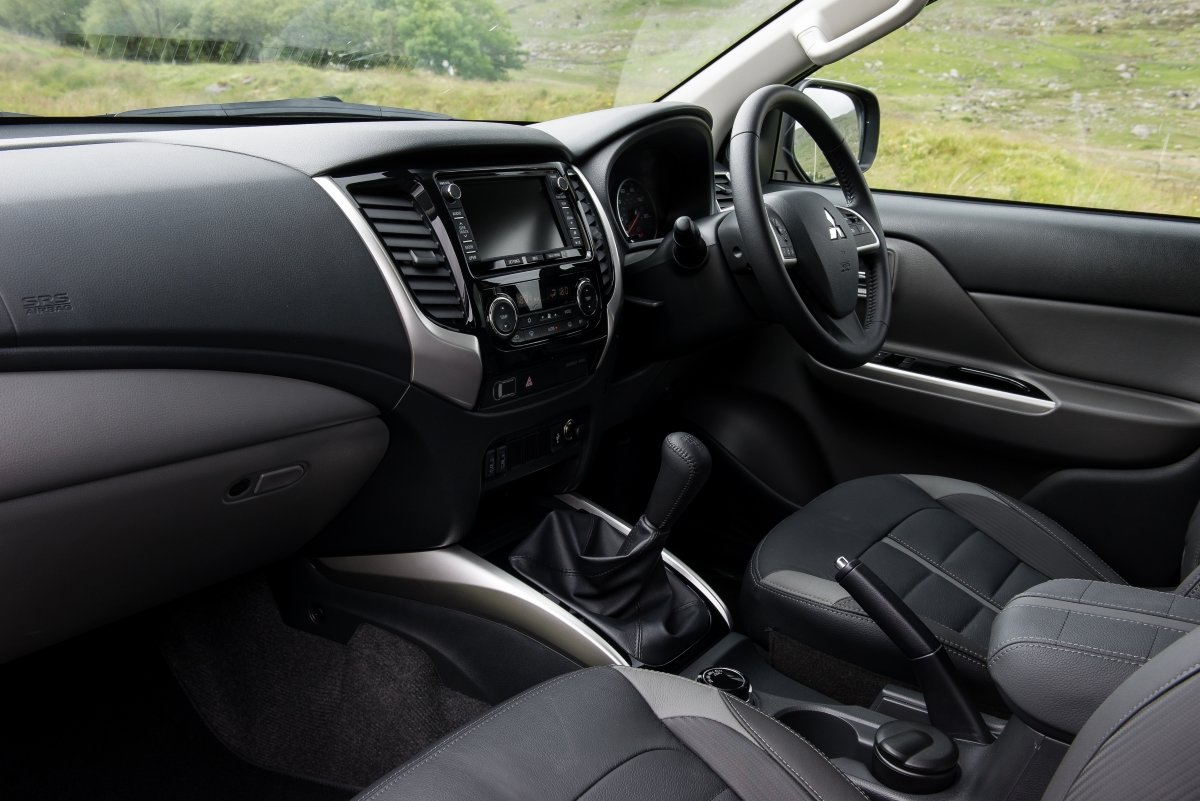
The L200 gets the basics right, with a 6-way adjustable memory foam-padded driver’s seat, good visibility, and large, logically laid out buttons that can be use even if you’re wearing work gloves.
There’s a good amount of standard kit too, with cruise control, air-conditioning and steering wheel mounted stereo controls on even the most basic models. Step up to the mid-spec Titan and you get dual zone (front and rear) air-conditioning plus DAB radio, while the range-topping Warrior adds leather upholstery, satellite navigation, touchscreen infotainment, Bluetooth connectivity, and mood lighting. That said, if you have the budget for a newer L200, the Barbarian X version of the later L200 Series 6 has even more toys.
Affordable running costs are one of the L200's strengths. It was a standard-setter when it arrived in 2015, although newer rivals now run it close or beat it.
The L200's modest running expenses are largely down to the efficiency of the 2.4-litre MIVEC diesel engine. In 151bhp form with a manual gearbox, it achieves 44.1mpg and emits a modest 169g/km of carbon dioxide.
The more powerful 178bhp engine has slightly worse fuel economy, returning 42.8mpg and emitting 173g/km of CO2. However, choosing the five-speed auto rather than the six-speed manual does make the L200 Series 5 more thirsty, with an official combined figure of 39.2mpg and CO2 emissions of 189g/km.
As with any vehicle, real-world figures are unlikely to match the official mpg. However, returns in the mid-30s should be possible. Expect that to drop to the low 20s if towing a heavy trailer.
To put those numbers in context, a Nissan Navara achieves 44.9mpg with a manual gearbox and 41mpg with an auto. So, it's more frugal than the L200, but the difference isn't great.
Insurance costs for the L200 Series 5 are also reasonable. The cheapest version if the 4Life single cab, sitting in group 41E.
Servicing is needed every 12,500 miles or 12 months, whichever comes first. This puts the L200 at a disadvantage compared with some rivals. The Nissan Navara, for example, only needs to be serviced every 25,000 miles or two years. A Ford Ranger also requires a service every two years or 18,000/20,000 miles (depending on the model).
Mitsubishi offers what it calls Value Servicing for vehicles outside of the warranty period, in a bid to keep franchised servicing bills competitive with the prices charged by independent garages.
Most versions of the L200 Series 5 were supplied with 245/65 R17 tyres. Budget on around £100 per corner for quality replacements, although high-end all-terrain tyres could be as much as £150 each.
The L200 Series 5 was originally sold with a five-year/62,500-mile warranty, and if you’re buying a late example you might find one with some of that remaining. Fortunately, the L200 has a decent reliability record to give you peace of mind beyond that. As a brand, Mitsubishi generally performs respectably in reliability surveys, and for the most part the L200 makes a tough and durable workhorse.
There are a few niggles to watch out for. Some examples have a fault with the door latching mechanism which led to a recall. The affected vehicles were built between December 2015 and June 2016. This should have been fixed by now, but if you are unsure check with a Mitsubishi dealer or look up the recall checker on the gov.uk website.
Rivets on the sidesteps of some L200s built between April 2015 and April 2016 could corrode, making the sidestep insecure. Again, this problem should have been addressed by now but check if you are in any doubt.
Some owners complain that the leather steering wheel shows signs of wear, and that the dashboard plastics are too easy to mark. However, there are few serious problems with the L200's mechanical components, although it's worth checking the tyres and the underside of the vehicle for signs of damage sustained off-road.
- Most versions of the Mitsubishi L200 pickup come with the Super Select 4x4 system. This allows the driver to switch between 2WD and 4WD modes at speeds of up to 62mph. There are two additional modes for serious off-roading. In 4HLc the centre differential is locked and power distributed evenly between the front and rear wheels. Engaging 4LLc switches to lower gear ratios to handle really steep slopes. To shift in or out of 4LLc the L200 must be stationary. The Super Select system helps make the L200 very capable off-road, without compromising the drive on tarmac.
- Every version of the L200 Series 5 can haul a payload of over a tonne, thanks in part to the heavy-duty leafspring rear suspension. Models with a manual gearbox can shift a payload of 1,045kg, whereas automatics up that to 1,050kg. There's no change in the payload for versions with the higher powered 178bhp version of the MIVEC engine. If you need to carry heavier loads and have a trailer to pull, the L200 has a generous towing capacity of 3,100kg, and Trailer Stability Assist is standard to help keep a heavily loaded trailer under control. From 2018, the maximum towing limit increased to 3,500kg, but only for three-axle trailers.
- Safety equipment is more generous in the Mitsubishi L200 Series 5 than in many pickups. Even the entry-level 4Life model has driver, passenger, side, curtain and driver's knee airbags. Driver aids include Mitsubishi Active Stability and Traction Control with Brake Assist, along with Hill Start Assist to stop the vehicle from rolling backwards when starting on a slope. Titan spec and above add Lane Departure Warning. All double-cab L200 pickups have ISOFIX child seat mounting points for the rear seats.
- If you want the biggest load bed: Choose the single cab. Doing without the second row of seats makes the load bed much longer, measuring 2,265mm, up from 1,520mm for the double cab. Although the width and height of the load space are unchanged, that's still a very useful increase in space. It also has a slightly higher maximum payload than other models – 1,060kg. Just keep in mind that the single cab has only been offered in the entry-level 4Life specification. If two seats are enough, the single cab is the most able commercial vehicle in the L200 range.
- If you sometimes carry passengers: Go for the crew cab. This is a halfway house between the single cab and double cab, with occasional flip-down seats, accessed through small rear-hinged doors. The seats are cramped though, and in practice many owners will use this space for extra storage. The crew cab has a longer load bed than the double cab, at 1,850mm. Like the single cab, all crew cab vehicles are in 4Life spec.
- If you're after the most fuel-efficient model: Choose the lower-powered 2.4 diesel manual in 4Life spec. There's only a slight difference between the 4Life model and the more 'lifestyle' oriented high-spec double cabs, but with an official combined fuel economy of 44.1mpg this is the most fuel-efficient version of the L200 Series 5. Other models have larger alloy wheels and use the more powerful version of the MIVEC engine, so consume a little bit more fuel.
- If you want maximum bling: Choose the L200 Barbarian. The top-spec model sits on 17-inch alloys and has styling tweaks to give it a more purposeful look than the more workmanlike models.


