Seat Ateca Review (2016-present))
Seat Ateca cars for sale
4.0
Expert review
Pros
Well equipped
Fun to drive
Spacious for people and luggage
Cons
Warranty protection not as long as for Kia or Hyundai
Base 1.0-litre petrol engine can be a bit breathless
Ride firmer than with some rivals

The CarGurus verdict
Stylish inside and out, fun to drive, roomy, economical, relatively reliable and cheap to run, and with the bonus of a five-star EuroNCAP safety rating, the Ateca has justifiably been a very successful car for Seat. As a consequence of its popularity, resale values remain high, so you may have to do some diligent hunting to find a bargain. But it’ll be well worth the effort to find yourself one of the best mid-size SUVs on the market. It's so good, in fact, that it was named overall Car of the Year in the 2019 CarGurus Best Used Car Awards.
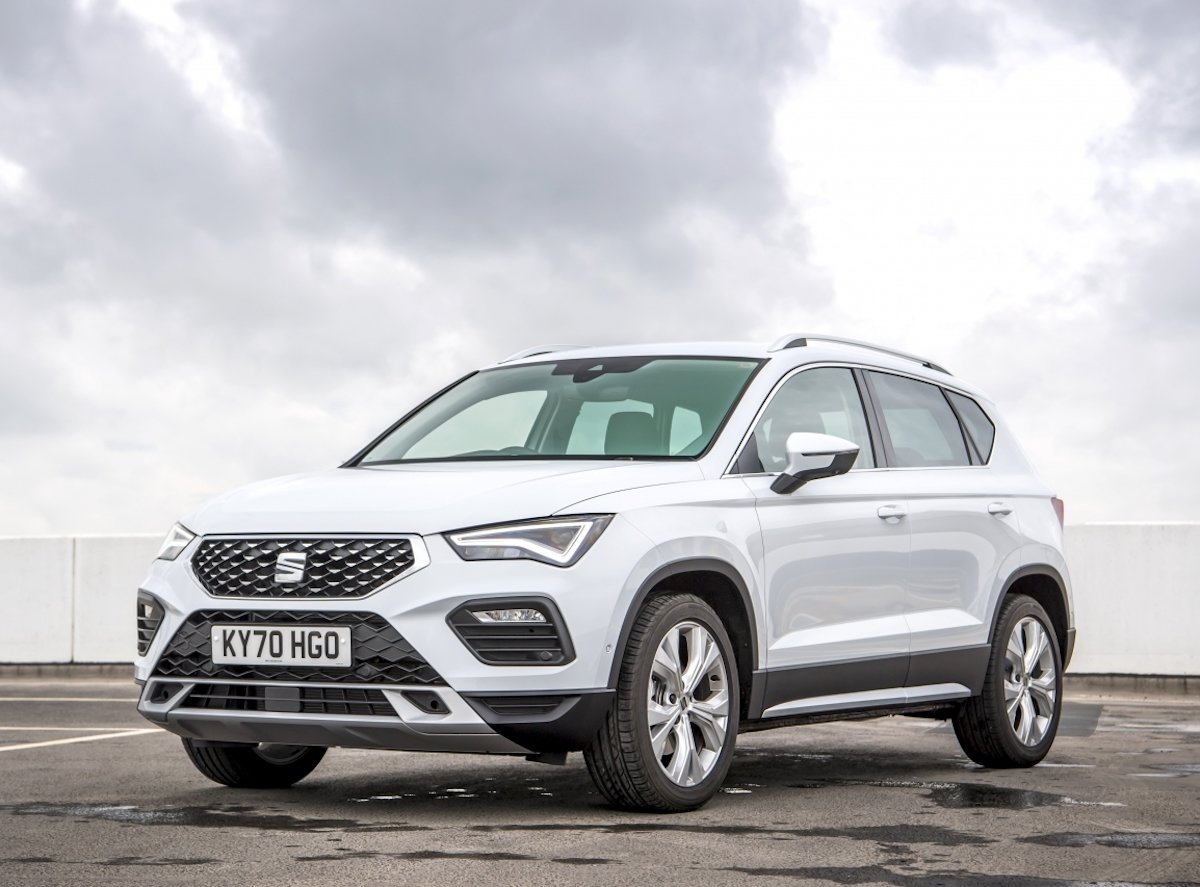
What is the Seat Ateca?
The Ateca is Seat’s take on the Volkswagen Tiguan, and the mid-size SUV shares major components not only with this important rival from its sister company, but also with the Skoda Karoq, which is another vehicle from the Volkswagen Group.
When compared with its sister brands, Seat market's itself as the sporty choice in the stable, and that's refelcted in the manners and the character of the Ateca compared with its stablemates, with sharper styling and an edgier driving experience.

How Practical is it?
In terms of interior space, the Ateca is very competitive with the majority of its rivals, without being particularly dazzling. There's enough headroom and legroom in any of the five seats for a six-foot-plus adult to sit comfortably (although whoever ends up in the middle-rear seat will have to contend with a narrow seat base and a hump in the floor in front of them), but it's also true that some rivals do offer them more space to stretch out.
The 510-litre boot is a very competitive size as well (four-wheel drive versions have slightly smaller 485-litre boots, as the drivetrain eats into the space), although the way that the rear seats fold isn't as versatile as in some rivals, while in others - such as the Ateca's Skoda Karoq sister car - the rear seats can be removed entire to create even more load-carrying space.

What's it like to drive?
Blessed with spirited performance from a range of turbocharged diesel and petrol engines, there's no version of the Ateca that feels underpowered when accelerating, or out of its depth on the motorway. Only the entry-level 1.0-litre can struggle a bit if it's heavily loaded with people and luggage. Most feel positively sprightly, while the most powerful versions feel downright quick. If you can find one of the hot Cupra versions (OK, that version is technically not a Seat Ateca at all since it was built after Cupra was split out as a separate brand, although to all intents and purposes, it's exactly the same car) then you'll enjoy the sort of hot-hatch performance that can embarass much more exotic machinery.
All Atecas are very enjoyable cars to drive, too. Even the front-wheel drive versions have lots of grip and traction, while neat body control and sharp steering allow the car to carve through corners with real alacrity. This is definitely one of the best-handling cars of its type. Granted, you do get a slightly stiffer ride than in many rivals as a result, so there are more comfortable family SUVs out there, but the Ateca still does a very decent job on that score and it's certainly nothing that'lll have you or your passengers wincing.

Technology, equipment & infotainment
It’s reasonably well equipped, too, with even the base model in the line-up featuring automatic city braking and pedestrian detection as standard, while from the SE trim up there’s climate control and a touchscreen infotainment system with satnav, DAB radio, Apple CarPlay and Android Auto. The trim levels were revised slightly during a facelift in 2022, with more levels added in between the existing levels, but as a general rule of thumb, if the car you're looking at has 'SE' in the title, it's a basic one, if it has 'FR', it's a sporty one, and if it has 'Xperience', it's a posh one.
Most versions of the Ateca are front-wheel drive, but four-wheel drive – called 4Drive – is also available, as is a seven-speed DSG (dual clutch) automatic gearbox to complement the six-speed manual.
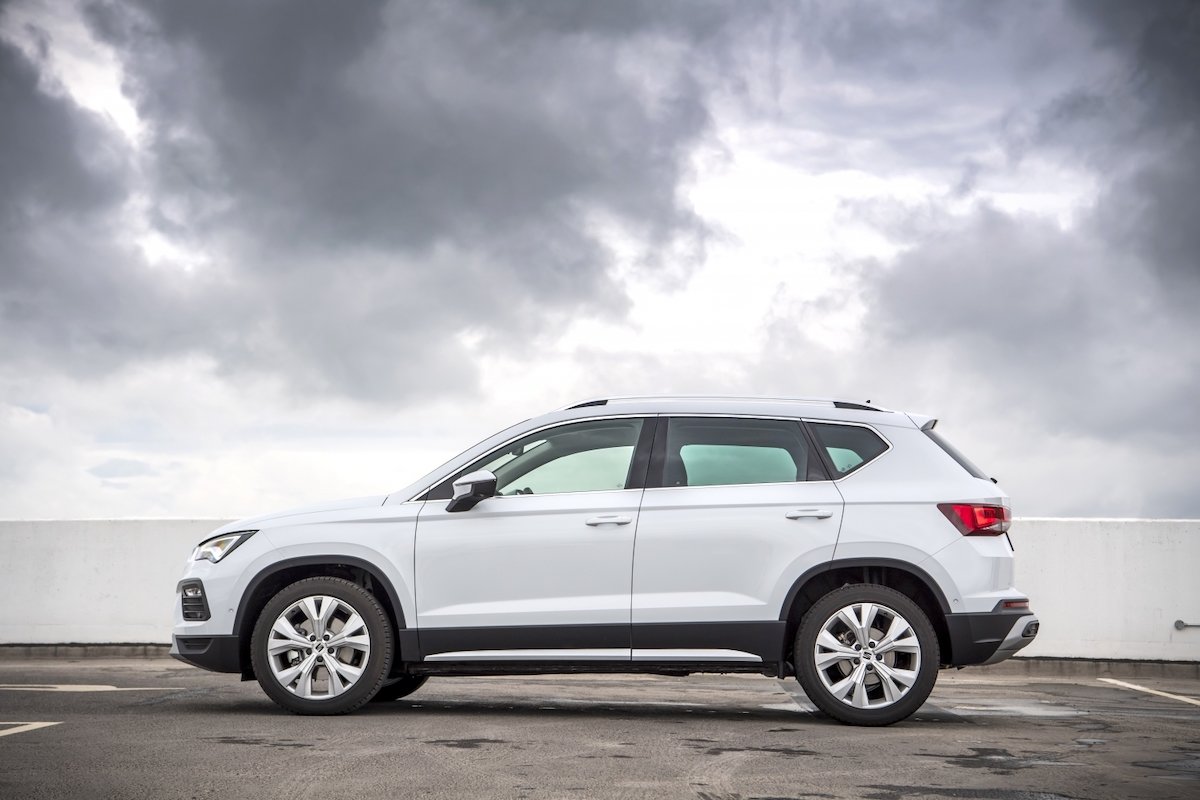
Seat Ateca running costs
While the Ateca’s three-year/60,000-mile warranty isn’t as generous as the seven years offered by Korean rivals, it does at least mean that you could get a year or two’s peace of mind if you buy new enough. In terms of servicing, Seat operates fixed-price packages for cars between two and 15 years old, with a minor (12 months/10,000 miles) service costing from £175 and a major one (24 months/20,000 miles) setting you back from £295.
A cambelt change on a petrol-engined Ateca at a Seat dealer will cost around £400, and a tenner more for a diesel: they come with a five-year warranty. A set of replacement front brake discs and pads is in the region of £360 and an air-conditioning service £140, although you might be able to improve upon those prices by visiting one of the numerous independent Volkswagen Group specialists.
Although the Ateca isn’t the most fuel efficient mid-size SUV out there, you’re not likely to be too upset by the 1.6 TDI Ecomotive diesel engine’s claimed 65.7mpg, nor by the 148bhp 2.0 TDI manual’s 64.2mpg. The petrol engines aren’t as frugal, but they’re not so bad either: the three-cylinder 1.0 TSI promises 54.3mpg, the 1.4 TSI - with its cylinder deactivation system - a creditable 52.3mpg. If you want models with greater performance, you’ll pay at the pumps: the 187bhp 2.0-litre TSI petrol gives 40.4mpg, and the 296bhp Cupra just 32mpg. As ever, those figures are from the official fuel economy tests. You might find that real-world economy isn't quite as good.
Any Ateca registered after 1 April 2017 is taxed at £140-£150 annually, whilst among the older models, both the 1.0 TSI petrol and 1.6 TSI diesel fall into the £30 a year bracket, although these costs are inflationary so will go up over time.
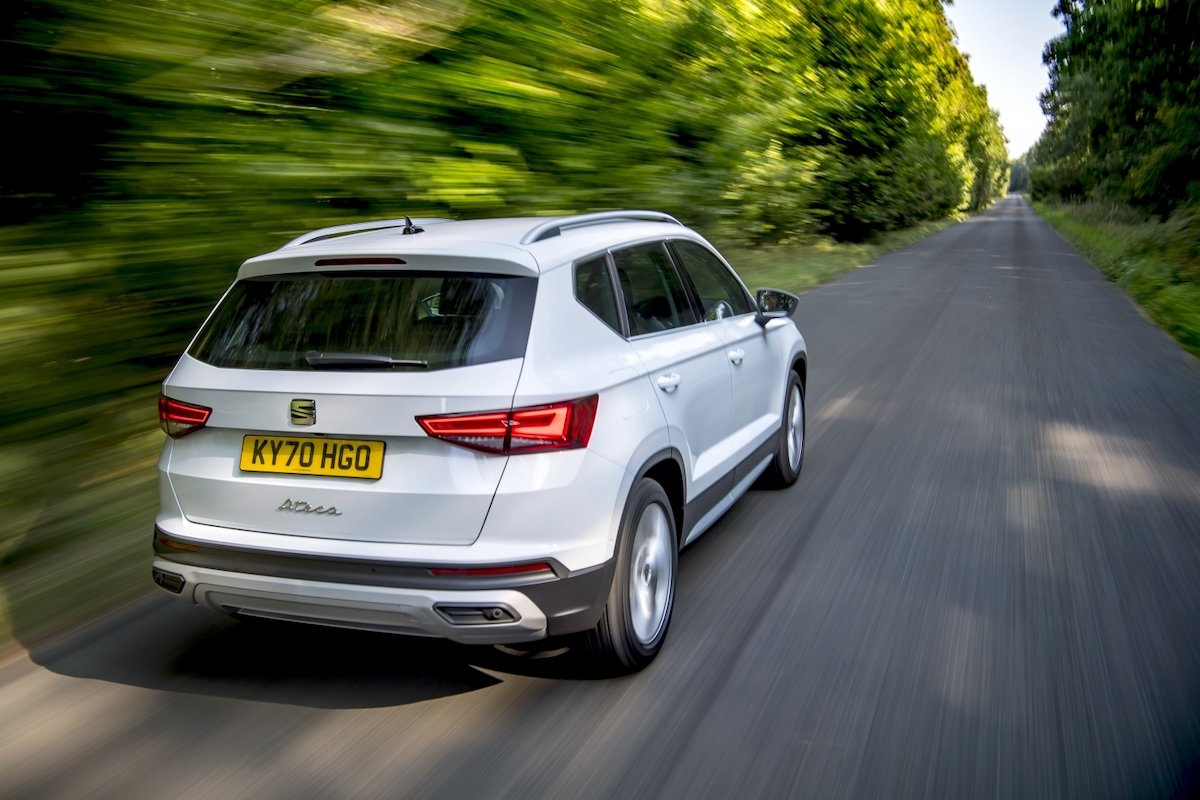
Seat Ateca reliability
According to various reliability surveys, most Ateca owners have very little to complain about. But that isn’t to say it’s without problems, the most concerning of which relates to the 1.5-litre TSI petrol engine, introduced in late 2018 to replace the 1.4 TSI because it complied with newer emissions and fuel consumption measurement regulations. In some instances the newer engine is reported to ‘kangaroo’ badly at low revs, and sometimes even cut out. In early 2020 the VW Group announced software updates to fix this, so make sure any example you’re looking at has had the changes made.
A more generic problem is that the front proximity sensors for the parking aid and city collision avoidance systems can be ‘fooled’ by items passing in front of them, such as droplets of rainwater, causing the Ateca to automatically apply the brakes. A software update is available, but some owners report that it doesn’t fully fix the issue. When buying, ask the previous owner if the sensors are working as they should. And talking of sensors, the powered tailgates of some models don’t always work when you wave your foot beneath the rear bumper to trigger their opening.
The Ateca has been subject to a few recalls, too, and while they should by now have been undertaken on all affected cars, it’s always worth asking the question. The most serious of these include possible cracking of rear wheel bearings, the slow inflation of driver’s side airbags in a crash, and malfunctioning electric parking brakes.
- Unless you live in a snowy area or regularly tow across muddy fields, you don’t really need the four-wheel-drive option. However, you’ll have no choice if you fancy a 2.0 TSI petrol, 2.0 TDI 187bhp diesel or the potent Cupra, as they’re not available in front-wheel drive.
- Try to avoid the 19-inch alloy wheels. They might look snazzy, but they take the suspension from being acceptably stiff to excessively so. They're optional across the range, but standard on the FR Sport and Xperience Lux models.
- As standard the Ateca has a tyre repair kit rather than a spare. Some first owners may have specified the optional space-saver, so if this is important to you, check under the boot floor to see if one’s in there.
- For the best blend of economy and performance: Any model with the 148bhp turbodiesel 2.0-litre TDI. It’s almost as economical as the less powerful 1.6, and has an impressive amount of punch.
- If you prefer to have petrol over diesel: The 148bhp 1.5-litre turbocharged petrol TSI engine is a peppy performer and returns 52.3mpg (officially, at least – the real world mpg will be less).
- If you spend most of your time in town and don’t go far: The 1.0-litre turbocharged petrol TSI model has enough zip for urban driving and has good fuel economy. Just don’t venture out fully laden on the motorway, as it might start to struggle.
- For outright performance: The Cupra Ateca with 296bhp, four-wheel drive and a DSG gearbox. There aren’t many about, though, and they’re not cheap. Fun fact – Cupra is, on paper at least, now a separate brand from Seat. But in reality, they’re the same firm.
- For the best value trim package: Go for the SE Technology; it has climate control, parking sensors, DAB radio, satnav, a well connected infotainment system and full LED headlights as standard.


