BMW M3 E36 Review (1992-1999)
BMW M3 Coupé cars for sale
4.0
Expert review
Pros
Secure handling and a surprisingly comfortable ride
Three body styles to suit different buyers
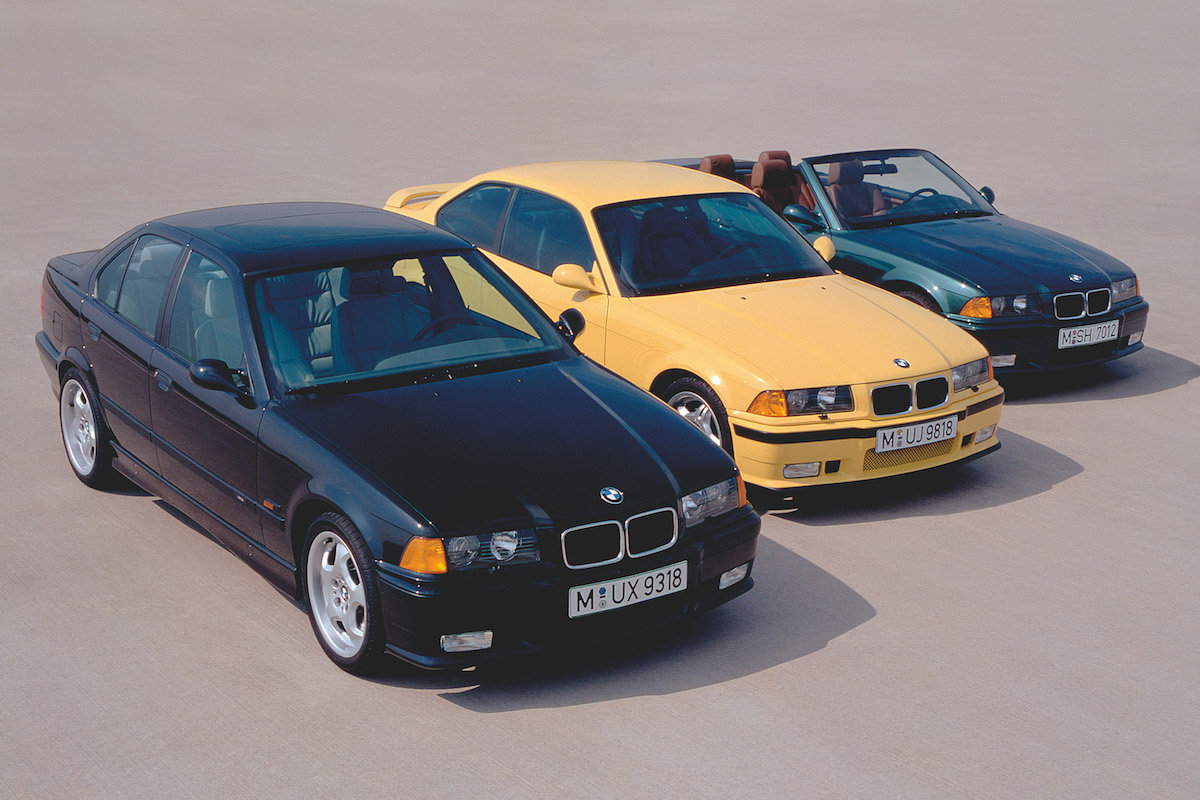
The most discreet-looking of all the M3 generations
Cons
These cars are now over 20 years old, so take your time and find a car that's been looked after
SMG versions don't match the involvement of manual models
The convertible is less rigid, and so doesn't drive as well as the coupe and saloon
The CarGurus verdict
When it was new the E36 M3 was much maligned for not being the same as the car it replaced. With the first generation of M3, BMW set the bar so high that the second E36 generation was initially going to struggle to find acceptance among the motoring press. However, BMW’s customers loved it, and driving one demonstrates the E36’s strength and depth of ability.
It’s still a pretty fast car, and with secure handling and a good ride it’s still a joy to punt along a winding road. With three practical bodystyles to choose from it’s now being viewed as a very usable end entertaining modern classic that can still be purchased for less than the cost of the cheapest new BMW 1 Series hatchback. We know which we’d rather be driving.
What is the BMW M3?
When BMW launched the E36 M3 it had to answer a very difficult conundrum – how do you improve on perfection? Its predecessor, the original M3 that sold from 1986 to 1991, had been designed with one thing in mind – to win touring car championships in motorsport – and it did so the world over. Its road-going counterpart was revered as one of the finest road cars money could buy at more-or-less any price point. With a gruff but powerful four-cylinder engine, pumped up styling and divine handling characteristics, it was a hugely desirable performance car.
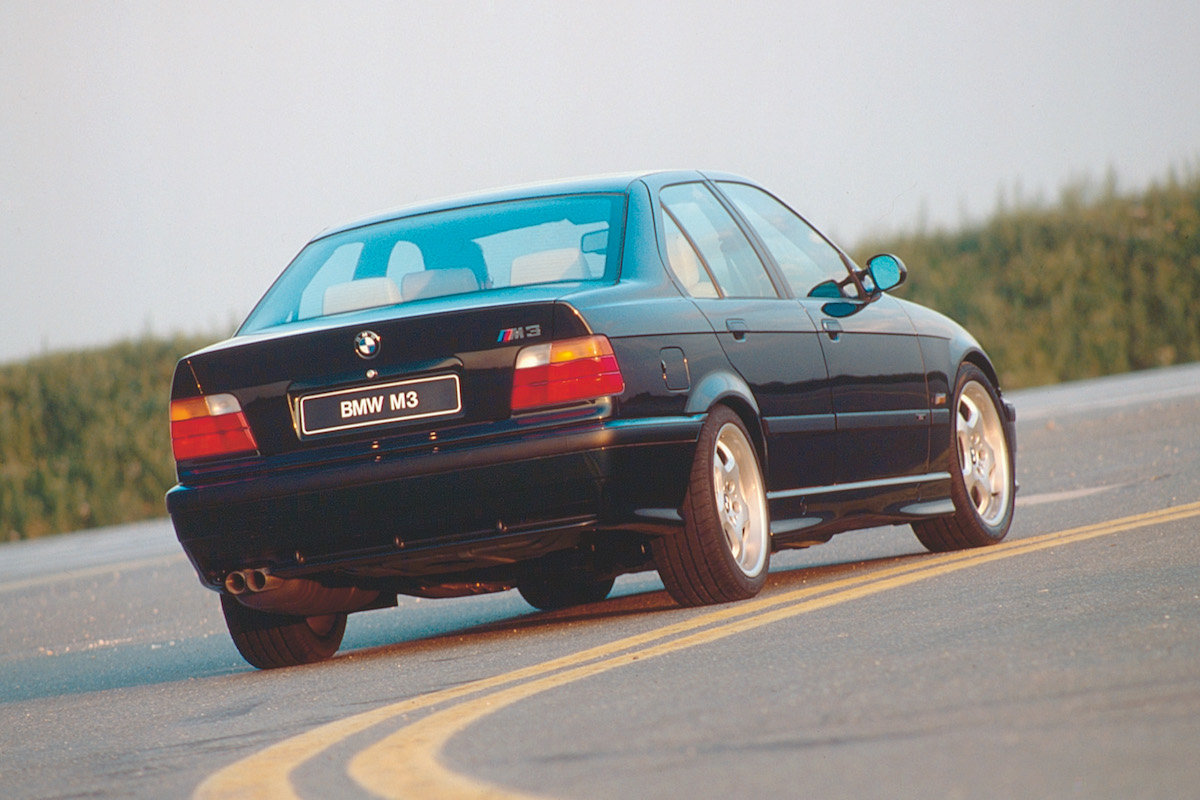
By way of contrast, the E36 M3 was designed exclusively as a road car, and with subtle looks it didn’t pull on the heart strings as much as the older, race-bred machine. On the other hand, it offered better passenger accommodation, was demonstrably faster and had safe and secure handling, with a decent ride and much improved refinement too. It was a better car than the E30 M3, but the press criticised it for lacking that joie de vivre that made the original such an absorbing car to drive.
In 2000, the E36 M3 was replaced by the E46 BMW M3, which we've reviewed here.
How practical is it?
The E36 M3 was launched 1992 and was initially only available as a coupe – the more practical saloon and the soft-top convertible would join the line-up in 1994, all with rear-wheel drive. Where it really scored was that while it was a devastatingly quick performance car, it was also a hugely practical one too.
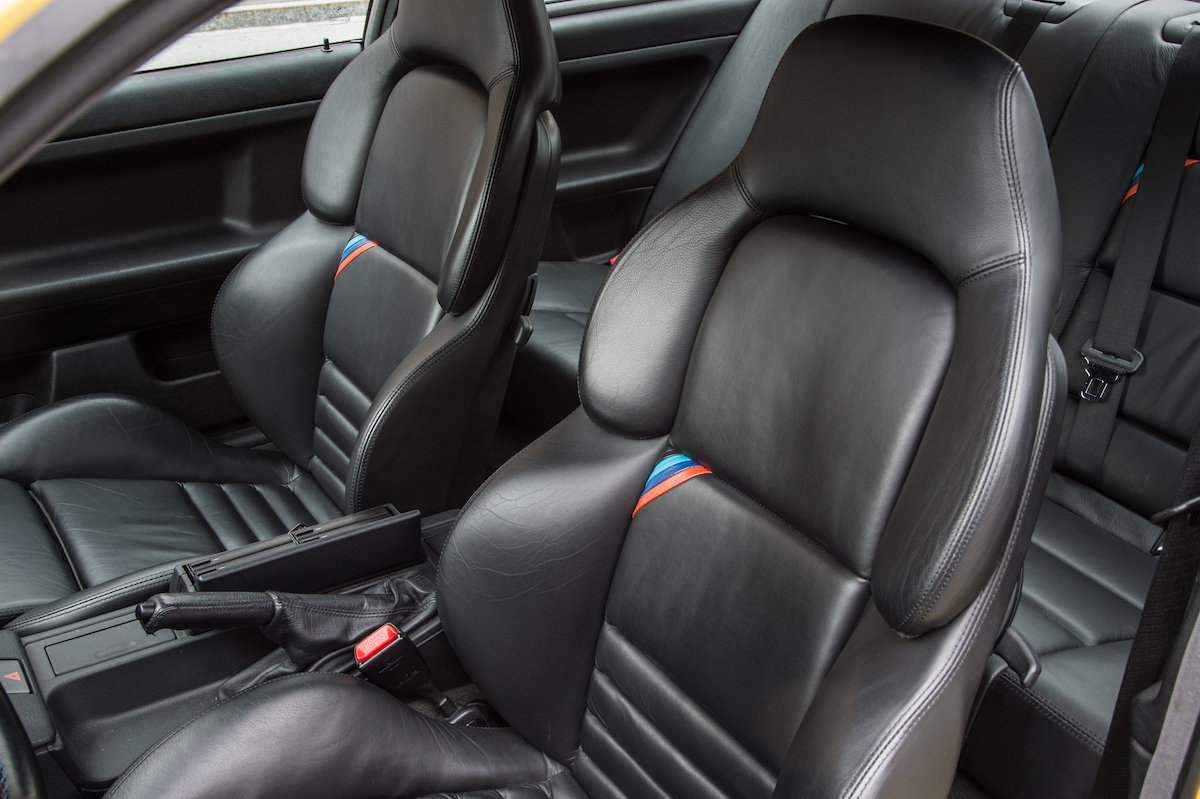
Both the coupe and saloon could accommodate five occupants, and with relatively decently sized boots (405 litres of luggage capacity in the case of the Coupe) their luggage could also be fitted in, too. The cockpit had an excellent driving position with supportive sports seats, and small (by today’s standards) 17-inch wheels and supple suspension meant that its ride was compliant enough for everyday use.
What's it like to drive?
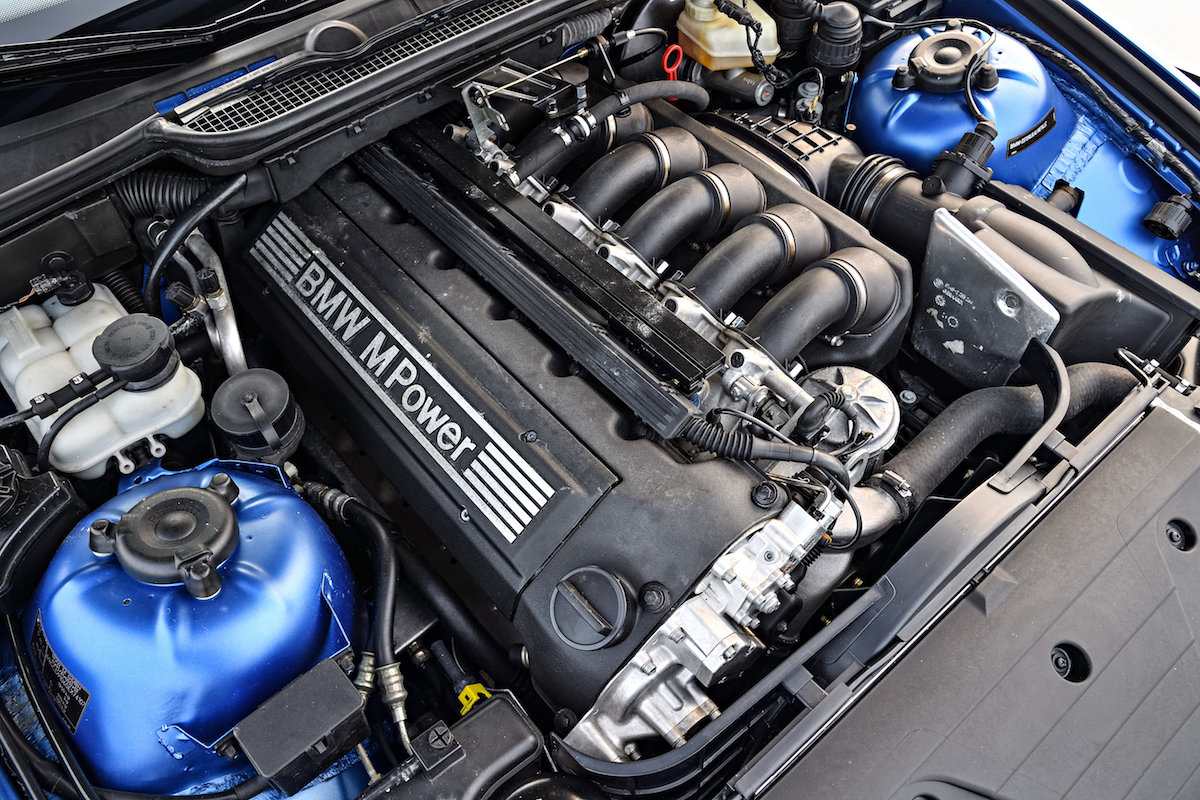
The main attraction, though, is the engine. The M3’s S50 engine was a work of art, a 3.0-litre straight-six that developed 282bhp and 236lb ft of torque, and it was mated to a five-speed manual transmission and a limited slip differential. In performance terms it was approaching supercar levels, accelerating from 0-62mph in just 5.8 seconds, and had a top speed electronically limited to 155mph.
An enhanced version of the E36 M3 was revealed in 1995 and launched in 1996. It was known as the M3 Evolution, or more commonly, the Evo. It had a 3.2-litre version of the straight-six that now developed 317bhp and 256lb ft of torque; good enough for a 5.5-second 0-62mph time.
Both the 3.0-litre and 3.2-litre versions of the straight-six engine are a joy to sit behind; docile when pottering but emitting a wonderful, visceral howl when revved towards their red lines. Perhaps the E36 M3 ultimately lacked the handling finesse of machinery like the Porsche 968, but it was still a very entertaining car to drive.
Technology, equipment & infotainment
The original 3.0-litre engine was loosely based on the 2.5-litre straight-six fitted to the BMW 325i but underwent a number of changes, including increased bore, stroke and compression, individual throttle bodies, heavy-duty valve springs, single Vanos variable valve timing and freer flowing intake and exhaust systems.
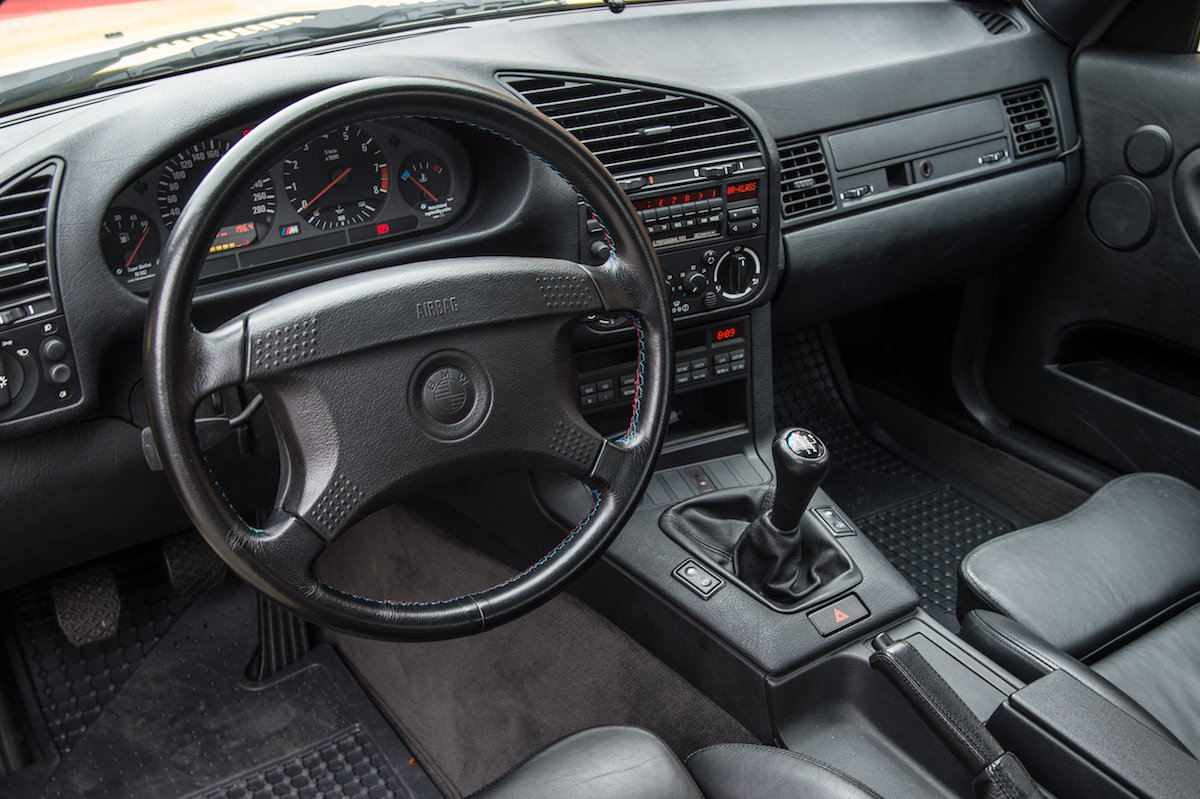
When the engine was enlarged to 3.2 litres, a six-speed manual gearbox was fitted, while further enhancements included some significant suspension changes and a quicker steering rack to make the Evo a more entertaining car to drive.
As with the engine, the E36 M3’s suspension is based on the regular car’s but with a number of modifications. The ride height is lower, the track has been increased front and rear, firmer shock absorbers and springs were fitted as were reinforced spring mounting plates along with thicker anti-roll bars and revised geometry. The M3 also had a special M-tuned steering rack with a variable ratio and vented brake discs all round.
BMW M3 running costs
You don’t buy a 1990s performance car expecting it to cost the same to run as a modern hatchback, but the E36 M3 is, generally speaking, less expensive to maintain than you might imagine. In terms of general running costs annual VED is the flat rate of £270 a year, while insurance should be reasonable if you opt for a classic car policy.
Fuel economy will obviously vary depending on how the car is driven, but when it was new the M3 had an average combined economy figure of 31mpg, although that was admittedly under a very old and inaccurate testing regime. However, when on a motorway cruise over 30mpg should still be achievable, but dipping into the car’s performance will see that drop to low 20s or high teens.
Servicing can be pricey, but it’s vital to have the car serviced ever year or around 7,500 miles to ensure it stays in fine fettle. The servicing schedule follows a strict pattern – Oil Service, Inspection 1, Oil Service, Inspection 2 – with an oil service starting at about £150. The Inspection services are more comprehensive, about £450 for an Inspection 1 and £750 for an Inspection 2, with these prices being from an independent specialist. The E36 M3 requires its valve clearances to be adjusted at every Inspection service and to do this the engine needs to be cold, so the car should be left overnight with a specialist.
A set of front brake discs for an M3 Evo cost in the region of £450 for genuine BMW parts, but there are a plethora of aftermarket parts available from reputable specialists that will cost a lot less. With relatively modest 17-inch wheels replacement tyres shouldn’t be too expensive – less than £500 will buy a set of good high performance tyres.
The oldest E36 M3 is now nearly 30 years old so there will be some age-related costs to expect. Rust can be an issue on the bodywork, particularly around the wheel arches, rear panel, boot lid and sills, while brake lines can be susceptible too. Suspension components – springs, dampers, shock absorber mountings and trailing arm bushes – can all fail and while no individual component is hugely expensive, if they all need doing at the same time it will involve a considerable invoice. Any prospective purchase should be inspected by a BMW specialist to avoid heartache further down the line.
BMW M3 reliability
With an engine that, in Evo form, is very close to producing 100bhp per litre, it’s perhaps reassuring that the E36 M3’s powerplant is actually pretty durable. As with most things there are some caveats, and with the M3 the main one is the engine’s Vanos variable valve timing system. The 3.0-litre model has a single Vanos system which just operates on the intake camshaft and this set up is generally pretty reliable given the correct servicing.
However, the Evo model has variable valve timing on both the intake and exhaust camshafts and in this guise it’s less reliable. New components from BMW are frighteningly expensive and will cost up to £3,000 in parts alone, but there are now several companies that can offer specialist repair on a Vanos unit. Depending on what parts need replacing, costs can vary from £300 to £1,000. A failing unit will sound noisy and the engine’s performance will feel flat.
While BMW has a less than perfect reliability record in more recent times, when the E36 M3 was built it was producing solid and dependable cars, so the M3 doesn’t have a huge number of common issues. The cars with the semi-automatic SMG gearbox are probably best avoided as the hydraulic system can be expensive to fix and doesn’t add anything to the driving experience. The manual gearboxes are generally durable – trouble engaging first gear on an Evo model can be cured by fitting a braided clutch hose.
Reliability concerns with an E36 M3 these days will mainly centre on age-related deterioration of components rather than any intrinsic problems with the car. Service history should be thoroughly examined for signs of preventative maintenance and prospective purchases should be carefully checked before signing on the dotted line.
- While the previous E30 M3 spawned several special editions – usually to homologate parts for racing – there were only two special edition models offered for the UK market in right-hand drive. The M3 GT Individual was based on the 3.0-litre model and had larger front and rear spoilers, British Racing Green paint and an interior with graphite birds eye maple trim along with some suspension improvements. The second was the Imola Individual, sometimes known as the GT2, which was a run out model based on the M3 Evo. It featured the larger spoilers, Imola red paint and a black and red interior. Just 50 of each were produced and are seen as desirable models today.
- While the vast majority of E36 M3s featured either a five-speed or six-speed manual gearbox, there was an ‘automatic’ version, which launched in 1997, known as the SMG, the acronym standing for Sequential Manual Gearbox. It was quite advanced for its day and used the same manual gearbox as the standard car, but with the shifting taken care of by hydraulics and the deletion of the clutch pedal. It wasn’t hugely successful though, and is probably best avoided today.
- Many M3s will have led a hard life, so it’s important to check a potential purchase very carefully, especially now prices are on the rise. Many cars were modified too, so look for a standard model. There are a plethora of BMW specialists to check over any potential purchase and in the long run this will be money well spent, as repairing a tired example could become very costly indeed.
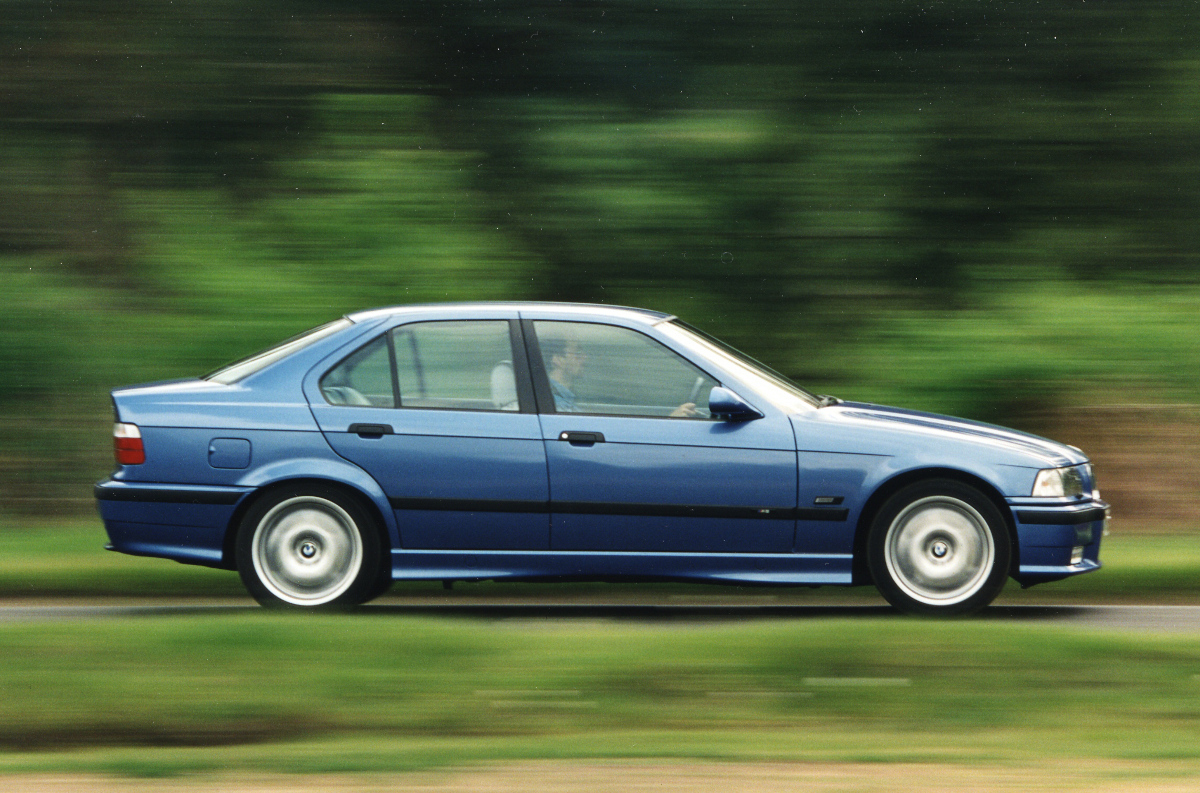
- If you want to stand out from the crowd: The E36 M3 coupe is a discreet machine, looking pretty much like a regular BMW 3 Series with a fancy set of alloy wheels, but if you’re not the shy retiring type there are a couple of options open to you. There were some colours unique to the M3, such as Dakar yellow, Daytona violet, Imola red and Estoril blue, which weren’t available on the normal 3 Series models. Dakar yellow is particularly sought after today.
- If you want the practical option: In four-door form the E36 M3 is not only hugely discreet, it’s also a very usable performance car. With five seats and ample luggage space it’ll happily put up with family duties or pottering to the shops, yet still has the ability to delight when travelling along a favourite back road.
- If you want the best to drive: While the original 3.0-litre was a decent driver’s car, the later Evo model is the one to go for if ultimate thrills behind the wheel are your number one priority. It’s a little faster than the 3.0-litre; not by much, but its chassis is more rewarding, with sharper steering and improved feedback. The four-door drives just as well as the coupe, but avoid the convertible, as its less rigid structure makes it a less involving car to drive.
- If you want wind-in-the-hair thrills: It has to be the convertible in either 3.0-litre or Evo form. Yes, it might not be quite as tack-sharp to drive, but it’s still pretty solid thanks to the extra stiffening that BMW added when it chopped the roof off. With the electric hood unfurled it’s a very attractive shape and allows you to hear that straight-six all the better. Search for the optional removable hard-top and it’s a pretty practical winter proposition too.