BMW X5 2025 review | A large and luxurious SUV
BMW X5 cars for sale
5.0
Expert review
Pros
Far more enjoyable to drive than most large SUVs
Brilliant plug-in hybrid version
Staggering performance of X5 M
Cons
Not as capable off road as a Land Rover Discovery
Petrols in particular are expensive to run
Not everyone will take to the styling
The CarGurus verdict
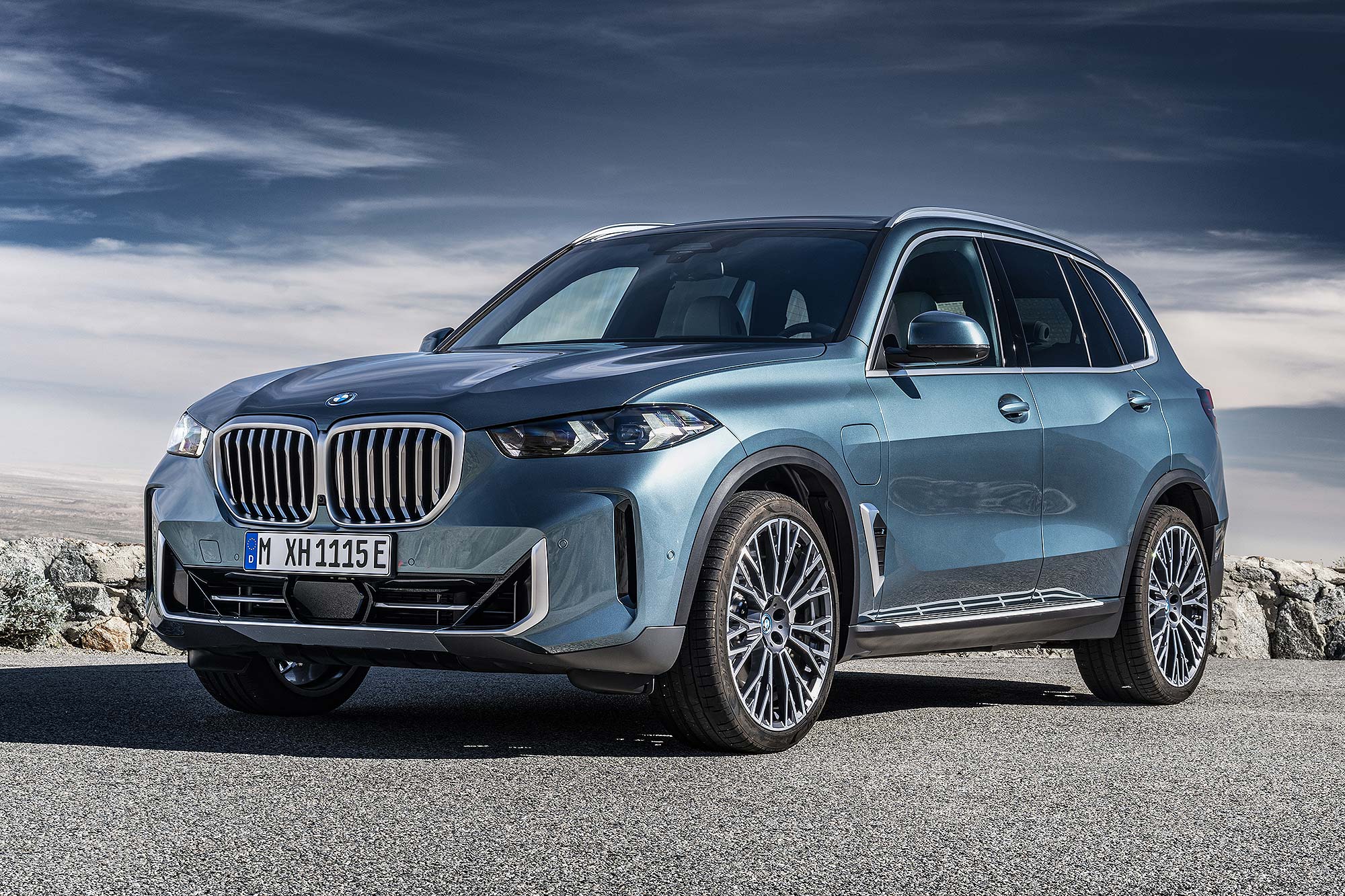
The BMW X5 gets the big stuff right: it’s spacious, properly luxurious and, unlike most large SUVs, genuinely enjoyable to drive, feeling better behind the wheel than rivals such as the Volvo XC90 while remaining easy and refined in everyday use. It isn’t cheap to run, and the styling – especially that grille – divides opinion, but the X5 gets very little wrong.
If towing and off-road ability are priorities, take a look at the Land Rover Discovery, but if you spend most of your time on the road, the X5 stands out as one of the most rounded and accomplished SUVs in its class.
What is the BMW X5?
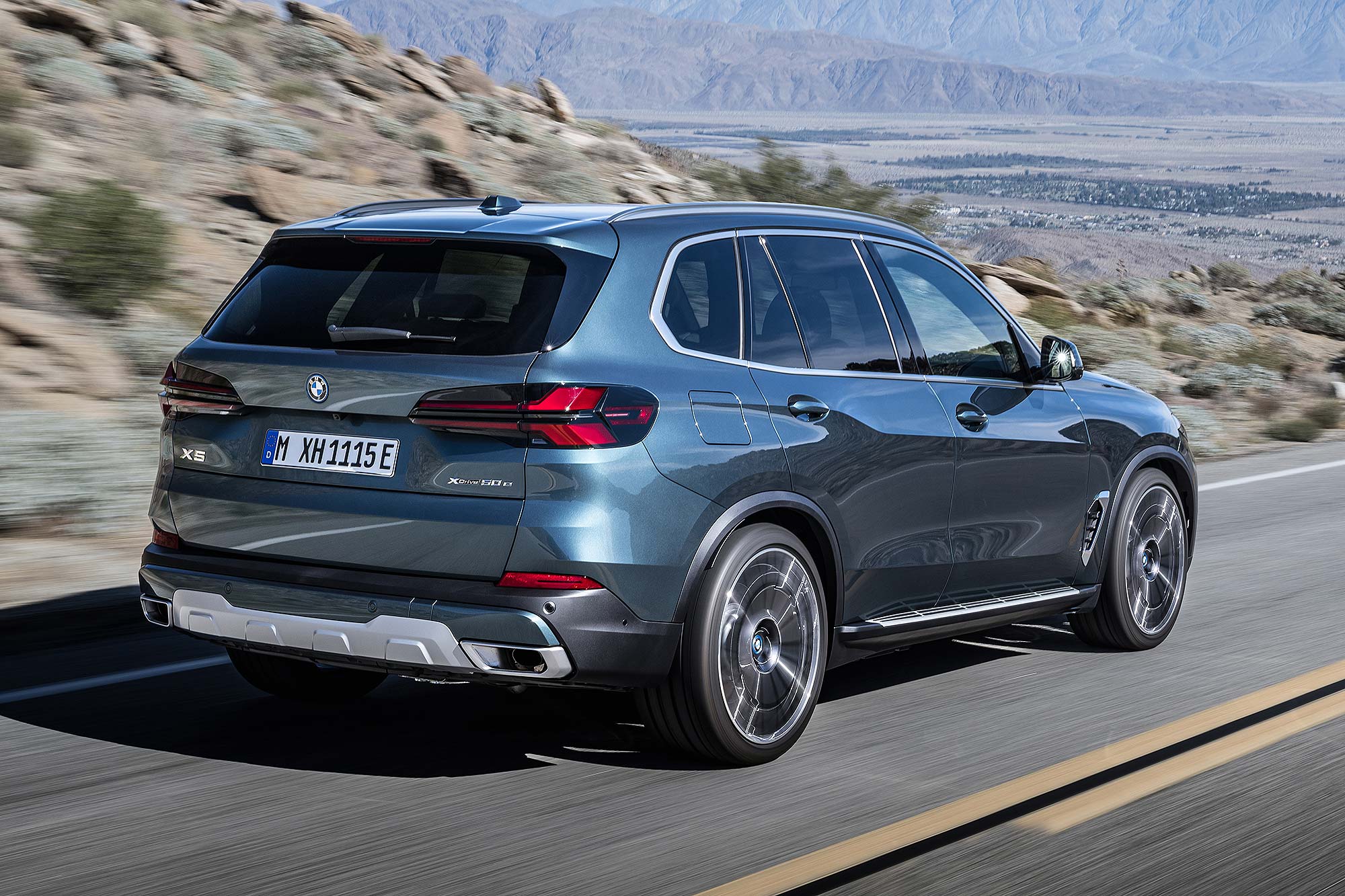
The current BMW X5 is the fourth generation of this luxury SUV. Introduced in 2018 and facelifted in 2023, it’s packed with the latest technology and offered with a wide choice of engines, including an efficient plug-in hybrid called xDrive50e, a pair of diesel options and two high-performance V8-powered M models.
It’s no longer the largest SUV in BMW’s range – that role now belongs to the imposing X7 – but few rivals offer such a compelling blend of performance, style, space and practicality. The Land Rover Discovery is better for off-road driving, the Mercedes GLE majors on luxury, the Porsche Cayenne is more fun to drive and the Volvo XC90 remains a class act overall. But the X5 stands out as one of the most well-rounded large premium SUVs you can buy.
For company car drivers, the xDrive50e makes the most financial sense, while the xDrive30d and xDrive40d prove that diesel engines still have a place in 2026. Choose one of the M models if you’re after supercar-baiting pace and can live with the high fuel and tax costs.
How practical is it?
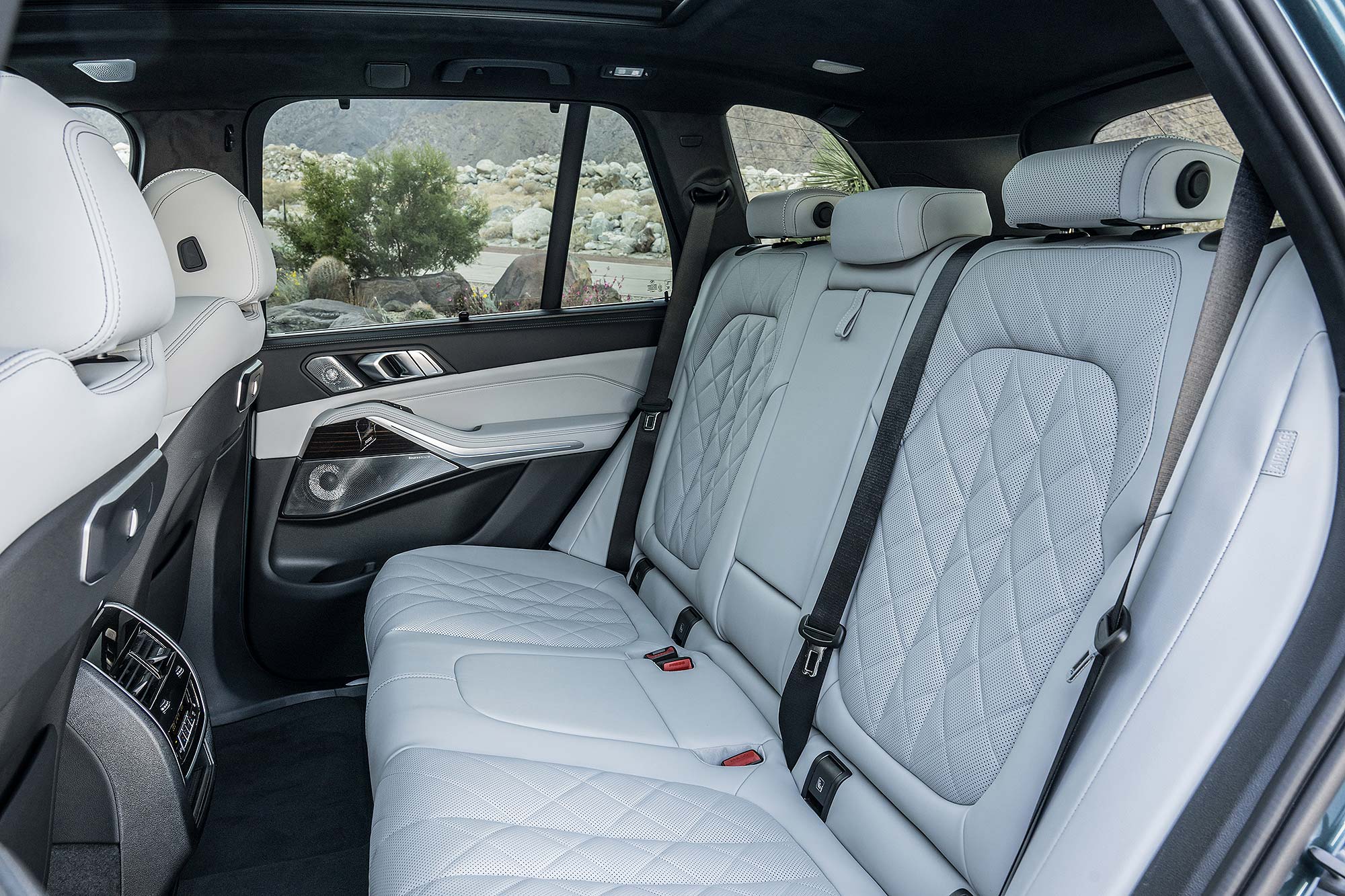
Given its size, it’s no surprise that the BMW X5 offers excellent passenger space. There’s ample room for adults in the front and second rows, with generous headroom and legroom making it a comfortable long-distance cruiser for five. An optional third row of seats is available on non-hybrid versions, turning the X5 into a seven-seater, although the rearmost seats are best suited to children rather than adults – and it’s worth noting that there are no Isofix points in the third row. The plug-in hybrid xDrive50e doesn’t offer seven seats at all, as its battery is packaged beneath the boot floor.
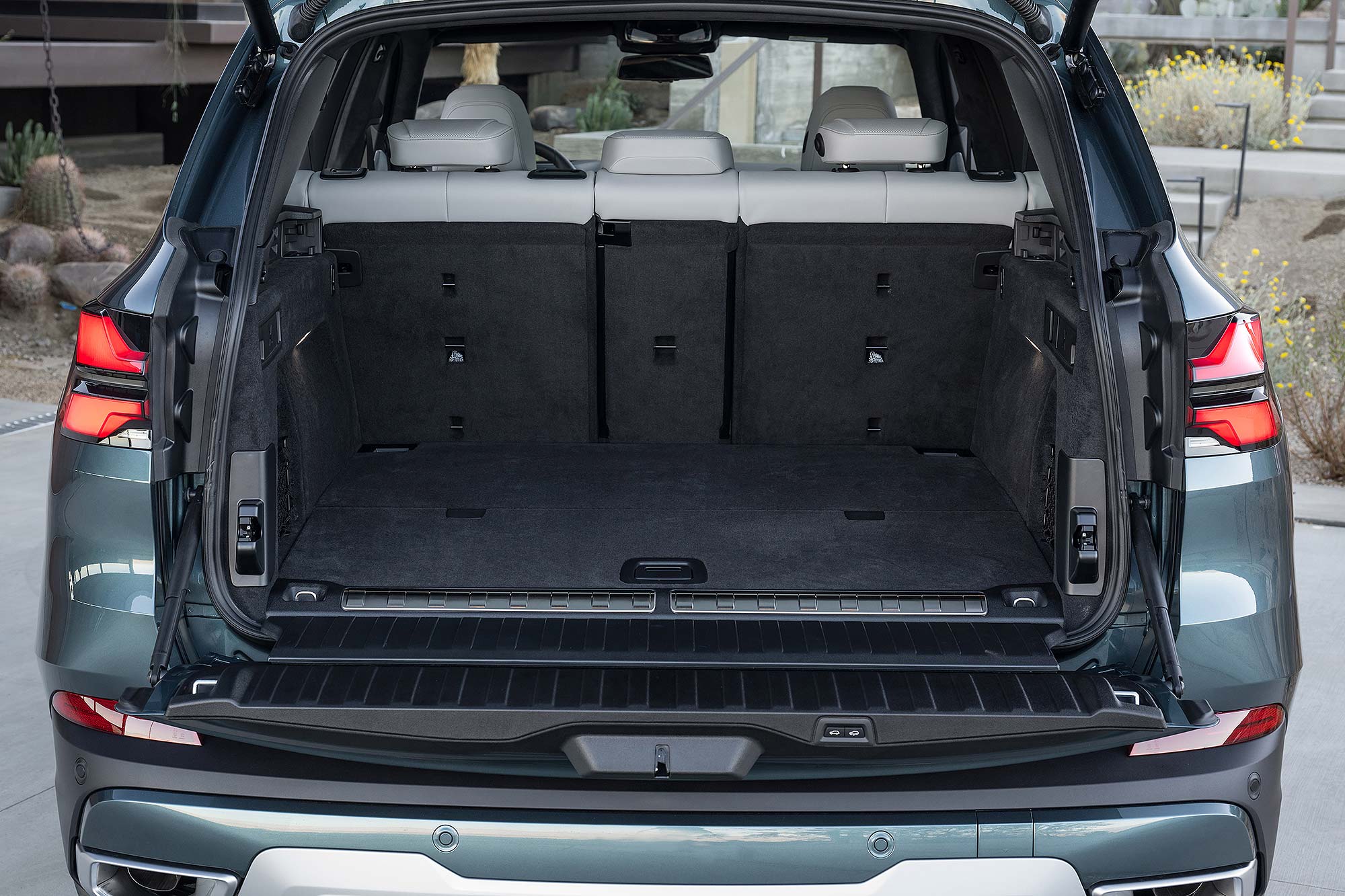
Boot capacity is strong by large SUV standards, with 650 litres available in five-seat, non-hybrid models, expanding to 1,870 litres with the rear seats folded flat. The xDrive50e plug-in hybrid sacrifices some load space due to its battery, reducing boot capacity to 500 litres – still usefully large, but less generous than in non-hybrid versions. A split powered tailgate comes as standard, along with a 40:20:40 split rear bench that adds flexibility for carrying long loads while still accommodating passengers.
Up front, the raised driving position gives a commanding view of the road, while rear visibility is surprisingly good thanks to the near-vertical tailgate and large side windows. Front and rear parking sensors and cameras are fitted as standard if you need a little help in tight spaces. As for storing odds and ends, there’s a good size central storage bin, generous door pockets, a sizable glovebox, and enough cupholders to avoid arguments on a long journey. The front ones can be heated and cooled if you choose the optional Comfort pack.
What's it like to drive?
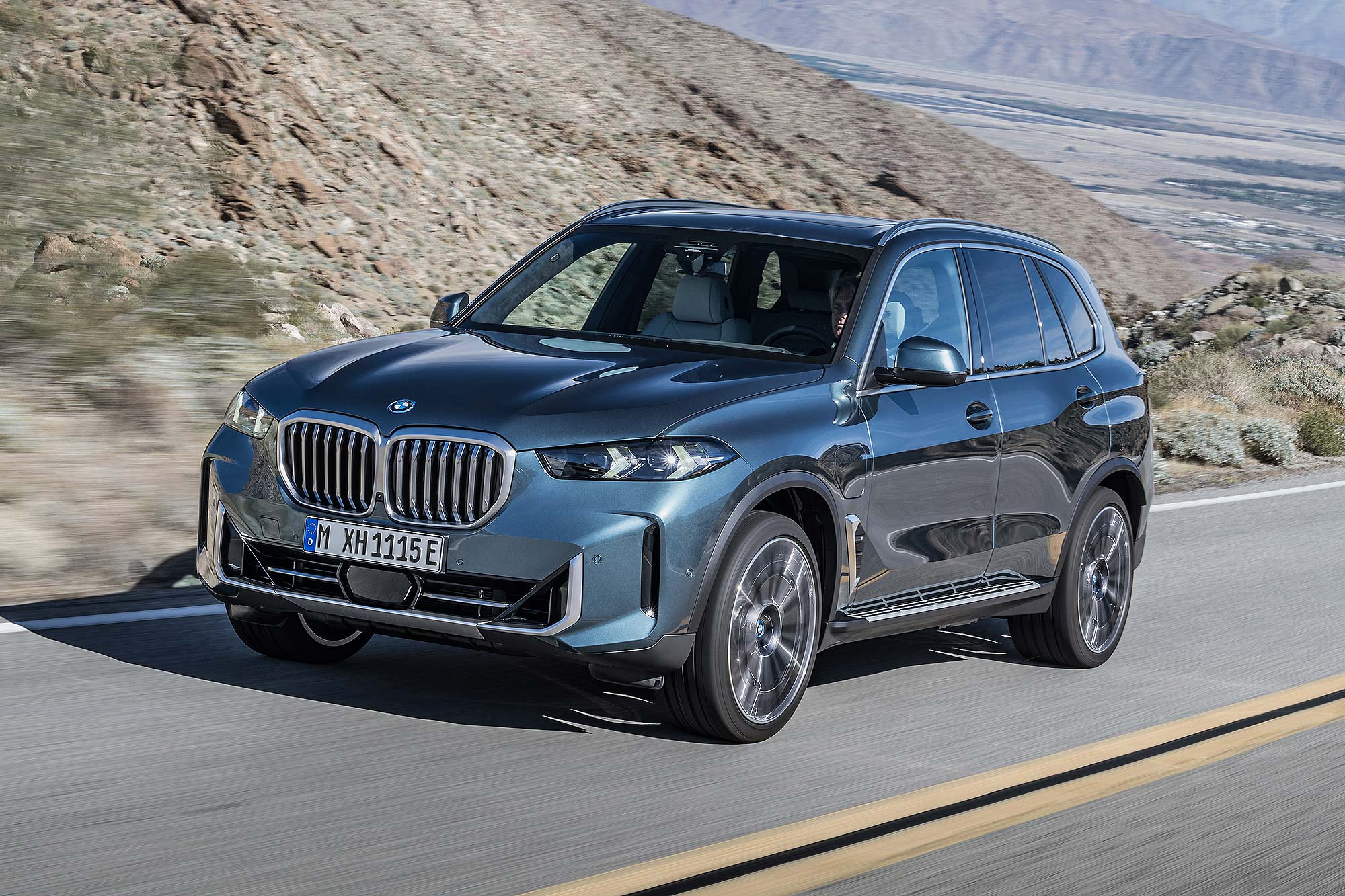
For a large and heavy SUV, the X5 feels impressively car-like to drive, like a BMW 5 Series saloon with a lofty driving position. It has the sure-footed, predictable feel you’d expect from a BMW, with tidy body control through corners and the reassurance of standard four-wheel drive across the range. It never feels unwieldy on the road, yet you still benefit from the high vantage point and excellent stability that buyers expect from a large SUV. All versions use a smooth eight-speed automatic transmission, which suits the X5’s relaxed and refined character.
Many buyers will opt for one of the diesel engines, with the entry-level xDrive30d offering 286bhp and strong performance for daily driving, while the xDrive40d offers more power and torque for punchier acceleration and improved towing ability. The plug-in hybrid xDrive50e combines a 3.0-litre straight-six petrol engine with a 194bhp electric motor and a 25.7kWh battery to deliver a total of 483bhp and an electric-only range of up to 64 miles if you remember to recharge the battery. At the opposite end of the spectrum sit the V8-powered M models, from the 523bhp M60i to the thunderous 626bhp X5 M Competition. Pricey options, but few large SUVs offer a better blend of performance, handling and long-distance comfort.
Indeed, the X5 majors on long-distance ability. Standard air suspension soaks up the worst of Britain’s notoriously pock-marked roads, making long motorway journeys particularly relaxing, while wind and road noise are kept to a minimum. The sharp handling comes at the expense of low-speed ride comfort, but you can minimise the effect by avoiding the larger alloy wheels. Whether you’re wafting along the M1 or tackling a twisty B-road, the X5 feels composed and supremely capable.
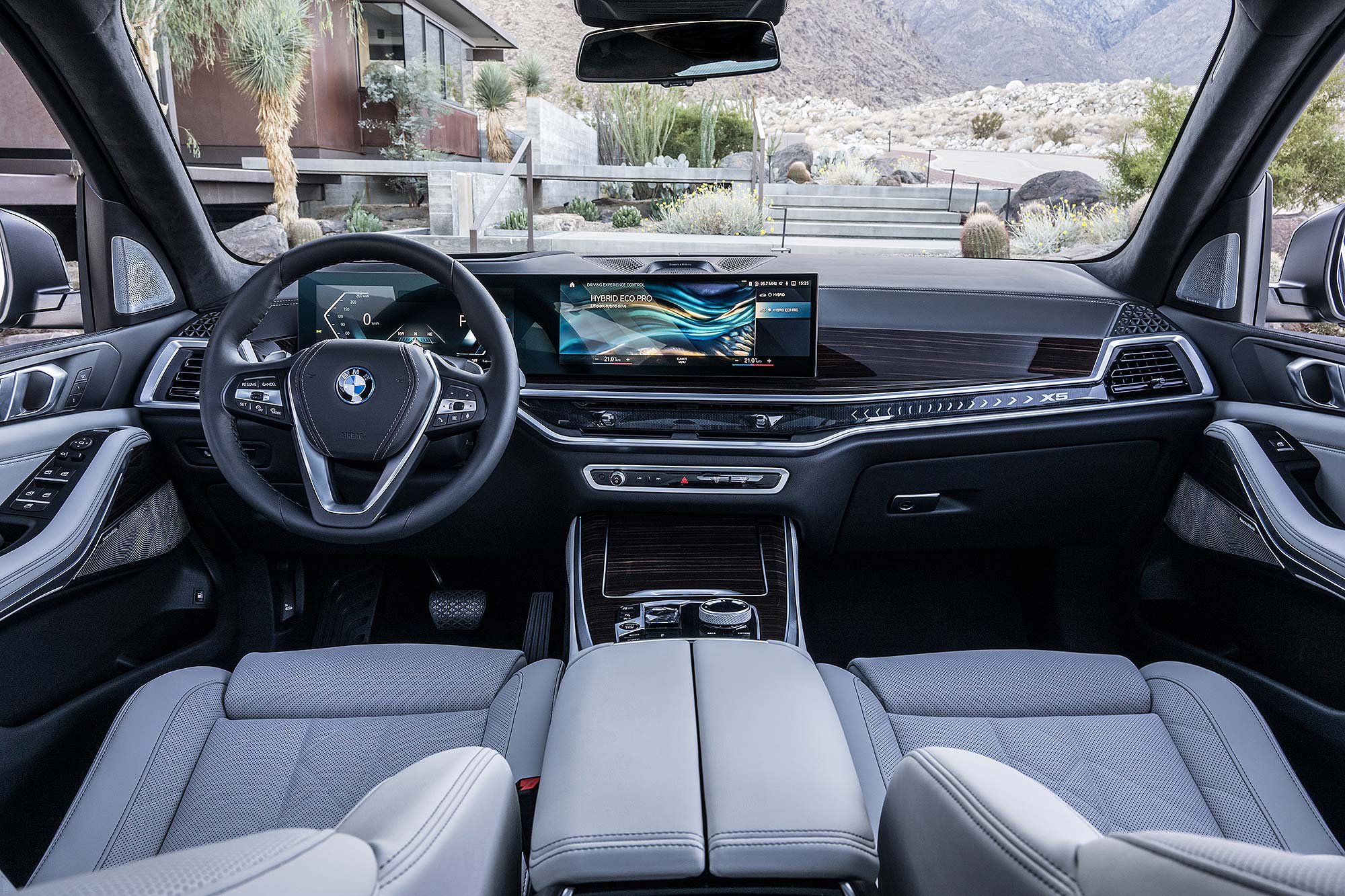
Technology, equipment & infotainment
The BMW X5 comes in three main trim levels: xLine, M Sport and M Sport Pro. The performance M versions are standalone models in their own right, rather than trim levels – and their much higher prices reflect this.
The base trim for the X5 range is xLine, which comes with so much equipment that you might wonder if you need anything else.
Standard features include heated front seats, automatic climate control, ambient lighting, adaptive LED headlights, air suspension, DAB connectivity, wireless phone charging and an electric tailgate. All versions also get a curved digital dashboard featuring a 14.9-inch touchscreen infotainment system and 12.3-inch customisable driver display.
Upgrade to M Sport trim and you’ll get a host of M-specific details, such as interior upgrades and more aggressive styling. The M Sport Pro takes things to the next level, featuring the likes of high-gloss Shadowline exterior styling for the grille, headlights and exhaust tips.
Buyers seeking more performance can opt for M Model versions, which pack more power as well as a host of cosmetic and kit upgrades. For the die-hard enthusiasts, BMW also offers a dedicated high-performance X5 M Competition model with 626bhp. As you’d expect, a range of upgrades, options and equipment packs are also offered. Tick all of the boxes and you could add the price of a new family hatchback to the price of an X5.
The Comfort pack is a popular upgrade. For £775, you get heating for all four seats, heated and cooled cupholders, and heating for the steering wheel, armrests and centre console. Alternatively, choose the £4,000 Comfort Plus pack, which adds the likes of soft-close doors, acoustic glass, four-zone climate control, sun protection glass and ventilated front seats.
BMW X5 running costs
A BMW X5 is never going to be cheap to run, but many models offer impressive efficiency considering their performance credentials – while options such as fixed-price servicing can help you keep costs in check.
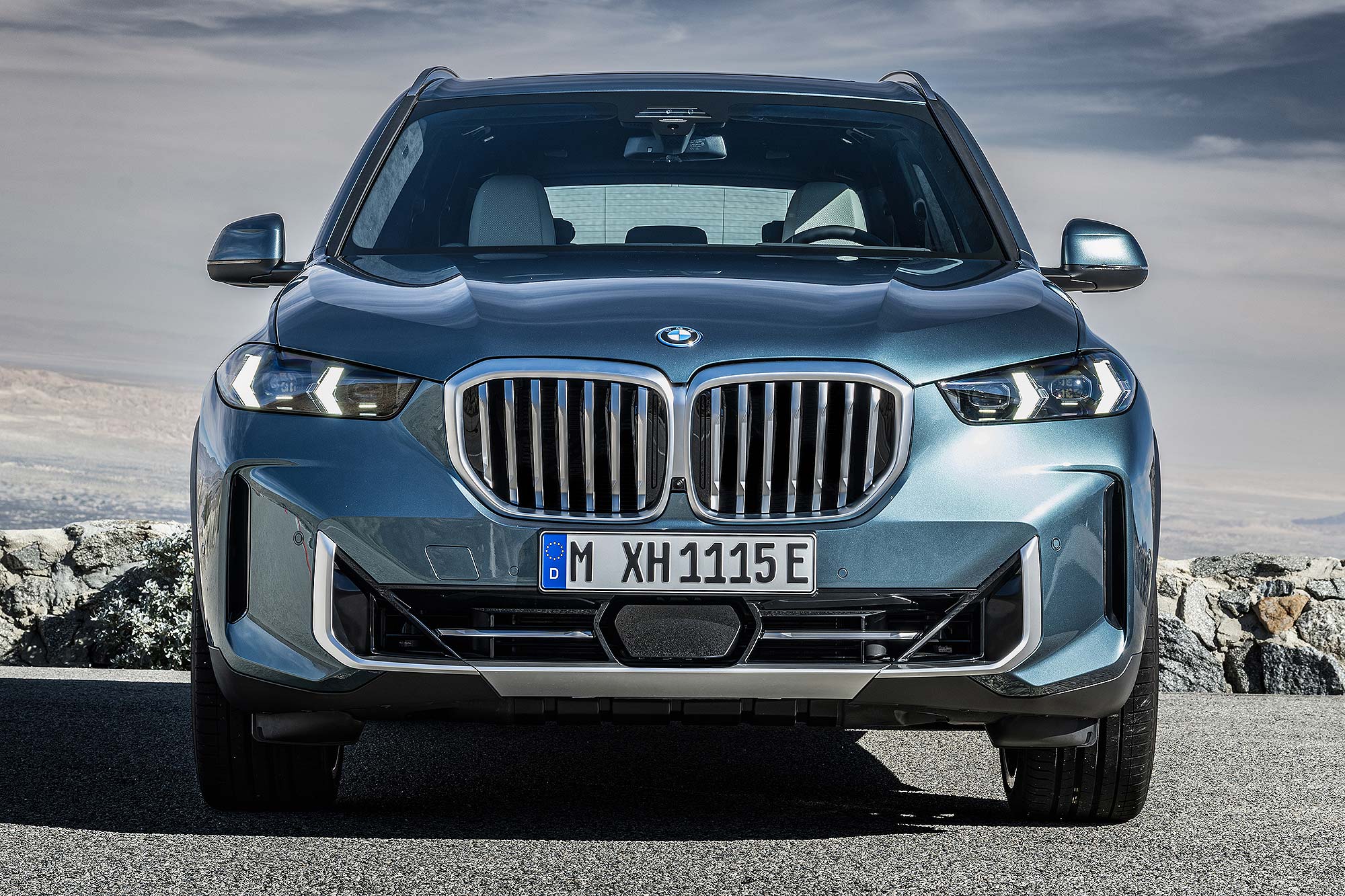
The most efficient X5 by far is the plug-in hybrid xDrive50e, which emits as little as 19g/km of CO2 and can average a claimed fuel economy of 353mpg. That means a low first tax payment and a low Benefit-in-Kind (BIK) company car tax band, which could make it a good option for business users. Just don’t forget to recharge the battery if you want to achieve anything near the official fuel economy.
Diesel xDrive30d and xDrive40d versions of the X5 deliver an official 39.8mpg and 37.7mpg respectively but their emissions are unsurprisingly far higher than the xDrive50e. The xDrive40d, for example, peaks at 196g/km of CO2.
The least efficient models are those with a V8 engine, with the X5 M Competition delivering an eye-watering 21.1mpg. You’ll see significantly less than this if you test the performance to its full potential, too. The M60i fares slightly better at 24.4mpg, but with CO2 emissions of 262g/km (304g/km for the M Competition), a performance X5 does little for your wallet or the planet.
Hybrid aside, all of the petrol and diesel versions will subsequently cost a considerable amount to fuel and, additionally, the first-year tax costs are also high due to their emissions, while the trend continues from year two thanks to the high purchase prices. Considering the cost of the X5 itself, however, the running costs are unlikely to trouble most new buyers. Prices range from around £75,000 for an X5 diesel in xLine trim, to £137,000 for the X5 M Competition.
Helping soften the blow somewhat, in any case, is BMW Service Inclusive. As the name suggests, it is an all-encompassing service package that covers the servicing costs for a fixed number of years and miles. These fixed-price schemes will help minimise the chance of unexpected bills in the first few years of ownership.
BMWs generally hold their value well, too, but do bear in mind the rapidly changing perception of diesel and the increasing costs being levied against vehicles with high emissions. If you’re regularly driving into a city centre, for example, you may well want to opt for the hybrid version to avoid unexpected costs or issues later down the line.
BMW X5 reliability
BMW hasn’t always had the most impressive reputation for reliability, especially considering its status as a premium brand. However, things have improved in recent years. In the manufacturer standings of the 2025 What Car? Reliability Survey, the brand came a respectable sixth out of 30 car manufacturers. Importantly, that also put it ahead of its premium rivals such as Audi and Mercedes-Benz (joint 22nd place), Land Rover (26th) and Jaguar (27th). It even managed to beat Lexus (9th), a company known for its reliability and customer service.
The X5 itself performed brilliantly in the latest test of luxury cars and SUVs aged up to five years old, finishing second with a reliability score of 96.2 per cent. Only the Lexus RX stood between the X5 and class honours, although it’s worth noting that the results were based on the petrol and plug-in hybrid models. Diesel versions are deemed to be less reliable, according to the survey data.
A new BMW X5 will come with a three-year, unlimited-mileage warranty. That’s not bad, considering cars such as the Volvo XC90 get a three-year, 60,000-mile warranty. Owners can also extend a BMW warranty with the Insured Warranty option, which provides three levels of cover that can last for up to 100,000 miles. Three years of roadside assistance are provided with every new BMW as well, so you won’t have to worry about getting stranded.
- A plug-in-hybrid version of the X5, called the xDrive50e (formerly the xDrive45e), is available. It pairs a six-cylinder petrol engine with a 194bhp electric motor and a 25.7kWh battery to produce a substantial 483bhp. The battery is mounted beneath the rear of the car, reducing luggage capacity to 500 litres, but it enables an electric-only range of up to 64 miles. Despite the extra weight, performance is strong, with BMW quoting a 0-62mph time of just 4.8 seconds.
- There are two V8-powered performance versions of the X5, with the xDrive M60i being the ‘entry-level’ model. It uses a 4.4-litre twin-turbocharged V8 with mild-hybrid assistance, producing 523bhp for a 0-62mph time of 4.3 seconds. Prices start from around £100,000. Sitting above it is the Porsche-rivalling X5 M Competition, which ups output to 626bhp and slashes the 0-62mph time to 3.9 seconds. However, at roughly £137,000 it comes at a hefty premium.
- Although the X5 is focused primarily on road use, BMW still offers an optional xOffroad pack on selected diesel models for buyers who want extra rough-terrain ability. Priced at £2,800, it adds a mechanical locking differential, bespoke xOffroad drive modes (xSand, xRocks, xGravel and xSnow), revised xDrive settings, tailored throttle and gearbox responses, plus dedicated off-road displays in the instrument screens. It’s currently limited to certain xDrive30d and xDrive40d models and depends on other options being fitted.
- If you want the best all-rounder and are happy with a diesel engine, we’d recommend going for a BMW X5 xDrive30d in entry-level xLine trim. It strikes a strong balance between performance and running costs for a large SUV, and even in standard xLine specification it’s generously equipped. Key features include heated seats, a 12.3-inch digital driver display, a 14.9-inch touchscreen infotainment system, LED headlights, air suspension, wireless phone charging and an automatic tailgate.
- If you’re looking for the cleanest and most efficient X5, the xDrive50e plug-in hybrid is the one to choose. Its electric-only range of 64 miles could be ideal for short commutes and the school run, helping to keep running costs comparatively low. The xDrive50e is available in xLine and the sportier M Sport and M Sport Pro trims. It’s worth noting, though, that third-row seating isn’t offered on the plug-in hybrid due to the battery pack.
- If outright performance is a priority, the X5 M Competition is the one to have. Its 4.4-litre twin-turbo V8 produces a thumping 626bhp, helping it to hit 62mph in just 3.9 seconds, which puts it firmly in sports car territory. It also comes with an active M differential, adaptive suspension and more aggressive styling inside and out. That said, at around £137,000, this level of ability doesn’t come cheap.
- If you plan to spend more time away from the tarmac, the X5 xDrive40d in xLine trim is the best starting point, thanks to its strong diesel torque and sure-footed four-wheel drive. It’s also one of the selected models on which the optional xOffroad package can be specified, adding a locking rear differential, bespoke off-road driving modes and tailored drivetrain settings to improve traction on slippery surfaces. While the X5 is no Land Rover Discovery, this setup gives it a useful boost in rough-road ability.

