Dacia Duster 2019-2024 review | Likeable budget-price compact SUV

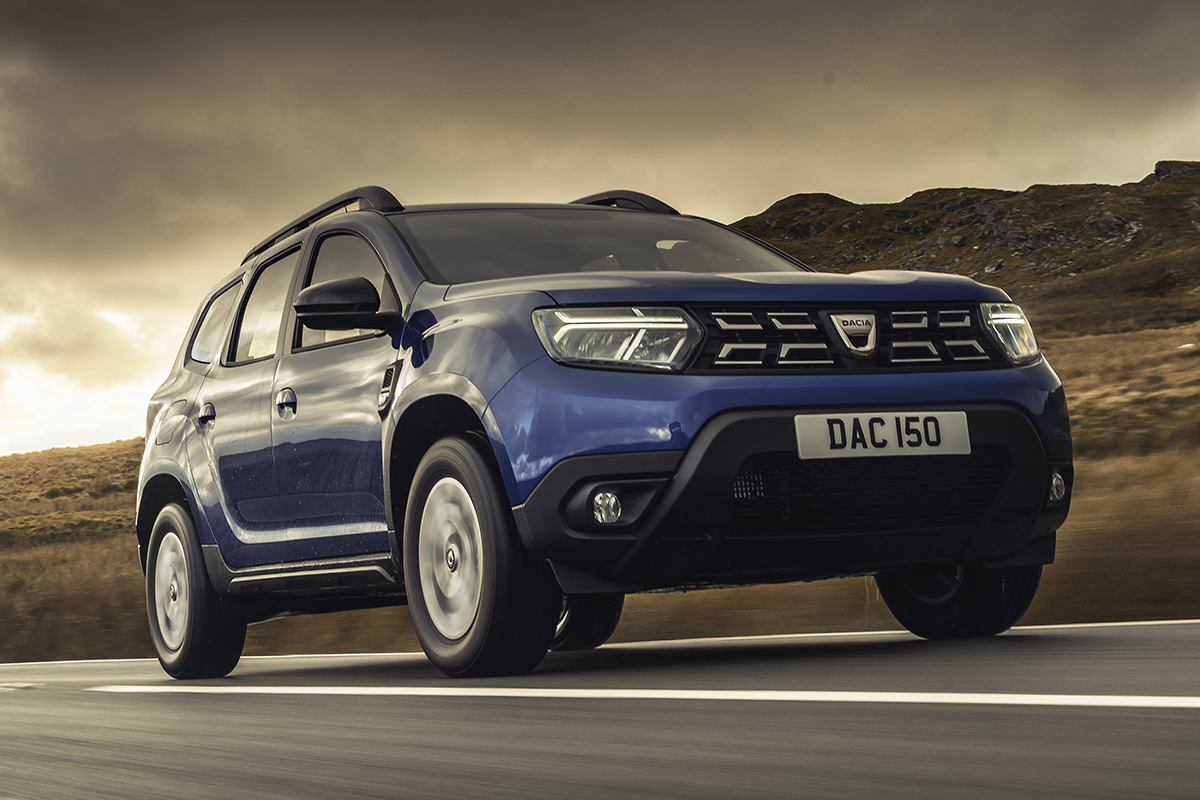
Pros and cons
What we like
Cheap to buy, new or used
Better finished than the old model
4x4 versions are available
What to consider
Below average Euro NCAP safety rating
Kia Sportage and Nissan Qashqai are better to drive
Four-wheel-drive cars have smaller boots
The CarGurus verdict
Dacia’s no-nonsense Duster is not without its charms. It’s a better car than its predecessor yet remains extremely good value for money, while the availability of 4x4 models further serves to widen its audience.
However, if you’re concerned about safety or want something better to drive, you’re probably better off buying an example of one of the alternatives, such as the Suzuki Vitara, Volkswagen T-Roc or Nissan Qashqai.
Those looking to buy as new a car as they can for a limited budget will otherwise find the Duster hard to beat. Go for a less costly 2WD TCe or dCi model, in Comfort trim, and you’ll get a practical and pleasant car that won’t cost the world to run.
out of 5 expert review
What is the Dacia Duster?
Buying a practical family SUV is all well and good but, more often than not, even the entry-level options can still be quite expensive.
Fortunately, not all is lost. Enter the second-generation Dacia Duster a capable family SUV which, when it was unveiled in 2018, was renowned for its incredibly affordable prices. That holds true as a used buy - indeed, you'll usually get a newer, lower mileage Duster for your budget than you will with most of its rivals.
This version of the Duster is much improved compared to the first-generation model. Its exterior styling is more modern and appealing, its revamped interior is a significant step up and its new technology options are more in keeping with what modern buyers want. It hasn’t done away with its utilitarian nature entirely, however, and has retained the original’s practical, rugged approach and off-road capabilities.

Practicality
How practical is it?
As far as interior space goes, there’s a large boot, with a total of 478 litres of storage space on offer in petrol models. Diesel models vary, with 494 litres available in the two-wheel-drive version, and 467 litres in 4x4 models (though this drops further to 471 and 414 litres respectively if you order the optional spare wheel). For comparison, a Nissan Qashqai of the same vintage offers up to 430 litres of space.
The rear seats can fold in a 60/40 split, too, although they leave a large step in the boot floor which isn’t ideal for carrying larger loads.
Space for rear passengers is good but not outstanding. There’s just enough legroom for somebody who is six-foot tall to sit behind a driver of the same height, and headroom is ample. Where the Duster lags some rivals is in the lack of rear seat flexibility; the backrests don’t recline, and you can’t slide the seats to trade legroom for extra boot space like you can in something like a Renault Captur. The rear bench is just wide enough to fit three adults across and while there is a central transmission tunnel to straddle, it’s at least fairly low.
Up front the Duster has lots of room and a decent amount of adjustment in the driving position, with seats that are wider and more comfortable than in the first-generation Duster. Do be aware, however, that the lack of a footrest next to the clutch is a bugbear for some drivers.
The interior fittings are mostly of the cheaper-feeling variety, with plenty of hard plastics in sight, but given the Duster’s low price point this isn’t entirely surprising.

Driving
What's it like to drive?
The engine line-up initially consisted of a naturally aspirated, 113bhp, 1.6-litre petrol engine and a 113bhp, 1.5-litre diesel engine, dubbed the SCe 115 and dCi 115, respectively. Peppy 1.0-litre and 1.3-litre TCe turbocharged petrol engines would later be added, in three different power configurations called 100 (later 90), 130 and 150; numbers that roughly match their bhp figures.
Most Dusters come with either a five-speed or six-speed manual transmission, the only exception being the TCe 150, which comes as standard with an automatic.
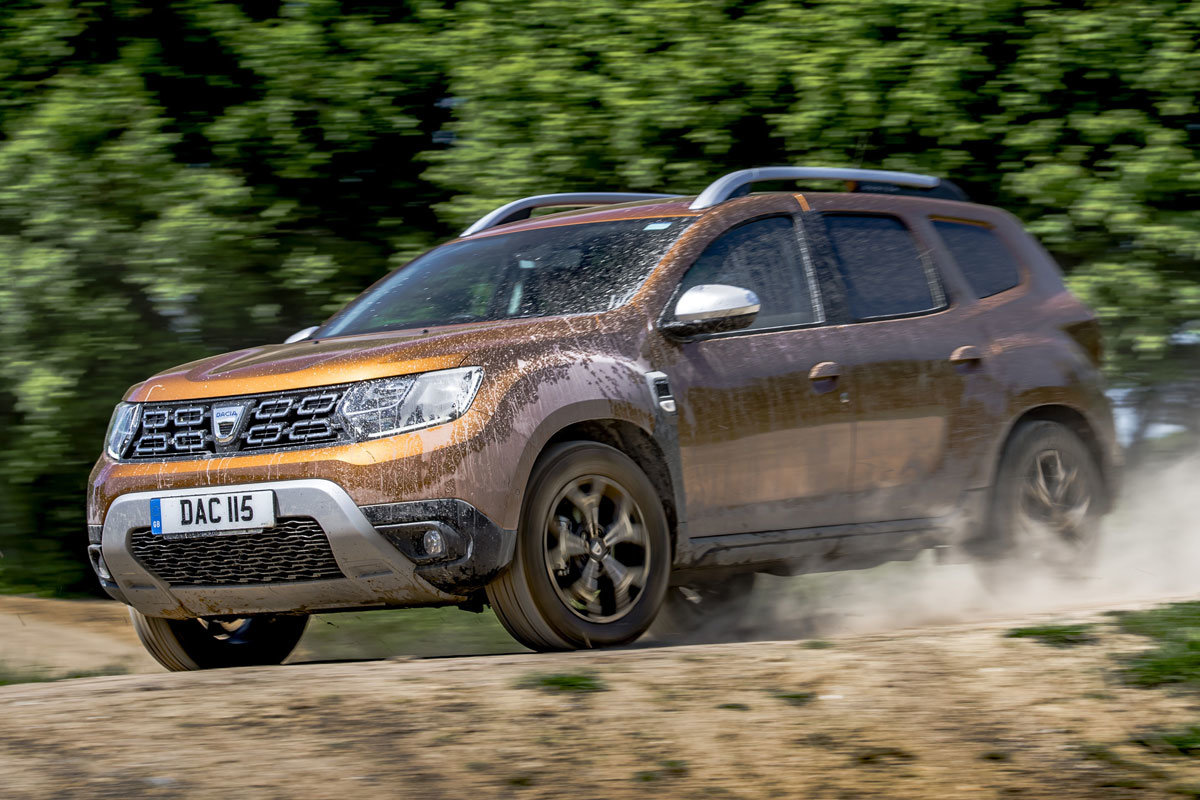
Adding further appeal to the Duster is the fact that it can be had in four-wheel-drive form. Early in the car's life, you could specify four-wheel-drive with either the TCe 150 or dCi 115 engines, though the former was a slow seller and it was soon dropped; most 4x4 Dusters on the used market today are therefore diesels.
Toward the end of its life, the range was slimmed down further, with first the SCe engines and later the diesels ditched. With the loss of the latter, the option of four-wheel drive also fell by the wayside.
The Duster is pleasant to drive when you consider its low price tag. It’s not exciting or involving but, given the price and its intended use, those are moot points. The 1.6-litre petrol engine is not a great option, however, as it doesn’t have much punch; the diesel, or later TCe turbocharged petrols, are more flexible and relaxing to drive.
Expect a comfort-oriented ride that does a reasonable job of soaking up lumps and bumps in the road, as well as being quieter than in the first-generation Duster. Body lean is pronounced, and the steering is light and on the slower side to respond, so this is no sports car – but what did you expect?
Tech and equipment
Technology, equipment & infotainment
At launch, four trim levels were offered: Access, Essential, Comfort and Prestige. The entry-level Access model was a very basic affair, with no stereo or air-conditioning, and despite its astonishing affordability, it sold in very small numbers. As a result, it was axed when the Duster was facelifted in 2021.
Most will want an Essential model or more, though, as the mid-level and range-topping models come with creature comforts such as aircon and a stereo or infotainment system. The more upmarket Comfort and Prestige Versions, built from December 2018 onwards, which are equipped with the touchscreen Media Nav system, also benefit from Apple CarPlay and Android Auto support for smartphones. A spare wheel was optional on every model except the bi-fuel versions.
In 2022, Dacia revamped its nomenclature, and with it came changes to the Duster range. The Essential model remained, while Comfort and Prestige versions were renamed Expression and Journey. Equipment lists were reshuffled, too, with cruise control now standard on the Essential version, and Journey models getting heated seats.
Also added at the top of the range was an Extreme version, which got all the equipment that was standard on the Journey, but featured a more rugged appearance with copper-coloured accents.
Overall, the second-generation Dacia Duster remains an inexpensive, straightforward and practical car that represents excellent value for money. The only major downside is that it scored just three stars in crash tests by safety organisation Euro NCAP, so it continues to lag behind mainstream five-star alternatives. But, on the flip side, all of those are much more expensive.

Running costs
Dacia Duster running costs
Dacias are not expensive cars to run thanks to their straightforward nature, frugal engines and low kerb weights.
Unsurprisingly, it’s the Blue dCi 115 4x2 model which is the most efficient in the range. It has a claimed average fuel economy, on the more realistic WLTP test cycle, of up to 57.9mpg. Its CO2 emissions are also rated at a sensible 128g/km. The TCe petrols all average in the 40mpg range but their WLTP CO2 emissions are higher, peaking at 162g/km of CO2 for the range-topping TCe 150 in 4x4 specification.
The diesel versions are also the most efficient in the real world, as well as on paper, with most owners citing mpg in the region of 50mpg or above, whereas the petrol versions range from the mid-30s to low 40s in the case of the TCe models. Most, however, are often not far off their claimed economy figures; fuel costs, as a result, should prove more than tolerable for most.
The Dacia will require servicing every year, or when 18,000 miles have been racked up since the last service. The schedule is straightforward, so costs will be low; a cabin filter is the only required servicing item in the first year, for example, then in the second year the cabin filter, oil and oil filter are changed. We’d be inclined to get the oil changed in the first year as well, though, just for peace of mind.
Dacia also offers a range of service plans that can help you control the costs further. A three-year, 30,000-mile plan costs £350, while a four-year, 40,000-mile plan costs £650. This, coupled with Dacia’s warranty and warranty extension options, should protect against any unexpected bills.

Dacia Duster reliability
The Dacia Duster is a comparatively straightforward SUV that uses lots of well-proven parts, so while there are more reliable options out there from Toyota, Hyundai and Kia, the Duster should still be pretty dependable.
This is backed up by a strong showing in reliability surveys. For example, the Duster scored 95% in the 2025 What Car? Reliability Survey, a creditable result that put it 19th out of the 38 small SUVs that featured in the study.
A conventional three-year, 60,000-mile warranty is also included with every Dacia, which is on a par with most rivals, and it can also be extended for relatively little money. To lengthen the coverage to four years or 60,000 miles, whichever comes first, costs just £195; for a total of seven years or 100,000 miles of coverage, you’ll pay a still-tolerable £795.
This could prove a sensible choice if you’re planning to own your Duster for a long time, particularly given that the warranty extension costs aren’t that high. You don’t have to opt into one immediately, however, as all can be applied at any point up to 36 months or 60,000 miles into your ownership. Roadside assistance is provided for the first three years and 60,000 miles, too, and that can also be extended.
If you’re looking at used versions and want to keep costs low, it might be worth seeking out one of the early naturally aspirated SCe 115 petrol models. The 1.6-litre engine is very simple, so it will prove reliable and easy to look after, and it has a timing chain instead of a belt, which will help keep overall servicing costs down. It’s not a great performer though; the diesels and later TCe petrols are more flexible and often more efficient.

What owners say
"The Dacia Duster has garnered positive feedback for its comfort, fuel economy, and spaciousness across model years. Many owners appreciate its value for money, off-road capabilities, and straightforward design. However, drivers have also pointed out some drawbacks, such as a basic interior and lack of modern features. Overall, the Duster is favored for its practical approach and enjoyable driving experience."
Exactly what I wanted for a very good price. I had considered the prestige model but in the end decided I wouldn’t use the additional features which had also had mixed reviews.
14 January 2026Great value for money. The Prestige is well packaged, comfortable, great acceleration and looks fab.
5 October 2025Seems good value with a lot of extras worth paying extra for Duster Extreme. 1.3 litre engine much quieter than the Journey 1 litre model I test-drived. Have owned Dacia Logan for 10 years from new with very few problems. Can't fault Dacia value for money.
13 May 2025What owners say
Exactly what I wanted for a very good price. I had considered the prestige model but in the end decided I wouldn’t use the additional features which had also had mixed reviews.
14 January 2026Great value for money. The Prestige is well packaged, comfortable, great acceleration and looks fab.
5 October 2025Seems good value with a lot of extras worth paying extra for Duster Extreme. 1.3 litre engine much quieter than the Journey 1 litre model I test-drived. Have owned Dacia Logan for 10 years from new with very few problems. Can't fault Dacia value for money.
13 May 2025Nice looking and very economical but interior is very basic
17 September 2022The Duster was good value for money, just what I was looking for a small 4x4 .
16 July 2024After reading positive reviews about the Duster I decided to go and try one out, Surprisingly comfy and quite perky for a diesel and a great plus is the economy is superb and low road tax band make the car a bargain, very roomy with a nice high seating position. Recommended
6 September 2021I like the ability - as anolder person to truly sit up and see out of the car with ease. Controls are fine for modern needs and I am sure it will hold its price better than other cars.
11 January 2022Shame it doesn’t have parking sensors that would of been perfect
1 April 2021great car, vale for money, has all the features of a comfortable vehicle. its great to drive and economical
9 March 2024The car I was looking at is great bodywork is immaculate, inside was very good, but a bit basic, but a really nice car.
7 September 2021Three things to know
- One of the biggest downsides to buying a Duster as a family car is that its safety rating isn't as good as its potential rivals. In 2017 crash tests, Euro NCAP gave it a fairly mediocre three-star rating. Dacia explained this away by citing the fact that the Duster's electronic driver aids weren't as comprehensive as its rivals, and said that this was to be expected given its price. But this doesn't tell the whole story - the Duster scored 71 per cent for adult occupant protection and 66 per cent for child occupant protection in the crash tests themselves which suggests it offers less protection in a crash too.
- A Bi-Fuel Dacia Duster was made available for around two years from June 2020. It featured a 1.0-litre turbocharged engine that could run on petrol or liquefied petroleum gas (LPG), granting reductions in emissions and running costs. The addition of the LPG tank, which didn’t alter boot space but did occupy the spare wheel holder, also granted a reputed total range of more than 620 miles. If you have a local LPG filling station, and plan on doing lots of miles, it could be worth considering.
- Dacia unveiled the SE Twenty version of the Duster in January 2020. It’s based on the Comfort model, so comes with features such as cruise control and a trip computer, but adds a range of bespoke cosmetic upgrades, including 17-inch diamond-cut alloys, custom SE Twenty interior trim and blue detailing. It also comes with a multi-view camera and rear parking sensors, as well as a blind-spot warning system.
Which one to buy
- If you want the best all-rounder: The TCe 130 4x2 offers a good blend of price, performance and economy. Essential trim isn’t a bad starting point, as it includes air-conditioning and a stereo system with Bluetooth, but most will be happier with Comfort or Expression trim, as that comes with a 7.0-inch touchscreen media system, cruise control and a rear parking camera.
- If you want the best mpg: The most economical Duster is the Blue dCi 115 4x2, which averages 57.9mpg. We’d go for the Comfort or Expression versions, which get some nice-to-have upgrades.
- If you’re on a budget: The cheapest Dacia Dusters will be Access versions with the SCe 115 engine and two-wheel drive. But these cars comes with very little and don't have a stereo, split-folding rear seats or air-conditioning, so be prepared for a bare-bones experience.
- If you want to go off-roading: You’ll want the additional traction of one of the 4x4 models if you’re regularly going to tackle more challenging routes or conditions. We’d go for the Blue dCi 115 4x4, as its torque and delivery should make it more easily controlled. Go for inexpensive Comfort trim, too, with the smaller 16-inch wheels and hill descent control.
- If you’re going to tow: The Blue dCi 115 4x4 offers the highest unbraked towing rating of 740kg, in the current line-up, as well as the same 1,500kg braked towing rating offered by several of the other models. The diesel version will also probably be the easiest to tow with, so we’d opt for one of those in mid-spec Comfort or Expression trim.


Pricing trends
Starting RRP
£12,013
Current avg. market price
£10,805
Trending down by 6.4% this month
May 2026 - October 2026
More on the Dacia Duster (2019 - 2023)
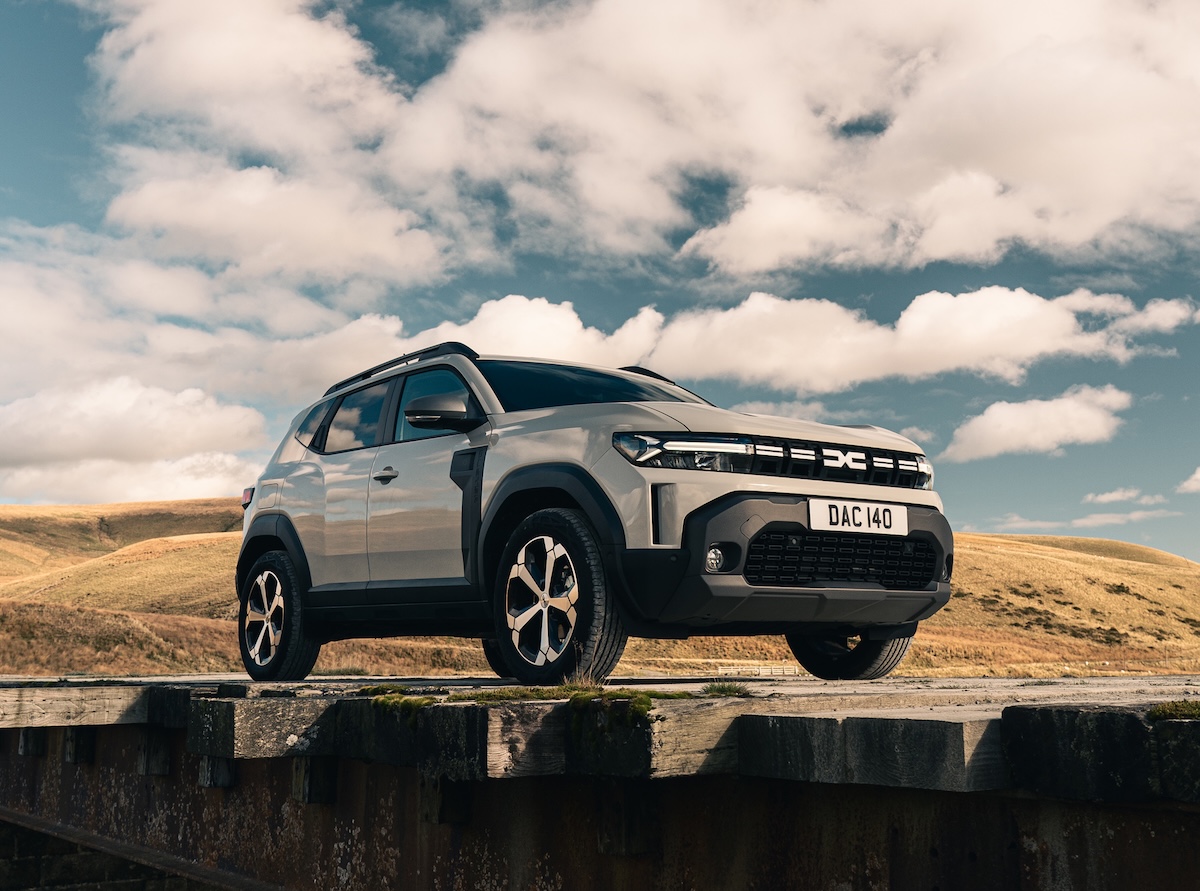
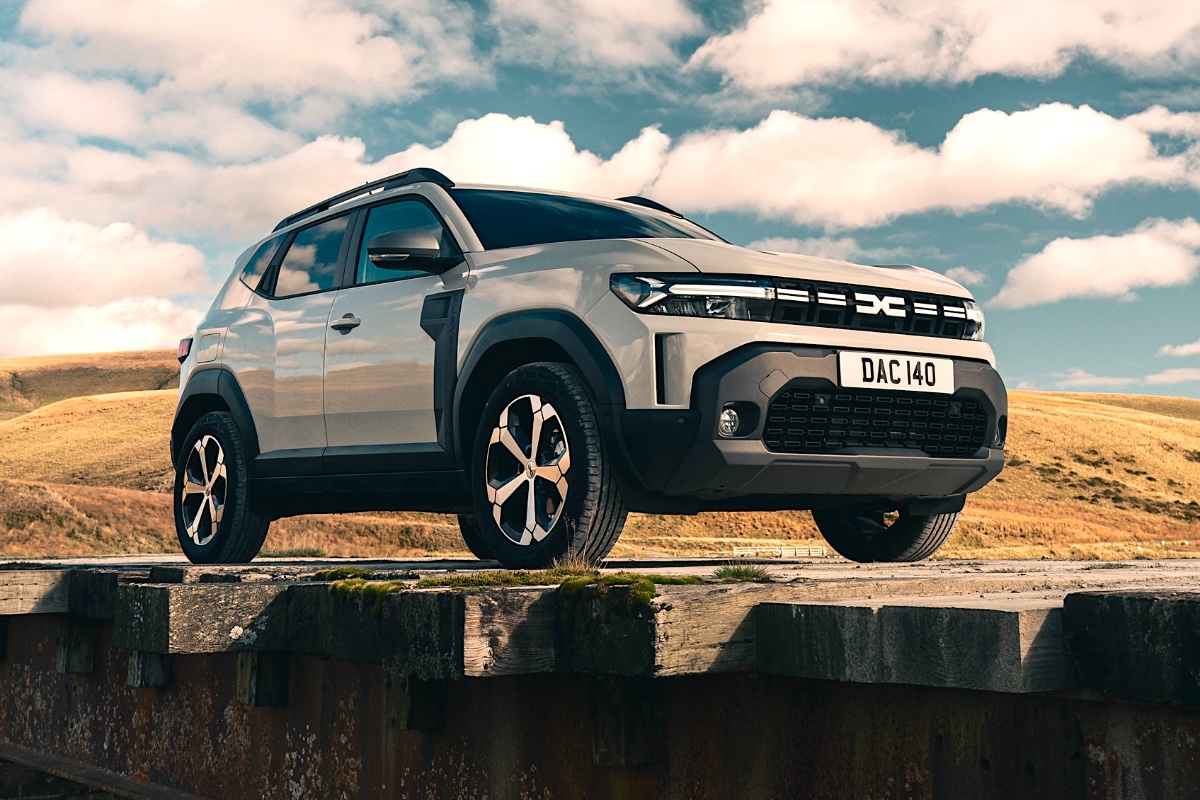

Compare 2023 Dacia Duster Trims
The Dacia Duster offers a range of trims from budget-friendly essentials to well-equipped options, all with FWD capability.
- Starting at £11,386
- Most Popular: 1.0 Tce 90 Journey 5dr
Trim Overview
Prices updated weekly from CarGurus listings.
| 1.0 Tce 90 Essential 5dr | 1.0 Tce 90 Expression 5dr | 1.3 Tce 130 Expression 5dr | 1.0 Tce 90 Journey 5dr (Most Popular) | 1.3 Tce 130 Extreme Se 5dr | 1.3 Tce 130 Journey 5dr | 1.3 Tce 150 Journey 5dr Edc | |
|---|---|---|---|---|---|---|---|
| Starting MSRP | £16,375 | £17,375 | £18,775 | £18,875 | £19,565 | £20,275 | £22,275 |
| Avg. Market Price | £11,386 | £12,361 | £12,966 | £13,506 | £13,945 | £13,961 | £15,498 |
| Positioning | Best value | Standard | Standard | Standard | Standard | Standard | Fully loaded |
| Standout Features | Bluetooth, DAB Radio, Air Conditioning | Cruise Control, Backup Camera, Alloy Wheels | Parking Assist, Backup Camera, Alloy Wheels | Navigation System, Heated Seats, Alloy Wheels | Navigation System, Heated Seats, Alloy Wheels | Navigation System, Heated Seats, Alloy Wheels | Parking Assist, Backup Camera, Heated Seats |
| Drivetrain | FWD | FWD | FWD | FWD | FWD | FWD | FWD |
| Listings Available | 23 | 55 | 18 | 58 | 12 | 34 | 23 |
Quick Compare Table
Listing prices sourced from CarGurus — updated weekly. OEM specs from manufacturer data.
| 1.0 Tce 90 Essential 5dr | 1.0 Tce 90 Expression 5dr | 1.3 Tce 130 Expression 5dr | 1.0 Tce 90 Journey 5dr | 1.3 Tce 130 Extreme Se 5dr | 1.3 Tce 130 Journey 5dr | 1.3 Tce 150 Journey 5dr Edc | |
|---|---|---|---|---|---|---|---|
| AI Summary | Best value entry point for budget shoppers | Good features at a reasonable price | More power without a big price jump | Most popular choice with added tech | Premium features for a higher price | Solid features with a good balance | Fully loaded for those wanting everything |
| Avg. Market Price | £11,386 | £12,361 | £12,966 | £13,506 | £13,945 | £13,961 | £15,498 |
| MSRP | £16,375 | £17,375 | £18,775 | £18,875 | £19,565 | £20,275 | £22,275 |
| Engine | 999.0cc 90 hp I3 | 999.0cc 90 hp I3 | 1.3l I4 Petrol | 999.0cc 90 hp I3 | 1.3l I4 Petrol | 1.3l I4 Petrol | 1332.0cc 148.0 hp I4 |
| Drivetrain | FWD | FWD | FWD | FWD | FWD | FWD | FWD |
| Bluetooth | ✓ | ✓ | ✓ | ✓ | ✓ | ✓ | ✓ |
| DAB Radio | ✓ | ✓ | ✓ | ✓ | ✓ | — | ✓ |
| AUX/USB connectivity | ✓ | ✓ | ✓ | — | ✓ | — | — |
| Air Conditioning | ✓ | ✓ | ✓ | ✓ | ✓ | ✓ | ✓ |
| Cruise Control | ✓ | ✓ | ✓ | ✓ | ✓ | ✓ | ✓ |
| isofix | ✓ | ✓ | ✓ | ✓ | ✓ | ✓ | ✓ |
| Alarm/Immobiliser | ✓ | ✓ | ✓ | ✓ | ✓ | ✓ | ✓ |
| Parking Assist | ✓ | ✓ | ✓ | ✓ | ✓ | ✓ | ✓ |
| Privacy glass/Tinted windows | ✓ | ✓ | ✓ | — | — | ✓ | — |
| Stop/Start System | ✓ | ✓ | ✓ | — | — | — | — |
| Parking Sensors | ✓ | — | — | — | — | — | — |
| Backup Camera | — | ✓ | ✓ | ✓ | — | ✓ | ✓ |
| Navigation System | — | — | — | ✓ | ✓ | ✓ | ✓ |
| Heated Seats | — | — | — | ✓ | ✓ | ✓ | ✓ |
| Keyless Entry/Start system | — | — | — | ✓ | ✓ | ✓ | ✓ |
| Active Listings | 23 | 55 | 18 | 58 | 12 | 34 | 23 |
Missing data displayed as "—".
Trim Deep Dives
1.0 Tce 90 Essential 5dr — "Who It's For"
The 1.0 Tce 90 Essential is the pick for shoppers who want essential features without paying for extras. It's the most budget-friendly option in the lineup.
- Avg. market price: £11,386 (updated weekly)
- Inventory: 23 listings — lower availability; may limit negotiating room
- View 1.0 Tce 90 Essential listings
1.0 Tce 90 Expression 5dr — "Who It's For"
The 1.0 Tce 90 Expression is the pick for shoppers who want a good balance of features without stepping up to the Journey trim.
- Avg. market price: £12,361 (updated weekly)
- Inventory: 55 listings — lower availability; may limit negotiating room
- View 1.0 Tce 90 Expression listings
1.3 Tce 130 Expression 5dr — "Who It's For"
The 1.3 Tce 130 Expression is the pick for shoppers who want more power without a significant price increase.
- Avg. market price: £12,966 (updated weekly)
- Inventory: 18 listings — lower availability; may limit negotiating room
- View 1.3 Tce 130 Expression listings
1.0 Tce 90 Journey 5dr — "Who It's For"
The 1.0 Tce 90 Journey is the pick for shoppers who want added tech features and comfort without going for the higher trims. It's the most popular choice in the lineup.
- Avg. market price: £13,506 (updated weekly)
- Inventory: 58 listings — lower availability; may limit negotiating room
- View 1.0 Tce 90 Journey listings
1.3 Tce 130 Extreme Se 5dr — "Who It's For"
The 1.3 Tce 130 Extreme Se is the pick for shoppers who want premium features and a stylish design without going fully loaded.
- Avg. market price: £13,945 (updated weekly)
- Inventory: 12 listings — lower availability; may limit negotiating room
- View 1.3 Tce 130 Extreme Se listings
1.3 Tce 130 Journey 5dr — "Who It's For"
The 1.3 Tce 130 Journey is the pick for shoppers who want a solid mix of features and performance without the highest price tag.
- Avg. market price: £13,961 (updated weekly)
- Inventory: 34 listings — lower availability; may limit negotiating room
- View 1.3 Tce 130 Journey listings
1.3 Tce 150 Journey 5dr Edc — "Who It's For"
The 1.3 Tce 150 Journey is the pick for shoppers who want a fully loaded experience with all the bells and whistles.
- Avg. market price: £15,498 (updated weekly)
- Inventory: 23 listings — lower availability; may limit negotiating room
- View 1.3 Tce 150 Journey listings
Trim Recommendations
Most Popular — 1.0 Tce 90 Journey 5dr
With 58 active listings, the 1.0 Tce 90 Journey is the clear volume leader in the lineup.
Browse 1.0 Tce 90 Journey listings
Best Budget Option — 1.0 Tce 90 Essential 5dr
At £11,386 avg market price — below the lineup median of £13,506 — it's the most accessible entry point.
Browse 1.0 Tce 90 Essential listings
These recommendations are based on CarGurus' proprietary market data from October 22, 2026, CarGurus experts' opinions, and generative AI.

