Suzuki Celerio Review (2014-2019)
Suzuki Celerio cars for sale
3.0
Expert review
Pros
Cheap to buy and run
Comfortable and easy to drive
Good interior space given its size
Cons
Interior feels very cheap
Some would wish for more equipment
Stodgy handling
The CarGurus verdict
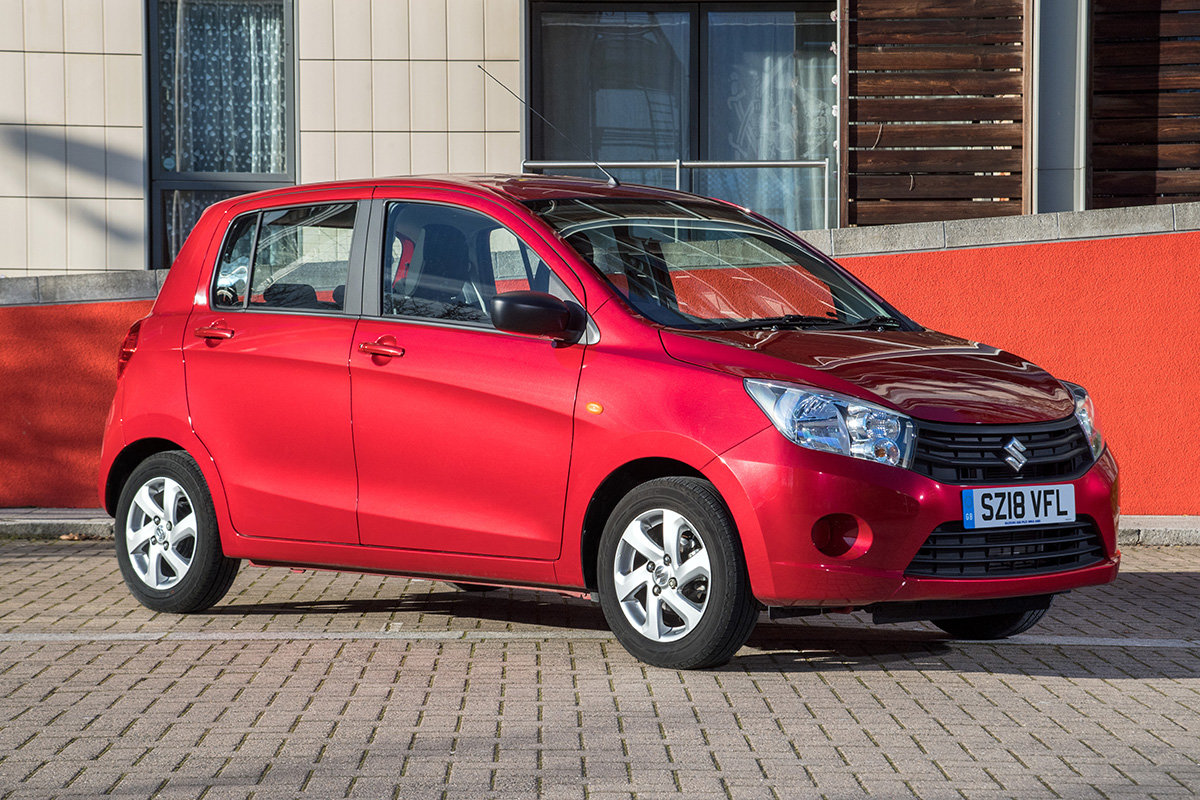
The Suzuki Celerio is the ultimate no-frills small car. What you see is what you get. There’s no pretence here, no attempts at fashion or frippery, and that honesty and simplicity is refreshing. That said, there’s no hiding the fact this is a cheap car that’s been built down to a price, and you can tell that from the minute you climb aboard. But the Celerio isn’t quite the automotive equivalent of a hair shirt; it’s comfortable enough once you’re motoring along, and while the engine isn’t all that powerful, it’s responsive enough to keep up with traffic.
If you want a super-cheap, new-ish car with lots of space, then the Celerio is worth a look. But do keep in mind that there are alternatives out there for similar money that feel just a bit less tinny, and are nicer to drive, and many of them can still be had with a bit of warranty left over, too.
What is the Suzuki Celerio
If you’re of a certain age, you’ll remember when the big supermarkets introduced us to the concept of a “budget brand” back in the 1990s. Tesco Value, Sainsbury's Basics, and so on… and soon, no-frills groceries became commonplace.
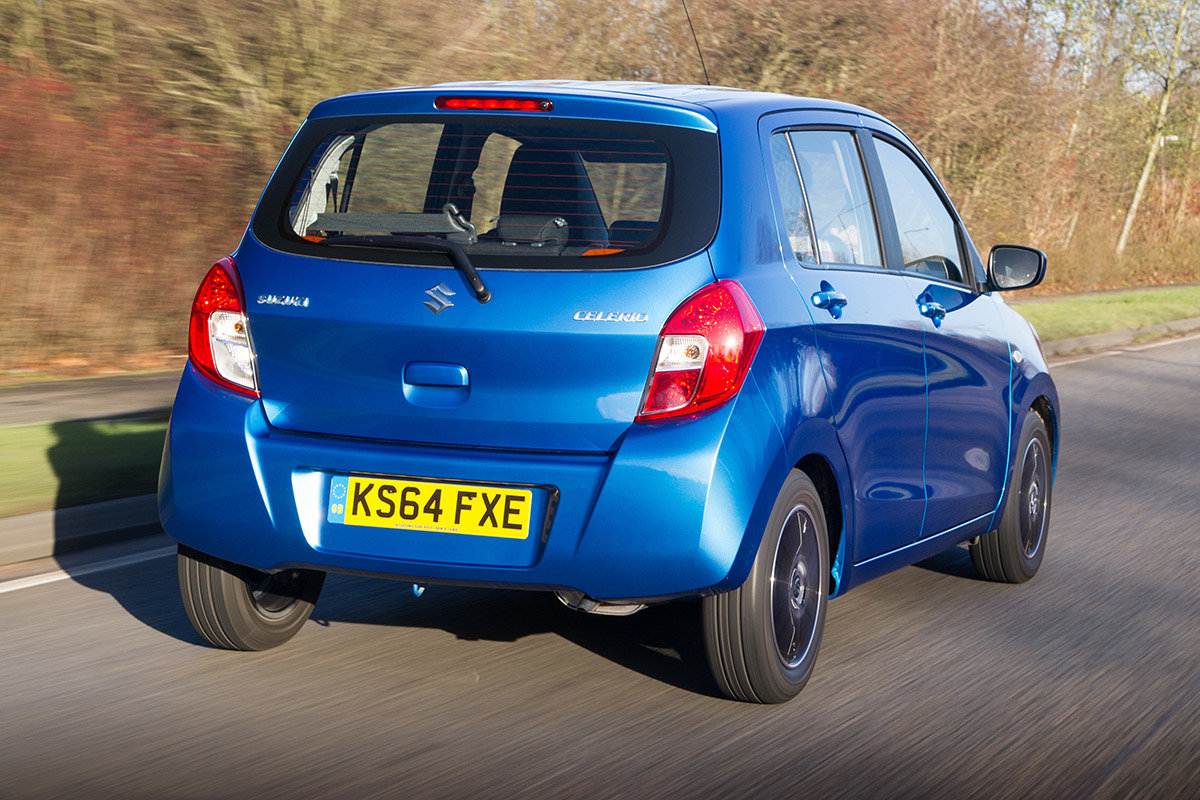
Think, therefore, of the Suzuki Celerio as a Tesco Value car. Like most cars, it will go forward and backward, and transport you from your home to a place of work and back again. Like most cars, it will seat five, and has space for luggage in the boot. And like most cars, you get a radio, seatbelts, airbags, doors, and windows that go up and down.
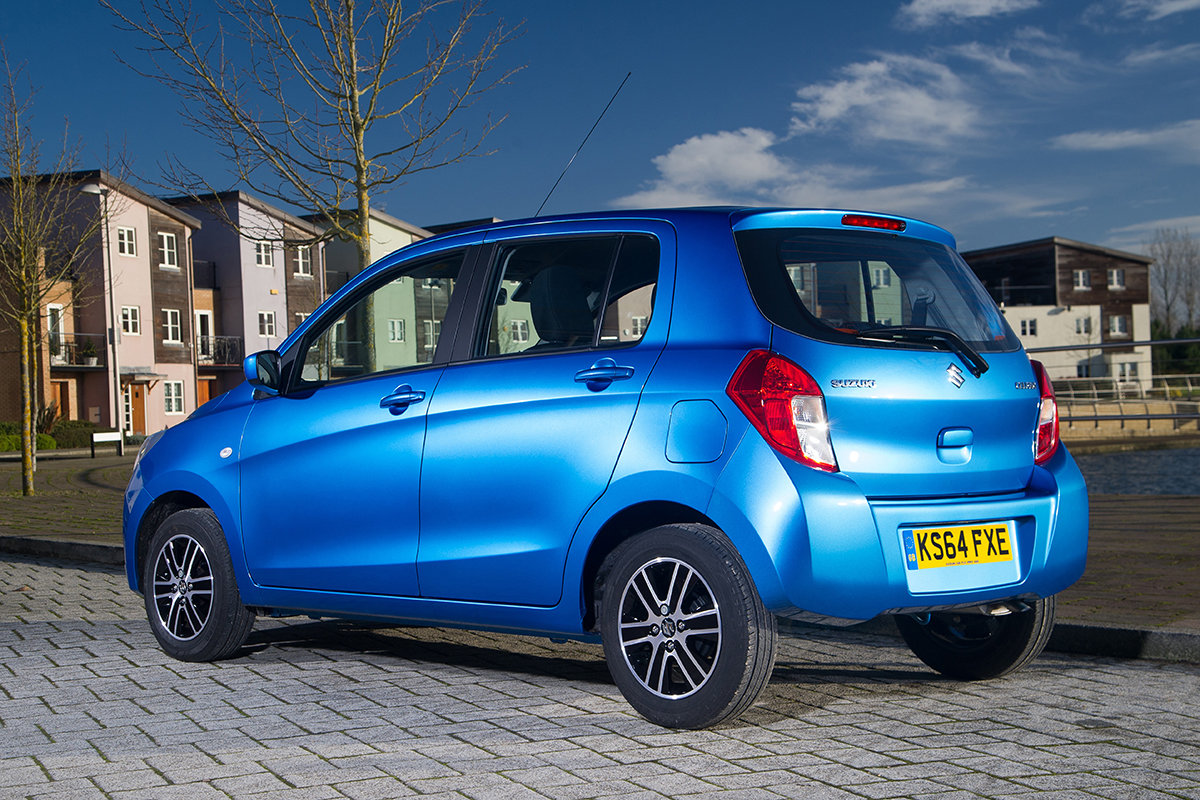
But unlike most cars, the Celerio does away with fripperies. It doesn’t have smart styling or fancy lights. You don’t get wood or metal inlays inside, and luxury items like sat-nav, parking sensors and leather seats are a distant dream. Instead, it provides simple, dependable transport; nothing more, nothing less. It was discontinued in 2019 and, although there was a replacement, it didn't make it to the UK.
How practical is it?
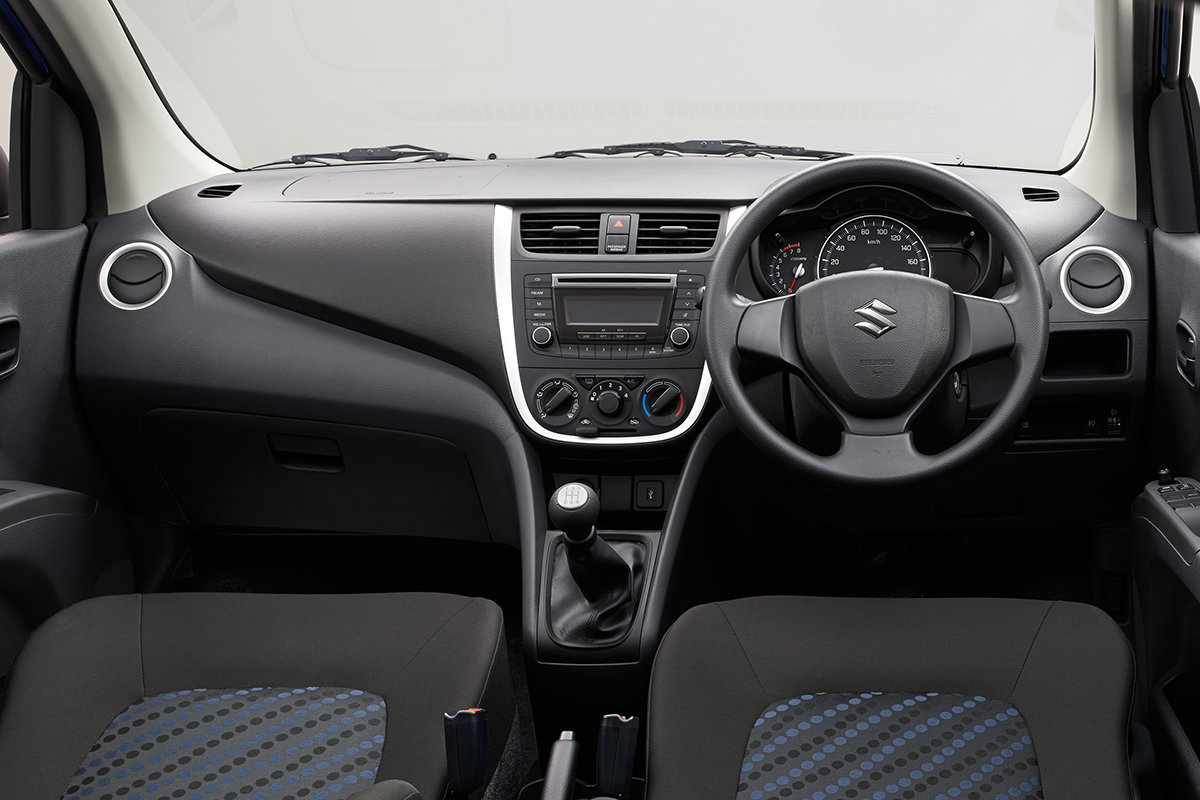
It does feel cheap, though. Sitting in the driver's seat, there’s no escaping the sea of dour, brittle grey plastic from which the Celerio’s interior is constructed, no matter where you look, nor the thin-feeling fabrics and carpets. In fairness, this is true in other no-frills cars, such as the Dacia Sandero.
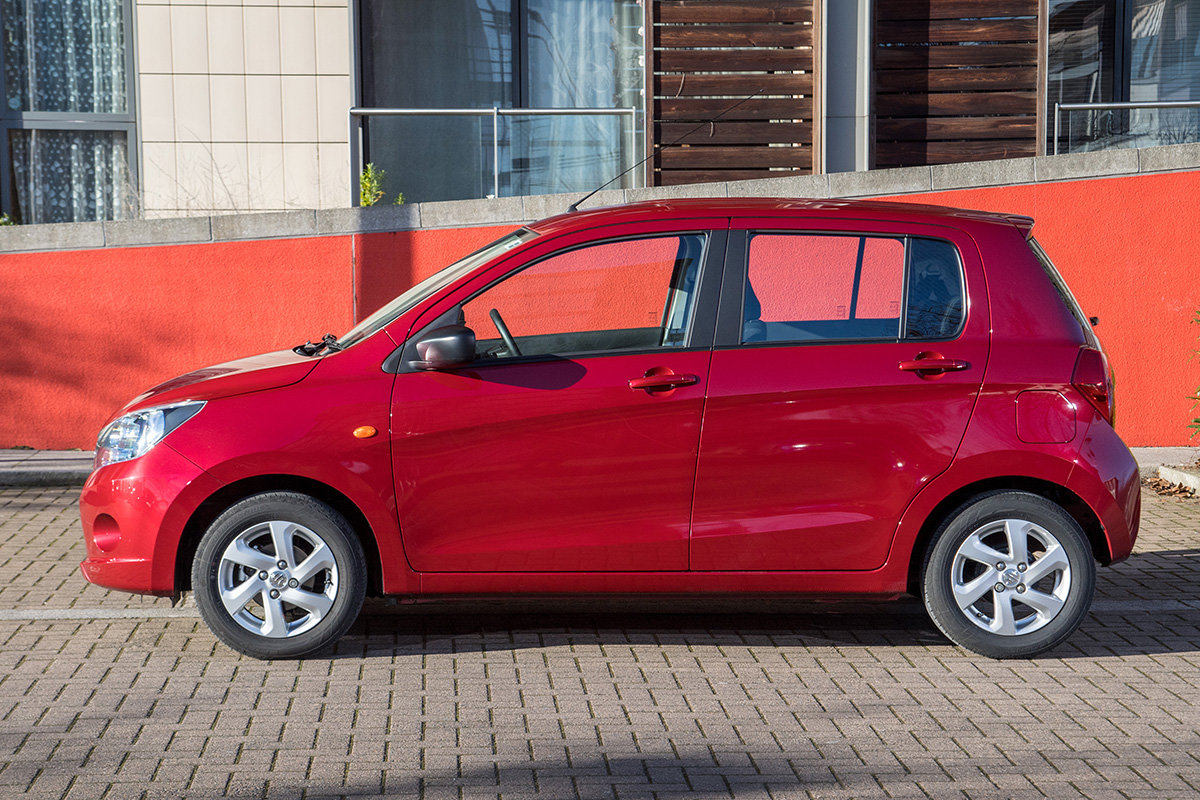
The Celerio’s biggest selling point, however, is its interior space. On the outside, it’s a city car, so it offers diminutive dimensions that make parking a doddle and squeezing through gaps in town a cinch.
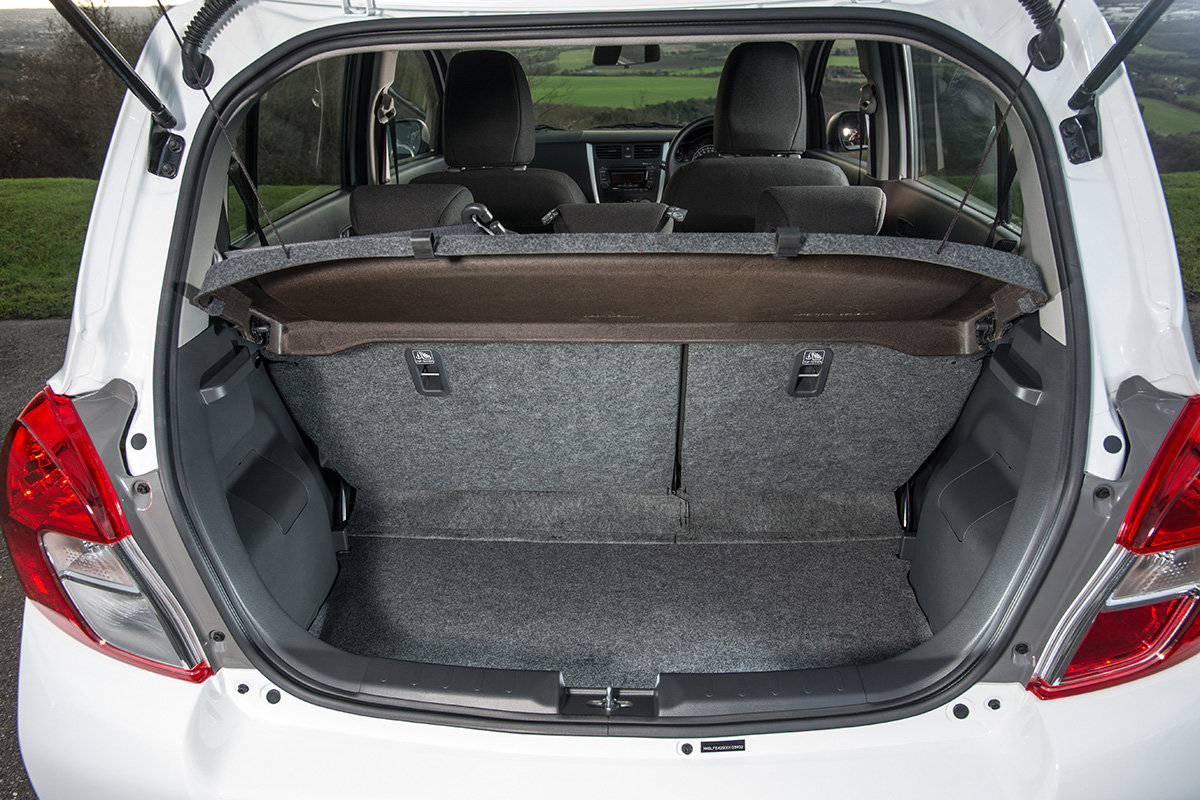
But Suzuki also gave the Celerio a high roofline, and sat its occupants up high, and as a result it feels far more roomy than you’d expect inside; indeed, there’s seating for five, where some rivals only have enough space for four, and both the front- and rear seats offer a good amount of legroom and headroom. The driving position is good, and it's even got five cupholders, while the 254-litre boot is generous for a car of this size.
What's it like to drive?
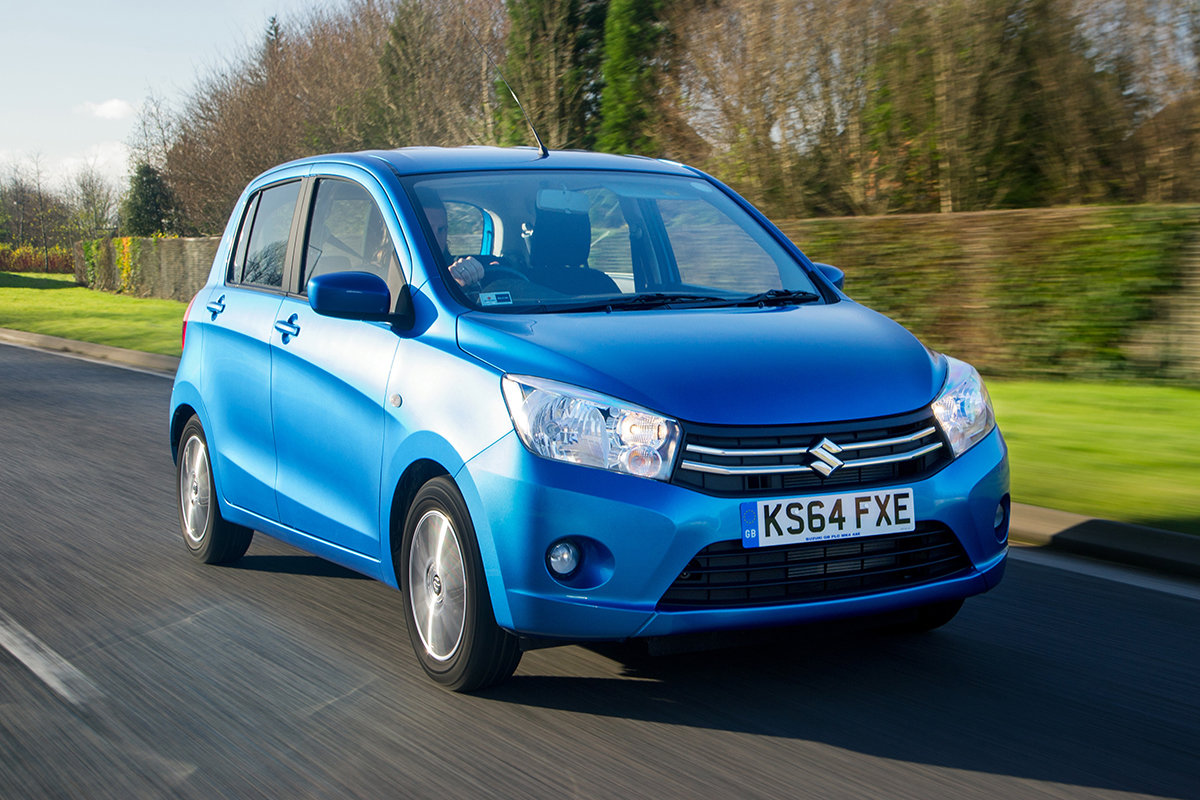
Decent enough, though don’t go expecting zippy, kart-like handling; the Celerio feels as stodgy and spongy as it looks in corners.
But the tight turning circle is very useful around town, the 1.0-litre three-cylinder petrol engines are peppy and willing, and while the ride’s a little knobbly over low-speed bumps, it smooths out nicely once you’re travelling a little faster, making this a surprisingly comfortable little car.
Don’t go too fast, mind you; at motorway speeds the Celerio feels a little out of its depth, and there’s a lot of wind- and road noise to contend with.
Technology, equipment & infotainment
And while the interior might feel cheap, the Celerio isn’t actually that poorly equipped.
Even the most basic SZ3 model has air-conditioning, central locking, a DAB radio, alloy wheels and Bluetooth connectivity for your mobile phone, while the SZ4 adds electric rear windows and front fog lights. Enough to be going along with, in other words.
Suzuki Celerio running costs
We’d expect to see around 60mpg on average from the Dualjet model, driven carefully, and around 50mpg from the standard car under the same conditions. Unusually, there’s no penalty for choosing the automatic version, probably because of the type of gearbox it uses, which means you should see similar fuel economy to the standard car.
It makes more sense to buy a Celerio registered before 1 April 2017, because you pay no vehicle excise duty, thanks to the sub-100g/km CO2 emissions on every model. Of course, as a result of the new tax regulations introduced on that date, Celerios registered thereafter will incur the flat rate tax that increases every year; as a result, choosing one of those could actually set you back quite a bit more cash.
Almost all Celerios now qualify for Suzuki’s “Three Year Plus” servicing, which offers reduced rates for older cars. Under this scheme, the Celerio’s servicing costs are quite expensive compared with rivals’, though you may find they work out cheaper if you use a local garage instead of a Suzuki dealer.
One cost you won’t have to worry about, however, is that of replacing the timing belt every few years, because the Celerio doesn’t have one. Instead, it uses a metal timing chain that’s intended to last the life of the car.
Suzuki Celerio reliability
Reports of major problems with the Suzuki Celerio are few and far between. That may be because it’s a super-reliable little car that very rarely goes wrong; on the other hand, of course, it may also be because there simply aren’t very many Celerios around, and consequently, there aren’t enough examples out there for us to be able to track - or even hear about - common concerns owners may have.
The Celerio sold in fairly small numbers, after all, and for that reason it doesn’t feature in very many reliability surveys. However, Suzuki as a manufacturer did feature in the 2020 What Car? Reliability Survey, and its mid-table placing of equal 14th was the very definition of average.
All Celerios were sold with a three-year or 60,000-mile warranty, and that means no used examples will still have manufacturer’s warranty left on them. By contrast, the Hyundai i10, Kia Picanto and Toyota Aygo all came with longer warranties, and that means there’s a greater chance of getting one of those cars with more warranty left.
- When the Celerio was still a new car, having just replaced the old Suzuki Alto and Splash models, sales were suspended after road testers from a car magazine experienced brake failure – twice – while conducting a brake test on a private test track. Suzuki rectified the fault, and recalled all Celerios so that it could be fixed free of charge. However, it’s imperative that you check this recall has been carried out on any Celerio you’re thinking of buying, or that the car was fitted with the revised brake pedal assembly that cured the problem from new (this will have been the case from early 2015 onwards). Check with a Suzuki dealership or on Suzuki’s website if you’re not sure.
- There are two versions of the same 1.0-litre engine available in the Celerio. Both offer an identical power output, but the more advanced ‘Dualjet’ model has a more sophisticated fuel injection system, which enables it to accelerate slightly faster, and improves fuel consumption. Curiously, this engine was only offered as an option on the SZ3 model: it isn’t available with the top-of-the-range SZ4, which can only be had with the standard 1.0.
- The SZ4 is, however, available with either a five-speed manual or an automatic gearbox. Suzuki called the automatic version AGS, which stood for Auto Gear Shift, but under the skin, instead of a conventional automatic, it’s actually a manual gearbox and clutch that operates electronically. No need to be concerned, though; there’s no clutch pedal, and you work the AGS like an automatic gearbox, by putting it into drive, reverse, neutral or park. The only real downside is that this sort of system is usually quite slow to change gear, and can be jerky, and the Celerio’s is no exception.
- If you want the best value: This is a cheap car, so it makes sense to keep it that way, and avoid inflating the price too much. With that in mind, we recommend plumping for the most basic variant, the 1.0 SZ3. It comes with all the equipment you’ll probably care about, not to mention the Celerio’s chief virtues of space and simplicity; indeed, it’s to its advantage that there’s even less to go wrong than on the dearer SZ4.
- If you want an automatic Celerio: You’ll have to upgrade to the SZ4 model. That said, if it’s an automatic city car you’re after, we can’t help but feel the Hyundai i10, with its conventional gearbox that feels much nicer to drive, might be a better option.
- If you're on a budget: Should you need the best possible fuel economy, the Dualjet model is worth a look. Of course, these also fetch a slight premium over the standard cars, so it’s worth working out first whether you’re going to do enough miles to justify the MPG savings you’ll make in fuel versus the higher purchase price.


