Toyota Aygo Review (2005-2014)
Toyota AYGO cars for sale
3.0
Expert review
Pros
Easy to drive and simple to park
Later cars are well equipped
Very reliable
Cons
Lacks some modern safety kit
Tiny boot, even for a city car
Not as much fun to drive as some small cars

The CarGurus verdict
If you want a low-cost small car that will be reliable and frugal, the first-generation Toyota Aygo is a smart choice, particularly if you’re going for one of the later and improved versions in a good specification.
The Toyota’s compact footprint also makes it a doddle to handle around town and, although it’s far from the liveliest or sharpest car around, it’s otherwise pleasant to drive. You won’t pay much (if anything) of a premium for a used Toyota Aygo, either, compared to alternatives such as the Hyundai i10.
You might also want to check out the Peugeot 107 and Citroen C1, which are rebadged versions of the same car, as they can prove cheaper to buy.

What is the Toyota Aygo?
If you want an affordable city car that’s never going to give you grief, the first-generation Toyota Aygo should be at the top of your list.
Toyota introduced its lightweight urban runabout, which was the result of a joint development project with PSA Peugeot Citroen, in July 2005. It was offered in three-door and five-door flavours and, initially, was powered by a 1.0-litre, three-cylinder petrol engine that produced 67bhp. The second-generation Aygo arrived in 2014.
How practical is it?
Even though the Toyota was tiny, measuring just 3,405mm long and 1,615mm wide, it could just about accommodate four adults.
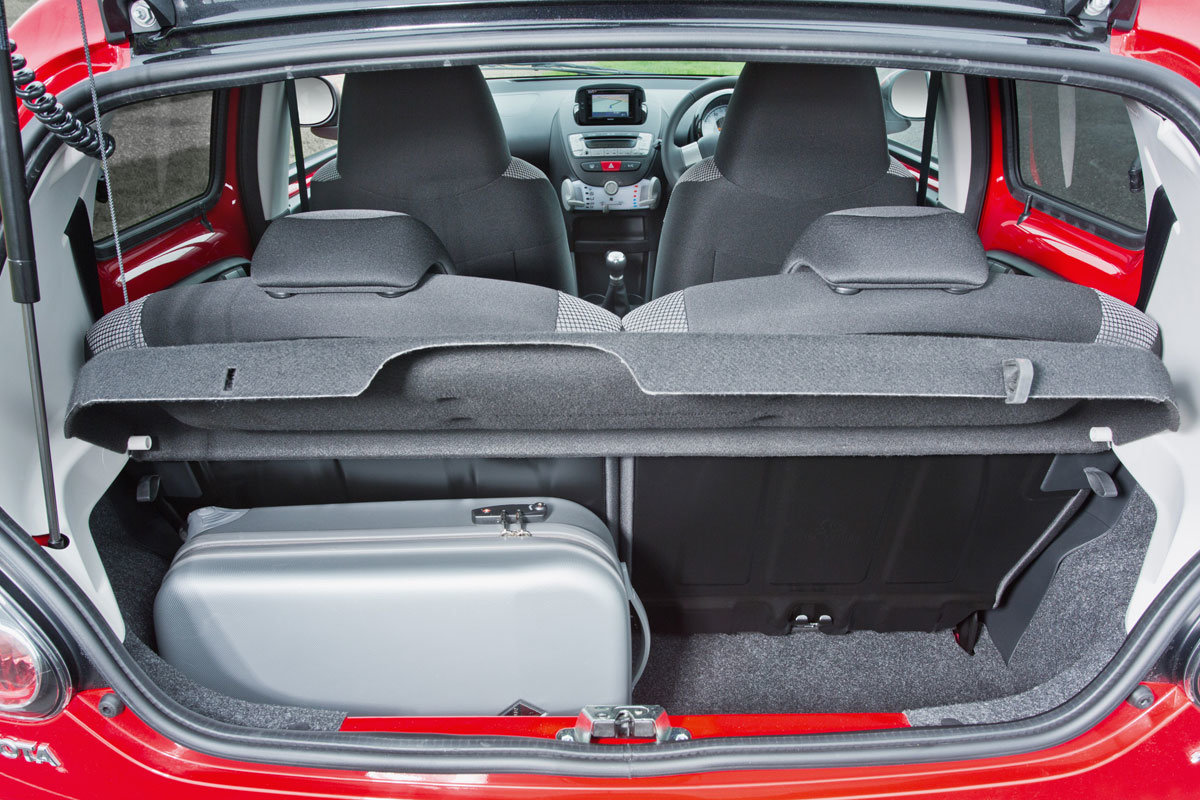
The only major practicality downside was the fact that it had a tiny 139-litre boot, and one that was also hard to access, due to a high boot lip and a comparatively narrow opening. You could cram a few bags of shopping in there, but not much else.
If it's space and clever seating in a small package you're after, then a Honda Jazz from the same era would be a much better bet.
What's it like to drive?
The Aygo wasn’t quick, unsurprisingly, with the five-speed manual gearbox version dispatching the 0-62mph sprint in 14.2 seconds. The optional automated manual, called the Multi-mode Manual Transmission – MMT – was slower still, registering an even more pedestrian 14.9 seconds.
Such performance was par for the course for a budget city car, however, and the Toyota’s eager engine and slick manual gear shift made the Aygo feel peppier than the numbers suggested. It was frugal, too, with the petrol engine capable of returning an average fuel economy 61.4mpg according to official (NEDC) figures. CO2 emissions were also low, at 109g/km.
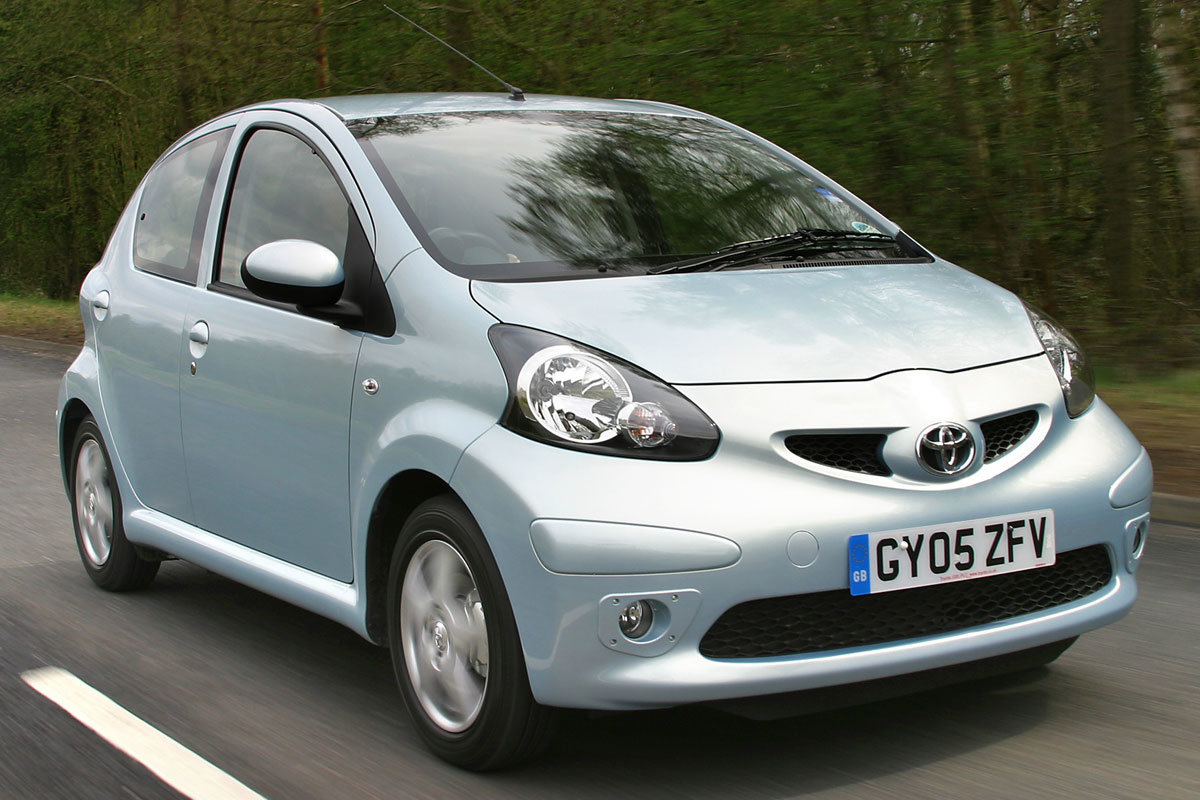
There wasn’t much to be had in the way of driving fun, as the steering was light and devoid of feel, but it rode well and felt secure. And, thanks to its effortless steering and tiny footprint, the Toyota Aygo was very easy to manoeuvre and park.
Toyota would also introduce a 54bhp 1.4-litre diesel version in 2006, which had a claimed average mpg figure of 68 and CO2 emissions of 109g/km. It was even slower, though, taking 16.8 seconds to cover the benchmark 0-62mph sprint.
Technology, equipment & infotainment
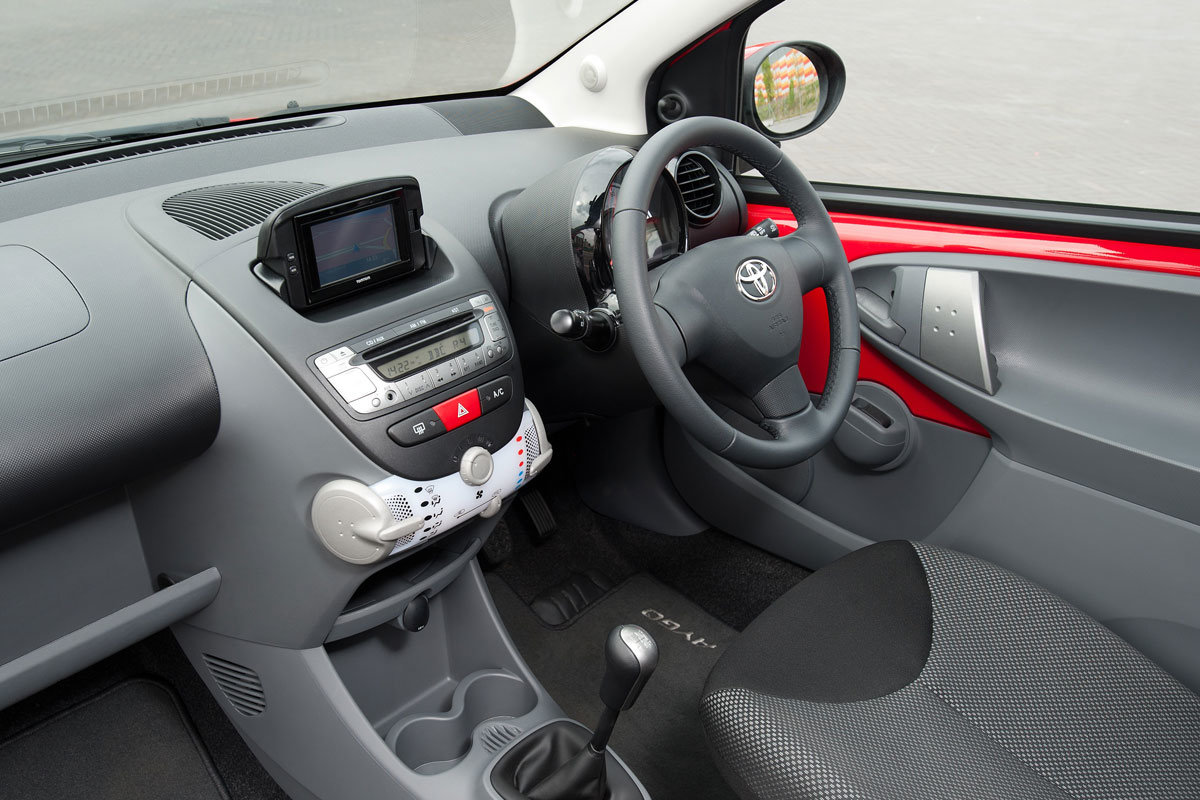
Originally, the Aygo line-up consisted of three trim levels: T2, T3 and Sport. The entry-level T2 came with a CD player, heated rear window, front airbags, ABS and electronic brake distribution. By today’s standards, that’s pretty basic.
If you went for a T3, you’d get creature comforts such as remote central locking, a 50:50 split-folding rear seat, electric windows and an upgraded sound system. Sport models came with fog lamps, a tachometer and 14-inch alloy wheels. But even in this range-topping trim and the T3 model, features such as air conditioning and metallic paint remained options, so check any used cars you're looking at to see if those important boxes were ticked.
Even today, the diminutive Aygo remains an appealing option thanks to its sensible blend of low costs, hallmark Toyota reliability, ease of use and simplicity. It might lack the equipment and power of more modern cars but, if you just want a straightforward used city car, it’s among the best options out there.
Toyota Aygo running costs
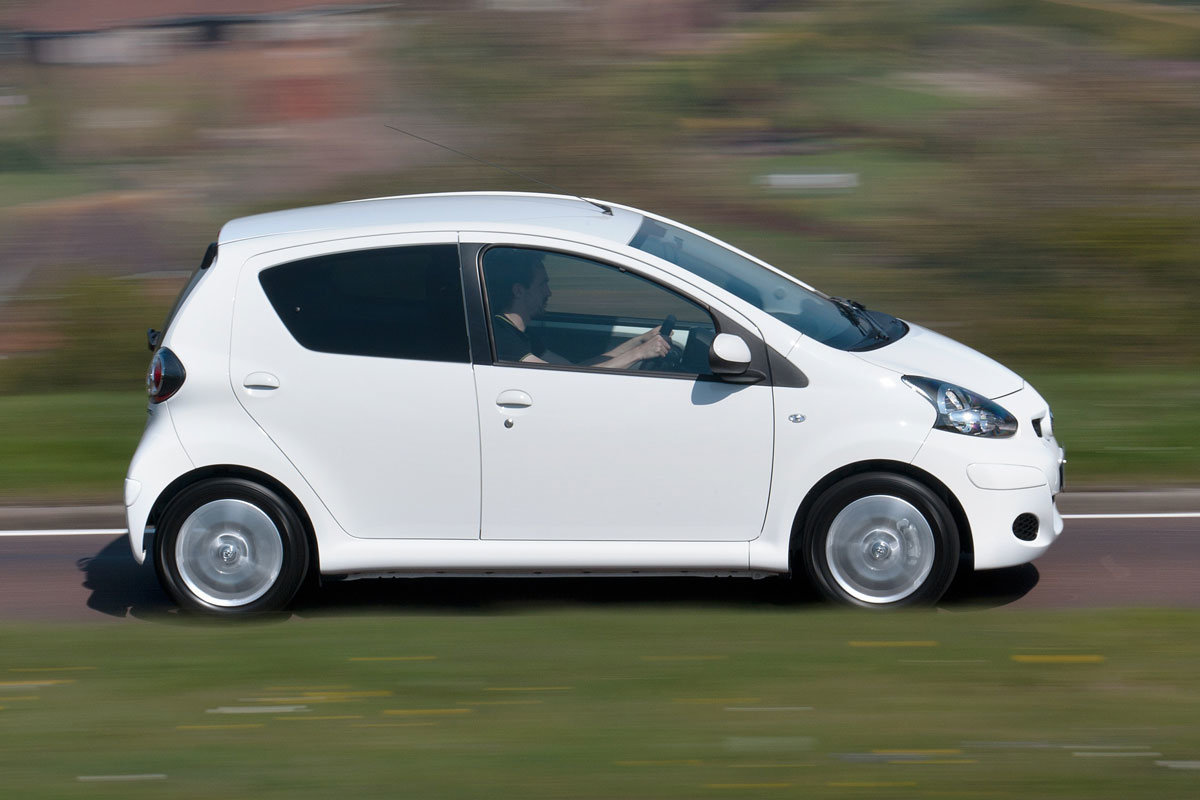
Toyota Aygo running costs should be low as the car is simple and light, while its engines are efficient. All versions sit in very low insurance groups, too, which will further help keep costs down, particularly for younger drivers.
On the fuel economy front, you can expect the petrol versions to easily average north of 50mpg. In the diesel, upwards of 60mpg is the norm. A 35-litre fuel tank is also standard, which means both versions should easily get 350 miles of motoring before fuelling up is needed.
Because the Aygo is a featherweight city car, wear and tear on consumable parts should be miniscule. Replacement parts won’t cost much, either; a brand-name 155/65 R14 tyre for an Aygo with 14-inch wheels, for example, will set you back around £50. A set of front discs and pads? Expect to pay less than £100.
Servicing will similarly prove inexpensive, with Toyota claiming that – when new – an Aygo would only require 4.2 hours of servicing up to 60,000 miles. Both the petrol and diesel versions use a timing chain instead of a belt, which further reduces maintenance costs.
As a result, you’ll just have to change the filters and fluids on a regular basis to keep the Toyota in fine fettle. If you’ve got a petrol one, change the spark plugs every 40,000 miles, too. Any local garage should be able to service an Aygo, so you won’t have to hunt down a specialist or rely on a main dealer.
On older examples, it’s also worth investing in getting the coolant, transmission fluid, brake fluid and clutch fluid changed. In many cases, they’ve probably not been touched for a long time and changing them will help minimise future issues.
Toyota Aygo reliability
No first-generation Aygo will be covered by its original warranty anymore but Toyota has an excellent reputation for both reliability and customer satisfaction.
However, these cars are getting older now and there are some common issues worth looking out for. The main issues are with failing water pumps and with water ingress into the cabin. Check for coolant leaks and make sure none of the interior carpets are damp.
Clutches can also fail prematurely, for which a service directive was issued that required the replacement of the original 180mm clutch with a larger 190mm version. Many Aygos spend a lot of time in stop-and-go traffic, which can exacerbate clutch issues, so make sure the clutch operates as it should and doesn’t slip.
There have only been a handful of recalls otherwise, with one recurring one being for a potential failure of the adhesive for the rear glass. If the recalls are of a concern, you can use the government’s recall site to enter the registration number of the example you’re looking at, and then correlate the details with a dealer to see if the recall has been carried out or not.
If you intend to run your Aygo for a long time, try and find one that’s been serviced annually and looked after properly. A good Aygo should give you very few issues, especially if it’s received some updates and replacement parts during its life.
- Toyota would tinker with the Aygo and add new versions throughout the course of its lifespan, but there was a major update in early 2012 that added new front-end styling, interior trims and equipment, including a stereo system with Bluetooth connectivity and USB ports. Tweaks to the 1.0-litre petrol engine also bumped its official fuel consumption up to a peak of 65.7mpg.
- In 2005, the Aygo was awarded four stars in crash tests by safety organisation Euro NCAP. The results were attributed to the general high quality of the Toyota, as well as safety systems such as standard-fit twin front air bags, a seat belt warning system and the Minimal Intrusion Cabin System – MICS – which dissipates crash energy throughout the car’s structure. However, when the car was facelifted and retested in 2012, the rating was downgraded to three stars due to the lack of modern safety systems like electronic stability control.
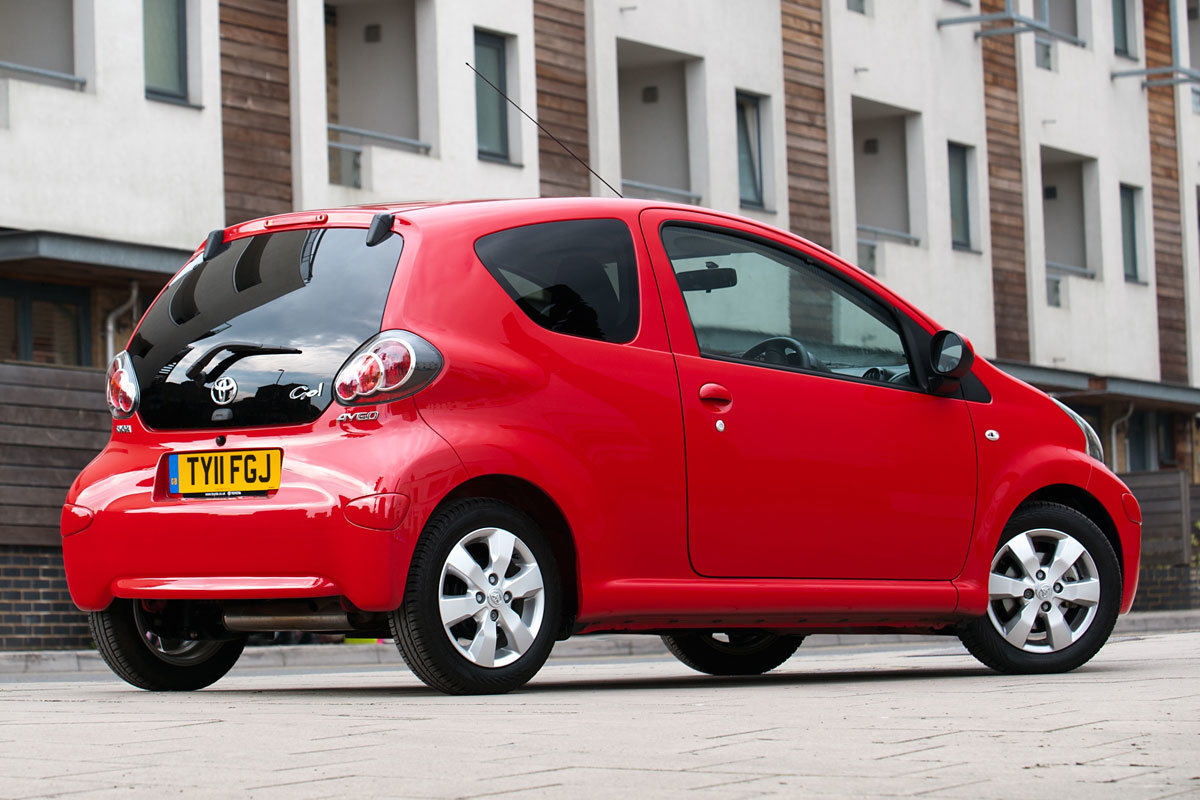
- A high-specification version of the Aygo, called the Aygo Go!, was launched in January 2011. The key upgrade was the addition of a removable TomTom satnav unit, with touchscreen infotainment system and voice controls, which also added Bluetooth and USB connectivity for media playback purposes. Upgrades such as a leather-trimmed steering wheel, tinted rear glass, new alloy wheels and bespoke exterior colours added further to the more upmarket feel. Air conditioning still wasn’t standard, but it could be added as an option.
- If you want the best all-rounder: We’d go for a 1.0-litre petrol version, preferably one of the improved facelifted cars, in one of the grades that includes air conditioning as standard. Move trim, for example, features standard-fit aircon, as well as a tachometer and some leather trim, which makes it a bit more comfortable and upmarket. It also comes with stability control and curtain airbags.
- If you want the maximum fuel economy: The diesel version is capable of delivering impressive economy figures, but they’re not particularly common as the Aygo diesel only sold in small numbers. The petrol version of the Toyota is so readily available and frugal that it’s the most straightforward choice. It’s also less complicated but, in any case, reliability shouldn’t be a problem.
- If you need an automatic: Toyota offered an automatic transmission in the Aygo which was called the Multi-mode Manual Transmission. The MMT is an automated manual transmission, which means it has an automatically controlled clutch, but it will also change gears for you. You can manually select gears as well though, if you want some more control. It’s not a bad option, particularly if you’re going to be doing lots of around-town driving, but do try one first.


