Toyota Highlander Review (2021-2023)
Toyota Highlander cars for sale
3.0
Expert review
Pros
Hugely practical seven-seater
Should prove to be extremely reliable
Lots of standard equipment
Cons
A bit noisy to drive
Pricing is dangerously close to a Lexus
You'll need space to park it
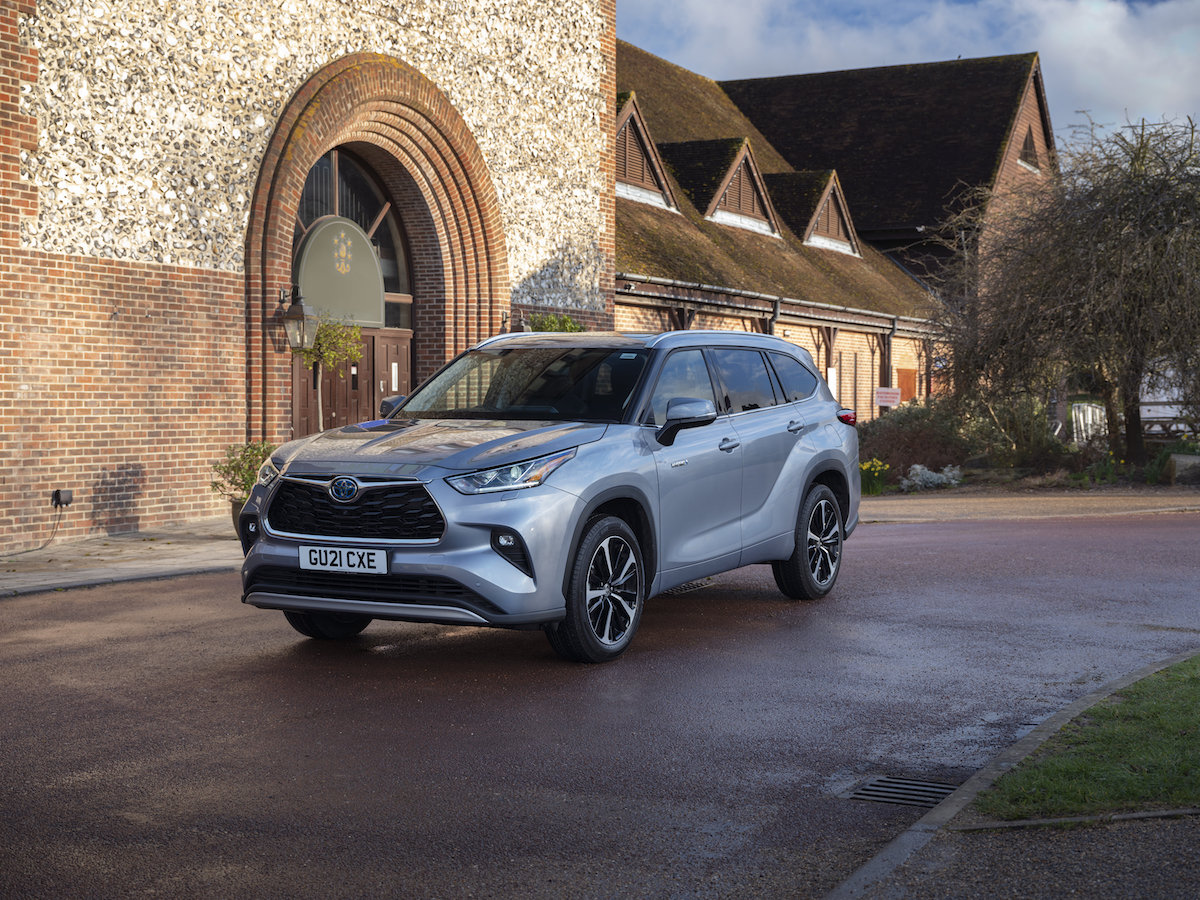
The CarGurus verdict
The Highlander is not the most exciting thing to drive, and its hybrid powertrain can feel overwhelmed - especially with a full complement of passengers on board - but it will stick to its task faithfully, and the prospect of mechanical maladies are as likely as the earth shifting off its axis.
The rather workmanlike interior does look a bit 1990s, but it is stacked with clever storage solutions and the seats can be configured in myriad different ways to maximise luggage or passenger space. Now that’s sorted, all there's left to consider is, pink or blue?

What is the Toyota Highlander?
The Highlander sits in a sector populated by some very tasty motors. For the same kind of cash, you can have a similarly powerful - albeit pretty basic - Volvo XC90 or a slightly more compact Kia Sorento Plug-in. Alternatively, you might consider a Lexus RX L, the Highlander’s more luxurious, more powerful, more dramatic-looking cousin.
Given the company’s expertise in the area, there are no prizes for guessing that the Highlander is powered by a self-charging petrol-electric hybrid powertrain. A non-turbocharged 2.5-litre four-cylinder engine linked to a pair of electric motors generates a healthy 245bhp, and drives through a CVT automatic transmission and an intelligent all-wheel drive layout.
It wasn't on sale for long in the UK, though, and was only available between 2021 and 2023.
How practical is it?
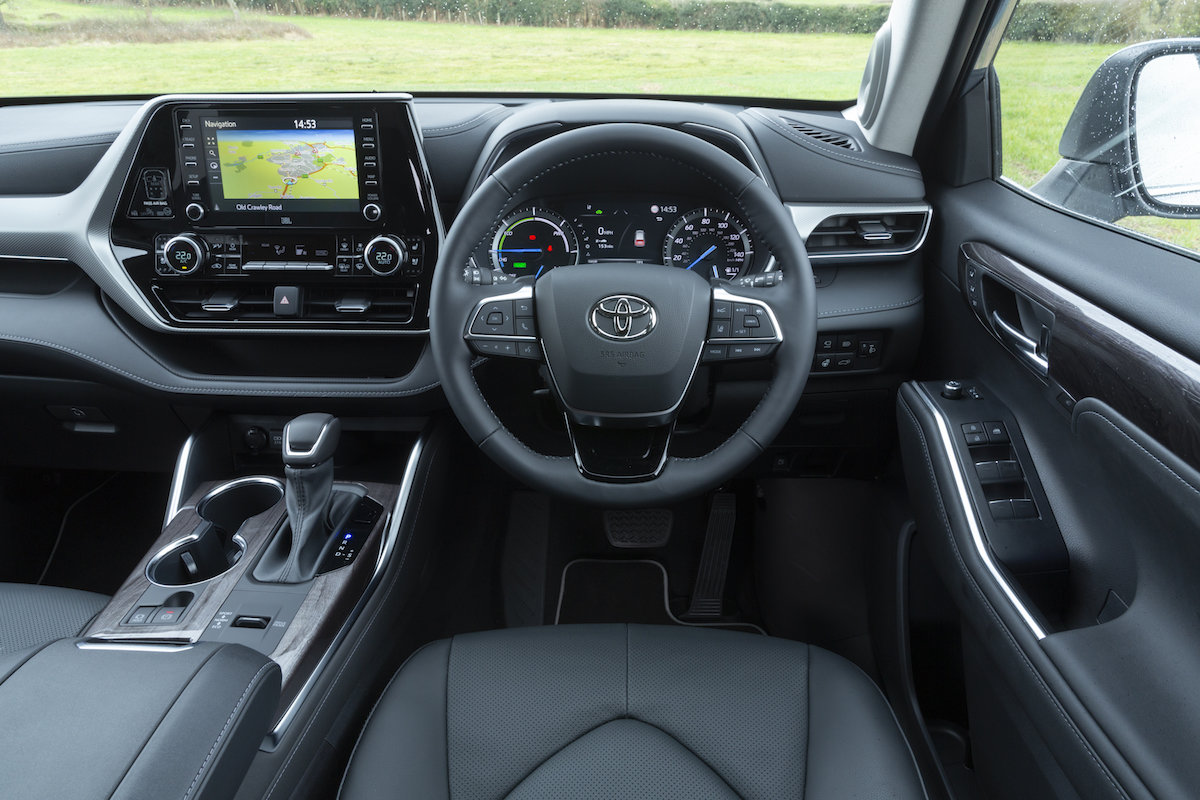
Inside, there’s loads of adjustment for the steering wheel and supportive front seats, but there's not a whole lot of cheer about the place, thanks to some pretty utilitarian surfaces and a fundamental lack of design flair. On the plus side, along with a plague of cockroaches, the cabin would probably survive a thermonuclear strike. There’s no shortage of storage solutions, including slots for phones and tablets and a cavernous centre armrest cubby, big enough to lose a small child in.
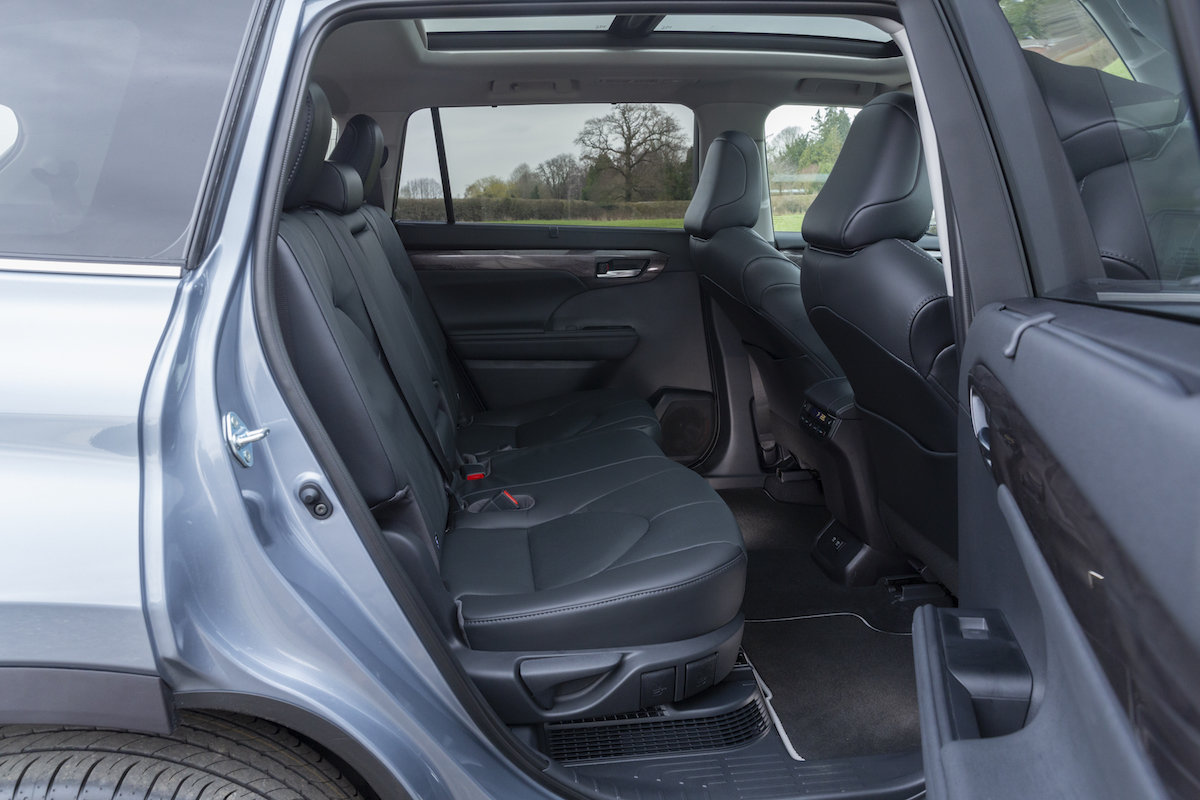
Speaking of the little fellas, access to the third row of seats is easy-peasy, thanks to the slick-sliding 60/40 split-folding second-row but you will have to scooch the second-row forwards a fair bit to provide enough legroom for anyone over the age of five.
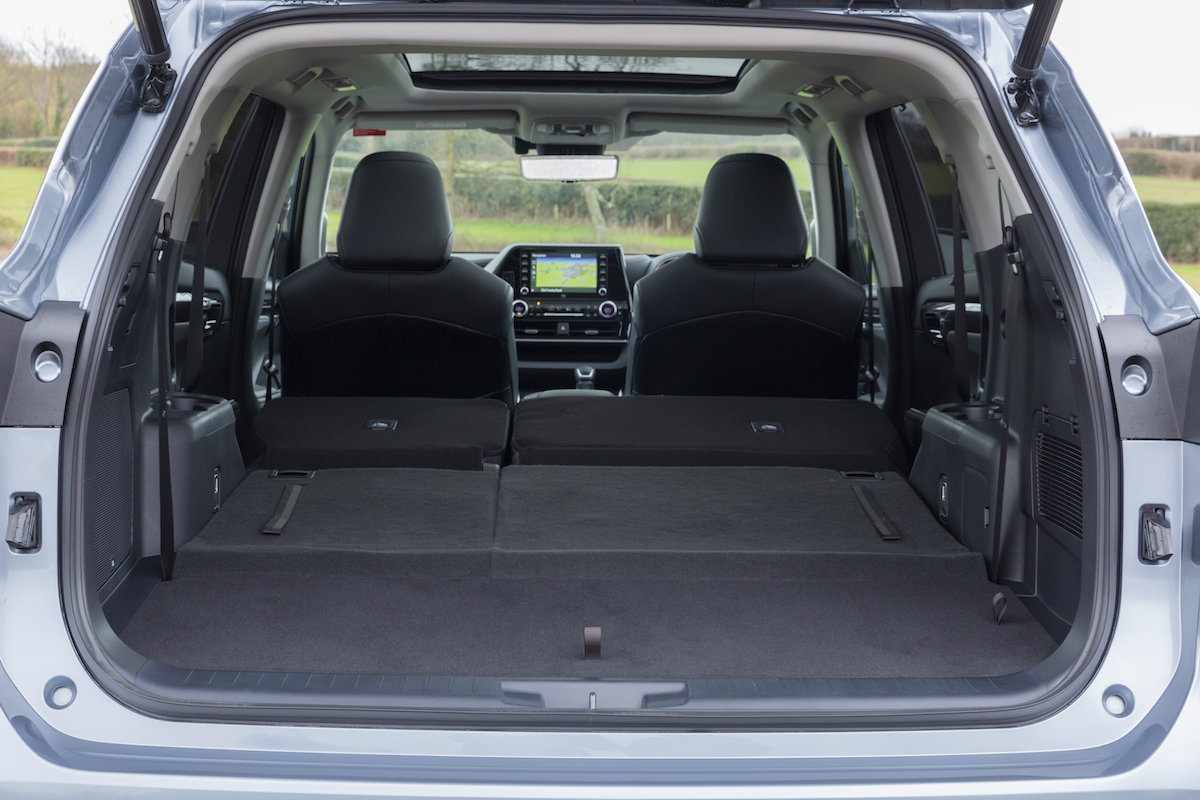
With all seven seats in place, there’s sufficient boot space for a cot and a half-dozen or so squishy bags of Pampers and there is a handy underfloor trench to store the luggage covering roller blind when it is not in use.
Access to the rear is gained via a huge electrically powered tailgate, and when required, both the middle and rear row can be folded flat to create a dance-floor sized 1,901-litre cargo space. Anyone up for a Highland fling?

What's it like to drive?
With so much mass to motivate, just driving off the mark is enough to give the drivetrain a severe case of the heebie-jeebies, sending the engine revs soaring in a manner totally at odds with the rather stately increase in road speed.
Once settled into a cruise, with the revs sedated, the Highlander is pleasant enough. The suspension is soft enough to take the sting out of most ruts and bumps and the body remains reasonably upright in corners, so you rarely, if ever, feel like you’re tooling around in a big, unruly barge.
What is quite surprising is, not so much the levels of road disturbances that enter the cabin, but where they come from. Whereas the majority of road mayhem in most vehicles is generally transmitted through the rear axle, most of the trash-talk entering the Highlander comes from the pointy end. Consequently, clunks from the front suspension and vibrations from the powertrain can be felt via the steering wheel and through the heels of your brogues.
Technology, equipment & infotainment
Only two versions of the Highlander are available: Excel and Excel Premium. Both are well equipped, with leather upholstery, three-zone climate control, a powered boot lid, adaptive cruise control, heated front seats and a panoramic roof coming on every Highlander, but upgrading to the Excel Premium adds ventilated front seats, a head-up display, and heated outer seats in the second row.
The cheapest and best-selling model is the Excel, but of course, cheap is a relative term, and there is only a couple of thousand pounds between Excel and the top of the range Excel Premium. Along with the standard seven seats and automatic gearbox, Excel trim gives you 20-inch alloy wheels, a full-length panoramic glass sunroof, a power tailgate, three-zone climate control, leather heated seats with memory function, keyless entry, LED headlamps, windscreen wipers with de-icer function, mirror-mounted puddle lamps and a 12.3-inch touchscreen infotainment system complete with sat-nav, Apple Carplay and Android Auto, hands-free Bluetooth connectivity, myriad USB ports, a wireless phone charging mat and an 11-speaker JBL sound system. Phew!
Toyota Highlander running costs
For such a big car the official fuel economy figures are very commendable at 39.7 mpg, resulting in a CO2 emissions output of 160g/km. At the time of writing, however, the way the UK’s BIK system works, this places the Highlander into a very punitive 36% taxation category. This is only 1% less than its more powerful Lexus stablemate and many more prestigious rivals, including the Audi Q7.
The problem stems from the fact that the Highlander is not a plug-in hybrid, so it cannot run for extended periods on electric power alone. Consequently, it is not privy to the same low-level tax advantages as the latest Kia Sorento plug-in, which is currently taxed at just 11%.
Given Toyota’s experience with hybrids, the Highlander shouldn’t throw up anything out of the ordinary when it comes to servicing. Prices should be pretty reasonable, too, and Toyota offers fixed price deals on both intermediate and full services.
Insurance rates are still to be decided but this shouldn’t be a deal-breaker given the Highlander’s rather sedate performance. Equally the sheer volume of motors Toyota’s produces world-wide means it is able to keep the price of any repair parts affordable.
High desirability ensures the residual values of many of Toyota’s vehicles are exceptionally strong, in particular the RAV4 hybrid. Although we don’t expect the Highlander to match the RAV, relatively low sales numbers and Toyota’s excellent reliability record should see used models maintain a high percentage of their original value.
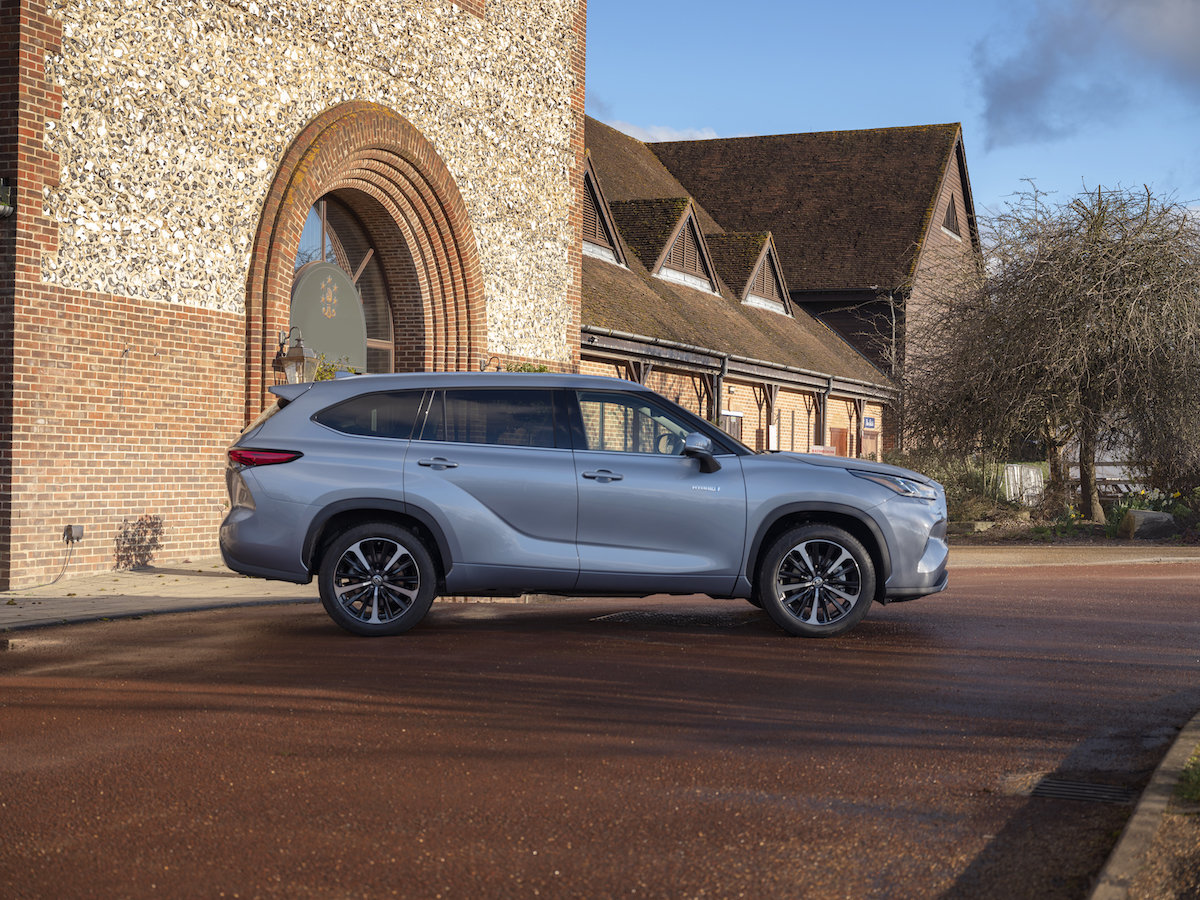
Toyota Highlander reliability
Although the Highlander is a releatively recent and short-lived addition to Toyota’s UK line-up, it has been on sale in the US for a number of years in one guise or another and the car being sold here is actually the fourth generation Highlander.
The good news is, the big seven-seater regularly tops the SUV class in the North American JD Power customer satisfaction survey. Between 2001 and 2019, the Highlander consistently received high marks from various consumer reports, generally scoring five out of five for reliability, which is a score rarely attained by any other vehicle.
The latest model once again finished in pole position in the JD Power survey and amongst its many strengths, owners praised its easy functionality, its overall performance, Toyota’s excellent dealership service and the Highlander’s fundamental lack of defects.
Closer to home, while sister brand Lexus finished second of the manufacturer's table in the most recent What Car? customer reliability survey, Toyota as a brand finished a highly commendable fifth out of 31 manufacturers.
As with all Toyotas, the Highlander benefits from an excellent five-year, 100,000-mile warranty, but if the car is serviced in accordance with its schedule, we’d be amazed if you ever had to claim against this cover.
- Toyota obviously thought long and hard before deciding to bring the Highlander to the UK. Big AWD seven-seat SUVs are relatively low sellers but more significantly, the Highlander is priced around the same price point as its more luxurious in-house sibling, the Lexus RX L 450h. A Lexus or a Toyota standing on your drive? Hmm.. let’s think about that one. Both cars are roughly the same size- for the pedants, the Highlander is a smidgen taller and wider- while both feature automatic CVT gearboxes and four-wheel-drive. Each comes with three rows of seats and both are capable of carrying up to seven people.
- While the Lexus employs a 308bhp hybrid powertrain, using a combination of a 3.5-litre V6 engine, a CVT automatic gearbox and a couple of beefy electric motors, the Highlander makes do with a similar arrangement but with a smaller, less powerful and less refined 2.5-litre four-cylinder engine at its heart. The Highlander does have a two-tonne towing capability, but this is outshone by RX L’s 3.5-tonne limit.
- At least the Highlander comes stuffed with all the latest Toyota safety sense systems. These elements include blind-spot monitoring, low-speed automatic emergency braking with pedestrian detection and emergency steering assist, adaptive cruise control with corner speed reduction, lane-centring-assist, lane departure warning with steering control, speed limit recognition and adaptive high-beam. Consequently, we’d be astounded if the Highlander doesn’t achieve a maximum five-star Euro NCAP crash rating.
- If you want all the bells and whistles: The entry-level car is so well equipped it’s hardly surprising that sales of Excel Premium trim account for only 20% of Highlander sales. Still, if money is no issue and given there’s so little difference between the two model’s leasing rates, why not? The top of the range car brings flashier alloy wheels, upgraded leather seats with heating and cooling ventilation, heated rear seats, a heated steering wheel, a head-up display, a trick panoramic rearview mirror, a kick-gesture sensor to open the powered tailgate and a 360-degree reversing camera.
