Kia Sorento 2025 review | Stylish and spacious seven-seat SUV
Kia Sorento cars for sale
5.0
Expert review
Pros
Excellent value for a seven-seat SUV
Spacious and high-quality interior
Wide engine range including hybrid and plug-in hybrid
Cons
Hybrids having lower towing limits than diesels
BMW and Audi rivals are better to drive
Feels large and bulky to drive in towns
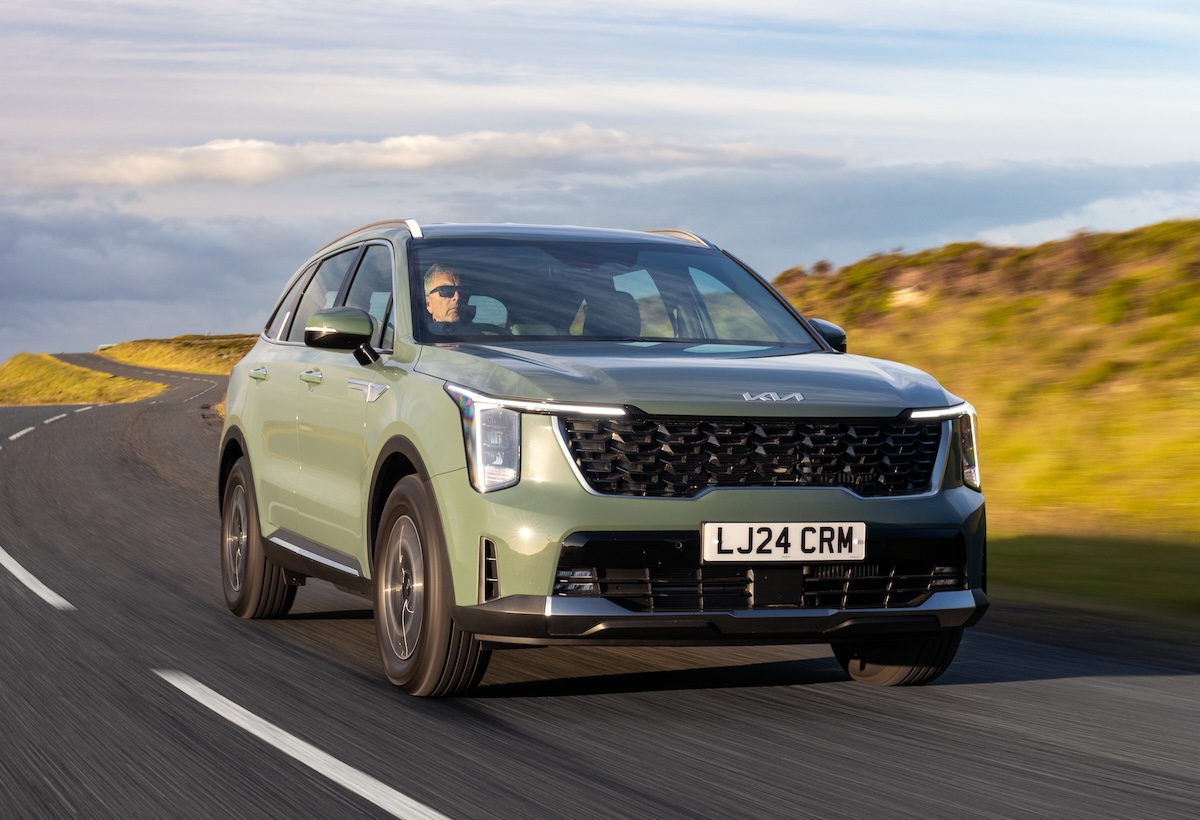
The CarGurus verdict
Today's Kia Sorento is the best of the four generations so far. It's the safest, cleverest and most practical Sorento yet. Yes, it's a lot more expensive than it used to be, but the quality of the car has risen in step with Kia’s steady move upmarket.
With the latest model, Kia has fully embraced hybrid technology, while wisely not abandoning diesel engines altogether. Anyone with a horsebox, small boat or caravan to tow will be grateful for that.
An Audi Q5 or a BMW X3 is still more engaging to drive, but the Sorento hardly disgraces itself dynamically, and it offers generous space for seven people in a cabin that now falls only just short of premium rivals for showroom appeal. In fact, if practicality is your priority, you'd be hard pressed to buy a better SUV without spending much, much more.
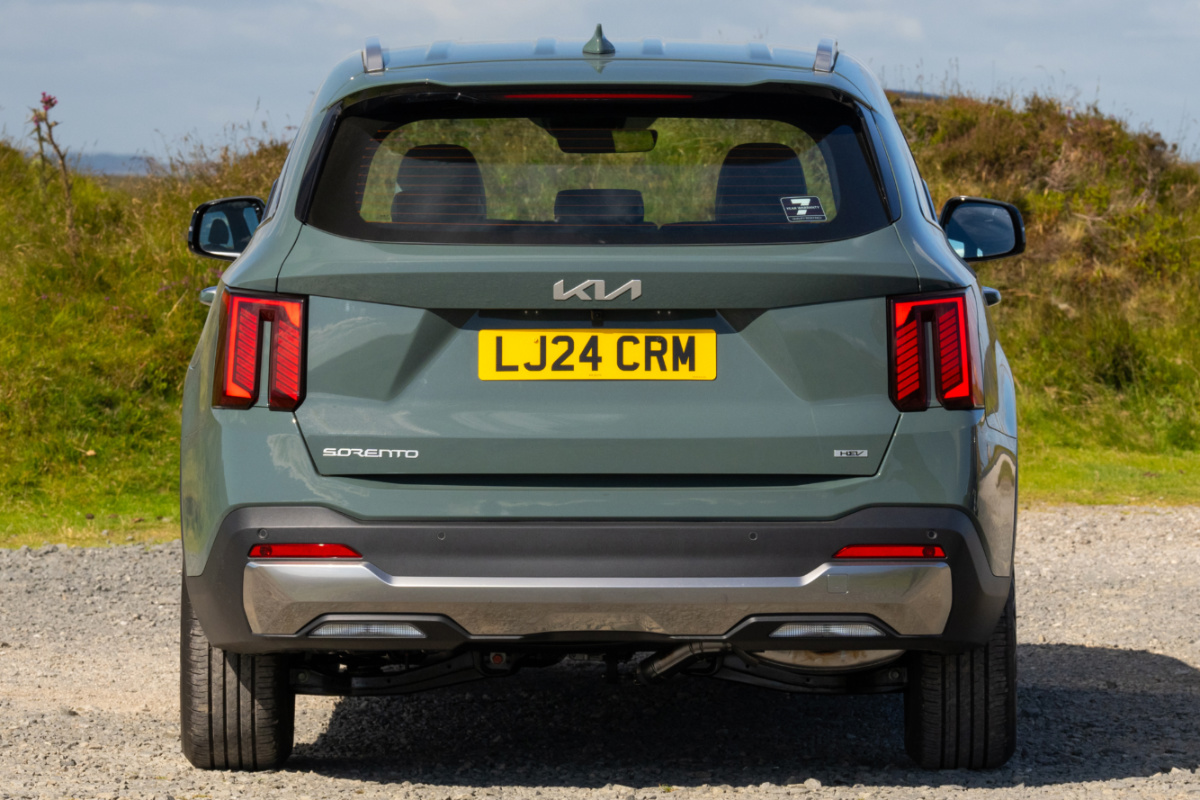
What is the Kia Sorento?
The Kia Sorento is a seven-seat family SUV that has fully embraced electrification in its current, fourth-generation form. Introduced in 2020 and updated with a mild facelift in 2024, the latest Sorento features revised styling, an upgraded interior and, in the UK at least, a strong focus on hybrid power. Where earlier versions of the Sorento leaned heavily on diesel, Kia expects most buyers today to choose a petrol-electric Sorento.
There are two hybrid options. The standard self-charging Kia Sorento hybrid (HEV) doesn’t need to be plugged in and pairs a 1.6-litre T-GDi petrol engine with an electric motor and a small 1.49kWh battery. Combined output is 212bhp (boosted to 235bhp for the 2026 model year). It can drive on electric power for short distances, but mainly uses its hybrid system to boost fuel economy rather than offer extended electric running.
Above it sits the Kia Sorento plug-in hybrid (PHEV), which uses the same petrol engine but with a much pokier motor and a much larger battery for a combined output of 248bhp (boosted to 284bhp for the 2026 model year). It offers an official electric-only range of 34 miles and is both the quickest and most fuel-efficient Sorento you can buy, although it’s also the most expensive.
Diesel may be declining in popularity, but Kia still offers a 2.2-litre diesel Sorento with 190bhp for buyers who value torque, towing ability and long-legged efficiency. With a braked towing capacity of up to 2,500kg, the Sorento diesel remains a popular choice in caravanning and equestrian circles.
How practical is it?
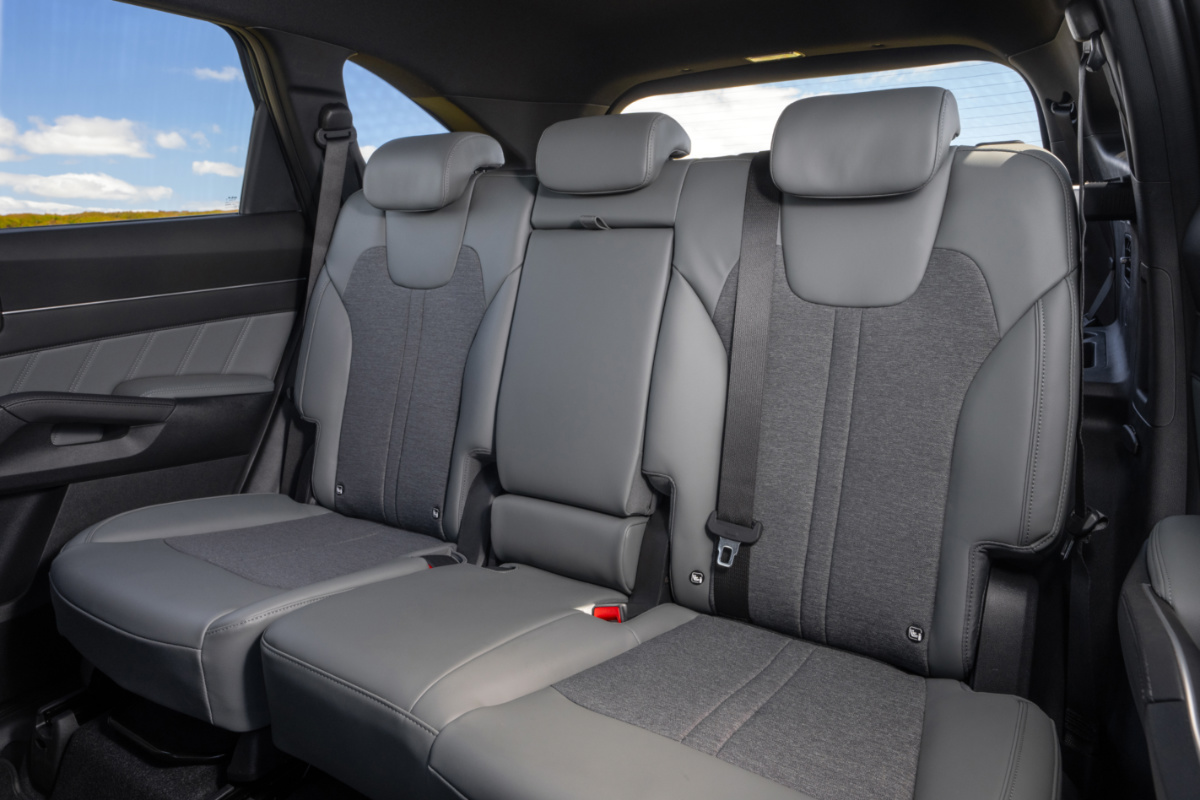
This fourth-generation Kia Sorento is noticeably bigger than its predecessor. The latest platform has shorter front- and rear overhangs, but more space between the axles and a slight increase in overall length and width. As a result, Kia has been able to make the interior roomier. The first and second rows have more legroom, while the third row has extra headroom.
Adults might not appreciate being shoehorned into the third-row seats on a long journey, but there’s enough space for short trips, and kids should be happy for the long haul. It’s possible to make more legroom by sliding the middle row forwards, which is a feature you see in many large SUVs. However, it’s more useful in the Sorento seven-seater, because there’s so much legroom in the second row to start with that passengers won’t mind giving some away. That’s certainly not true of some other seven-seat SUVs, such as the Land Rover Discovery Sport.
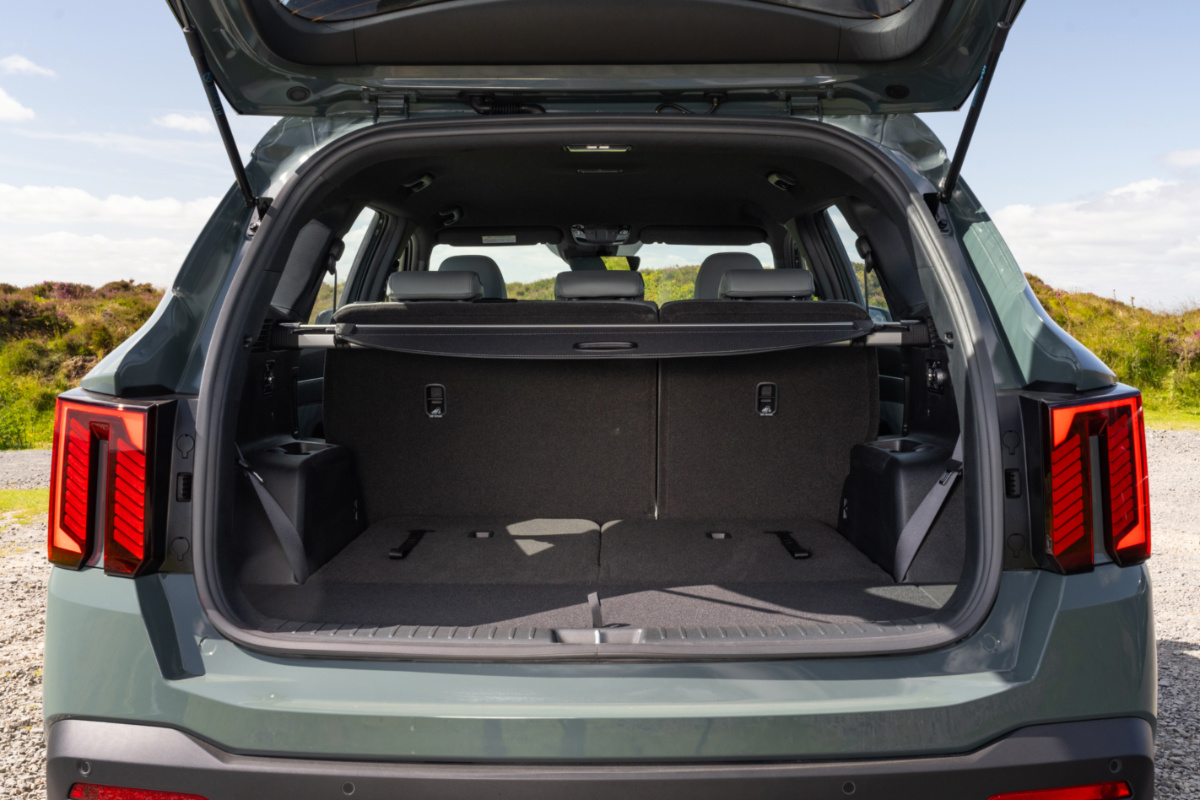
So long as the third-row seats are folded away, boot space is very generous. The luggage capacity ranges from 604 to 616 litres depending on the engine chosen, and increases to a maximum of 1,996 litres if you’re not carrying any passengers. With all the seats occupied, there’s just 179 litres of boot space, which is typical for a seven-seat SUV and only really suitable for a couple of soft bags.
The Sorento’s interior is upmarket as well as roomy. The cabin is well equipped as well as neatly designed, with USB ports and air vents in all three rows. Go back 20 years, and the Sorento was a decidedly budget 4x4, but there’s no evidence of those cut-price origins anymore. The Sorento isn’t embarrassed by rivals with prestige badges, either in terms of its design or finish.
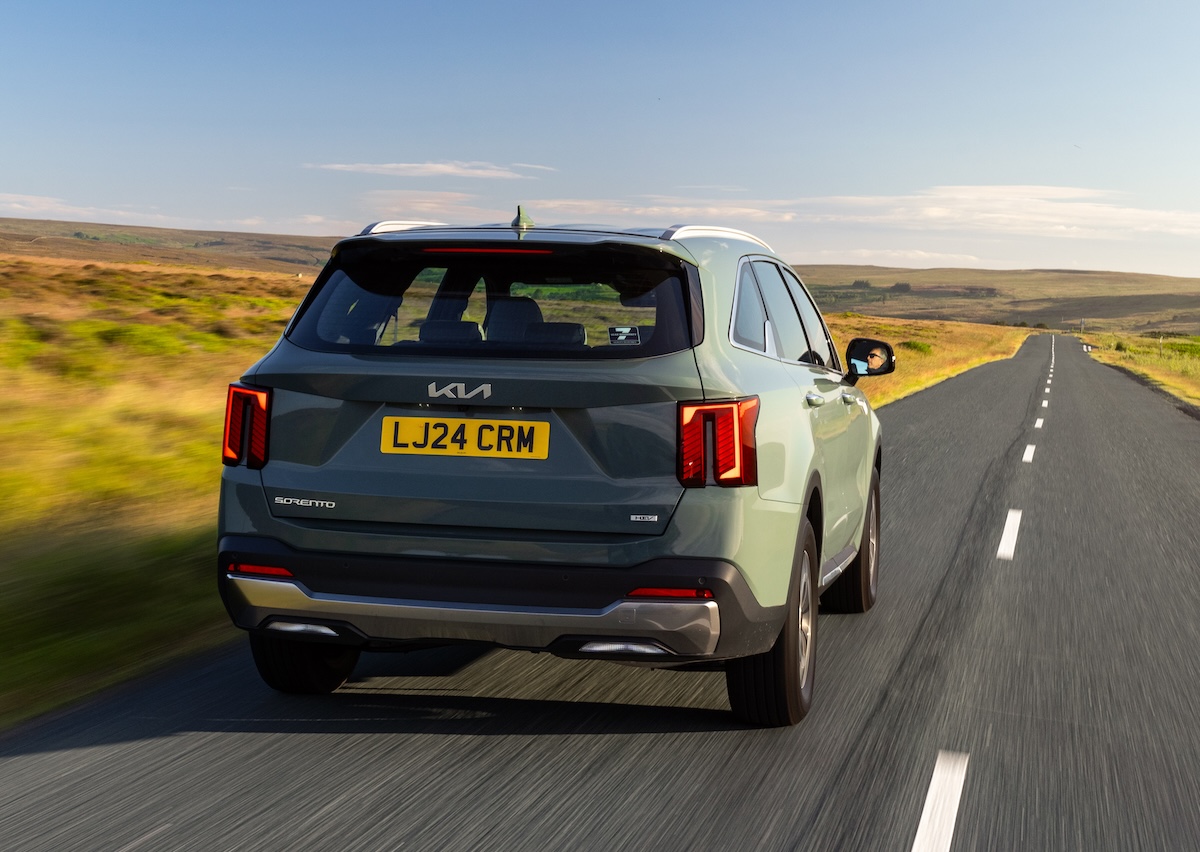
What's it like to drive?
The Kia Sorento isn’t as rewarding to drive as an Audi Q5 or a BMW X3, but that’s very much by design. The emphasis here is on comfort and refinement, rather than agility, which will suit most buyers just fine.
The Sorento is at its most comfortable in its most basic specs - 2 or Pure, depending on the age of the car - with smaller 17-inch alloy wheels (19 inches on the plug-in hybrid) and higher-profile tyres that do a better job of absorbing bumps and potholes. Higher-spec models on 19-inch wheels feel a little fidgety in town and at low speeds, but the big Kia settles down on motorways and A-roads.
If you choose the hybrid or plug-in hybrid, the Sorento comes with a six-speed automatic gearbox, while the diesel engine is matched to an eight-speed automatic ’box. A manual gearbox is not available.
The self-charging hybrid will run in electric-only mode for short distances or when coasting, but otherwise the main benefit of its electric motor is a little extra oomph under acceleration. That said, you will spend a surprising amount of time with the engine switched off in urban environments.
Go for the plug-in hybrid and not only is it more powerful, but there's also an electric-only range of up to 34 miles to make use of before the petrol engine cuts in. While this was pretty respectable at the time of the car's launch in 2020, it looks a little lacklustre in the present day next to some of its newer plug-in hybrid rivals. As with any plug-in hybrid, it only really makes financial sense if you have access to an electric charger at home, and do primarily very short journeys. If you don’t, the regular (and cheaper) Sorento hybrid makes more sense.
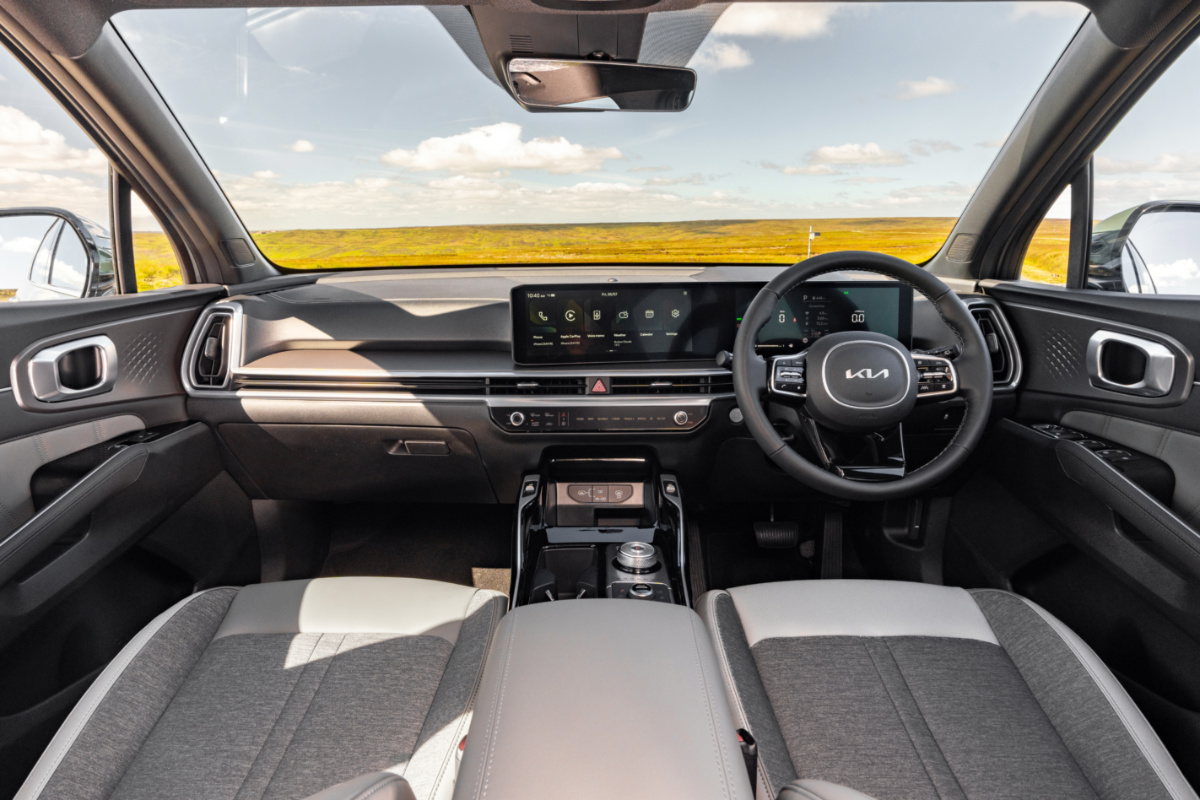
Technology, equipment & infotainment
Every Kia Sorento comes with a touchscreen infotainment system, although screen size and technology vary depending on trim level, or whether you’re looking at a pre- or post-2024 model. Choose a pre-facelift ‘2’ spec car and you’ll get an 8.0-inch touchscreen, a 12.3-inch digital instrument cluster in place of conventional dials, a DAB radio, multi-device Bluetooth connectivity, Apple CarPlay and Android Auto connectivity, a reversing camera, dual-zone climate control and an extensive suite of safety technology.
The ‘2’ model also comes with seven seats and all-wheel drive as standard, along with Drive Mode Select so that the driver can tailor the car’s responses to the conditions. It’s not a serious off-roader, but the all-wheel drive does provide reassurance in wet and slippery conditions.
Upgrade to '3' or '4' spec in a pre-facelift Sorento, and the central screen grows to a 10.25-inch widescreen running Kia’s UVO Connect infotainment system. This adds live traffic information, weather forecasts, points of interest and nearby parking information. UVO Connect also allows drivers to set a destination via their smartphone before starting a journey, and to remind themselves where their Sorento is parked.
All post-facelift Kia Sorento models come with a 12.3-inch central touchscreen infotainment system as standard. It’s easy to use, quick to respond, and includes wireless Apple CarPlay and Android Auto as standard. Entry-level '2' models use a mixed instrument panel with a four-inch digital trip computer flanked by fixed digital dials, while ‘3’ trim and above gain a fully configurable 12.3-inch digital instrument cluster.
In both pre- and post-facelift guises, the range-topping ‘4’ trim level is loaded with luxury equipment. Highlights include Nappa leather upholstery, 10-way electric adjustment for the driver’s seat, a head-up display, a 12-speaker Bose sound system and a panoramic sunroof. Diesel versions also gain 20-inch alloy wheels, while the hybrid and plug-in hybrid models ride on smaller 19-inch wheels.
For the 2026 model year, the trim levels on offer changed from 2, 3 and 4 to Pure, Evolve and Aspire. The equipment provision remained broadly similar to before, with a few very minor tweaks.
Kia Sorento running costs
The plug-in hybrid Sorento will be the cheapest version to run, assuming you can plug it in regularly and make use of the 34 miles of electric range. However, that benefit needs to be weighed up against the fact that the PHEV is the most expensive model in the range, costing around £5,000 more than a comparative hybrid or diesel Sorento.
You might expect the regular hybrid to be the best non-plug-in model, but in reality there’s little difference between the hybrid and diesel when it comes to fuel bills. Officially, the 1.6 T-GDi hybrid returns between 39.8mpg and 42.2mpg, depending on the specification, while the 2.2 CRDi diesel offers between 42.8mpg and 43.5mpg. Factor in the cost of unleaded petrol, which is cheaper than diesel, and there isn’t a lot in it.
The Sorento diesel makes more sense for regular motorway journeys, while the hybrid is most efficient in urban driving where it can make full use of regenerative braking and electric power. Pick your powertrain accordingly according to which type of driving you do more of.
Either way, the Sorento's fuel economy figures are perfectly acceptable when you consider how much energy is needed to shift two tonnes of car, especially as there's no fuel-sipping two-wheel-drive version. If you can live with five- rather than seven seats, an Audi Q5 40 TDI can return 44.8mpg, while a BMW X3 xDrive 20d achieves 41.5mpg to 44.8mpg. So these lighter and less practical cars will only be slightly cheaper to fuel.
Road tax (VED) is not particularly kind to the Kia Sorento, not least because all post-facelift models sit above the £40,000 threshold for premium rate VED. At the time of writing, this means a £425 surcharge for five years from the second year of the car's life, on top of the flat rate of £195 per year. Insurance is broadly in line with other family SUVs, although the regular hybrid tends to be cheaper to insure than the plug-in hybrid and diesel versions.
Kia Sorento reliability
Kia has a strong reputation for dependability, and that was reinforced by the 2025 What Car? Reliability Survey, in which the brand finished an impressive eighth out of 30 manufacturers. There’s even better news for Sorento buyers, because it ranked fifth in the latest list of seven-seaters (out of 14 models), beating the likes of the Volvo XC90, Land Rover Discovery and Audi Q7.
Backing that up is Kia’s seven-year, 100,000-mile warranty, which provides a safety net should things go wrong. The Hyundai Santa Fe’s warranty is two years shorter but has no mileage limit. Audi offers three years' cover for Q5 owners, as does BMW with the X3, so the length of warranty is a definite argument in the Kia's favour if you plan to keep your Sorento until the children have flown the nest. In fact, as the warranty transfers to subsequent owners, it's a plus point even if you trade-in the Sorento after a few years, because it makes the car far more desirable on the used market.
As a result, there should be no unexpected bills for several years, although there is the cost of regular servicing to consider. Kia offers servicing plans that cover the cost of several services in one payment. It's possible to include the cost of future MOTs, too.
- The fourth-generation Kia Sorento comes loaded with safety technology, with some genuinely innovative tech on higher-spec models. The Blind-Spot View Monitor is standard on the ‘4’ trim level and uses a live video feed in the instrument cluster to give the driver a camera view of whatever is in their blind spot. The display shows the video feed whenever the driver indicates to change lanes. You don’t need to go for the range-topping Sorento for autonomous emergency braking, either. Kia calls this feature Forward Collision Avoidance Assist, and it can detect people and cyclists as well as other vehicles.
- Kia knows the Sorento is a popular choice with tow car drivers, which is one of the reasons it continues to offer a diesel option. The 2.2-litre engine’s hefty 325lb ft of torque makes it well suited to pulling heavy loads. The diesel has a higher legal towing limit than the hybrid, at up to 2,500kg. That said, the hybrid’s legal limit of 2,000kg is still enough to tow most mid-sized family caravans, although the PHEV's limit of 1,700kg might mean it struggles more. Every Sorento has Trailer Stability Assist, and ‘3’ and ‘4’ models (or later Evolve and Aspire ones) also come with self-levelling rear suspension, which will help to keep the car stable while towing.
- Kia’s new-car warranty remains one of the strongest in the business, covering the Sorento for seven years or 100,000 miles, whichever happens soonest. Only Toyota offers longer cover among major manufacturers, at up to ten years and 100,000 miles, but that's provided that the car is serviced at a franchised dealer. High-mileage drivers should note that while Kia’s warranty is capped at 100,000 miles, Hyundai’s five-year cover has no mileage limit whatsoever, so if you regularly bang in interstellar mileage figures, the Santa Fe could actually be a better bet.
- Best Sorento for value for money: 1.6 T-GDi HEV '2' (or Pure). This entry-level hybrid is arguably the sweet spot of the Sorento range. It rides more comfortably on its smaller 17-inch alloy wheels than the higher-spec models on larger rims, and it’s far from basic when it comes to equipment. You get a touchscreen infotainment system with Apple CarPlay and Android Auto phone connectivity, a DAB radio, a reversing camera, dual-zone climate control and a full suite of safety systems. Seven seats and all-wheel drive are also standard, along with Kia’s famed seven-year warranty.
- Best Sorento for towing: 2.2 CRDi. Diesel power may be out of fashion, but it still makes sense if you regularly tow a trailer or caravan. The 2.2-litre diesel engine’s strong mid-range torque makes light work of heavy loads, and its 2,500kg towing limit is right up there with key rivals such as the Hyundai Santa Fe and Land Rover Discovery Sport.
- Best Sorento for luxury: 1.6 T-GDi HEV '4' (or Aspire). The range-topping ‘4’ (or Aspire) is a treat for gadget and luxury lovers. Standard equipment includes Nappa leather upholstery, 10-way electric driver's seat adjustment, a head-up display, a 12-speaker Bose sound system and a panoramic sunroof. It feels properly upmarket and good enough to rival some expensive rivals with premium badges.
- Best Sorento for low emissions: 1.6 T-GDi PHEV. With CO2 emissions of 37g/km and up to 34 miles of electric-only range, the Sorento plug-in hybrid is perfect for short commutes, the school run and company car drivers. If you can charge the battery regularly, it should deliver very low running costs.


