Vauxhall Vivaro Review (2014-2019)
Vauxhall Vivaro cars for sale
4.0
Expert review
Pros
Wide choice of sizes and layouts
Refined and economical turbodiesel engines
Enjoyable to drive
Cons
Low-quality cabin plastics
Diesels need to be worked hard when the van is fully loaded
Payload is nothing special

The CarGurus verdict
Almost car-like to drive and with a cabin that wouldn’t look out of place in an MPV (if you ignore the quality of the plastics), the Vivaro is deservedly popular with one-man band owners and fleet drivers. It’s reasonably economical, quiet, and refined, and because it was well priced when new, it’s good value second-hand.
The load area benefits from a low floor and wide doors but, against modern rivals, its payload is nothing special, and some owners grumble that the diesel engines have to be worked too hard when hauling big weights.
Whether the Vivaro is the best van for you therefore depends on how you’ll use it, but there are vastly more satisfied owners than grumblers, and the Vauxhall wins folk over with the quality of its driving experience and its value.

What is the Vauxhall Vivaro?
It’s more or less the same as the Renault Trafic under the skin, but the Vauxhall Vivaro was assembled in the UK, and its claim to be ‘made in Britain’ carried some decent sales appeal after Ford shifted production of the Transit out of the country.
But for all its Britishness, the Vivaro is largely a Renault Trafic with a different nose, and it’s none the worse for that. When it was launched in 2014, the biggest difference between the Vivaro and its predecessor was its smaller diesel engines, all turbocharged and some with twin turbos, the aims of which was to improve fuel economy and reduce CO2 emissions. It was replaced by the current Vivaro in 2019.
How practical is it?
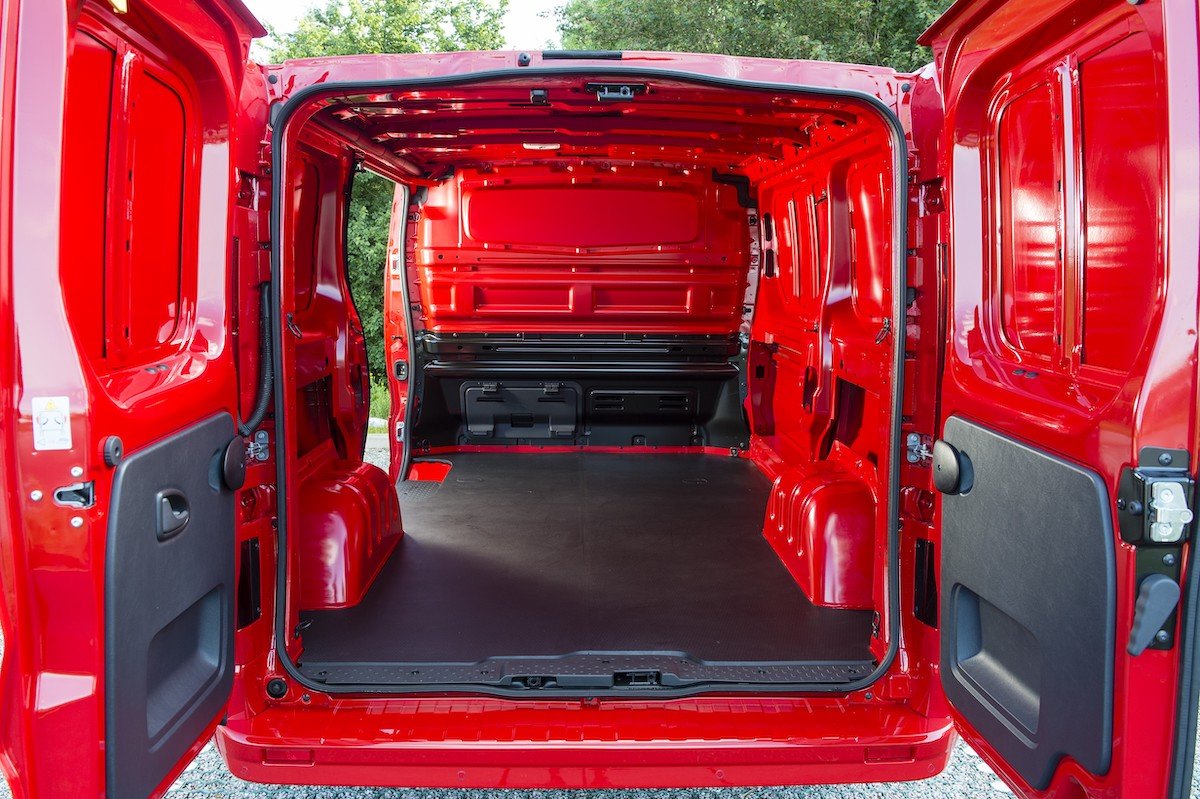
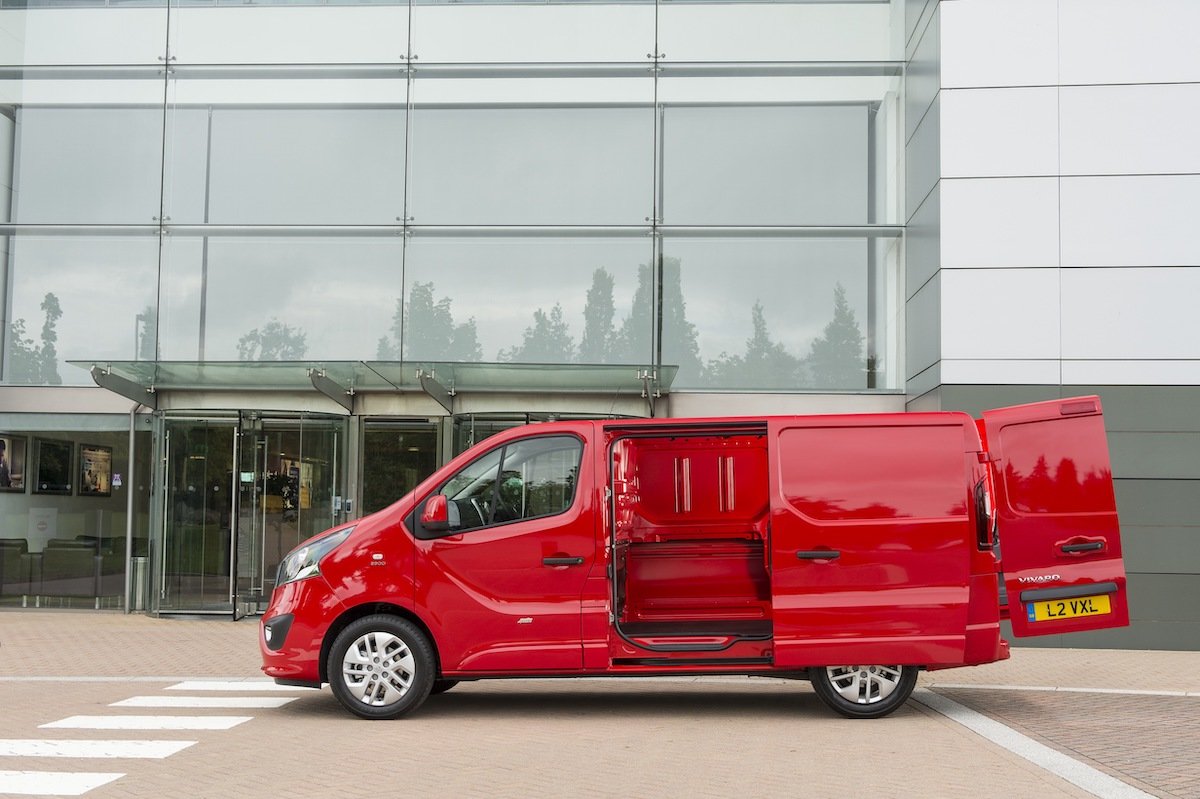
Available with long and short wheelbases and high and low roofs, the Vivaro panel van derivatives have a metre-wide sliding door on the nearside and barn doors at the back, while the six-seat Combi and nine-seat minibus have windowed sliding doors on both sides.
The low floor makes loading easy and all models bar the minibus have a metal bulkhead to separate humans from cargo. Although the Vivaro isn’t the biggest van in its class, even the short wheelbase version can accommodate three Euro pallets, and because there are 1.2 metres between the wheel arches inside the loading area, it will easily accommodate 8ftx4ft panels.
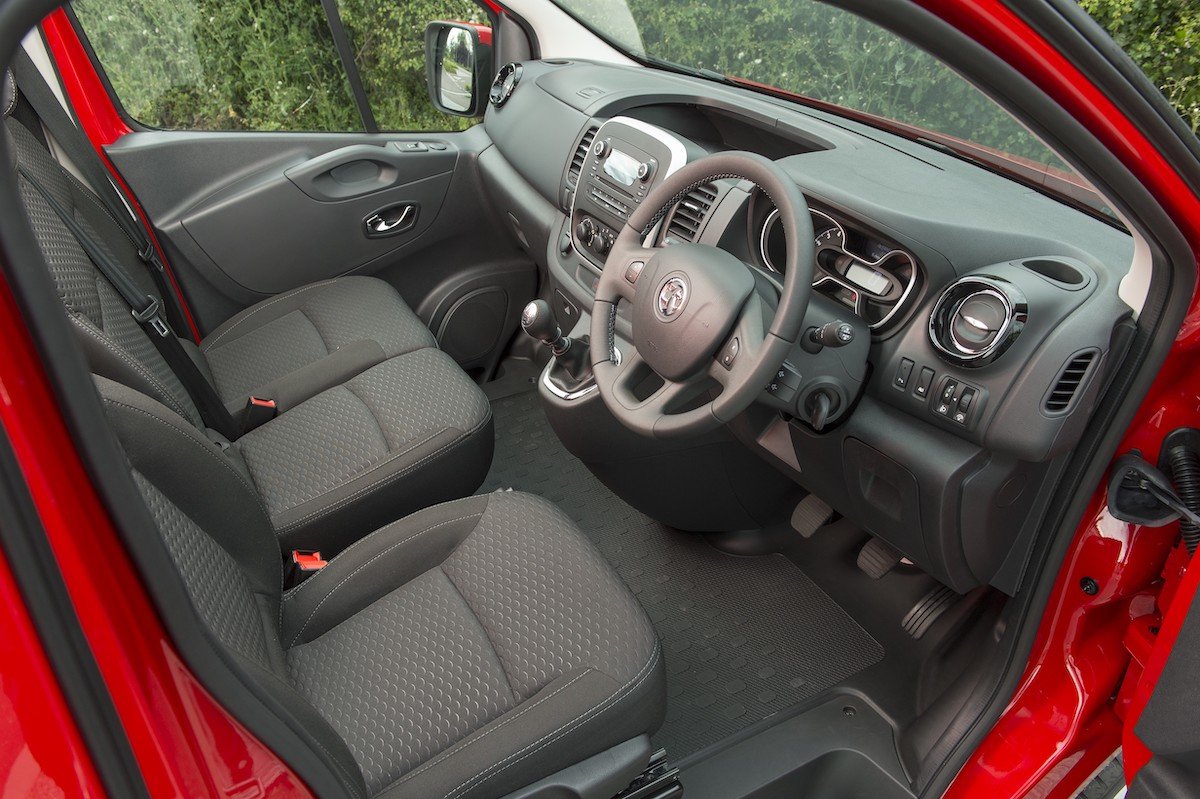
The Vauxhall’s cabin is the same as the Renault Trafic’s and, despite the workmanlike quality of the plastics, its design is more MPV than van. Drivers are treated to a six-way adjustable seat and a steering column that lets you play with reach and rake, so most people should find a comfortable driving position. The ride quality adds to its appeal, because it’s supple (for a van) whether empty or fully loaded.

What's it like to drive?
The Vivaro’s engines fall into two groups. The Euro 5 emissions-compliant versions comprise a 1.6 with either 89bhp or 113bhp – the latter is badged ecoFlex and features a stop/start system and an eco button – and BiTurbo models with 118bhp (also called ecoFlex) or 138bhp. In late 2015, the engine range was updated to be Euro 6 compliant, all models receiving a 5bhp power boost and using Adblue to help reduce exhaust emissions.
The 1.6-litre engines are refined, quiet, and reasonably economical. They’re lively enough when the Vivaro is empty, but some business owners complain that, while the bi-turbo versions have impressive torque on paper, the mk1 Vivaro, with its bigger engine, made easier work of hauling heavy loads. They reckon you have to thrash the turbocharged 1.6 to achieve similar performance. Not all owners agree with that, though.
Technology, equipment & infotainment
The Vivaro was sold with just two standard trim grades, Variant – which has black plastic bumpers, grille, etc, and is very much the utilitarian choice – and Sportive, which puts paint onto the bare plastic parts outside, and adds air-con and selective door locking.
All models have electric windows and door mirrors, a DAB radio, Bluetooth connectivity, and a wealth of electronic safety systems including Adaptive Load Control, which alters the stability control’s parameters according to the weight on board.
Vauxhall Vivaro running costs
Vauxhall recommends 25,000-mile/two-year service intervals for the Vivaro, but owners and independent garages suggest you ignore that advice and consider at the very least having an oil change every year or even every 10,000 miles.
An independent garage is almost guaranteed to cheaper for servicing than visiting a main dealer, but Vauxhall operates a two-tier fixed-price parts scheme. The lower level uses ‘Vauxhall Approved’ aftermarket components rather than original specification parts, and it can work out a good bit cheaper.
All versions of the Vivaro have an official combined fuel consumption figure of at least 40mpg, with the BiTurbo 120 (118bhp) heading the range at 47.9mpg. In the real world, plenty of vans are used in towns and cities for short hops between deliveries, and in those cases fuel consumption could drop to less than. In mixed use however, some owners report that figures from the mid-30s to around 40mpg are typical.
Despite complaints from owners about a lack of alarm or deadlocks, the Vivaro sits in groups 9E to 11E for insurance.
Vauxhall Vivaro reliability
The Vivaro fares quite well in reliability surveys, suggesting that its problems aren’t sufficiently widespread to attract general condemnation, but that isn’t to say it’s without issues.
Turbochargers, particularly on the BiTurbo models, are known to whine even from a relatively young age, and both will need to be replaced at the same time, which can be very costly. One owner reported that, shortly after having replacements fitted, they also failed. Another problem you could do without is fuel injectors seizing in the cylinder head, due to corrosion caused by water dripping onto the top of the engine via a faulty seal at the base of the windscreen. The fix can be four figures.
Faulty exhaust gas recirculation (EGR) sensors and associated pipes can also fail, triggering warning lights on the dashboard and possibly sending the engine into limp home mode. Some dealers quote up four figures to sort this out, although the parts are a fraction of that price. Still in the engine bay, there are several reports of mysterious coolant loss; in one instance, it turned out to be a lower radiator hose chafing against the gearbox casing and eventually developing a hole.
Some owners report the clutch pedal randomly sticking down near the floor after a gear change, with no explanation from garages as to what’s causing the problem. A few unlucky owners have also needed a new clutch and flywheel at mileages as low as 35,000, which is a four-figure bill. Cheaper, but nevertheless annoying, is that some radios ‘die’ temporarily and, when they restart, fail to acknowledge your mobile device. Replacement original equipment radios often suffer the same problem.
Leaky dampers and perished front suspension subframe bushes are known to afflict the chassis. Cosmetically, the Vivaro’s nose seems especially prone to stone chips, while door handles can snap and even fall off. Several owners grumble that their panel vans suffer badly from condensation in the load area, to the point where, in one case, rust has started to form inside. These same owners reckon that condensation was never an issue with their previous Vivaro mk1s.
- The Vivaro’s wheelbase dimensions (long and short) are identical to those of the first-generation model, which enables owners who are upgrading to the more recent version to directly transfer their racking systems. There’s also an extra 100mm length in the load area.
- Standard on Sportive models is FlexCargo, essentially a hinged flap in the lower left-hand side of the bulkhead that allows you to slide items up to 4.15 metres long (in the long-wheelbase version) all the way into the passenger footwell and shut the back doors.
- On models with the twin-person passenger seat, the central backrest can be folded down to create a desk with an integrated clipboard, which also has a pocket to accommodate a laptop. The Vivaro’s dashboard also has built-in cradles for smartphones and tablets, although the phone holder struggles to support today’s larger devices. There are also 14 cubbies with a combined volume of 90 litres.
- For general business users: While the single-turbo versions of the Vivaro are fine for pottering about, the BiTurbo 120 (118bhp) has more urgency to the way it performs and more torque for lugging heavier loads. Unless you’re on a really tight budget, go for the Sportive trim which has more equipment for not a whole lot more money.
- For heavy loads: The long wheelbase, regular height model has the heaviest payload capacity at 1,281kg, and its best to hunt out a 143bhp BiTurbo engine for its extra grunt. If your loads are tall as well as heavy, then a high roof option – H2 as it’s described on the spec sheet – is available but with a slightly reduced payload.
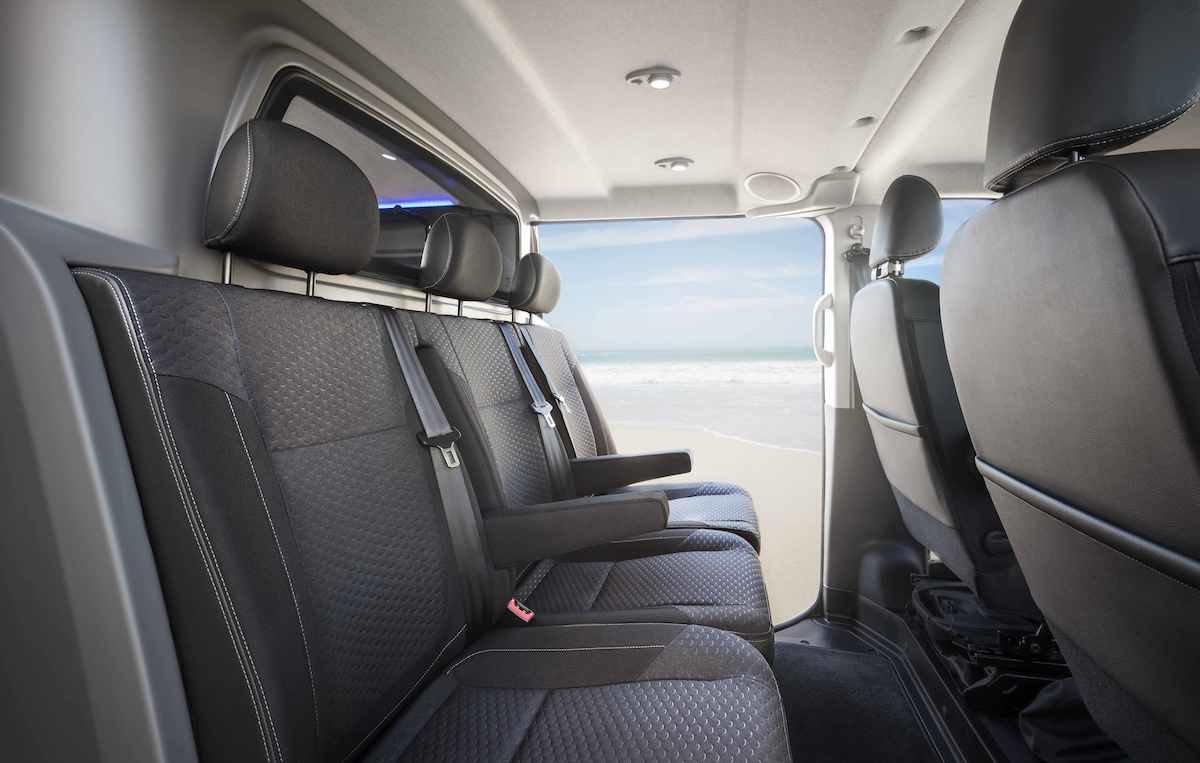
- For work and family use: The Crew Cab Vivaro seats six people in two rows, although the central passenger up front is going to be a bit squashed. In the second row, the outer two seats have Isofix mounts for child seats and there are large, opening windows in the twin sliding doors. A rear bulkhead keeps passengers and load separate. Although the load space is much reduced compared with panel van versions, the Crew Cab will still accommodate a Euro pallet.
- Best for passengers: The Vivaro is available as a minibus with a nine-seat configuration. Make sure you pick the long wheelbase (L2) version so there’s also enough room for luggage. Airport transfer firms praise the Vivaro minibus for its value and ability to swallow copious amounts of suitcases; their only gripe is that it’s less fancy inside than rivals.


