Volkswagen Golf Mk6 Review (2009-2013)
Volkswagen Golf cars for sale
4.0
Expert review
Pros
Sensibly and thoughtfully designed inside and out
Good fun to drive – especially GTI
Decent long-distance refinement
Cons
A bit of a conservative choice
Reliability concerns, especially DSG gearboxes
Not the most practical car in its class

The CarGurus verdict
Realistically, any serious faults with a mk6 Golf should already have been sorted out by now, either under warranty or at the previous owner’s expense. But check the service records and other invoices diligently to make sure remedial work has taken place, especially on cars fitted with the DSG automatic gearbox.
Conservative choice though it may be, a mainstream Golf represents mid-level motoring at its refined and well-executed best. And while most of the range will maintain your pulse rate at an unremarkable level, the GTI and R versions are held in high regard by thrill-seeking sports car aficionados.

What is the Volkswagen Golf?
With a production life spanning 50 years and multiple generations, the Golf is arguably one of the best known family cars in the business. With its mix of practicality, low running costs and just a dash of premium appeal, the evergreen Volkswagen has proved a popular choice for buyers looking for hassle-free runaround that also has a dash of style and a reputation for durability.
Launched in 2009, the sixth generation Golf was actually an updated version of its predecessor, the already excellent mk5. With refreshed looks on the outside and an overhauled interior it gave the VW an extra injection of showroom appeal, yet in most respects it performed pretty much identically to the old car. However, a reduction in production time and costs meant it was a more profitable model for the brand.
As with the mk5, there was a choice of three and five-door hatchback versions, plus a spacious estate and taller and roomier Golf Plus MPV. The range was further boosted by the addition of the Cabriolet model, which as it stands remains the last open-topped Golf.
Being effectively a mid-life refresh model meant that the mk6 Golf had a relatively short lifespan, with sales ending in 2012 in readiness for the all-new seven generation version. However, that doesn’t mean the older car didn’t have an eventful life, with some models caught up in the ‘Dieselgate’ scandal, for instance. In this review we'll point out potential pitfalls, as well as the good things about the Volkswagen Golf mk6.

How practical is it?
As with every generation of Golf, the mk6 serves-up just enough space and versatility that few owners will have anything to grumble about. It’s not the most practical car in its class, but it offers enough that it should cover most needs.
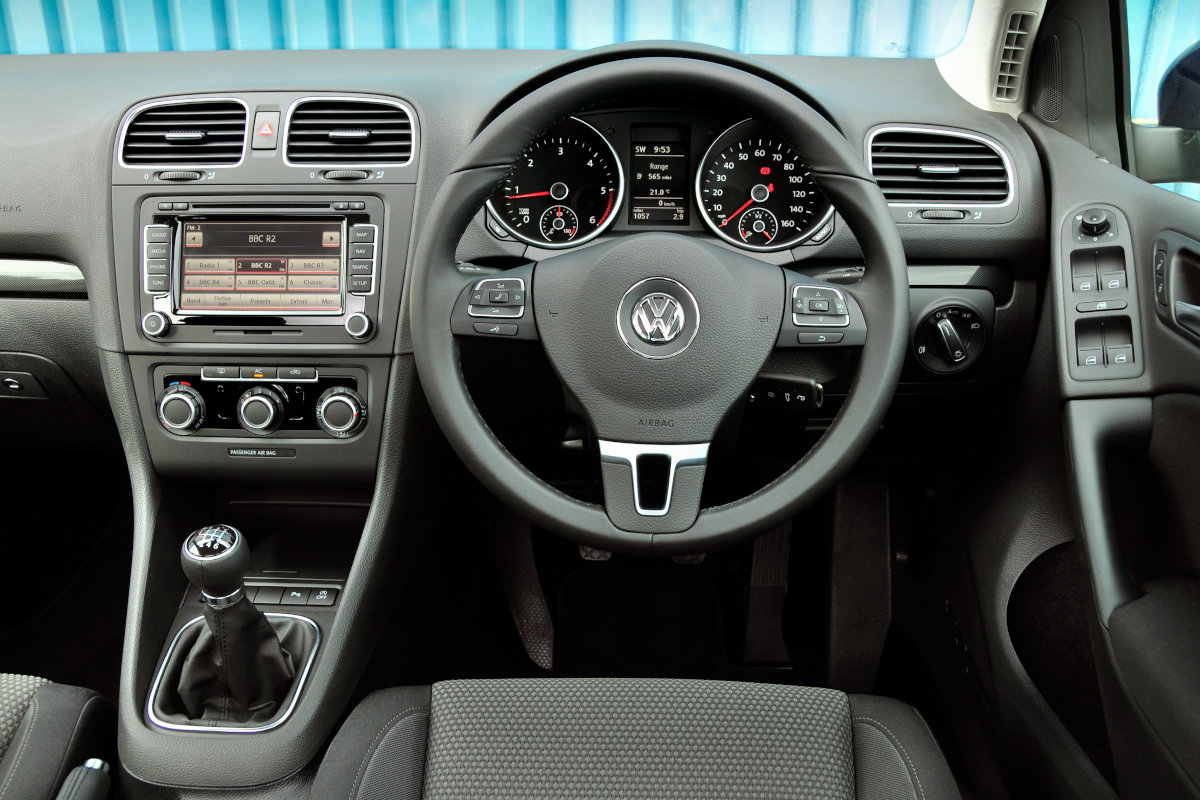
Up front there’s plenty of head and legroom, while the supportive seats have a wide range of adjustment, so there’ll be no trouble finding a comfortable driving position. And while the slab-faced dashboard looks a little dull, it’s thoughtfully laid out and solidly constructed from quality materials.
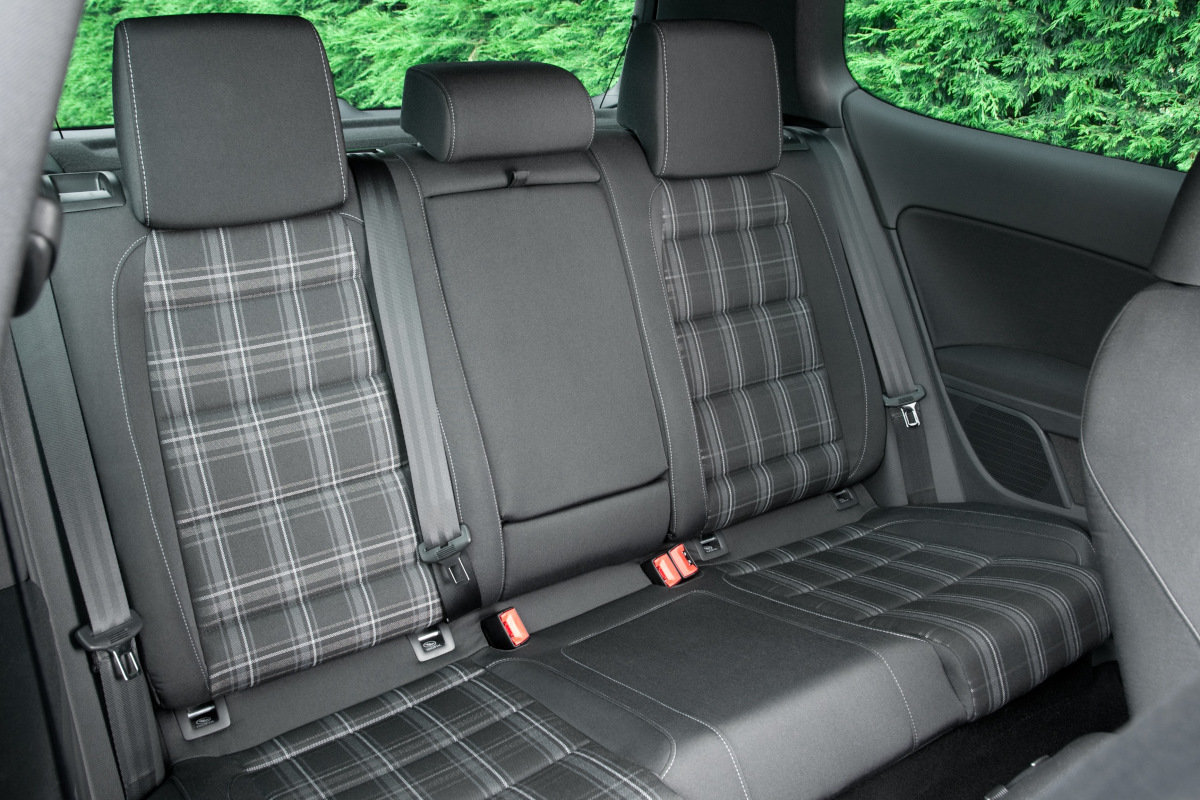
Those in the back are almost as well catered for, with decent head and legroom even for taller passengers. There’s even space for three at a push, although only for short journeys as shoulder room is tight and the person sitting in the middle will be perched higher and their legs will need to straddle the transmission tunnel.
The taller Golf Plus adds a bit more room for heads and legs, plus it gets a useful sliding rear bench. Least accommodating is the Cabriolet, which is a strict four-seater, with those sitting in the back feeling particularly hemmed in - it’s fine for kids, but adults won’t thank you after a long journey.
Regardless of the version, the interior is also dotted with handy storage, including big, felt-lined door bins, a lidded compartment between the front seats, a large glove box and a couple of cupholders. The Golf Plus also adds handy features such as fold-out, aircraft style tables for those sitting in the back.
When it comes to loading luggage, the standard hatchback has a decent 350-litres of space, which stretches to 1,305-litres with the rear seats folded flat. If you need to carry larger items, then the estate version increases these figures to 505-litres and 1495-litres respectively, while the Golf Plus manages 395-litres and 1,450-litres. Smallest of the lot, unsurprisingly, is that Cabriolet, which manages just 250-litres. On the plus side, its relatively compact fabric roof mechanism means this space remains the same whether the hood is up or has been lowered to catch some rays.

What's it like to drive?
Throughout its production life the Volkswagen Golf mk6 was fitted with a broad range of sophisticated and efficient petrol and diesel engines, most of them turbocharged, one of them, the 1.4-litre TSI, turbocharged and supercharged, also known as twin-charging. A BlueMotion version of the 1.6-litre TDI diesel engine brought with it the prospect of super-low emissions and 75mpg, while at the other end of the scale 2010’s all-wheel drive Golf R was punched along by a turbocharged 2.0-litre producing 266bhp.
Overall, performance is good compared to rivals, apart from the lowest powered entry-level 84bhp turbocharged 1.2-litre, can feel a bit sluggish and breathless when worked hard. Much better is the more powerful 104bhp version that’s brisk and responsive in most situations.
Diesel was hugely popular when the mk6 was new, so much so that it was later revealed that many features featured ‘defeat devices’ that artistically lowered emissions when being tested for official fuel efficiency and CO2 output. Although this software addition doesn’t affect the way the car drives, VW were forced to recall plenty of Golfs and pay huge fines to authorities (and compensation to owners in the United States). Still, these units still make a lot of sense, as they’re frugal and reasonably refined - mostly, early cars were still available with the clattery but bombproof 1.9 TDI. Pick of the bunch is the 138bhp 2.0-litre, which delivers strong acceleration and an easy 50mpg.
Of the high performance models, the Golf R steals all the headlines, but the popular 207bhp GTI offers the best blend of pace and efficiency, while its lowered and stiffened suspension serves-up agile and engaging handling. In fact, in most situations it feels lighter on its feet and more nimble than its more powerful sibling.
Standard versions of the Golf are very capable too, with well-weighted and direct steering, confidence-inspiring grip and a suspension set-up that strikes a fine balance between control in the corners and comfort over the bumps. Noise levels are low, which combined with the supportive seats make the VW a refined long distance cruiser. Yet with its light controls and fairly compact dimensions the Golf feels equally at home in town, able to squeeze happily into most parking spots.
A precise manual gearbox is standard on most versions, with either five or six-speeds depending on the version. A quick and smooth-shifting twin-clutch DSG was also available as an option and proved quite popular but, as we’ll discuss later, it’s not without its problems.
Technology, equipment & infotainment
On the surface, the entry-level Golf S looks a bit stark, with its small wheels with plastic trims and a drab grey interior that appears quite spartan. However, you do get the essentials, including electric windows, remote central locking, air-conditioning, plus an aux-in connector to play an external music device through the car’s stereo.
However, a much better bet is the SE, which added alloy wheels and a leather-trimmed multi-function steering wheel, as well as desirable extras such as separate vents for the rear seat passengers and centre armrest for those up front. This was eventually replaced by the even better equipped match, which featured all this plus cruise control and an iPod connection.
Next up is the GT, which gets larger alloys and sporty front seats, while the GTD and GTI add distinctive checked trim, a chunkier steering wheel, metal pedals and lowered and stiffened suspension.
If you’re expecting the latest in infotainment, then the Golf will be something of a disappointment. Standard cars make do with a standard radio and CD player, while there was an optional touchscreen upgrade that added sat-nav and features such as Bluetooth (for a long while this was optional on lower spec cars). Yet the mapping is dated and the features are fairly limited. On the plus side, it’s fairly easy to upgrade to an aftermarket unit with all the latest features.
Volkswagen Golf running costs
The running costs of a mk6 Golf are very dependent on you finding an example that has already had key issues sorted out by the previous owner under warranty (or not) – see our Common Problems section for examples of what to ask about. Some of these problems can lead to engine failure and that generates bills running into thousands of pounds.
Fuel economy on most models is excellent, both petrol and diesel, and BlueMotion versions can return extraordinarily parsimonious figures when driven gently: up to a genuine 75mpg. Additionally, the 1.6 TDI BlueMotion is exempt from annual Vehicle Excise Duty, while the regular 1.6 TDI is £30 a year to tax. The fuel economy of many other models (and therefore emissions) mean that yearly tax costs are comparatively modest.
Volkswagen has its own fixed-price servicing plans, and although seeking out a marque specialist will undoubtedly bag you a better deal, the main dealer costs perhaps aren’t as expensive as you’d think. A minor service is advertised at £179, while a major one costs £349. There are conditions attached to these service plans, so read up beforehand.
Despite some of the issues the mk6 suffers from – and which you can read in the section below – the Golf’s reputation for dependability serves it well on the used market and depreciation generally isn’t as much of a concern as it is for some rivals. You’ll be paying a premium for buying your Golf in the first place, but chances are you’ll receive a premium when selling it.

Volkswagen Golf reliability
A major issue for the mk6 was the reliability of the dual-clutch automatic DSG gearbox. In the six-speed version a software glitch could cause the car to lose all forward propulsion, while with the seven-speed derivative VW discovered that the synthetic oil it was filled with in the factory was causing failures: a switch to a mineral oil was part of a recall that then insisted the oil was changed every 40,000 miles – it’s worth checking that this has been done on the car you’re looking at, as the gearbox replacement costs run to several thousand pounds.
Diesel particulate filters are known to clog if the car is used only for short trips, and there have been many cases of the exhaust gas recirculation (EGR) cooler failing, at great expense: there are several recorded instances of this happening after the car in question was recalled for the NOx ‘fix’ required in the wake of the ‘Dieselgate’ scandal. Some 1.4 TSI petrol engines suffered cracked piston crowns and broken piston rings, while early examples of the 2.0-litre turbocharged GTI were plagued with poorly manufactured cam chains and tensioners – ensure the one you’re after has had an updated tensioner fitted.
Of less consequence, yet still annoying: very early mk6s of all varieties had a problem with their multimedia systems connecting to – a limited number of – mobile phones via Bluetooth: there is a fix from VW but it’s £500.
- In 2009 the mk6 Golf was top model in its class in the Euro NCAP crash tests, achieving a commendable five-star rating. However, by today’s standards the VW is fairly simple when it comes to safety features, with electronic stability control and multiple airbags being the most obvious additions. That said, Automatic Distance Control (ADC) was also an option, and it used forward pointing sensors to determine if you were getting too close to the car in front: it could automatically maintain a set distance and in extreme conditions could instigate braking. It is rare, though.
- The 138bhp 2.0-litre TDI model has a solid reputation as a tow car amongst the caravanning fraternity, and won several awards for its abilities in this field.
- Some versions of the mk6 Golf, and not just the sporty models, were offered with the option of Adaptive Damping Control (ACC), a technology more often found in sports cars and luxury cars. In its softest setting it delivered a more cushioned ride, while at the touch of a button it firmed-up the suspension for even tauter handling.
- For the best fuel economy: the 1.6 TDI BlueMotion. Some owners boast of regularly attaining 65-67mpg from this ultra-frugal Golf; one claims to have achieved 75mpg on a long run. If you're happy with a diesel-powered Golf and want maximum miles per gallon, the 1.6 TDI BlueMotion is the car for you.
- For extreme performance: with four-wheel drive and 266bhp, the Golf R is a solid all-weather performance car. Just be aware it doesn't have quite the same reputation for driver thrills as its mk7 successor. If you don’t need the all-weather grip of four-wheel drive, then the GTI is a better bet.
- For great space utilisation: the Golf Plus is a taller mk6 with more cabin space. It might not be pretty, but with its large boot and extra space for rear-seat passengers, the Golf Plus makes for an extremely practical family car.
- Best all-rounder: the 1.4 TSI Match. Although not problem-free in terms of reliability, the twin-charger petrol engine offers plenty of performance, and the Match has a good level of specification for the money.

