Volkswagen Polo Mk5 Review (2009-2017)
Volkswagen Polo cars for sale
4.0
Expert review
Pros
Feels like a bigger, more expensive car than it is
Fuel-efficient BlueMotion diesels
Refined and comfortable to drive
Cons
Unexciting to drive – sporty GTI is a particular disappointment
Not that well equipped
Understated styling could be seen as boring

The CarGurus verdict
The mk5 Polo didn’t ever excel itself in reliability surveys, but nor did it perform badly enough to undermine its numerous qualities elsewhere. Its styling was led by Walter de Silva – a car design stalwart who also has various Alfa Romeos and Lamborghinis to his credit – and apart from being handsome (in an understated sort of way) and very well built, the Polo also pulls off that typical VW hatchback trick of feeling like a bigger and more expensive car than it really is.
Nonetheless, it was never as fun to drive as the Ford Fiesta of the time, nor as stylish as something like a MINI. The BlueMotion versions are remarkably fuel efficient, while more powerful models are easy to drive around town and comfortable on the motorway. The sporty GTI hot hatches, however, never scaled the heights necessary to stand out in a very competitive sector.
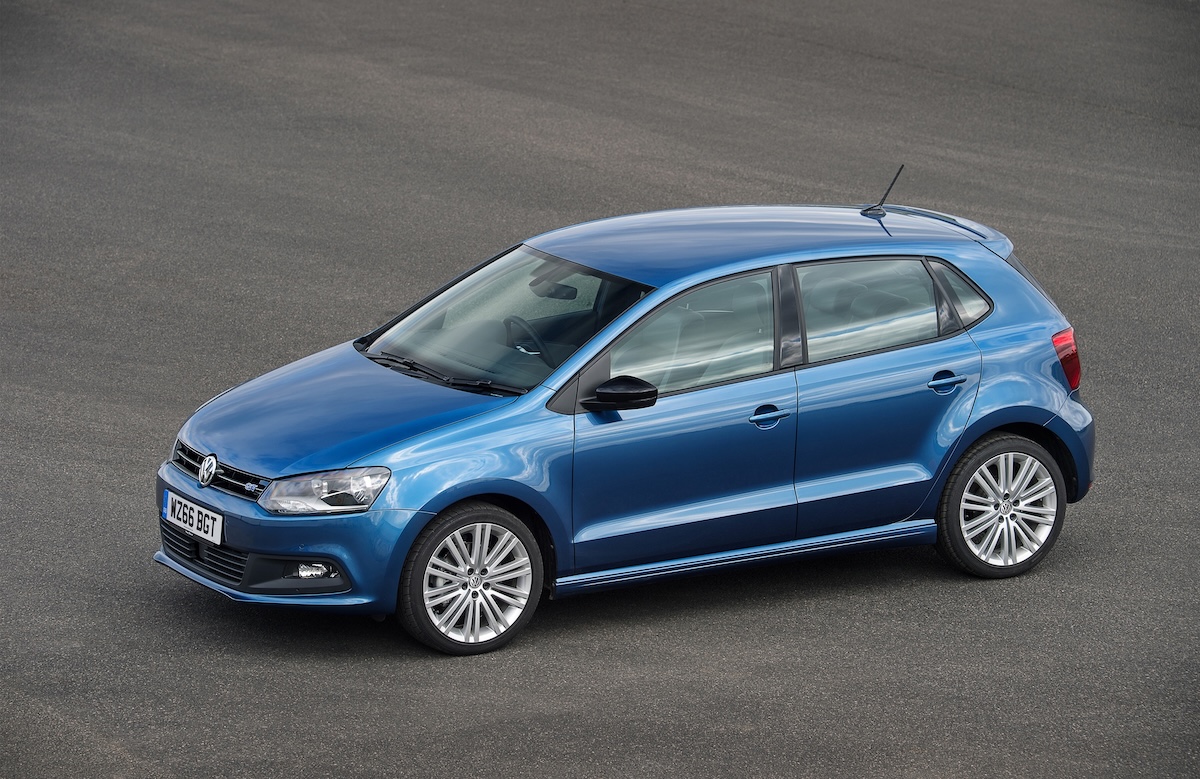
What is the Volkswagen Polo?
The focus of this used car review is the mk5 version of the Volkswagen Polo, which was replaced by the sixth-generation model in 2017. Yet while it’s been off sale for a number of years already, the capable and dependable Mk5 will always be remembered as a high point in the Polo dynasty.
In 2010 the German supermini was named European Car of the Year, finishing ahead of the likes of the deceptively clever Toyota iQ and the characterful Skoda Yeti. Between 2013 and 2016, the heavily-adapted Polo R WRC dominated the World Rally Championship, winning both the drivers’ and constructors’ titles four years in succession - although badge aside you’ll struggle to find any real link between the rally and road cars.
As you’d expect of a car wearing a VW badge, the Polo feels more grown-up than its diminutive proportions would suggest – in terms of build quality, comfort in town and refinement on the motorway, it really is like a scaled-down Golf. Just don’t expect it to steer and handle with the same sophistication as its bigger brother on a winding road. In fact, for those buyers who expect their small hatchbacks to be fun to drive, a contemporary Ford Fiesta is a far better bet.
Available in three and five-door body styles, the Polo went on sale in 2009 and received a mid-life refresh in 2014 that added new technology and engines, but left the styling largely unchanged. It was replaced by an all-new, sixth-generation version in 2018.

How practical is it?
It’s a bit of a cliche, but the Polo really is a small car that likes to think big. Despite its modest exterior dimensions, the VW is surprisingly roomy and will do a decent impression of a larger family car if you’re looking to downsize.
It feels most grown-up in the front, where its neatly styled dashboard and decent quality materials help lift it above contemporary rivals such as the Ford Fiesta. There’s also decent space, while the driver gets enough seat and wheel adjustment that finding a comfortable driving position shouldn’t be an issue. There’s good storage too, with a large glovebox and two cupholders and deep trinket tray ahead of the gearlever. The large door bins include space for two-litre bottles, but unlike the bigger Golf they’re not flock-lined so smaller items can rattle around.
Given its small size, the Polo serves-up decent space for rear seat passengers, with even those around six-feet tall finding just enough head and legroom. However, while it’s just about possible to seat three adults on the rear bench, it’s best only for very short journeys if you’re hoping to avoid bad tempers. Three door models have the same space, but getting in and out is a little trickier despite wide-opening doors and front seats that tilt and slide forwards to aid access.
The Polo’s hatchback tailgate boasts a wide opening, while a handy variable height boot floor creates a flat load lip and creates useful hidden storage below. A 280-litre capacity is about average compared to rivals, while folding the rear seats flat creates a handy 952 litres of space. Bear in mind, however, that entry level models feature a single piece folding rear bench as opposed to the more versatile 60/40 arrangement in higher specification models. All get a handy shopping bag hook and 12V power supply, however.

What's it like to drive?
While many small car rivals aim to be fun and engaging to drive, the Polo strives for a more mature approach. That’s not to say it’s not satisfying to drive, just that keen drivers will get more enjoyment elsewhere.
Accurate and well-weighted steering combines with the car’s compact dimensions to make it feel as nimble as you’d expect of a supermini, while overall grip is good and the suspension doesn’t get upset by mid corner bumps. In short, the Polo is a safe, predictable and composed choice, but not one that involves and engages like a Ford Fiesta.
The upshot is the fact the Polo feels far more grown-up and relaxing in day-to-day use. Good refinement and a compliant ride help, while few small cars are as adept at racking up motorway miles. As you’d expect, it also feels right at home in the urban jungle, with the light controls and great visibility allowing you to slot into gaps in the traffic and tight parking spots.
There’s a wide range of engines to choose from for the Polo, but unless you’re planning to stay exclusively in town then the weedy naturally aspirated 1.2-litre petrol is best avoided. The 1.4-litre and 1.6-litre are better, but if you can stretch to the 104bhp turbocharged 1.2-litre then its smooth and torquey delivery suits the Polo down to the ground.
The facelift replaced most of these four-cylinder units with new, down-sized three-cylinder engines. All are more eager than the engines they replace, with even the entry-level 59bhp unit feeling happy to keep up with faster moving traffic. Again, the 89bhp and 108bhp turbocharged versions are more desirable. Of the diesels, the 1.6-litre is the most refined - the three-cylinder 1.4-litre and (rare) 1.2-litre sound very clattery at idle and thrummy when extended, but do deliver remarkable fuel efficiency.
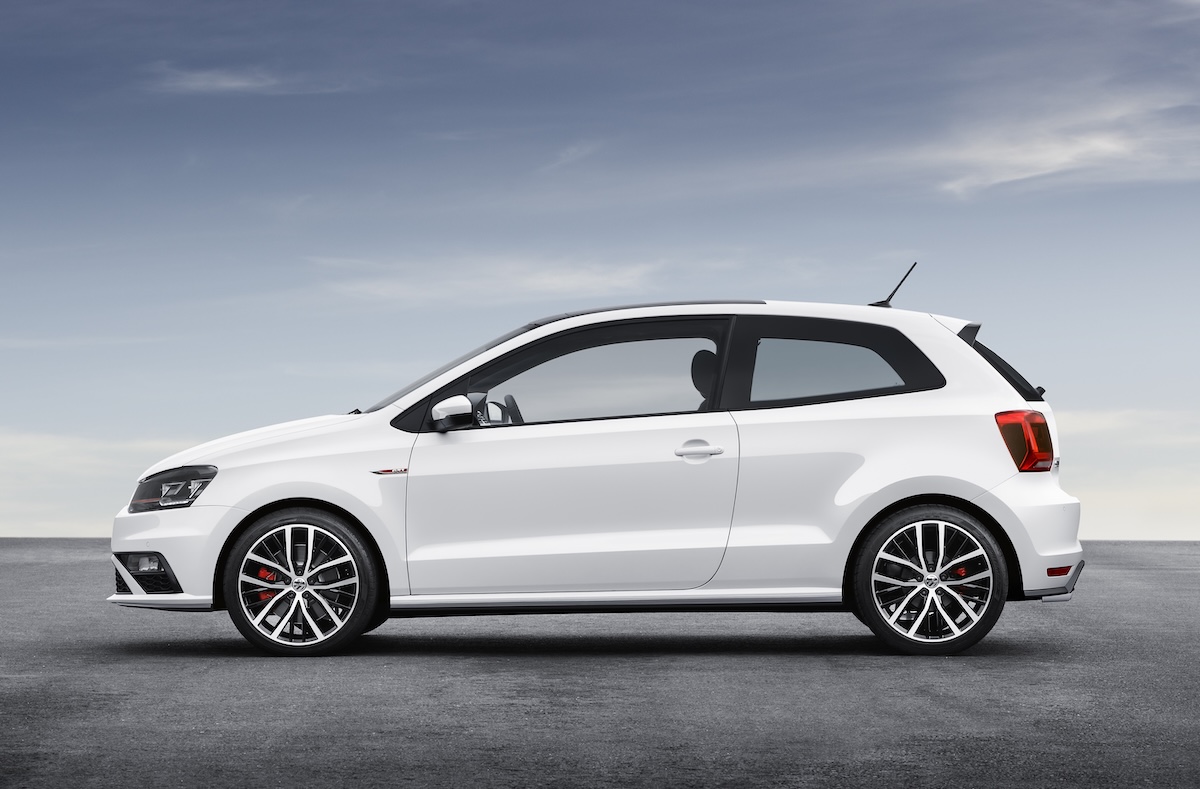
Top of the performance tree are the GTI models, which tried to ape the succes of the bigger Golf but literally and figuratively came up short. Early cars featured the novel but potentially troublesome 178bhp 1.4-litre that featured both a turbo and supercharger. It was exclusively mated to a six-speed twin-clutch DSG gearbox.
Later cars benefitted from a more muscular 189bhp turbocharged 1.8-litre that was also available with a six-speed manual as well as the DSG option. Neither are as fun or fast to drive as the Ford Fiesta ST, but as quick, grippy and discreet transport they’re worth a look.

Technology, equipment & infotainment
When it was new, the Polo played on the upmarket image of the VW badge, and so while it looked and felt a cut above mainstream competition, it wasn’t as well equipped. The entry-level S model is particularly basic, with electric windows and central locking, but no air conditioning and steel wheels covered in simple plastic trims. As the name suggests, the S A/C added the chilled air.
The SE added alloy wheels, remote locking, a body colour finish for the door mirrors and handles, plus electric rear windows. The SE L featured all of this, plus a leather trimmed steering wheel, larger alloys, front fog lights and classy touches such as footwell illumination.
In 2014 an update improved equipment levels, with SE models getting Bluetooth and DAB radio, plus improved infotainment systems. The Match eventually replaced this model, adding some extra kit along the way.
Most early versions feature a traditional radio and CD Player infotainment system with an aux-in socket for external music devices. A touchscreen sat-nav is available, but it’s a rare option and, given how dated the mapping now is, not worth seeking out. Matters improved for the facelift cars, with all apart from the S getting a slick touchscreen system with Bluetooth and USB connectivity. The most recent versions also got Apple CarPlay and Android Auto.
The Polo’s age means many don’t get the latest driver assistance systems, but the post-facelift cars were some of the first small cars to get autonomous emergency braking and adaptive cruise control. These were expensive options, so not many have the kit fitted, but it’s worth double-checking any potential purchase.
Volkswagen Polo running costs
Unless you’re considering one of the high performance GTI models, you can expect very good fuel economy from the mk5 Polo. As the car matured, the technology beneath the bonnet improved as well, meaning later cars will generally be significantly more efficient than equivalent early models. As a general rule of thumb, post-facelift versions will benefit from the more up-to-date powertrain technologies.
Even so, early petrol cars – in theory the least fuel efficient of the bunch, GTIs aside – will manage close to 50mpg in real-world mixed driving. That’s not at all bad, but the more modern petrol models (look for TSI badging) will return half as much again. If saving money at the pumps is a priority, narrow in on the diesel models – particularly if you do more miles than most. Even early diesels will manage around 60mpg, while later cars, the BlueMotion models in particular, will return as much as 90mpg.
The GTIs, whether the earlier ‘twincharger’ 1.4 (with both a supercharger and a turbocharger) or the later 1.8-litre turbo version, will inevitably be less fuel efficient. Neither is likely to break the bank, though, with 40mpg a realistic figure for both.
In 2017, the same year the mk5 Polo went off sale, a new road tax system was introduced. All but the last of the line cars, therefore, will be charged based on CO2 emissions. Accordingly, post-facelift diesels won’t incur any charge, while petrols will only cost £20 a year to tax. At £155 for the year, the GTIs are rather more expensive to tax. Certain pre-facelift petrol models can cost the same or only a little less to tax than the GTIs. Pre-facelift diesels, meanwhile, will cost nothing, or only a nominal amount.
Servicing at a main dealer will cost more than you’d pay for a comparable Ford or Renault (£164 for a minor service and £329 for a major one), but you’ll make savings with independent specialists. Finally, all Polos other than the GTI and BlueGT will be very reasonable to insure, none sitting in a group higher than 15 (out of 50).

Volkswagen Polo reliability
The Polo was one of the best-selling cars throughout its time on sale in the UK, which means there are plenty of them about. You shouldn’t expect to travel far to find the right car, therefore, and you can afford to be choosy.
The same advice that applies to any very common car is every bit as relevant here – walk away from examples with incomplete service histories, cosmetic imperfections beyond what you’d expect of a car of a certain age, tatty interiors and so on. Similarly, if buying from a garage, you should expect all four tyres to have plenty of life left in them.
Otherwise, you really only need to concern yourself with potential engine issues and recall work (on the latter point, a responsible dealer will tell you exactly which recalls applied to the car in question and show proof of remedial work where necessary). Look out for the codename EA189 – it describes a family of three-and four-cylinder diesel engines that were implicated in the VW ‘dieselgate’ scandal a few years ago. Ask your dealer if the car you’re considering has one of these engines. As long as the correct recall work has been carried out, you needn’t dismiss the car offhandedly . Most Polo engines use timing belts that need changing every four years, so look for evidence in the service book that this essential work has been carried out accordingly. The 1.2-litre petrol engine, meanwhile, uses a timing chain. Check that it isn’t rattling loudly at idle.
Finally, diesel cars that spend their life in the city, doing mostly short journeys and rarely venturing onto the motorway, can suffer clogged-up particulate filters. Although these can be cleaned at modest expense by a garage, in some cases a new filter will be needed – a job that can land you a four-figure bill.
- A midlife facelift in 2014 included subtly restyled bumpers and a touchscreen infotainment system on all but the most basic versions of the Polo. Support for Apple CarPlay and Android Auto was introduced the following year.
- With multiple airbags, ABS and electronic stability control as standard across the range, the Polo is a very safe car. That’s backed up by a five-star Euro NCAP rating, the highest score possible.
- BlueMotion models are the most fuel efficient. These came with aerodynamically-optimised bodywork and wheels, plus fuel-saving powertrain technology. Petrol and diesel versions of the BlueMotion were available.
- For tiny fuel bills: any of the BlueMotion models will return exceptional fuel efficiency whether they run on petrol or diesel, but none more so than the 1.2 TDI. This 74bhp diesel model was officially rated at 91.1mpg combined. Later versions switched to a 1.0-litre petrol, which isn’t quite as economical but is far nicer to drive.
- For city driving: the three-cylinder petrol engines (1.0 and 1.2 litres) feel out of their depth on the motorway but they work well in town and emit fewer harmful particulates than diesel versions.
- For motorway driving: the BlueGT is a curious mash-up of the sporty GTI and the very fuel efficient BlueMotion models. It has a 1.4-litre turbocharged petrol engine with 148bhp, plus cylinder deactivation to reduce fuel consumption when cruising.
- For those in a hurry: the 178bhp Polo GTI was replaced by a faster 189bhp version in 2015. Neither one was a world-class hot hatch, but they do at least give the Polo a useful turn of speed when needed. The limited edition Polo R WRC with 217bhp wasn’t offered in right-hand drive.

