Audi Q5 Review (2017-2024)
Audi Q5 cars for sale
4.0
Expert review
Pros
Quiet and comfortable
Quattro four-wheel-drive models cope well with bad weather
Plug-in hybrids make great company cars
Cons
Not as fun to drive as a BMW X3 or Porsche Macan
Looks may be too subtle for some
A premium badge means a premium price, whether you are buying new or used
The CarGurus verdict
You need reasonably deep pockets to buy an Audi Q5, either as a new or a used car. But if the Q5 falls within your budget, there really is little to put you off. Perhaps it's not as engaging as a BMW X3, or as close to fault-free as a Lexus. Otherwise though, this is a very talented car.
The entry-level engines are efficient, especially if you choose one of the new mild hybrid diesels. And further up the range you trade some economy for greater performance. The exceptions are the plug-in hybrids, which are fuel-efficient and fast.
The longer you spend with the Q5, the more you appreciate its comfort, practicality, build quality and refinement. It's a very enjoyable car to travel in, whether you are the driver or passenger. And the SQ5 is super-fast, but every bit as easy to live with as any other Q5.

What is the Audi Q5?
The original Q5 was launched in 2008 and, at the time, it was Audi's smallest SUV, sitting below the hefty Q7. It paved the way for a series of smaller SUVs from the German brand, and the second generation refined the formula of the mid-sized premium SUV.
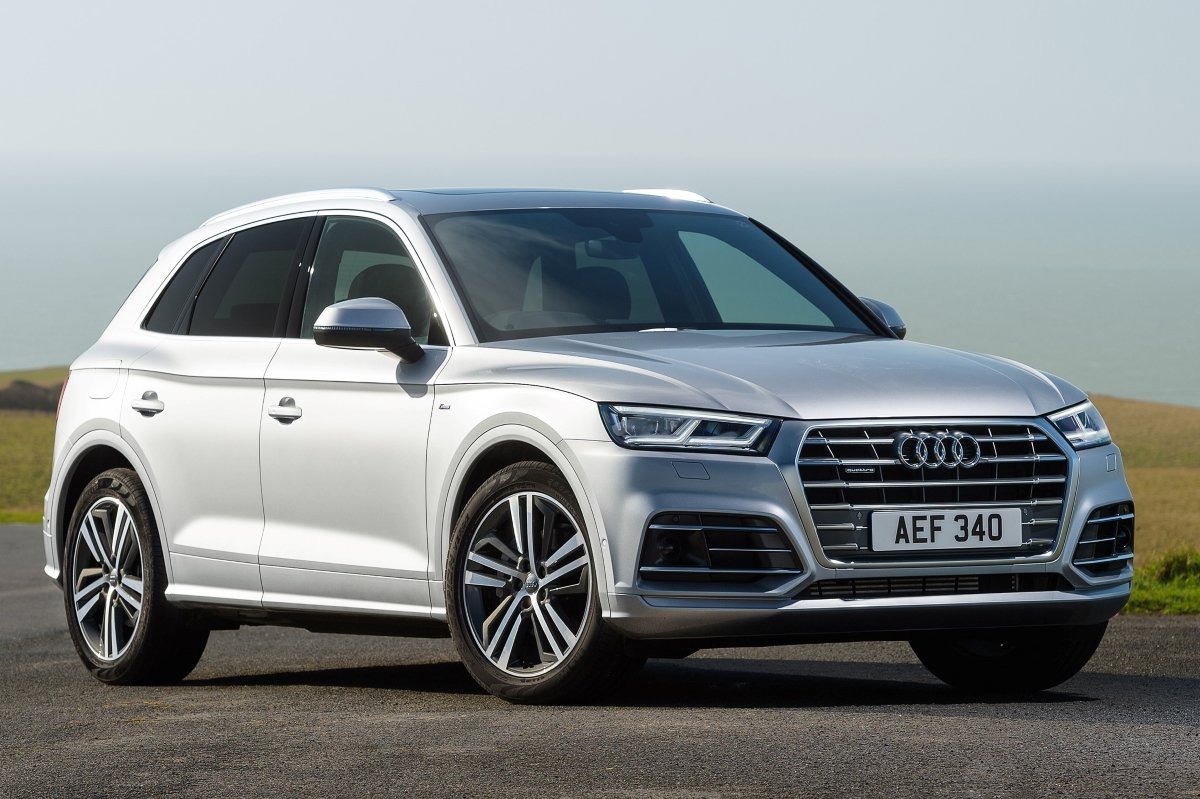
Audi tends to favour evolution over revolution when it comes to the design of its cars, and the second generation of the all-wheel drive Audi Q5 is no exception. There's an understatement to the car's looks that contrast with the more aggressive styling of rivals such as the Mercedes-Benz GLC.
Diesels may not be as popular as they once were, but the TDI engines in the Q5 could persuade buyers to keep faith with the fuel for a while longer yet. Audi has done a great job of refining its diesels, so the noise level in the cabin is subdued. It was replaced by the third-generation Q5 in January 2025.

How practical is it?
Inside, the Q5 is beautifully made, and the Virtual Cockpit, as Audi calls it, has a configurable digital screen in place of conventional dials. There's space for five to travel in comfort, and those in the front seats in particular have lots of space. Adults will have enough room in the rear seats, although there's not quite as much legroom in the second row as you'd find in a Land Rover Discovery Sport. As standard, the rear seats split and fold 40/20/40, and sliding and reclining seats are an optional extra.
Boot space is good for this class of car, with most models offering 550 litres of capacity with with rear seats in place. The exceptions are the plug-in hybrid models, which lose 155 litres of space to accomodate their batteries. At 395 litres, the boot in a plug-in hybrid Q5 is definitely on the small side for this class of car. That there's no dedicated space for the storage of charging cables doesn't help here either.

What's it like to drive?
The 187bhp 2.0-litre diesel engine in the confusingly badged 40 TDI is the mainstay of the diesel range. It's quick enough for most tastes, with similar acceleration to the BMW X3 20d. You can tell the engine is diesel when you put your foot down but once cruising at a steady speed there's little sound to make it clear which pump you should fill up at. The seven-speed S tronic automatic gearbox can be a little slow to respond at times but swaps ratios with pleasing smoothness. The Audi Q5 2.0 TDI may not be the most exciting model in the line up, but it's certainly the best value.
If you prefer a petrol engine, the 242bhp 2.0 TFSI is noticeably quicker than the diesel. Badged 45 TFSI, the engine has lots of top-end power, but doesn't sacrifice mid-range flexibility. However, the diesel has it well beaten for economy.
Want a hybrid SUV? Audi obliges with the 50 and 55 TFSIe plug-in models. The latter in particular is a very rapid machine, hitting 62mph in 5.3 seconds. In fact, performance is quite brisk even when running on electric power alone.
For the ultimate in performance, there's the SQ5. The current model is powered by a 342bhp diesel, which makes this performance SUV effortlessly quick. Mild-hybrid technology harvests energy from braking and cruising and stores it, before deploying it under acceleration to help improve fuel economy and reduce emissions.
Any SQ5 sold from 2017 until the spring of 2019 has a 349bhp turbocharged 3.0-litre petrol. It's slightly slower than the diesel SQ5, but we're only talking about a couple of tenths of a second from 0-62mph. You're unlikely to feel shortchanged by the earlier petrol model.
SQ5 aside, the Audi doesn't entertain as well as a BMW X3 or a Jaguar F-Pace. Don't get us wrong, it handles very well but it's not as involving as the BMW or the Jaguar. Instead, it majors on comfort and refinement. Even versions with sports suspension cope well with bumps. Cars with the optional air suspension are best of all.

Technology, equipment & infotainment
As you’d expect of an expensive Audi SUV, the Q5 is available with plenty of hi-tech equipment, including what is arguably the best digital dial system of any manufacturer in Audi’s Virtual Cockpit.
Perhaps just as impressive as the equipment itself, is the ease with which it can all be used. Audi’s control interface is simple to follow, helped by the heating controls being housed in a separate panel to the central infotainment system.
This Q5 was available with a three-year subscription to Audi Connected Services, offering entertainment, information and search functions through the MMI control panel, the multi-function steering wheel, or the voice control system. In-car internet access is provided by a SIM embedded in the Q5, allowing owners to call up information such as flight times, fuel prices, weather and other online services provided by third parties. The system also gives access to points of interest and high-resolution aerial and satellite pictures from Google Earth.
Safety standards are excellent. When tested by Euro NCAP in 2017, the car achieved a five-star rating with a score of 93% for adult occupant protection.

Audi Q5 running costs
For a five-seat SUV of this size, the Audi is a pricey used car. The plus side if you are shopping for a new Q5 is that strong resale values mean finance and leasing rates are less painful than you might expect.
Predictably, the SQ5 will be the most expensive version to run. The petrol version achieves just 34mpg according to official figures, and in reality mpg in the 20s should be expected. It will cost a lot to insure as well as fuel, sitting in group 42 of 50. The latest diesel will be a little pricier for cover, as it's in insurance group 42-45 depending on the exact specification. However, it will be a lot more frugal. Although its official combined figure of 32.5-34.4mpg appears little different to that of the petrol, it's tested to the more realistic WLTP protocol, so should be a better indication of real-world economy.
For the right driver, the plug-in hybrid models will get close to the SQ5's performance but with much better economy. Like all plug-in hybrids, the TFSIe models work best for owners who cover few miles most days, and so can be run frequently on electric power alone. The 55 TFSIe's fuel economy on the combined cycle is 113mpg. The insurance group is 41-43 depending on the specification.
Choose the 45 TFSI, and officially it will return 31.4-32.1mpg. It sits in group 34 to 40, depending on the exact spec.
The cheapest Q5 to run is the 40 TDI. The 187bhp version returns 37.7-39.8mpg, and sits in group 31 to 32.
Audi recommends two different servicing schedules, depending on use. Shorter intervals of 9,300 miles or one year, whichever comes sooner, are for drivers who cover few miles, especially if those miles are mostly in towns or cities. Longer 18,600-mile or two-year intervals are advised for high-mileage drivers.
Servicing costs at franchised dealers won't be cheap, although Audi does offer a fixed-price, two-year service plan for cars between three and six years old and engines up to 2.0-litres to spread the cost. Even so, you can expect to pay less at an independent garage. As a halfway house some Audi owners take their cars to non-Audi VW Group dealers for servicing, where labour rates may be lower.
Replacement tyres for the SQ5 will be expensive. Budget on £200 or more for each corner if fitting quality performance tyres like a Michelin Pilot Sport or a Pirelli P Zero.

Audi Q5 reliability
The Q5 shares its platform and parts with various other models throughout the Volkswagen Group, so you’d think those parts would be tried and tested by now. Well, yes and no, according to the 2024 What Car? Reliability survey.
In the Large SUV category of the study, petrol and diesel versions of the Q5 were rated separately, and the results were mixed to say the least. There were 15 models considered in all, and the petrol- and hybrid-powered Q5s finished a credible fifth, but the diesel Q5 was way down in 12th place. In the manufacturer standings, Audi finished 24th of the 31 carmakers considered. That put it behind its biggest rivals: BMW, Mercedes and Jaguar.
Audi trails its German rivals for its warranty cover, too. While your Q5 is covered by Audi’s standard three-year, 60,000-mile package, alternatives from both domestic counterparts will have three-year, unlimited-mileage cover.
- Audi threw every last bit of technology at the diesel engine in the SQ5. It uses a compressor as well as a turbocharger and, at low revs, the electrically powered compressor makes the engine more responsive. Once up to 1,650rpm, the turbocharger takes over. Further assistance is provided by the 48-volt mild-hybrid system, which recovers and redeploys energy that would otherwise be lost while braking, and allows the car to coast with the engine off for up to 40 seconds.
- A facelift in 2020 saw the Q5 benefit from several updates. The exterior styling has more impact and aggression, while inside the cabin, the touchscreen infotainment system, called MMI, was upgraded. The 40 TDI received a power boost to 201bhp. It also adopts mild-hybrid tech and the latest on-demand version of the quattro 4x4 system, which supplies all power to the front wheels until the system detects a loss of traction. A high-spec Edition 1 model was added to the range, in addition to the existing Sport, S line and Vorsprung specifications.
- The 55 TFSIe plug-in hybrid model is great for those who want to combine performance with lower running costs. It's very close to the pace of the fire-breathing SQ5, but with the ability to travel 20 miles or so on electric power alone. You can commute in near silence with no exhaust emissions, but serious pace is on tap when required.
- If you want an all-rounder: The 40 TDI quattro is all you really need. It may be the entry-level engine, but still has a healthy turn of pace, especially with the uprated engine introduced as part of the 2020 facelift. Other models add more tech or more pace, but cost more to buy.
- If you want petrol rather than diesel: Choose the 45 TFSI. It costs a little more than the 40 TDI to buy, and it's not nearly as fuel-efficient. But this is a smooth and refined engine that suits the Q5 well. With 242bhp, the 45 TFSI accelerates with real vigour.
- If you want a high-performance SUV: Pick the SQ5. Whether you go for the earlier petrol or the more recent mild hybrid diesel, this is a very quick car indeed. It's luxuriously well equipped, and rides comfortably for a performance model. It would be better still if the steering offered more feedback.


