Audi S3 Review (2013-2020)

Pros and cons
What we like
Four-wheel drive delivers strong performance in all weathers
Available in a choice of bodystyles
Modest running costs for such a quick car
What to consider
Not as much fun as a BMW M140i
Convertibles are harder to track down than other models
High servicing costs at franchised dealers
The CarGurus verdict
The Audi S3 is not for those seeking the ultimate in handling and driving fun, despite its sporting credentials and hardware. Instead, if you’re after engagement and cornering prowess, you’d be better off with something from a rival such as BMW.
However, if outright dynamism isn’t essential and you’re instead looking for a sporty car that’s quick, practical, safe and easy to live with, an S3 is an excellent choice. Its high-quality finish, subtle looks and sensible running costs are also appealing, as is the fact that it’s available in a variety of body styles – a choice often not offered in competitor offerings.
Its all-wheel-drive system lends it a further edge, particularly for those who regularly drive in poor conditions or on rougher roads. With a set of appropriate tyres, an S3 could subsequently make for a flexible and compelling all-season companion.
out of 5 expert review
What is the Audi S3?
The third-generation Audi S3 is an upmarket high-performance compact car, and goes toe-to-toe with popular choices like the Volkswagen Golf R and BMW M140i.
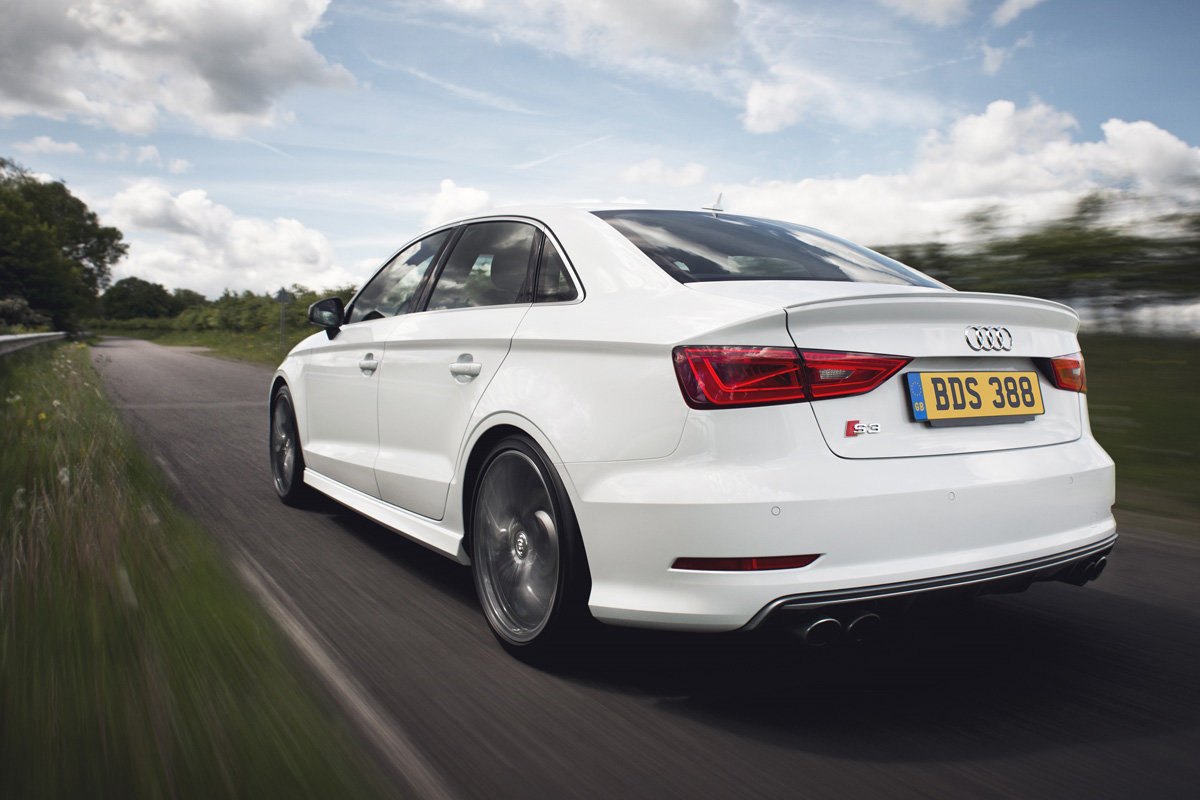
Unlike some of its rivals however, the Audi is offered in a range of body styles; buyers can pick from a three-door hatch, a five-door hatch called the Sportback, a four-door Saloon and a Cabriolet. As a result, there’s something in the line-up to cater for most needs and desires. This array of options also means that the Audi can serve as an alternative to cars such as the Mercedes-Benz CLA and even the BMW 3 Series, widening its appeal.
The S3 was introduced into the UK in 2013, initially in three-door hatchback and five-door Sportback form, with the other body styles following later. It was powered by a turbocharged 2.0-litre four-cylinder engine that produced a stout 300hp, which was channelled to all four wheels via Audi’s quattro all-wheel-drive system. A choice of six-speed manual or six-speed S tronic dual-clutch automatic transmission was also offered, with the S tronic being the quickest and more efficient choice.
In 2021, this generation of the Audi S3 was replaced by a more angular successor, though some felt its design and quality – especially inside – was a step down on the third-generation model.

Practicality
How practical is it?
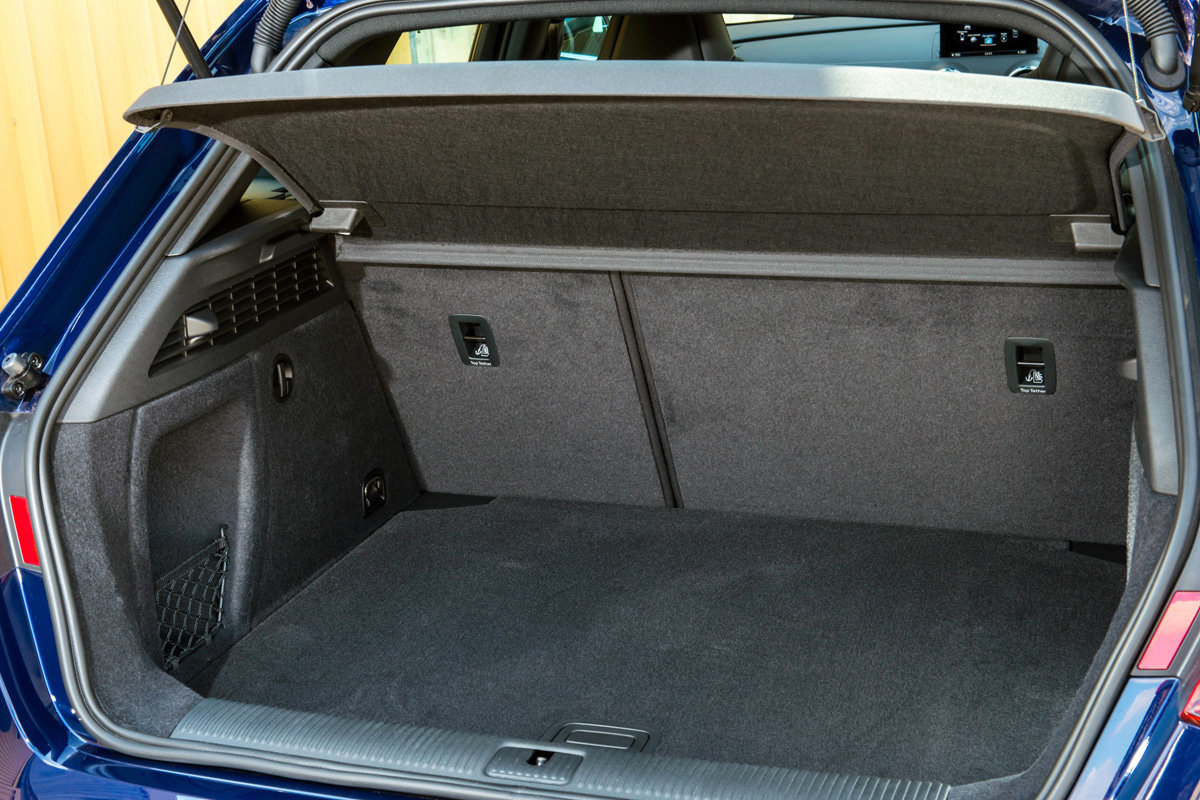
Given it’s based on the Audi A3, a sensible family hatchback that majors on space and comfort, it’s no surprise that the S3 is pretty practical. At 325 litres, boot space is a little smaller than more mainstream family cars like the Volkswagen Golf, but better than premium performance rivals like the contemporary BMW M140i and Mercedes-Benz A45 AMG.
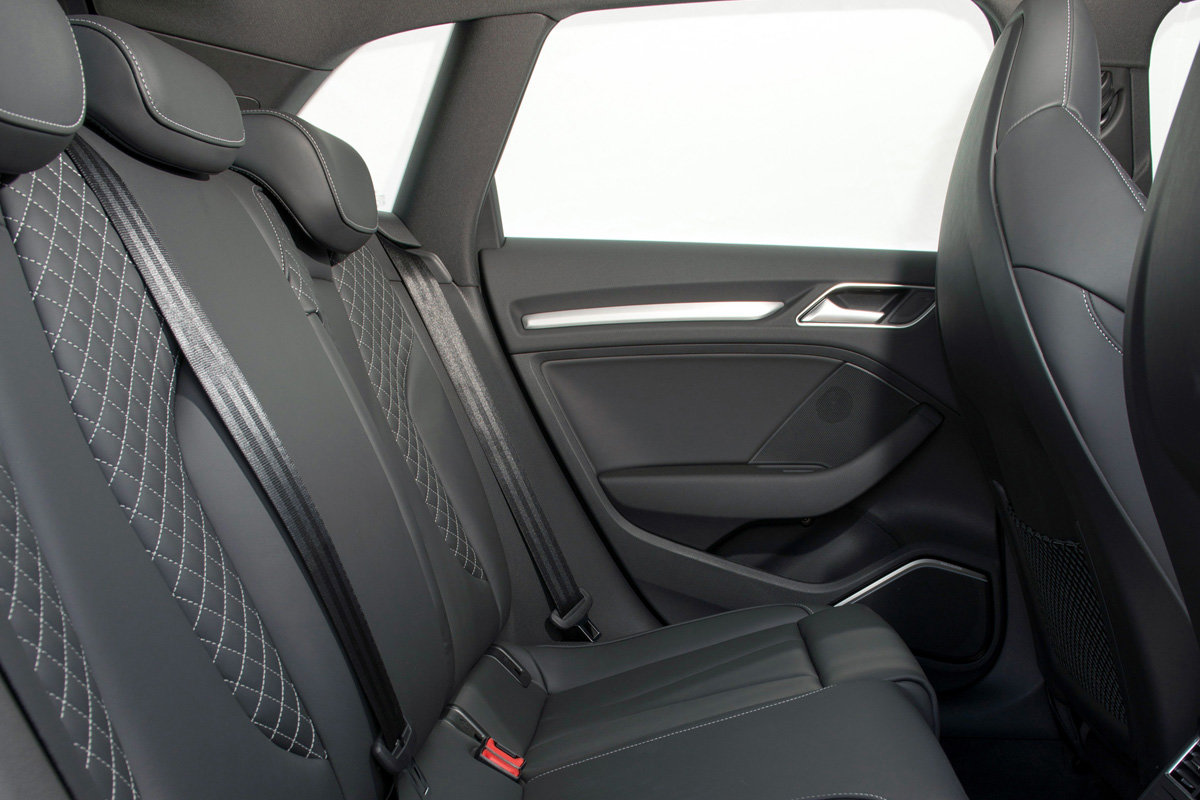
Meanwhile, up front there’s plenty of space for both occupants, while the back seats are also pretty roomy. Those rear seats fold down onto their bases and form a flush floor with the boot, too, so that you can slide larger, bulkier items of luggage into the S3 without a hitch.
The saloon version isn’t quite as practical as the hatchback simply by dint of the fact the boot opening is smaller, but it’s technically got a larger luggage compartment at 390 litres. There si, in short, plenty of room for a car of its type, and the same goes for the cabriolet; while obviously the rear seats are less spacious than either of its stablemates, it’s still a proper four-seater with a boot that can fit a weekly shop into it.
Driving
What's it like to drive?
Unsurprisingly, thanks to that turbocharged engine and all-wheel drive, the S3 is astoundingly quick off the line. Times for the benchmark 0-62mph sprint, regardless of version, are in the sub-five second range. And yet despite this sports car-like performance, the claimed average economy is around 40mpg.
On the road, the S3 feels stable and balanced. This, in conjunction with its traction-boosting all-wheel-drive system and powerful brakes, makes it easy to quickly traverse even more challenging roads. However, its steering isn’t particularly engaging or tactile – a classic Audi trait – which means the S3 ends up feeling not quite as exciting as some rivals.
But it’s not necessarily all about outright excitement and engagement, and many will appreciate the Audi’s blend of effortless high-speed performance and practicality. The hatch and saloon variants also both offer plenty of interior space and myriad storage areas, and even the convertible version serves up just enough space for four adults, while the sharp design and upmarket interior contribute further to its appeal.
Tech and equipment
Technology, equipment & infotainment
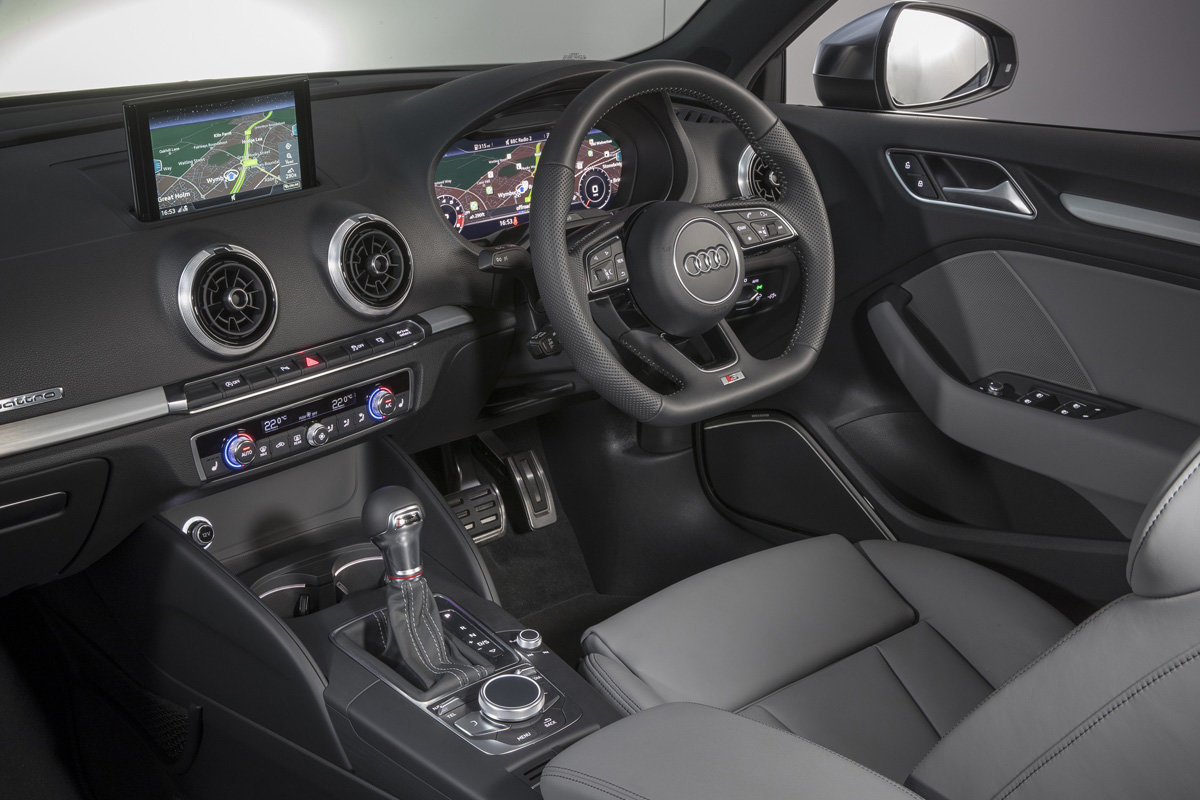
At its launch, the S3 was the flagship model in the A3 line and, as you’d hope, it was well equipped; standard equipment included cruise control, dual-zone climate control, sports suspension and adaptive steering. Other upgrades included a host of S3-specific features, such as 18-inch anthracite wheels, black brake calipers, bespoke instruments, a subtle styling kit and heated Nappa leather-covered sports seats.
The S3 was offered with technology often found in larger cars, such as all-LED headlights and adaptive cruise control, meaning premium car buyers could downsize into something smaller and lighter without sacrificing the creature comforts they’d become accustomed to. A facelift would follow in 2016, which served to modernise the looks and equipment of the S3 while also boosting its performance slightly.
Running costs
Audi S3 running costs
One of the reasons that the Audi S3 is a popular option is because, like the Volkswagen Golf R, it offers remarkable performance without crippling running costs.
When it was unveiled, for example, the S Tronic version was reputed to average 40mpg and emit 159g/km of CO2, which was on a par with many a conventional petrol hatchback. That said, although the S Tronic version was the most efficient in the range, any savings were negligible; the Vehicle Excise Duty costs were the same and there was only a very slight difference in company car tax costs and fuel consumption.
The real-world fuel consumption figures were unsurprisingly a little lower than the official lab-tested figures, but even so, most S3s will easily average around 30mpg, if not slightly more. This means that you can expect to travel upwards of 350 miles on a single tank, which isn’t bad for a high-performance compact car.
Desirability further helped to prop up the S3’s depreciation figures, so owners wouldn’t lose money hand over fist. Every S3 also came with a three-year warranty, which was unlimited with regards to mileage in the first two years but capped to a total of 60,000 miles in the third year. A three-year paint warranty, and a 12-year anti-corrosion warranty, was also included.
Fortunately, if ongoing reliability and costs are a concern, Audi offers Approved Used cars. These include a minimum of 12 months’ warranty, as well as roadside assistance, and are all comprehensively checked before sale. Cars up to eight years old are available, so there is typically a range of Audi S3s, Sportbacks, Saloons and Cabriolets available.
Servicing costs were admittedly higher compared with some rival offerings when new but, these days, a decent Volkswagen Audi Group specialist should be able to maintain an S3 for sensible money.
Audi S3 reliability
Audi generally has a reputation for high-quality cars but it often doesn’t fare particularly well in the reliability stakes. Trawl through the annual reliability and brand surveys and you’ll often find it in a middling or disappointingly low position.
Some of those poor results can be attributed to the fact that Audi's cars are often more complex and customers are often justifiably more demanding; someone buying an inexpensive hatch might overlook or ignore a small fault, whereas someone paying a premium would understandably expect it to be perfect – resulting in repeated dealer visits and dissatisfaction.
That said, the Audi A3 on which the S3 is based is generally held in high regard for reliability and quality. Major problems with the S3 also tend to be uncommon. It’s important that servicing is carried out on time and as per the schedule however, to avoid any problems in the long run or when the time comes to sell the car. Consequently, if you’re looking at a used example, make sure that its service history is complete and up to date.
Don’t worry if the service stamps are from an independent specialist; S3s are often owned by enthusiasts who will have sought out specialists capable of maintaining and repairing the car to the highest standard. If you’re not sure about the company in question, carry out a quick internet search, as the first few reviews and reports will often tell you all you need to know.

What owners say
"The Audi S3 is praised for its impressive performance and enjoyable driving experience, making it a favorite among drivers seeking a combination of power and comfort. Many appreciate its well-featured interior and value for money. However, some owners feel the pricing is a bit high, and there's a desire for improvements like better tires for enhanced aesthetics and ride quality."
The car was even better than I had thought , clean inside and out . Definitely well priced aswell
18 December 2024Love the car and its performance, and yes, good value for money. This car's air con was not working, which is disappointing and frustrating.
5 August 2025The car was nice, and lacked nothing other than 19” low profile tyres to make the look and ride of the vehicle more appealing.
21 August 2022What owners say
The car was even better than I had thought , clean inside and out . Definitely well priced aswell
18 December 2024Love the car and its performance, and yes, good value for money. This car's air con was not working, which is disappointing and frustrating.
5 August 2025The car was nice, and lacked nothing other than 19” low profile tyres to make the look and ride of the vehicle more appealing.
21 August 2022Lovely car , vastly overpriced. Would only consider if price was reduced substantially.
6 May 2023Great features and great value for money, I don’t think it’s missing anything that I require.
28 January 2021Outstanding drive and performance handles brilliantly
2 December 2021Great all rounder all extras except folding wing mirrors.
22 November 2023Absolutely stunning car, looks and drives amazing. Very quick!!!
5 April 2022Great car, good power when you need it but also decent comfort would say it’s a great all rounder.
8 October 2024Three things to know
- In May 2016, a facelifted version of the S3 arrived. Upgrades included a tweak to the engine that boosted its output to 310hp and 295lb ft when equipped with the S Tronic transmission. Manual versions got the same 310hp but retained the original torque output of 280lb ft. Cosmetic tweaks and new technology, including a sharper grille and the Audi Virtual Cockpit option – which replaced traditional dials with a digital screen ahead of the driver – were also added. The facelifted S3 was slightly better to drive too, as Audi engineers tweaked its stability control and four-wheel-drive system for a more engaging yet safer driving experience.
- The standard transmission is a six-speed manual gearbox. Alternatively, you could choose the optional six-speed dual-clutch automatic transmission, which was called S tronic. This advanced transmission provides almost instantaneous gear shifts as well as the convenience of a standard automatic, making it ideal for those who regularly drive in heavy traffic. Optional wheel-mounted paddles are also available for improved control and a more direct, sporting feel. While more complicated, it’s worth noting that the S tronic-equipped S3s are also the quickest and most efficient.
- The S3 comes with Audi’s Drive Select system, which adjusts the engine response, the action of the progressive steering system and the shifting points of the S tronic transmission depending on which mode you pick. Auto, Dynamic and Efficiency modes are standard but drivers can also tailor each system using the Individual mode. If the optional electromagnetic dampers are fitted to the car, the suspension response can also be adjusted. This means it’s very easy to get the S3 responding and performing in a fashion that bests suits your driving style and regularly travelled roads.
Which one to buy
- If you want the best all-rounder: We’d recommend opting for the five-door Audi S3 Sportback version if you’re seeking the most practical and capable option. Its boot offers a useful 380 litres of storage space, compared with the 325 litres in the three-door hatch, and there's more space if you drop the rear seats. The S3 Saloon does offer 390 litres of storage space but its boot isn’t as accessible as that of the hatchbacks’; even with the rear seats folded down, there’s still less storage space than in either the three-door or five-door S3.
- If you want drop-top fun: You’ll want the Audi S3 Cabriolet. While it’s nowhere near as engaging to drive as a Mazda MX-5 or a BMW 2 Series Convertible, it offers serious performance and an impressive degree of practicality. It’s also pleasing to have such performance and flexibility in what is otherwise a comparatively small car.
- If you're a performance enthusiast: The lightest and quickest of the Audi S3 range is the three-door hot hatch, so that’s the one to opt for if performance credentials are key. The dual-clutch transmission offers the quickest acceleration, as well as enabling easily repeated standing-start launches and removing the chance of missed shifts, but many enthusiasts will probably want the six-speed manual for the extra level of mechanical engagement.
- If you’re on a budget: If you’re looking to buy a used Audi S3, it tends to be the five-door hatch versions that are the least expensive. That’s because they’re the most common, followed by the Saloon and three-door hatch. Convertibles are typically the least common. In any case, aim to buy the best example you can find.


Pricing trends
Starting RRP
£29,396
Current avg. market price
£17,254
Trending down by 6.2% this month
April 2026 - October 2026
More on the Audi S3 (2013 - 2020)
Compare 2020 Audi S3 Trims
The 2020 Audi S3 offers a blend of performance and luxury, with a range of trims that cater to different preferences and budgets.
- Starting at £21,445
- Most Popular: S3 Tfsi Quattro 5dr S Tronic
Trim Overview
Prices updated weekly from CarGurus listings.
| S3 Tfsi 300 Quattro 5dr S Tronic | S3 Tfsi 300 Quattro Black Edition 5dr S Tronic | S3 Tfsi Quattro 5dr S Tronic (Most Popular) | S3 Tfsi Quattro 4dr S Tronic | |
|---|---|---|---|---|
| Starting MSRP | £35,775 | £36,370 | £39,045 | £39,610 |
| Avg. Market Price | £21,445 | £23,161 | £23,245 | £24,040 |
| Positioning | Best value | Adventure-ready | Adventure-ready | Trail-ready |
| Standout Features | Bluetooth, Parking Assist, Navigation System | Privacy glass, Heated Seats, Climate control | Bluetooth, Heated Seats, Navigation System | Heated Seats, Bluetooth, DAB Radio |
| Drivetrain | AWD | AWD | AWD | AWD |
| Listings Available | 18 | 26 | 93 | 40 |
Quick Compare Table
Listing prices sourced from CarGurus — updated weekly. OEM specs from manufacturer data.
| S3 Tfsi 300 Quattro 5dr S Tronic | S3 Tfsi 300 Quattro Black Edition 5dr S Tronic | S3 Tfsi Quattro 5dr S Tronic | S3 Tfsi Quattro 4dr S Tronic | |
|---|---|---|---|---|
| AI Summary | Best value for performance seekers | Stylish option with added features | Popular choice with balanced features | Performance-focused with extra power |
| Avg. Market Price | £21,445 | £23,161 | £23,245 | £24,040 |
| MSRP | £35,775 | £36,370 | £39,045 | £39,610 |
| Engine | 1984.0cc 300 hp I4 | 1984.0cc 300 hp I4 | 2.0l I Petrol | 1984.0cc 310 hp I4 |
| Drivetrain | AWD | AWD | AWD | AWD |
| MPG/MPGe (City/Hwy) | 32.1/47.9 | 32.1/47.9 | — | — |
| Bluetooth | ✓ | ✓ | ✓ | ✓ |
| Cruise Control | ✓ | ✓ | ✓ | ✓ |
| DAB Radio | ✓ | ✓ | ✓ | ✓ |
| Parking Assist | ✓ | ✓ | ✓ | ✓ |
| AUX/USB connectivity | ✓ | ✓ | ✓ | ✓ |
| Climate control | ✓ | ✓ | ✓ | ✓ |
| Parking Sensors | ✓ | — | ✓ | ✓ |
| Navigation System | ✓ | ✓ | ✓ | ✓ |
| Alarm/Immobiliser | ✓ | ✓ | ✓ | ✓ |
| Heated Seats | ✓ | ✓ | ✓ | ✓ |
| Privacy glass/Tinted windows | — | ✓ | ✓ | — |
| isofix | — | ✓ | — | — |
| Active Listings | 18 | 26 | 93 | 40 |
Missing data displayed as "—".
Trim Deep Dives
S3 Tfsi 300 Quattro 5dr S Tronic — "Who It's For"
The S3 Tfsi 300 Quattro is the pick for shoppers who want a well-equipped performance vehicle without the higher price tag of other trims.
- Avg. market price: £21,445 (updated weekly)
- MPG/MPGe: 32.1 city / 47.9 hwy
- Inventory: 18 listings — lower availability; may limit negotiating room
- View S3 Tfsi 300 Quattro listings
S3 Tfsi 300 Quattro Black Edition 5dr S Tronic — "Who It's For"
The S3 Tfsi 300 Quattro Black Edition is ideal for those who desire a stylish vehicle with premium features without going for the top trim.
- Avg. market price: £23,161 (updated weekly)
- MPG/MPGe: 32.1 city / 47.9 hwy
- Inventory: 26 listings — lower availability; may limit negotiating room
- View S3 Tfsi 300 Quattro Black Edition listings
S3 Tfsi Quattro 5dr S Tronic — "Who It's For"
The S3 Tfsi Quattro is the pick for shoppers who want a blend of luxury and performance, making it the most popular choice in the lineup.
- Avg. market price: £23,245 (updated weekly)
- Inventory: 93 listings — lower availability; may limit negotiating room
- View S3 Tfsi Quattro listings
S3 Tfsi Quattro 4dr S Tronic — "Who It's For"
The S3 Tfsi Quattro 4dr is perfect for those who prioritize performance and are willing to pay a bit more for extra horsepower.
- Avg. market price: £24,040 (updated weekly)
- Inventory: 40 listings — lower availability; may limit negotiating room
- View S3 Tfsi Quattro 4dr listings
Trim Recommendations
Most Popular — S3 Tfsi Quattro 5dr S Tronic
With 93 active listings, the S3 Tfsi Quattro is the clear volume leader in the lineup.
Browse S3 Tfsi Quattro listings
Best Budget Option — S3 Tfsi 300 Quattro 5dr S Tronic
At £21,445 avg market price — below the lineup median of £23,203 — it's the most accessible entry point.
Browse S3 Tfsi 300 Quattro listings
These recommendations are based on CarGurus' proprietary market data from October 22, 2026, CarGurus experts' opinions, and generative AI.

