Subaru Solterra Review (2022-present)
Subaru Solterra cars for sale
4.0
Expert review
Pros
Fantastically well equipped
Lots of interior space and impressive quality
Comfortable and refined on the road
Cons
Many rivals have a greater range
Warranty offering is slightly disappointing
Rather lazy throttle response
The CarGurus verdict
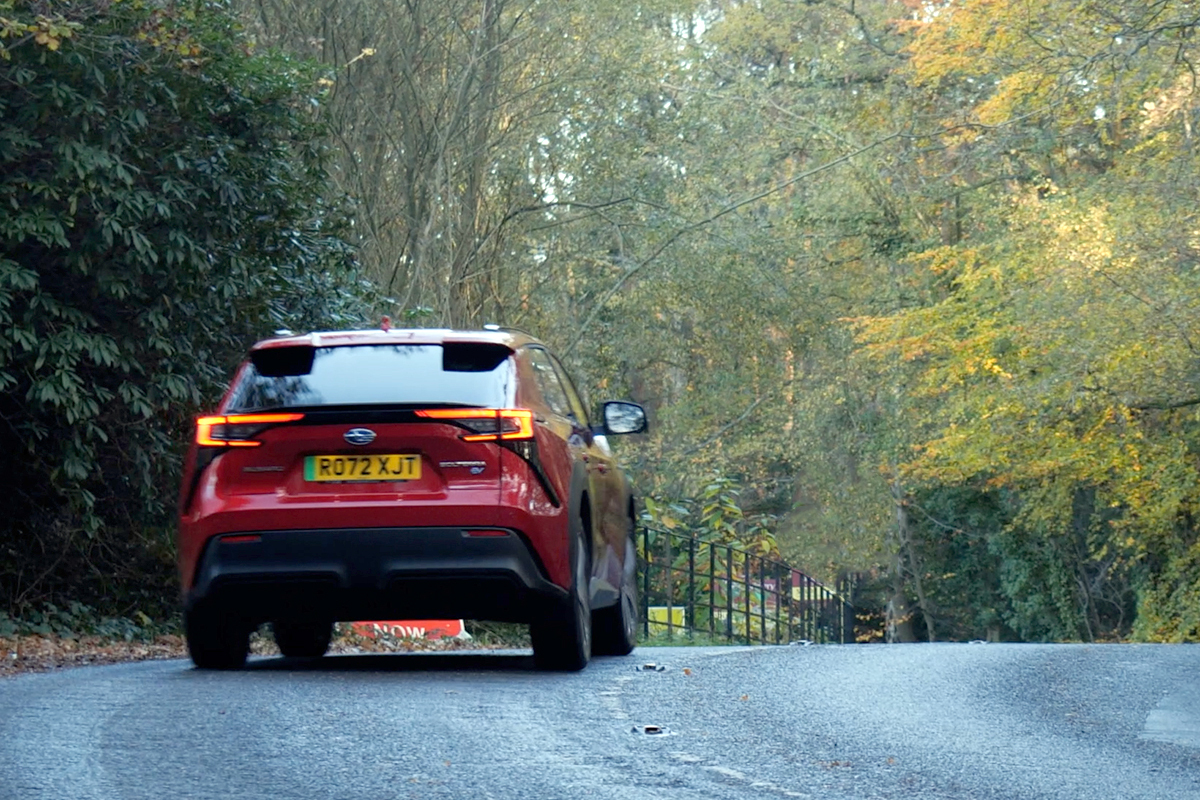
There’s plenty to like about the Subaru Solterra. It’s a mature, comfortable and relaxed car to drive, rear passenger space is nothing short of enormous, it has some clever packaging touches, and the build quality and interior finish are at a higher level than any other Subaru before it. It’s also very generously equipped, and competitively priced when compared to its direct rivals.
It's not perfect. The driving range – either theoretical or real-world - isn’t as long as in many rivals, the warranty package is a tad disappointing, and in general, the Solterra doesn’t do an awful lot to stand out amidst a vast number of very talented rivals. However, there’s very little to complain about otherwise, so if you have your heart set on one, or you have a friendly Subaru dealer nearby, then we can offer you virtually no reason not to.

What is the Subaru Solterra?
The ultimate Johnny-come-lately, that’s what! Over the past couple of years, the midsize electric SUV market has been the one of the fastest growing in the motor industry, and the one that all manufacturers want to conquer. As a result, carmakers have been punting out model after model in order to steal a march in this space, meaning that there’s no shortage of choice.
Until now, Subaru hasn’t been represented in this sector of the market, but that’s finally changed with the introduction of its first EV, the Solterra. It was co-developed with the other notable absence from the same sector – Toyota – and as a result, the Solterra shares its underpinnings, technology – pretty much everything, really - with the snappily-named Toyota BZ4X.
There are differences between the two, however. While the Toyota is available in a variety of formats with various power outputs, trim levels and front- or four-wheel drive, the Solterra is available in just two forms, Limited or Touring trims. Aside from slightly different standard equipment levels – both of which are very extensive by the way – both versions get the same twin-motor X-Mode all-wheel-drive system – this is a Subaru after all, so it needs a certain amount of off-road appeal – delivering 215 horsepower and an official range of between 257 and 289 miles. Prices start at around £50,000 for the base-level Limited car, and rise to around £53,000 for the higher-spec Touring.
And what are all these rivals we’ve been talking about? Well pretty much anything with five seats, crossover-type styling and an electric powertrain. Think Kia EV6, Hyundai Ioniq 5, Volkswagen ID.4, Tesla Model Y, Nissan Ariya, Skoda Enyaq: they’re all included in the mix.
How practical is it?
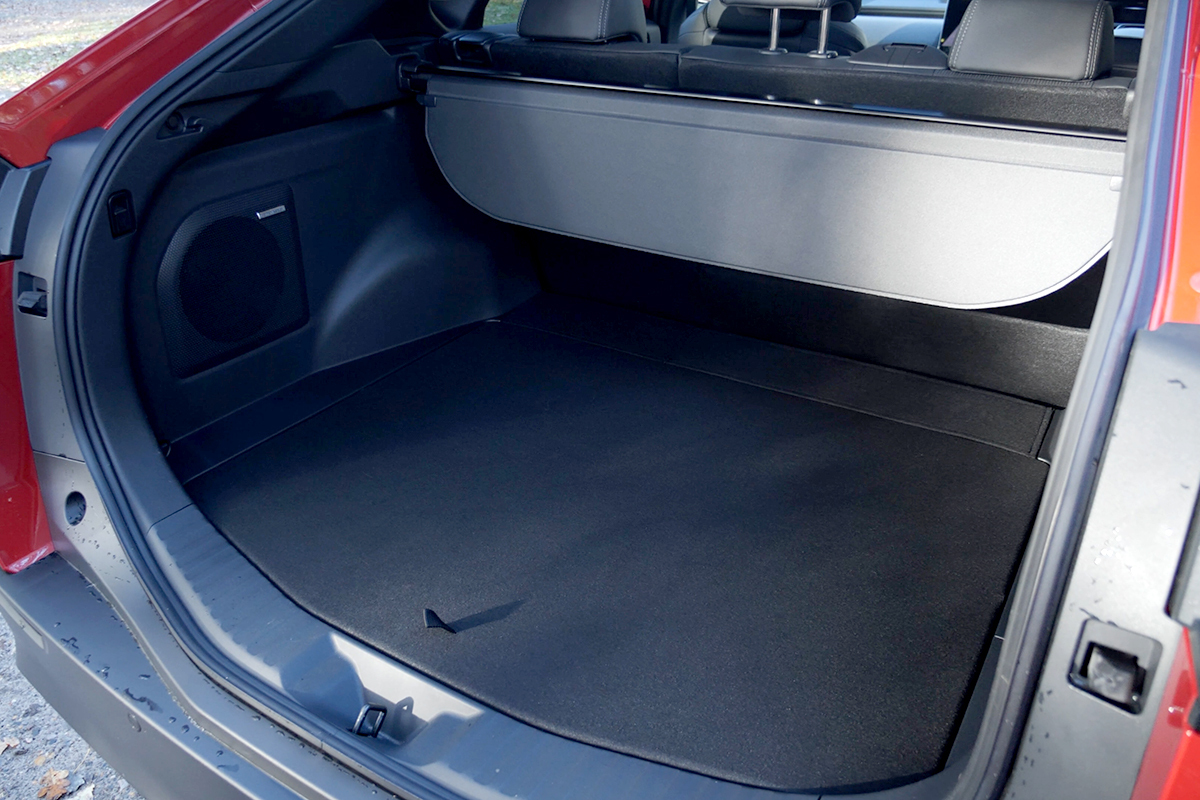
The Solterra does a very reasonable job on this score, as you’d expect from a car this big. The boot is adequate rather than enormous, with either 441 litres or 452 litres of space depending on which trim level you go for (the difference being accounted for by a stereo subwoofer in the boot of the higher-spec Touring trim), and that space is a nice square shape, if rather shallow. It’s well packaged, too. There’s a space under the floor in which you can stash both the standard charging cables (more on that in a while), and you can also get the fabric load cover under there as well for when you’re carrying bigger loads.
The rear seats fold down in a 60/40 split to help you carry bigger loads, which doesn’t give you the versatility of rivals with a 40-20-40 split, and although folding the rear chairs doesn’t leave you with a step in the load area, it does leave you with a bit of a slope.
You can’t slide the seats back and forth like you can in some rivals, but you can recline them slightly for a more chilled out seating position, and they’re also heated as standard on both trim levels. Where the rear seats really impress, though, is on space. Headroom is generous while legroom is nothing short of massive, so even tall passengers will be able to stretch out. The cabin also feels quite wide, and the middle seat has a wide base and a flat floor in front of it, so carrying three across the rear bench will be comparatively comfortable.
Up front, you really know you’re in an SUV. You sit quite high up, which many drivers will like, and you get a really good view of the road ahead, although your rear view isn’t quite so clear due to the thick pillars that flank the rear window.
Otherwise, you might feel that the driving position is a little odd. Much like you do in a Peugeot, you view the instrument panel over the top of the steering wheel rather than through it, and that means you might well have to set the wheel a bit lower than you’d like. That said, you have electric driver’s seat adjusters as standard on all models, and if you spend enough time playing with them to fine-tune your driving position, you should be able to get comfortable.
What's it like to drive?
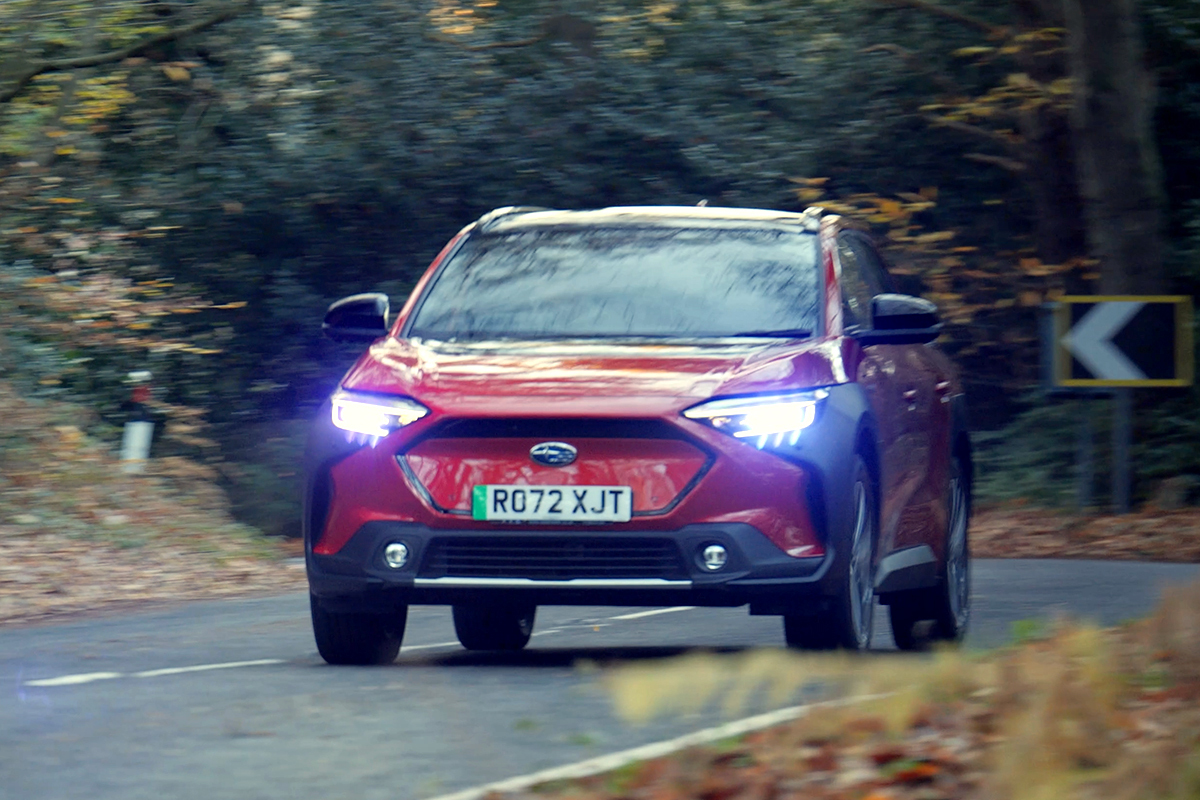
The Solterra is powered by two electric motors, one on the front axle and one on the rear axle, and they combine to deliver 215bhp, allowing the car to sprint from 0-62 in 6.9 seconds. Now, both those numbers are bordering on hot hatch territory, but that’s certainly not the character that the Solterra communicates. That’s largely because of slightly lazy throttle responses. Push the right-hand pedal, and there’s a strange delay of about half a second or so before anything happens. With many cars, that’s often the fault of the gearbox, but we know that’s not the case with the Solterra because it hasn’t got one, because like most EVs, it’s a single-gear arrangement. That on its own means the pickup doesn’t feel as urgent as it might, but once the Solterra does finally wake up and get going, the acceleration you feel is strong, smooth, linear and uninterrupted.
Your progress is also nice and quiet. Many EVs these days synthesise an overly theatrical whoosh or wail as you put your foot down, but refreshingly, there’s none of that with the Solterra, choosing instead to take the kind of serene, sophisticated approach that an electric car is best suited to. You do hear a bit of road noise once you get up to motorway speeds, but importantly, it’s not enough to ruin the calm.
Big SUVs usually concentrate their dynamic efforts on providing a comfortable ride, and such is the case with the Solterra. There’s a slightly firm edge at low urban speeds, but otherwise, things stay impressively composed and settled. That comfort makes it all the more forgivable that the Solterra isn’t the sharpest-handling car you’ll ever drive. It feels tall and heavy – largely because it is at upwards of two tonnes – so fast direction changes aren’t really its forte. But despite feeling a little bit clumsy in a set of bends, it does at least feel secure and safe, with plenty of grip and traction from that four-wheel-drive system.
There’s a touch of clumsiness in a couple of other areas, too. The steering is fairly quick, but its initial responses are a little bit leisurely, and you get a slightly rubbery, synthetic feel through the wheel. Like a lot of EVs and plug-in hybrids, the Solterra also feels very heavy on the brakes, so you have to give the pedal a good old shove to get the car to pull up. You can get around that to a certain extent by dialling up the car’s regenerative braking, which you can do with paddles mounted behind the steering wheel, or there’s a button on the centre console you can hit to dial it up to its maximum level. However, the regen never gets strong enough to deliver the one-pedal driving experience that some EVs give you. And one other weird thing on that subject: to increase the level of regen, you pull the minus paddle rather than the plus paddle. It's not a problem, it’s just a bit strange.
Technology, equipment & infotainment
Even considering its punchy price-tag, the Solterra is exceptionally well equipped as standard, and very few optional extras are available. There are two trim levels – Limited and Touring – but kit levels on even the entry-level Limited are anything but. That standard roster includes 18-inch alloy wheels, automatic lights and wipers, four powered windows, keyless entry, heated seats front and rear, a heated steering wheel, a powered tailgate and dual-zone climate control. The standard infotainment system has nav, wireless Apple Carplay and wired Android Auto as standard, along with all of the other features you expect.
Touring trim adds plenty more features besides, such as 20-inch rims, a panoramic roof, leather-effect upholstery, wireless phone charging and a Harmon Kardon sound system, so there are plenty of luxury toys to get to grips with.
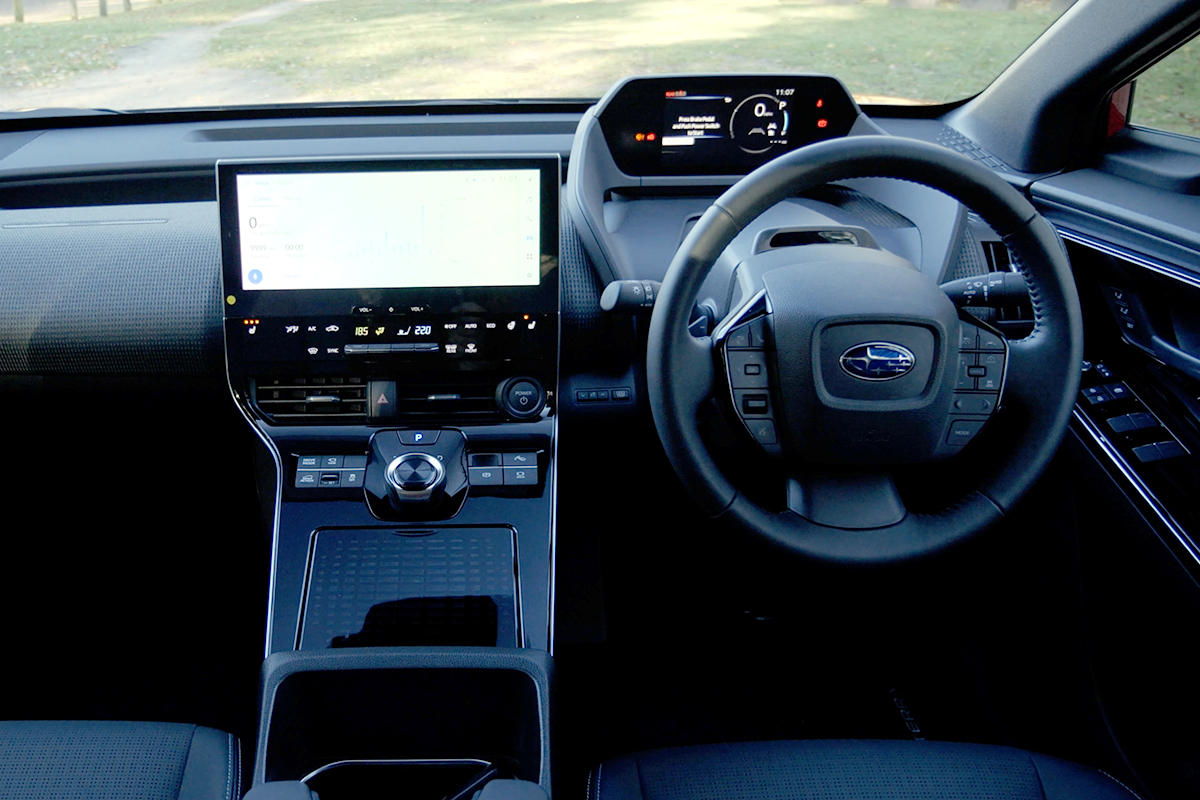
Something else you should be able to get to grips with reasonably easily is the touchscreen system. The logical menus and shortcut buttons down the right-hand side of the screen make it easy to use, while the graphics are quick and slick, and the screen sensitivity is good. You also have separate controls to drive the aircon – something we very much like here at CarGurus – and the rest of the controls on the centre console are clearly marked. What might not be so clear is the digital instrument screen. You can select from a variety of layouts, but some of them try to pack too much information into too small of a space, and it looks rather cluttered as a result.

Subaru Solterra running costs
The Solterra is not a cheap car, but very few EVs are, and importantly, it’s priced at a competitive level compared with its main rivals, especially when you consider that it’s more generously equipped as standard than the vast majority of them. It’s difficult to say how the Solterra will perform when it comes to residual values, which will have an impact on how much you pay to run your car long-term, but we don’t expect to see a huge amount of them kicking about on the streets, and that’s likely to work in its favour.
As we’ve already said, the Solterra has an official WLTP range of between 257 and 289 miles. However, like any car – electric, ICE or otherwise – the figures you get in the real world usually differ greatly. We’ve also heard various reports of an online kerfuffle about the car delivering disappointing range returns.
We can only speak from our own experience. Our drive took place in chilly – if not properly cold – conditions, and included a variety of road types and a fairly large chunk of motorway, so hardly optimal conditions for maximising efficiency and range. And on that drive, we saw a return of 2.9 miles per kilowatt hour. Okay, that’s no great shakes, but it’s hardly dreadful, either. The Solterra’s battery pack has a total capacity of 71.4kWh, and while unpublished, you’d assume the usable capacity (some of the battery’s cells always remain unused in order to prolong the life of the battery) would be something like 67- or 68kWh. Based on that, you’d presume a range of around 200 miles under the unfavourable conditions described, but more favourable conditions will inevitably result in more favourable range returns.
Charging the car up with electricity will be considerably cheaper than filling an equivalent combustion-engined car up with petrol or diesel. We’d estimate that a full charge at home will cost you around eight pence per mile, but you could get that cost down by utilising off-peak charging tariffs by charging overnight. If you regularly have to rely on the public charging network, however, charging will cost a lot more.

Subaru Solterra reliability
Reliability is always a virtually impossible thing to second-guess when it comes to an all-new car, but you can take great solace in the fact that the Solterra was developed in conjunction with Toyota. While the latest What Car? Reliability Survey placed Subaru 14th of the 32 manufacturers considered, earning the brand mid-table respectability, Toyota came second in the same study, being beaten only by Lexus, the luxury brand that it also owns and operates. That should stand the Solterra in good stead when it comes to mechanical dependability.
The news isn’t so great when it comes to warranty. The all-but-identical Toyota BZ4X has a warranty that can last up to 10 years or 100,000 miles provided you get your car serviced at an authorised Toyota dealer every year, which is excellent. The Subaru, meanwhile, merely has three-year/60,000-mile cover, which is about the bare minimum you can expect from a mainstream car manufacturer. The battery, meanwhile is covered for eight years/100,000 miles, which is about par for the course, but interestingly, Subaru considers a battery failure to constitute less than 90% of its original capacity, where with most EVs, that figure is more like 70- or 75%, so that should give buyers some peace of mind.
In theory, electric vehicles should cost less to repair and maintain than their combustion-engined counterparts because there are far fewer moving parts. It’s a bit strange, then, that the Solterra has relatively short service intervals of 12 months or 9,000 miles, whichever comes first.
- The area in which existing Subaru owners might be most surprised by the Solterra is the area of interior quality, and in a good way. Many of the firm’s other cars (the Forester, Outback, BRZ, etc) have a predominantly hard-wearing and robust feel that seems to prioritise functionality over flair, but the Solterra feels like a real cut above its stablemates. The surfaces within your eyeline are a pleasant mixture of fabrics, metallic finishes and glossy black inserts, and it all looks interesting, cohesive and classy. There are harder, scratchier plastics, but these are tucked away where you can’t see them, so the premium feeling isn’t betrayed. Only some scratchy plastic panels in the boot floor betray the feeling of quality.
- In recent years, Subaru has been properly bossing it in the area of safety. Some of the brand’s more recent models have ranked among the highest-scoring models ever tested by Euro NCAP, for example The suite of safety systems used in the Solterra is slightly different to that used in other Subarus because it’s the one shared with the Toyota BZ4X rather than with the firm’s other models. However, it’s no less comprehensive and includes radar cruise control, automatic emergency braking, automatic lane keep assist and all the other clever safety stuff that is available these days. It’s no colossal surprise, then, that the bods at Euro NCAP have awarded the Solterra the full five stars.
- Charging the Solterra happens through a CCS charging port, which is fast becoming the European standard. The maximum rapid charging speed stands at 150kW, which is pretty good in the scheme of things, and you can expect to juice your battery from 20% to 80% in just 20 minutes at that speed. The same charge will take 10 hours on your 7kW home wallbox charger, and a Type 2 to Type 2 charging cable is provided as standard for that very purpose. You also get another cable as standard, a Type 2 to three-pin domestic plug cable for occasional ‘granny charging’, but on that kind of hookup, you’re looking at a charging time of more than 30 hours. One more interesting thing to note: the Solterra comes as standard with a heat pump, which makes heating the car more efficient and boosts your range in cold temperatures. Subaru should be applauded for this, because in most EVs, a heat pump is a pricey optional extra.
- If your heart is set on a Solterra: There’s only one drivetrain option, two trim levels and very few optional extras, so the only real choice to make is whether you can settle for Limited trim, or you want to pay the extra three grand or so to upgrade to the Touring. It’s a justifiable premium for the Touring considering the amount of extra kit you get, but even so, we’d probably stick with the Limited, as it’s still exceptionally well equipped, has a slightly bigger boot and a smidge more driving range thanks to its lower weight and smaller wheels.
- If you like the Solterra but don’t need dual-motor AWD: You could save yourself a few quid by choosing one of the more basic variants of the Toyota BZ4X, because these are available with single-motor front-wheel drive, and so list prices are a decent slice cheaper. In most other ways – including space, practicality, quality, technology and driving experience - the BZ4X and Solterra are almost indistinguishable from each other.
- If you want the best car of this type: It won our huge ten-car Electric SUV Megatest back in 2021, and we still rate the Skoda Enyaq as the best car of this type due to its incredible all-round ability. It’s super-spacious, has lots of clever touches and features, is really impressive on quality, delivers a driving experience that’s comfortable and grown-up, comes well equipped and is good value for money.
- If you want the most fun car of this type: Of all the electric SUVs of this kind of size and budget, the Ford Mustang Mach-E is probably the most enjoyable, with its bombastic performance and comparatively sharp handling. Do bear in mind, though, that this is still a big, tall, heavy car, so while it’s fun, it’s still not quite the thoroughbred sports car that the Mustang name might have you believe. You pay the price for this fun in terms of ride comfort, too, so make sure you can live with that before you buy.
