Kia EV6 Review 2026 | Not the newest EV, but don't rule it out
Kia EV6 cars for sale
5.0
Expert review
Pros
Impressive range and charging speeds
Luxuriously equipped
Usefully wide range of models to suit different budgets and needs
Cons
A Skoda Enyaq is roomier and cheaper
Finance deals could be cheaper
Steering lacks feel
The CarGurus verdict
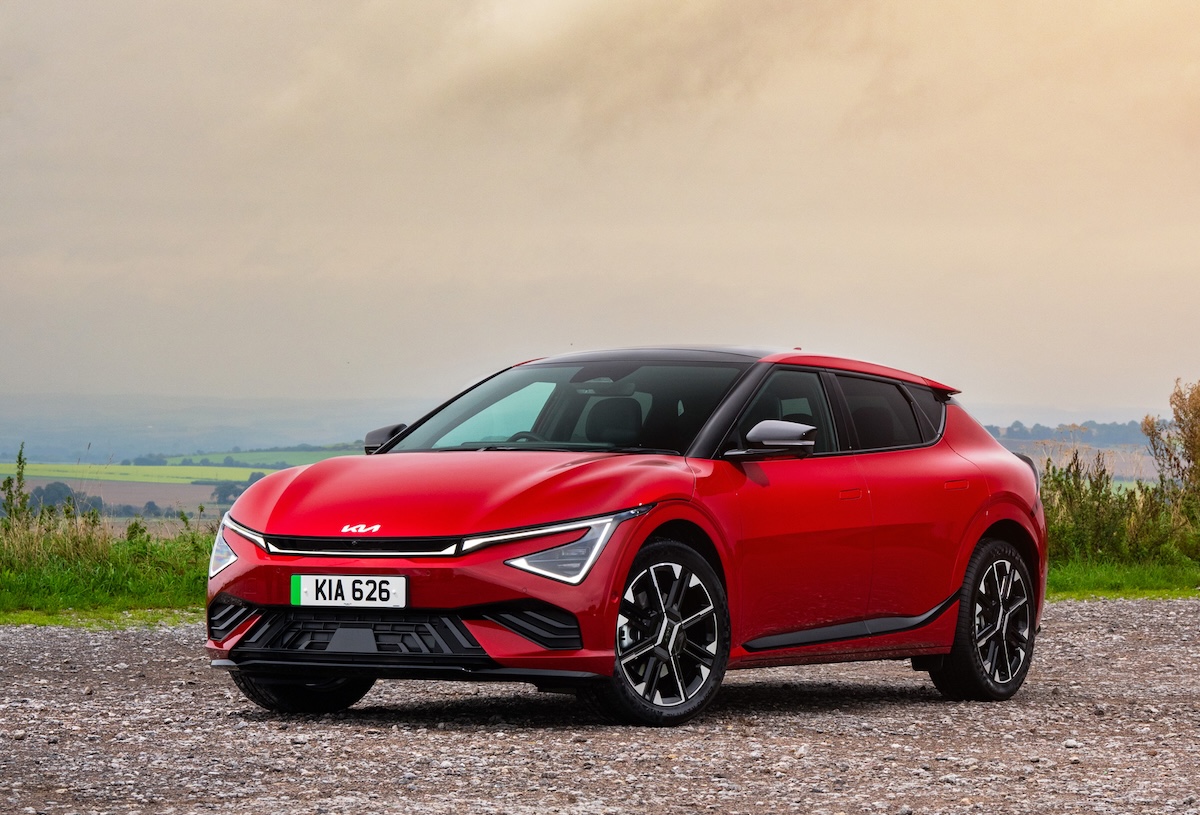
New or used, the Kia EV6 is one of our favourite electric cars. It’s a fantastic blend of executive luxury and performance, sensible family car roominess and hi-tech gadgetry. If interior space and versatility are priorities then there are better options, including the cheaper Skoda Enyaq and Hyundai Ioniq 5, but the Kia EV6 is very roomy and practical, especially for a car that’s usefully more compact than full-size SUV alternatives like the Skoda and Ford Mustang Mach-E.
The EV6 GT is a fitting flagship and a great performance EV, if not quite in the same league as Hyundai's Ioniq 5 N.
What is the Kia EV6?
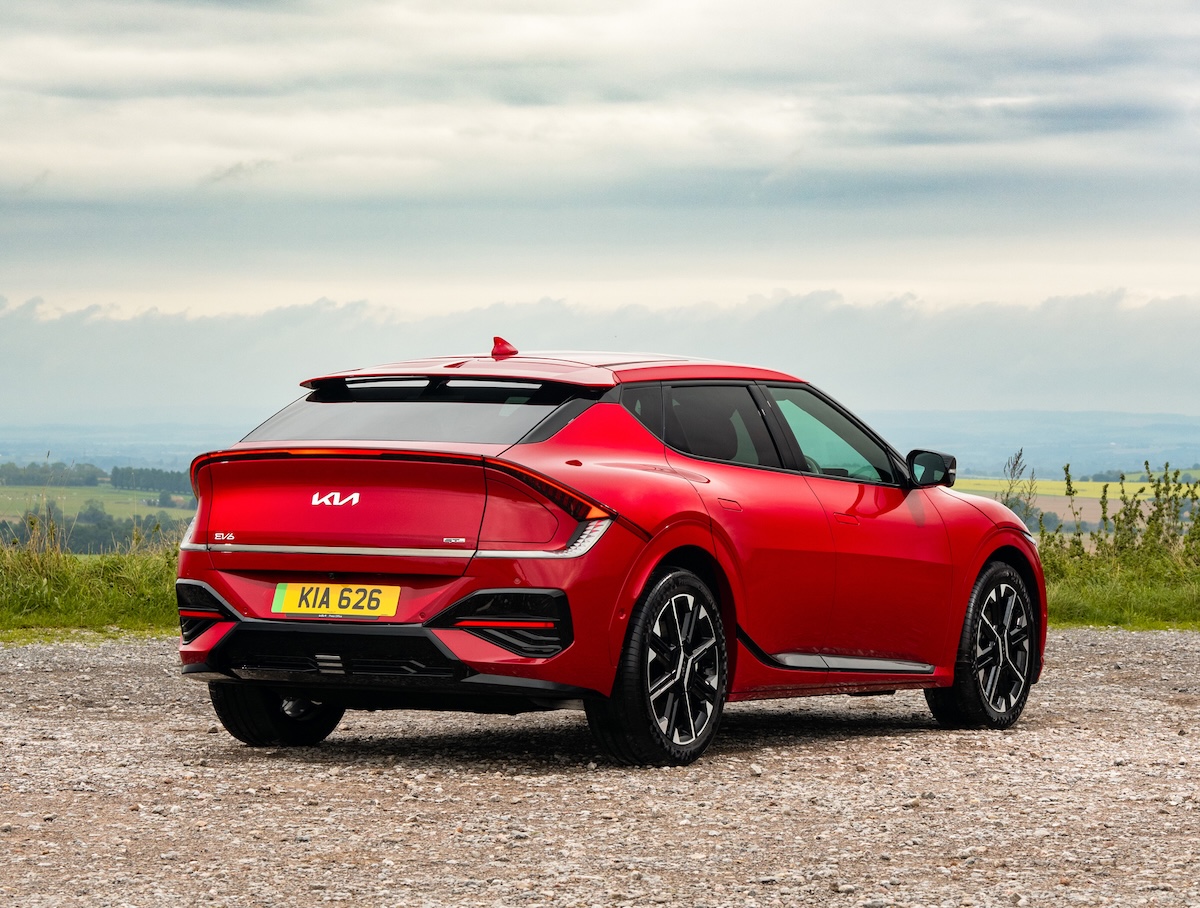
The Kia EV6 is an interesting, pure-electric crossover that competes with everything from the Tesla Model 3 and BMW i4 to hatchbacks and SUVs like the Volkswagen ID.3 and ID.4, Ford Mustang Mach-E and even the Hyundai Ioniq 5, with which the Kia shares a platform. The Korean firm has pitched the EV6 as an executive crossover by giving it a classy finish, loads of equipment and long range of up to 328 miles per battery charge in pre-2024 facelift versions, or up to 361 miles in post-facelift models.
Charging in the Kia EV6 is about as fast as it gets. The Kia EV6 and Hyundai Ioniq 5 are the first non-premium brands to offer 800V ultra-fast charging, which means that they can take full advantage of the 350kW chargers that are springing up around the motorway network. Plug the Kia EV6 into one of these chargers and you’ll have an 80% full battery in 18 minutes. It’s compatible with any CCS rapid charger as well, so plugging into a 150kW or 50kW charger will get you a 100-mile top-up in around 20 minutes or 45 minutes, respectively.
A flagship GT model joined the EV6 line-up after launch. With 577bhp and a 0-62mph time of 3.5 seconds, it's Kia's most powerful and fastest model to date.
As mentioned, the EV6 was facelifted in 2024 with some small but worthwhile changes. The updated cars are easy to spot thanks to their sleeker front-end styling, while under the skin (or the floor, to be more precise) is a bigger battery (84kWh vs the outgoing model's 77.4kWh) to boost the car's WLTP range. A lightly revised interior features some improved materials and a new steering wheel design.
How practical is it?
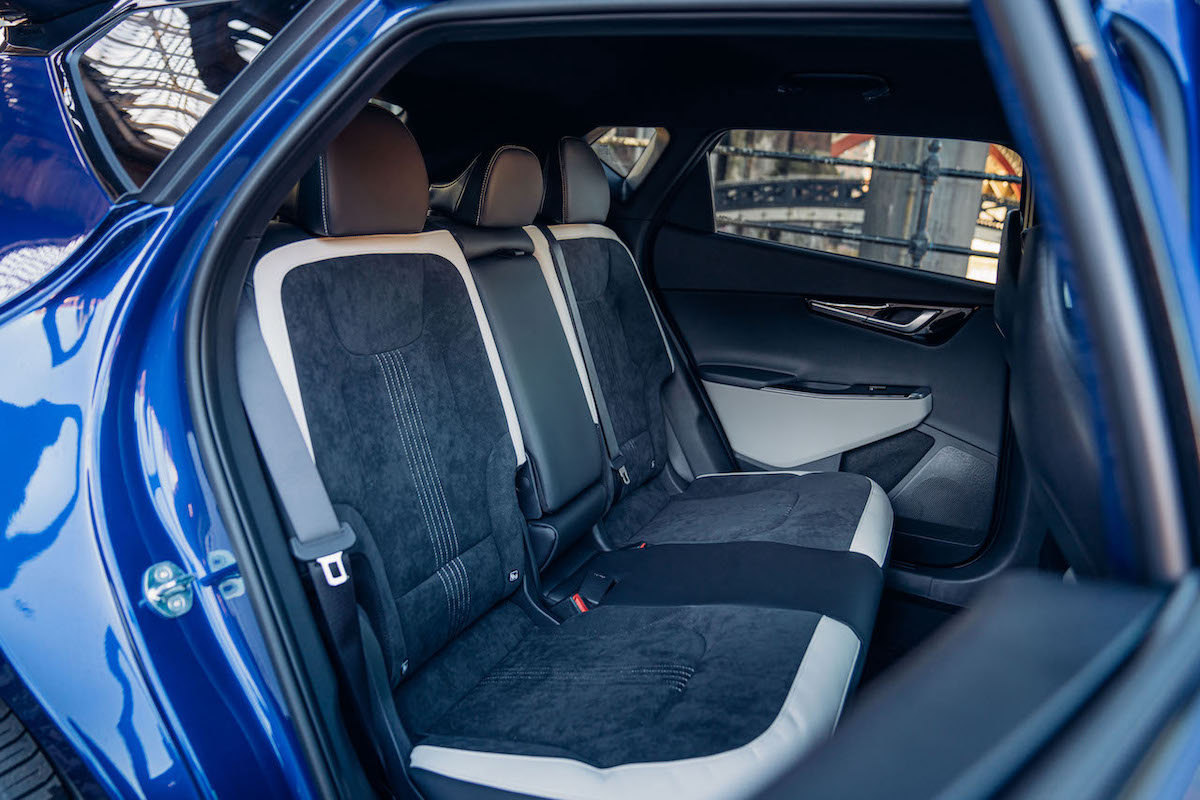
The Kia EV6 is true ‘crossover’ in that it's a great family hatchback, and a brilliant executive express. Thanks to the electric vehicle-specific 'e-gmp' platform that it sits on, which has the wheels at the extreme corners of the car for a super-long wheelbase, there’s masses of room up front and in the back.
The Hyundai Ioniq 5 and Skoda Enyaq do offer a little more in the way of space and flexibility, but there is way more headroom and legroom in the back of the EV6 than you get in the likes of a BMW 3 Series. The totally flat floor also means that there's plenty of foot room, even for someone sat in the middle of the rear seats.
The 490-litre boot is a good size, complete with underfloor cable storage, rear seats that split 60/40 and fold flat, and there’s even a further 52 litres of space under the bonnet on rear-wheel-drive models (dropping to 20 litres on AWD versions).
The subwoofer that you get in high-spec GT Line S models eats into boot space a little – albeit only by 10 litres – and there are ‘proper’ electric SUV rivals like the Ford Mustang Mach-E, Skoda Enyaq and Tesla Model Y that have usefully bigger, more usable boot space. Even so, you’ll get a chunky pushchair in the back of the Kia easily, and with the storage up front and various big cubbies around the cabin, this is still a really versatile family car.
You can also tow up to 1,600kg with the Kia EV6, which isn’t bad by electric-car standards and also means that you can have a towbar fitted, which is useful for bike racks.

What's it like to drive?
The Kia EV6 is very good to drive, and certainly better than the bigger, more top-heavy Hyundai Ioniq 5. The rear-wheel-drive EV6 gets 226bhp from its single electric motor, which delivers a 0-62mph time of 7.3 seconds, and you don’t need any more performance than this in the real world. It’s more than punchy enough to make light work of a fun country road or rapid motorway merge; there’s certainly nothing ‘entry-level’ about the way this cheaper RWD EV6 version drives.
Even the first of the four-wheel-drive models has a serious performance edge to it, with 321bhp streaming from dual motors and firing it up to 62mph at 5.2 seconds. That’s proper sports car pace, and it’ll have you grinning away even on a mundane road. That four-wheel drive also brings an aspect of all-weather peace-of-mind to the EV6 ownership experience.
That’s not even the fastest EV6 – the EV6 GT sits at the very top of the range, with a monster 577bhp and a 0-62mph time of 3.5 seconds – just in case you had any doubts as to whether Kia is going to compete with the Tesla Model 3 Performance or the Porsche Taycan. The power hike is matched with upgraded suspension, brakes, steering and drive modes to create a very well-rounded high-performance GT car.
Our big complaint with all versions of the EV6 is that the steering could be more engaging. It’s lovely and confidence-inspiring on the motorway and around town, but it’s a little unpredictable in the way it weights up as you wind lock on in faster corners (regardless of which drive mode you’re in) and it’s not got the level of feedback that you might expect from a car purporting to be a sports executive car.
Still, the ride comfort and refinement are great. Even on bigger wheels the Kia EV6 is still supple enough to shrug off scruffy city roads with relative ease, although there’s a bit of choppiness over big bumps. There’s not much whine from the electric motor at low speeds, and wind noise is also kept to a minimum, so this is also a fantastic cruiser.
Technology, equipment & infotainment
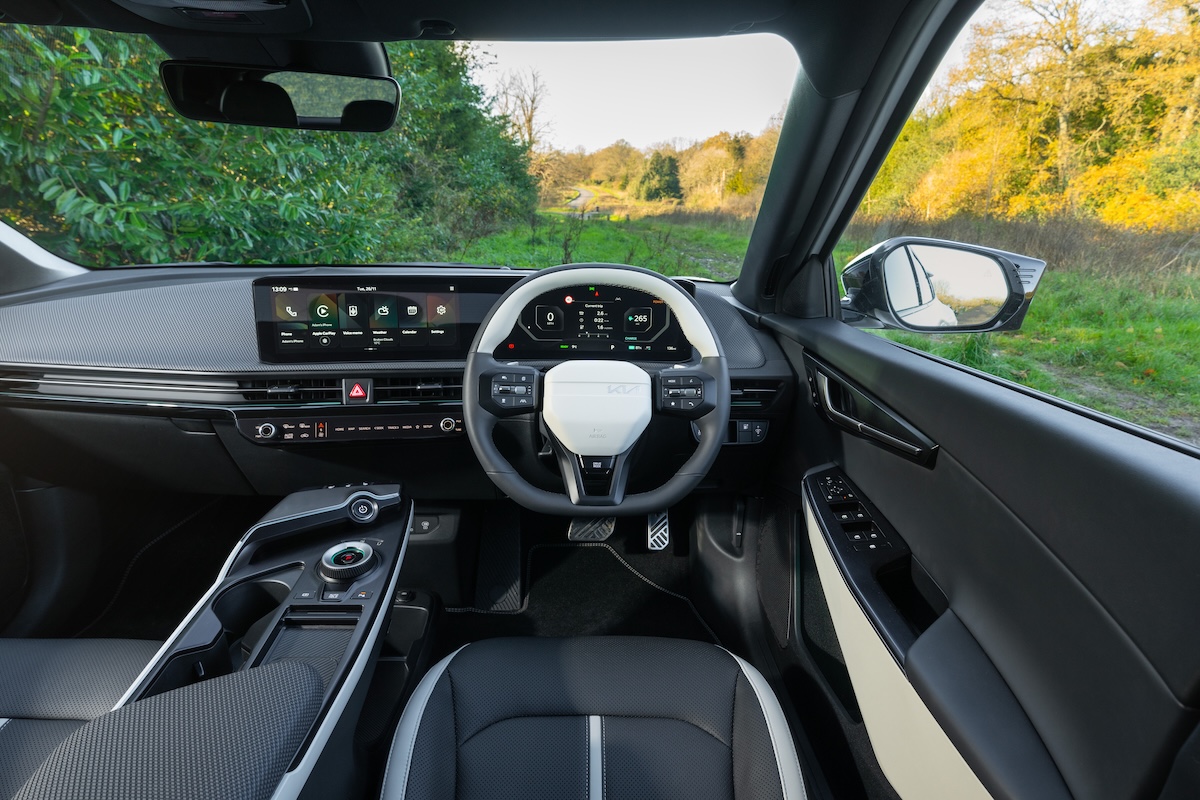
There are all the gadgets and luxuries in the Kia EV6 that you’d expect in an executive electric car. Every EV6 gets two curved, 12.3-inch screens – one touchscreen in the centre to control most functions from, and another in front of the driver to function as an instrument readout, with various views and layouts on offer. A row of touch-sensitive buttons beneath the main touchscreen infotainment system doubles up as climate control switches, or at the touch of a button the panel changes to offer shortcut buttons to the main functions, such as satnav and media. It works well enough, although it’s a faff to have to find the fairly small icon that you need to prod to change the control bar from one to another.
The touchscreen itself is very good. The graphics and screen response aren't quite what's offered in, say, the BMW i4, but it’s still easy to use thanks to logical menu layouts and a full suite of functions. Those include satnav, Android Auto, Apple CarPlay, digital radio and Bluetooth.
Even entry-level Air models get heated seats and similarly warmed steering wheel, climate control, adaptive cruise control with stop-and-go, auto LED lights and wipers, reversing camera and vegan leather upholstery. GT Line adds wireless phone charging, blind spot warning, front parking sensors, electrically adjusted front seats and part-suede upholstery. It also adds the vehicle-to-load charging system, which brings you an adaptor that fits into the car’s charging socket and allows you to slow charge another vehicle or accessory from the car’s battery.
GT Line S trim adds a 360-degree camera, an upgraded, 14-speaker sound system, heated rear seats, sunroof, powered tailgate and an augmented reality head-up display. This beams a moving arrow onto the windscreen in front of you, to point in real time at the road you need to take according to the nav. There’s also a blind-spot view function that beams a camera view of the side of the car when you indicate, making it easier to see any cyclists that may be hidden in your rear three-quarters.
Upgrade to the GT and there are 21-inch wheels, manually adjustable sports seats, and a range of hardware changes that includes an electronically controlled limited-slip differential for the rear axle, adaptive dampers, and upgraded brakes.

Kia EV6 running costs
The Kia EV6 will be much cheaper to run than any equivalent petrol, diesel or even plug-in hybrid alternative, such as the BMW 3 Series or Audi A5, because electricity is cheaper than petrol or diesel. A full charge in the Kia EV6 will cost under £30 on a typical domestic electricity tariff, or you get it cheaper still if you take advantage of off-peak tariffs. You can do this easily, thanks to a phone app that allows remote control of charging times, pre-setting of cabin temperatures and more. Note that rapid charging at public charging points can cost the same (or sometimes more) as filling a petrol or diesel car.
However, the Kia is still more expensive to buy than those conventional alternatives as battery technology is still more expensive than combustion engines, and we’d also like to see Kia offer lower PCP finance costs, since the EV6 is a bit expensive on this front next to some rivals, both electric and not.

Kia EV6 reliability
The Kia EV6 finished 4th out of 16 electric SUVs in the 2024 What Car? Reliability Survey, while the brand's Niro EV model was fifth. The survey reports that while not many EV6 owners reported faults, those that did noted above average repair times. Kia as a brand meanwhile finished 11th of the 31 brands included in the same survey.
The Kia EV6 comes with an impressive seven-year, 100,000-mile warranty, which covers the high voltage battery as well as the car itself.
- The Kia EV6 offers a ‘vehicle-to-load’ charging function, which is an adaptor that fits into the car’s charging socket and allows you to charge another vehicle or accessory from the car’s battery. It does so slowly, mind you, at a rate of around 10 miles per hour into the connected EV. You can, of course, set a limit on how much charge the EV6’s battery will use while being a very posh generator, so that you retain enough range to get home.
- Brake regeneration is excellent in the Kia EV6, with various modes, ranging from off altogether through to a very heavy, ‘i-Pedal’ mode. They’re controlled via paddles on the steering wheel, and all of those levels of regeneration can also be set up with or without an adaptive function, which automatically increases brake regen as it approaches a car or junction up ahead. It sounds complicated, but in reality you very quickly get used to the way the car brakes as you lift off the throttle in order to harvest energy and improve efficiency. Before you know it, you’ve found the level of regen that you prefer and you can leave it at that and forget about it. That said, many electric car drivers like to use heavier modes in town and lighter brake regen on the motorway, or on clear country roads. The Kia makes it easier than most to do just that.
- The Kia EV6 has very decent real-world range. We found that in middling temperatures it’ll still do some 250 miles even in solid motorway use (all electric cars are less efficient on the motorway and in cold weather, and are more efficient on town roads and in warm temperatures). Expect to see around 230 miles of range to a charge as a worst-case scenario in very cold conditions and solid motorway miles. In summer, and if you spend a lot of time in the suburbs or around town, you’ll likely get very close to, or may even better that official WLTP electric range. Despite the performance on offer, the real-world efficiency of the EV6 is certainly better than that of the VW ID.4 or Ford Mustang Mach-E, and is very similar to what you’ll get in the Tesla Model Y.
- If you want the longest range: Stick with the rear-wheel-drive version and go for the EV6 GT Line trim or up, since these are available with an optional heat pump, a bit of kit that makes the car more efficient in cold weather as it takes less energy to heat the cabin up. We’d just stick with GT Line since it’s usefully cheaper than the S, although if you spend a lot of time on the motorway then that augmented reality head-up display and more advanced semi-autonomous drive mode of GT Line S could both be useful additions.
- If you want the best value: Stick with entry-level Air model, since it gets most of the features that you want but costs usefully less than higher-spec models. Even the standard ‘Runway Red’ paint looks good, and there are very few colour options on this trim, anyway.
- If you want the sportiest: It’s got to be the AWD dual motor GT, with its supercar 0-62mph acceleration of 3.5 seconds. It’s got serious vigour to the way it goes down a road, it turns into corners nicely and has a bit of playfulness to the way it drives rather than simply being a point-and-shoot type of fast electric car.
- If you’re a company car driver: Electric cars are very cheap on Benefit-in-Kind (BiK) tax, so if you’re paying in this way for your company car and your employer is happy to lease a higher spec car, then go for AWD GT Line S, as the additional cost of this top spec car over lower-spec versions of the EV6 is negligible. If you do have to stick to a lower P11D price, or if leasing costs are a factor, go with the rear-wheel drive GT Line car, which is still stuffed with tech but is a much more reasonable price.


