BMW X1 2025 review | Practical and pleasant to drive
BMW X1 cars for sale
4.0
Expert review
Pros
Beautifully appointed interior
Brilliant on space and practicality
Pleasant to drive
Cons
Ride slightly firmer than some rivals
Higher-end models are expensive
Too much desirable kit costs extra
The CarGurus verdict
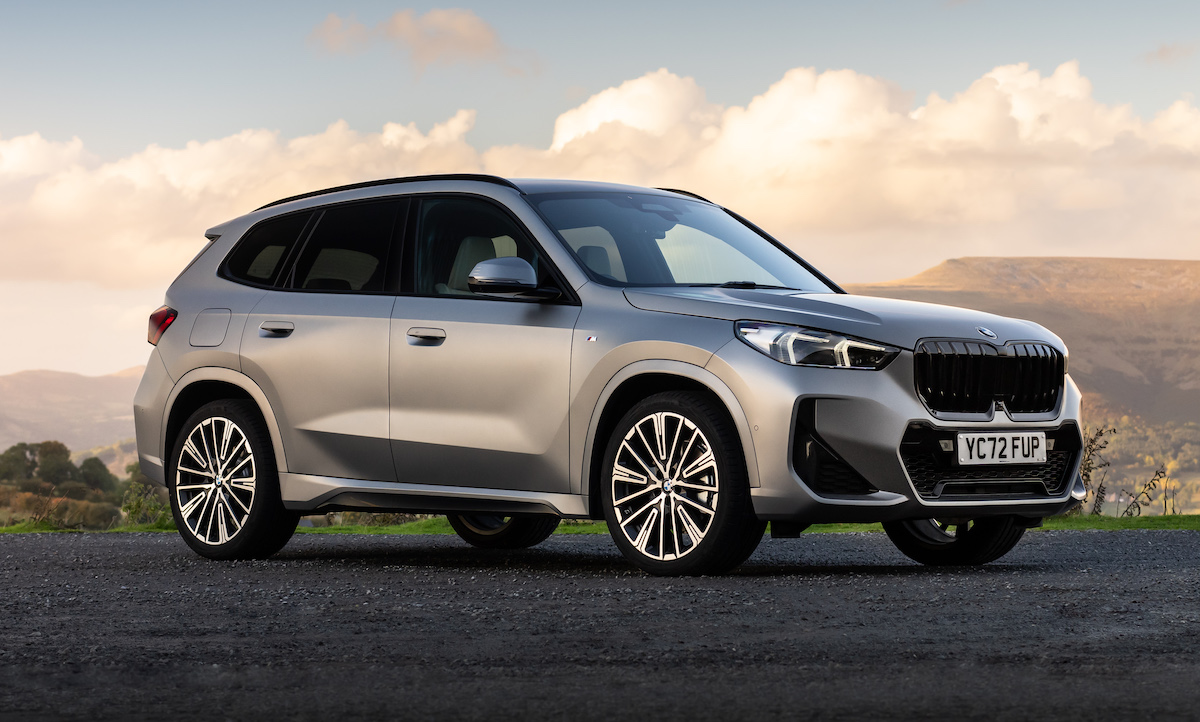
The BMW X1 feels satisfyingly confident on the road, there’s an engine for every lifestyle, great roominess and practicality, and it has one of the classiest interiors of any premium family SUV.
The plug-in hybrid models are particularly desirable thanks to their generous electric-only range. Even in the very competitive compact SUV class, the X1 stacks up as one of the best all-rounders.

What is the BMW X1?
The current BMW X1 is the third generation of this family crossover SUV. It sits on an advanced platform with plenty of high-tech features and a broad range of mild hybrid, plug-in hybrid and electric powertrains to choose from.
However, while the BMW X1 is a small SUV in the context of BMW’s lineup, it’s not really that small anymore. With this third generation, it has grown to 4.5 metres long, up by 53mm in length and 22mm in wheelbase compared to the previous generation model. Don’t go thinking this is a compact ‘urban’ crossover simply because it’s the entry-level car in BMW’s SUV range; the X1 is actually 75mm longer than a Nissan Qashqai. Saying that, the latest BMW X3 has also grown to maintain the gap over the X1. Indeed, all BMW SUVs are bigger than ever, with the flagship X7 measuring almost 5.2 metres long.
The BMW iX1 is a fully electric vehicle, which we talk about in a separate review. In the core range, however, there are two petrol-electric plug-in hybrids. These offer a choice of power outputs, but both have an official EV range of around 55 miles. Two diesels and two petrols – all mild-hybrid engines – make up the rest of the range. All come with an automatic transmission as standard; there’s no manual gearbox option in the BMW X1 range.

How practical is it?
The BMW X1 is impressively roomy and versatile. You’ll get two tall adults or three children across the rear bench, and it’s more than spacious enough to cope with a couple of chunky car seats. It has two sets of Isofix attachments, but the centre seat squab is narrower and quite firm, so you won’t easily get three car seats in here; for that, you will realistically need a bigger car with three individual middle-row seats, such as the Peugeot 5008. For most family needs, though, the X1’s rear seats, which have a charging port, air vents and a centre armrest with cupholders, will be more than comfortable enough.
For a few hundred quid extra, the rear bench can slide and recline in a 60/40 split, so that you can prioritise passenger legroom or boot space as needed. The seat-backs also fold flat in a 40/20/40 split, which is really handy for through-loading long objects. However, it’s worth pointing out that rivals such as the Skoda Karoq are more versatile, as you can remove the rear seats altogether for van-like loading capacity.
Lift the hatchback tailgate – it’s electrically operated as standard – and you’ll find that the boot in the BMW X1 is a really good size: essential for a family car. At 540 litres, it’s usefully bigger than the boot in an Audi Q3, Volvo XC40 or Mercedes GLA. Even if you go for one of the PHEV models, you only sacrifice 10 litres of boot space to the hybrid battery.
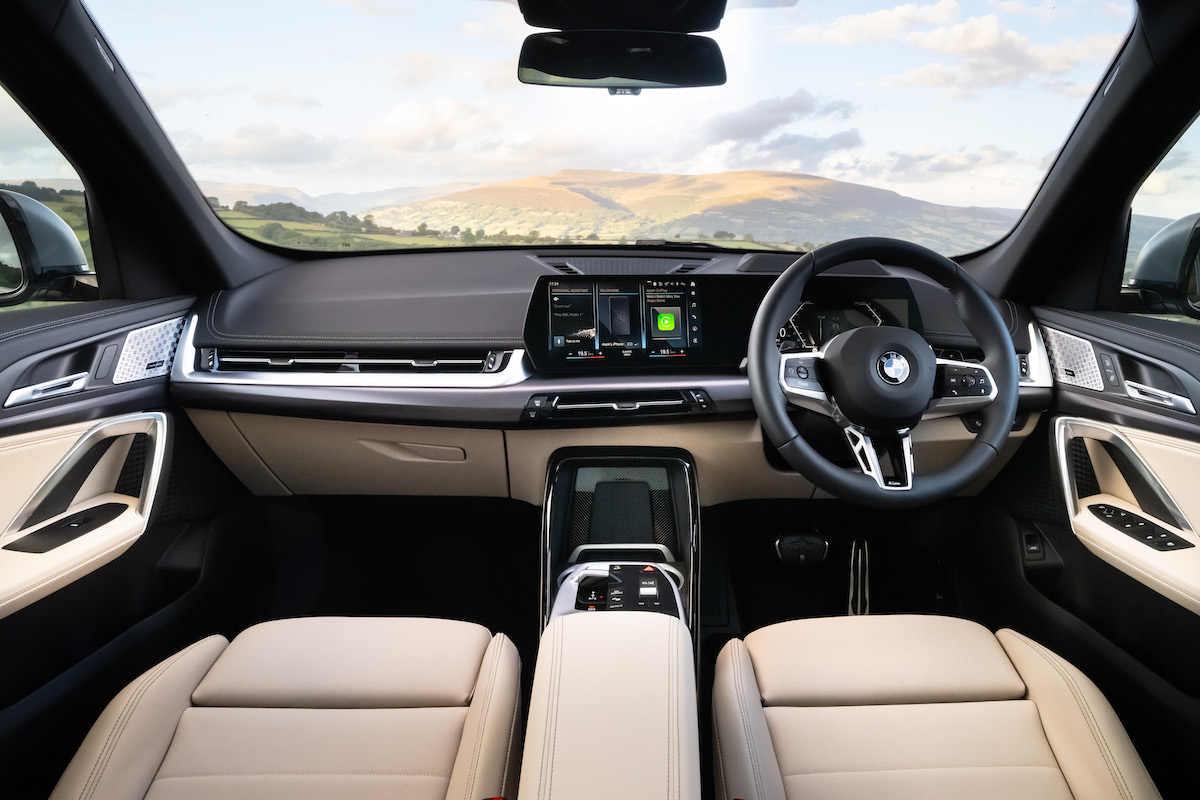
There is loads of space in the X1’s front seats, too. You get a great set of sports seats in M Sport models, which are optionally available in Sport and xLine specs. All models have an open-plan centre console, with stowage space beneath the ‘floating’ centre armrest. The gearshift toggle is located here, along with a few other controls, although it’s a shame the heater controls are now integrated into the touchscreen, rather than being physical buttons.
Overall, this is one of the nicest interiors of any family SUV. All the materials feel plush and tactile, perceived build quality is excellent and the clean but modern design makes it feel smart and user-friendly. The X1 is at its most appealing in M Sport trim, which has hints of style from BMW’s sporty M division. You can also now get an even more well-specced M Sport Pro version, with an M Sport rear spoiler, uprated brakes and more.
What's it like to drive?
BMW X1 petrol engine options start with the front-wheel-drive sDrive20i. This has a 168bhp 1.5-litre engine making the X1 capable of 0-62mph in 8.3 seconds. There’s also a 2.0-litre xDrive23i, with 215bhp and all-wheel drive, that sprints to 62mph in 7.1 seconds. Both are mild hybrids, which means that they have a small battery and electric motor that is used to boost performance. It can even power the car on its own for short distances at slower speeds. You can’t plug these models in, however, and the electric aspect is there only to boost efficiency from the petrol or diesel engine. You drive and fuel the X1 just as you would any normal car.
If you want more electric power, consider the plug-in hybrids. These have a 14.2kWh battery that you plug in to charge up, with an engine on board to take over when the battery runs flat. Both are four-wheel drive and use a 1.5-litre, turbocharged three-cylinder petrol engine. The 241bhp xDrive25e manages 0-62mph in 6.8 seconds, while the xDrive30e has 322bhp and shaves this time to 5.7 seconds. They offer an electric range of up to 56 miles.
The sporty range-topper is the BMW X1 M35i xDrive. This has a high-output 2.0-litre turbo engine producing 296bhp, for 0-62mph in 5.4 seconds. The suspension has been given an ‘M’ makeover too, for a hunkered-down, sporty feel to help you make the most of its livewire power output.
The BMW X1 sDrive18d is the entry-level diesel in the range, It gets a 148bhp, four-cylinder 2.0-litre engine and front-wheel drive, and does 0-62mph in 8.9 seconds. The other diesel option is the four-wheel-drive xDrive23d, which gets 208bhp and will do the benchmark dash in 7.4 seconds.
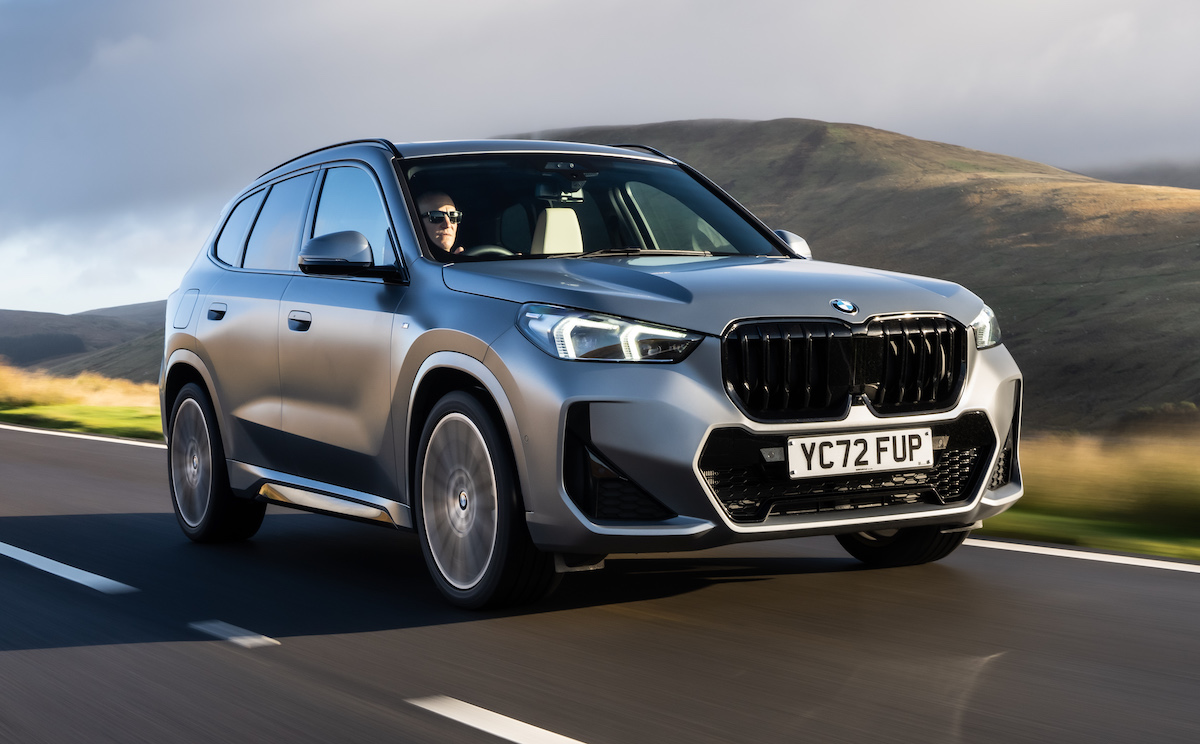
There isn’t a bad engine in the X1 range. We like the petrol xDrive 23i, which is a really nice, punchy motor. It gives the X1 an almost hot hatch character if you want to make the most of its potential. There’s even a ‘Boost’ function that you activate via a paddle on the steering wheel for a few seconds of maximum performance. It’s a bit unnecessary, to be honest, although the kids will like it as a party trick. More importantly, the xDrive 23i has a smooth, flexible and quiet engine that is ideal for everyday driving.
The plug-in hybrid BMW X1 versions will run in near-silent electric mode if the battery is charged (and offer a decent amount of lower-speed EV running even when it’s almost flat). The petrol engine kicks in seamlessly and they are the most sophisticated of all BMW X1s to drive. Both have the advantage of grippy xDrive four-wheel drive, too.
The diesel engines are not quite as well-rounded. The sDrive18d feels quite laboured and gets noisy if you accelerate hard. Even so, it’s responsive enough and the seven-speed ‘Steptronic’ DCT automatic gearbox blurs shifts smoothly, making this a perfectly pleasant car, even on long distance journeys with a full complement of passengers.
There are two different suspension options in the X1: a standard ‘passive’ setup that can’t be adjusted, or the M Sport Adaptive upgrade that allows you to change the suspension response separately or via the drive mode buttons. Even with the adaptive suspension that we’ve tried, the X1 can be a bit firm and jarring, especially at low speeds around town. Thankfully, it does smooth out at higher speeds for calm, comfortable progress. We haven’t tried a car on standard non-adaptive suspension yet, but we’re confident in saying the Volvo XC40, Mercedes-Benz GLA and Range Rover Evoque are more comfortable if it’s a really cushy, pliant ride that you want.
Handling is good in the BMW X1. It has something of a sporty edge in the way it’s keen to turn into corners, and gives you an ample sense of how much grip remains as you accelerate away. It’s planted and confident, rather than exciting, but by family SUV standards it’s rather satisfying on a good road, just as you’d hope from a BMW.
Technology, equipment & infotainment
The BMW X1 comes in three main trim levels: Sport, xLine and M Sport. Sport is reasonably well equipped with 17-inch alloy wheels, all-round parking sensors, a reversing camera, LED headlights, a powered boot lid, cruise control, dual-zone climate control, a large and configurable digital driver’s display and a touchscreen infotainment system.
That curved touchscreen is a really smart-looking centrepiece. The infotainment system now features BMW’s latest Operating System 9, based on Android Automotive OS, and comprises a 10.7-inch touchscreen and 10.25-inch driver display. The enhanced system offers superb graphics and all the features that you’d want, including sat-nav and Bluetooth, plus wireless Apple CarPlay and Android Auto smartphone connectivity. You can even integrate the BBC Sounds app. It doesn’t have an iDrive rotary controller like the BMW iX, which we prefer for the easiest control when you’re driving, but the touchscreen is responsive and isn’t too badly affected by glare.
The xLine trim adds mostly aesthetic upgrades, including 18-inch alloy wheels, while M Sport gets 19-inch alloys, sports seats, ‘Shadowline’ exterior trim (darker than normal chrome), part-Alcantara seats, a gorgeous ‘M’ steering wheel and the aforementioned adaptive suspension. For many, even the little ‘M’ logos outside and in make this the must-have X1. You can also option ultra-stylish 20-inch alloys on M Sport models.
However, it is disappointing that some of the key luxuries many buyers will want are only available in pricey option packs. The Technology Pack will be popular on the lower two trims, and is standard on the M Sport. It includes folding door mirrors (which should be standard on a car this costly), keyless entry, heated seats, a nifty wireless charging cubby for your phone and adaptive LED headlights that provide high-beam illumination without dazzling oncoming traffic. The Technology Plus Pack may be popular as well, adding all of the above, plus a head-up display, upgraded sound system and semi-autonomous parking.
The Comfort Pack, which brings electric seat adjustment with a memory function and a heated steering wheel, will be another big-seller. A panoramic glass roof is also an option. It seems a bit rum to ask around £200 for a heated steering wheel, though: this is a standard feature in many cars costing half the price of the X1.
M Sport cars also have the option of the M Sport Pro Pack, which adds a Harman/Kardon sound system, privacy glass and even sportier styling tweaks.
Every BMW X1 gets adaptive cruise control and autonomous emergency braking, while the Driving Assistant Professional Pack is yet another option pack you may want to consider. It adds traffic sign recognition, blind-spot assist, lane-keep assist and a semi-autonomous drive mode.

BMW X1 running costs
The BMW X1 is comparable to most of its rivals on list price. That said, this entire class of car has now become rather expensive. You can get one of the entry-level engines in a decent spec and with the options you’ll want for around £40,000 to £42,000, or for roughly £500 per month on PCP finance with a reasonable deposit.
Bank on paying £45,000 for a nicely equipped plug-in hybrid. These cost around £6,000 more than the basic petrol engine, but have considerably more power and, of course, that generous electric range. The top-spec trims and performance-oriented models can easily creep up towards £50,000.
All BMW X1s are very competitive when it comes to fuel economy and CO2 emissions. The plug-in hybrids have some of the longest pure electric ranges of any PHEV, so achieve astonishingly good figures in the official tests. You’ll only achieve anything like those numbers if you seldom wake up the petrol engine, though, so it’s best to really consider your typical usage and how easily you can charge if you are considering a PHEV for its efficiency. If you’re likely to do a lot of very long journeys without charging, a diesel may well be cheaper to fuel and run overall.
Servicing typically comes in at around £900 – £1000 for three years and three services, and you can get a fixed-price servicing deal for around £1000, which spreads the cost into monthly payments. Insurance groups vary from around Group 24 up to 35, which is very reasonable for this level of family SUV.

BMW X1 reliability
The BMW X1 is too new for there to be any useful feedback on real-world reliability, as is the BMW 2 Series Active Tourer that shares its platform and many of its powertrains. Overall, BMW came an impressive sixth out of 32 brands in the 2025 What Car? Used Car Reliability Survey. Rival marque Audi was down in 22nd, while Land Rover was 26th.
A three-year, unlimited-mileage warranty applies to the BMW X1, and the hybrids also have their batteries covered for six years and 60,000 miles. If you’re keen on a longer warranty and better reliability, look to the Lexus NX, which is available as a plug-in hybrid or full hybrid and – with a main dealer service every year – offers a manufacturer warranty for up to 10 years and 100,000 miles.
- The four-wheel-drive X1 variants – called xDrive, as opposed to the front-wheel-drive sDrive derivatives – can tow up to 2000kg (an electronically retractable tow bar is optional) with a braked trailer, which is a fair towing capacity in this class. The sDrive18d manages a maximum of 1800kg.
- The BMW X1 plug-in hybrids get a 14.2kWh usable battery capacity, and can charge at up to 7.4kW. That means they can fully charge in around 2.5 hours from a standard home wallbox. There is no rapid charging on X1 plug-in hybrids, but their Type 2 socket will be compatible with just about every AC public charging point. This will help you take advantage of the slow-speed ‘destination’ public chargers that are often found in town centres, gym car parks and the like.
- White and black are the ‘free’ paint options. There’s also a really good palette of optional metallics, including a bright copper and darker green, both a refreshing change from the usual monochrome options.
- If you want the best value: Stick with the sDrive20i Sport, which is the cheapest BMW X1 but still manages to be good to drive and reasonably equipped. Add the optional Technology and Comfort Packs if you can; they will make the car nicer to live with and also improve its resale value.
- If you want the best company car: The plug-in hybrid BMW X1 xDrive25e xLine is a great bet for company car users. Its long electric range and very low CO2 emissions keep Benefit in Kind costs much lower than they would be on comparable non-plug-in petrol or diesel models. Again, add the optional Technology and Comfort Packs for the best ownership experience and resale values.
- If you want the best high mileage commuter: The BMW X1 sDrive18d will be really efficient on a long run, and is also fairly affordable to purchase by the standards of premium family SUVs. Go for xLine spec and add the Technology Plus Pack, as the head-up display and electric seat adjustment will be worth it. The Driving Assistant Professional pack may well be worth having, too, as blind-spot assist and lane-keep assist are useful safety aids on motorway journeys.
- If you want the sportiest one: The BMW X1 xDrive30e PHEV is the most powerful model in the range, with a hot-hatch-style 0-62mph time of 5.6 seconds. However, the M35i is a bit faster (5.4 seconds) due to its lighter weight, and it feels generally a bit racier as a result.


