BMW X1 Review (2009-2014)
BMW X1 cars for sale
3.0
Expert review
Pros
Enjoyable handling and keen steering
Fuel-efficient engines
Solid roster of standard kit
Cons
Noisy timing chain could warn of a big bill around the corner
Stiff ride, especially the M Sport models
Lacks the premium cabin finish of most BMWs
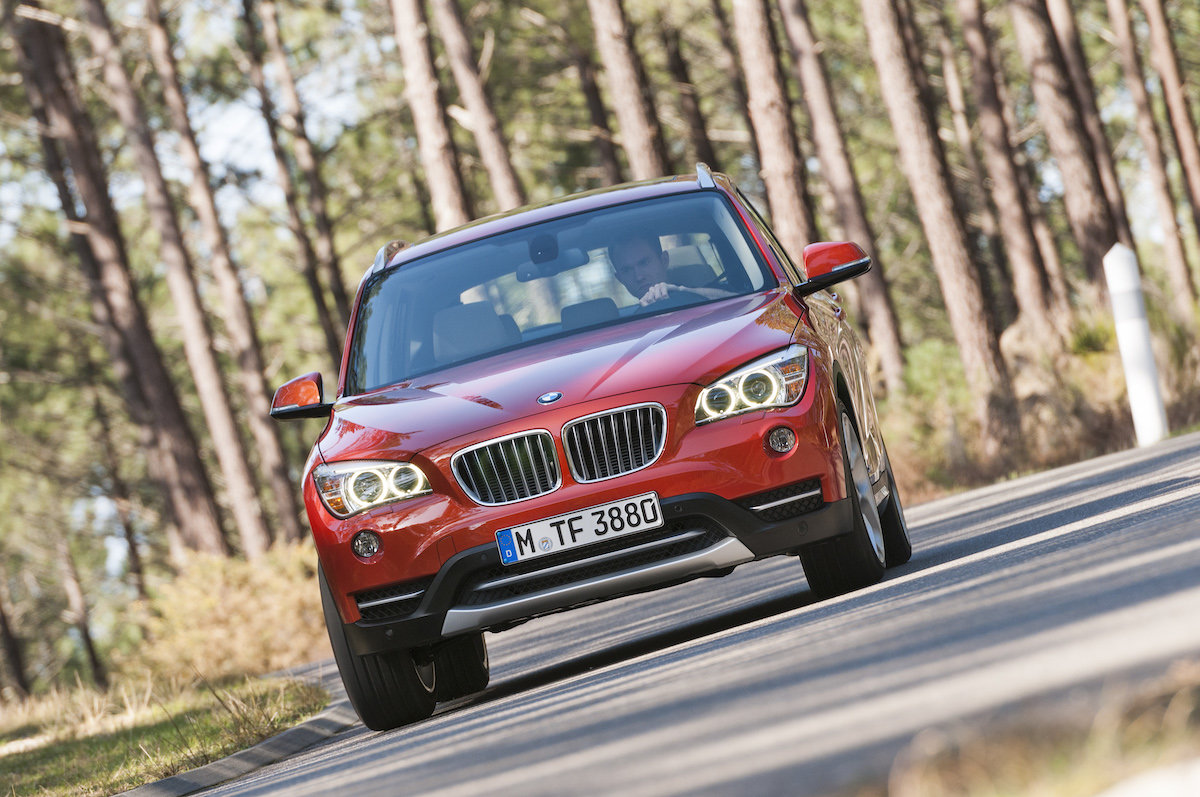
The CarGurus verdict
While it’s not the best all-rounder in the compact SUV sector, the X1 mk1 is enjoyable to drive, decently economical, commendably refined, and as long as you’re not a big passenger sitting in the rear, it offers a comfortable environment in which to travel long distances. Most of its engines are spirited performers, and the more powerful diesel derivatives make easy work of towing caravans and trailers. The availability of four-wheel drive on the xDrive models is a boon for those who have a genuine need for the extra traction. Plus, for some people, there’s the reassurance of having a BMW badge on the nose.
But when buying an X1 mk1, be very cautious of noisy timing chains on the diesel engines, as explained in our Reliability section. And while the M Sport versions are stylish, their stiffened suspension and big alloy wheels badly compromise the X1 mk1’s ride quality.
Most owners, though, report being very happy with their X1. Choose wisely, and you should be, too.
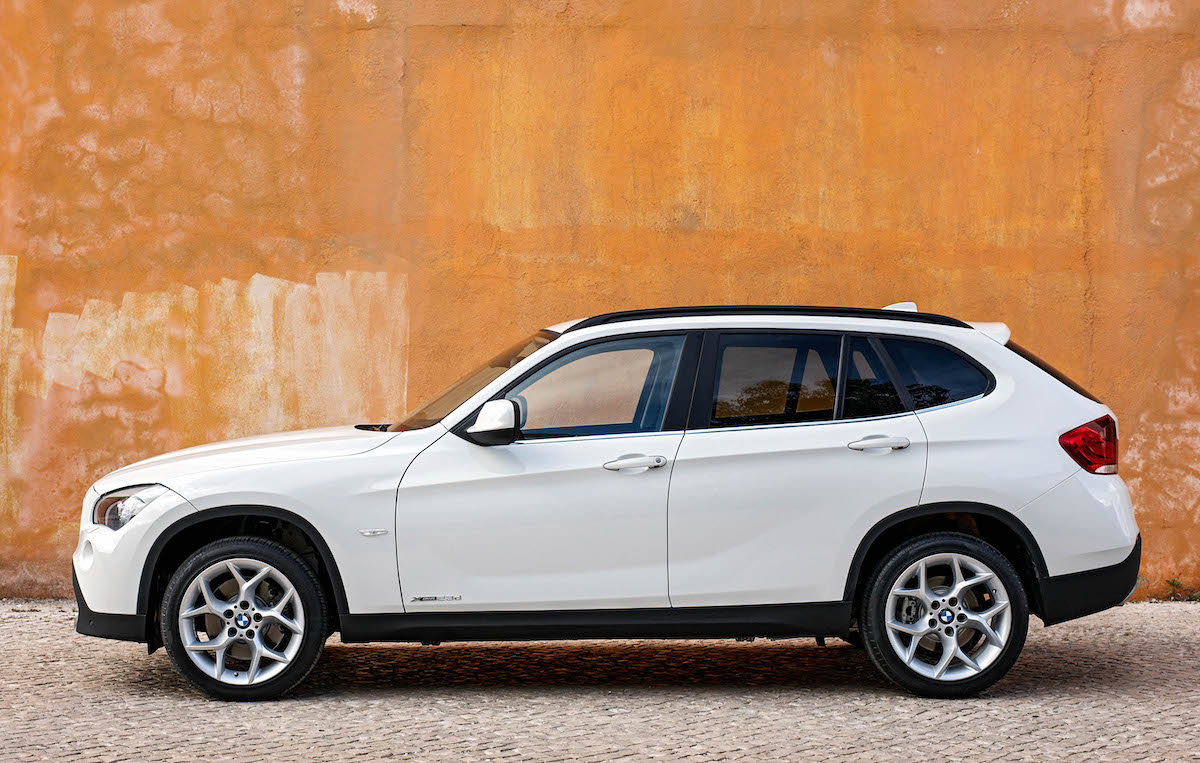
What is the BMW X1?
Having enjoyed considerable success with its two larger SUVs, the X3 and X5, it was inevitable that BMW would extend the concept down the range to create the compact X1 mk1. Launched onto the UK market in December 2009, this small SUV is shorter than a BMW 3 Series Touring, although its greater height can make it seem larger overall. However, it’s as much a tall estate car as it is an SUV. Its rivals include cars such as the Audi Q3 and Mercedes GLA, while bigger-but-less-premium alternatives like the Nissan Qashqai could also be considered rivals, all very popular cars that continue to fly out of showrooms.
How practical is it?
While the X1 mk1’s cabin is neatly styled, some of the plastics don't feel as posh you’d expect of a BMW, and the equivalent Audi or Mercedes feel a bit stronger on build quality.
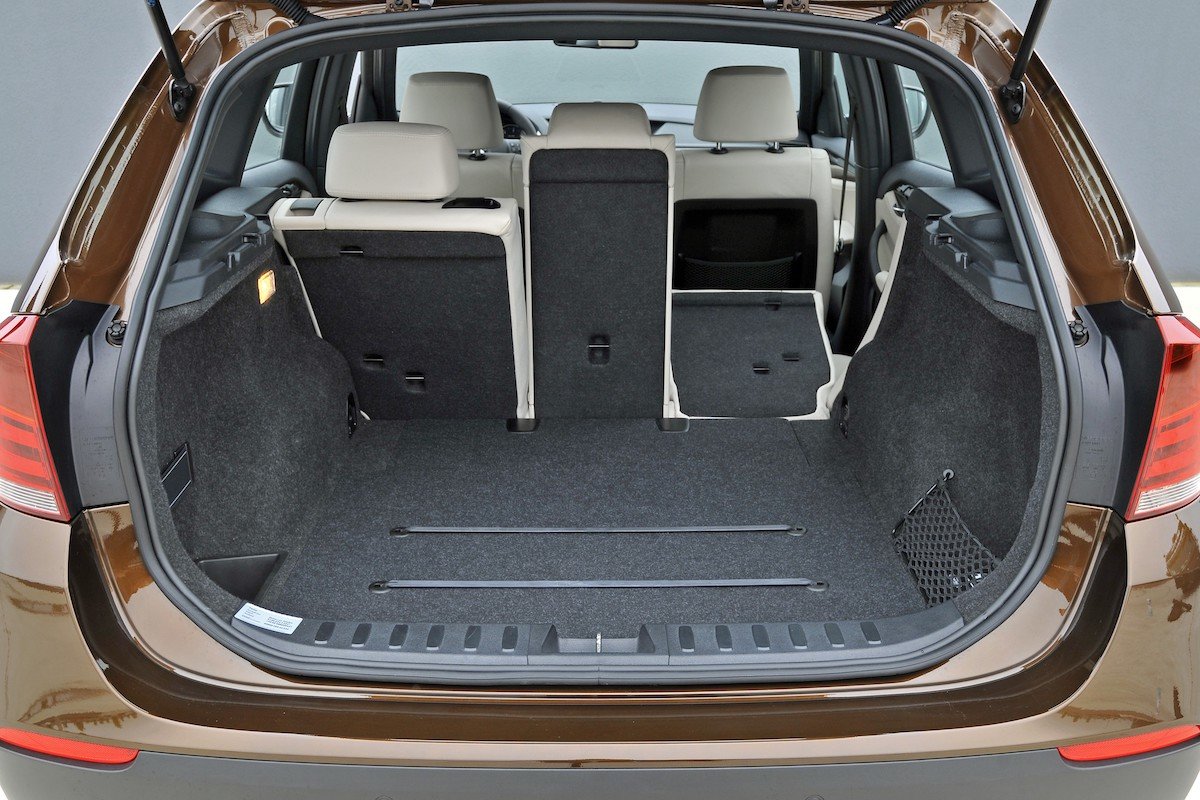
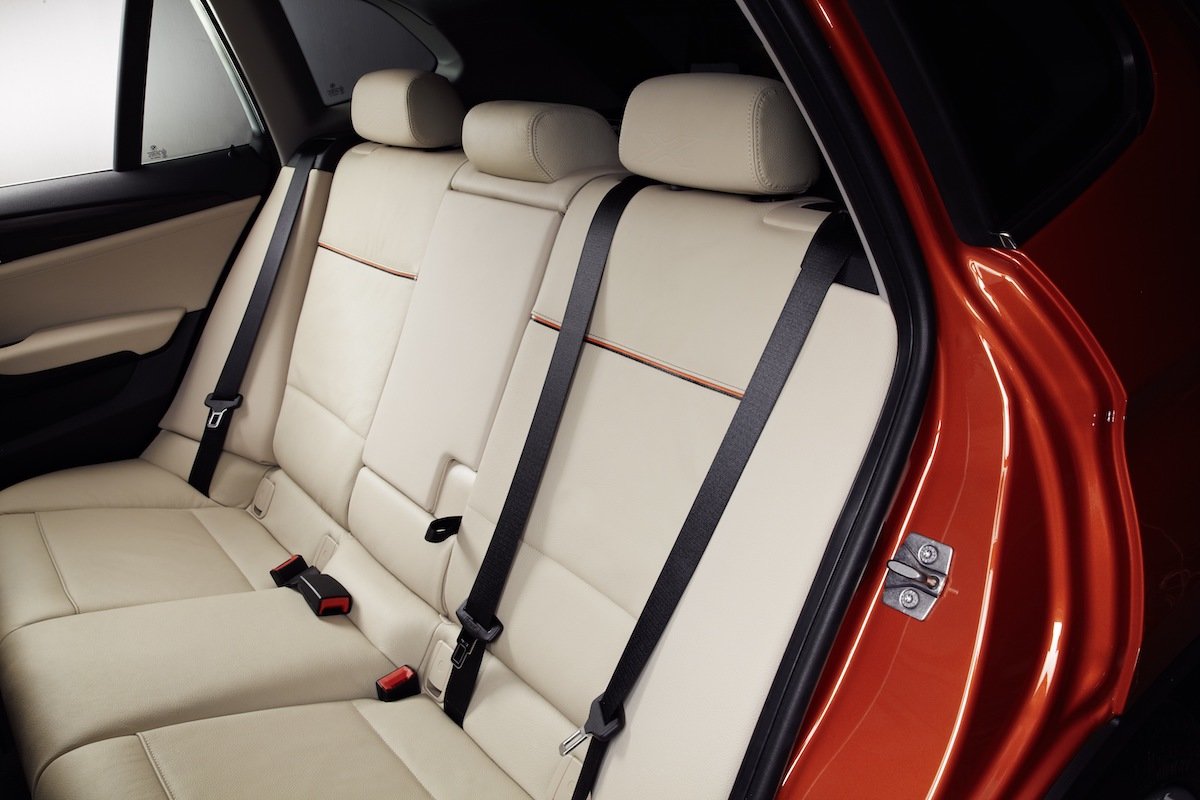
You'll be comfortable in the front seats, with a decent amount of adjustment for the driving position, but the X1 can feel a bit cramped for taller passengers in the rear, particularly when it comes to legroom. Things are especially awkward for a middle-seat passenger who has to deal with the transmission tunnel beneath their feet. The 420-litre boot is big, though, and its practicality is enhanced by the rear seat’s 40/20/40 split-and-fold arrangement.

What's it like to drive?
While other compact SUVs also offer customers the choice of having two- or four wheels driven, what’s unusual about the first-generation X1 is that when it’s not four-wheel drive, it’s rear-wheel drive: all its rivals provide front-wheel drive. This is in keeping with BMW’s engineering ethos that rear-drive cars provide a superior driving experience. The rear-wheel drive X1 mk1s wear sDrive badges, while the four-wheel drive models are known as xDrive.
Keen steering and a moderately agile chassis make the X1 mk1 more fun on back roads than it looks as though it should be, but if you’d also like your car to ride well, then avoid models with M Sport suspension and the larger diameter alloy wheels.
At launch the X1 was propelled by a 2.0-litre turbodiesel engine available with three different power outputs, the 18d producing 143bhp, the 20d giving 177bhp, and the twin-turbo 23d with 204bhp. The latter is available only in four-wheel-drive guise, but the other two offer the alternative of rear-wheel drive. In 2011 BMW equipped the X1 xDrive 20d with its EfficientDynamics package that knocked the power back slightly to 163bhp but also reduced the CO2 output to an impressive 119g/km.
Other engine derivatives followed. Coinciding with the X1’s facelift in June 2012, the 23d was replaced by the 218bhp xDrive 25d, while the 20d got a power hike to 184bhp. Then in March 2013 the entry-level 116bhp sDrive 16d joined the line-up, together with the X1 mk1’s first petrol engine, a 181bhp 2.0-litre four-cylinder that powers the sDrive and xDrive 20i.
Although slightly gruff when accelerating hard, the diesel engines are commendably quiet when cruising, and you’re not much disturbed by road- or wind noise, either. Apart from the somewhat anaemic 16d, all the diesels are punchy performers thanks as much to strong torque delivery in the mid-range as outright power. The petrol model, the 20i, doesn’t boast the same flexibility, yet it’s smooth and fast enough for most of us.
Technology, equipment & infotainment
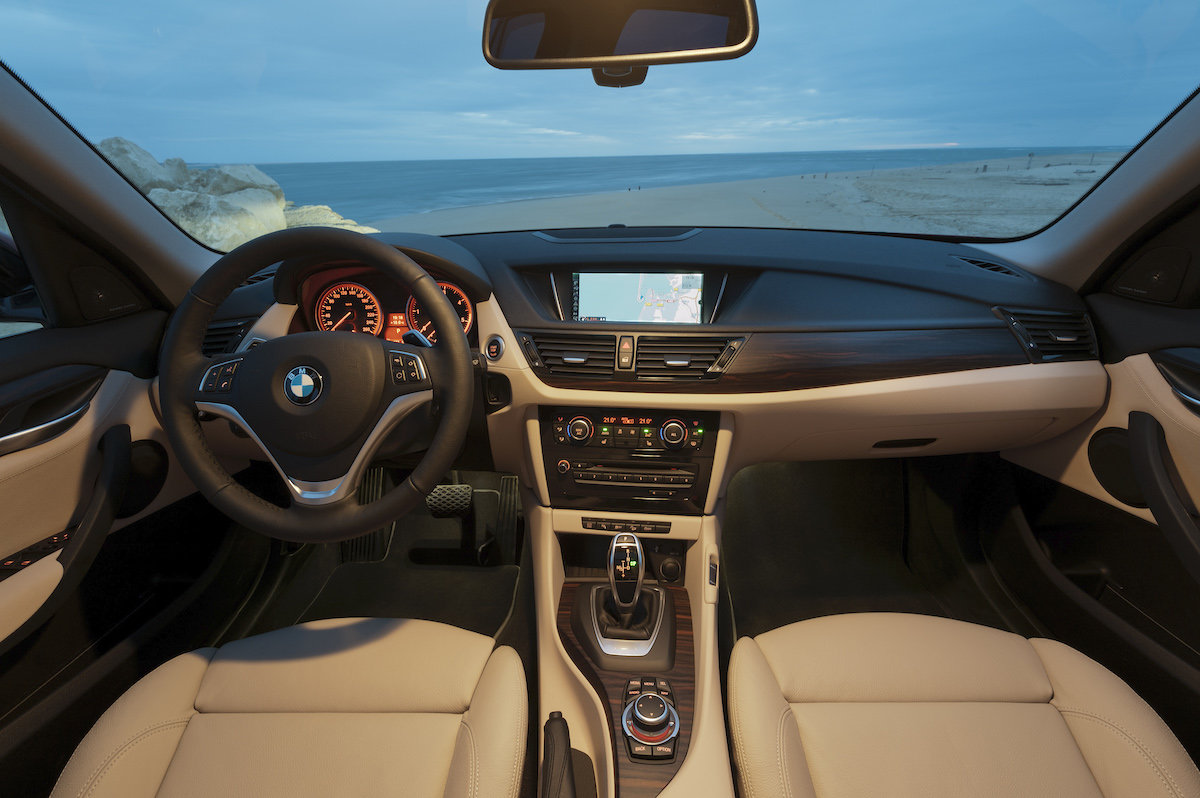
BMW, certainly at the time the X1 was a new model, was famed for being rather stingy with standard kit, and leaving far too many items on the options list. With the X1, though, basic equipment levels are maybe better than you might imagine. Dual-zone climate control, electric windows front and rear, alloy wheels, rear parking sensors, a multi-function steering wheel and an excellent infotainment system with Bluetooth are all standard.
BMW X1 running costs
Service intervals for the X1 are dictated by an on-board computer that assesses mileage and how the car is being driven, before announcing via a message on the dashboard, that a service is due. Roughly speaking that will be about every two years or 15,000 to 20,000 miles, although as your X1 gets older it’s best to schedule in an annual inspection to ensure that items such as brake pads, brake discs, clutch etc are still in good order.
Services alternate between interim and major, and at a BMW specialist you can expect to pay from £112 for the former, and £168 for the latter. With age and higher mileage then expect those prices very much to be a base line, on top of which there are bound to be items such as brake pads that require replacement. By way of contrast, one (from new) owner reports that at a BMW dealer the first service cost £300, the second £800, and the third £500. Which is why, once it’s out of warranty, it’s worth investigating your local independent BMW specialist.
The X1 mk1 is fitted with run-flat tyres which can last up to 30,000 miles if you’re careful, but are more expensive to replace than regular tyres. Depending on the brand, you’re looking at between £107 and £150 each, and up to £165 if you go for a premium all-seasons tyre.
Claimed mpg economy figures for all cars tend to be on the optimistic side, so it’s interesting to hear what some X1 owners achieve in real-world driving. An xDrive 18d, for example, averaged 42.1mpg over the course of 62,000 miles, while the claimed figure is 49mpg. Another xDrive, this time a 23d, managed just over 40mpg in mixed driving against the claimed average of 44mpg, which isn’t bad going. Meanwhile, the owner of an sDrive 20d EfficientDynamics reckons to regularly see 50-60mpg, the latter impressively close to the claimed 62.8mpg.
Annual road tax costs span a range of £30 to £265, the former what you pay for an sDrive 20d EfficientDynamics thanks to its lowly 119g/km CO2 output. Insurance bands for the X1 mk1 are spread between groups 18 and 28.

BMW X1 reliability
Although the X1 mk1 isn’t plagued with serious problems, there’s one potentially devastating issue that is expensive to fix. Provided, that is, you catch it in time before it wrecks your whole engine. The 2.0-litre diesel engine’s timing chain can stretch and then snap, causing valves and pistons to meet… So if you hear any knocking or ticking noises from the engine, look at another car. Replacing the timing chain prior to it snapping means removing the engine and a bill for about £2,000, without any guarantee it won’t happen again: rebuilding the engine costs a whole lot more.
In March 2018 the BBC’s Watchdog consumer programme pressured BMW into recalling 312,000 cars – some of them X1 mk1s – to rectify an electrical fault that could cause the engine to cut out while you’re driving: make sure that rectification work has been done. Other recalls include for some cars built before November 2011 to have four engine bolts replaced; a replacement steering box for some cars manufactured before July 2012 following power assistance failure; a potential fault with some clutches; and for modifications to prevent some battery cables from being damaged by heat.
On a test drive of an X1 mk1 xDrive, be wary of a car that judders through its clutch as you pull away from rest. This could be a sign of a worn clutch (we’ve heard of clutch problems in 50,000-mile cars) but it may also indicate that the transfer box for the four-wheel drive system is beginning to fail. We’ve spotted several reports of this problem, one of them from the owner of a 26,000-mile car: at 58,000 miles this same car also required a replacement front differential at a cost of £2,100.
Uneven tyre wear can be a problem with xDrive models. The four-wheel drive system is so sensitive to the diameter of the tyres that if one of them wears more quickly than the others, the whole system can be thrown out of kilter. And in common with pretty much every other modern car, the X1 mk1 suffers from random electrical gremlins, so before handing over your money, check that all the electrical items in the car work as they should.
- The X1 mk1 has a five-star EuroNCAP crash safety rating, thanks in part to its six airbags and seatbelt pre-tensioners. It also features what BMW calls Brake Force Display, a system aimed at alerting drivers behind you to how hard you’re braking. Under regular braking your brake lights illuminate as normal, but if you’re slightly heavier on the pedal then the high-level brake light flashes: during emergency braking all three brake lights flash. The driver behind won’t know what this means, of course, but it’s hoped that the flashing is so unusual that it triggers them to brake very hard, too.
- The X1 mk1' styling makes it look like a small off-roader, so it’s tempting to believe you should buy a four-wheel drive – xDrive in BMW language – version of it. The extra traction four-wheel drive provides is useful if you live in an area prone to regular snowfall, or you often travel mud-slathered rural roads. And if you tow a caravan or trailer, it’s a boon to stability. But four-wheel drive has a negative effect on fuel economy and CO2 emissions, both of which increase the running costs of your X1. A rear-wheel drive model – or sDrive – may be the better bet for you.
- BMW doesn’t have set-in-stone servicing intervals. Instead, an on-board computer takes into account how you drive your X1, as well as the mileage, and then posts a message on the dashboard to recommend a service is due. This variable service interval regime works well, but as a car gets older it’s probably best it has an annual inspection to check mechanical items that fall outside the remit of the computer’s beady eye. As a rule of thumb, though, expect to service your X1 every two years or 15,000-20,000 miles.
- For the best blend of performance and economy: The 140bhp sDrive 18d has enough performance for most folk – 0-62mph in 9.3 seconds – and is capable of a claimed 57mpg. But the 174-181bhp (depending on the year) sDrive 20d has appreciably more sparkle in all driving conditions, polishes off the sprint from standstill to 62mph in as little as 7.6 seconds, and at best has a claimed Combined fuel consumption figure of 57mpg. Go for the SE trim, as the suspension on the M Sport is unpleasantly stiff.
- If you fancy the looks of the M Sport but don’t want the harsh ride quality: In recognition of the fact that not everyone enjoyed the ‘sporty’ ride quality of M Sport versions of the X1, BMW offered standard suspension as a no-cost option on the M Sport. It’ll take a bit of diligent research to find an M Sport thus equipped as a used car, especially as many second or third owners may not be aware of how their car was originally specified as a new car. A test drive on a bumpy road should prove revealing…
- If you regularly tow a caravan or trailer: You’ll be wanting a four-wheel-drive xDrive model for towing duties, and if you can stretch to it then the xDrive 25d is ideal. It has 331lb ft (450Nm) of torque in a tow-friendly band between 1,500rpm and 2,500rpm. If the 25d is out of your price range, the 23d is the next best – 295lb ft (400Nm) from 2,000rpm to 2,250rpm. The 20d makes a reasonable alternative to those two. All X1 mk1’s feature Trailer Stability Control, which works through the Dynamic Stability Control, to stop caravans and trailers from ‘snaking’.
- If you’re seeking the best fuel economy: With its longer gear ratios and stop/start system, the sDrive 20d EfficientDynamics is the economy king of the X1 range. Its claimed Combined fuel consumption figure is 62.8mpg, an achievement that contributes to its 119g/km CO2 output and therefore its £30 annual road tax. The stop/start part of the EfficientDynamics package is reckoned to be especially effective in urban driving, with BMW claiming a 3% improvement in fuel consumption around town. Others in the X1 range also perform well at the pumps; the 16d, 18d and 20d are capable of up to 57mpg.

