BMW X6 Review (2019-present)
BMW X6 cars for sale
4.0
Expert review
Pros
Undeniable road presence
Drives remarkably well for such a heavy car
Still practical, despite SUV coupe body style
Cons
Divisive looks will put off some buyers
The X5 is more roomy and less compromised
High price and running costs of the quickest versions
The CarGurus verdict
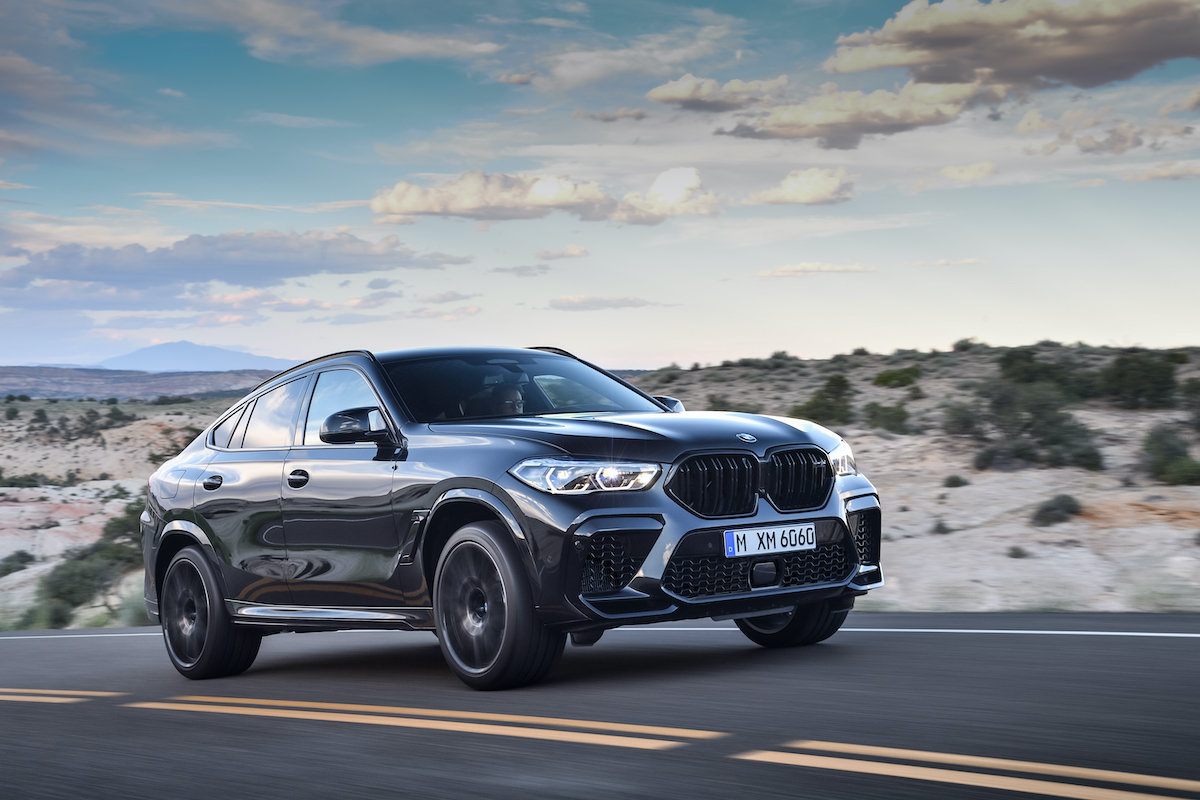
The BMW X6 is about as divisive a car as you could possibly ask for, the mix of SUV elements, without all the practicalities that SUVs bring, really seeming to rub some people up the wrong way. They don’t have to buy it, though, and for many others the X6’s bold looks, fine drive and excellent performance significantly outweigh what others think about it. Indeed, that divisiveness is arguably part of its appeal, and we can’t argue against that. Choice is a good thing, and the X6 is a good choice if its mix of attributes appeal to your sensibilities and desires, as well they might.
Even so, it’s difficult to make a convincing argument for the range-topping X6 M50i when the xDrive40d M Sport exists, it being cheaper to buy, run and nearly as fast in the real world, and you’ll not be on first name terms with the assistant at the petrol station. A nodding acquaintance, perhaps...
What is the BMW X6?
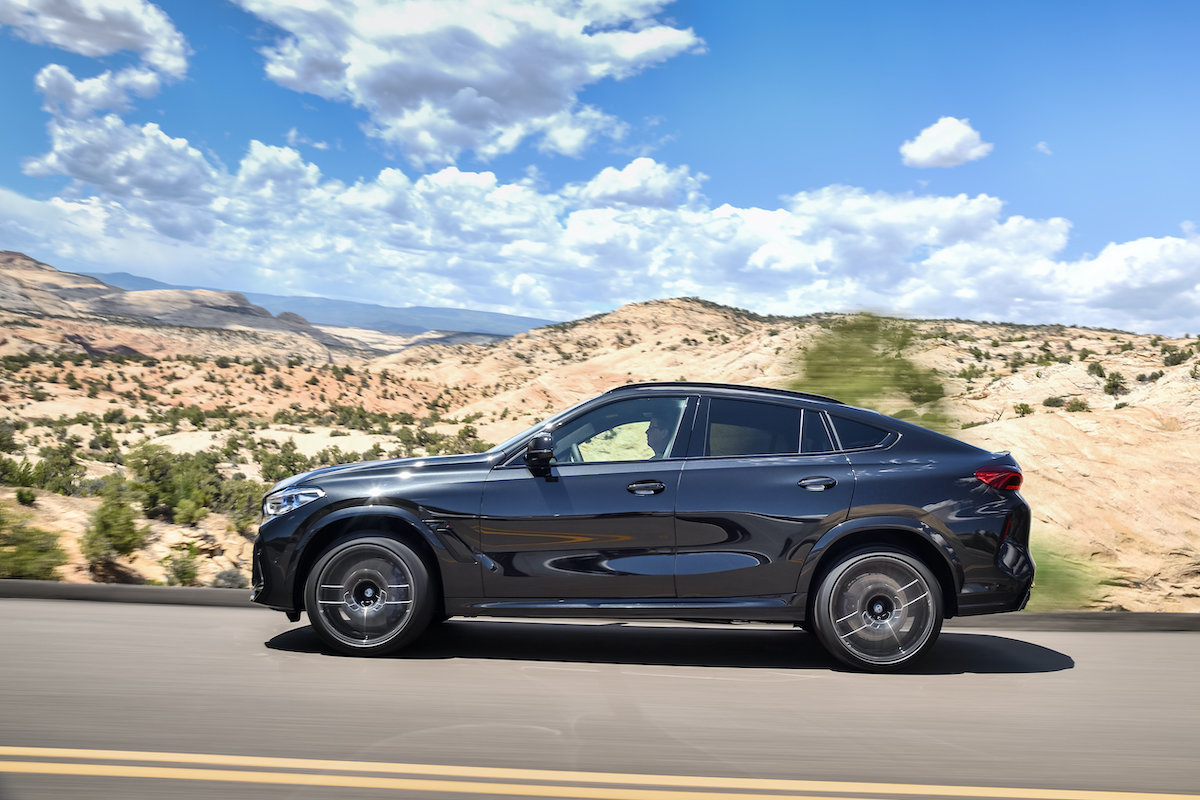
Haters are going to hate, but for everyone who doesn’t like - or understand the appeal of - the BMW X6, there are plenty of others who find it desirable, and, crucially, who have bought one. So much so, the X6 hasn’t just endured, but actually flourished. It's now in its third generation, and selling very well indeed, for a car that even BMW itself admits it took a bit of a gamble on. Indeed, the X6 has proved so successful that BMW took the formula and applied it further down its range, creating the X4 out of the X3, while the majority of its premium rivals all now offer alternatives, with the Mercedes-Benz GLE Coupe (and Mercedes-AMG GLE), Audi Q8 and Porsche Cayenne Coupe all pinching BMW’s idea to create more dramatically styled - if slightly less practical - spin-offs from their conventional SUV models.
How practical is it?
The Coupe SUV formula is fairly simple, too, the X6 is based heavily on its BMW X5 relation, only where the X5 has a large boxy rear end to accommodate lots of luggage and give plenty of rear headroom, the X6 sees its roofline taper from behind the front seats. That give it its coupe-like profile, albeit one situated on an elevated, high-riding SUV platform. An odd mix, perhaps, but one that’s undoubtedly worked, with people evidently more than happy to put up with the compromises the X6 brings over the X5 for its more striking styling outside. Practicality aside, the interior is all but identical, from the dashboard layout, the steering wheel, the touchscreen and iDrive infotainment system, through to the seats and trim levels.
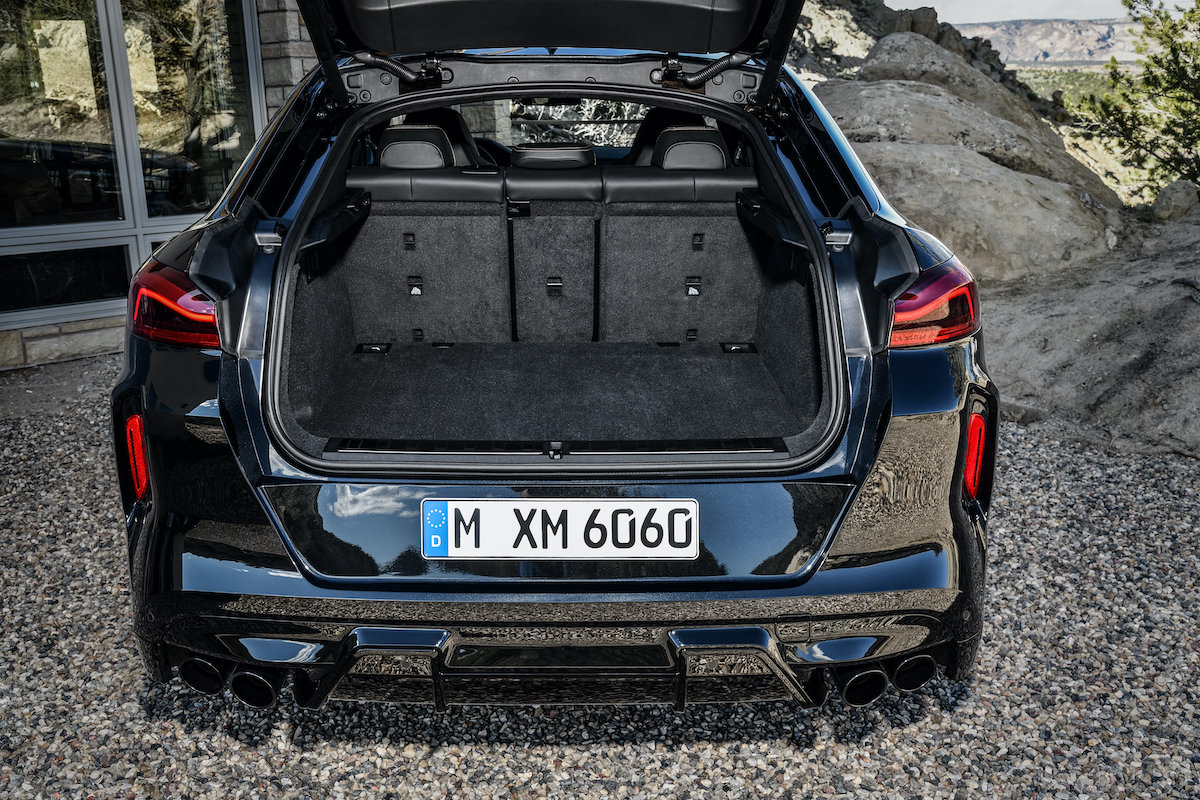
Choice isn’t a bad thing, though, and not every SUV buyer wants to tow a horsebox and has a family to accommodate in the back seats. Even if they do, the X6 is adept at either role, indeed, the boot is still sizeable at 580 litres, or as much as 1,530 litres if you fold its rear seats.

What's it like to drive?
It’s among the more enjoyable, sporty SUVs to drive, too, with taut suspension and adjustable drive modes, with air suspension for the top models. Despite BMW's passion for rear-wheel drive, all X6s are four-wheel drive – xDrive in BMW speak – while even the lowliest engine in the line-up is capable of excellent performance, especially given the size and not inconsiderable weight of the X6.
The X6 M50i might be the range-topping performance model with its ability to reach 62mph in 4.3 seconds, but no X6 can be described as slow. Indeed, the ‘slowest’ is the X6 xDrive30d, which takes 6.1 seconds to reach 62mph, which, to put in context, is 0.3 seconds quicker than that bastion of hot-hatch performance, the Volkswagen Golf GTI. The X6 xDrive40i takes 5.7 seconds and the X6 xDrive40d manages it in 5.5 seconds. It’s a case of quick, quicker and quickest, then, with all able to offer sparkling performance.

Technology, equipment & infotainment
The range starts from around £60,000, but that is before you’ve dipped into the extensive and expensive options list, as you inevitably will. Trim levels start with Sport, with M Sport above that, while BMW’s M division offers the range-topping M50i with a twin-turbo 4.4-litre V8 petrol with 523bhp. The xDrive40i with 328bhp is the other petrol choice, while a pair of turbodiesels badged xDrive30d and xDrive40d are also available.
The diesels are 282bhp and 335bhp, respectively, with both being versions of BMW’s impressive 3.0-litre straight-six turbodiesel. All are all-wheel-drive and come with an eight-speed automatic gearbox.
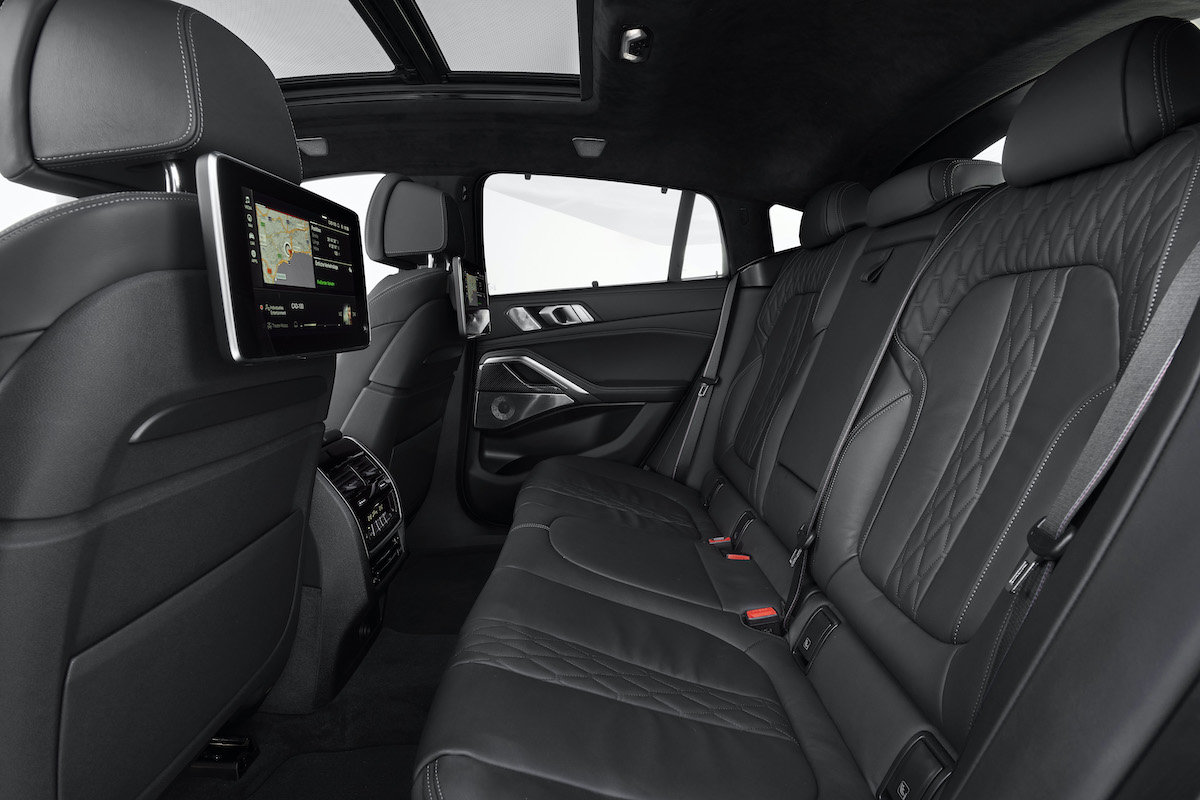
Despite being the lowliest model, Sport trim still comes with standard equipment including leather upholstery, powered and heated front seats, a powered tailgate, automatic lights and wipers, a sophisticated parking assistant and the full range of infotainment functionality including Apple Carplay and Android Auto.
BMW X6 running costs
If running costs really are a concern then you’re looking at the wrong vehicle. Any X6 is expensive to buy, and run, but the likelihood is you know that already. The cheapest to buy will, unsurprisingly, cost you the least to run, with the X6 xDrive30d Sport being the entry point to the range, and offering the best fuel economy and emissions; 39.2mpg to 42.8mpg, depending on wheel options. Bigger wheels on all increase the running costs in relation to emissions, so you need to weigh up whether you’re prepared to put up with the extra CO2 emissions that come with the 20- and 22-inch optional wheels.
If you want near-M50i levels of performance, then the xDrive40d is a fine choice, it dropping the possible mpg compared with its xDrive30d relation by 3-4mpg, but it still being more palatable than the low-to-mid-20mpg you’ll get with the range-topping M model. All need a few options to make your X6 as good as it can be, so expect to spend a good 10-15% more than the list price when buying it.
Insurance on all will be costly, with all but the diesels being the highest grouping of 50, those diesels being group 49. All come with a three-year warranty as standard, with the opportunity to extend that further for an additional payment. Servicing can be done via BMW’s pay-monthly service plan, it costing £30 a month (for 36 months) and covers two services. Additional running costs associated with the X6 include subscription charges for things like BMW Apps, Connected Music and lots more under BMW’s Connected Drive services, these being free for the first three years of ownership.
The biggest cost for owners will be depreciation, with it accounting for a sizeable chunk of the running costs. That’s even more true of the highest price, highest performance models, with these not retaining their value as well as the bigger volume models. The additional fuel and servicing costs on things like the M50i model will also be far more punitive than those for an xDrive30d, but buyers of these range-topping models will be well aware of that.

BMW X6 reliability
At the time of writing, the new X6 is only around 12 months old, so there’s very little detail of any common faults, if indeed there are any at all. With new models there are usually some teething issues, and owner surveys suggest around one in four owners have required some warranty work doing on their X6 within the first year.
BMW might be a premium brand, but it’s a volume seller these days, too, and there’s evidence of the dealers slipping in regard to customer service. Indeed, in recent surveys BMW has scored poorly for owner satisfaction, being ranked in the bottom third of manufacturers. If there’s one glimmering hope it’s higher – only just - than its key rival Mercedes-Benz, but behind Audi. Reliability surveys are very open to interpretation, though, with many BMW owners delighted with their cars, their reliability, and the service they get from the dealers.
- The M division X6 M50i might be the rapid, range-topping model in the line-up, but when the X6 was introduced in its third iteration in 2019 there was a diesel engine wearing an M badge, too, and not just denoting the M Sport trim. The X6 M50d was BMW’s flagship performance turbodiesel, using a version of BMW’s venerable 3.0-litre six-cylinder engine, but featuring no fewer than four turbochargers. The result was 394bhp and huge torque, giving it mighty, any-rev response. Despite this, the flagship turbodiesel model was quietly discontinued after only a short run to mid-2020. The dropping of that diesel might have something to do with the fact that the X6 range is anticipated to feature a plug-in model soon. BMW is rapidly electrifying all its models, and, given the X6’s close X5 relation is offered in xDrive45e form, with a petrol engine mated to an electric motor for a combined output of 389bhp, it’s not such a leap to expect it to feature in the X6. A plug-in X6 would give an electric-only range of around 50-54 miles, and, possibly, silence some of the X6 critics.
- The BMW X6 was a pioneer in the coupe/SUV class. The formula proved to be so successful that it was adopted not only by BMW's rivals from Mercedes and Audi, but also mainstream car brands including Renault.
- There might not be a proper hybrid in the line-up yet, but all except the X6 M50i come with mild hybrid technology. In the X6, that means an 11hp electric motor that works as a helper to fill in any gaps in the engine’s powerband, as well as acting as an advanced 48-volt start-stop system. With that mild hybrid assisting the engine, it helps reduce emissions and improve economy, too, but, regardless, no X6 powertrain is particularly parsimonious.
- The one to reach for: If you want an X6 but you’re stretching yourself to buy it, then the base Sport trim in xDrive30d form is the one of the X6 models to go for. It’s the cheapest at just over £62,000 as a new car, and will also be the most economical to run, with an official combined consumption figure of between 39.2 and 42.8 mpg. With the lowest CO2 emissions of the range, it’ll be less expensive on tax, too.
- The monster: Nobody really needs an X6 M50i, but that doesn’t mean you’ll not want one. With its 4.4-litre turbocharged V8 it’s got the performance to shock sports and supercars, and has dynamic capability to match. It looks pretty menacing, too, BMW going to town with the more overt styling that befits its extreme performance. If you’ve a garage full of Ferraris, Porsches and suchlike, and want your practical, daily driver to offer much the same performance, then the X6 M50i will do exactly that.
- The all-rounder: That X6 M50i might be very fast, but it’s got a sizeable drinking habit. If you want most of that performance, but without so many stops to fill up, then the X6 xDrive40d is the most compelling all-rounder. It’ll reach 62mph in 5.5 seconds, which is quick enough for anyone, yet it’ll sip fuel – in X6 terms at least – at a rate of 36.2-38.7mpg so long as you’re not in a rush all the time. M Sport trim adds more assertive styling over Sport, so that’s the one to have.
- For the go-fast, fashionable farmer: All X6s are four-wheel drive, but here it’s more of an on-road performance element, than an off-road aid. You can change that, with the optional xOffroad Package option, which costs around £2,600. Do that and you get four selectable off-road modes that adapt the X6’s four-wheel drive system as well as a mechanical differential lock for better ability on sand, rocks, gravel or snow.

