BMW i8 Review (2014-2020)
BMW i8 cars for sale
4.0
Expert review
Pros
The hybrid i8 is greener than most sports cars
Futuristic looks still turn heads, even after many years on the road
Cons
Not as thrilling to drive as an Audi R8 or Porsche 911
Short of storage space
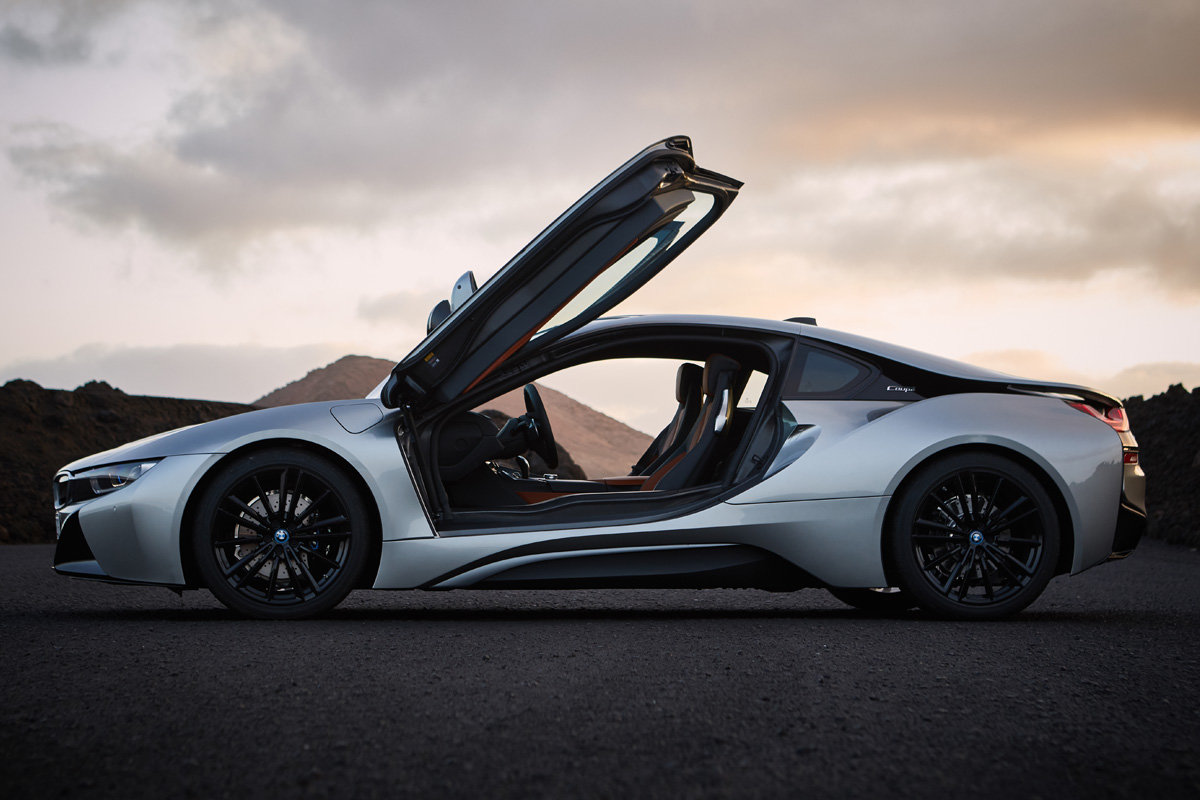
Awkward dihedral doors

The CarGurus verdict
The BMW i8 exists effectively in a class of one and there’s very little that’s comparable to it. A similarly priced Porsche 911 is far more involving to drive, for example, but it doesn’t offer the same hybrid capabilities or show-stopping looks.
A pure electric Tesla is perhaps the more appropriate comparison, but both the Model S and Model 3 are heavier and less exotic than the BMW. Their reliance on pure electric power can also pose problems for some – and, although they are tremendously quick, they do not offer a sports car-like experience.
Consequently, if you like the idea and looks of the i8, you’ll probably love owning one. It’s a compelling car to live with, gratifying to drive, comfortable and affordable to run. Practicality can be an issue, particularly with regards to its doors, but its foibles are often outweighed by its capabilities and appealing features such as its silent all-electric mode.
What is the BMW i8?
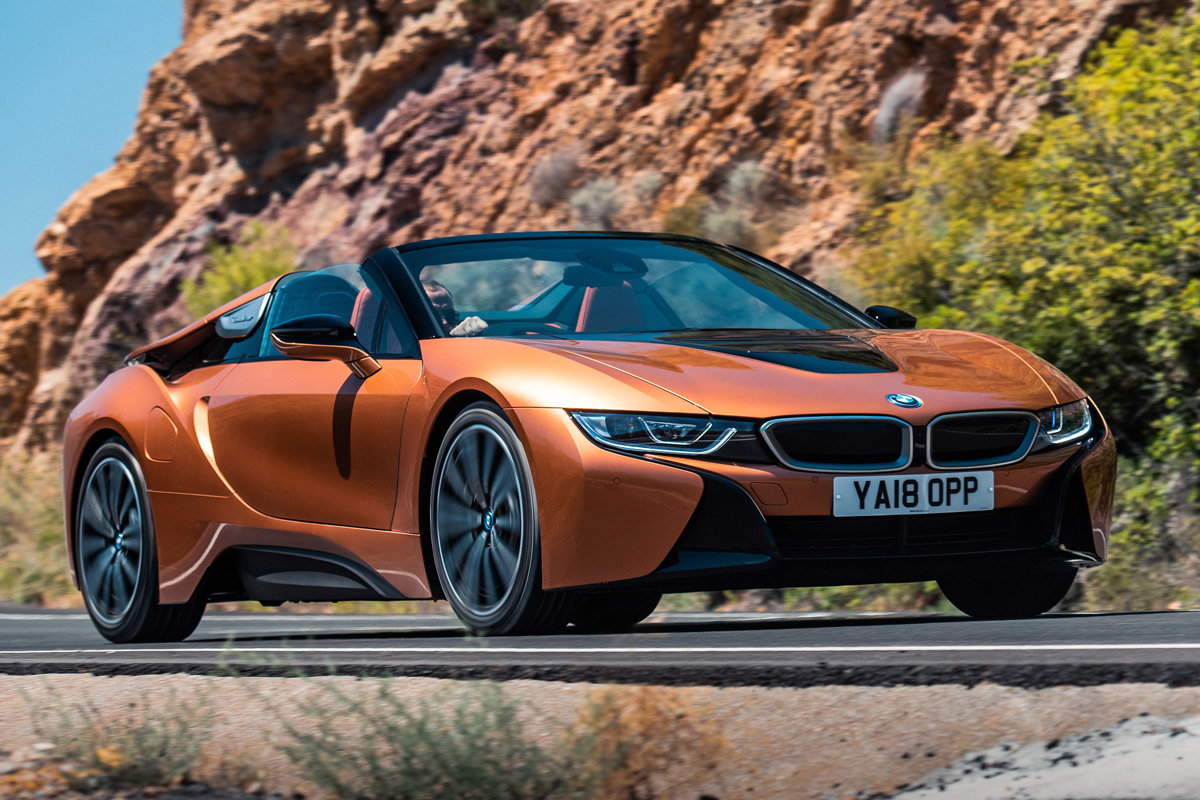
The BMW i8 is a futuristic-looking hybrid sports car that even several years after its launch in 2014 is guaranteed to stop people in their tracks. There’s more to the BMW than just its distinctive styling, however; it offers a forward-looking take on performance motoring, one which considers sustainability and efficiency, and it was also the first production plug-in hybrid from BMW.
When it was unveiled, its pricing was similar to alternatives such as the Porsche 911 and Audi R8. That said, although it was of a similar size and cost, it really couldn’t be directly compared with conventional competitors. Countless elements set it apart, ranging from its hybrid system and pure electric mode through to its advanced and lightweight construction, which included a carbon-fibre reinforced plastic (CFRP) passenger cell.
How practical is it?
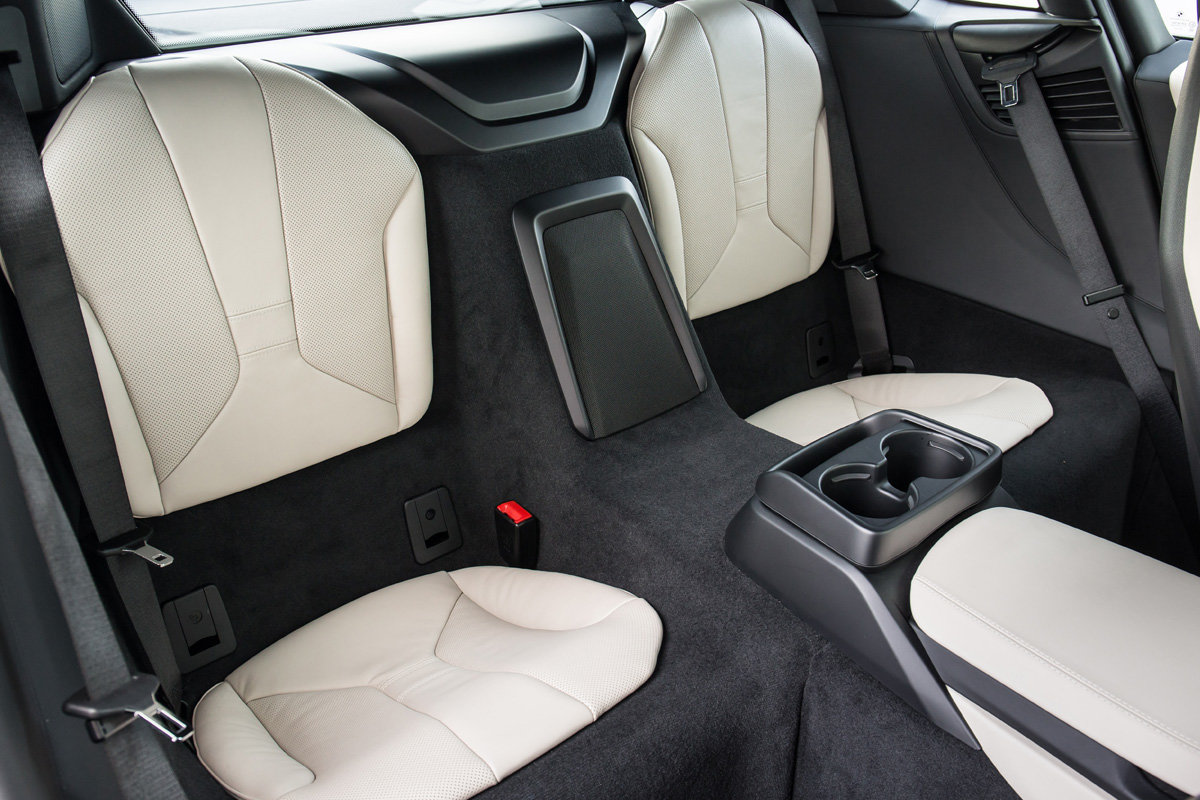
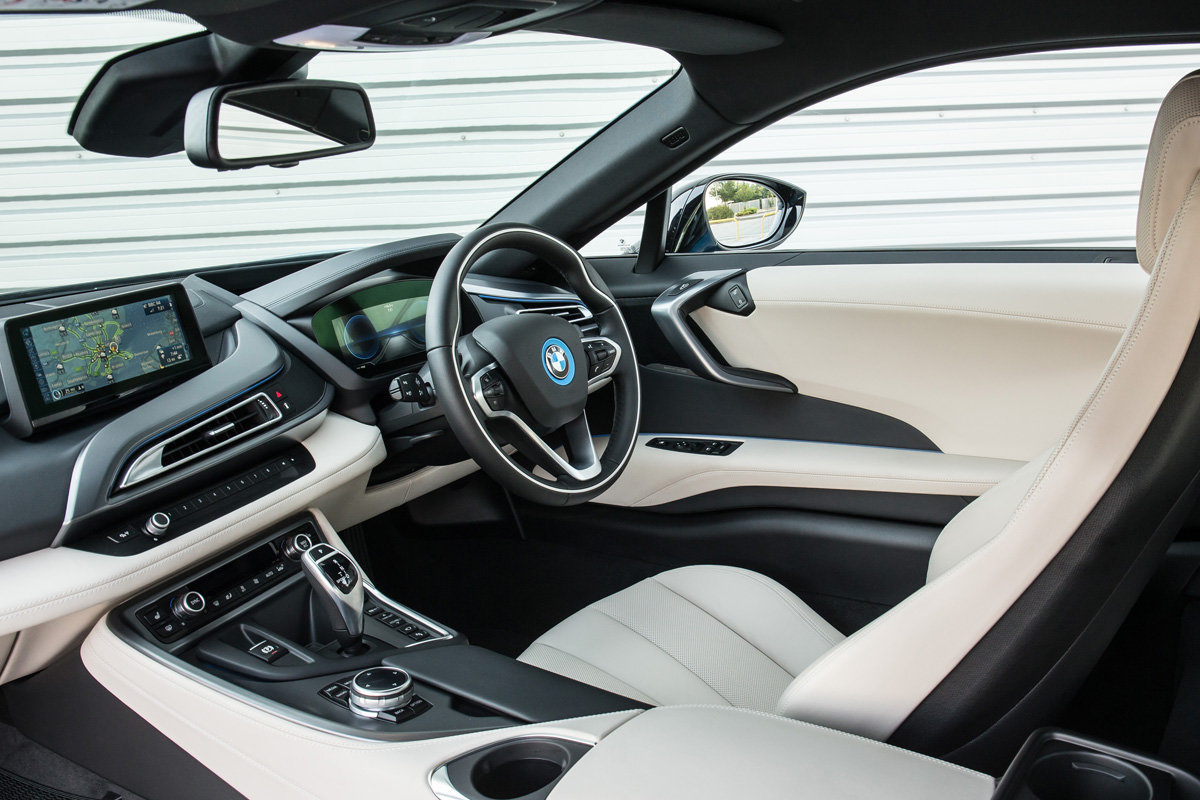
The i8 works very well as a grand tourer, thanks to its decent equipment levels, refined cabin and supportive seats.
It’s admittedly not the most practical, in part due to its tiny 154-litre boot, At least the rear seats can serve as additional storage space (and anyone larger than young children won't want to use them as seats for any extended length of time). Unless, that is, you opt for the Roadster, which has no rear seats and an even smaller boot (which offers just 88 litres of space).
What's it like to drive?
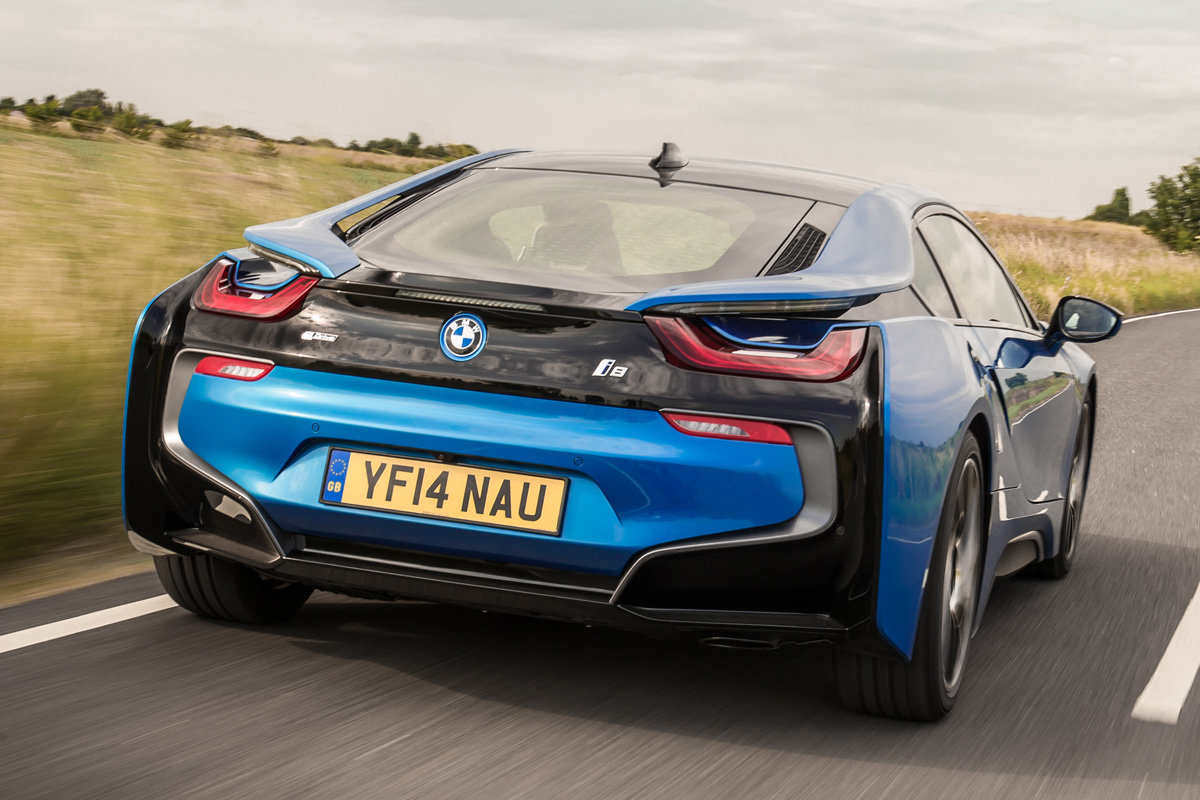
While the BMW is unquestionably a quick car, it doesn’t offer the same outright driving thrills found in conventional sports or supercars. Its steering is light, the braking system occasionally hard to judge and the interplay and delivery of its power sources sometimes unpredictable. When not being pushed, it’s a delight to drive and easy to enjoy; when driven harder, its weak points become more obvious.
Technology, equipment & infotainment
Power for the i8 comes from two distinct sources. The rear wheels are driven by a three-cylinder, 1.5-litre, turbocharged petrol engine, coupled to a conventional six-speed automatic transmission. The front wheels, however, are powered by an electric motor through a two-speed gearbox. The initial combined output was a heady 362hp, which was enough to propel the 1.6-tonne i8 from 0-62mph in just 4.4 seconds. The hybrid system also gave claimed emissions of just 49g/km of CO2 and an official, albeit unrealistic, average fuel economy figure of 134.5mpg.
The car itself might have been complex, but the line-up certainly wasn’t. Initially, the BMW i8 range consisted of the Coupe and customers only had to pick from a selection of colours, trims and options. Key upgrades on offer included a Harman/Kardon audio system, keyless entry, a driving assistant technology pack and a choice of two 20-inch alloy wheel designs.
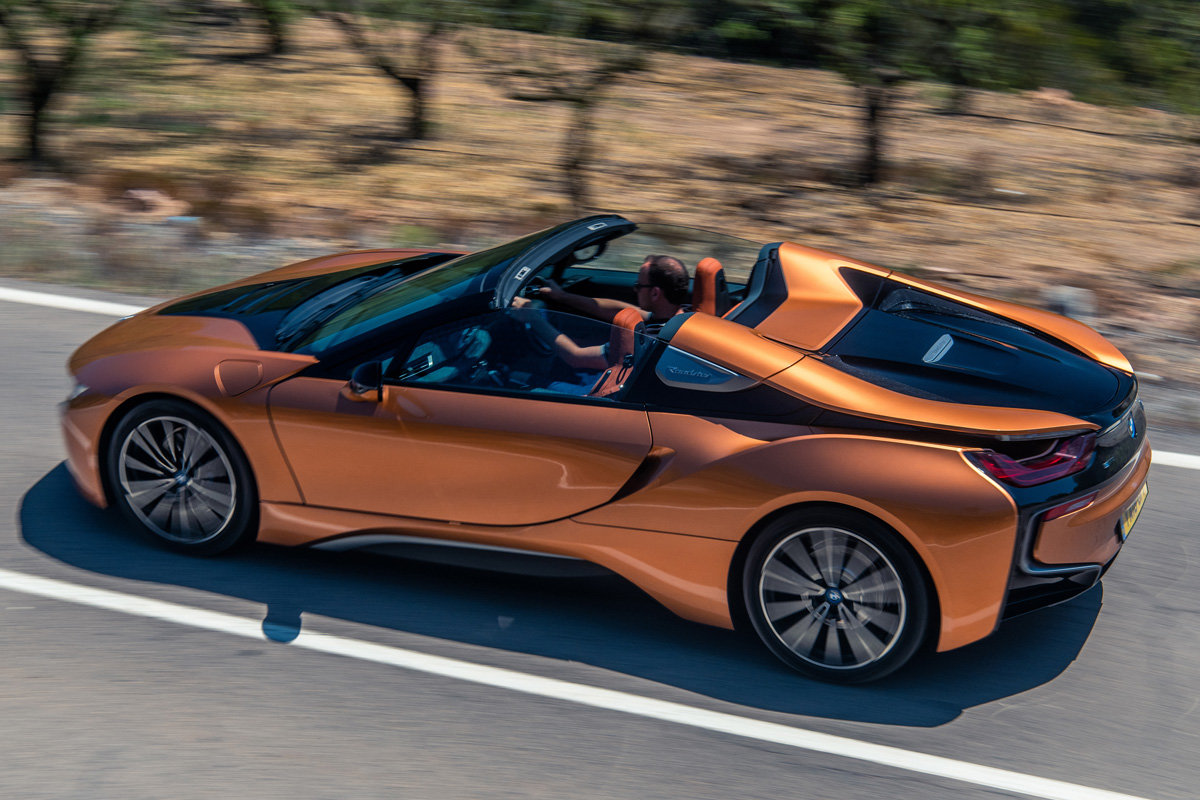
A Roadster version, with a neat powered drop top-roof, was introduced in 2018, and the Coupe was also updated at the same time. Both featured a larger battery to boost the all-electric range, while a more powerful electric motor upped the combined output to 374hp. In all versions, the three-cylinder engine is endearing and offers adequate punch, while the silent all-electric mode is ideal for around-town driving and quiet early-morning departures.
If you find the technological aspects, efficiency and design of the BMW i8 appealing, then it warrants a place on your shortlist. There is very little like it, for one thing, and if you’re seeking something evocative and attention-grabbing, and outright performance and dynamics aren’t essential, it could be just the ticket.
BMW i8 running costs
Thanks to its hybrid system and impressive efficiency credentials, the BMW i8 offers far lower running costs than many conventional sports cars. In its earliest form, the i8 emitted just 49g/km of CO2 – which, in the Vehicle Excise Duty (VED) banding of the time, meant it cost nothing to tax. It was also exempt from congestion charging and sat in a low Benefit-in-Kind (BIK) band, which made it particularly appealing to business users who wanted something more upmarket.
As the bandings and emissions testing systems changed, the cost of taxing the i8 for private buyers increased. It was still financially advantageous for business users, however, primarily due to its still-low BIK band.
Where the i8 gained a real edge, and where it still has an advantage today, is on the fuel economy front. BMW initially claimed a heady average of 134.5mpg, or 128.4mpg (on the revised WLTP test). This, unsurprisingly, wasn’t feasible in the real world; those regularly doing motorway trips and not charging it all the time would average in the region of 35mpg but, with a little care, in the region of 50mpg isn’t difficult to attain, which is impressive considering the performance on offer. Using its all-electric mode regularly will drive costs down, especially if most trips are short.
A standard five or three-year service package was also included on new i8s, which further helped control costs. For a car outside the window of that package, comparatively inexpensive servicing is only required every year or 12,000 miles, so it’s not like you’ll need to visit the dealer overly often. There are other elements of the i8 that help minimise costs too; for example, it uses narrow tyres that often cost less than the wider tyres used by other sports cars.
Like most high-priced cars, however, you need to consider depreciation in mind as i8s will lose a lot of money in a comparatively short time, which racks the overall costs up considerably. If minimising the total cost is a major consideration, it’s best going for a used example that’s a few years old.
BMW i8 reliability
Although complex, the BMW i8 is proving to be a reliable car. Major problems are rare, so it’s really just a case of checking any prospective example over carefully and making sure every option and feature works in the process. Fuel flaps can be problematic, so ensure that they open and close securely.
Every i8 also came with a three-year, unlimited-mileage warranty. The high-voltage battery in the i8 is also guaranteed for eight years or 100,000 miles, which should quell any fears of a costly battery replacement. Owners can buy extended BMW warranties, so if you intend to keep the car then you might be able to retain the peace of mind offered by an official warranty.
Buying a used approved i8 is also a good way to help avoid grief, as each car offered by BMW comes with a 12-month, unlimited-mileage warranty, even if it’s an older example. Although big issues are uncommon, it’s worth bearing in mind that any i8 was a very expensive car when new, and consequently any significant issues will cost a lot to fix, so some kind of warranty is essential unless you have some money set aside.
It’s also worth double-checking that your local or preferred dealer or specialist is equipped to service or repair i8s, due to their uncommon and specialised nature.
Watch out for cars fitted with the optional Laser Light system which, as the name suggests, uses lasers as a light source – but only for the high beam. They are more efficient and offer a longer range, but they will also cost a terrific amount to replace if they fail.
– Standard equipment at launch included adaptive LED headlights, cruise control with a braking function and a head-up display, as well as front and rear parking sensors, a DAB radio, Bluetooth connectivity and satnav. A small selection of options were also offered, including a technology pack that included a surround-view camera, and buyers could pick from four main body colours: Crystal White, Protonic Blue, Ionic Silver and Sophisto Grey. These were accented with a choice of either Frozen Grey or BMW i Blue, which gave i8 buyers an additional degree of personalisation. – The dihedral doors of the i8 add a real sense of theatre to the experience, as they evoke the feel of myriad supercars. However, they can also be a real problem on the practicality front, because they swing both upwards and outwards as you open them. Park close to another car or a wall and, as a result, you may not be able to open the door enough to get out. This can be particularly problematic when you return to the car only to find that someone has parked too close to you, preventing you from getting in. It can also be difficult to judge where the edge of the door is when opening it, so you have to take your time to avoid inadvertently hitting things. – Despite its hybrid system and efficiency credentials, you might find yourself refilling the i8 quite often. This is because it has a small 42-litre fuel tank, which is about the same size as that found in a small hatchback. It shouldn’t prove much of a problem if you can plug the BMW in to an electric charger regularly but, if you’re regularly doing long trips and can’t plug it in, you might find yourself stopping for fuel more often than expected. On electric power alone, expect an i8 to cover some 10-20 miles, depending on model year, weather and driving conditions.
- If you want the most thrilling experience: The Roadster adds a degree of top-down excitement and involvement to the i8, making it ideal for those seeking maximum enjoyment. The only downside is that you lose the rear seats of the Coupe, and some storage space, so the drop-top is even less practical than the regular model.
- If you want the most affordable option: The i8 range is pleasingly straightforward but, if you want to keep costs to a minimum, you’ll want to go for a base Coupe – as it’s the least expensive model in the range. Do bear in mind that i8s depreciate quickly, however, so if overall costs are critical then perhaps a used example would be a better option.
- If you’re an enthusiast: If you’re seeking the highest performance and every fraction of a second is crucial, you should opt for the i8 Coupe. It’s 60kg lighter than the Roadster, as it doesn’t have the additional weight of the folding roof, which will help both its cornering and straight-line performance. BMW claims the Coupe is only 0.2 seconds quicker to 62mph than the Roadster, however, so the difference will effectively be moot in the real world.
- If you want to stand out: The i8 will always grab the attention of passers-by, as it’s not a common sight. However, if you’re looking for something a bit more collectable and distinctive, you could seek out one of the limited-edition Protonic Coupes. These limited-edition models were offered in black, yellow, red and silver – and the brighter colours, in particular, serve to make the i8 stand out even more.

