Citroen Grand C4 SpaceTourer Review (2018-present)
Citroen Grand C4 SpaceTourer cars for sale
3.0
Expert review
Pros
Lots of space
Very versatile seats
Smart interior
Cons
Not great to drive
Patchy reliability record
Ride can be unsettled
The CarGurus verdict
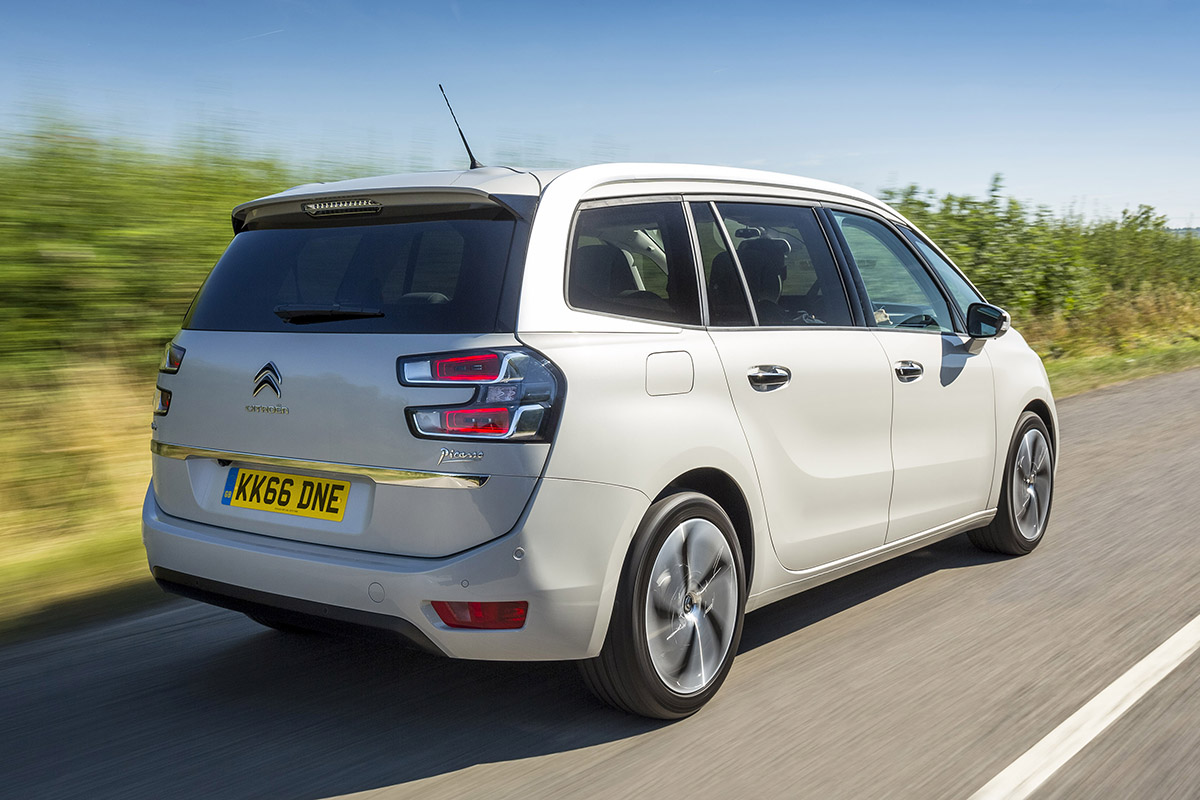
It’s hard to fault the Grand C4 SpaceTourer as far as practicality is concerned. This is one of the most versatile and family-friendly cars money can buy, whether you’re choosing one new or used.
And while it isn’t all that exciting to drive, it is at least comfortable, while the airy interior and relatively generous equipment list will keep your passengers happy.
The ownership experience might give you cause for grief, though, because while the Grand C4 SpaceTourer is reasonably affordable to run, its reliability record is disappointing, so you might find yourself taking more trips to the garage than you’d like. With that in mind, a more reliable alternative like a Kia Carens or Ford S-Max might be a better bet.
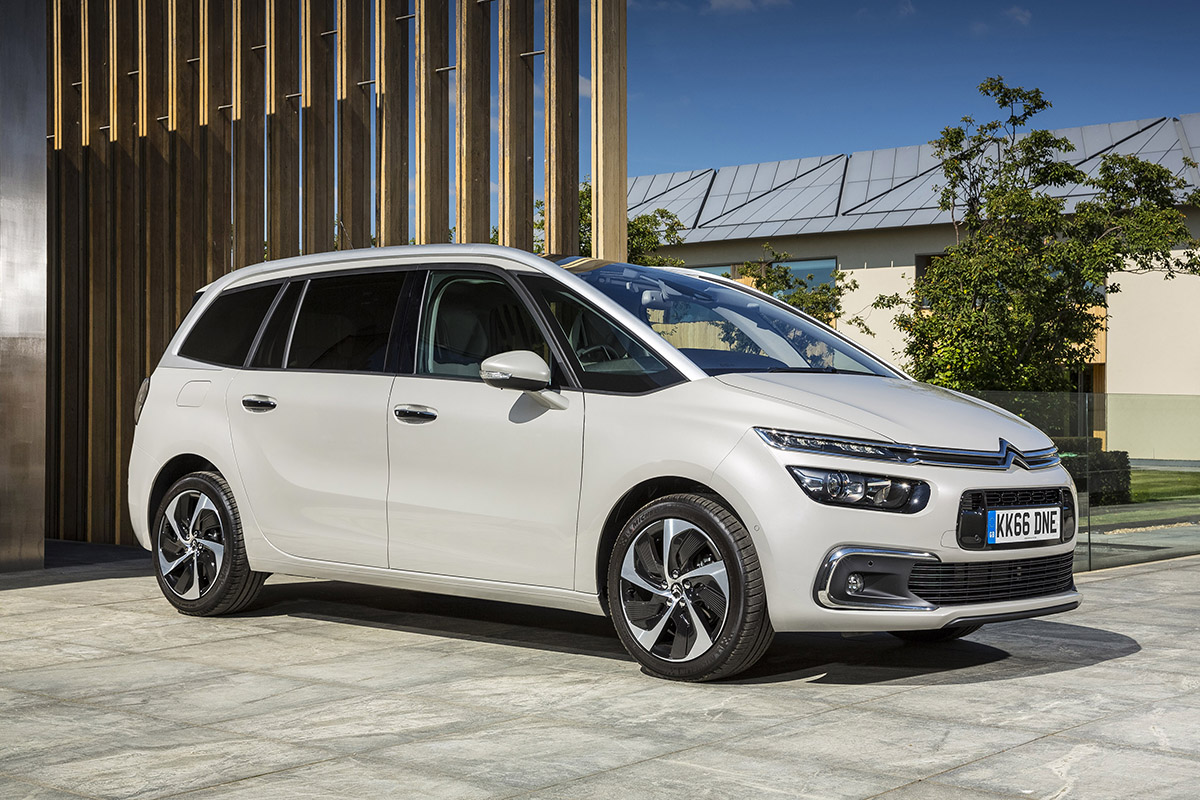
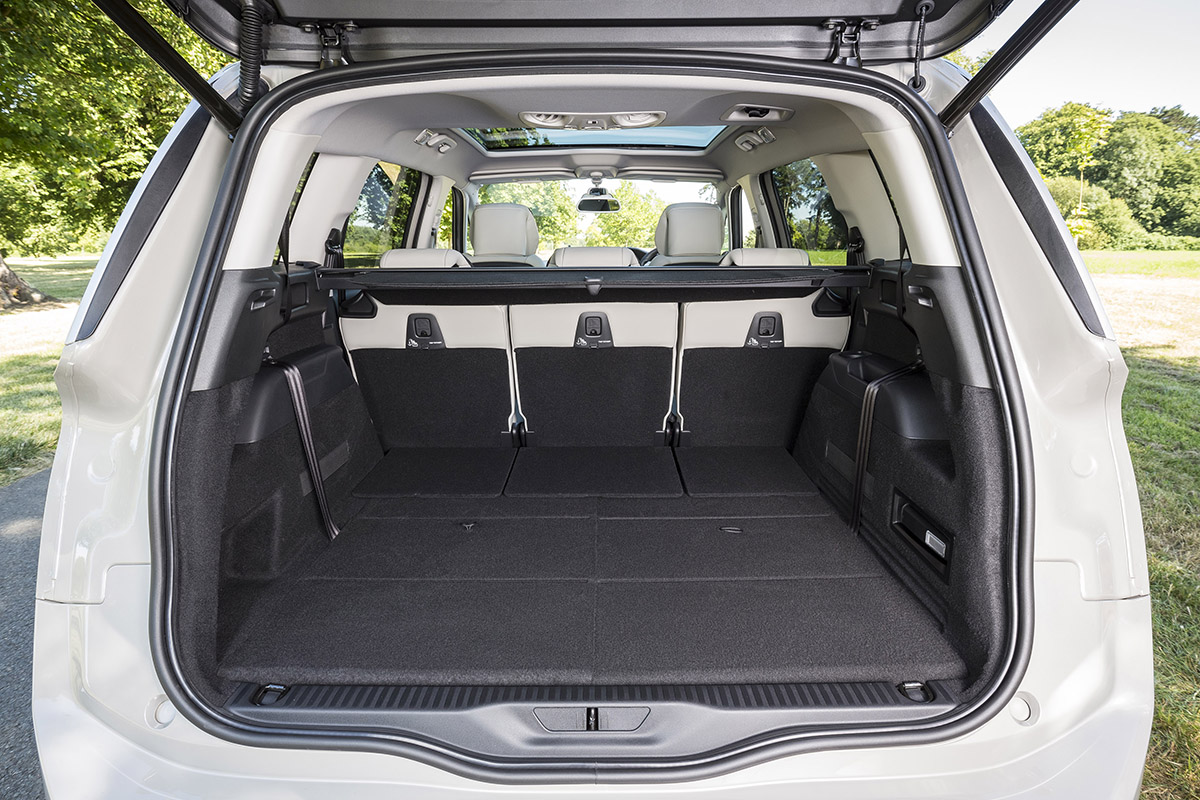
Indeed, with a wide variety of different configurations for its seven seats, it’s one of the most practical family cars there is. First, there’s the front passenger seat, which folds down flat to help you transport longer loads. Then there’s the middle row, which consists of three individual seats that fold, slide and recline, each with their own Isofix mounting points. In the back row, meanwhile, are two more seats, which can each be folded into the floor individually.
With this done, boot space behind that big hatchback is a whopping 632 litres, but this can be expanded by sliding all three middle-row seats forward to an even more enormous 793 litres. With all five rear seats folded down, meanwhile, a van-like 2,181 litres of space is available. That makes this one of the most practical new cars on the market.

Pretty underwhelming, to be honest, but then, what did you expect? The Grand C4 SpaceTourer is a seven-seater, not a sports car, so it should come as no surprise that it isn’t exactly the last word in dynamism.
The steering is accurate, but too light and lacking in feel, and the big, tall body leans over on its soft suspension if you try and corner in a spirited fashion. On the plus side, there’s plenty of grip, and the handling is free of vices, so it shouldn’t catch you out in an emergency.
The soft suspension means the ride is pretty comfortable, too, though the Grand C4 SpaceTourer isn’t perfect in this regard, and can get a little thumpy over poorly surfaced roads.
You only get a choice of two engines – a diesel and a petrol – and with either engine, you get a six-speed manual as standard, or can pay more to upgrade to an eight-speed ‘EAT8’ automatic. The petrol engine, a punchy little 1.2-litre three-cylinder turbo, is badged ‘PureTech 130’ and kicks out 129bhp. As it happens, and as you might gather from the 1.5-litre diesel’s ‘BlueHDi 130’ badging, its output is exactly the same. However, keep mind that because the diesel’s engine is heavier, it’s also slower, taking about a second more to complete the 0-62mph sprint.
Generally, the entire range of engines is pretty good, though, with enough muscle to haul the Grand C4 SpaceTourer along even when it’s fully loaded (though the diesel is slightly better than the petrol in this regard due to its greater mid-range muscle).
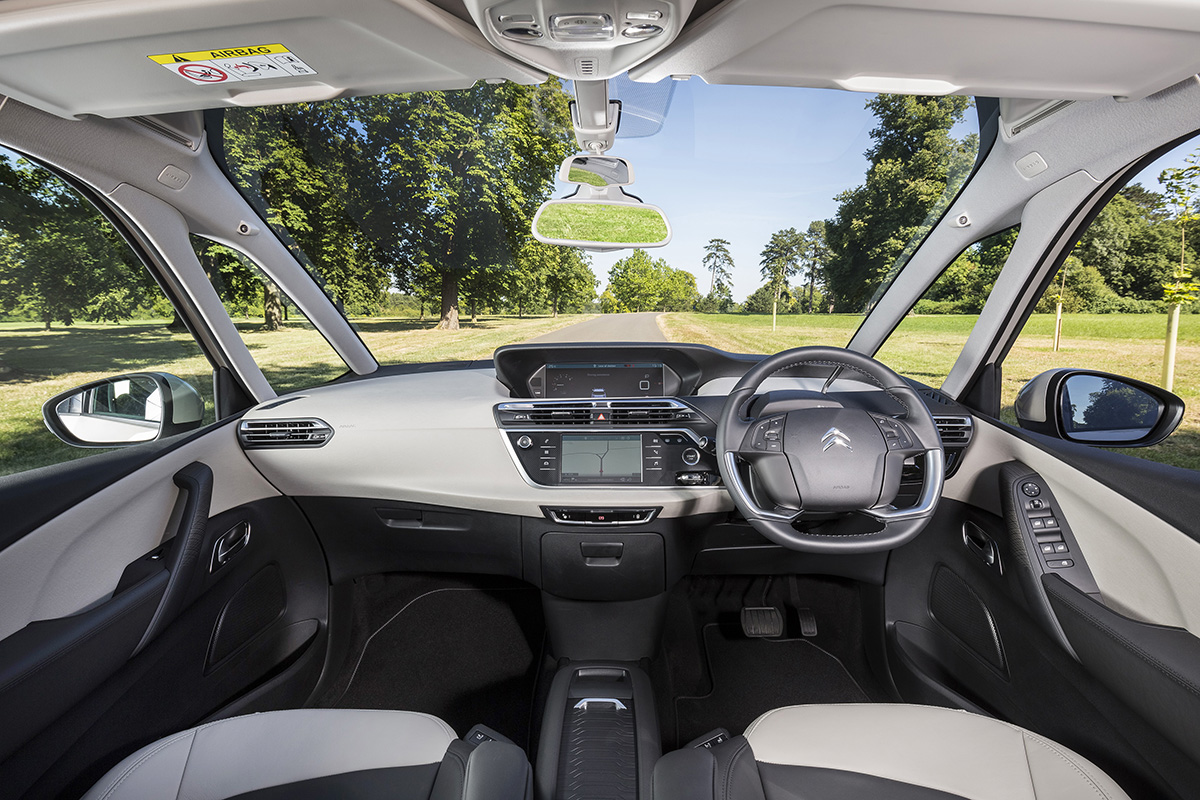
The Sense version of the Grand C4 SpaceTourer is pretty well equipped, given it’s an entry-level version, with cruise control, a reversing camera, parking sensors, dual-zone climate control, sat-nav, and both Apple Carplay and Android Auto coming as standard.
That said, if you opt to pay more for the top-spec Shine model, you don’t actually get an awful lot more for your money; while the powered tailgate, fold-down tray tables, panoramic glass roof and adaptive cruise control are nice to have, they aren’t exactly essentials.
What’s more, because the Grand C4 SpaceTourer is now an old design, some of the equipment you’d expect on a newer model simply isn’t available – for example, LED headlights. It is at least plusher inside than Citroen's other seven-seater, the Berlingo XL, however - and from the front seats, the view out is excellent.
Now let’s talk touchscreens – for the central touchscreen is just about the most frustrating part of the Grand C4 SpaceTourer. For starters, it looks quite dated – another by-product of the underlying car’s age. This is less annoying than its finicky, fiddly menus and its sluggish responses, which become all the more annoying when you realise just how much you have to use the screen – because most of the car’s functions are accessed through it, including the climate control. This means you have to find your way through the menus each time you want to adjust the temperature, or turn the fan up or down, which soon grows tiresome.
As you might expect, the diesel engine is by far the most efficient of the two that are available in the Grand C4 SpaceTourer. You should see somewhere between 50 and 55mpg from the BlueHDI model on average in real-world use, though be aware that if you choose the automatic version, you’ll see around 3mpg less than you will with the manual alternative.
Opting for the manual petrol engine instead will see your fuel consumption figures drop off to somewhere around 40mpg on average, or maybe just shy if you tend to do more driving in town. Once again, you can bank on a penalty of roughly 3mpg if you choose the automatic instead.
Citroen’s servicing costs aren’t quite as affordable as those of some rivals like Ford, but neither are they exorbitant. What’s more, Citroen dealers offer a menu servicing scheme, with discounted servicing and repairs at its dealers for cars that are three years old or more, which helps to keep costs down. Alternatively, you can opt for a service plan, which allows you to pay for your servicing on a fixed-price, monthly basis.
Both of the Grand C4 SpaceTourer’s engines use rubber timing belts, which need to be changed every few years so that they don’t degrade and break up, causing serious engine damage. The diesel engine’s belt should be changed after five years or 125,000 miles, whichever comes up soonest, while the petrol engine should go six years or 60,000 miles between changes.
Expect to pay upwards of £500 to have the belt changed, which is quite expensive compared with other manufacturers; keep in mind, too, that some of the C4 SpaceTourer’s rivals use metal timing chains instead of belts, and these shouldn’t need to be changed at all, eliminating one semi-regular (and very costly) bill.
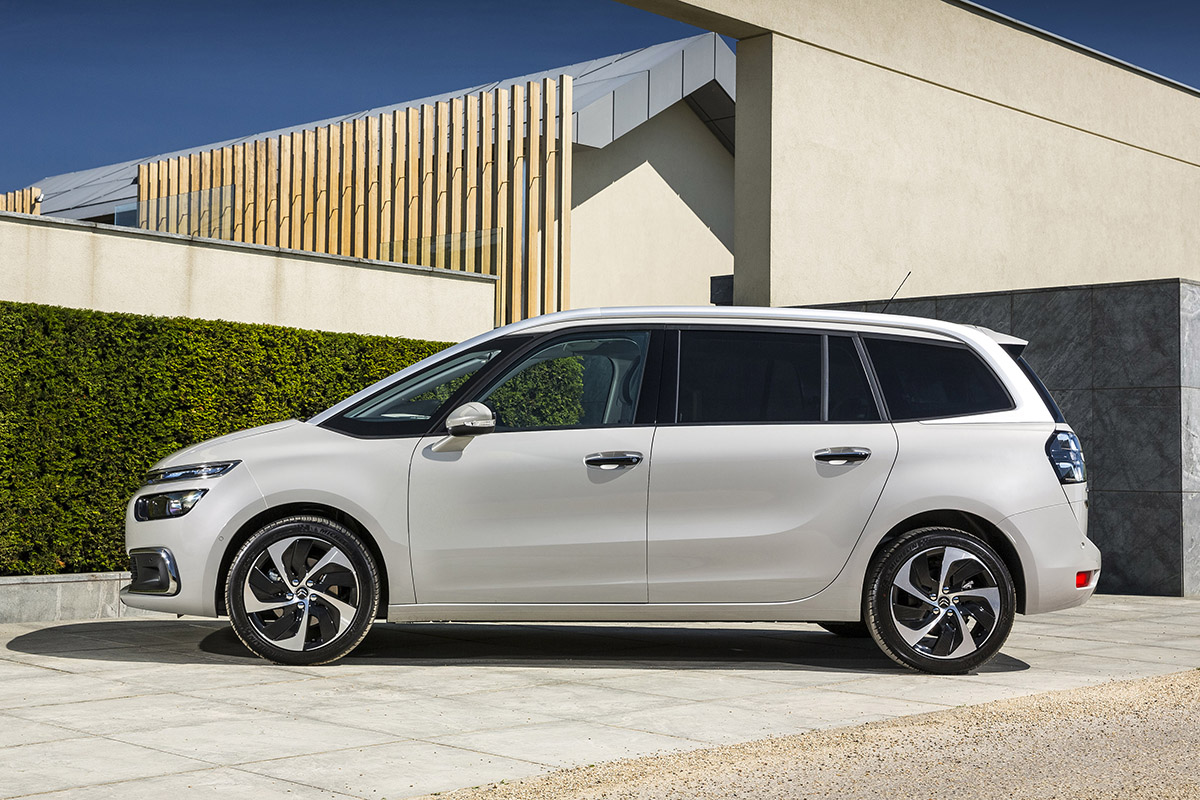
The Grand C4 SpaceTourer’s reliability record is somewhat less than stellar. In the latest What Car? Reliability Survey, it finished second from bottom in the MPV category, while in the preceding years, it’s finished either last or second-to-last too.
You only get a three-year, 60,000-mile warranty as standard, too, which is about the bare minimum you can get away with in the car industry these days. By comparison, the Kia Carens's seven-year warranty and the even longer guarantee you can now get on a used Toyota Verso are much more worthwhile.
Electrical glitches are the most common fault, with dashboard warning lights, erratic behaviour of the dash-top screen that displays the car’s speed and other driving information, freezing or buggy touchscreens, and lots more besides.
The SpaceTourer suffers from mechanical issues, too, though; fuel injectors and air-conditioning condensers are particular trouble spots. What’s more, its petrol PureTech engines have become associated with an issue whereby the timing belt disintegrates if it isn’t changed soon enough.
Because the belt runs through the engine oil to keep it lubricated, this means miniscule pieces of rubber are deposited within the oil, and then clog up the oil filter, or worse still, circulate through the engine and pump. For this reason, it’s imperative to ensure any Grand C4 SpaceTourer you buy has had its timing belt changed on time, if not earlier than specified to be on the safe side.
- The Grand C4 SpaceTourer is actually the third iteration of this car, which was launched as the Citroen Grand C4 Picasso way back in 2013. Back then, it was one of a huge number of MPVs on the market, and counted among its rivals the Renault Grand Scenic, the Vauxhall Zafira and the Ford Grand C-Max. All of these competitors have fallen by the wayside, but the Grand C4 Picasso soldiers on, having had two facelifts, the second of which came along with the new SpaceTourer name, to bring it into line with Citroen’s larger people carrier, simply known as the SpaceTourer.
- The Grand C4 SpaceTourer (and Grand C4 Picasso that predates it) is one of the rare cars that offers three individual seats complete with Isofix across its middle row. As such, it's a great option if you're a family with three kids in car seats.
- If you love the idea of the Grand C4 SpaceTourer but just don't need seven seats, fear not. Citroen also offers a five-seat model called the C4 SpaceTourer (minus the Grand). Another bonus of that model is its shorter and therefore easier to park.
Our choice would be the 1.5 BlueHDi 130 Sense. This gives you the diesel engine, which gives you better mid-range grunt (and therefore makes the Grand C4 SpaceTourer easier to drive when it’s fully loaded), and the entry-level trim, which still gets you lots of useful equipment.
If you don’t want a diesel, there’s no real harm in choosing the 1.2-litre petrol instead, and teaming it with the same specification. The only difference is that it might feel just a bit more breathless when driving uphill fully loaded.
If you want an automatic, though, we’d recommend sticking with the diesel. The gearbox is better suited to the diesel’s extra torque, and if you do need to drive fully loaded regularly, it’s less prone to kicking down and causing the engine to rev noisily than when attached to the petrol.


