DS DS 7 Crossback Review (2017-present)

CarGurus expert score
Pros and cons
What we like
Distinctive looking alternative to the SUV mainstream
Practical and roomy for people and luggage
Economical plug-in hybrids, if you recharge often
What to consider
Doesn't drive as well as a BMW X3
Remote and uninvolving steering
Firm ride on standard suspension
The CarGurus verdict
The DS 7 Crossback is not the best prestige SUV you can buy. As all-round talents, the Audi Q5, BMW X3, and Volvo XC60 all have the edge over the DS. However, for any Francophile seeking an alternative to the usual suspects, the DS 7 Crossback has much to recommend it. The design is bold, fresh, and exciting: most rivals are bland in comparison.
It may not be the sharpest SUV to drive, but it is practical, with plenty of room in the back and lots of luggage space. What's more, the DS 7 Crossback is packed with hi-tech driver aids and comes with the reassurance of a five-star safety rating from the experts at Euro NCAP.
The older petrol and diesel models make solid buys, but the e-Tense plug-in hybrids are the stars, matching excellent economy with hushed and rapid performance.
out of 5 expert review
French car makers have had their fingers burned with prestige models in the past. Trawl through any archive of car reviews and you'll be reminded that it's not enough to set a high price, cover the seats in leather, and expect buyers to desert Audi and Mercedes.
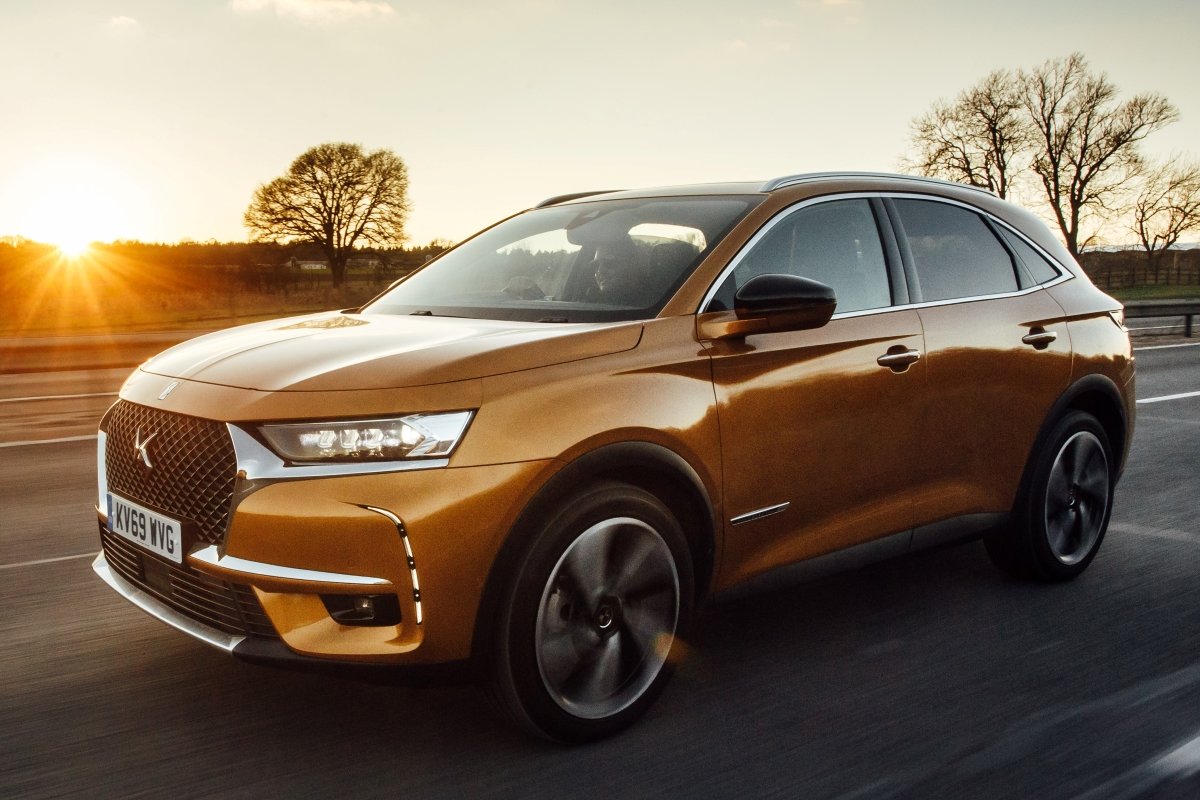
That's certainly not the approach DS has taken with the DS 7 Crossback. Both inside and out, the DS is distinctively different from its big-name German rivals. With its flamboyant styling, quirky cabin, and sophisticated touchscreen infotainment system, the DS 7 Crossback is distinctively French, and proud of it. In truth, that individuality is the main reason to consider a DS 7 Crossback over its more generic rivals, although it fares reasonably well in other respects too.
Practicality
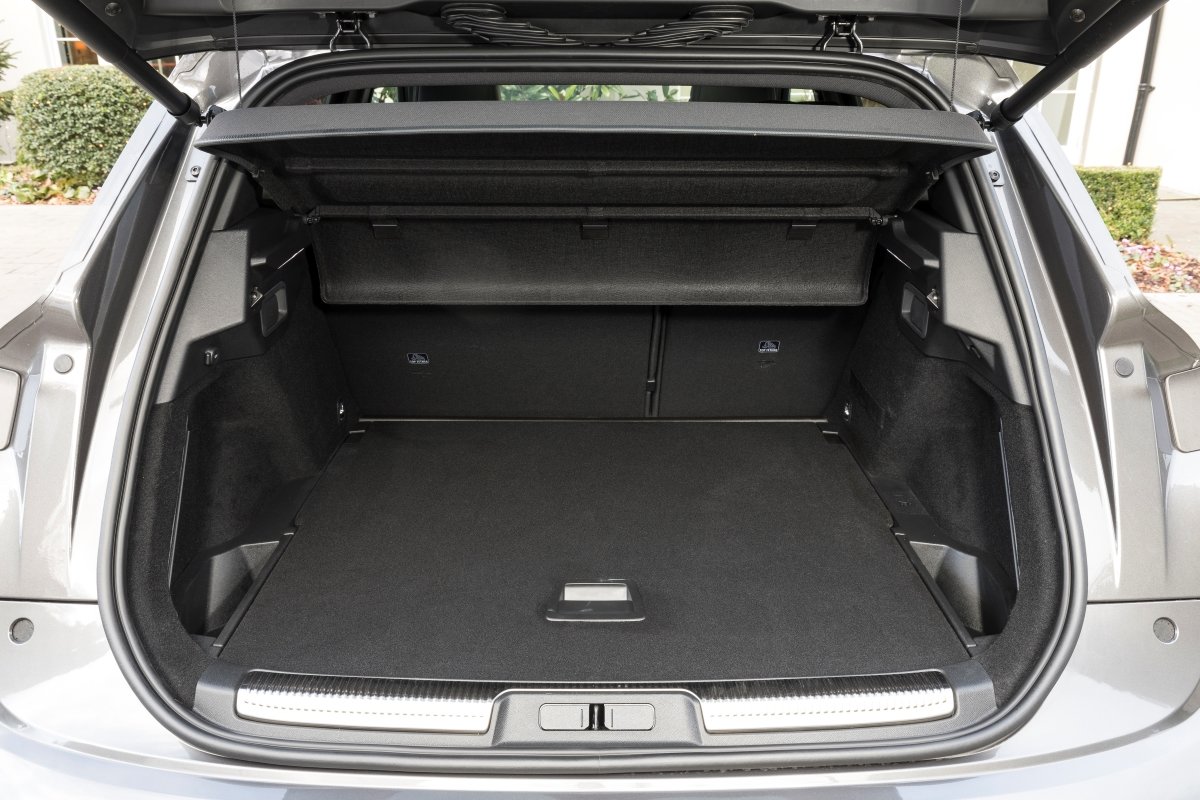
Family SUVs thrive on practicality, and it’s something that the DS 7 Crossback does quite well. There's a useful 555 litres of boot space with the rear seats upright. That compares with 550-610 litres for the Audi Q5, depending on the position of the rear seats. The Volvo XC60, meanwhile, has 505 litres for bags.
The same applies if you go for the plug-in hybrid E-Tense model. Unlike some manufacturers, DS has managed to package the batteries and motors so there's no loss of passenger or luggage space. That means every DS 7 Crossback has plenty of room, front and rear. Cars fitted with the panoramic sunroof are a little tight on headroom for very tall passengers, though. Another plus point is that there's no big hump in the middle of the floor, so the DS can comfortably seat three in the back.
Driving
The DS 7 Crossback handles competently, but it’s no firecracker, and neither is it as soothing to drive as you might expect from a large French car (the brand’s iconic namesake, the Citroën DS, is still considered to be one of the most comfortable cars ever made and it set the template for the large executive saloons that followed).
The steering is too remote and uninvolving, and the ride on the standard suspension is quite firm. High-spec cars with Active Scan suspension offer a more cushioned ride, but it’s good rather than exceptional by the standards of the class. You also notice the extra weight on the E-Tense hybrid models that now make up the majority of the range.
One caveat here is that DS has recently treated the car to a significant refresh, with the new models expected on the road from autumn 2022. We’ve yet to sample these revised cars, although there’s nothing to suggest that they should handle radically differently.
Where things have changed is the engine line up, with no less than three different E-Tense petrol plug-in hybrid options, each named after their respective power outputs of 225, 300 and 360 PS (222, 296 and 355bhp). The new E-Tense 4X4 360 model is the most powerful DS 7 Crossback to date, and it promises strong performance.
There’s also the entry-level BlueHDi 130 diesel engine carried over from the old line up, although it’s no longer possible to buy a new non-hybrid petrol. Delve into the used market and you’ll also find a higher output 178bhp diesel, along with 128bhp, 178bhp and 222bhp PureTech petrols.
Most are front-wheel drive only, so if you want any off-road capability you’ll need to go for the E-Tense 4X4 300 or E-Tense 4X4 360 versions. Similarly, most come with automatic transmission as standard – only the entry-level diesel was offered with the option of a manual gearbox.
Tech and equipment
Spec levels range from the well equipped to the downright luxurious, with Alcantara or leather seats on all but the most basic models. At the time of writing, DS had dropped the entry-level Elegance trim, leaving the specifications to rise through Performance Line, Performance Line +, Rivoli and Opera. The latter two are roughly equivalent to the Prestige and Ultra Prestige models offered previously.
An interesting feature to watch out for is the Active Scan suspension. Standard on the Prestige and Ultra Prestige specifications, it uses a stereoscopic camera to read the Tarmac ahead, identifying bumps in the road. Combining this information with a range of other sensor data, such as speed and steering angle, the suspension dampers are set to deal with lumps and bumps with the minimum of disturbance. At least that's the theory. The system mostly works well, but it can be caught out at times and the ride can be a little floaty.
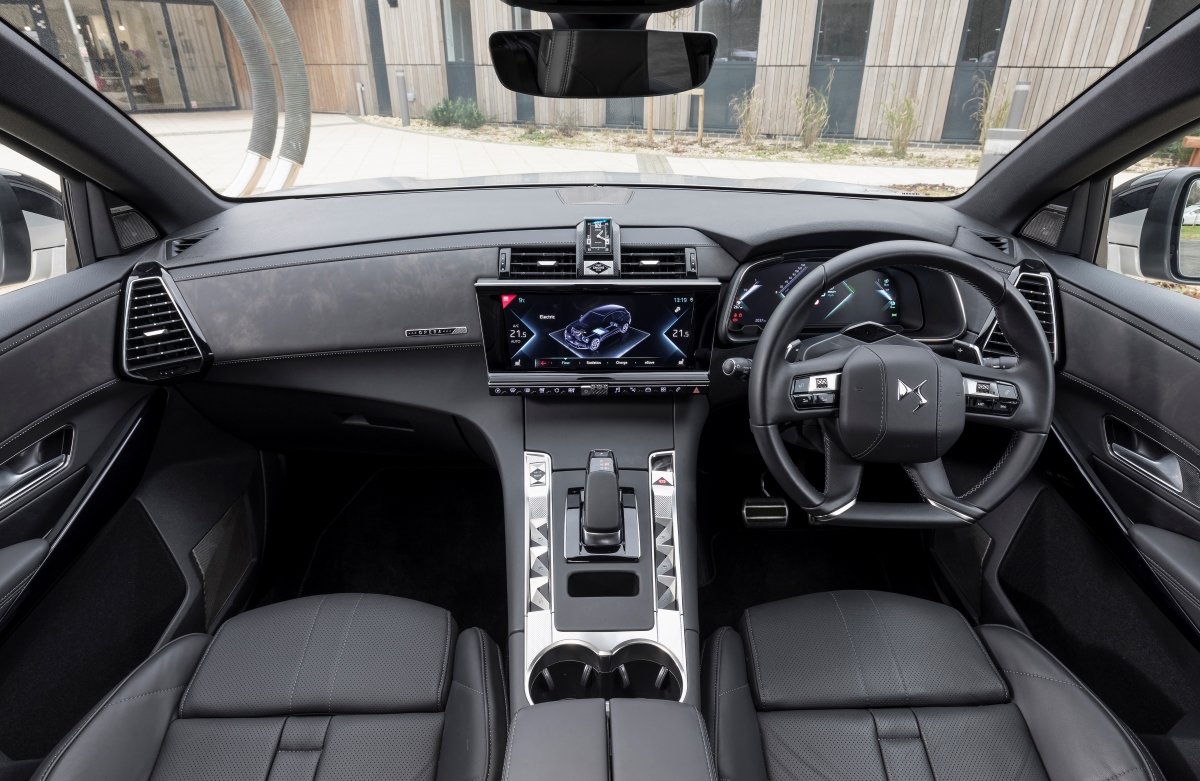
Another quirky addition on the up-spec models is an analogue clock from French high-end watch manufacturer B.R.M that rotates out of the dashboard (not unlike the revolving dials on a modern Bentley). It’s a largely pointless piece of design, but one that helps to reinforce the feeling that you’re driving something a little bit different to the usual family crossover crowd.
The 2022 facelift has brought a raft of changes inside and out, btu the most noticeable of these is a new infotainment system with a redesigned 12-inch high-resolution touch and a reworked interface. This groups the functions into so-called widgets, so you can skip to navigation, audio or heating and ventilation controls with a single movement. There’s also a revised 12-inch digital instrument panel and new high-resolution parking cameras front and rear.
Running costs
If you're a company car driver and your monthly allowance will cover the leasing bills, go for one of the plug-in hybrid models. The combination of low emissions and an impressive electric-powered range make for low benefit-in-kind tax bills. For private drivers, the case isn't so clear cut. If you do a lot of motorway miles, the BlueHDi 130 diesel is likely to be the most economical option in the real world – figures have yet to be released for the facelifted DS 7 Crossback, but the original car with the same engine and the automatic gearbox was officially rated at 49.3-55.3mpg under the new WLTP test. We’d expect to see high 40s on a run, but it won’tmatch the performance or refinement of the plug-in hybrids.
If you do a lot of short trips with the chance to plug in and recharge overnight, however, the plug-in hybrids can be spectacularly economical – in fact, you might hardly use the petrol engine at all.
If you’re buying second hand, the more powerful BlueHDi 180 is only available with an automatic gearbox, and returns 42.7mpg. The entry-level petrol with a manual gearbox returns similar economy of 42.2-46mpg. Reckon on mpg in the mid-30s from the PureTech 180 and 225. There's not a lot between them, although the 180 should stretch each gallon a mile or two further.
Insurance groups start for the DS 7 Crossback are slightly higher than average for the class, starting at 18E for the entry-level petrol, rising to 39E for the original E-Tense 4x4 (insurance groups for the revised cars have yet to be released, but expect them to be in the same ballpark).
The DS needs servicing once a year or every 10,000 miles, whichever comes first. Servicing prices are fixed, so you'll pay the same at any DS franchised dealer, anywhere in the country. DS original parts are used and come with a two-year warranty.
It's fair to say that DS hasn't set the world of customer satisfaction surveys on fire during the few short years it has been around as a stand-alone brand. But it's not propping up the bottom of the table, either.
That short history makes it hard to make a firm judgement about reliability, but with Citroen and Peugeot generally performing better than they used to in reliability studies there are reasons to be optimistic. So don't expect the painless experience that Lexus owners enjoy, but don't expect endless hassle, either.
Think twice about buying a diesel if you mostly drive short distances. That's because the diesel particulate filter (DPF) can become clogged if used for brief, stop-start journeys. It usually just needs a longer drive to warm the exhaust enough for the DPF to cleanse itself, but look out for a warning light if you are buying a used DS 7 Crossback.
One problem that has cropped it is a fault in the driver's airbag, which can reduce its effectiveness in an accident. This applies to vehicles made from 5 September 2017 to 26 October 2018. Any car subject to this recall should have been fixed by now, but any DS dealer should be able to check this for you. Standard models come with a 3 year, 60,000-mile warranty, but for plug-in hybrid cars this is increased to 8 years and 100,000 miles. Approved used cars come with a minimum warranty of 24 months, which is a year longer than the norm.

What owners say
Three things to know
- DS may be a new brand, but it's an old name. The original Citroen DS was one of the most innovative cars of the 20th century. Launched in 1955, the DS was a front-engined, front-wheel drive saloon, wrapped in futuristic, wind-cheating bodywork. The DS was the first mass production car with all-round disc brakes, and it used hydraulics for the suspension, clutch and transmission. In a poll of 20 renowned car designers for a classic car magazine, the DS was named the most beautiful car of all time.
- The Active Scan suspension isn't the only clever piece of tech in the DS 7 Crossback. The car also comes with DS Connected Pilot. This system is a stepping stone on the road to a fully autonomous car. It combines the functions of an adaptive cruise control, which will reduce speed if there's another vehicle up ahead travelling more slowly than the speed to which the cruise control has been set, and a lane keeping system to gently steer the car back to the centre of the lane. There's also the DS Night Vision system, which uses an infrared camera to scan the road up to 100 metres ahead, displaying the image in the digital instrument cluster with potential hazards highlighted yellow or red depending on how close they are.
- DS has developed a close association with the French presidency. The company created a special one-off version of the car, the DS 7 Crossback Présidentiel for Emmanuel Macron’s inauguration in 2017. A second modified car, the DS7 Crossback Élysées entered his fleet in 2021.
Which one to buy
- If you want high performance without compromising on fuel economy: choose one of the DS 7 Crossback E-Tense 4x4 models. The new E-Tense 4X4 360 will accelerate from 0 to 6mph in just 5.4 seconds, while also covering up to 40 miles on electricity alone.
- If you want style on a budget: stick with the entry-level DS 7 Crossback BlueHDi 130. The diesel may be fairly mundane in a straight line compared with the E-Tense plug-in hybrids, but it's the most affordable model in the range, whether you are looking to buy new or used. It has the best mpg figure of any non-hybrid DS 7 Crossback.
- If you want to climb every mountain: the DS 7 Crossback is not really pitched as a rough and ready off-roader, but the two higher powered plug-in hybrid models come with four-wheel drive as standard. Fit a set of winter tyres and it should be more than capable of taking on a family ski trip.

