DS 9 (2020-2024) review | A delightfully French take on the premium saloon
DS DS 9 cars for sale
2.0
Expert review
Pros
Comfortable and quiet
Lots of hi-tech gadgets
A little bit different from the luxury car norm
Cons
Likely to be expensive to finance
Some interior trim feels downmarket
Not much fun to drive
The CarGurus verdict
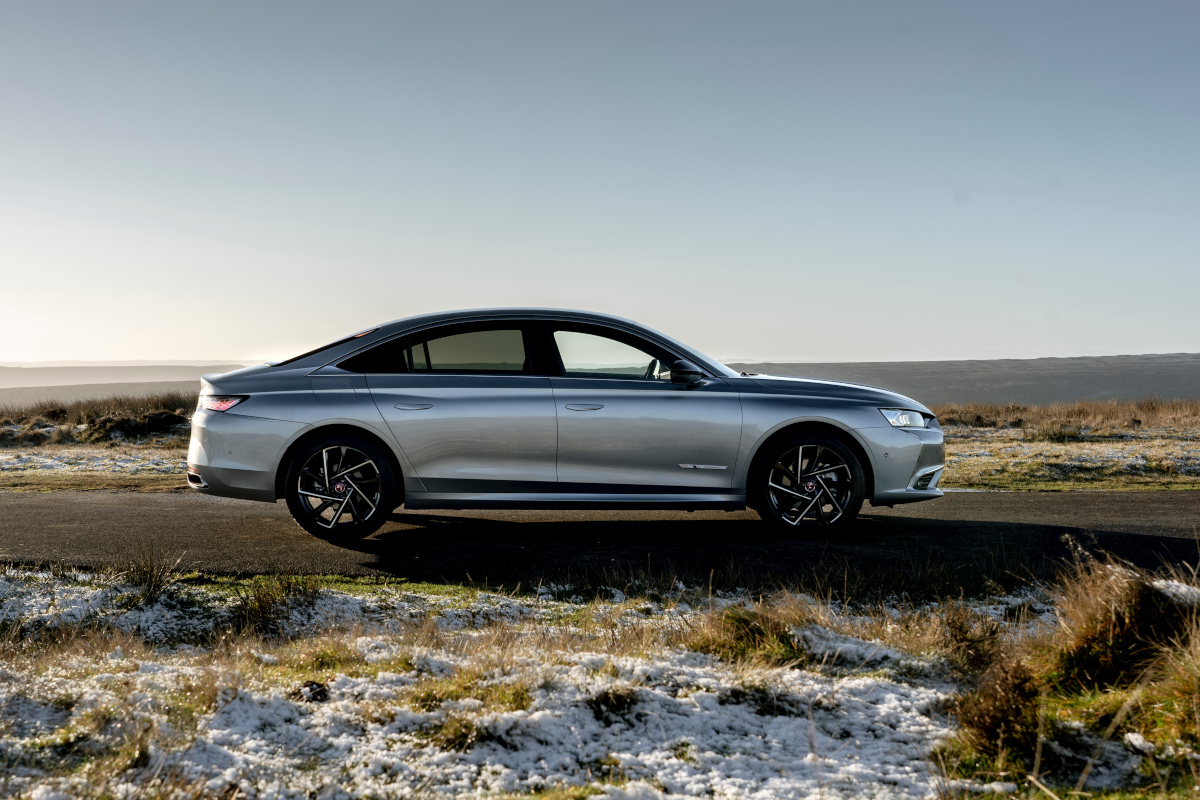
In many ways, the DS 9 is a brilliant car. It’s comfortable, quiet, luxurious and it features some excellent design details. It also doesn’t try to slavishly copy German executive saloons – something that both the Jaguar XF and Lexus ES could have been accused of.
However, the DS 9 is left a bit wanting in some key areas. Despite the lovely design touches, it’s a bit conservative-looking, its engine and gearbox are not responsive enough, and it’s likely to lose value fast – although this isn’t necessarily a problem when you’re buying used.
Unless you really love the idea of a big French saloon, if you want something that’s not a BMW, Audi or Mercedes-Benz then we suggest you go for a Volvo S90. It’s still a little bit quirky, but is ultimately a better car.

What is the DS 9?
French luxury saloons might be a rare sight on British roads, but DS Automobiles has built its brand around that idea: taking the design flair and focus on comfort you’d associate with classic Citroens of the past, and blending these with a modern finish. The DS 9 was the brand’s range-topping four-door saloon: big, stylish and more Wafty Spice than Sporty Spice.
In the UK, the DS 9 ultimately became a plug-in hybrid-only proposition. Later cars are badged E-Tense 250 and pair a 1.6-litre turbocharged petrol engine with an electric motor and a 15.6kWh battery, offering an electric-only range of 47 miles. The range of trim levels also narrowed down over time, with UK buyers typically choosing between Rivoli+ and the plusher Opera models.
As you’d hope from something pitched as a French luxo-barge, the DS 9 majors on comfort, refinement and cabin ambience – with features such as camera-controlled suspension and a high-end infotainment system on later cars. The aim was to lure owners of cars such as the Audi A6, BMW 5 Series and Mercedes-Benz E-Class.
How practical is it?
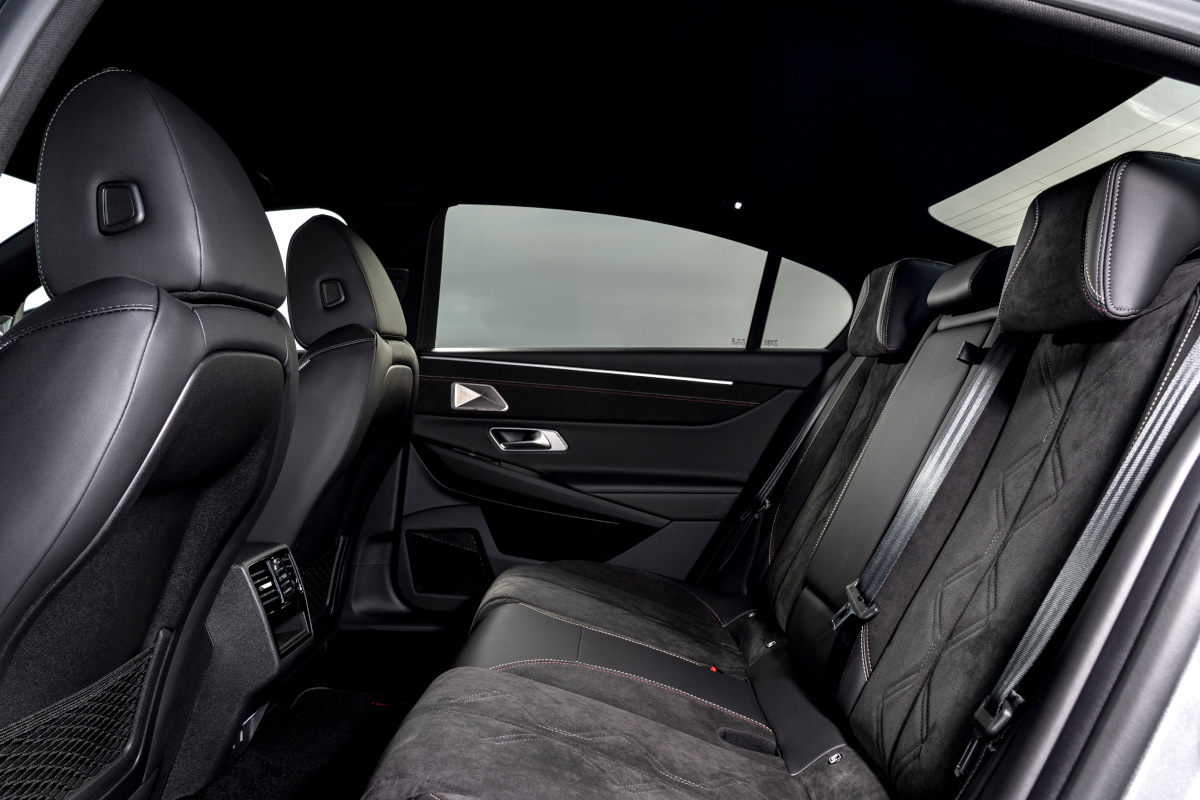
Very practical – if you use it as intended. This is the sort of car where the passengers are every bit as well treated as the driver, so if you can find a willing chauffeur, you can indulge in your own Emmanuel Macron presidential role-play.
It’s easy to get in, thanks to doors that open wide and a good-sized aperture. Once you’re inside, you’ll also find loads of legroom. There are lovely Nappa leather seats that heat you up, cool you down and give you a massage – although these, along with an Alcantara headliner, are only available as part of Opera specification. There are also separate climate control settings for the rear seats, plus a couple of USB connectors.
In terms of boot space, the DS 9 acquits itself well. Big saloons aren’t always designed to be super-practical, but the DS 9 can swallow a decent 510 litres of luggage, albeit through a slightly narrow opening. Compared with 400 litres in a Mercedes-Benz 300e, or the 410-litre boot in the BMW 530e, that’s not bad. And although it’s quite shallow, it stretches back a long way.

What's it like to drive?
DS might have pitched the 9 as an alternative to a BMW 5 Series, but don’t go expecting BMW-like handling and performance – because you won’t get it. Acceleration from 0-62mph in the E-Tense 250 is completed in a fairly leisurely 8.1 seconds.
The steering, meanwhile, is inconsistent in its weighting and feedback, while the suspension allows the car to wallow a tiny bit through corners and the eight-speed automatic gearbox isn’t exactly the most responsive when you want to get a move on.
It’s not especially sporty, then, but it’s not really pretending to be. Instead, it rides very well indeed – especially considering the rather large 19-inch wheels that our particular test car was fitted with. Plus, when you’re driving at speed, the DS 9 is ever so quiet. There’s very little wind noise, and not much fuss from the tyres, either. This, combined with a quiet and smooth drivetrain that switches between its petrol engine and electric power very seamlessly indeed, makes the DS 9 a wonderful long-distance cruiser.
That said, PHEVs do tend to suffer in terms of fuel consumption on longer runs once they’re out of battery power. See the section on running costs for more details.
Technology, equipment & infotainment
You’re certainly not left wanting for equipment with the DS 9. Even entry-level versions come generously equipped, while higher-spec Rivoli+ and later Opera models add premium touches such as wireless smartphone charging, all-round parking sensors, adaptive cruise control with lane assist, adaptive LED headlights with high-beam assist, plus heated and ventilated electric seats.
It also gets DS Active Scan Suspension, which uses a camera to scan the road ahead and adjust the damping in advance for a smoother ride. Technology like this has appeared on rival luxury cars for some time, but it remains impressive in practice and suits the DS 9’s comfort-focused character well.
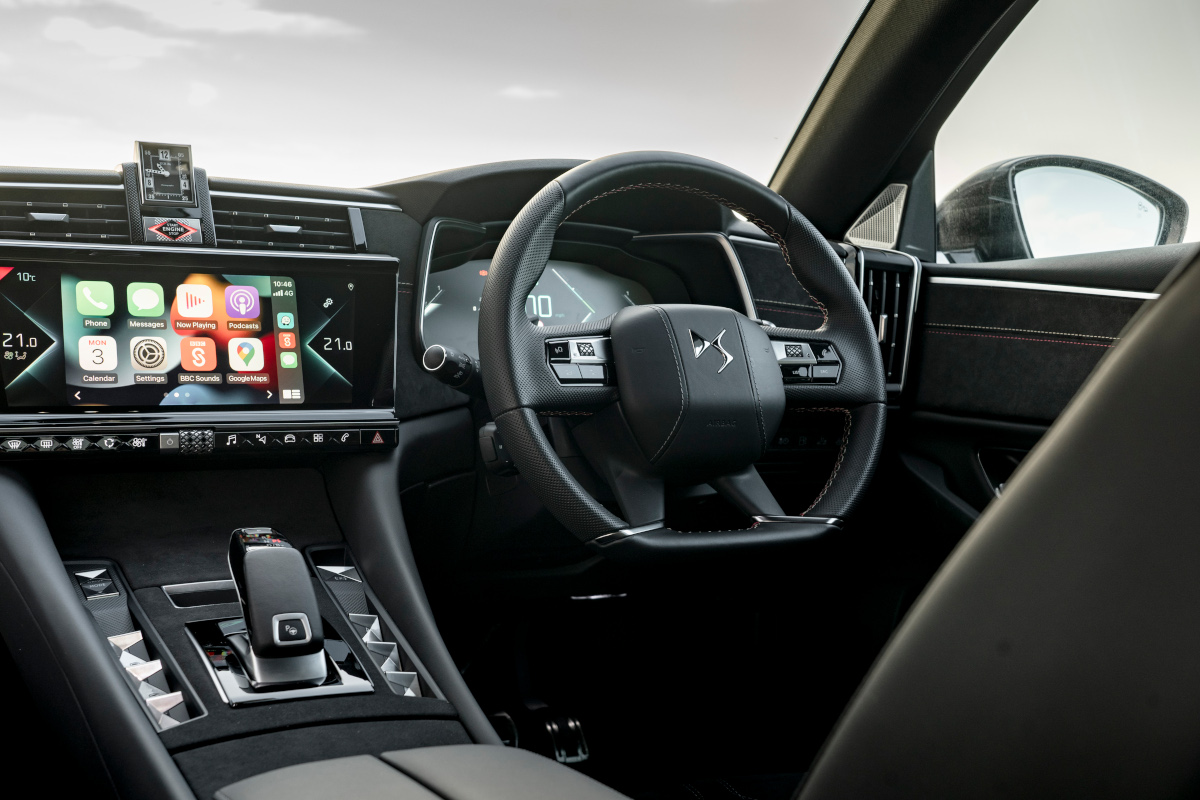
Later versions gained the updated DS IRIS 12-inch infotainment system, bringing a revised interface with improved responsiveness, connected navigation and natural voice control. It looks smart and offers plenty of functionality, although some menus can still feel a little fiddly to navigate compared with the best systems in the class. Earlier cars in particular suffered from low-resolution camera graphics, although later models improved this with higher-quality displays.
At least the 12.3-inch digital instrument cluster is clear and stylish, with distinctive diamond-themed graphics. Apple CarPlay and Android Auto are also available if you’d rather bypass some of the native menus.
DS 9 running costs
When new, the DS 9 undercut many premium plug-in hybrid saloons on list price, while offering generous standard equipment. Even so, heavily optioned examples could easily push into territory occupied by rivals such as the BMW 530e or Mercedes-Benz 300e.
Today, as a used buy, the DS 9 makes more sense. Because it never sold in large numbers and sits outside the mainstream premium brands, residual values weren’t especially strong. That means used buyers can often find well-equipped examples at appealing prices.
As for day-to-day running costs, this is one of those cars that feels like it would once have been powered by a smooth turbodiesel or a six-cylinder petrol engine. Instead, every DS 9 uses a plug-in hybrid setup combining a turbocharged petrol engine with electric power. Later E-Tense 250 models brought a larger battery and improved electric range, while the range-topping 4x4 360 adds performance rather than efficiency.
Like most plug-in hybrids, efficiency depends heavily on how you use it. Keep journeys short and charge regularly, and the electric-only range – typically between 30 and 45 miles, depending on age and spec – can significantly reduce fuel consumption. The electric motor alone is strong enough for urban driving and can maintain motorway speeds in electric mode. Once the battery is depleted, fuel economy drops to conventional petrol engine levels, so expect 45-55mpg depending on your driving style and the conditions.

DS 9 reliability
There isn’t a huge pool of model-specific data for the DS 9, largely because very few were sold in the UK. However, many of the parts and plug-in hybrid powertrains are shared with more established Stellantis models, including the DS 7 Crossback and Peugeot 508, which helps provide some reassurance when buying used.
DS Automobiles itself doesn’t appear frequently in large-scale reliability surveys due to its lower sales volumes, but sister brands offer a useful guide. In the 2025 What Car? Reliability Survey, Citroen finished an impressive 10th out of 30 manufacturers, while Peugeot placed 11th. As all three brands share platforms, engines and electric architectures under the Stellantis umbrella, this suggests a prospect of respectable reliability.
As with many plug-in hybrids, the DS 9’s complexity means potential issues are more likely to involve electronics or hybrid system components, rather than mechanical faults. A full service history and evidence of software updates are therefore worth checking when buying used.
When new, the DS 9 was covered by a three-year, 60,000-mile warranty, so check if there’s any remaining cover when buying used. If not, it could be worth investing in an aftermarket warranty. The battery itself is covered for eight years or 100,000 miles.
- There is a real sense of occasion in the cabin of the DS 9. The art deco starter button, the way the analogue BRM clock spins round out of the dash – it’s all plush, stylish and very chic. The problem is that some key parts, such as the gearshift lever and column stalks, are sourced from much cheaper Peugeot and Citroen models, which does lower the tone a little – and that’s not an issue that rivals from Audi, Mercedes, BMW or even Volvo suffer.
- True touches of luxury are hard to find in mass-produced products, especially cars. Which is why the DS 9’s hand-stitched steering wheel is such a surprise: each one takes 45 minutes to stitch together, and the result is rather lovely.
- Although the four-cylinder engine isn’t the smoothest-sounding in the world, its tones are impressively hushed by cabin sound-deadening that makes the DS 9 a beautifully refined cruiser. Thank the laminated double-glazed windows for that.
- If you want the best value: Earlier Performance Line+ or Rivoli+ models represent the sweet spot, offering plenty of equipment including adaptive suspension, high-quality interior materials and strong technology without the higher prices commanded by later, more lavish specifications.
- If you want maximum comfort and luxury: Look for later Opera models fitted with the Opera interior package. These add features such as Nappa leather upholstery, heated and cooled massage seats, plus additional rear-seat comfort and equipment that really suit the DS 9’s relaxed, chauffeur-style character.
- If you want the quickest DS 9: The range-topping E-Tense 4x4 360 delivers noticeably stronger performance thanks to its twin-motor setup and four-wheel drive, cutting the 0-62mph dash to 5.6 seconds. It’s still comfort-focused rather than sporty, but it adds extra pace and traction. That said, it has a smaller battery, so you’ll see a significant reduction in the electric range.
- If you want the best all-rounder: The E-Tense 250 strikes a good balance between performance, efficiency and electric range. It offers slightly longer electric-only driving capability than the earlier 225 models, which can help reduce fuel costs if you charge up regularly.