Dacia Duster 2012-2018 review: A significant improvement on the original
Dacia Duster cars for sale
3.0
Expert review
Pros
Extremely cheap to buy and run
The cabin is practical
Choice of 2WD and 4WD
Cons
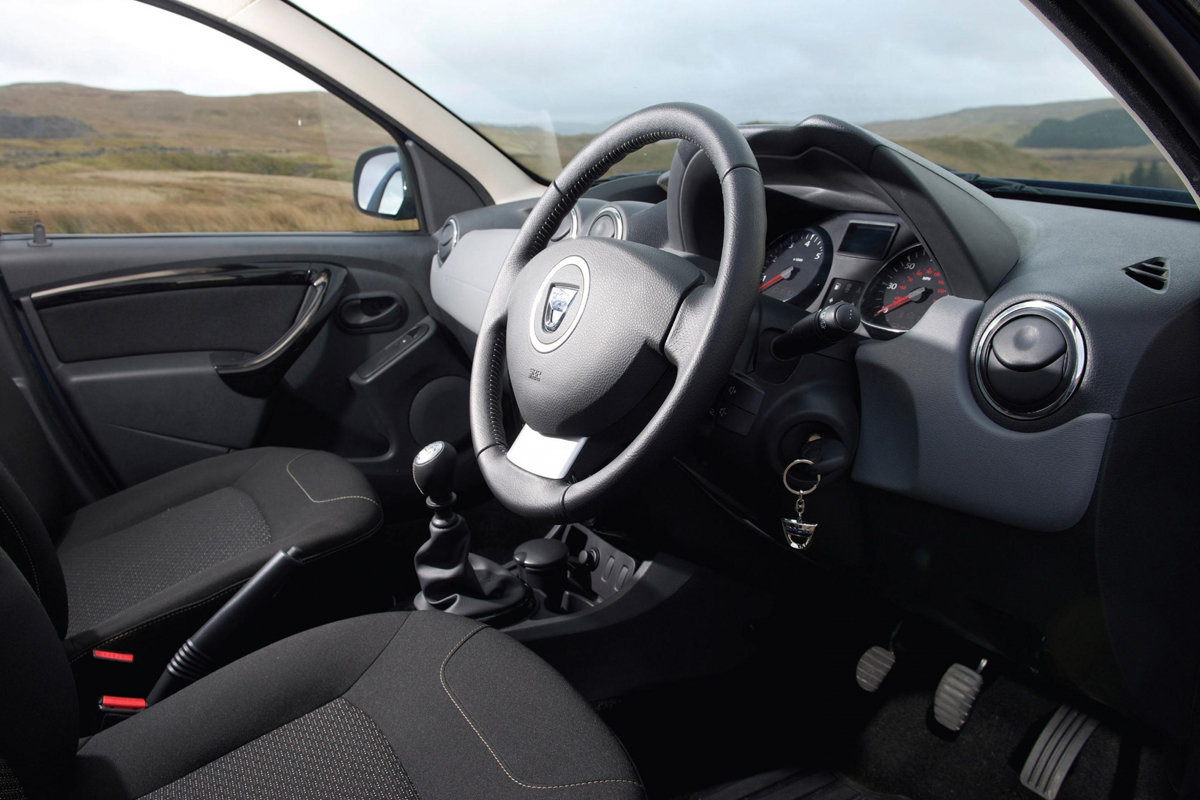
Rough and ready finish
The cheapest models are short of equipment
Not great to drive
The CarGurus verdict
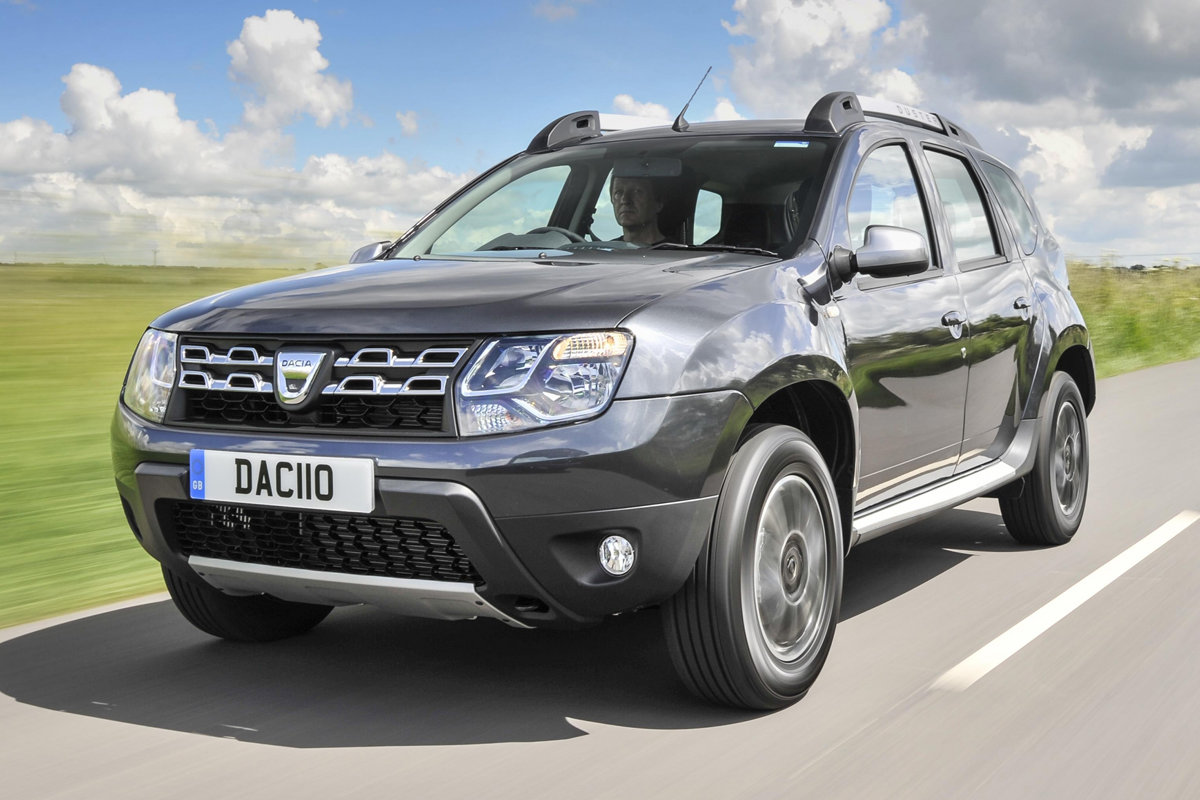
The Dacia Duster has its foibles, such as its plain and cheap-feeling cabin, and there are some quality and reliability issues to be aware of too. But if you just want a simple, uncomplicated and practical small SUV – and don’t mind how it drives or performs – a Duster is worth a shout.
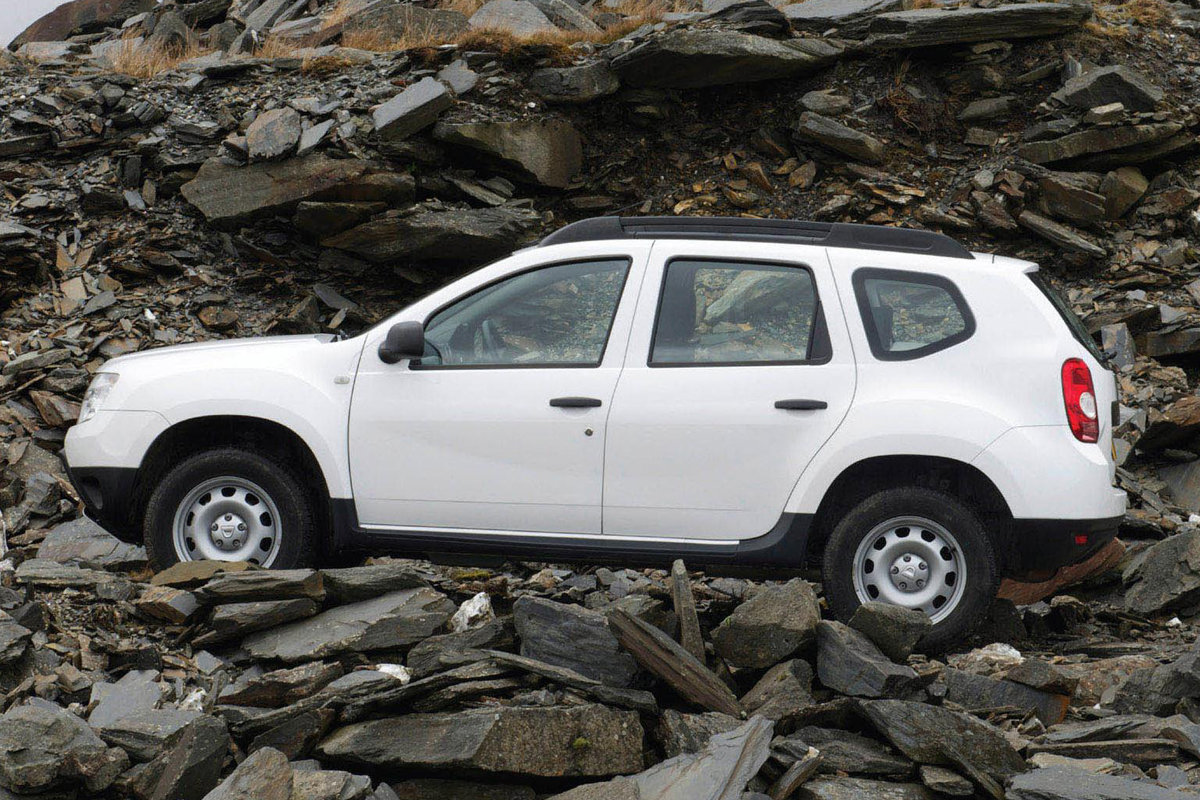
The option of all-wheel drive is also useful at such a low price point and in a comparatively compact car; if you live in the countryside and have to travel down muddy or rutted paths, the Dacia could prove ideal. Its low-cost nature lends it further appeal in such conditions, as you won’t be as worried about scraping or denting it.
While the Dacia’s unpretentious and affordable nature has its charms for some, others may find its bare-bones equipment level and on-road performance severely lacking. In those instances, although the costs will be higher, it’s probably best to consider alternatives such as the Nissan Qashqai, Skoda Yeti or Fiat Panda 4X4.

What is the Dacia Duster?
In an era when many SUVs are driven by style as much as substance, the Dacia Duster is a breath of fresh air. First introduced to the UK in 2012, it’s a rugged, utilitarian machine, with the emphasis placed firmly on affordability and practicality.
Back then, the Duster cost just £8,995 in basic Access 1.6 petrol flavour. It massively undercut its rivals as a result, with even the affordable second-gen Nissan Qashqai clocking in at around £17,000 just one year later. There wasn’t much in the way of choice or options, but that was in keeping with the Duster’s back-to-basics ethos. Just two engines were offered initially; a 104bhp 1.6-litre petrol engine or a 109bhp 1.5-litre diesel.
Usefully, the Duster could be had in both front-wheel-drive or all-wheel-drive forms, with the all-wheel drive versions being ideal for those who had some light off-roading in mind. In front-wheel-drive “4x2” form, the petrol version featured a five-speed manual gearbox while the diesel would get a six-speed version. Both petrol and diesel “4x4” models got a six-speed manual.
Anyone harbouring hopes of a cut-price Range Rover Evoque will be sorely disappointed, but those looking for a cheap, no-nonsense vehicle should find plenty to like about this unpretentious workhorse.
How practical is it?
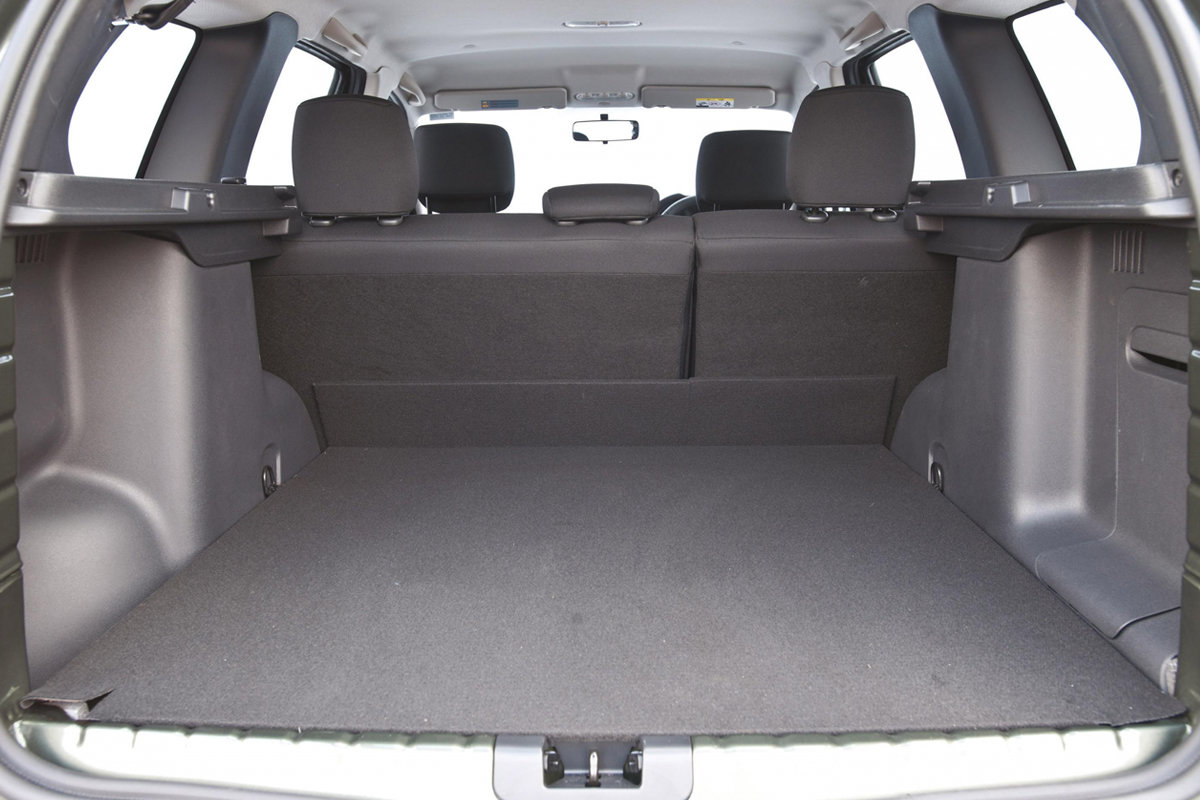
The Duster isn’t an especially large car – it sits comfortably shorter than a Nissan Qashqai – and yet there’s decent room for five adults, plus a generous boot. As with a lot of SUVs, however, the exact amount of luggage space varies according to which version you pick.
Go for one of the 4x2 models and you’ll get 475 litres of storage space, rising to 1,636 litres with the rear seats dropped. The 4x4 versions are slightly less capacious at 443 litres and 1,604 litres, respectively (which falls to 408 and 1,570 litres when a spare wheel is specified).
It’s worth bearing in mind that the 4X4 models are also somewhat less economical and more costly to buy, so the moral of the story is to stick with front-wheel drive unless you’re likely to need the extra traction on a regular basis.
What's it like to drive?
The driving experience in the Duster is much as you might expect for a cheap, utilitarian car. On the plus side, it’s relatively easy to drive, with light steering, a high driving position and excellent visibility. In diesel form it’s also reasonably frugal – around 50mpg should be achievable in the real world.
Other aspects are less encouraging. The steering feels quite vague, and there’s a fair amount of body roll. Unfortunately, the soft suspension doesn’t do a great deal to improve the ride quality, either, as that initial softness gives it a tendency to wallow over bumps and crests. It’s also quite noisy by modern car standards.
All of this, of course, is relative. Step into the Duster after half an hour in an original Land Rover Defender and you’d think it was a paragon of precision and refinement. And that’s what matters with the Duster – it’s not especially fast or luxurious, but it gets the job done.
Technology, equipment & infotainment
The list of trim levels for the original Duster was short and sweet, with Dacia offering Access, Ambiance and Laureate specifications. However, you’d have to upgrade to the flagship Laureate trim if you wanted creature comforts such as air-conditioning and alloy wheels.
Optional extras were similarly basic. The Adventurer pack added protective sill mouldings and arch protectors, while the Styling pack added daytime running lights, chrome details and a chrome exhaust tip. The Protection pack usefully added an alarm, rear parking sensors, boot liner, mudguards and tailgate protection and the final pack, Touring, featured a tow bar and roof bars, plus a centre armrest for increased comfort. Some special editions, such as the Duster Black Edition, were also available.
There were a host of updates to the first-gen Dacia Duster range throughout its life. A facelift in September 2014 added a new grille, roof bars, upholstery, trim colours and more tech; Laureate trim, for example, was now offered with cruise control and a seven-function trip computer.
Then in 2018, shortly before the second-generation Duster was introduced, Dacia upgraded the equipment levels on offer, and changed the trim names to suit; Ambiance became Air, and gained manual air conditioning, while Laureate became Nav+ and, as you might have guessed, now came with the added benefit of a colour touchscreen with sat-nav.
Dacia Duster running costs
No Dacia Duster should prove expensive to run, thanks to their lightweight nature, generally frugal engines and uncomplicated mechanicals. That said, it is worth keeping an eye on VED – Vehicle Excise Duty – costs. Early versions of the Duster diesel, for example, cost quite a bit more than those introduced in 2015, when more efficient versions of the dCi 110 engine came along.
That means buying a car registered from late 2015 onwards will cost significantly less each year than one made beforehand. But that’s not the full story, because things changed again on 1 April 2017, when the Government changed the way the car tax system worked. Duster diesels built after this date are therefore taxed at a later flat-rate fee, which actually works out even more expensive than the cars built before 2015.
For petrol versions, it’s a different story. 1.6-litre models registered before the April 2017 threshold will be noticeably pricier to tax, especially in 4x4 form, while for 1.2-litre turbos, taxa will cost about the same no matter which age of Duster you choose.
While the basic 1.6-litre petrol is simple, so servicing costs are low and reliability good, it can struggle to exceed 30mpg in the real world. The TCe petrol is a little better but it’s the diesels that consistently average over 40mpg. If you’re going to be racking up the miles, the maths will probably stack in favour of the more economical diesel versions.
One of the saving graces is that the Dacia is an uncomplicated car, so you shouldn’t have to track down a specialist or main dealer to service and maintain it, and servicing should be easy and inexpensive. In any case, make sure the used Duster’s service history is complete and, if required for the particular version you’re viewing, the timing belt and water pump have been changed at the correct point.
Dacia Duster reliability
The Duster’s fundamental reliability record isn’t too bad. But it is beset by lots of small niggles, often to do with low-quality parts failing earlier than you might expect on a more expensively-built car.
Examples include cooling problems due to cooling fan failures, water ingress from worn door seals, and rattles aplenty, throughout the interior.
Failure of the catalytic converter is not unknown, and this brings on a dashboard warning light. Look out for clogged diesel particulate filters on diesel models that have done low mileages, too.
Premature corrosion – i.e. rust – was also a big issue on early examples; this should have been fixed under warranty, but check that it has. Production shifted to a new factory in 2014, which cured this particular issue.
- Two-wheel-drive versions of the Duster are front-wheel drive and these are lighter, less complicated, quicker and more efficient, so think carefully about whether you really need the all-wheel-drive version. With a set of appropriate tyres, the 2WD model will be more than capable of dealing with the odd bit of mud, snow and ice. If you do need the additional traction of the AWD model, there is the option to switch it between 2WD and AWD when needed. The system also allows you to split the drive 50:50 between the front and rear axles, which is ideal for use on rougher terrain.
- A more modern turbocharged, 123bhp, 1.2-litre TCe petrol engine was also introduced later for the flagship all-wheel-drive models, along with a dual-clutch automatic transmission for diesel versions of the Duster.
- Safety was not a strong point for the original Duster. When first tested in 2011, it scored a middling three stars in crash tests by safety organisation EuroNCAP. Even cars such as the frugal Fiat Panda, which was tested in the same year, scored a higher four stars.
- If you want the best all-rounder: We’d always go for a Laureate trim if budget permits, purely because it comes with air-conditioning and electric mirrors and windows. If you’re happy with the idea of a diesel, pick the 1.5-litre dCi diesel option as it serves up a decent blend of performance and efficiency. Don’t feel compelled to go for the 4x4 model, though, unless you really need it.
- If you want the cheapest option: To keep purchase and upkeep costs to a bare minimum, go for the earliest 1.6-litre petrol model in 4x2 Access specification. The 1.6-litre petrol is claimed to average up to 39.8mpg in 4x2 specification, while the model’s uncomplicated nature means that major problems should be rare. Just remember that this very basic trim level doesn’t even include a radio. If higher mileages are planned, you’ll probably want a diesel model.
- If you want the most efficient: You’ll want a two-wheel-drive diesel version of the Duster if efficiency is key. Even the earliest models have a claimed average north of 50mpg, while the more efficient versions introduced in August 2015 are even more economical. The dCi 110 4x2, for example, can average 64.2mpg. The dual-clutch automatic version isn’t far behind, either, at 62.8mpg. The 4x4 version is less efficient, returning an average 60.1mpg.
- If you want the best performer: The quickest of the Dacia Duster line-up is the later TCe 125 4x2 model, which can accelerate from 0-62mph in 10.4 seconds. The four-cylinder turbocharged petrol engine also offers a decent amount of torque, which makes it less of a faff to drive than the naturally aspirated 1.6 105 or SCe 115 petrol models. It’s also less busy and more efficient at higher speeds, so if you’re doing long trips, it’s worth considering.


