Ferrari 488 Review (2015-2020)
Ferrari 488 cars for sale
5.0
Expert review
Pros
Ferocious performance
Precise and agile handling
Gorgeous looks
Cons
Turbocharged engine is short on character
Colossal running costs
Spider is less structurally rigid than the GTB
The CarGurus verdict
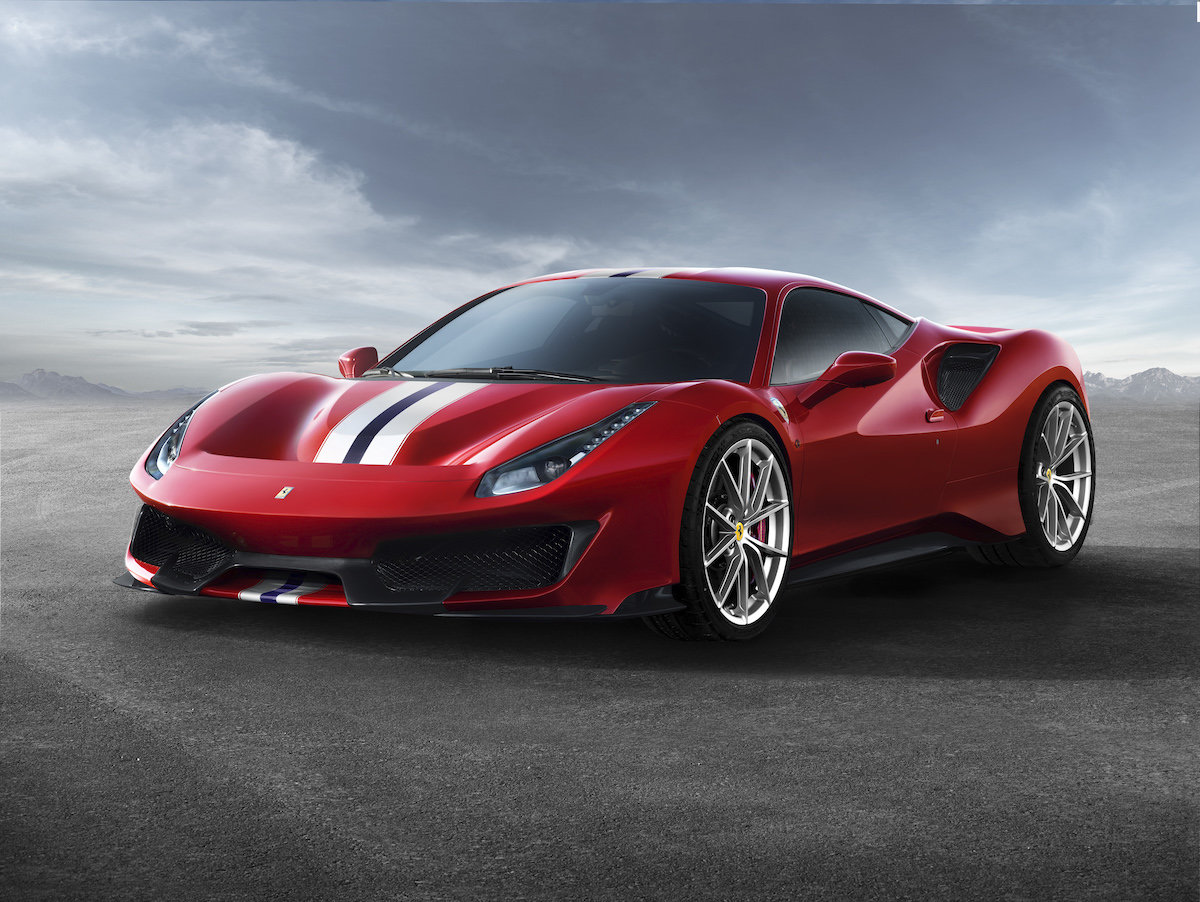
Ferrari has scarcely put a foot wrong with its entry-level supercar since it replaced the woeful 348 with the brilliant F355 back in 1994. The models that followed have been the very foundation upon which Ferrari built its business: cars like the 360 Modena and 488 GTB have been instrumental in turning the world’s most famous supercar manufacturer into the hugely profitable enterprise it is today. Nonetheless, by swapping out the old naturally-aspirated engine for a more powerful but less characterful turbocharged one in the 488, Ferrari did erode some of what made earlier models so wonderful to drive.
The turbo engine was, at least, one of the best of its type, exhibiting a level of tractability and a kind of throttle response that no series production turbo engine before it had yet achieved. Ferrari backed up that technically impressive motor with one of the best sports car chassis there has ever been. The 488 GTB and its derivatives are masterpieces and they’ll be highly sought after for many years to come.
What is the Ferrari 488?
For several decades, the entry-level supercar in Ferrari's range has arguably been its most important. That's because it sets the tone and standard for the even more exotic (and expensive) models in the Italian firm's lineup. And in 2015, Ferrari replaced the previous incumbent of this important role - the 458 Italia - with the new 488 GTB.
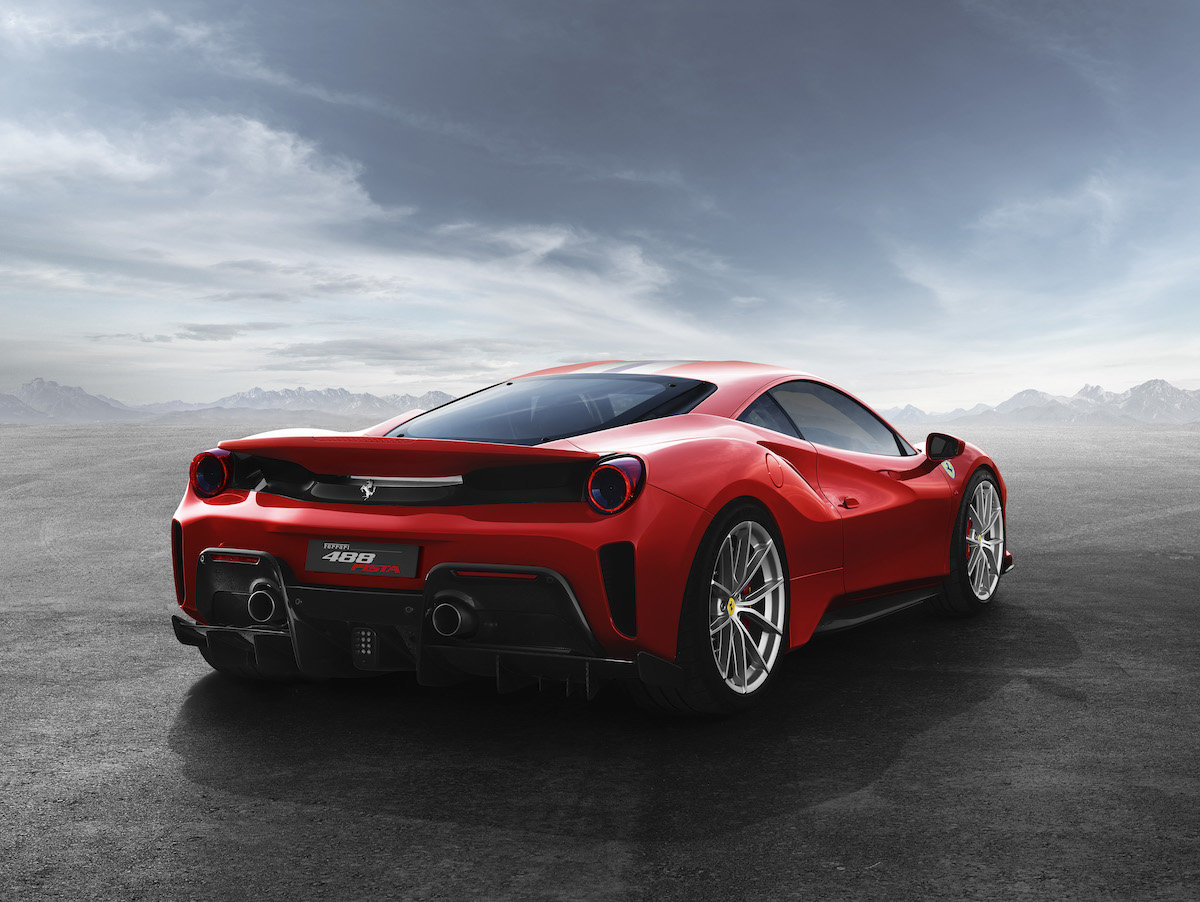
The shape was familiar. Clearly mid-engined, the 488 GTB’s aerodynamic bodywork clung tightly to the hard points beneath, its strong haunches rising over the rear wheels, interrupted only by gaping air intakes. This was unquestionably a Ferrari berlinetta, at least to look at. To listen to, on the other hand, it was something else altogether.
Throughout those several decades mentioned, the Prancing Horse’s dynasty of entry-level supercar models – including the closely related 458 Italia, and the very first in the series, the 308 GTB of 1975 – were made so utterly irresistible by one factor more than any other: their naturally-aspirated V8 engines, and the howling soundtracks that flooded the road behind them.
The first in the dynasty to abandon natural aspiration in favour of turbocharging, the 488 GTB put an end to this 40-year aural reverie. Gone was the spine-tingling musical score of old, in its place a relatively tuneless, monotone blare, as is the way with turbochargers. Actually, the 488 GTB could have sounded far worse, for there is at least a hint of potency in its exhaust note. Most turbocharged cars sound much flatter. Compared to the 488’s predecessors, though… well, there is no comparison.
In 2016, the droptop Spider variant emerged, followed two years later by the 488 Pista, the track-focused model whose power output rose beyond 700bhp. The Pista Spider completed the set later that year. The 488 GTB was replaced in 2019 by the F8 Tributo, which is essentially a heavily facelifted 488 with the more potent Pista engine.
How practical is it?
The days when you had to suffer for the privilege of owning a supercar are, thankfully, long gone. The Ferrari may not be the last word in practicality – that’s simply impossible with a mid-engined layout – but the two-seat cabin gets the basics right.
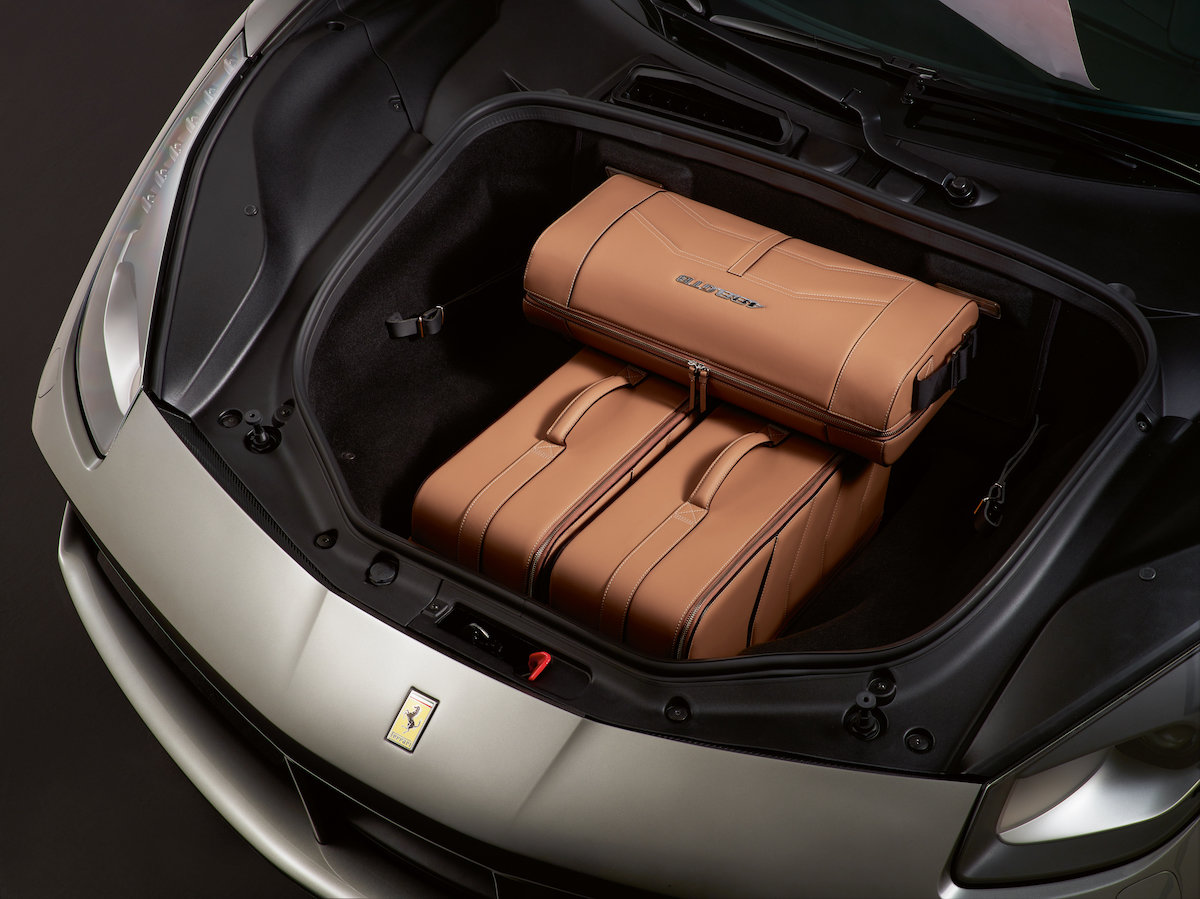
The seating position and visibility are good, for instance, and there’s a useful storage compartment beneath the front clamshell. There’s more storage space than you’d find in direct rivals like the McLaren 650S or the Lamborghini Huracan, although 2+2 GTs like the Porsche 911 Turbo S will easily better it for practicality.

What's it like to drive?
What the turbocharged engine in the 488 GTB lost in aural drama compared to its naturally aspirated predecessors, it made up for with far greater power outputs and better fuel efficiency (at least on paper). Whereas the 458 Italia’s 4.5-litre V8 managed 562bhp, the 488 GTB’s 3.9-litre twin-turbo V8 produces 661bhp. That's backed up by a mighty 561lb ft of torque, which is 163lb ft more than in the 458.
The 488 accelerates from standstill to some frightening speed very differently to the 458, too. Whereas the older car surges forward in an elastic, rising-rate manner, the newer model bursts towards on the horizon on a great wall of torque, with almost no turbo lag. It feels much quicker because of it (in fact, it feels almost hypercar-fast in a straight line), but the older model’s electrifying power delivery was lost with its scintillating exhaust note. The 488's seven-speed dual-clutch gearbox is among the very best of its type.
Engine aside, the 488 GTB is a near flawless supercar. It looks sensational with its bodywork that's optimised for downforce and a prominent rear diffuser, and it has a simply exquisite chassis, one that blends the precision and agility of a purpose-built track car with the tyre-smoking savagery of a BMW M super saloon. Its steering, though, feels nervous and over-responsive to begin with, but you do adjust to its razor-sharp responses with time. Meanwhile, the ‘bumpy road’ mode, which slackens the adaptive dampers to suit rougher ground, gives the car the kind of fluid ride quality you’d normally expect of a luxury saloon.
Technology, equipment and infotainment
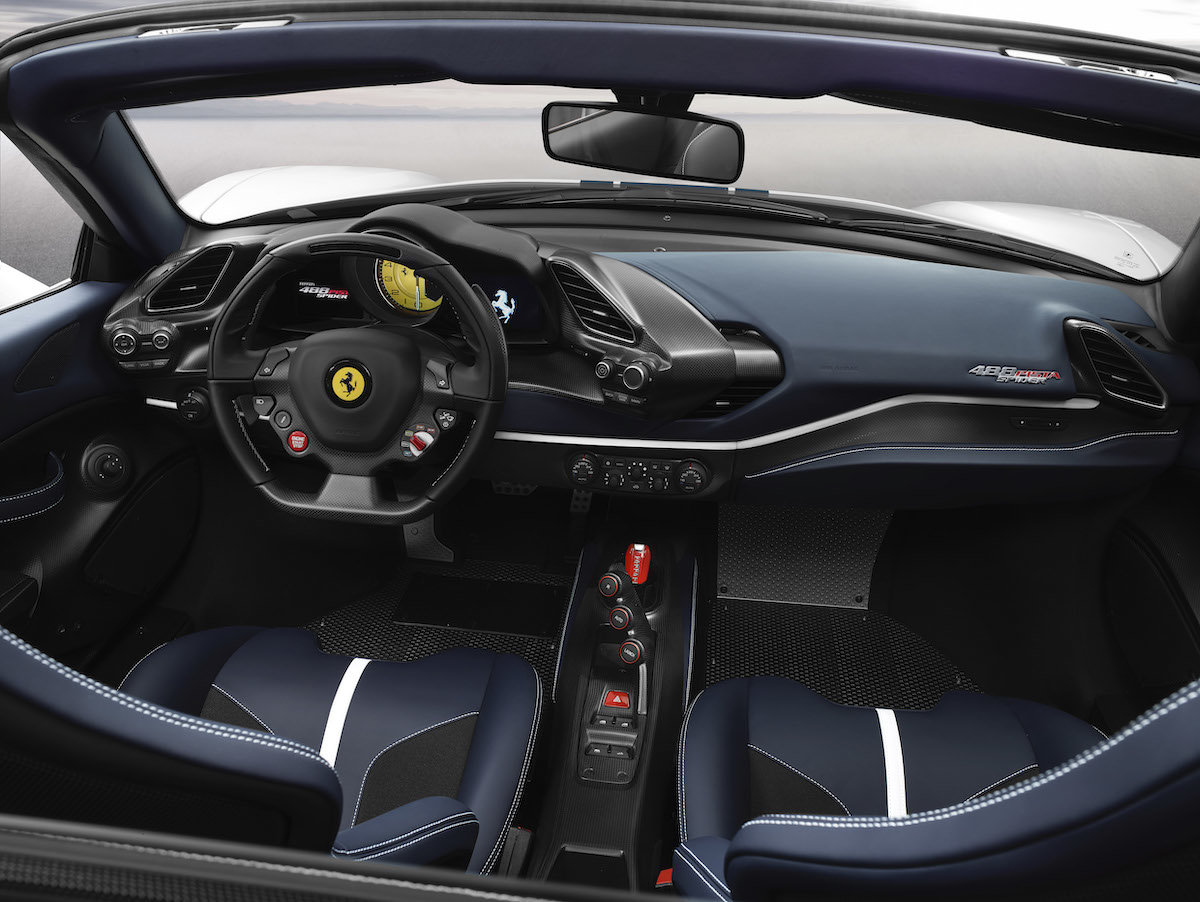
There’s no denying that the Ferrari 488 GTB’s cabin looks sensational, but the build quality is patchy and the infotainment system fiddly at best. Meanwhile, the not-quite-round steering wheel that's littered with buttons and knobs takes some getting used to.
The most intriguing of these is the little red Manettino switch on the right of the steering wheel. This effectively tailors the character of the 488 to your preferences. The settings to choose from are Wet, Sport, Race, CT Off and ESC Off, all promising progressively more lairy characteristics. As well as tweaks to the throttle mapping and gearshift speed, these settings also govern a system known as Side Slip Control (SSC) that adjusts the electronically-controlled differential and the traction control to allow increasing levels of slip. The idea is that you can make the 488 GTB as exciting as you want on the road (or the track) while still retaining something of a safety net.

Ferrari 488 running costs
No matter how far 488 GTB values fall, running costs will always be that of a vehicle that was comparable in price to the average UK home when new (after options were added, at least). Tyres, servicing, insurance, replacement parts, poor fuel economy and general maintenance will add up to an eye-watering sum each year, not least because a car as highly-strung as a Ferrari supercar should be maintained to the very highest standards.
Expect to pay a low four-figure sum for a full set of replacement tyres. All models sit in the highest insurance group (50). In mixed driving you may see 20mpg, but more likely is an mpg figure in the mid- to high teens, or even lower if you really stretch the 3.9-litre V8 with any regularity.
For the first seven years of any new Ferrari’s life, annual servicing is covered free of charge. This includes labour, parts, lubricants and so on. It’s the only maintenance package of its type and it saves Ferrari owners significant sums each year. Called General Maintenance, it applies to the car rather than the owner, meaning one keeper after another will benefit. Once the seven years are up, though, owners will have to cover servicing themselves. This can be very pricey at main dealers, which is why many 488 owners will choose to go with reputable independent specialists instead.
Ferrari 488 reliability
Along with the generous maintenance package, Ferrari’s warranty is also class-leading. Initially it runs for three years with no mileage limit, but after that it can be extended (at additional cost) for up to 15 years in total, although the level of cover does reduce slightly as the car ages.
Ferrari wants its customers to rest assured that should their cars suffer some sort of reliability fault, it will be dealt with swiftly and at minimal cost. This can take the sting out of supercar ownership and it helps explain why so many Ferrari customers are fiercely loyal.
Best of all, most owners report fault-free running (which hasn’t always been the case with Maranello’s supercars). Certain cars were subject to an airbag recall, but this should have been actioned under warranty.
- Beneath the skin, the Ferrari 458 Italia, 488 GTB and F8 Tributo (and by extension, their convertible variants as well) are actually the same car. They share a platform, meaning that the 488 GTB can trace its roots right the way back to 2009 when the 458 Italia was new. The biggest change Ferrari made during all those years was to replace the 458’s naturally-aspirated engine with a smaller, twin-turbo unit when it unveiled the 488.
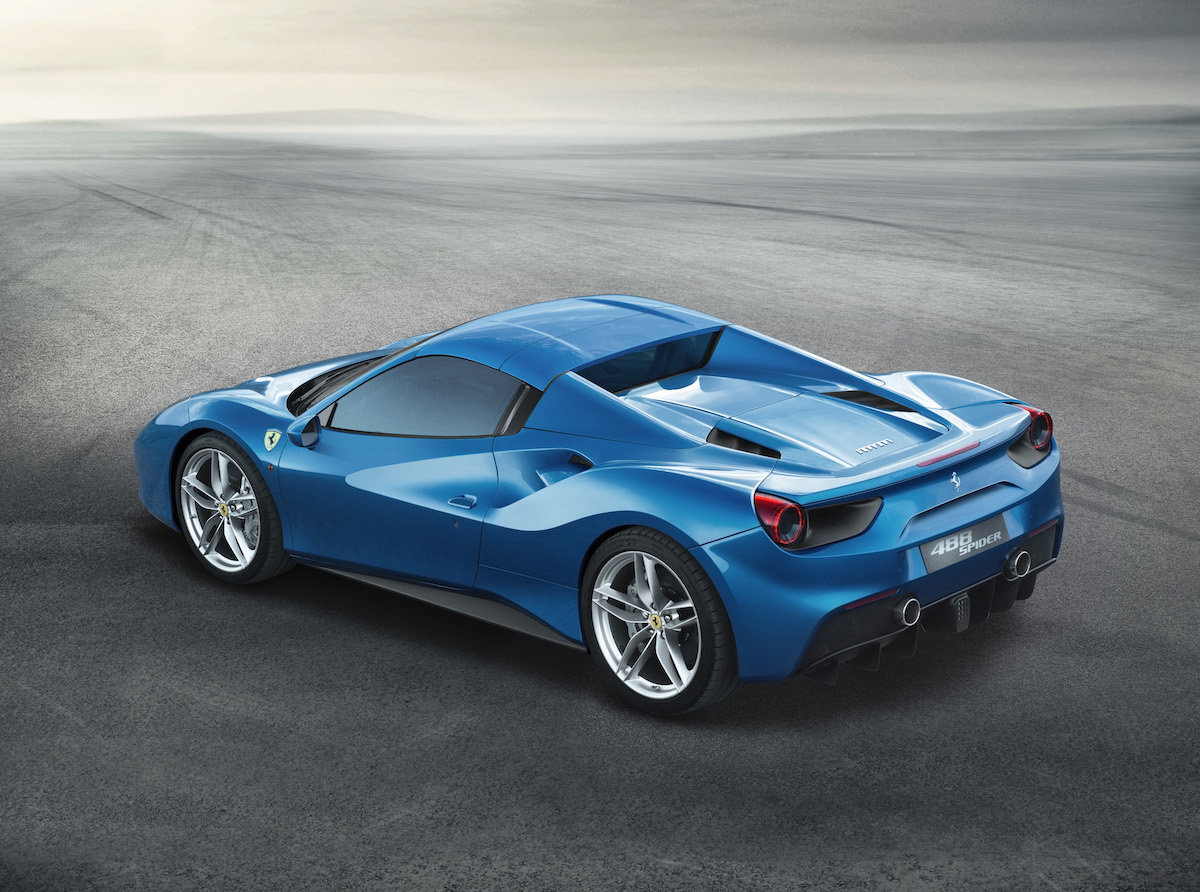
- The Ferrari 488 Spider model has an appeal all of its own – who wouldn’t want to whisk along in a Ferrari with the wind in their hair? – but it's not without its flaws. The folding hardtop roof stows itself beneath the engine cover at the press of a button, but whether it’s stowed or in position, the Spider’s body structure flexes and shudders over uneven road surfaces. By removing the 488’s roof, Ferrari made its smallest supercar even more eye-catching, but also significantly less structurally rigid.
- The 488 Pista (‘pista’ being Italian for track) followed in the tyre tracks of the 458 Speciale, the F430 Scuderia and the 360 Challenge Stradale. They’re all lighter, more powerful and more uncompromising versions of the mainstream models, engineered to be faster and more thrilling to drive on a race track. Like the 458 Speciale before it, the genius of the 488 Pista is that despite being so phenomenally capable on a circuit, it’s still blindingly good to drive on public roads, even bumpy, poorly-surface ones.
- On a budget: even now, several years after the 488 GTB was new, you’ll pay at least £130,000 for an early example. It’ll have covered around 20,000 miles and should be in pristine condition. It sold for £184,000 in 2015, meaning used cars are holding their value remarkably well.
- Don’t hold back: the 710bhp 488 Pista takes things on another level. The hardcore variant listed at £252,000 when new, and even now you’ll pay pretty much the same as that for a 2019 example. Despite being the supposed special edition model, there are plenty of 488 Pistas on the used market.
- The Italian alternative: Lamborghini’s rival to the 488 GTB, the Huracan, is a less rewarding supercar to drive, except for one very important consideration: its 5.2-litre V10 makes the Ferrari’s turbocharged V8 seem about as exciting as a diesel generator. The cheapest Huracans are changing hands for around £120,000.
- The British alternative: the 650S was McLaren’s retort to the 488 GTB. It too used a twin-turbo V8, but rather than aluminium construction, it boasted a carbon-fibre tub. That made it lighter than the Ferrari, but also more structurally rigid. You appreciated that most when driving the convertible version. The 650S starts at around £90,000 today.


