Ford Mustang (2014-2023) review | Charismatic old-school coupe and convertible
Ford Mustang cars for sale
4.0
Expert review
Pros
Fabulous old-school V8 of GT models
Charismatic looks and driving experience
Bullitt edition is sharp to drive
Cons
High running costs
Mustangs with the four-cylinder engine have less character
Cramped rear seats

The CarGurus verdict
Great to look at and entertaining to drive, the Ford Mustang is everything a muscle car should be. European sports cars with more compact dimensions, less weight and sharper chassis tuning will run rings around a Mustang on a demanding road, but that doesn’t mean you’ll be having more fun. For the full muscle car experience, the 5.0-litre V8 that powers the GT model is the one to have.
Despite its sheer size, the Mustang isn’t especially spacious inside. The front seats are roomy, but the rear seats are cramped and best saved for children or short journeys. The Fastback does offer a useful boot, though, which makes the Mustang more usable than its muscle car image might suggest.
It isn’t the most polished performance car, nor the most sophisticated, but as a charismatic used coupe or convertible with proper American muscle car appeal, the Mustang is very hard to resist.
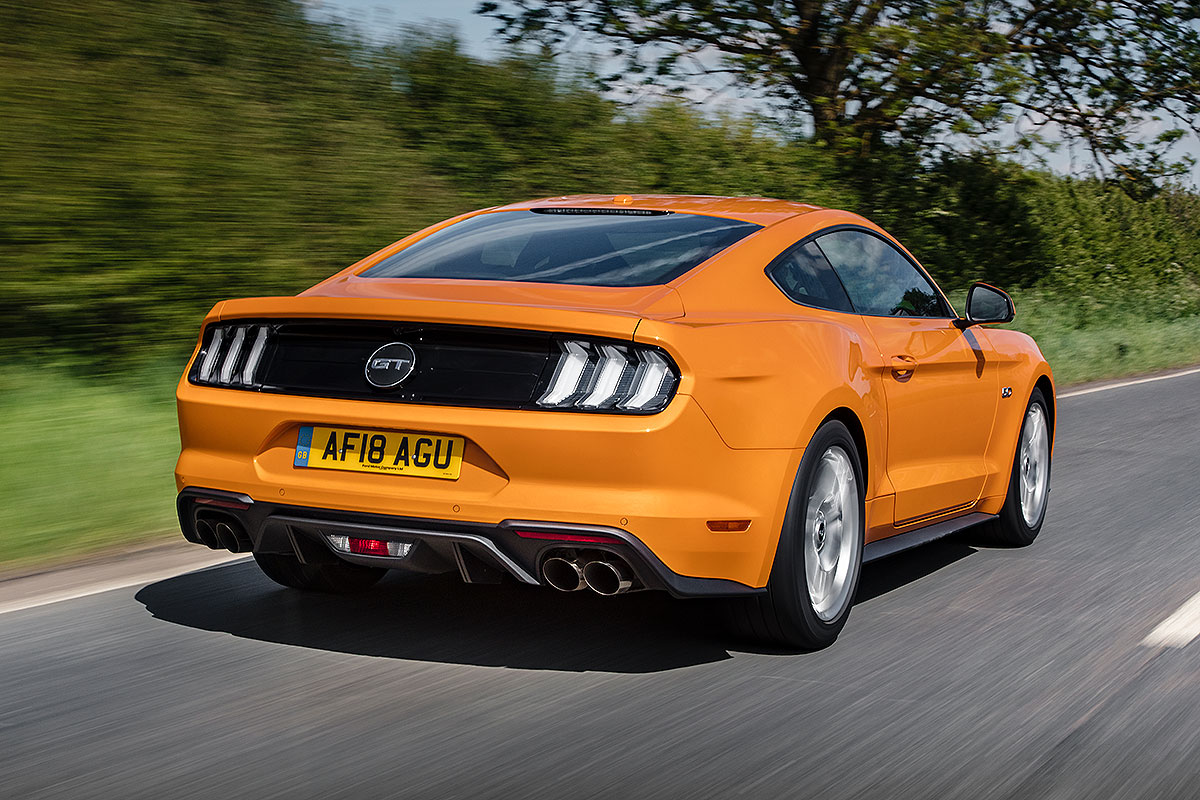
What is the Ford Mustang?
For many car fans, the Ford Mustang is an icon, but it’s one that was denied to UK car buyers for the best part of half a century. This good ol’ American muscle car has been a staple for decades, its blend of style, value and performance earning it legendary status.
This sixth-generation Mustang was launched in 2014 and given a mid-life facelift in 2018. More importantly for UK buyers, it was the first Mustang to be officially sold in right-hand-drive form in Britain. The A303 might not be quite as alluring as Route 66, but there’s no denying the Mustang’s appeal on this side of the pond.
As with rivals such as the Chevrolet Camaro and Dodge Challenger, the Mustang was designed to evoke the carefree spirit of the 1960s. Throwback styling is no less a part of the muscle car proposition than a rumbling V8 engine, which is why the Mustang’s long bonnet, shallow glasshouse and classic-inspired details matter so much.
The cabin takes its cue from the original Mustang, too, with a double-cowl dashboard layout and chunky switchgear. Some of the interior plastics are hard and scratchy, but the Mustang’s enduring success has always been built on value for money. When new, there were few cheaper ways into a rear-wheel-drive vehicle with proper muscle car presence.
As a used buy, the Mustang offers even more bang for your buck. Early UK cars were available with a 2.3-litre EcoBoost four-cylinder engine or a 5.0-litre V8, while later cars became V8-only, with special versions such as the Bullitt and Mach 1 adding extra appeal for enthusiasts. It has now been replaced by a newer-generation Mustang, but this 2014-2023 model still delivers the classic recipe: lots of style, lots of noise and lots of character for comparatively sensible money.
How practical is it?
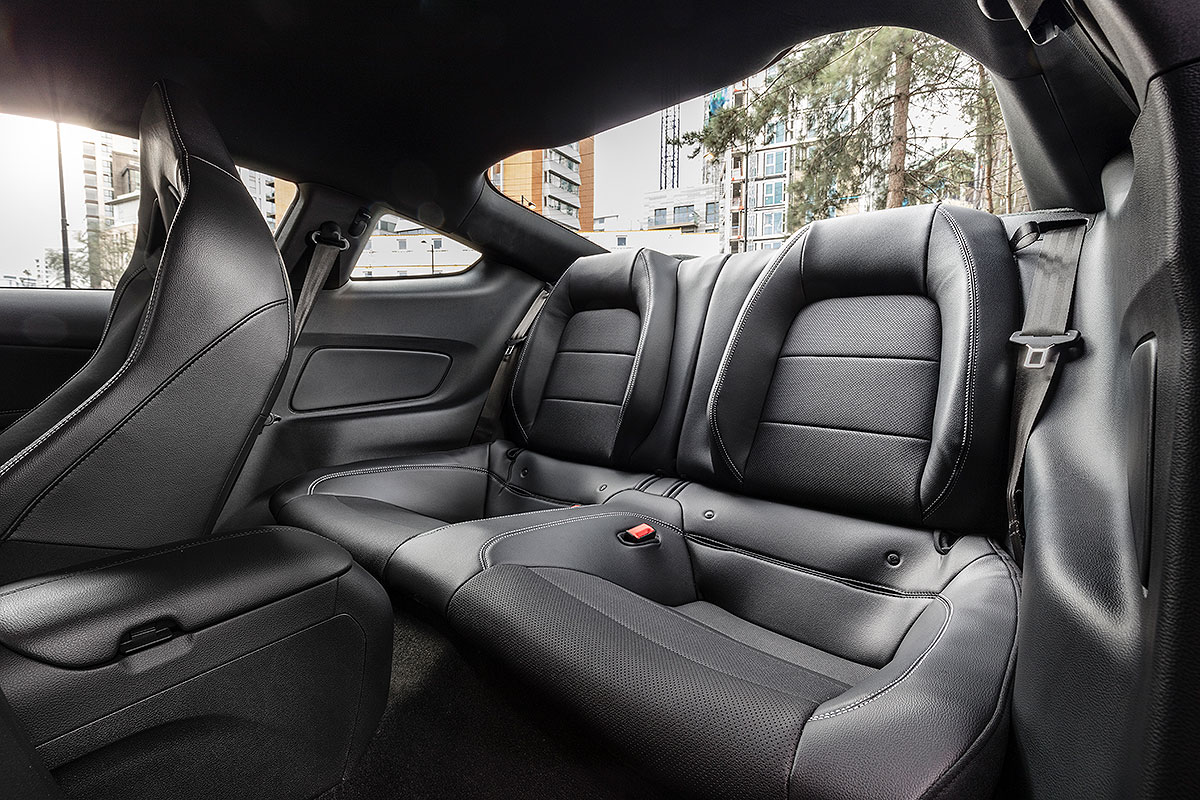
It’s a big car on the outside, but unfortunately that doesn’t translate into a particularly roomy interior. Ford bills the car as a four-seater, but while those sitting in the front have little to grumble about, your rear-seat passengers will soon be moaning more loudly than that thundering V8. Kids will be fine in the two rear seats and they’re bearable for adults if it’s just a short hop, but any longer than a few minutes and they’ll be complaining of cramps.
In other respects, the Mustang is surprisingly usable, with Fastback versions getting a fairly handy 408-litre boot. The Convertible’s is smaller at 332 litres, but it’s a usable size and, crucially, it’s the same size whether the roof is up or down. Some drop-top models lose luggage space when the hood is lowered, so this is not to be sniffed at.
Speaking of which, opening and closing the fabric roof is an electrically powered doddle; just release a catch, prod a button and eight seconds later you’ll be enjoying some wind-in-the-hair thrills.
Regardless of body style, the Mustang offers a wide range of seat and wheel adjustment for the driver, so you’ll have no problem getting comfortable. There’s also the usual array of cupholders, a decent glovebox and a handy roof-mounted sunglasses holder (obviously Ray-Ban Aviators do fit). The door bins aren’t especially generous, though.
As mentioned, the Mustang is a big car, measuring almost 4.8 metres long and around two metres wide. That means parking requires precision, making you grateful for the standard parking sensors and reversing camera.
What's it like to drive?
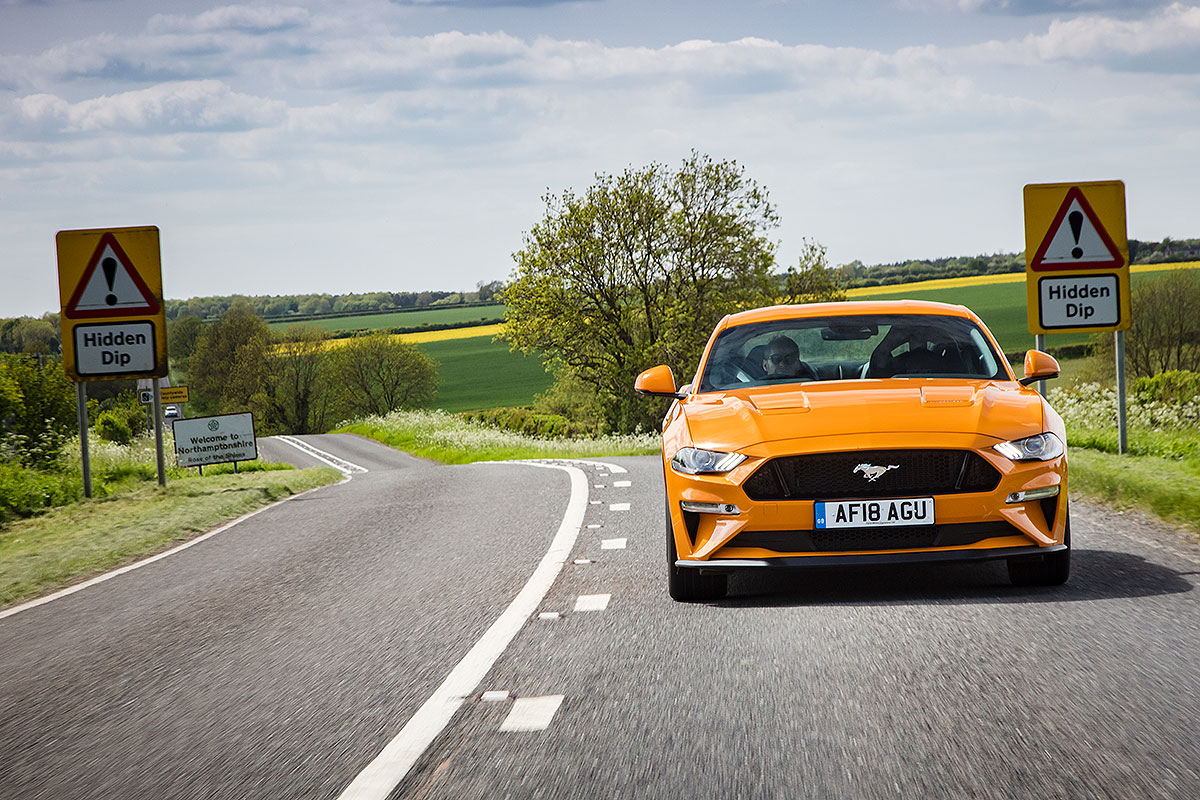
This generation of Mustang was the first to be built for right- as well as left-hand-drive markets. Perhaps more importantly, it was also the first to use a sophisticated multi-link rear suspension arrangement. Between them, those two developments made the Mk6 Mustang more suitable for use on narrow, bumpy British roads than any previous US muscle car.
That more advanced rear suspension arrangement did give the chassis better control and more precise responses than earlier Mustangs, but this is still an old-school bruiser at heart. It feels sizeable on UK roads, and it steers more lazily and rises and falls on its springs more markedly than a European sports car. The Mach 1 versions get uprated suspension and brakes, helping them feel the most agile and responsive Mustangs of the lot, but this is still not a delicate driving machine with scalpel-sharp responses.
Even so, it’s hard to deny that the Mustang oozes charisma and a sense of fun. That’s particularly true of models equipped with the 5.0-litre V8, which most definitely puts the ‘muscle’ into muscle car. It’s not a particularly sophisticated motor, but its bellowing soundtrack and hairy-chested power delivery never fail to raise a smile.
The turbocharged 2.3-litre EcoBoost four-cylinder is hardly a slouch and it’s much more efficient, but it sounds a bit flat by comparison and, well, it’s not really in keeping with the gas-guzzling, good-time vibe of a proper muscle car.
Technology, equipment & infotainment
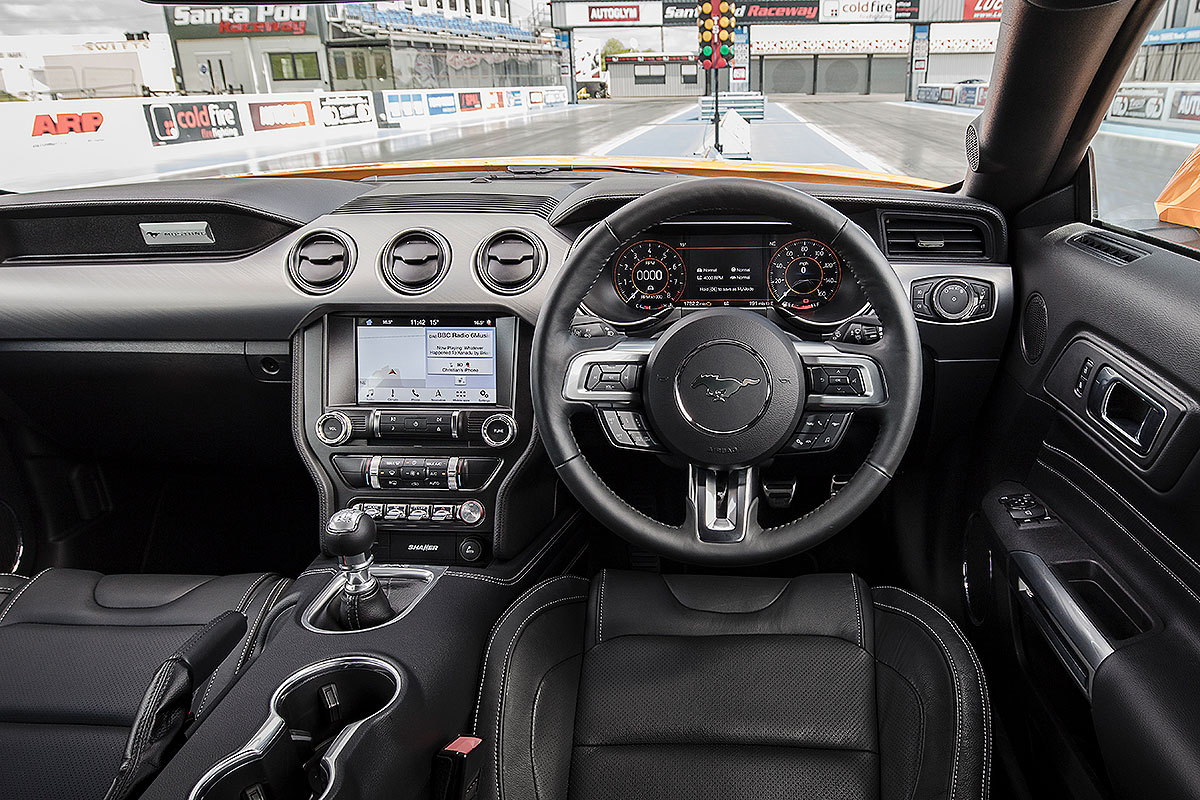
A big part of the Mustang’s appeal has always been the fact you get a lot of car for the cash. So while it can’t match rival European machines for sophistication, it makes up for that with toys. Depending on age and specification, you’ll find kit such as leather upholstery, climate control air-con, xenon or LED headlights, rear parking sensors, a reversing camera and, on later cars, a 12-inch digital instrument cluster.
In terms of infotainment, Ford’s touchscreen SYNC system is standard across the range. Earlier cars came with sat-nav, digital radio and Bluetooth connectivity, while post-2018 facelift models gained the more intuitive Sync 3 setup, with crisper graphics, cleaner menus and useful upgrades such as Apple CarPlay and Android Auto connectivity. All cars get Ford’s Track Apps feature, which allows you to view performance data such as 0-60mph times, cornering g-forces and even the temperature of air entering the engine.
When it comes to safety kit, the Mustang is very much a mixed bag. Earlier cars were criticised for their limited driver assistance systems, and Euro NCAP initially awarded the Mustang just two stars in 2017. Ford later improved the package, with equipment such as Pre-Collision Assist, Distance Alert, Lane-Keeping System and Driver Alert appearing on later cars. Even so, the Mustang never feels quite as sophisticated in this area as many European rivals.
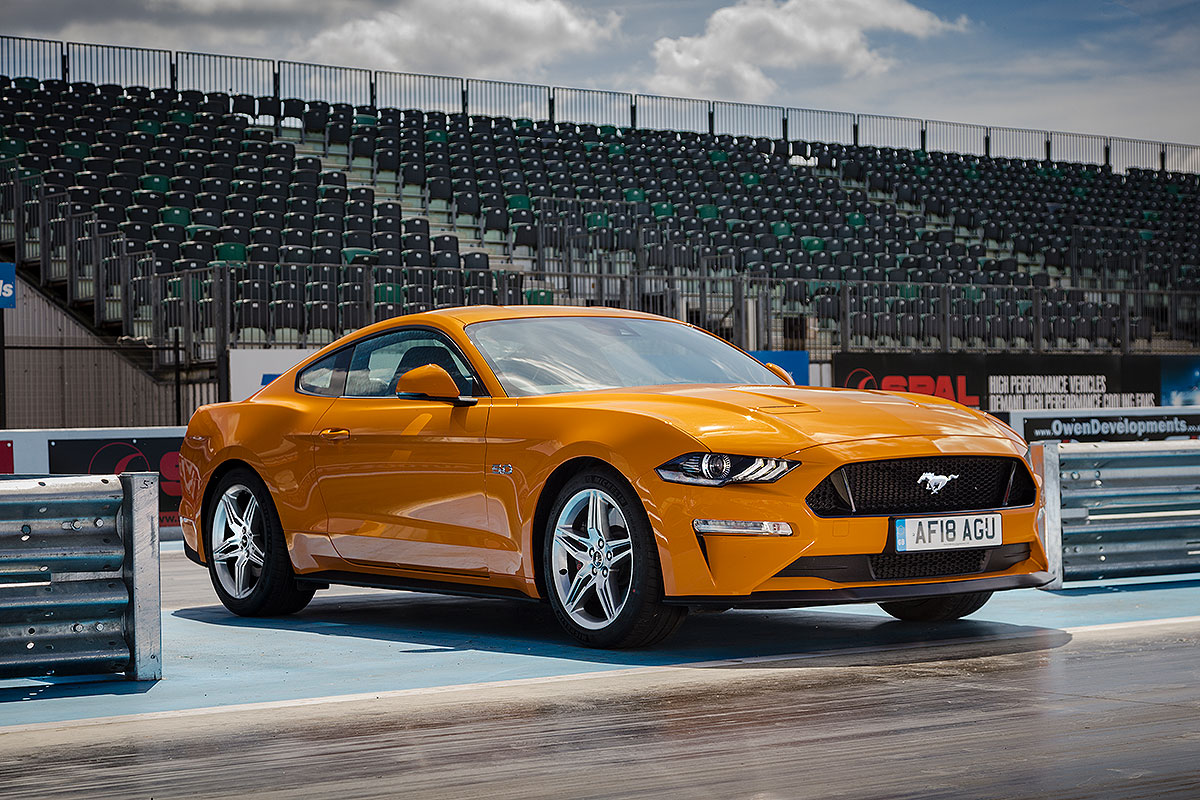
Ford Mustang running costs
Nobody buys a Ford Mustang expecting supermini running costs. The 5.0-litre V8 is thirsty, especially if you use its performance regularly, and a realistic mixed-driving figure is likely to be around 20mpg. Drive it hard and that figure will drop quickly, although the soundtrack does at least go some way towards justifying the pain at the pumps.
The 2.3-litre EcoBoost is cheaper to fuel and should get closer to 30mpg in everyday driving, but it doesn’t deliver the same sense of occasion. Later UK cars were V8-only.
Tyres are another cost to keep in mind. The Mustang is a heavy, powerful rear-wheel-drive car, and enthusiastic drivers can work through tyres quickly, especially if they experiment with features such as the wheel-spinning Line Lock launch control. Insurance is also expensive, particularly for V8 and convertible models.
On the plus side, the Mustang is less exotic than many European performance cars, and that helps keep some costs under control. Servicing and maintenance should be cheaper than for a Porsche 911, for instance, while the car’s relatively simple mechanical layout and strong following mean parts and specialist knowledge are not hard to find. It’s not cheap to run, but by V8 performance car standards, the Mustang is a refreshingly attainable icon.

Ford Mustang reliability
Mustangs might be built to last but they’re also built to a cost. This is more obvious in the cabin than anywhere else, where the hard and scratchy interior plastics can show signs of wear sooner than you might expect. Mechanically, though, there isn’t a great deal that goes seriously wrong if the car has been looked after properly.
Owners have reported air conditioning compressors failing, so check the air-con works as it should and ask whether the compressor has ever been replaced. Oil coolers are a known weakness, too, although not a frighteningly common one. Check the car from bumper to bumper for poor panel gaps and patchy paint quality, because build quality isn’t always on a par with a BMW M car or Mercedes-AMG model.
If you’re considering a Mustang convertible, check that the fabric hood operates smoothly and fits snugly against the windscreen header rail and side windows. That isn’t always a given with a used Mustang.
These are high-performance cars and many will have been driven enthusiastically. That’s not a problem if the car has been properly maintained and serviced on schedule, but look for signs of neglect or abuse. Kerb damage, car park scrapes and mismatched budget tyres should all be treated as warning signs, even if they’re not necessarily reasons to walk away immediately.
Ford finished joint 24th out of 30 manufacturers in the latest What Car? Reliability Survey, so the brand result is nothing special. Even so, the Mustang itself has a fairly simple mechanical layout by modern performance-car standards, and a carefully bought, properly maintained example should prove dependable.
- The smaller, less powerful and far less characterful 2.3-litre EcoBoost four-cylinder wasn’t a big seller in the UK and was eventually dropped from the range. If you’re looking at used examples, the EcoBoost badge is the giveaway. It’s cheaper to run than the V8, but it misses out on the soundtrack and sense of occasion that make a Mustang feel like a Mustang.
- There are two body styles: the Fastback coupe and the convertible. The fixed-roof model is the better choice for enthusiastic drivers, while the drop-top is more at home cruising along a promenade making the sort of noise that encourages people to look up from their ice creams.
- GT badging signifies the 5.0-litre V8 model, but there were several more focused or collectable versions above it. The Bullitt celebrated the famous movie car with Dark Highland Green paint, subtle styling tweaks and a retuned V8, while the later Mach 1 added more performance-focused suspension, better brakes and aerodynamic upgrades.
- For modest running costs: The V8 models won’t return much more than 20mpg in mixed driving, but the four-cylinder EcoBoost should manage closer to 30mpg. Just don’t expect the same thunderous soundtrack, effortless performance and sense of occasion.
- For an authentic muscle car experience: It simply has to be the V8-powered GT, ideally in Fastback form with a manual transmission. This is the Mustang at its most honest: big engine, rear-wheel drive, muscular styling and a soundtrack that makes the fuel bills easier to forgive.
- For collectors: The Bullitt is well worth considering. Introduced to celebrate the 50th anniversary of the Steve McQueen film of the same name, it brought subtle styling tweaks, Dark Highland Green paint and a retuned 5.0-litre V8. It feels more special than a regular GT without being too shouty.
- For keen drivers: Look for a Mach 1. It’s not easy to find, but it’s the sharpest official UK-market version of this generation, with extra power, uprated brakes, more focused chassis settings and styling that nods to Mustangs of old without going full fancy dress.