Honda e Review (2019-2023)
Honda Honda E cars for sale
3.0
Expert review
Pros
Cute and characterful looks
Peppy performance around town
High-tech connectivity features
Cons
Short range
Cramped cabin
High price for such a small car
The CarGurus verdict
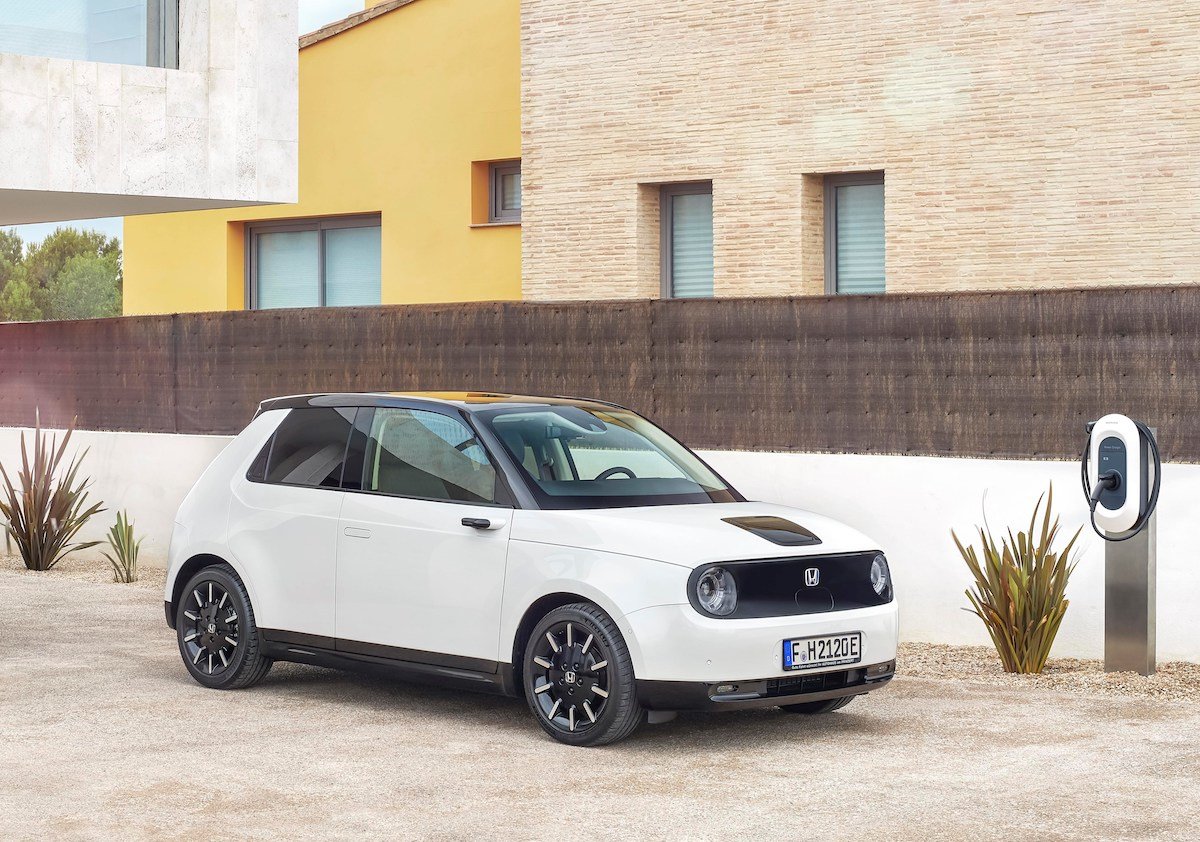
The Honda e is the sort of car that certain buyers will simply have to have, no questions asked. Others, meanwhile, will look at its price, contemplate its range and wonder why anybody would want one. It will appeal to drivers who value design, desirability, and connectivity above all else, although it will only suit those who live in a city and rarely venture beyond its outskirts.
There are several far more usable alternatives for similar money that offer double the range, if not more. But none, as yet, combines the Honda’s want-one factor with that kind of flexibility. Those who take the plunge on the e will discover a likeable car with peppy around-town performance, mature driving manners, and a high-quality cabin.

What is the Honda e?
The Honda Urban EV Concept stole the show when it was unveiled at the 2017 Frankfurt Motor Show, upstaging the luxury SUVs and supercars that surrounded it. The Honda e production version followed a while later, and became Honda’s first mass-market electric car. Inevitably, as the model left the show stand behind and moved closer to showroom floors, the very wide arches and enormous wheels of the concept gave way to narrower hips and more sensible rims. On first acquaintance with the production version of the e, it was hard not be a shade disappointed.
But the tiny five-door electric hatchback is still a charming and distinctive thing, with styling that’s simultaneously retro and futuristic. It has an expressive face and just-so proportions, giving it the personality other electric city cars so sorely lack.
In a purely logical sense, the e doesn’t make a particularly strong case for itself, lacking the battery range, usability and value-for-money that underpin its rivals. Instead, Honda hoped you’d long to own an e so strongly that you’ll overlook all practical considerations and buy one anyway. Those hopes would ultimately prove to be overoptimistic, though, because in late 2023, the e was quietly discontinued due to poor sales.

How practical is it?
The e has a small boot at only 171 litres and decidedly cramped rear seats, so practicality is limited, but up front there’s ample room. Meanwhile, cabin quality is mostly very good, and visibility is excellent, as is the turning circle.
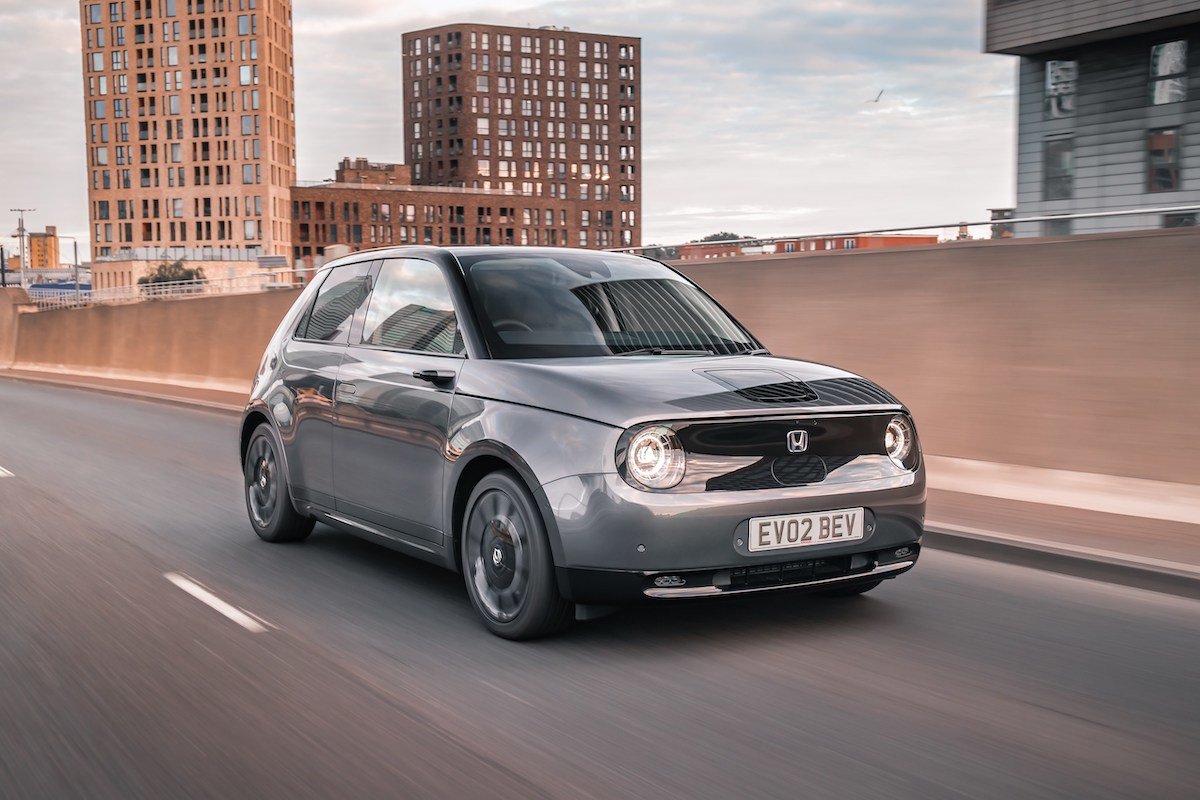
That’s largely because it’s rear-wheel drive, which frees up the front wheels to handle the only the steering. The electric motor is mounted at the rear, and that allows the front wheels a huge amount of articulation as you fling the steering wheel from lock to lock.
What's it like to drive?
It’s a very different approach to the one Renault has taken with its Zoe EV, for instance. The two cars are broadly comparable in terms of cost, but where the Zoe won’t charm you with its looks or amuse you with a virtual aquarium (see Three Things to Know, below) it will cover 239 miles between charges. The Honda will manage only 125. The Renault is much more spacious, the Honda far cuter in appearance.
The two cars, it’s fair to say, will hardly squabble over the same buyers. In the real world, you should expect around 100 miles of range from the e’s 35.5kWh battery pack, but no more, despite what the official WLTP figures say. That’s fine for city driving, but the moment you find yourself venturing further out of town, that sort of range is seriously limiting. Honda says the e will replenish its batteries in four hours when plugged into the 7kW wallbox charger you can have installed at home, while an 80% charge can be achieved in 30 minutes at a public fast charger.
The Honda e already has some stiff competition in the electric small car market in the form of the Renault Zoe already mentioned, as well as the Mini Electric, the Nissan Leaf, the BMW i3, the Peugeot e-208, and the Vauxhall Corsa-e, not to mention small electric SUVs and larger hatchbacks such as the Hyundai Kona Electric, MG ZS EV and the Volkswagen ID3 – not to mention all the offshoots from other Volkswagen Group brands.
Technology, equipment & infotainment
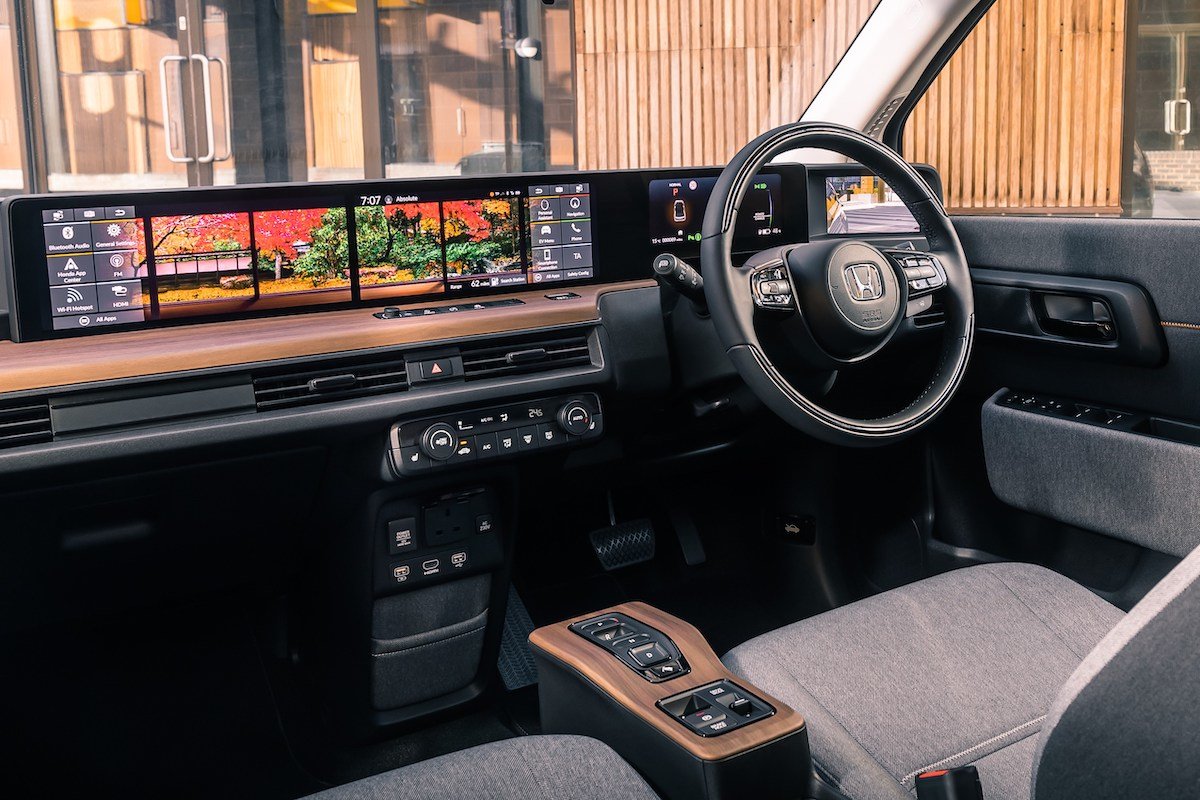
This car trades as much on its desirability as anything else. Its interior is every bit as alluring as its exterior, the five digital infotainment screens that stretch the full width of the dashboard and the convincing faux-wood trim lending the feel of a trendy hotel lounge. The various screens take care of pretty much all functionality (except the ventilation controls, thankfully) from the nav system to music streaming, and the displays can be interchanged between the various touchscreens for ease of use.
There are two versions of the e: the entry-level model, which has a 134bhp electric motor and a slightly more generous 137-mile range, and the Advance variant, with a more potent 152bhp motor. Along with that extra shove, the Advance also adds bigger wheels, a trick digital rear-view mirror, a premium sound system, a heated windscreen, and self-parking capability.

Honda e running costs
This is where the Honda e – and all electric cars like it – come into their own. If you recharge the e’s battery overnight, at home, and on the right tariff, your ‘fuelling’ costs will be very low indeed. However, charging at a public rapid charger with any regularity can be much more expensive. For batteries replenished in this way, the 100 miles or so that you’ll get for your money might only represent a 50% saving compared to a similar petrol-powered car. The point is, an EV will not necessarily cut your fuel bill to nothing.
However, you will make savings on congestion and emissions charging zones, because the Honda e is exempt from the lot. Benefit-in-kind tax for company car drivers will cost peanuts, and will for the next few years at least. However, the car sits in insurance group 25 – 29 for the Advance model, which is substantially higher than any conventionally powered city car.

Honda e reliability
It’s difficult to comment on the Honda e’s reliability, because so few were sold. Moreover, given this is Honda’s first mass market electric car, we can only rely so much on the company’s reliability record before it.
That said, Honda tends to perform extremely well in reliability surveys, and it has been building hybrid vehicles for many years, so those two considerations combined should give would-be buyers reason to feel optimistic. So should the fact that, in theory at least, EVs should be considerably more reliable than petrol and diesel cars, because there are far fewer moving parts.
Like all Hondas, the e was sold new with a three-year/90,000-mile manufacturer warranty, and the battery itself is covered for eight years or 100,000 miles.
- The e’s cabin has a series of party pieces. An HMDI port allows you to plug in a games console and play via the car’s digital screens, and when you’ve had enough of that, you can sit back and lose yourself as you peer into your own virtual fish tank. Apple CarPlay and Android Auto are standard across the line-up.
- Despite its tiny proportions, the e is heavy at 1,500kg, which is about the same as a family saloon. While it doesn’t want for straight-line performance at low and medium speeds, it does feel its weight in corners. Ultimately, that prevents it from being fun to drive in the way the best petrol-powered city cars can be. Nonetheless, the Honda is comfortable and quiet, and there is an unexpectedly grown-up feel about it. You never get the sense of sitting inside a flimsy tin can.
- All versions of the e come with a pair of small bullet-shaped cameras on stalks in place of door mirrors. These relay a live feed to the outermost screens within the cabin. It takes time to grow accustomed to this new way of seeing what’s over your shoulder, but eventually, you stop thinking about it. The benefit of these cameras over conventional door mirrors is that they reduce aerodynamic drag and squeeze a little more range out of the batteries.
- Style over substance: if you don’t need much space or a particularly generous range but adore the way the car looks, then the cutesy Honda e will slot into your life like a dream. It’s full of character, good to drive, well-built, and has charm by the bucketload.
- A little more substance: the British-built Mini Electric is most similar in principle to the Honda. It trades far more on its design and desirability than any practical considerations, although with a claimed range of up to 145 miles, it should prove a fraction more useable than the e.
- Usability matters most: priced in line with the Honda, Nissan’s Leaf is the sort of EV that will appeal to those who buy with their head rather than their heart. In a subjective sense it is nothing like as desirable as the e, but with a claimed 239-mile range and its one-pedal driving experience, it is vastly easier to live with.
- Top of your budget: the Kia e-Niro is more expensive than the Honda but so much more usable. With a claimed range of 282 miles, it’s as flexible in real-world use as EVs costing twice as much. It just doesn’t have the Honda’s charm.


