Hyundai Bayon 2026 review | Not perfect, but a sensible buy nonetheless
Hyundai Bayon cars for sale
4.0
Expert review
Pros
Striking and unusual design
Spacious and comfortable cabin
Long warranty
Cons
Uninspired interior design
Lacks the sliding rear seats fitted to many rivals
Not as well equipped as the Hyundai Kona

The CarGurus verdict
If you’re in the market for a small SUV like this one, then the Bayon is one of those cars you really should try, even though it isn’t quite at the top of the class. To be up there, it would need an interior that didn’t feel as though it had been plucked from the bargain bin, and perhaps some smarter sliding rear seats wouldn’t go amiss, either.
But elsewhere the Bayon is such a well-rounded package that you soon find yourself forgiving these flaws. It’s spacious, well equipped, comfortable, and even manages to be pretty good fun to drive when you get it out on a back road.
Match this to Hyundai’s competitive pricing, its long warranty and its excellent reputation for reliability, and suddenly the case for the Bayon looks pretty strong. Yes, its rivals are smarter, sharper and sometimes more upmarket, but the Bayon is still a neat little car that stands out for more than just its looks.
What is the Hyundai Bayon
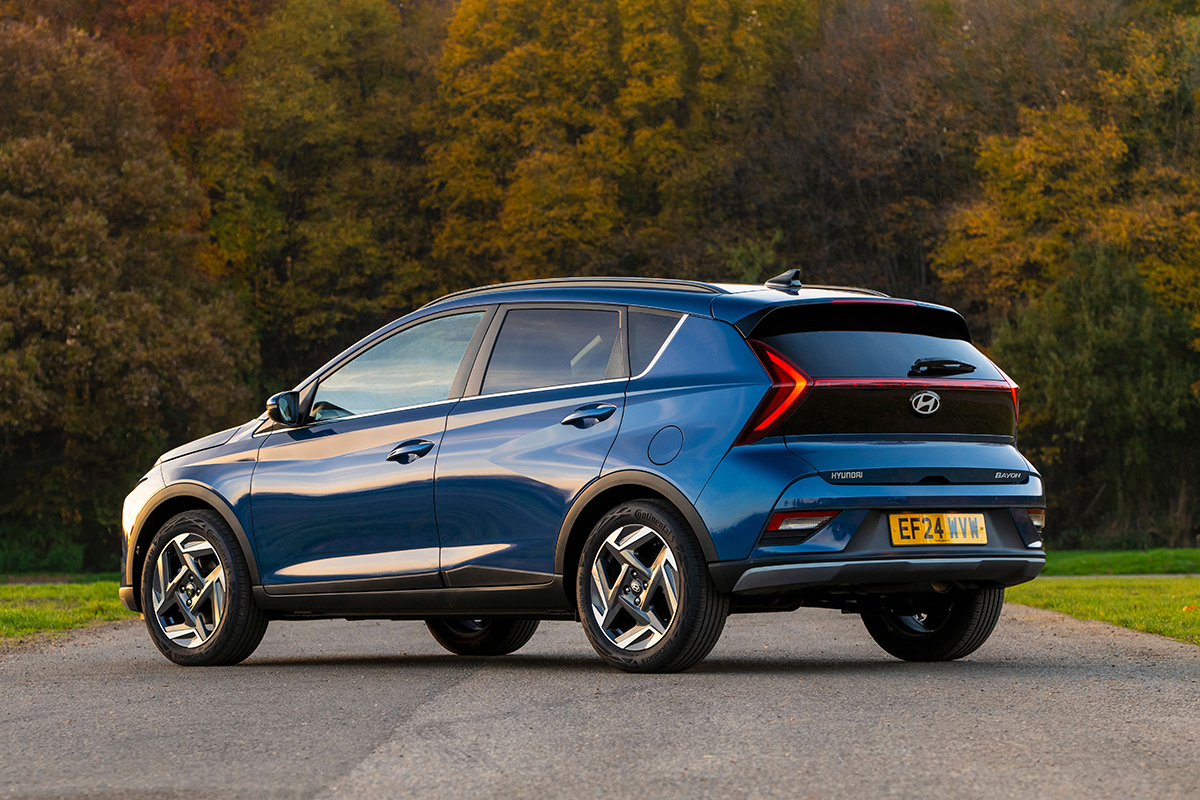
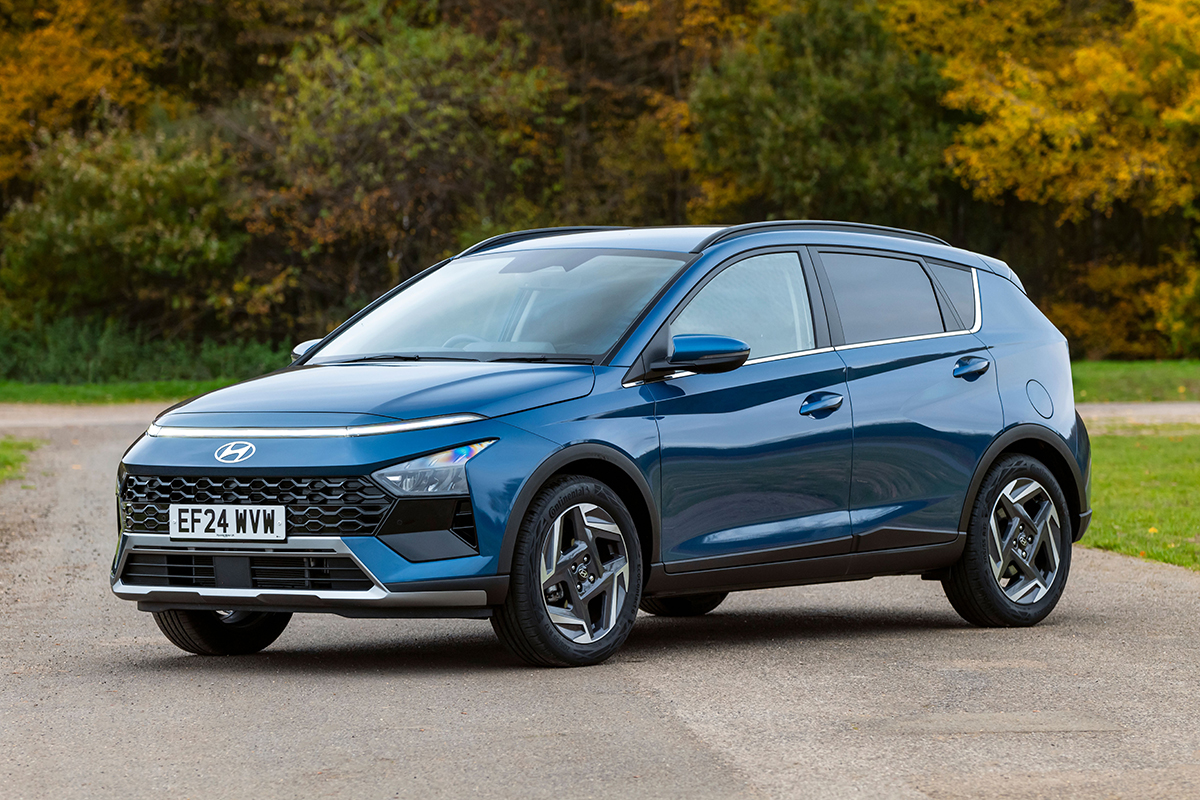
In a market that’s saturated with rivals, you need to stand out from the crowd. So it should come as no surprise that the Hyundai Bayon has radical styling that ensures it’ll stand out from the compact SUV mêlée.
Whether you like it or not, there’s no doubting that its snub nose, with running lights mounted high up like brows, its angular side profile and its boomerang-style rear lights set it apart from the competition. And there’s plenty of that around these days; the Bayon goes up against big-selling rivals like the Ford Puma, Renault Captur, Dacia Duster and Citroën C3 Aircross.
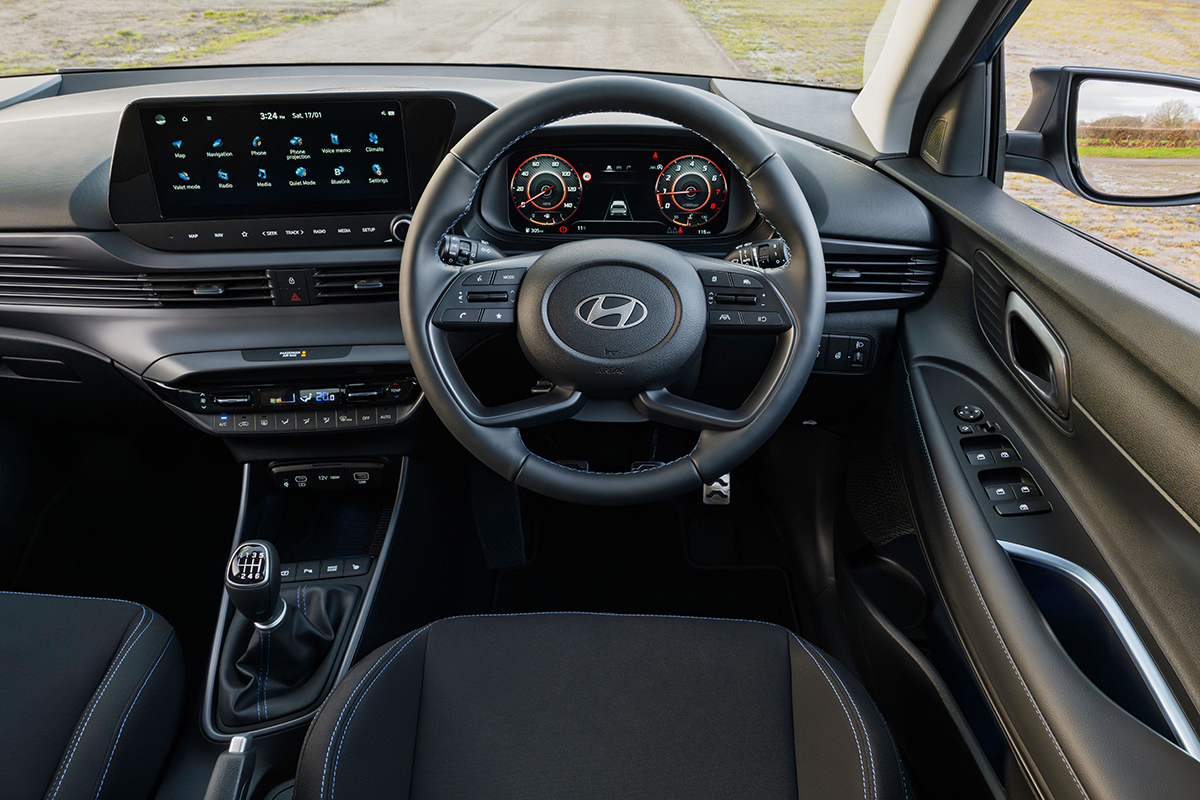
Climb inside and its origins become clearer: the Bayon shares a dashboard with the Hyundai i20 hatchback, the car on which it’s based. In fact, think of the Bayon as an i20, just a little bit taller, making it the small Hyundai of choice for those who prefer a slightly higher seating position.
How practical is it?
That’s both good news and bad. Good, because the Bayon’s dash is clearly laid out and easy to use; bad, because it’s built from cheap-feeling, shiny plastics. At least the infotainment system, which sits on top of the dashboard, is easy to find your way around and is quick to respond to your commands.
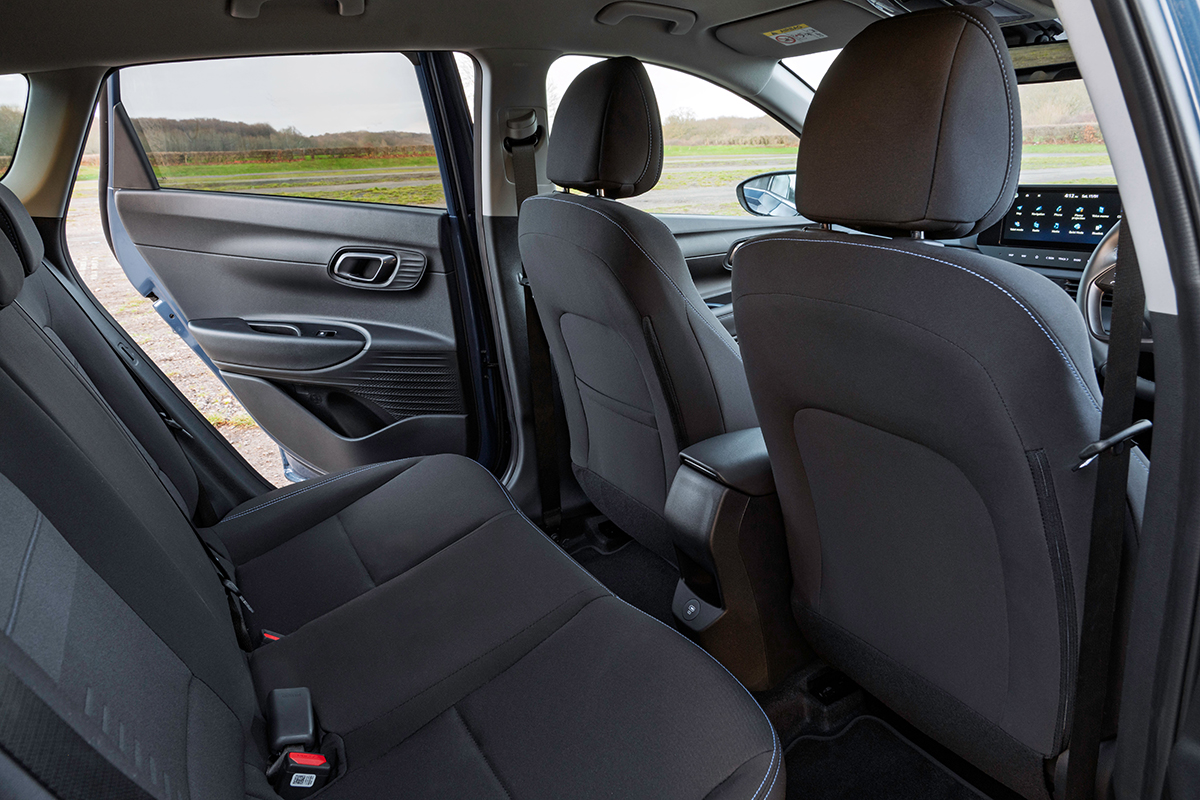
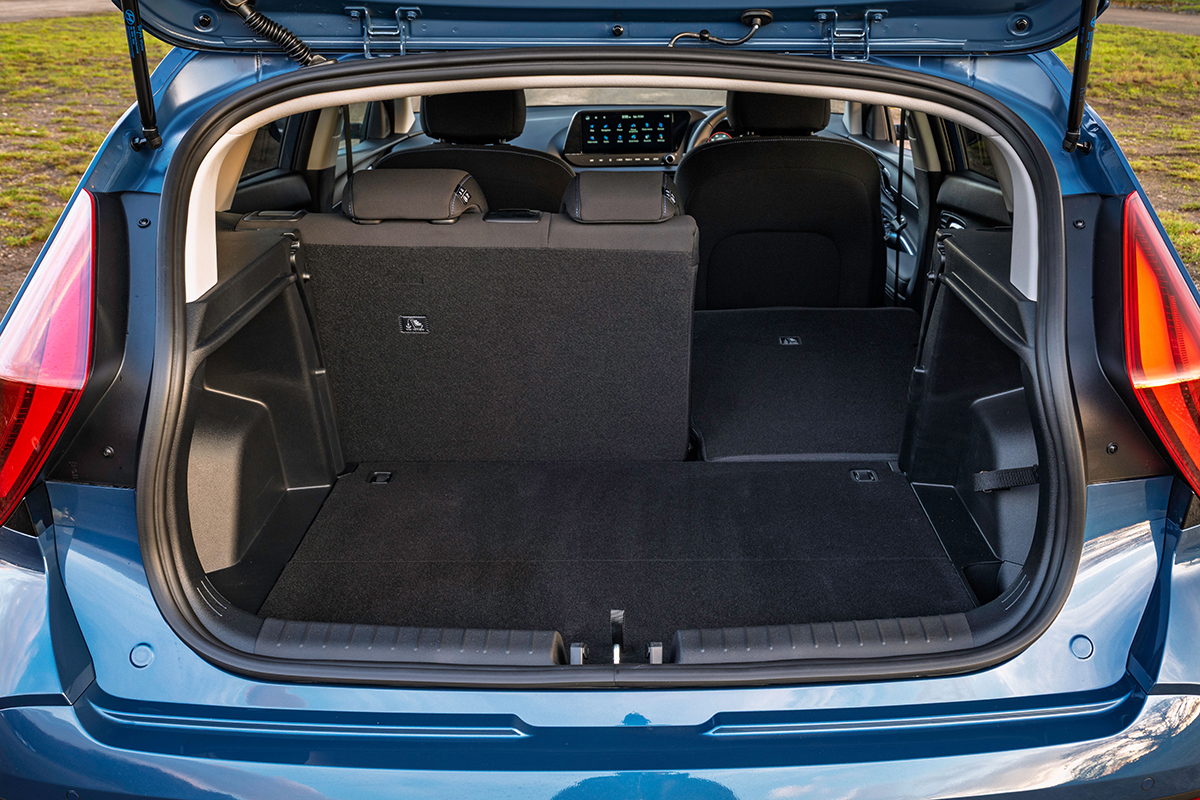
But while it may not be entirely pleasant to look at, the Bayon’s interior is at least roomy, with plenty of headroom and legroom whether you’re in the front seats or the back seats. Those seats split and fold in a conventional way, though, and don’t slide like those in the Renault Captur and Citroen C3 Aircross, which means the Bayon isn’t as versatile in the best in the class.
Boot space is a bit on the small side, too; about the size of a Skoda Kamiq’s, but smaller than the VW T-Cross, Peugeot 2008, and several others. On the plus side, the way the parcel shelf stows flush with the rear seat backs is a neat trick, and useful if you unexpectedly find yourself needing to carry a tall load in the boot.
What’s it like to drive?
At first, you got a choice of two powertrain options in the Bayon, both 1.0-litre turbo T-GDi petrols with a 48-volt mild hybrid technology. One came with 99bhp, and the other got 118bhp, and you could have both with either a six-speed manual gearbox or a seven-speed dual-clutch automatic, or DCT. The 99bhp engine isn’t the most gutsy of engines and feels a bit flat in the middle of the rev range, but the 118bhp version is better, and feels much more eager, with plenty of mid-range punch.
However, when it was facelifted in 2024, Hyundai removed the mild hybrid technology from the 99bhp engine, and discontinued the 118bhp version altogether. The result of this is that the only engine available is now 89bhp version of the 1.0-litre turbo, though you can still choose to have this with the seven-speed automatic, should you wish.
It’s a bit flatter at lower revs than the old 99bhp engine, which means it doesn’t feel as punchy as some rivals, and you have to work it hard to get the best from it. Mind you, that isn't a chore; revving the Bayon's little engine out is unexpectedly enjoyable, as it starts to feel keener the harder you push it.
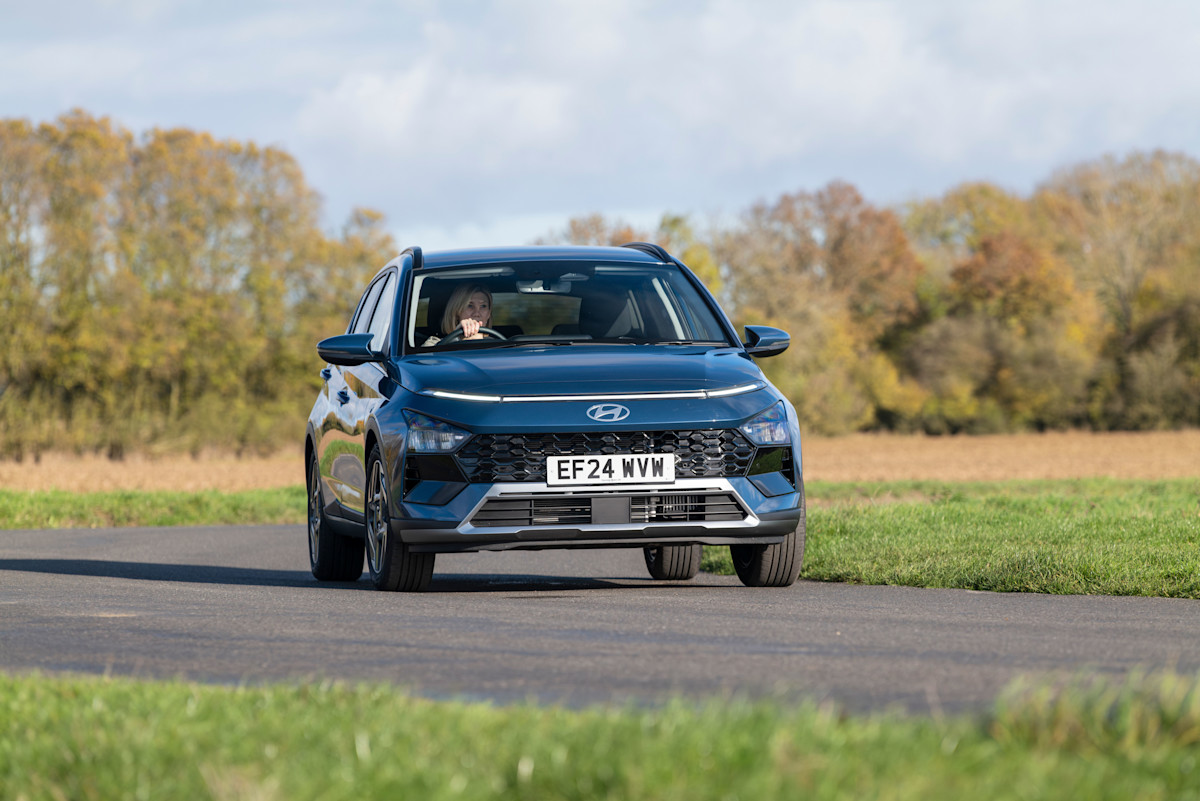
What comes as more of a surprise is that the Bayon is actually really good fun to drive; it doesn’t lean over much in corners, there’s plenty of grip, and the steering is responsive, which leaves it feeling rather agile. Granted, it’s never as involving or as playful as a Ford Puma, but it’s still a lot more engaging than most other supermini-sized SUVs, and given the Bayon’s remit as cheap and cheerful family transport, that’s an unanticipated pleasure.
You don’t pay for this with overly firm suspension, either; granted, the Bayon isn’t quite as comfortable as some of its rivals, but it still rides bumps pretty well, and doesn’t feel skittish over larger undulations.
Technology, equipment & infotainment
At launch, the Bayon line-up started with the SE Connect, which got 16-inch alloy wheels, air conditioning, rear parking sensors and an eight-inch touchscreen with Android Auto and Apple Carplay smartphone connectivity. Premium trim upgraded the touchscreen to a 10.25-incher, and added heated seats, a heated steering wheel, climate control, 17-inch alloy wheels and automatic lights & wipers. Ultimate sat at the top of the range, with keyless entry, a two-tone interior, and a Bose sound system.
In 2024, the trim names changed to Advance, Premium and Ultimate, keeping in line with Hyundai’s etymology across its range. Then for 2026, the Advance model was dropped, while Premium was renamed Black Line, and Ultimate became Tech Line. Equipment levels were downgraded slightly; the Black Line’s climate control became manual air conditioning, for example, while the Bose sound system became an optional extra on the Tech Line. But prices also came down slightly to match, which means that while you get less, you also pay less – and that means the Bayon still feels like it gives you a decent amount of equipment for the money.
The Bayon gets a 10.25-inch touchscreen as standard on both models, and it’s one of the better systems in the business. Mainly, that’s because it isn’t trying to do too much; you don’t have to use it to operate the air conditioning as you do in a Peugeot 2008, for example, because in the Bayon, you get a proper separate heating and ventilation panel with easy-to-use physical controls. That means the software can be faster, easier to understand and more intuitive to use, which it is.
Hyundai Bayon running costs
Prices for the Bayon now start at less than £25,000, which means it looks pretty affordable; by contrast, a Ford Puma will cost a few thousand pounds more. Granted, a Citroen C3 Aircross is cheaper still, but you don’t get as much equipment or as long a warranty with one of those.
You should be able to see around 50 miles per gallon from the 89bhp petrol engine if you choose the manual gearbox. And if you go for the automatic, fuel consumption should actually be fractionally better thanks to the dual-clutch gearbox’s efficiency. Those figures are roughly on a par with petrol rivals’, though they can’t compete with full hybrid models’.
Hyundai’s servicing costs are very reasonable, meanwhile, and it offers service plans that give you the chance to pay up-front or monthly for servicing. Once the Bayon’s warranty has come to an end, you can also benefit from Hyundai’s aggressively priced menu servicing scheme, which allows you to keep servicing your car at a Hyundai dealer for little more than the cost of a service at an independent garage.
There’s more good news when it comes to the Bayon’s timing belt: it doesn’t have one. Instead, it has a metal timing chain, which shouldn’t need replacing for the duration of the car’s life.
So while the Bayon might cost you a fraction more than some of its rivals on fuel, its relatively affordable maintenance costs mean that, overall, it should be a pretty affordable car to run.
Hyundai Bayon reliability
Unfortunately, we don’t have any reliability data on the Bayon; too few owners have responded to industry reliability surveys, so it’s hard to draw concrete conclusions as regards its reliability.
However, we can get some idea by looking at Hyundai’s other offerings, particularly the Kona, which shares engine technology with the Bayon. So it’s a brilliant sign that the Kona petrol came fifth out of the 38 small SUVs featured in the 2026 What Car? Reliability Survey.
Hyundai as a manufacturer also did creditably well in the same study, coming 14th out of the 30 carmakers considered with a solid score of 93.1%. All of which suggests the Bayon’s reliability should be hard to beat.
Even more reassuring is the fact the Bayon comes with Hyundai’s standard five-year, unlimited-mile warranty. That’s much more than most manufacturers offer you these days, and is only beaten by a few manufacturers.
- The Bayon isn’t the only compact SUV Hyundai sells, because there’s also the Kona. So what’s the difference? Well, think of the Kona as the Bayon’s plusher, more extrovert sibling, and the Bayon as the more straight-laced, more down-to-earth car of the two. You pay slightly less like-for-like for the Bayon, but also get a slightly stingier equipment list, and the Kona is fractionally bigger, and a touch more upmarket. The Kona also offers you the choice of hybrid or electric power, on top of the petrol engine range, and there’s also the option of a sporty-looking N Line model and a hot N version, neither of which can be had with the Bayon. For all that, though, these two cars are pretty similar in like-for-like form, so which one to choose will come down largely to personal preference.
- Manual Bayons built before 2024 came with Hyundai’s electronic fly-by-wire clutch system, badged iMT. What this means is that early manual Bayons can automatically declutch for you, allowing the car to freewheel when it works out that doing so would save you fuel, an act Hyundai refers to as “sailing”. It doesn’t actually do this all that often, and you don’t really notice when it does unless you keep a close eye on the dashboard, where a little icon of a sailing boat pops up to let you know. Does it make a difference to the fuel economy? If it does, it’s negligible, but it does make the Bayon’s clutch a little trickier to use because you can’t feel the bite point. Manual Bayons built from 2024 onwards come with a normal conventional six-speed gearbox.
- As with all Hyundais, the Bayon comes with a five-year, unlimited mileage warranty as standard to give buyers peace of mind over the longer term. This warranty includes roadside assistance and five annual vehicle health checks.
- If you want the best all-rounder: We reckon the best Bayon is the entry-level Black Line, which gets most of the equipment you’d want yet doesn’t cost the earth to buy.
- If you want all the toys: go up a notch to the Tech Line, but choose the manual gearbox to keep the price reasonable. Doing so will get you a specification somewhat in excess of that which you’d expect on a little car like this one.
- If you want an automatic: you can take your pick between either version, as an auto is available in both forms. And the Bayon is one of the better small autos, so if that’s what you’re after, it’s a sound choice.
- If you’re buying on a budget: once again, the Black Line model is the one to have. Go for the manual version, and you’ll have the cheapest Bayon there is.


