Jeep Compass Review (2017-2020)

Pros and cons
What we like
Better off road than most rivals
Well equipped, so long as you steer clear of Sport spec
Strong safety rating from Euro NCAP
What to consider
No better than adequate to drive
Some rivals are more fuel efficient
Most versions have low towing limits
The CarGurus verdict
The Jeep Compass has a bluff, ‘proper SUV’ appeal that is lacking in the kaleidoscope of more on-road oriented, crossover-style rivals that are available. However, that is ultimately the only reason you’d go for it. It’s merely adequate to drive and to live with, given that others offer more space, a sharper drive, more efficiency and a broader range of engines.
The monthly PCP costs are compelling, but we’d still nudge you towards a Seat Ateca or Skoda Karoq for similarly great monthly rates on a family SUV that’s better to drive and much more efficient. Or, a VW Tiguan is great if you value a premium look and finish, while the Peugeot 3008 is very recommendable if you want something that looks really sharp, is efficient and good value. That advice stands whether you’re buying used or new. In fact, we’ve previously named the Seat Ateca our overall winner in the CarGurus Used Car Awards.
So yes, the Jeep looks cool and is inoffensive to drive, but there are much better options out there.
out of 5 expert review
The Jeep Compass has its work cut out for it to make an impact in a compact SUV class that’s brimming with household name alternatives. With the Nissan Qashqai, Seat Ateca and Ford Kuga all in the same price range, not to mention the Kia Sportage, Peugeot 3008, Skoda Kodiaq, Hyundai Tucson, Volkswagen Tiguan and Mazda CX-5, there’s a confusion of choice before you even consider less conventional alternatives, such as smaller (yet still practical) premium SUVs like the BMW X1.
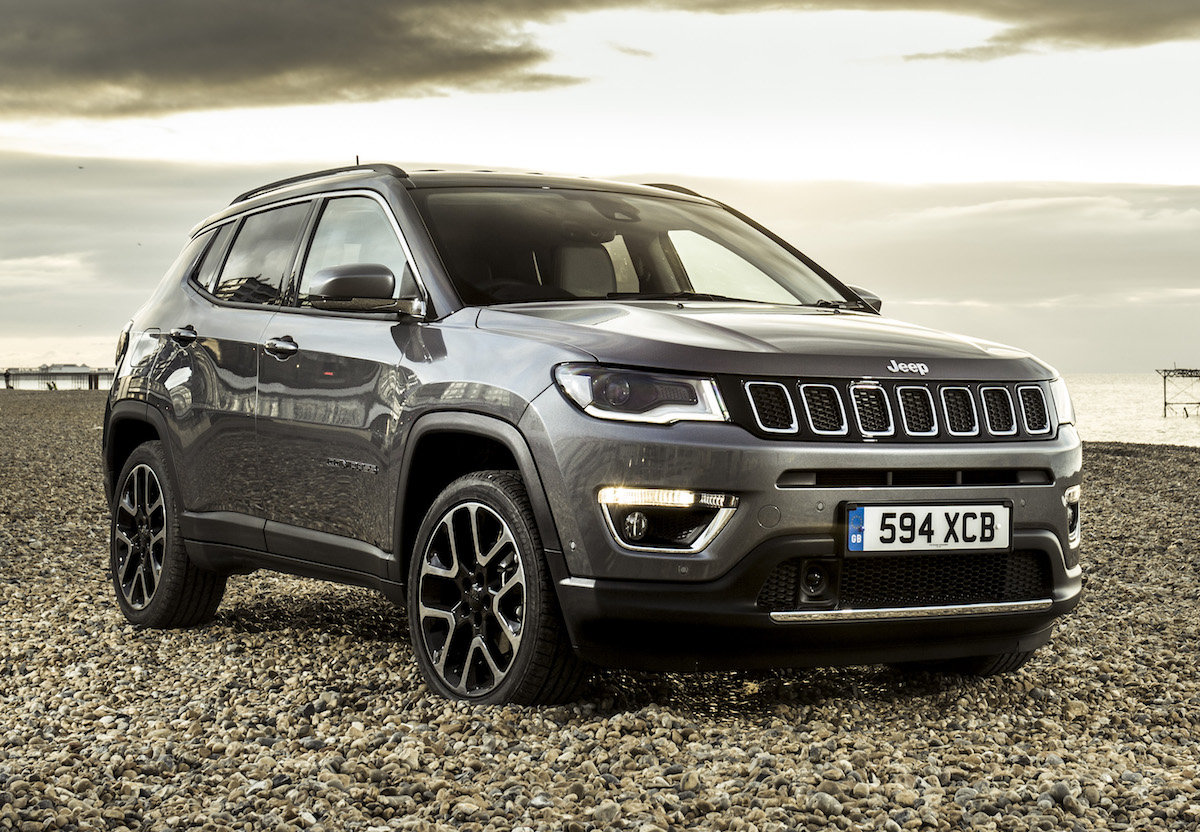
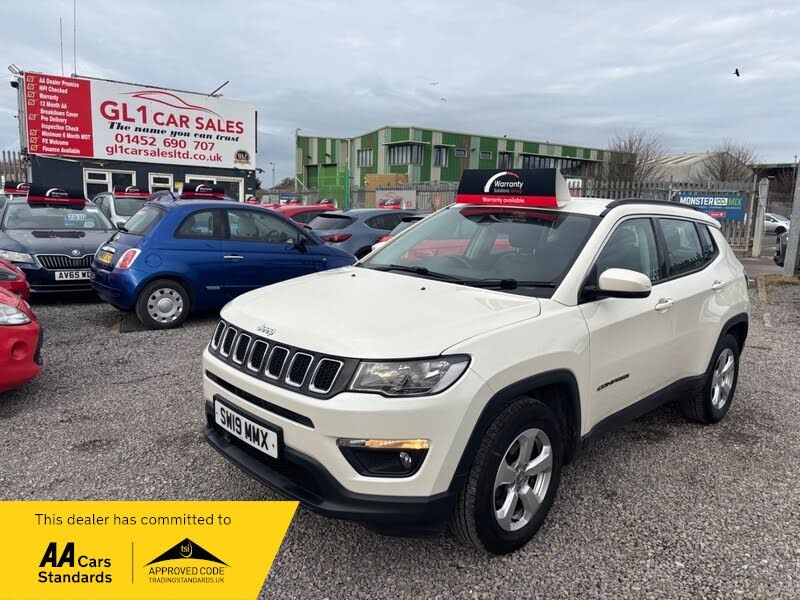
Still, the brash chrome grille and bluff styling has a straightforward ‘proper 4x4’ appeal to it that few of those unashamedly on-road orientated rivals offer. The Compass can also be had with an active four-wheel drive system, called ‘Selec-Terrain’, which offers a front-wheel drive mode for normal on-road use and terrain-specific all-wheel drive modes for tougher conditions.
Practicality
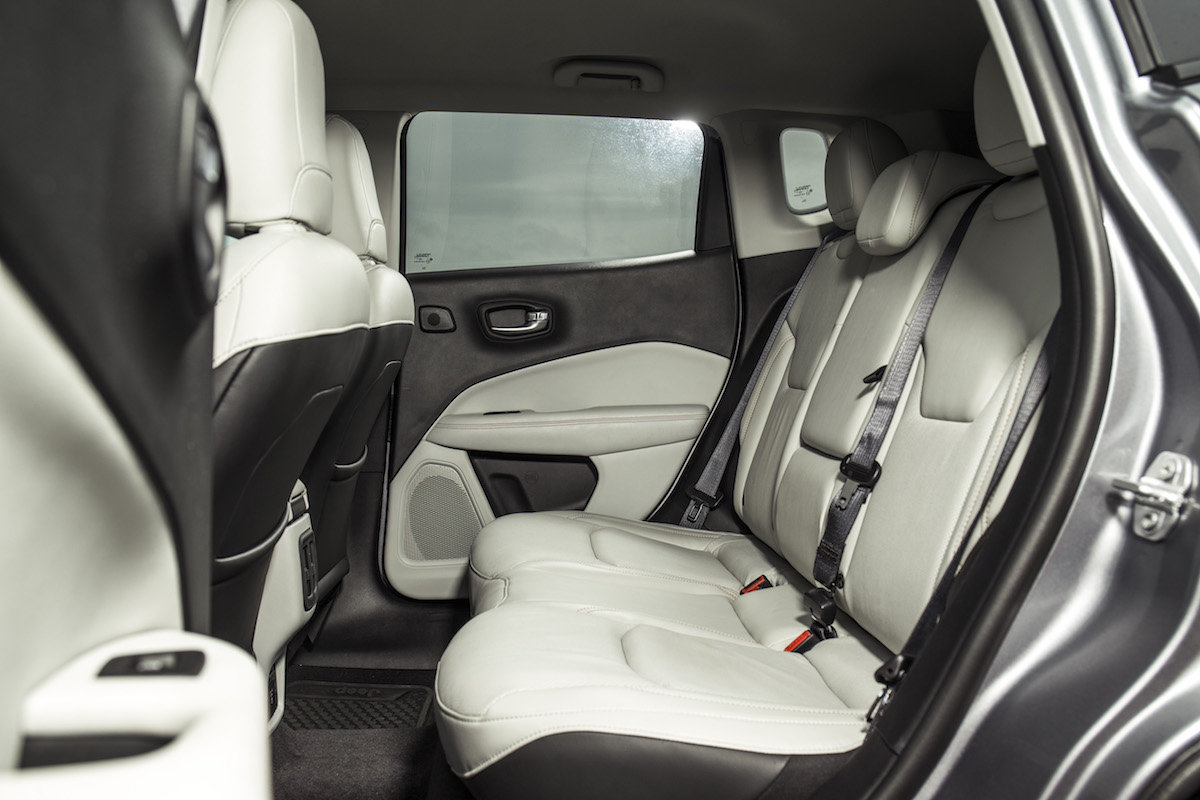
There’s plenty of space up front in the Jeep Compass, with good visibility and plenty of adjustment to the driving position. Passengers in the back get ample leg- and headroom on the standard 60/40 split rear seats. There’s no seven-seat option, though, unlike the Skoda Kodiaq, VW Tiguan Allspace and Land Rover Discovery Sport.
The boot space is adequate; you get 438 litres of space and a variable-height boot floor, which will be fine for a chunky double buggy. If you add a full size spare tyre, you lose the underfloor space and the total boot capacity drops to 368 litres. It’ll still take a chunky buggy, but – whether you go for a spare wheel or not – there are alternatives to the Jeep Compass that have bigger boots. The Peugeot 3008 gets 520 litres, for instance, while the Ford Kuga manages 475 litres of luggage space.
Driving
Driving the Compass is a perfectly unexceptional experience. The engine has enough gumption for a smart getaway from a standstill, but you’ll have to row through the rather long-throw gearshift to get much response from the 1.6 MultiJet 120 at higher speeds. If you do a lot of rural road driving and like to be able to execute an easy overtake, you’ll want to look to the more powerful engines in the Jeep Compass range or, better still, a punchier and sharper driving rival such as the Seat Ateca.
Still, the Jeep’s 1.6 diesel engine is hushed on a steady throttle, and ride comfort in the Jeep Compass is cushy, although accompanied by plenty of wallowy body movement. It all combines with the wide, squishy seats and high-set driving position to give this more of an old-school, American SUV character than many of those alternatives that have a more hatchback-like feel.
Tech and equipment
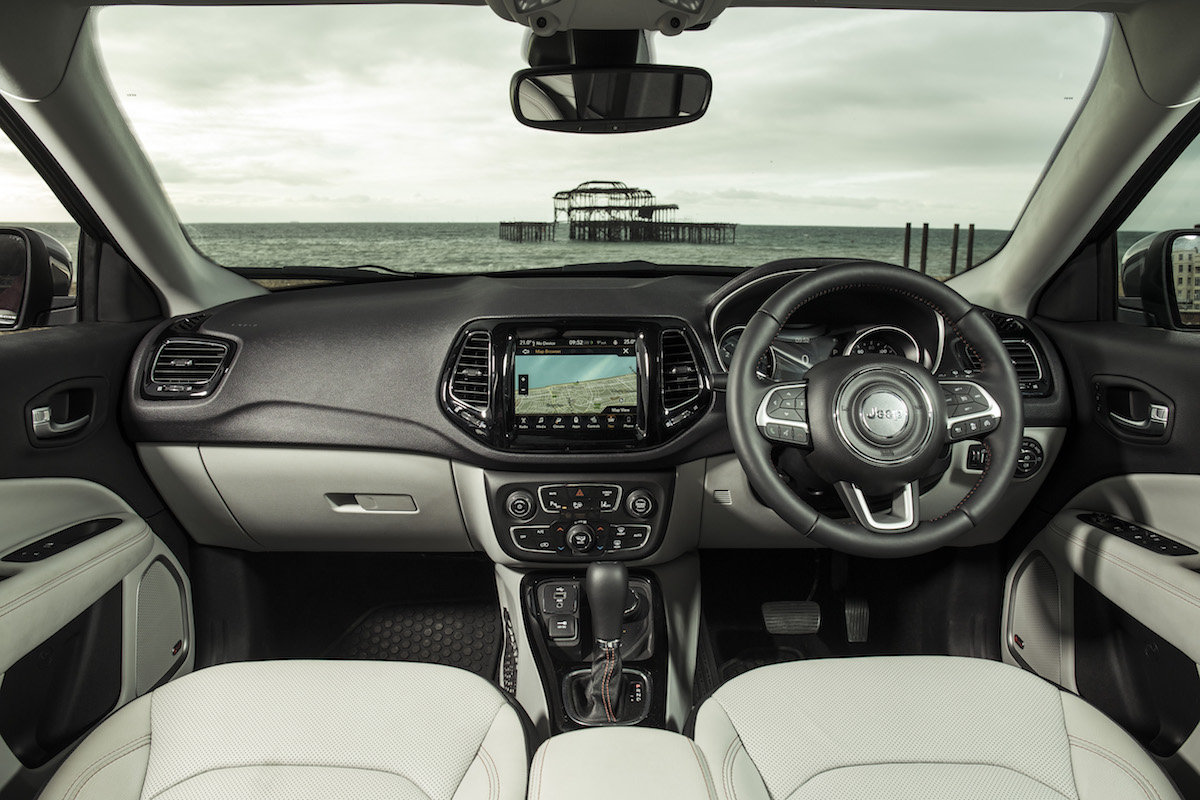
The interior of the Jeep is fairly disappointing by the standards of those rivals. Sure, there’s a smattering of chrome, the switches are easy to figure out and there’s also an 8.4-inch touchscreen with Apple CarPlay and Android Auto, satnav, digital radio and Bluetooth. But even that bigger 'UConnect' infotainment system is way behind the graphics quality and user-friendly menus of alternatives like the Kia Sportage and Seat Ateca. The dash design and materials also feel a little dated next to the more sleek, minimalist cabin designs of the Volkswagen Tiguan, Peugeot 3008 and many others.
The Compass is well equipped, provided you avoid the entry level Sport model (which is no longer on sale and is rare on used forecourts, as few were bought new). Sport is the only version that doesn’t get the big, 8.4-inch touchscreen, and it misses out on the keyless entry, dual-zone climate control, leatherette upholstery, electric lumbar adjustment, roof rails, reversing camera and ambient LED interior lighting that makes the next trim up – Longitude – our pick of the lot.
Running costs
The Jeep Compass is priced competitively against its many core rivals when new. It makes most sense if you stick to the lower-end trims and smaller engines, when you’re looking at some £28,000 to £32,000 for a spacious, comfy, safe and well-equipped family SUV depending on which trim and engine you go for. Monthly costs and finance deals are far more compelling than the list prices of the Jeep Compass. There are big dealer deposit contributions available on those mid-spec models that we recommend, making it easy to get a monthly PCP contract with payments of under £300 even on a fairly high spec model, currently with three years free servicing thrown in, a usefully better deal than you’ll get on most alternatives.
There’ll be a big hit of depreciation in the first year or two, as with most cars. But, given the number of excellent nearly-new Jeep Compass examples available with low mileage and high spec, for well under £20,000, it’s a no-brainer to look there before committing to a new car, especially if you’re a cash buyer. Used prices are a little higher on the Jeep Compass than you might pay for a comparable used Nissan Qashqai, with the Jeep’s brasher looks and rarity factor boosting its appeal, but the Jeep is a usefully cheaper second-hand buy than the ever-popular VW Tiguan.
Go for the 1.6 MultiJet 120 II diesel and you’ll likely see fuel economy of around 38 to 40mpg. The 1.4 MultiAir 140 II petrol that’s the other big seller will do more like 35mpg, as will the Jeep Compass Trailhawk with its 168bhp 2.0-litre diesel and four-wheel drive system. There are more efficient family SUVs around; even discounting the plug-in and hybrid alternatives, options like the Skoda Karoq with its small but peppy petrol engines or torquey diesels will be a smoother and more efficient drive when it comes to your MPG figure.
Jeep offers very good servicing deals, with free servicing for three years often thrown in with a new car. Fixed-price servicing deals are also routinely available for new or used Jeeps. Insurance is very comparable to class contenders, too, with the Jeep Compass falling in between group 17 and 22 (of 50) depending on which model you go for. Ultimately, there are family SUVs that will cost less to run in terms of fuel costs, but otherwise – as long as you avoid the expensive top-end models – the Jeep Compass promises to competitive on purchase and ownership costs.
The Jeep Compass gets a three-year, unlimited-mileage warranty, which is better than that you’ll get in alternatives from Volkswagen, Skoda and Seat, although not as good as the longer warranties offered by Hyundai and Kia. Jeep offered a five-year warranty on its cars from July 2018, but that extended warranty was recently rescinded, so it’s worth looking for a used car that was sold with the longer warranty. You can check how much warranty is remaining on a second-hand car you’re considering by contacting a Jeep service department and quoting the reg number.
Jeep sells comparably few cars in the UK next to its chief rivals and, as such, it hasn’t featured in many of the recent used car reliability surveys. However, there have been six recalls in Europe since the Jeep Compass went on sale in 2017, and owners complain of issues with the gearboxes and electrical glitches with the car’s screens, such as the touchscreen or driver’s display not dimming as they should for nighttime driving.
Ultimately, with comparably few Jeep Compasses sold in the UK there’s not as much data as for many rivals. But, with rivals like the Skoda Karoq and Peugeot 3008 both rated very highly for reliability in surveys from What Car? and Driver Power, it’s safe to say that there are more reliable alternatives.

What owners say
The features are great, the use of the features are not instantly intuitive .
13 June 2026Good value and the interior is above average size with more than average leg room at the back.
1 March 2024nice sized great car. easy to drive and has a good sized boot.
30 March 2024What owners say
The features are great, the use of the features are not instantly intuitive .
13 June 2026Good value and the interior is above average size with more than average leg room at the back.
1 March 2024nice sized great car. easy to drive and has a good sized boot.
30 March 2024The Jeep is not particularly attractive but is reasonable value for money
29 March 2022Three things to know
- We’ve only driven the front-wheel drive Jeep Compass 1.6 MultiJet 120 diesel model, which is one of the most popular models, due to the fact that the Compass is mostly bought as a family wagon, and needs only to withstand the rigours of the M4 rather than mud ruts. This engine is only offered with a six-speed manual gearbox and front-wheel drive, as is the 1.4 MultiAir II 140 petrol engine. Other options include a 2.0 MultiJet diesel, or a 168bhp version of that 1.4-litre petrol, both of which are four-wheel drive and come with a nine-speed automatic gearbox.
- There is no hybrid, plug-in hybrid or electric version of the Jeep Compass going on sale in the UK right now, but there will be soon. The Jeep Compass 4xe plug-in hybrid will be available with either a 1.0-litre or 1.3-litre petrol engine, together with a battery and electric motor that’s likely to offer around 25 to 30 miles of pure electric running. Prices and further specs are yet to be announced.
- The Jeep Compass was introduced in 2017. Not much has been changed since then, other than some tweaking of the trim levels, which is why it feels a little dated next to many rivals that are newer or have been facelifted. Still, safety standards are up to date; the Jeep Compass achieved a five-star Euro NCAP rating in 2017, and today it has standard autonomous emergency braking, cruise control, lane-keep assist and more, in line with what most rivals offer. Blind spot warning is available as an option.
Which one to buy
- If you want the best all-rounder: For most buyers who are after a used or new Jeep Compass that’s got plenty of luxury at a decent price, Longitude is our favourite trim. It offers the best balance of comfort, convenience, style and cost. You can’t get Longitude trim with the higher powered automatic diesel and petrol models, though, so our pick of the rest of the engine lineup is the 1.4 MultiAir II. It’s front-wheel drive and has a manual gearbox, but it’ll be easy to live with and it’s the best value of the Jeep Compass range.
- If you do high mileage and want good fuel economy: The 1.6 MultiJet II diesel is the best option, given that it’s the most economical of the Compass models. It’s a shame that you can’t get it with an automatic transmission, though; the only automatic diesel option is the Jeep Compass Trailhawk, which is expensive and not economical. You’ll find much better diesel auto' options in the Skoda Kodiaq or Skoda Kamiq, VW Tiguan and more.
- If you want to tow: The Jeep Compass is a surprisingly poor choice. Most models will tow 1,500kg or less, including the Trailhawk. That’s surprising, since the Trailhawk is Jeep’s macho off-road model; it gets a 168bhp diesel engine, a heavy duty four-wheel-drive system including rock mode, raised suspension and a contrast bonnet decal to ensure that the styling leaves you in no doubt of the off-road machismo. Yet it’s the Jeep Compass 2.0 MultiJet 140 diesel engine (which isn’t available as a new buy any more, but can be found on the used market) that’s the best of the range for towing, thanks to a 1,900kg braked towing limit.
- If you’re a company car driver: Both the 1.4 MultiAir 140 petrol and 1.6 MultiJet 120 cost a very similar amount in tax, but the latter offers better economy so will suit most company car users best. Go for the Longitude trim to keep costs down without sacrificing the essential convenience and comforts you’d expect in a plush new family SUV. However, before settling for a straightforward diesel or petrol car, do consider a plug-in hybrid or full hybrid rival, such as the Ford Kuga PHEV or new Nissan Qashqai. The lower emissions bring much lower Benefit in Kind company car tax costs than you’ll pay on any of the conventional, non-electrified options in this class, and should also bring lower fuel costs.
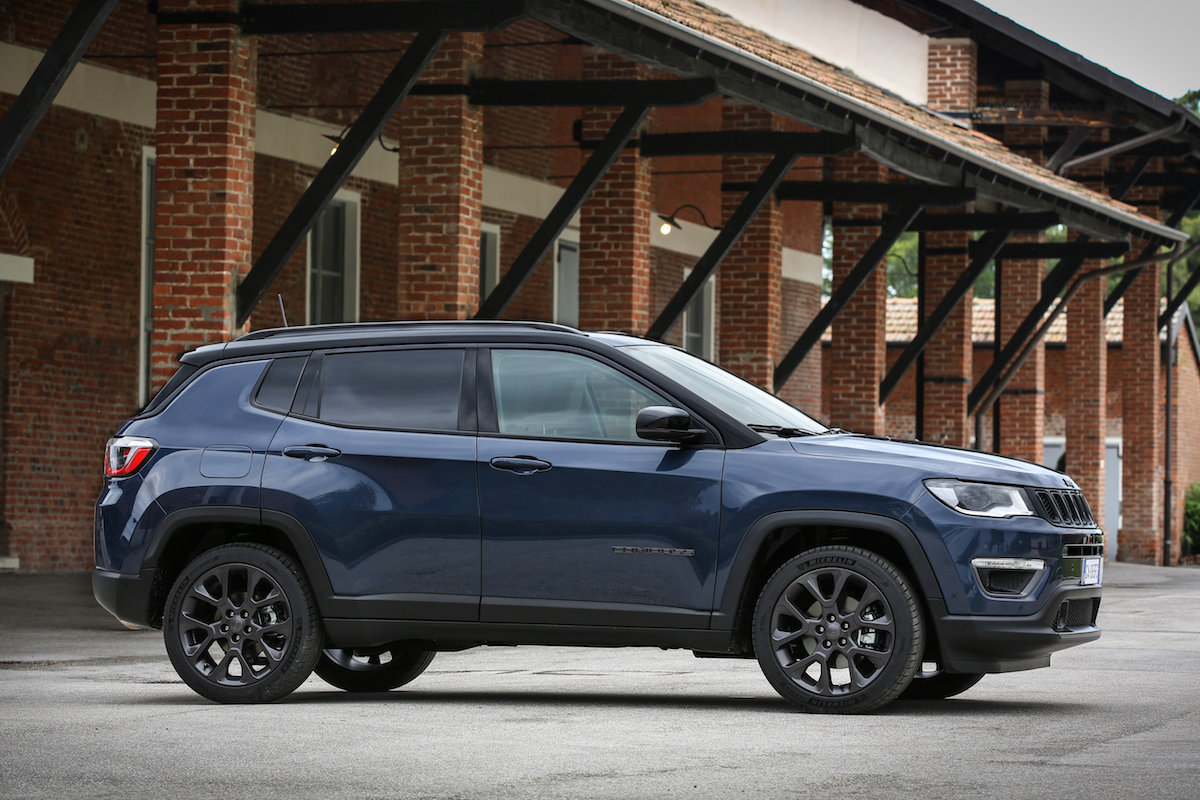
- If you want the sportiest-looking Jeep Compass: Go for the fantastically named Night Eagle trim. It gets gloss black alloys, and still more gloss black everywhere else including on the badges, the window surrounds, the fog light housings and more. It also gets ‘Techno leather’ upholstery. We’d go for the 1.4 MultiAir petrol engine (also front-wheel-drive only), but frankly the engine choice is secondary to the fact that you’ll be driving a car that sounds like a dark and troubled Marvel comic hero. If the Night Eagle isn’t expensive and macho enough for you, the Jeep Compass Trailhawk really does look strikingly butch with its contrasting bonnet and roof and chunky off-road bodykit. It’s too expensive to be recommendable, though (even with such a great action hero name and fairly serious off-road ability) since it’s pushing the £40,000 mark.




Pricing trends
Starting RRP
£18,400
Current avg. market price
£9,383
Trending down by 10.8% this month
April 2026 - October 2026
Compare 2020 Jeep Compass Trims
The 2020 Jeep Compass offers a range of trims from budget-friendly options to more feature-rich models, all with efficient fuel economy.
- Starting at £9,128
- Most Popular: 1.4 Multiair 140 Longitude 5dr [2wd]
Trim Overview
Prices updated weekly from CarGurus listings.
| 1.4 Multiair 140 Longitude 5dr [2wd] (Most Popular) | 1.6 Multijet 120 Longitude 5dr [2wd] | 1.4 Multiair 140 Night Eagle 5dr [2wd] | 1.4 Multiair 140 Limited 5dr [2wd] | 1.4 Multiair 170 Limited 5dr Auto | |
|---|---|---|---|---|---|
| Starting MSRP | £25,475 | £26,475 | £26,975 | £28,475 | £32,440 |
| Avg. Market Price | £9,435 | £11,393 | £9,128 | £9,990 | £13,698 |
| Positioning | Best value | Standard | Standard | Standard | Trail-ready |
| Standout Features | Navigation System, Bluetooth, Backup Camera | Bluetooth, Navigation System, Keyless Entry/Start system | Bluetooth, Parking Assist, Backup Camera | Heated Steering Wheel, Heated Seats, Navigation System | Heated Steering Wheel, Parking Assist, Heated Seats |
| Drivetrain | FWD | FWD | FWD | FWD | AWD |
| Listings Available | 40 | 12 | 20 | 11 | 14 |
Quick Compare Table
Listing prices sourced from CarGurus — updated weekly. OEM specs from manufacturer data.
| 1.4 Multiair 140 Longitude 5dr [2wd] | 1.6 Multijet 120 Longitude 5dr [2wd] | 1.4 Multiair 140 Night Eagle 5dr [2wd] | 1.4 Multiair 140 Limited 5dr [2wd] | 1.4 Multiair 170 Limited 5dr Auto | |
|---|---|---|---|---|---|
| AI Summary | Best value with essential features | Efficient diesel option for budget-conscious buyers | Stylish trim with added tech features | Well-equipped with premium features | Powerful AWD option for adventurous drivers |
| Avg. Market Price | £9,435 | £11,393 | £9,128 | £9,990 | £13,698 |
| MSRP | £25,475 | £26,475 | £26,975 | £28,475 | £32,440 |
| Engine | 1368.0cc 140 hp I4 | 1598.0cc 120 hp I4 | 1368.0cc 140 hp I4 | 1368.0cc 140 hp I4 | 1368.0cc 170 hp I4 |
| Drivetrain | FWD | FWD | FWD | FWD | AWD |
| MPG/MPGe (City/Hwy) | 32.5/49.6 | 44.8/68.9 | 32.5/49.6 | 32.5/49.6 | 29.1/37.7 |
| Navigation System | ✓ | ✓ | ✓ | ✓ | ✓ |
| Cruise Control | ✓ | ✓ | ✓ | — | ✓ |
| Bluetooth | ✓ | ✓ | ✓ | ✓ | ✓ |
| Alarm/Immobiliser | ✓ | ✓ | ✓ | — | — |
| AUX/USB connectivity | ✓ | ✓ | ✓ | ✓ | ✓ |
| DAB Radio | ✓ | ✓ | ✓ | ✓ | — |
| Climate control | ✓ | ✓ | ✓ | ✓ | ✓ |
| Keyless Entry/Start system | ✓ | ✓ | ✓ | ✓ | ✓ |
| Android Auto | ✓ | ✓ | — | ✓ | ✓ |
| Apple CarPlay | ✓ | ✓ | — | ✓ | ✓ |
| Backup Camera | ✓ | — | ✓ | ✓ | ✓ |
| Air Conditioning | — | ✓ | ✓ | — | — |
| Parking Assist | — | — | ✓ | — | ✓ |
| Heated Steering Wheel | — | — | — | ✓ | ✓ |
| Heated Seats | — | — | — | ✓ | ✓ |
| Active Listings | 40 | 12 | 20 | 11 | 14 |
Missing data displayed as "—".
Trim Deep Dives
1.4 Multiair 140 Longitude 5dr [2wd] — "Who It's For"
The 1.4 Multiair 140 Longitude is the pick for shoppers who want essential features and good fuel economy without paying for higher trims.
- Avg. market price: £9,435 (updated weekly)
- MPG/MPGe: 32.5 city / 49.6 hwy
- Inventory: 40 listings — lower availability; may limit negotiating room
- View 1.4 Multiair 140 Longitude listings
1.6 Multijet 120 Longitude 5dr [2wd] — "Who It's For"
The 1.6 Multijet 120 Longitude is the pick for shoppers who want a fuel-efficient diesel option without the premium price of higher trims.
- Avg. market price: £11,393 (updated weekly)
- MPG/MPGe: 44.8 city / 68.9 hwy
- Inventory: 12 listings — lower availability; may limit negotiating room
- View 1.6 Multijet 120 Longitude listings
1.4 Multiair 140 Night Eagle 5dr [2wd] — "Who It's For"
The 1.4 Multiair 140 Night Eagle is the pick for shoppers who want a stylish trim with added tech features without stepping up to the Limited.
- Avg. market price: £9,128 (updated weekly)
- MPG/MPGe: 32.5 city / 49.6 hwy
- Inventory: 20 listings — lower availability; may limit negotiating room
- View 1.4 Multiair 140 Night Eagle listings
1.4 Multiair 140 Limited 5dr [2wd] — "Who It's For"
The 1.4 Multiair 140 Limited is the pick for shoppers who want a well-equipped vehicle with premium features without going for the highest price.
- Avg. market price: £9,990 (updated weekly)
- MPG/MPGe: 32.5 city / 49.6 hwy
- Inventory: 11 listings — lower availability; may limit negotiating room
- View 1.4 Multiair 140 Limited listings
1.4 Multiair 170 Limited 5dr Auto — "Who It's For"
The 1.4 Multiair 170 Limited is the pick for shoppers who want a powerful AWD option for adventurous driving without sacrificing comfort.
- Avg. market price: £13,698 (updated weekly)
- MPG/MPGe: 29.1 city / 37.7 hwy
- Inventory: 14 listings — lower availability; may limit negotiating room
- View 1.4 Multiair 170 Limited listings
Trim Recommendations
Most Popular — 1.4 Multiair 140 Longitude 5dr [2wd]
With 40 active listings, the 1.4 Multiair 140 Longitude is the clear volume leader in the lineup.
Browse 1.4 Multiair 140 Longitude listings
Best Budget Option — 1.4 Multiair 140 Night Eagle 5dr [2wd]
At £9,128 avg market price — below the lineup median of £9,990 — it's the most accessible entry point.
Browse 1.4 Multiair 140 Night Eagle listings
These recommendations are based on CarGurus' proprietary market data from October 22, 2026, CarGurus experts' opinions, and generative AI.

