Jeep Compass 2026 review | A rugged take on the family SUV
Pros and cons
What we like
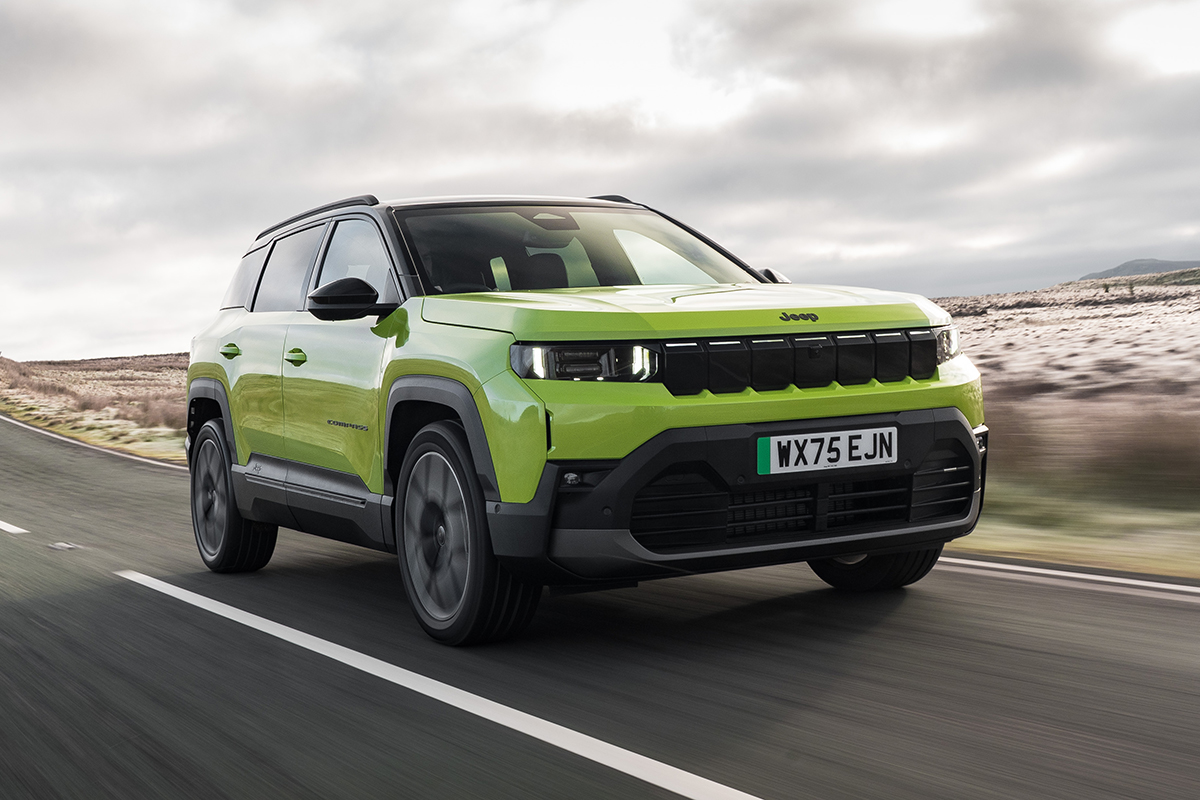
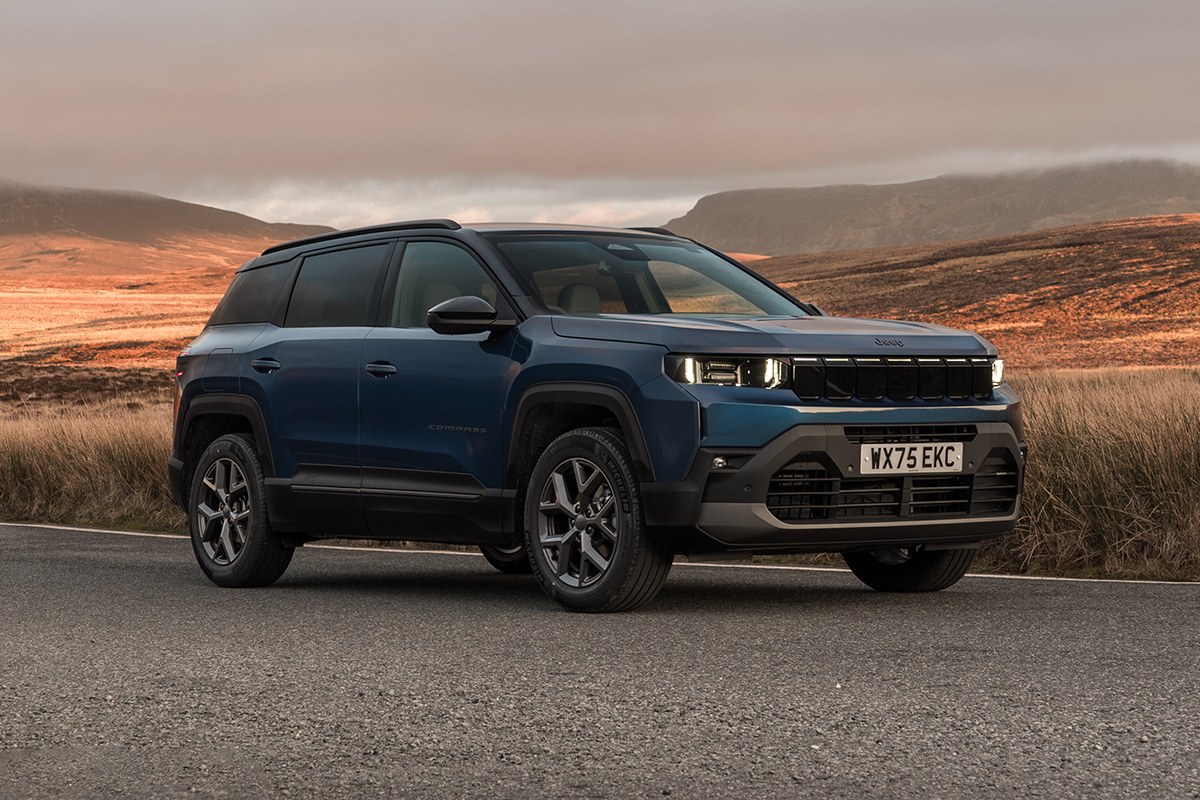
Chunky styling, inside and out
Roomy interior
Some off-road ability
What to consider
Unsettled ride, especially in electric version
Interior quality could be better
Slow, fiddly touchscreen
The CarGurus verdict
This latest Jeep Compass is no ugly duckling, and it’s hard to argue with the amount of space and kit it offers for the cash.
But there’s more than a whiff of style over substance here, and at least until the 4xe and Overland models come along, the Compass boasts neither the on-road finesse to stand out among similarly-sized family SUVs, nor the off-road credentials to do its rough, tough looks – and its badge – justice.
If you love its rugged styling and roomy interior, the Compass might still be worth a look, especially if you can find a favourable finance deal. But you’ll have to be prepared to tolerate a few flaws, because this is a family SUV that hasn’t quite got all its ducks in a row.
out of 5 expert review
What is the Jeep Compass
They call it ‘ducking’ in Jeep enthusiasts’ circles. The idea is that you carry a supply of small rubber ducks with you in your Jeep – and if you spot another Jeep parked up that you love the look of, you leave one of them on the windscreen for the owner to find when they return to their car, as a sign of appreciation.
It’s this sort of irreverent camaraderie that marks Jeep out. There’s something about this brand, steeped in history and renowned for its off-road know-how, that makes its owners feel like they’re joining a special club; buying not just a car, but a lifestyle.
And it’s that sense of belonging that Jeep is hoping will persuade buyers to choose its new Compass over one of the many other mid-sized family SUVs on the market.
The old Compass was very much at the back of the pack, both in terms of sales and ability. But this new one is based on the same platform as the Peugeot 3008, Vauxhall Grandland and Citroën C5 Aircross – all popular models with tried and tested mechanicals, and Jeep hopes that will enable the Compass to steal buyers away from big-name rivals like the Kia Sportage and Volkswagen Tiguan.
But these new underpinnings present Jeep with a new problem: it has to make the best of this new platform without making the new Compass feel too much like its platform-mates. In other words, the challenge here is to bring the Compass in line with the best in the class, without losing the rugged appeal that makes it feel like a real Jeep. Otherwise, family buyers and Jeep lovers alike simply won’t give a duck.
Practicality
How practical is it?
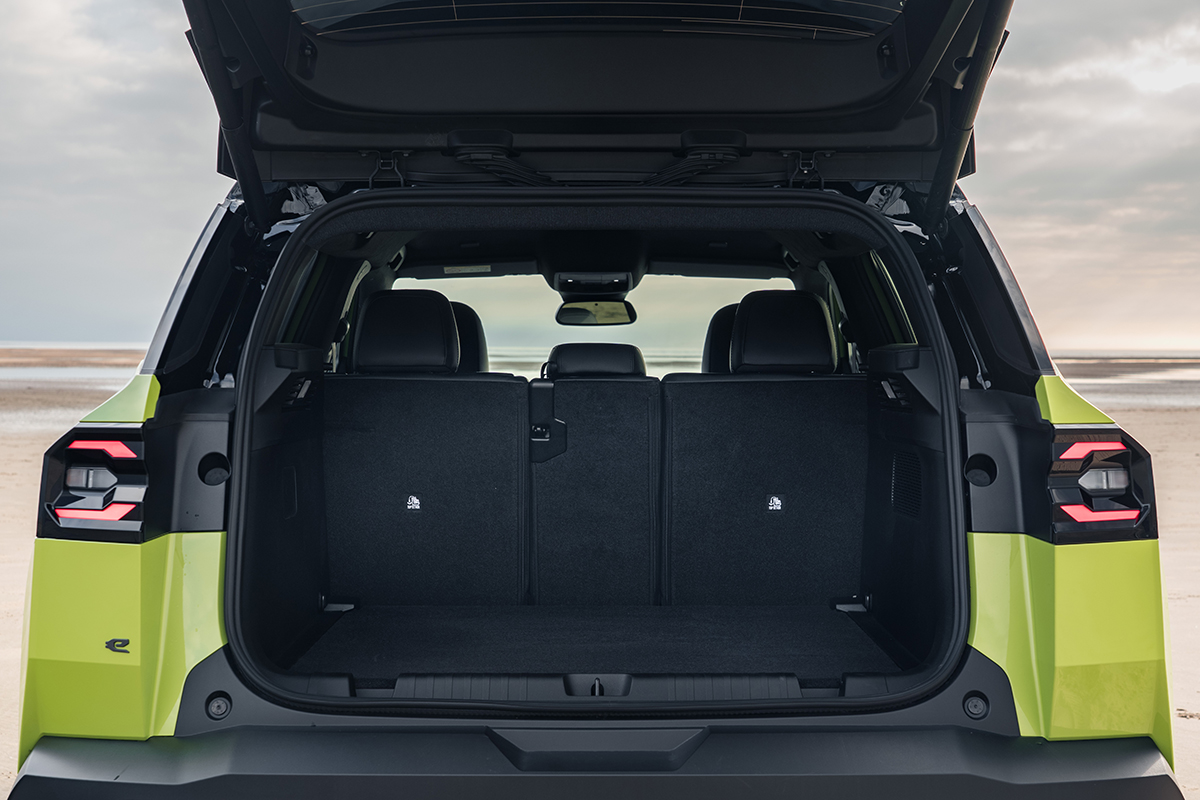
Regardless of whether you choose hybrid, plug-in hybrid or electric power, you get the same-sized boot in the Jeep Compass, and it comes in at 550 litres. That’s just a smidge less than you’ll get in a Citroen C5 Aircross, and about 30 litres less than a Kia Sportage.
But while it might not be the best in the class for outright volume, the Compass is still more than roomy enough to carry all the luggage for a family holiday, and its big, square boot is a good, useful shape.
What’s more, Jeep proudly boasts that there are 34 litres of extra storage in the front part of the passenger cabin, divided up between all of the various cubbies, pockets, slots and shelves that it provides for odds and ends.
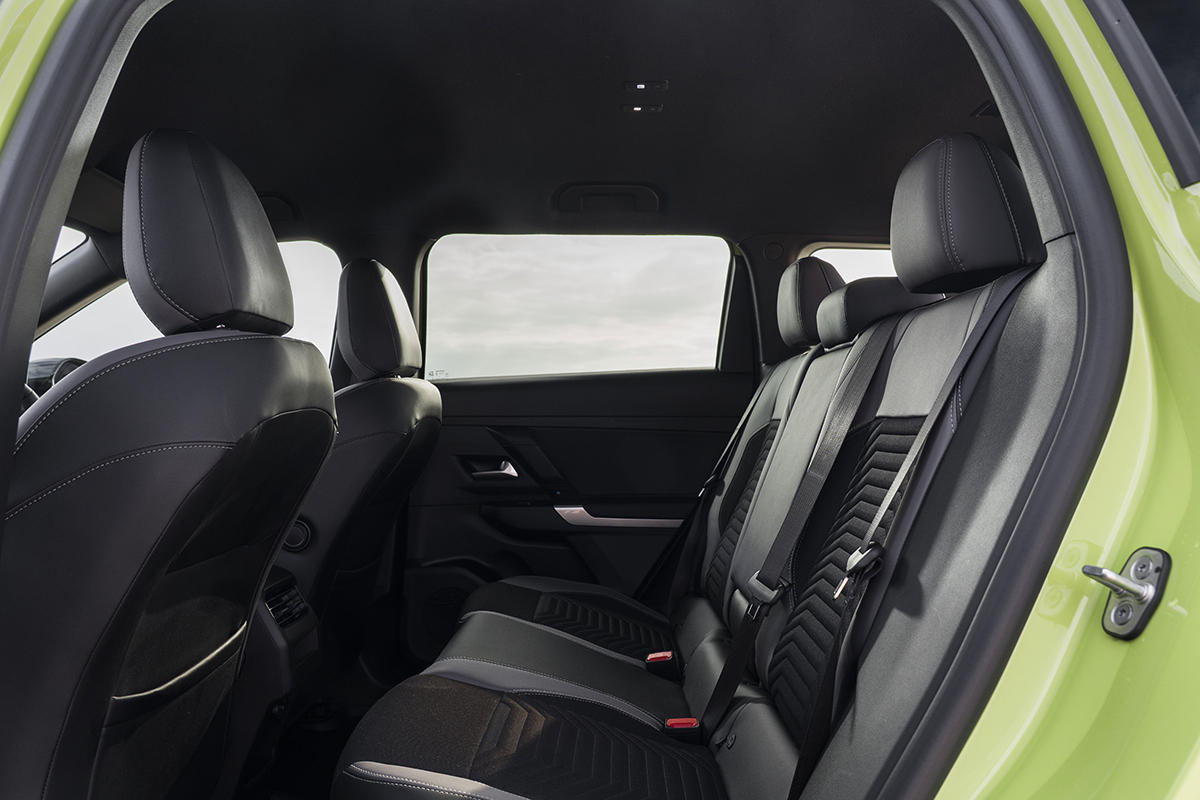
What about space for people? Well, there’s plenty of that, too; whether you’re sitting in the back or the front, you won’t want for leg or head room. Visibility is fine, too, and the flat, wide bonnet is visible from the driver’s seat, which makes the front end of the Compass easy to place when parking.
That said, those in the rear seats will feel somewhat short-changed by the quality of the plastics, which takes a nosedive as you move back through the car.
Up front you get tactile fabrics with squidgy faux leather atop the dash, lots of neat detailing (like the anodised metal surround for the drive mode selector), and a wipe-clean rubberised finish to much of the switchgear.
But the rear door panels consist almost entirely of hard, scratchy plastics that don't feel as though they'll stand the test of time. And you don’t get a little pocket in the seat back for your smartphone, such as you do in the C5 Aircross. All in all, it feels as though Jeep ducked the chance to make back-seat passengers feel as special as those in the front.
Driving
What’s it like to drive?
There are currently only two powertrain options in the new Compass: a hybrid (badged e-Hybrid), and a fully electric version.
The e-Hybrid isn’t quite a mild hybrid, but it isn’t quite a full hybrid, either. It can power the wheels and drive the car forward, something only a full hybrid can normally do. But its 48V electrical system is a pretty low voltage (compared with something like a Toyota full hybrid system, which runs at around 200V), and so isn’t as powerful or as effective as a traditional full hybrid, either. In other words, it comes down somewhere between the two.
Nevertheless, boosted by this hybrid system, the 1.2-litre three-cylinder engine is able to deliver 143bhp, which looks decent enough on paper. In practice, however, 0-62mph takes 10 seconds dead, which is a little on the leisurely side (a Tiguan 1.5 TSI can do the same sprint almost a second faster).
And you feel this gutlessness out on the road, too. There isn’t much low-down grunt, which means you either have to use the automatic gearbox’s kickdown function to spur the Compass into life (at which point the engine gets quite vocal, and sounds rather strained), or you have to wait an age for the revs to build.
The electric model is much better, with a solid 210bhp to play with, to which its 8.5-second 0-62mph time attests. However, keep in mind that its 74kWh battery only allows it a maximum range of 310 miles – which will equate to a fairly meagre 250-ish miles in the real world.
And while peak charging speeds of 160kW look decent enough, the Compass’s average charging speed isn’t brilliant, which is why it still takes 36 minutes to get from 10 to 80 percent, only adding 4.3 miles per minute on average.
What’s more, the electric Compass is disappointing to drive. The biggest problem is the ride quality: it’s not that the Compass is stiff, more that it’s uncontrolled, and that lack of control makes it uncomfortable.
Around town, the tyres seem to pick up every small imperfection in the road, while at higher speeds that slack suspension allows the heavy body to waft up and down over larger undulations, which makes you feel slightly queasy.
The hybrid version is better, but still far from perfect. This version is lighter, so the suspension has less work to do to keep the car’s weight under control, and as a result, that nauseating vertical waft is much less profound. But you do still get a slightly jittery feel over smaller, sharper bumps, and as a result, the hybrid Compass never really settles down.
Also problematic in both versions is the steering, which is oddly sharp just off-centre, and that makes the Compass feel jumpy, in that it often overreacts to smaller inputs. This is a shame, because the body doesn’t actually lean over too much in bends, and there’s plenty of grip – so if the steering was better resolved, you get the feeling the Compass might actually be quite decent to chuck around.
It’s worth noting that there are longer-range variants of the electric Compass on the way, with a 404-mile range expected from the best. Also on the way is a plug-in hybrid model, whose 192bhp power output should make it feel much more sprightly than the normal hybrid. We’ll tell you what these versions are like when Jeep lets us have a quack at them.
Tech and equipment
Technology, equipment & infotainment
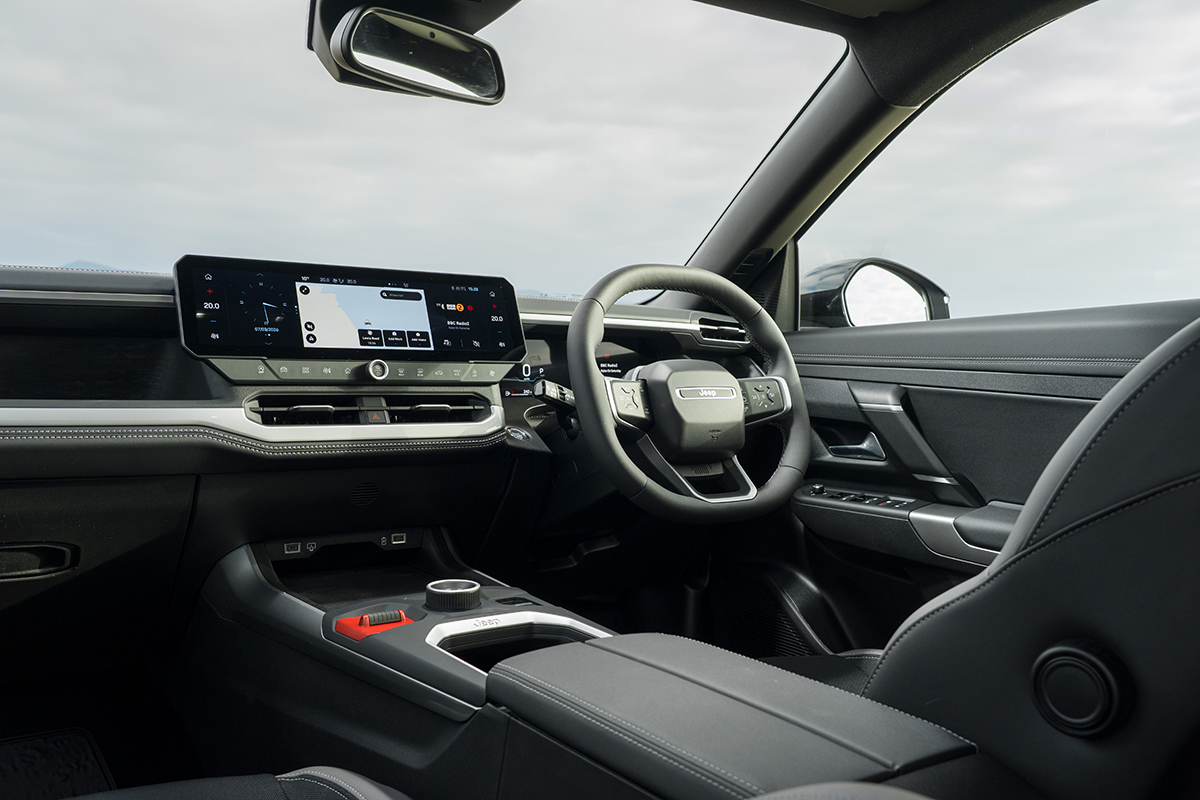
The Compass features an unusually wide touchscreen, which is great in some ways because it means you can display multiple different bits of information on tiles across the screen – allowing you, for example, to display what’s playing on the stereo at the same time as the sat-nav display.
There’s a problem with this, though, which is that the screen is so wide that the far side of it requires a bit of a stretch to reach it from the driver’s seat.
That isn’t the only issue. The on-screen buttons are quite small, which can make operating them on the move rather fiddly. And because the software features lots of finicky little animations, which take time to display and use up processor power, it sometimes takes much longer to get to the function you want than it really needs to.
Each end of the screen is sectioned off to allow you to adjust the temperature of the climate control without having to dip into a menu, which is good. However, you still need to do this to access other functions in the climate control menu, including the heated seats. As a result, turning these on when you’re just starting the car – while the system is still warming up (and you’d like your backside to be heated as quickly as possible) – requires several agonisingly slow prods at the screen.
For the time being, there are two versions of the Compass: Altitude and First Edition. The former is pretty well equipped, even though it’s the cheapest, with 18-inch alloy wheels, LED headlamps, heated front seats, a heated steering wheel, ambient mood lighting, and adaptive cruise control all coming as standard.
The First Edition adds an illuminated grille, a heated windscreen, a reversing camera, and a powered boot lid. Choose the electric version, and you also get a heat pump and 20-inch alloys.
As you may have guessed from its name, the First Edition won’t stick around forever, and will soon be replaced with the Summit model, which as its name suggests, will sit at the top of the range.
Jeep will also introduce an Overland model, more geared toward off-roading, with a 10mm suspension lift, smaller bumpers for better approach and departure angles, an anti-reflective bonnet decal, and heavy-duty fabric upholstery, designed to resist muddy stains like water off a duck’s back.
Running costs
Jeep Compass running costs
A sub-£35,000 starting price means the entry-level Compass is pretty reasonable. In fact, given how much kit you get for your money, it’s darn good value. Granted, a Citroen C5 Aircross can be had for less money – but try to spec one up to the same level as a Compass Altitude, and you’ll actually end up spending more.
This logic holds higher up the range, too. Even the Electric First Edition, which is the most expensive model in the range at the time of writing, comes in below £40,000 – though adding option paintwork means it busts this figure.
That means it’ll cost you more to tax, as it’ll incur the ‘luxury car’ surcharge in years two to five. Having said that, choose a lower-spec Compass, and you won’t run the same risk unless you get trigger-happy with the options list. That should make this a reasonably affordable car to tax.
Real-world fuel economy of 40-45mpg is achievable in the e-Hybrid model, which is decent enough for a petrol engine, though a little disappointing by comparison with some of the full hybrid rivals on sale.
It’s a similar story with the Electric version, which gets just 3.3mpkWh on average – less than you’d expect from an electric car of this type. As a result, the Compass’s electric rivals will be better placed to avoid those quackers public charging rates.
Jeep Compass reliability
We have relatively little data about the reliability of Jeep’s cars in general, and because the Compass is so new, it’s hard to draw any concrete conclusions about this particular model’s reliability either.
What we can say is that Peugeot, Citroen and Vauxhall have all seen marked improvements in their respective reliability records in recent years, and given the Compass will share its mechanicals with cars made by all three of those brands, it’s not unreasonable to imagine that it might prove to be reasonably dependable.
Disappointingly, however, Jeep’s warranty doesn’t look particularly generous next to the likes of Kia’s seven-year warranty, and Toyota, which offers up to 10 years’ worth of warranty if you keep your car serviced at its main dealers. By comparison, the Compass’s warranty expires after three years and 60,000 miles, leaving you a sitting duck if something goes wrong after that.

What owners say
The features are great, the use of the features are not instantly intuitive .
13 June 2026Good value and the interior is above average size with more than average leg room at the back.
1 March 2024nice sized great car. easy to drive and has a good sized boot.
30 March 2024What owners say
The features are great, the use of the features are not instantly intuitive .
13 June 2026Good value and the interior is above average size with more than average leg room at the back.
1 March 2024nice sized great car. easy to drive and has a good sized boot.
30 March 2024The Jeep is not particularly attractive but is reasonable value for money
29 March 2022Three things to know
- Unfortunately, towing capacity is one area in which the latest Compass has actually regressed compared with the old model. Surprisingly, it’s the electric model that can tow the most – though its rated maximum of 1,230kg for a braked trailer is still not particularly impressive. The 1,150kg that the e-Hybrid model can haul is rather disappointing – most rivals can pull more.
- Jeep sells itself on its off-road ability, but the range as it stands doesn’t really boast much of that. There’s no four-wheel-drive option as yet, and when it does come along, it’ll only come with electric power. In fact, the only real difference between the Compass and its Peugeot, Citroen and Vauxhall platform-mates in terms of its off-road ability is a mild suspension lift, which gives it better approach, departure and breakover angles. So if you need the ability to get up slightly steeper hills, choose a Compass. Otherwise, don’t be fooled into thinking the Jeep badge means you’ll be able to drive up the side of a mountain.
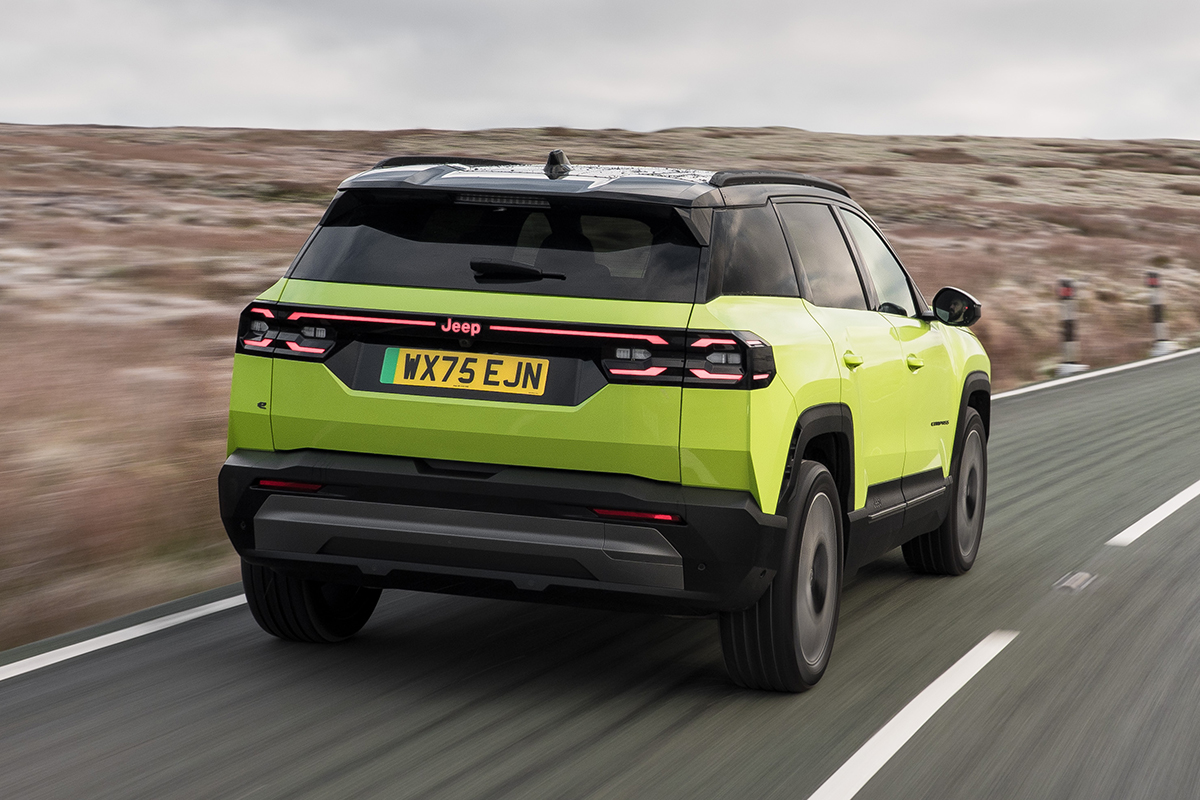
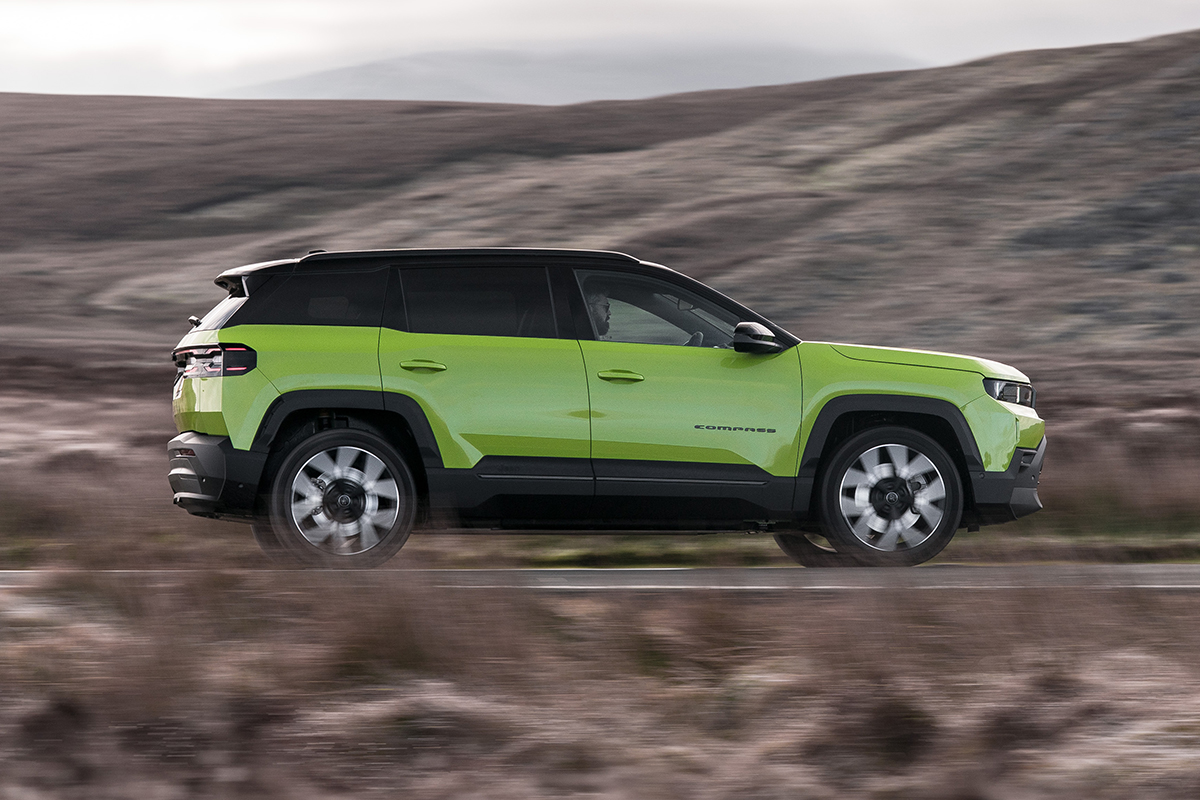
- The standard paint finish on the Compass is a startling day-glo yellow that Jeep calls Hawaii. All credit to Jeep for offering such an eye-catching shade, but if you don’t want to drive around in a car that looks as though it’s been coloured in with a Stabilo Boss highlighter, be prepared to pony up for one of the optional paint finishes.
Which one to buy
- If you want the best all-rounder: by a whisker, it’s probably the e-Hybrid, which we’d team with the Altitude specification. The First Edition’s nice enough, but Altitude is so well equipped that you don’t really need to pay more.
- If you want to tow regularly: at this point, you’re best off choosing an Electric model in First Edition trim, which will give you the best towcar in the Compass range. But a better bet might be to wait for the four-wheel-drive version to come along, which should boast a heftier towing capacity. Or choose something else instead.
- If you want the cheapest Compass to run: it’ll depend on whether you can charge up at home or not. If so, go electric; charging it on an EV-specific tariff will save you bucketloads. Otherwise, given the price of charging at a public charge point, you might be better off with the e-Hybrid.
- If you need to go off road: don’t buy a Compass. Not yet, anyway. Hold on for the Overland model, with the 4xe electric powertrain. That should be a reasonably competent off-roader – but we won’t know for sure until we’ve tried it.


Pricing trends
Starting RRP
£28,522
Current avg. market price
£30,186
Trending down by 2.9% this month
May 2026 - October 2026

