Kia Soul (2015-2019) review | An EV pioneer

Pros and cons
What we like
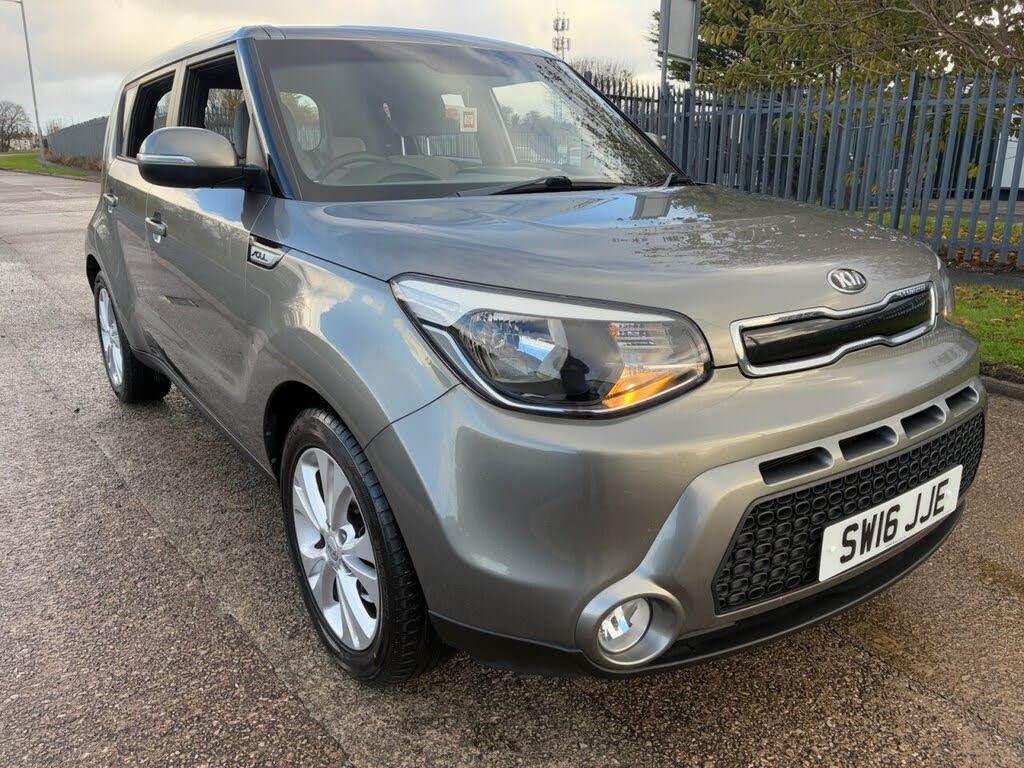
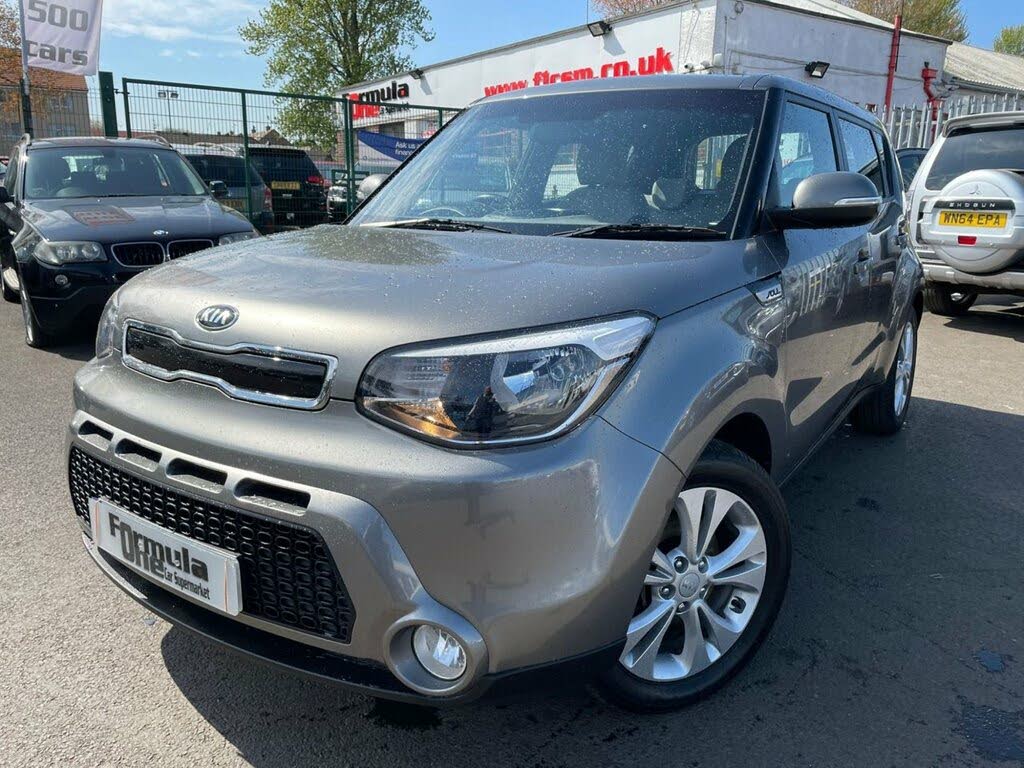
Funky micro-SUV looks
Comfy to drive
More practical than most rivals
What to consider
Interior plastics feel cheap
Infotainment looks dated
Others have a longer range
The CarGurus verdict
The Kia Soul is a good option if you’re after a car that’s a bit striking and different, but that ultimately makes easy work of the day-to-day chores. It’s a nice car to drive that’s reliable, affordable to buy and run, and that’s comfortable and enjoyable for you and your passengers. If you don’t mind that it’s got less boot space and a firmer ride than alternatives like the Renault Captur, it’s sure to please on most other scores.
The fully electric Soul also happens to be a bit of a bargain on the used market. If you need something for shorter journeys it could be an ideal cheap second car.
out of 5 expert review
What is the Kia Soul?
This second-generation Kia Soul takes the hatchback idea and adds sharper styling with a bit of SUV ambition. It’s front-wheel drive and doesn’t have the high ride height associated with SUVs, so don’t expect the 4x4 ruggedness you’d get with some versions of the Skoda Yeti, and it doesn’t even have the clever mud and snow traction settings of front-wheel drive crossovers such as the Peugeot 2008. Basically, despite the styling, it really is a straightforward hatchback.
At launch, there were two 1.6-litre engines: a 130bhp petrol, and a 134bhp diesel. From late 2016, these were joined by a 1.6-litre petrol turbo with 201bhp in the Soul Sport, which brought with it some real pep.
Unusually for a car of this age, there’s also the option of a pure electric version – though don’t expect great shakes in the range stakes. Early models had a 27kWh usable battery capacity, and while 2017 saw an upgrade to 30kWh, that’s still a far cry from the sort of capacity you’d expect to see in a more modern EV.
Charging takes around five hours from a home wallbox, or a 50kW rapid charger will deliver a 10 to 80 per cent charge in around half an hour. Also worth noting is that the Soul EV uses a CHAdeMO charging socket, which is different to the Type 2/CCS sockets that are fitted to most newer public charging points. As a result, you won’t benefit from quite such a wide choice of charging points as newer EV owners will, unless you invest in a costly CHAdeMO to CCS adapter.
The Soul was pitched against fashion-forward crossovers like the Nissan Juke and Fiat 500X, though its boxy profile made it more practical than those offerings – so it could also compete with more pragmatic small SUVs like the Skoda Yeti and Renault Captur. It’ll therefore appeal to buyers who want something that looks a little different to the norm, but still has plenty of space in the back seats.
Practicality
How practical is it?
Practicality was never the Soul’s forte, but it is roomy and comfortable in the front, and has some of the most spacious rear seats of any car in its class, with plenty of legroom and masses of headroom thanks to that high, boxy roofline. The big rear doors mean access is easy, too.
The downside is that there isn’t much space for small knick knacks in the front – the tray in the centre console is tiny, and while the door bins are wide at the front to offer space for a bottle, they taper to a slender compartment further back. At least there’s a good-sized glovebox and a small central cubby under the arm rest to make up for it.
It falls short on boot space too, which, at 354 litres, is below average for a family hatchback or a small SUV. It’s less the outright space and more the layout that’s problematic; the boot is tall and slim, so you often find you have to remove the parcel shelf to accommodate lengthy items – or anything more than a few shopping bags.

Driving
What’s it like to drive?
Most used buyers will be considering the petrol or diesel options, which are far more numerous than the EV – and cheaper.
The 130bhp petrol engine gives a fairly average 0-62mph time of 10.6 seconds, but it needs working hard to achieve that, so it never feels even as fast as that. The 201bhp version is much better to drive, and can hit 62mph in just 7.5 seconds – but isn’t great on fuel economy.
The diesel is the best option, because although its 0-62mph time is actually slower than the petrol car’s by 0.2 seconds, it offers much more mid-range torque, which means it feels punchy – and it doesn’t cost the earth to run.
Ride comfort is good enough, particularly on the smaller wheels that came with lower end trims, but bigger alloy wheels make things fidgety and bumpy, particularly in town. While the Soul was never remotely sporty to drive, the light steering is good for winding through traffic, and it always feels stable and predictable whether you’re on a fast country road or on the motorway.
The 109bhp EV drives well for a relatively early electric car, hitting 62mph in the same time as the diesel model, although lots of that acceleration happens below 40mph – which means at higher speeds, it can feel a bit gutless.
The 27kWh model gives an official range of 155 miles, but you should remember that that figure was obtained under the old (and rather unrealistic) NEDC test regime.
In reality, this version of the Soul EV should do around 90 miles on a full charge, but always ask to see the car with a full battery and check what the car’s range readout is suggesting as a maximum range.
The 30kWh model does give an increase in the available range, but not by much; expect to get 10 to 15 more miles of charge out of it, depending on the conditions.

Tech and equipment
Technology, equipment & infotainment
When first launched, the Soul range kicked off with the Start model, which was rather basic, with air conditioning and a digital radio the only real highlights; you didn’t even get heated door mirrors.
The rest of the range, however, was pretty well equipped. Connect models, the next rung up, got alloy wheels, a reversing camera, cruise control and Bluetooth connectivity; Connect Plus added satnav, a premium sound system, and climate control.
Mixx models offered a two-tone paint job as standard, along with heated front seats, and there were some neat touches in the boot, too, like a boot light you could remove and use as a torch, an under-floor storage compartment, and an extra power outlet for a cool box.
Maxx models then lost the two-tone paint job, but got a panoramic sunroof instead, as well as leather upholstery and front and rear parking sensors.
Both Mixx and Maxx models came as standard with an ‘Urban styling pack’, which brought with it gloss black bumpers with chrome inserts, LED rear lights, LED daytime running lights at the front.
This pack was also made available on the short-lived Urban model, which came out in early 2016, and was ditched when the range was reshuffled later that year.
As part of this range update, Kia tweaked the names of the trim levels: Start became 1, and now came with alloy wheels and Bluetooth connectivity. Connect was ditched altogether, and Connect Plus became 2. Meanwhile, Mixx and Maxx models were combined into the new 3 version, which had the Maxx’s leather upholstery and could be specified with the Mixx’s two-tone paint.
A panoramic sunroof was now the preserve of the new range-topping Sport, which also brought with it heated front and outer rear seats, a heated steering wheel, orange contrast stitching on the part-leather seats, and of course, that more potent 1.6-litre turbocharged engine.
Where a touchscreen is fitted, it’s Kia’s 8.0-inch system, which is one of the best you’ll get in a compact SUV of this era, short of more expensive premium brands such as Audi and BMW.

Running costs
Kia Soul running costs
Go for the Kia Soul diesel and running costs will be fairly low. You can expect to achieve some 50mpg in normal everyday driving, although the automatic gearbox will see that drop a bit. The 1.6 GDi petrol is a lot less efficient, not least because it feels slow so you’re tempted to rev it hard to keep up with free-flowing traffic. Expect around 30 to 35 mpg from this engine, and the turbocharged Kia Soul Sport actually won’t be much less than that in varied driving.
The Kia Soul EV will be very cheap to run if you can charge it up at home. Even on a normal electricity tariff you’ll only pay around £7 for a full charge at home, and you can reduce that to less than £2 on an EV-specific tariff. That’ll get you around 70 miles, which works out to around 3p per mile. Of course, if you’re reliant on public charging, that figure rises drastically – in fact you’ll probably find a Soul EV run exclusively on public chargers won’t be all that much cheaper to run than the diesel equivalent.
It will at least be much more affordable to buy, as EVs don’t hold their value as well. So if you can live with the limited range and can charge it up at home, an electric Soul will make for an incredibly wallet-friendly way of getting around.
Insurance groups of all Souls are low, and are comparable with those of rivals such as the Nissan Juke, as well as conventional hatches like the Ford Fiesta or bigger alternatives like Kia’s own Cee’d.
Tax costs will depend on when your Soul was registered. Models dating from before 1 April 2017 were taxed based on their CO2 emissions; those registered after that date are taxed according to the current flat rate system, and so will all cost the same.
What does that mean for you? Well, if you’re after a diesel, you’ll pay marginally less tax if you buy an example registered under the old regime; for petrol models, you’ll pay less if you buy one registered after the system changed, as the flat rate works out more affordable.
Servicing should be reasonable since Kia regularly offers fixed price and low cost deals, so do check with the dealer if you can get your servicing costs cheaper if you bundle them in with the purchase cost of the car when you buy it.
Mind you, you’ll need to get the petrol or electric Soul serviced every year or 10,000 miles, which is disappointing since electric cars typically need much less frequent servicing. Diesel Soul models need servicing every 12 months or 20,000 miles.
Kia Soul reliability
When it was new, the Kia Soul benefited from a class-leading seven-year warranty with a 100,000-mile limit. That means almost every Soul’s warranty will have expired by now, but that long warranty is still worth remembering because it speaks to Kia’s excellent reputation for reliability. Indeed, What Car? rated it the most reliable used small SUV to own in its 2019 reliability survey, which is based on owners’ experience.
Kia as an overall brand is rated highly for reliability. It came 8th out of 30 manufacturers tested in the latest running of the What Car? survey, and consistently rates in similar positions in other reliability surveys too.
Petrol-engined Souls can suffer from high oil consumption, which is hard to detect on a test drive, but it’s always worth checking the dipstick. If the car was serviced recently and the oil is low, it could be a telltale sign. Some owners report that the problem was solved by replacing the positive crankcase ventilation (PCV) valve; others say that sticking piston rings caused the issues, and that these were freed off with an engine cleaner. In the worst-case scenario, this problem can require an engine rebuild, with new piston rings required – and that can end up being costly.
Depending on the trim level, certain Soul alloy wheels have been found to be prone to premature corrosion. It’s a cosmetic problem, but budget for refurbishment of all four wheels if you want to get it sorted out.

What owners say
Very well balanced mini SUV fully electric at affordable price
20 October 2023I love my new Kia Soul ev. Its so stylish with plenty of space and Im especially over the moon with the heated steering wheel..It runs so quiet and smooth and plenty of guts ! Great car.
18 March 2022So comfy especially if you have aches and pains. The car has very sturdy seats and not too high not too low to climb into. Lovely drive. I always loved my picasso for the above comments but will always buy kia now. Spacious inside very attractive car. Deffo reccommend
1 July 2021What owners say
Very well balanced mini SUV fully electric at affordable price
20 October 2023I love my new Kia Soul ev. Its so stylish with plenty of space and Im especially over the moon with the heated steering wheel..It runs so quiet and smooth and plenty of guts ! Great car.
18 March 2022So comfy especially if you have aches and pains. The car has very sturdy seats and not too high not too low to climb into. Lovely drive. I always loved my picasso for the above comments but will always buy kia now. Spacious inside very attractive car. Deffo reccommend
1 July 2021Different, efficient and very nice to drive. Solid build and great warranty.
27 February 2021Its a good compact car with everything you need
15 February 2023So far so good, smallish mpv but loads of room inside. The boot has a secret compartment which is large, USB connector, rear sensors . All in all for £3000 its great......if im being picky, I dont like it when theres no alert or bleeps to say you have left your lights on after turning engine off.
7 November 2021Three things to know
- Most Kia Souls of this generation came with manual gearboxes, but the 1.6 diesel was offered with a six-speed dual-clutch automatic transmission, which makes for smooth progress. You’ll get better economy from the six-speed manual diesel, though, and even that has economy and emissions that can be bettered by diesel options in rivals such as the Peugeot 2008 and the Skoda Yeti.
- The 201bhp turbocharged petrol Soul Sport arrived in 2016 and came with the automatic gearbox as standard, along with lower suspension. However, it really isn’t what you’d call a hot hatchback, and remains uninspiring to drive.
- A 2016 facelift saw the Kia Soul’s touchscreen system updated to a new operating system called UVO3, which added Apple CarPlay and Android Auto. Lots of buyers look for this, because it means you can use your phone’s map apps, music, and more via the car’s screen. Kia also offered a free retrofit of the software for Souls produced before 2016.
Which one to buy
- If you want the best all-rounder: The manual 1.6 CRDi diesel is the best model for most buyers. It’s got the best balance of performance and efficiency, and it’s the most common model out there on the used market so it should be easy to find one that you like. Try and go for a ‘2’ - or what later became a Connect or Connect Plus trim after the 2016 facelift - since they’re well equipped and affordable to buy.
- If you want a first car for a learner or new driver: The Kia Soul is a good option. The high seating position and good visibility makes it easy to drive and give a sense of confidence, while the bright colours, distinctive style and good media connectivity and sound system will keep your novice motorist happy, too. The 1.6 petrol or diesel will be fine choices in terms of engine. More importantly, safety levels are good on every Soul. All of them got six airbags, traction control, rear parking sensors and daytime running lights. Having said that, it received a four star Euro NCAP rating back in 2014, and conventional alternatives such as a VW Golf – which has standard autonomous city braking – are safer still.
- If you want loads of kit and maximum style impact: there are various high-spec Soul trims and special editions that offer features including leatherette upholstery, contrasting colour roof and more. Look for ‘3’ trim, the Mixx or Maxx special editions and you’ll get everything you could want. The 201bhp Kia Soul Sport was its own very high-spec trim, but given the running costs of the turbocharged petrol engine, you’re better off going for one of the high-spec diesels.
- If you're after a second car for covering lots of short journeys: the Soul EV is a great bet. It has a much nicer interior and touchscreen system than other electric cars such as the Nissan Leaf, and is more fun to drive as well as better looking.





Pricing trends
Starting RRP
£10,967
Current avg. market price
£6,008
Trending down by 11.8% this month
May 2026 - October 2026
More on the Kia Soul (2015 - 2019)
Compare 2019 Kia Soul Trims
The 2019 Kia Soul offers a budget-friendly entry point with a spacious interior and a variety of tech features, making it a versatile choice for many drivers.
- Starting at £6,695
- Most Popular: 1.6 Gdi 2 5dr
Trim Overview
Prices updated weekly from CarGurus listings.
| 1.6 Gdi 2 5dr | 150kw First Edition 64kwh 5dr Auto | |
|---|---|---|
| Starting MSRP | £16,315 | £34,295 |
| Avg. Market Price | £6,695 | £6,695 |
| Positioning | Best value | Fully loaded |
| Standout Features | Bluetooth, Backup Camera, Air Conditioning | Navigation System, Heated Seats, DAB Radio |
| Drivetrain | FWD | FWD |
| Listings Available | 15 | 11 |
Quick Compare Table
Listing prices sourced from CarGurus — updated weekly. OEM specs from manufacturer data.
| 1.6 Gdi 2 5dr | 150kw First Edition 64kwh 5dr Auto | |
|---|---|---|
| AI Summary | Best value option for budget-conscious shoppers | Fully loaded with premium features |
| Avg. Market Price | £6,695 | £6,695 |
| MSRP | £16,315 | £34,295 |
| Engine | 1591.0cc 130.0 hp I4 | 0.0cc 201.0 hp 0 |
| Drivetrain | FWD | FWD |
| MPG/MPGe (City/Hwy) | 33.2/52.3 | 0.0/0.0 |
| Bluetooth | ✓ | ✓ |
| AUX/USB connectivity | ✓ | — |
| Air Conditioning | ✓ | — |
| isofix | ✓ | — |
| Privacy glass/Tinted windows | ✓ | ✓ |
| Parking Assist | ✓ | ✓ |
| Backup Camera | ✓ | ✓ |
| Alarm/Immobiliser | ✓ | — |
| Android Auto | ✓ | ✓ |
| Apple CarPlay | ✓ | ✓ |
| Cruise Control | ✓ | ✓ |
| Navigation System | — | ✓ |
| Heated Seats | — | ✓ |
| Heated Steering Wheel | — | ✓ |
| DAB Radio | — | ✓ |
| Active Listings | 15 | 11 |
Missing data displayed as "—".
Trim Deep Dives
1.6 Gdi 2 5dr — "Who It's For"
The 1.6 Gdi 2 5dr is the pick for shoppers who want a budget-friendly vehicle with essential tech features without paying for luxury upgrades.
- Avg. market price: £6,695 (updated weekly)
- MPG/MPGe: 33.2 city / 52.3 hwy
- Inventory: 15 listings — lower availability; may limit negotiating room
- View 1.6 Gdi 2 5dr listings
150kw First Edition 64kwh 5dr Auto — "Who It's For"
The 150kw First Edition 64kwh 5dr Auto is the choice for shoppers seeking a fully loaded electric vehicle with advanced features and a stylish design.
- Avg. market price: £6,695 (updated weekly)
- MPG/MPGe: 0.0 city / 0.0 hwy
- Inventory: 11 listings — lower availability; may limit negotiating room
- View 150kw First Edition listings
Trim Recommendations
Most Popular — 1.6 Gdi 2 5dr
With 15 active listings, the 1.6 Gdi 2 5dr is the clear volume leader in the lineup.
Best Budget Option — 1.6 Gdi 2 5dr
At £6,695 avg market price — below the lineup median of £6,695 — it's the most accessible entry point.
These recommendations are based on CarGurus' proprietary market data from October 22, 2026, CarGurus experts' opinions, and generative AI.

