Land Rover Freelander 2 Review (2006-2014)
Land Rover Freelander 2 cars for sale
3.0
Expert review
Pros
Drives well on the road and off it
Reasonably practical cabin
The Freelander 2 is a very stable tow car
Cons
Reliability is not a strong point
Unpopular front-wheel-drive model lacks the off-road ability of a proper Land Rover
The 3.2-litre petrol is exceptionally thirsty
The CarGurus verdict
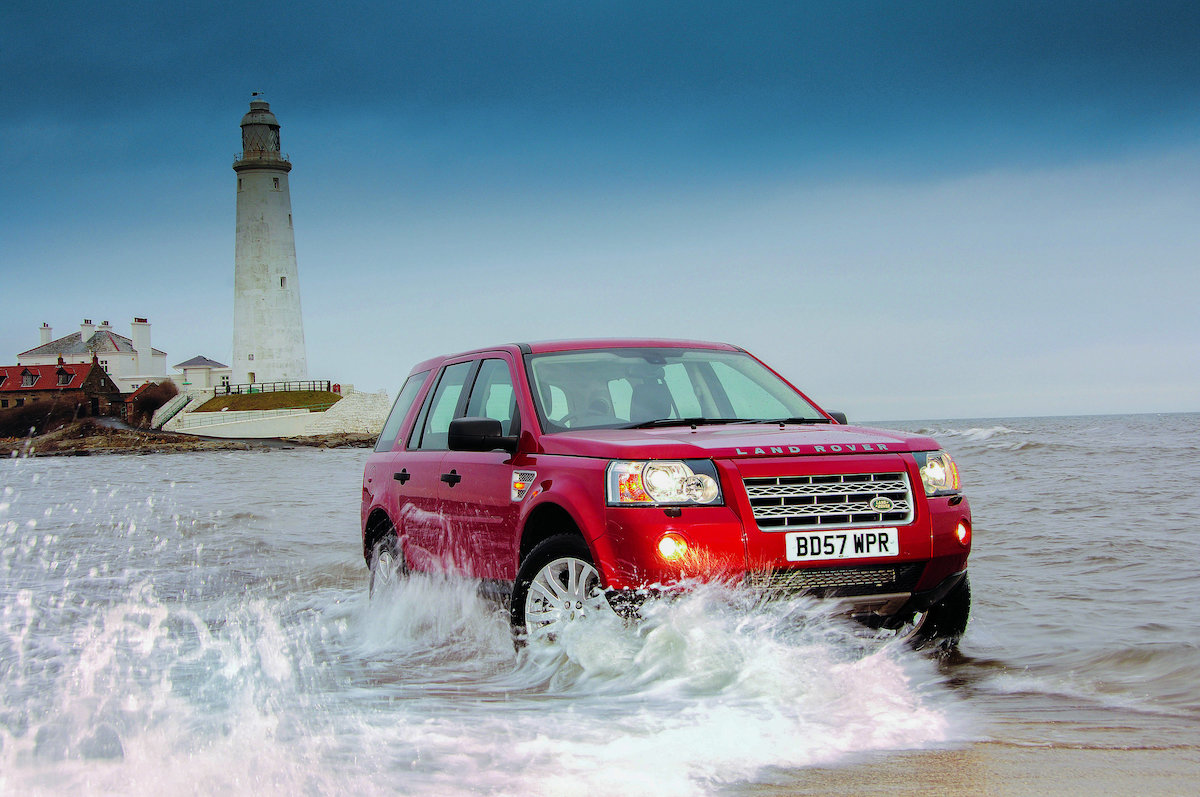
Ready for adventure? The four-wheel drive Land Rover Freelander 2 is handsomely equipped to take you off the beaten track and into the wild blue yonder. Or maybe just tow your horsebox into the middle of a muddy field in Surrey. Mostly, though, it’s the Freelander 2’s promise of year-round mobility that’s the attraction, together with its neat styling, smart cabin, gutsy turbodiesel engines, and refinement.
It is not short of reliability issues, though, and wise buyers would do well to invest in a pre-purchase inspection by a good independent Land Rover specialist.
In some ways, the Freelander 2 is akin to a mini Range Rover (actually, it’s roughly the size of the original Range Rover) in its blend of off-road prowess and on-road sophistication. While it’s nice to know the former is available if you need it, you’ll appreciate the latter.

The ‘baby’ Land Rover’s cabin is smart and upmarket and, although it’s not the most spacious compact SUV around, four adults can travel very comfortably. There’s plenty of room in the front, but the back seats are a little on the small side compared to rivals such as the BMW X3.
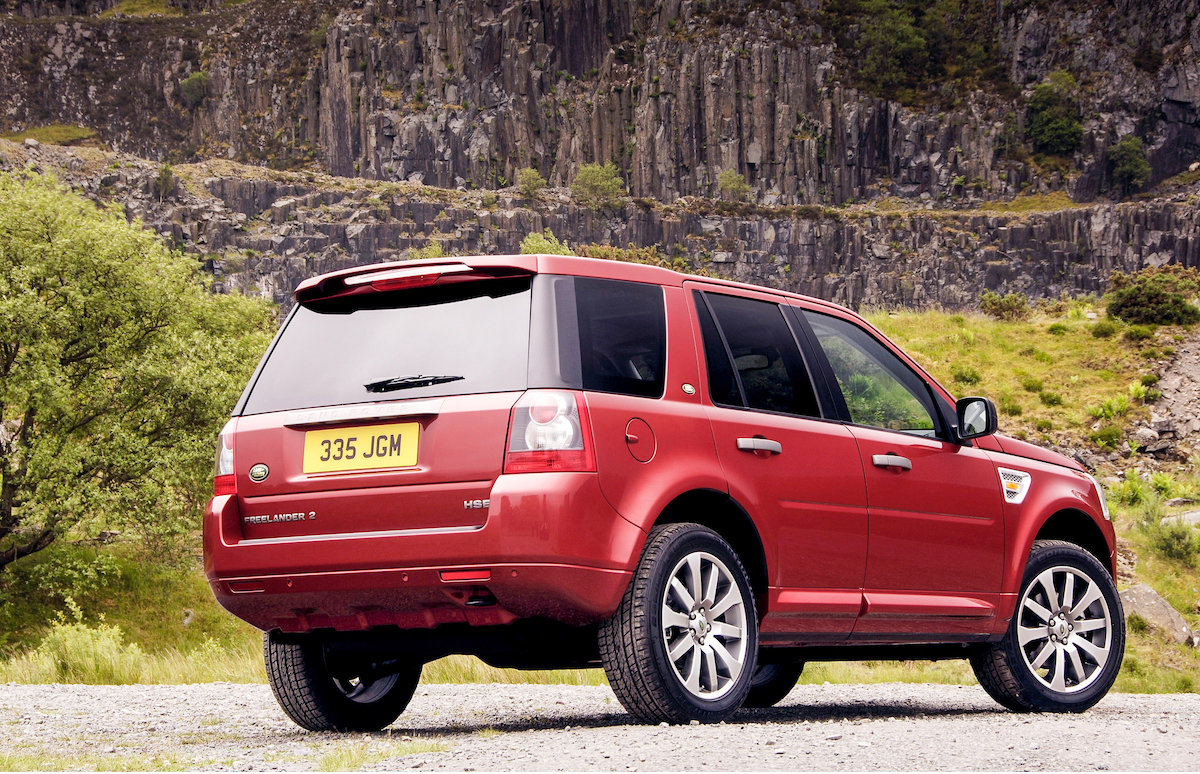
There’s a large 755-litre boot, which extends to 1,670 litres with the rear seats folded down. It was available with a full set of tailored and rugged rubber over-mats to mitigate the onslaught of muddy wellies, and the boot floor has a reversible cover, one side of which is waterproof, so you can flip it around if you’re carrying soggy or muddy things. The downside is that the boot is relatively narrow – the wheel arches eat up a bit of space – so loading wider items can be tricky.
Even the four-wheel drive versions of the Freelander 2 operate with just front-wheel drive in regular driving conditions. As the surface gets slipperier, torque from the engine is automatically fed to the rear wheels in varying amounts via what’s known as a Haldex central coupling.
The Freelander 2 was initially available with a 229bhp six-cylinder petrol engine coupled to an automatic gearbox, known as the i6, and a 2.2-litre 158bhp four-cylinder turbodiesel called the TD4. The latter was originally manual-only, but it quickly gained an automatic option.
By 2009, the i6 was dropped and the turbodiesel gained a stop/start system for improved emissions: it was badged TD4_e. When the Freelander 2 received its first facelift in 2010, the TD4 lost 10bhp but its torque was boosted to 309lb ft (420Nm), and it was joined by a 187bhp version of the turbodiesel, badged SD4. These two engines sustained the Freelander 2 beyond its second facelift in 2012 and until it was discontinued in 2014, when it was replaced by the Land Rover Discovery Sport.
Despite its size, weight and off-road ability, the Freelander 2 is very relaxing to drive. Its steering is direct and well-weighted, the ride comfortable for a car of its ilk, and it’s relatively quiet. It isn’t what you’d call agile, but the Freelander 2 can hustle along back roads at reasonable speed.
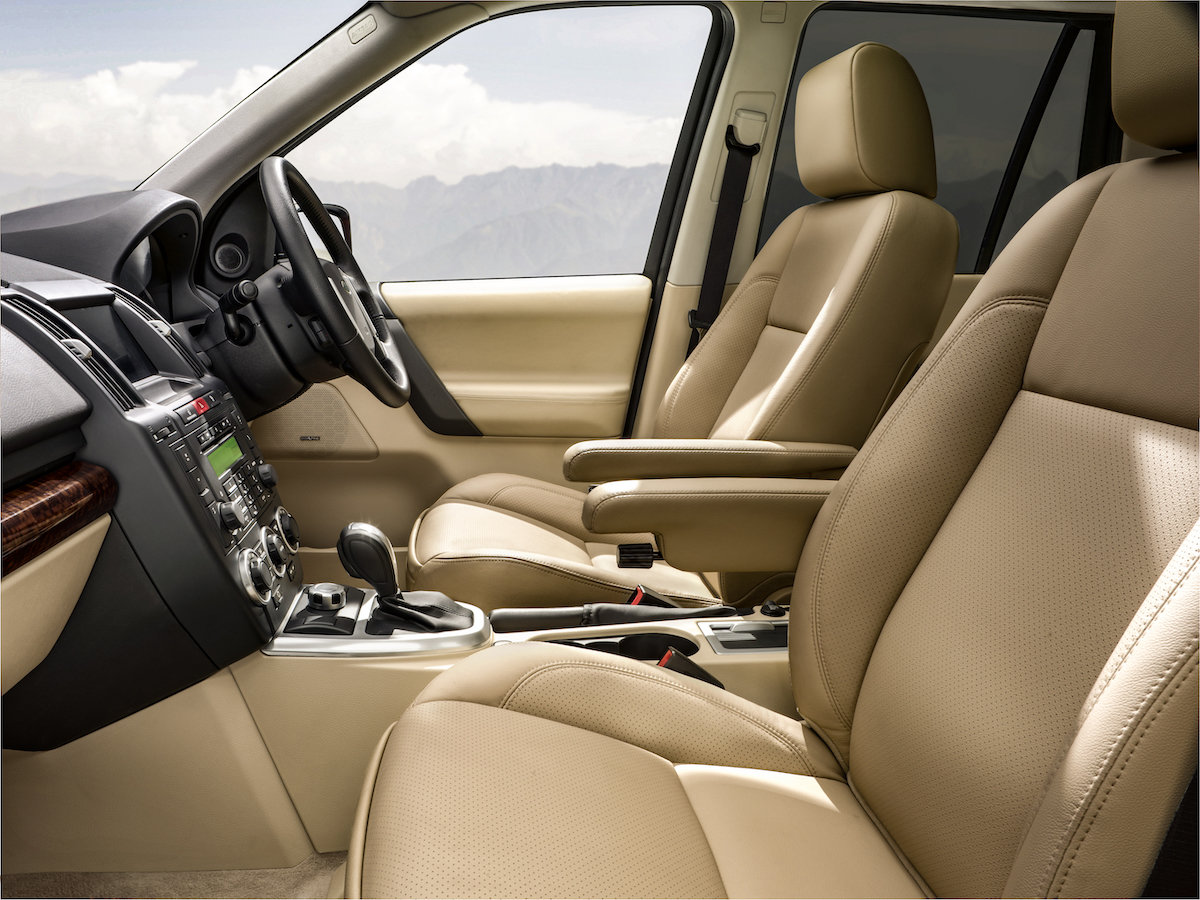
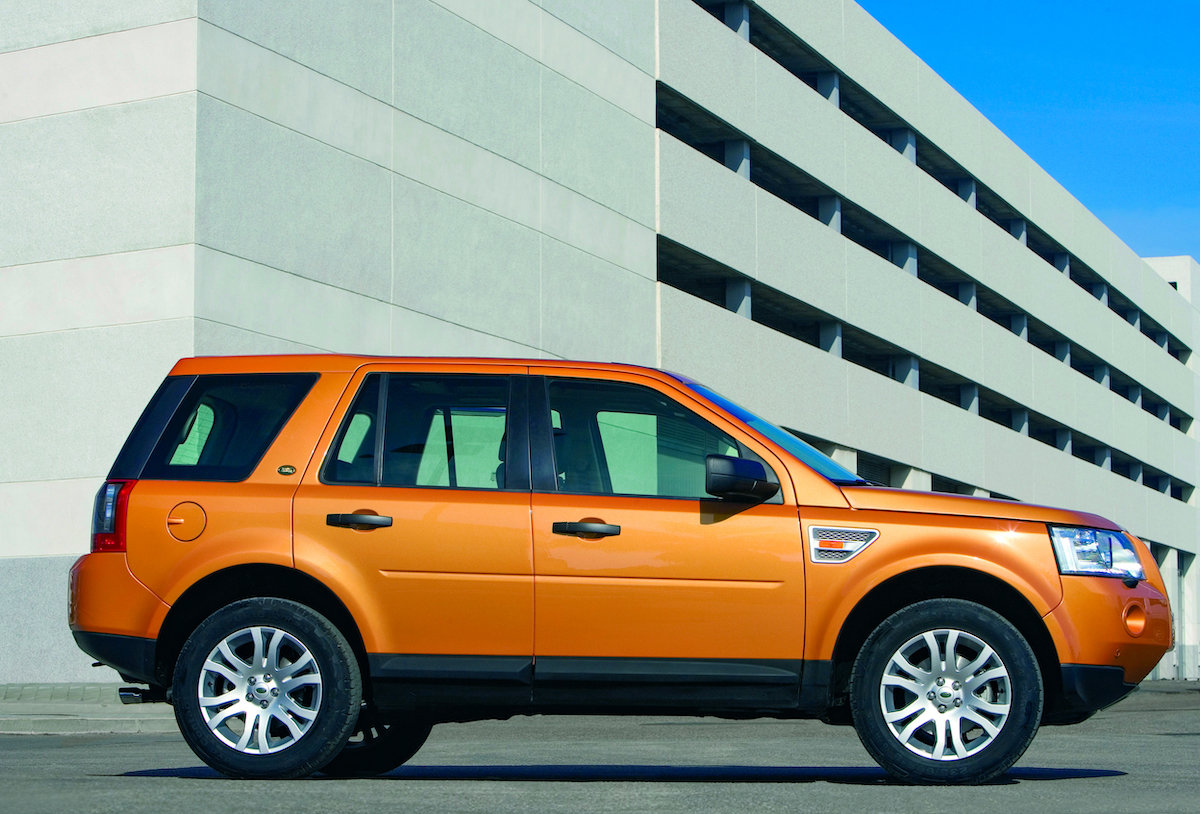
Mainstream trim levels for the Freelander 2 comprise S, GS, XS, Dynamic, SE, HSE, HSE Lux and HST. Standard on all are alloy wheels, climate control, all-round electric windows, and electrically adjustable and folding heated door mirrors. Move up from the entry-level S and the equipment levels swiftly become more generous.
The GS, for example, has full leather upholstery, while the HSE has wood interior trim, a panoramic sunroof, a memory function for the driver’s seat, and a high-end surround sound hi-fi system. There are also several special editions including Aspen SE, Sport LE, and Metropolis.
At the time of the 2012 facelift, Land Rover introduced two hardcore Meridian hi-fi options, both operated via a new seven-inch touchscreen system and both featuring a subwoofer and Audyssey MultEQ audio tuning system. The smaller of the systems has 380W and 11 speakers, while the other boasts 825W and 17 speakers. These models are rare, but it’s worth keeping an eye out for them.
The most popular: The regular TD4 engine in either 158bhp or 148bhp guises outsold the more powerful SD4 by around two to one. Prior to the 2010 facelift, only the TD4_e version featured a fuel saving stop-start system, but after that, all manual diesels had one as standard. The GS and XS models are prolific and quite well-equipped.
The petrol option: The Freelander 2’s 3.2-litre straight-six petrol engine wasn’t a great seller, but if your annual mileage is low, then its 25mpg fuel consumption may not prove too big a hurdle. It’s smooth, powerful and suits the car very well. You might struggle to find one, but its pariah status could mean you bag a bargain.
The quick and stylish version: In December 2010, Land Rover launched the Freelander 2 Sport limited edition, powered by the 187bhp SD4 turbodiesel engine, so it can hit 60mph in 8.7 seconds. It features a special styling pack and paint colours, 19-inch alloy wheels, body-coloured door handles and mirror caps, privacy glass, front and rear parking sensors, and high-grade leather upholstery.
The Freelander 2’s reliability is like playing Russian roulette with four bullets in the chamber rather than one. Some owners have cars that are comfortably on the other side of 200,000 miles and they’ve never had a serious problem, while one unlucky soul we heard about had three new turbos, one gearbox, and five replacement EGR valves in the first 36,000 miles of ownership.
Leaky differentials, front and rear, are an issue, with one owner having to replace both. Driveshafts are known to fail, along with their bearings, and the four-wheel drive system’s Haldex centre coupling can also give up the ghost if it’s not treated to an oil and filter change at least every 30,000 miles. The dual-mass flywheel on manual gearboxes can be a weak spot, and requires the clutch to be replaced at the same time, and power steering pumps are known to give trouble along with a four-figure bill for a new steering rack. Worn anti-roll bar drop-links can cause the car to wander.
Make sure the fuel gauge works, because a sensor problem can have the needle pointing to the quarter-full mark on the dial when the fuel tank is empty, and try the parking sensors, because they’re prone to failure. Water ingress to the boot can cause corrosion on the rear hatchback latch and it won’t close properly, and at the other end, the hoses between the turbocharger and the intercooler can split, causing the engine to flip into limp home mode.
A glitch with the radio means it can stay on after the key has been removed from the ignition and flatten the battery; this should have been resolved with a software upgrade, but it’s still worth checking. Also, see if the glass sunroof moves easily in both directions; it was subject to a recall after some of them jumped off their guide rails and got stuck. Electrical gremlins can affect the alarm and the optional automatic wipers, and the satnav and air-conditioning systems can malfunction.
- Although a Freelander 2 is more likely to be spotted on the school run, Land Rover likes to foster the notion that its products are ideal for the rural crowd. There’s a dial – later changed to buttons – on the Freelander 2’s centre console that allows you to choose between several predetermined set ups to best handle different off-road conditions. Called the Terrain Response System, it alters the engine’s torque, drive, and traction control systems depending on whether you’re driving on sand or mud or rocks, etc.
- Land Rover built a front-wheel drive version of the Freelander 2, known as the eD4 and launched in January 2011. Despite being touted as the most efficient Land Rover to date at the time – 47.2mpg fuel economy and 158g/km CO2 emissions from its diesel engine – the two-wheel drive Freelander 2 eD4 found few buyers and was dropped in June 2014.
- The Freelander 2 received two facelifts, the first in 2010, the second in 2012. If your budget can stretch to the second of these then you’ll benefit from greater equipment levels, a new centre console, buttons for the Terrain Response System rather than a rotary dial, and a more modern instrument cluster with a five-inch display screen between the dials. Models built from 2012, the have an ‘intelligent’ electric parking brake, which detects if the car is on a slope and automatically adjusts its pressure as the brake discs cool down and contract after a long run.
- The most popular: The regular TD4 engine in either 158bhp or 148bhp guises outsold the more powerful SD4 by around two to one. Prior to the 2010 facelift, only the TD4_e version featured a fuel saving stop-start system, but after that, all manual diesels had one as standard. The GS and XS models are prolific and quite well-equipped.
- The petrol option: The Freelander 2’s 3.2-litre straight-six petrol engine wasn’t a great seller, but if your annual mileage is low, then its 25mpg fuel consumption may not prove too big a hurdle. It’s smooth, powerful and suits the car very well. You might struggle to find one, but its pariah status could mean you bag a bargain.
- The quick and stylish version: In December 2010, Land Rover launched the Freelander 2 Sport limited edition, powered by the 187bhp SD4 turbodiesel engine, so it can hit 60mph in 8.7 seconds. It features a special styling pack and paint colours, 19-inch alloy wheels, body-coloured door handles and mirror caps, privacy glass, front and rear parking sensors, and high-grade leather upholstery.

