Lexus RZ 2026 review | A refined and classy electric SUV
Lexus RZ cars for sale
3.0
Expert review
Pros
Exceptionally smooth and comfortable
High-quality interior
Brand's strong reliability record
Cons
Not as practical as some rivals
Feels remote to drive
There are better-value alternatives

The CarGurus verdict
The Lexus RZ is rather clinical in the way it drives and, while it’s comfortably spacious, it could be much more versatile as a large family SUV. It could also be a touch cheaper, and there are rivals that feel more engaging to drive and offer better value for money.
All that said, the RZ is very well equipped, impressively refined and backed by the brand’s reputation for reliability and customer care. Its expanded lineup now offers a broader spread of performance and range options, making it easier to find a version that suits you. If you prioritise comfort, technology and long-term peace of mind over driver appeal, the Lexus RZ makes for a compelling if slightly conservative choice. Just be aware that some rivals offer more space or a sweeter drive for similar money.
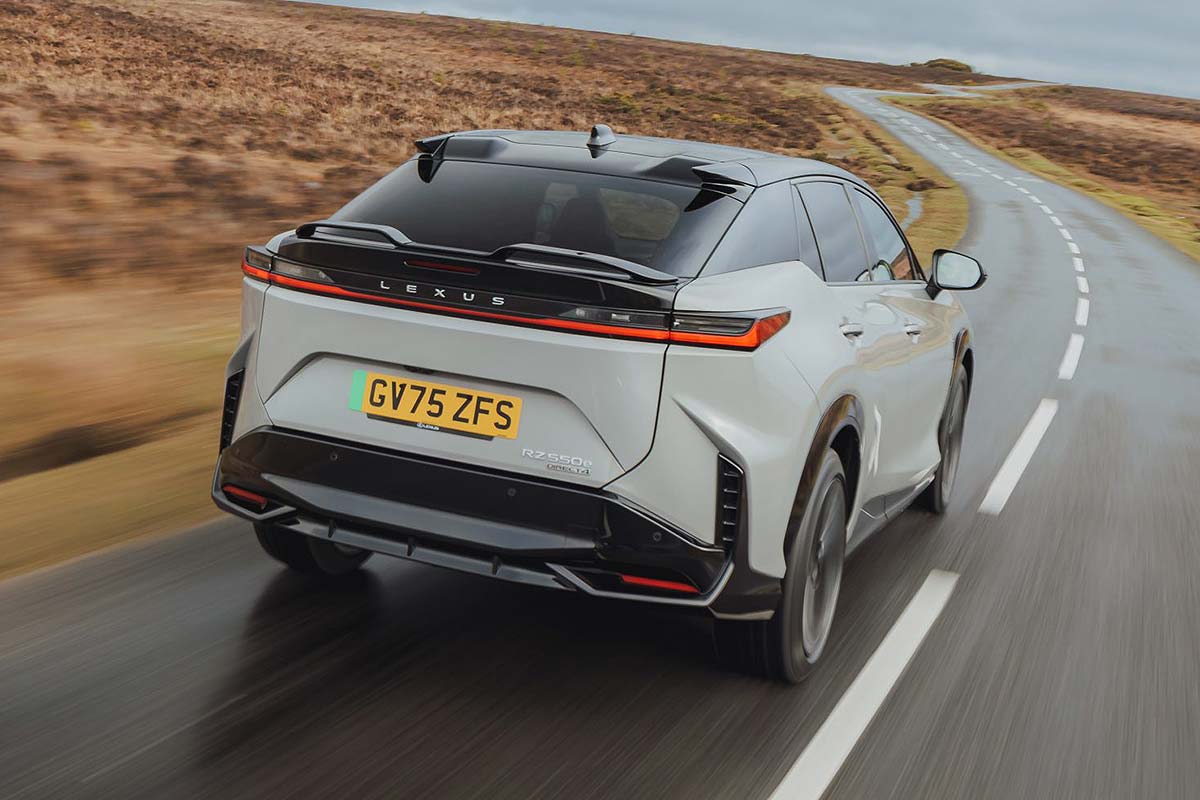
What is the Lexus RZ?
The Lexus RZ is a large, premium electric SUV that now comes in several versions, including the front-wheel-drive RZ 350e and all-wheel-drive RZ 500e and RZ 550e models. Built on the same dedicated electric platform as the Toyota bZ4X and Subaru Solterra, but positioned further upmarket, the RZ is focused more on refinement, performance and luxury rather than affordability. Consider it the EV alternative to the Lexus RX hybrid (and, yes, it is very easy to confuse the two names...)
Depending on the version and wheel size chosen, the latest RZ models offer a WLTP-tested driving range of up to 353 miles from a 77kWh battery. Power outputs range from 221bhp up to 402bhp in the flagship F Sport model.
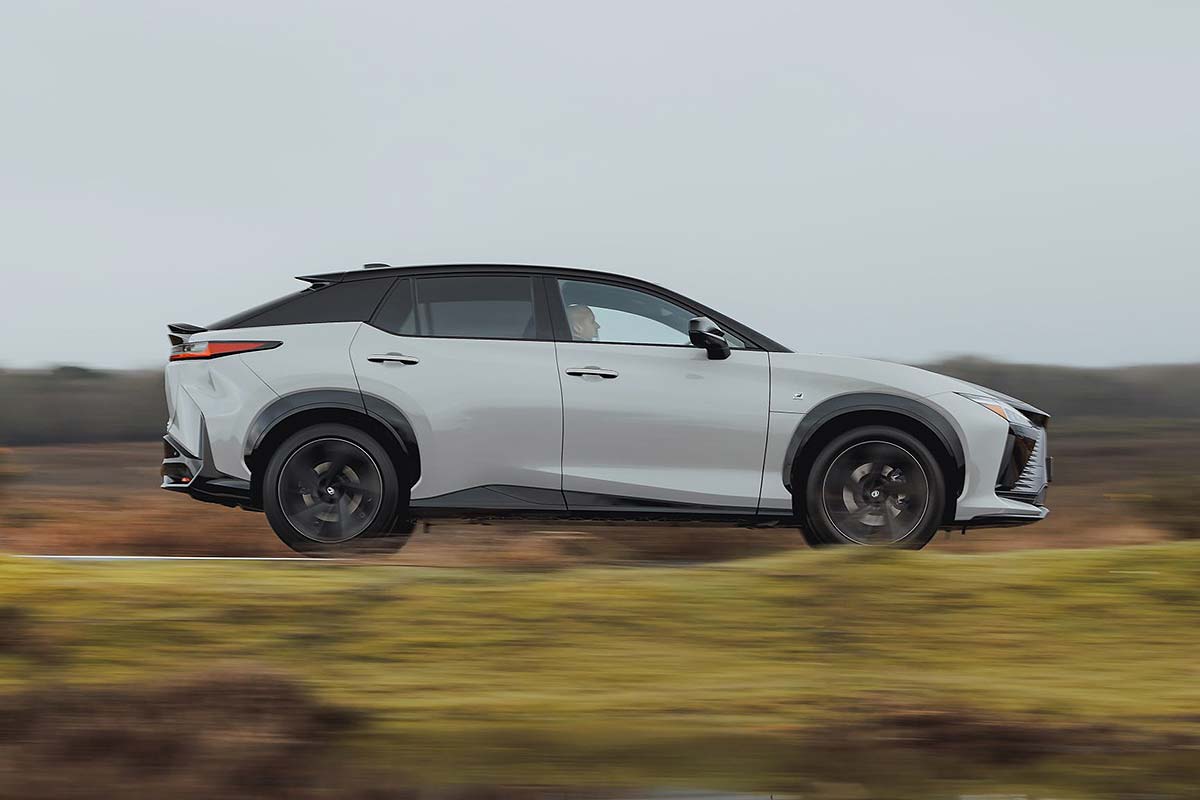
The RZ is also unmistakably Lexus in terms of its design. While it appears rather fussy and over-styled to our eyes, there’s no doubt it is very modern and distinctive. Neat design cues such as the ‘Blade’ LED rear light emphasise a futuristic look.
While it shares an underlying ‘e-TNGA’ platform with its Toyota and Subaru siblings, the Lexus is larger, at just under 4.8 metres long, and offers a more premium interior, higher equipment levels and greater performance. That places it firmly among premium electric SUVs such as the Audi Q8 E-Tron, BMW iX and Mercedes-Benz EQE SUV, while also overlapping with well-equipped versions of cars like the Tesla Model Y, Nissan Ariya and Ford Mustang Mach-E. The RZ certainly isn’t short of competition.
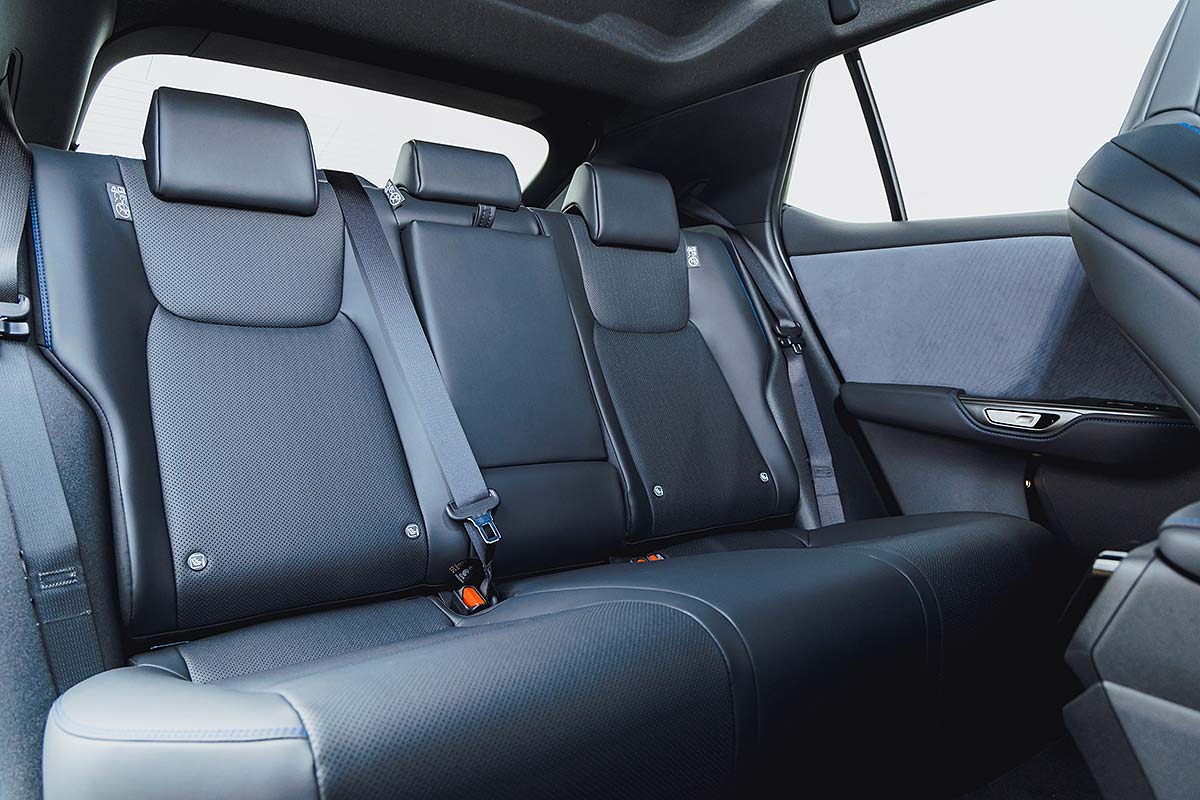
How practical is it?
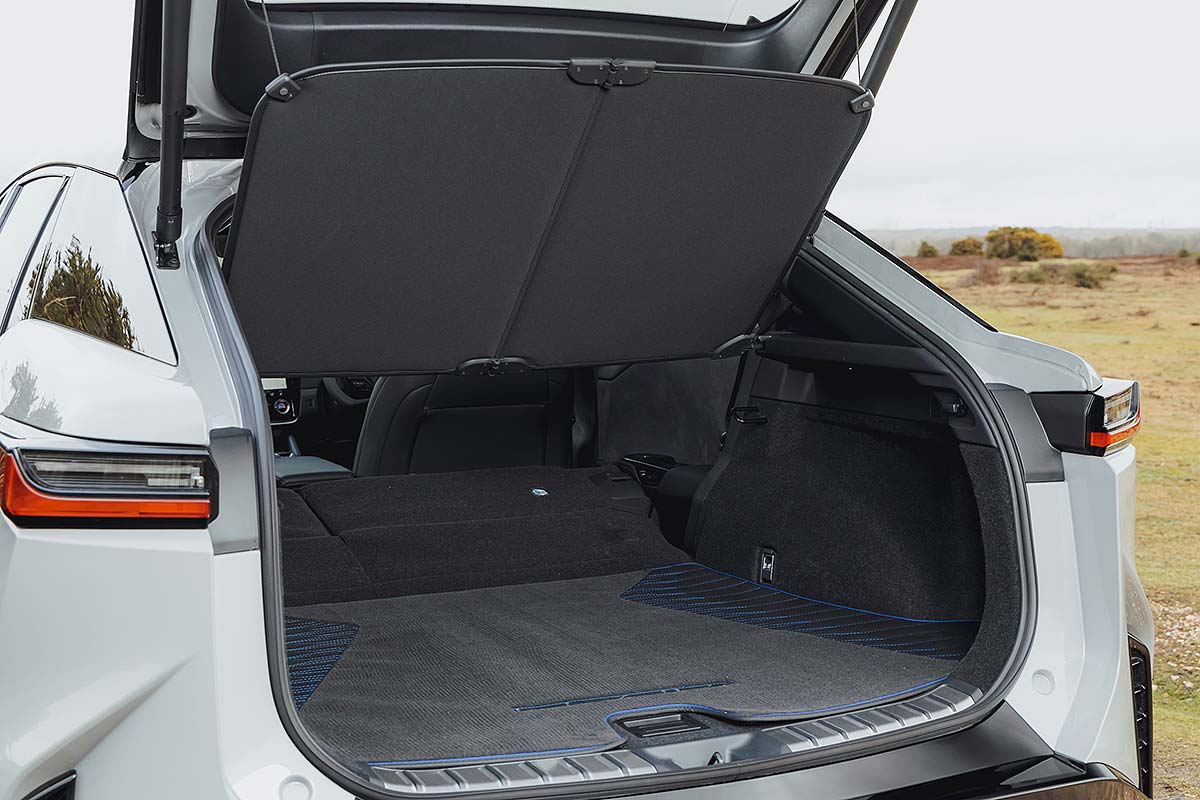
The Lexus RZ would make a great family car given its spacious rear seats and useful 522-litre boot (a BMW iX3 gets a 510-litre boot and the Audi Q8 E-Tron has 569 litres, for some context).
However, it is short on versatility, as the seats fold in a 60:40 split rather than the more flexible 40:20:40 split of some alternatives, plus there is no through-loading facility. Nor is there a seven-seat option; if you want an electric seven-seater, your options are still limited to the Mercedes EQB and Tesla Model X.
Still, there is a huge amount of legroom and enough headroom to keep any six-footer happy. The boot is also a good size, complete with underfloor cable storage. A high load lip might not suit an ageing dog, but the same can be said of many modern SUVs – and you do get an electric tailgate as standard on every RZ.
Up front, you’ll find a storage tray below the centre console and additional space in the armrest, but the door bins are too small for a large bottle and – oddly – there is no glovebox.
The driving position is very good, with masses of adjustment and support, but visibility to the rear three-quarters and out of the narrow rear window is fairly limited. Thankfully, a reversing camera and blind-spot warning system are standard across the Lexus RZ range.
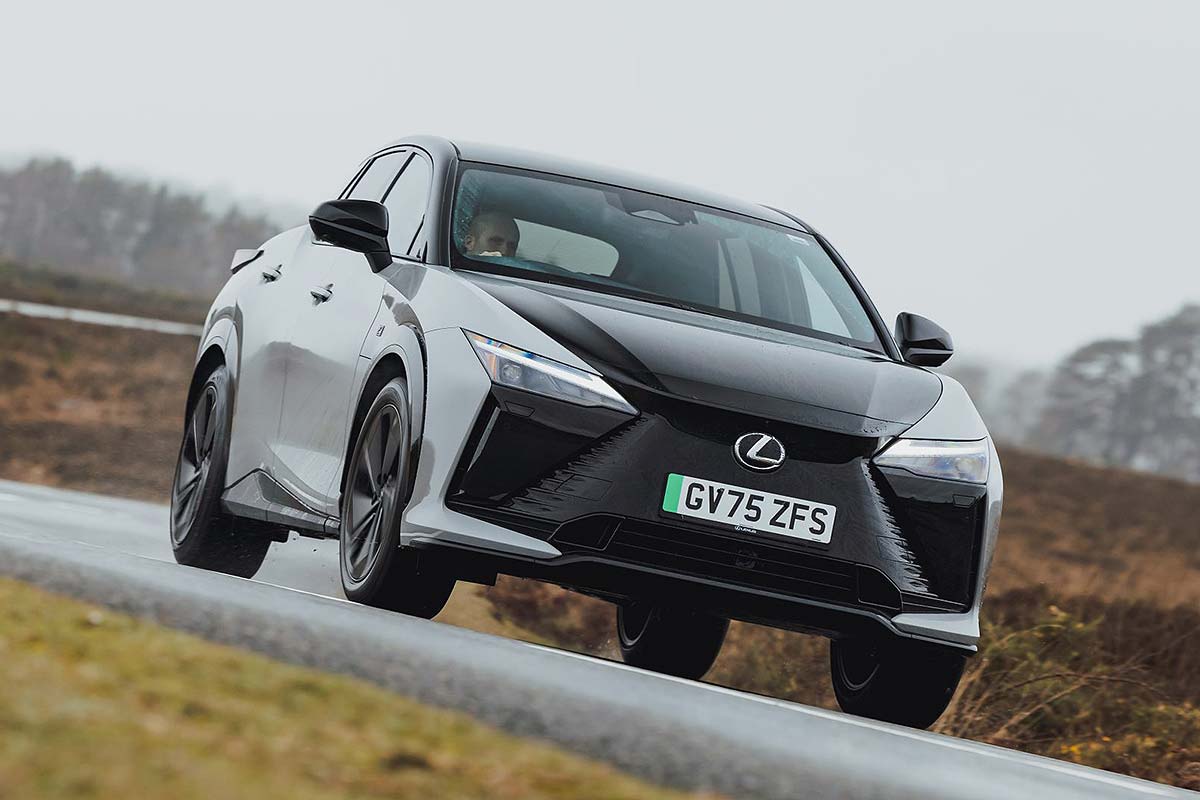
What’s it like to drive?
Comfortable and refined, but otherwise unremarkable. Which isn’t to say that it’s not quick: a 0-62mph time of 4.4 seconds in the RZ 550e (4.6 seconds in the RZ 500e) is hardly to be sneered at. The Lexus undoubtedly feels rapid, whether you’re pulling away from a standstill or going for an overtake or fast merge.
Comfort is the car’s greatest strength, though. Our test RZ rode on 20-inch alloy wheels and delivered a gentle, loping ride over most road surfaces. The soft suspension setup does bring a fair amount of body lean, however, along with some noticeable ‘float’ as the car’s body heaves over undulations or crests. Still, that cushy ride is one of the RZ’s chief assets. This isn’t a car that encourages you to drive quickly anyway.
It feels composed in sweeping corners; the ‘Direct4’ all-wheel-drive system continuously adjusts torque between the axles, helping the RZ feel secure and planted. Sadly, the steering remains largely devoid of feedback regardless of drive mode, so you never feel particularly connected to what the car is doing. Higher-spec versions feature adaptive suspension, which should reduce body lean slightly, although the focus remains firmly on comfort rather than agility.
Some versions now offer Lexus’s ‘One Motion Grip’ steer-by-wire system paired with a yoke-style steering wheel. This replaces the traditional mechanical connection between wheel and steering rack with electronic control (with a backup system in place for safety), and while it reinforces the RZ’s technology-focused approach, it will take some acclimatisation for drivers used to conventional steering setups. It's certainly a talking point.
Refinement is excellent. Even by the standards of electric vehicles, the RZ suppresses motor noise and road roar effectively, making it a very calm cruiser. Nonetheless, there are rivals that feel more engaging to drive while being similarly refined, such as the Genesis GV70 Electrified.
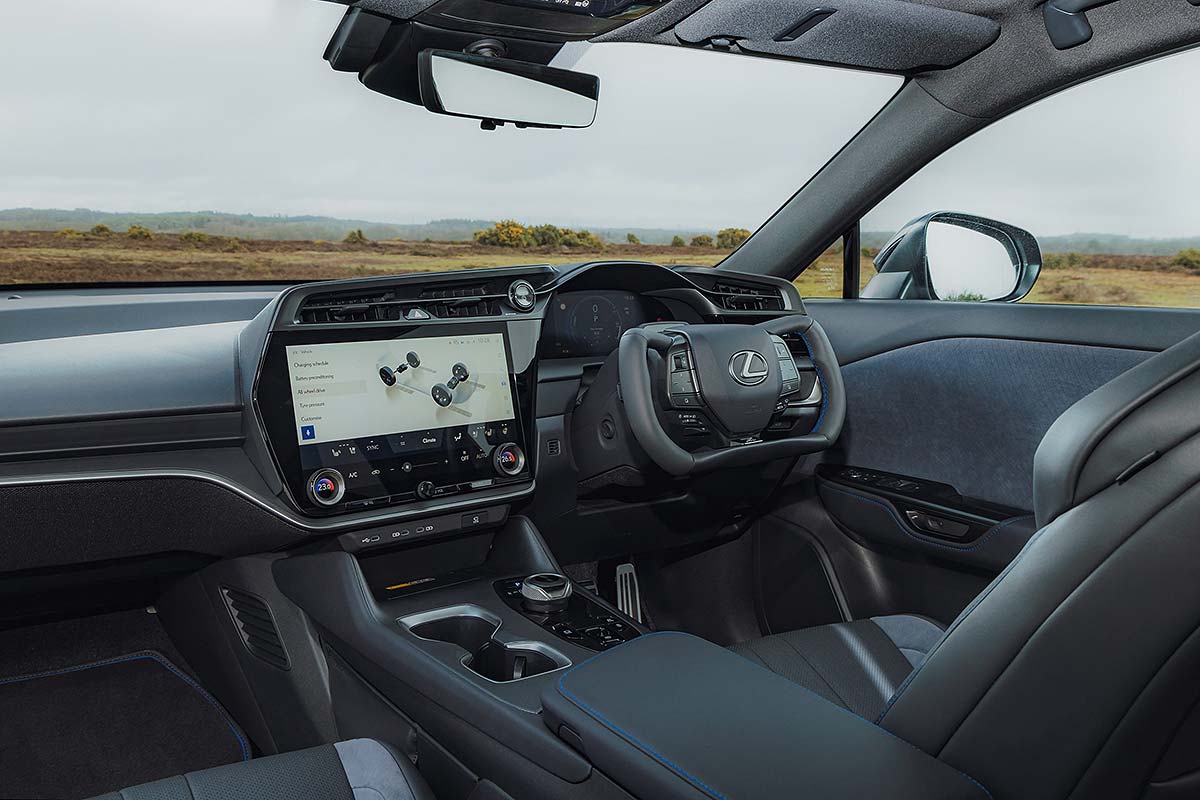
Technology, equipment and infotainment
The Lexus RZ is very well equipped, with even the entry-level RZ Premium getting a panoramic roof, dual-zone climate control, 18-inch alloy wheels, keyless entry, synthetic leather upholstery, electrically adjustable front seats and a Lexus Link Pro 14-inch touchscreen infotainment system. Premium Plus spec adds a head-up display, 360-degree parking camera, ventilated front seats and a memory function for the driver’s seat.
The Takumi trim is exclusive to the RZ 500e and introduces 20-inch alloy wheels, a 13-speaker Mark Levinson surround-sound audio system, a dimmable panoramic sunroof, gloss black exterior styling details, a digital rear-view mirror, LED front fog lights and cornering lights, single LED headlights with adaptive high-beam, front performance dampers, 64-colour ambient interior lighting, Ultrasuede upholstery and heated rear seats.
The performance-focused F Sport (550e) adds to the Premium Plus spec with more equipment, including 20-inch alloys, additional front and rear spoilers, 'One Motion Grip' steer-by-wire, F Sport front seats and interior trim, aluminium pedals and Ultrasuede upholstery with blue stitching. Finally, the F Sport Takumi model gains the 13-speaker Mark Levinson sound system and dimmable panoramic roof.
The infotainment setup in the RZ is very decent, with a huge, glossy touchscreen offering a portal to the standard wireless Apple CarPlay and Android Auto, as well as to Lexus’ own sat-nav system with charger search function, plus all the other music and system settings you’d expect. The screen is a bit prone to reflecting light, and shows fingerprints quite badly, but otherwise it responds quickly and the icons are big enough to be easy to prod while you’re driving. Over-the-air software updates are also supported.
Safety equipment is comprehensive, with lane-keep assist, traffic sign recognition and adaptive cruise control all standard, along with blind-spot monitoring – a feature that remains optional on some rivals.
It’s a shame that there’s no vehicle-to-load charging feature, though, as this ability to power other external devices from an EV battery is becoming increasingly common.
Lexus RZ running costs
The RZ isn’t cheap to buy – several key rivals make it look particularly pricey – but the Lexus is generously equipped compared with many rivals. It remains competitive on overall list price positioning and monthly finance costs.
Electric cars have become more expensive to charge since energy prices rose in 2022, but they remain cheaper to run than a petrol or diesel car. If you charge at home at around 40p per kWh, you’ll be paying roughly 13p per mile for electricity in the Lexus RZ – a similar cost to a diesel car returning 55mpg. However, most EV drivers use cheaper overnight tariffs, which can reduce that cost significantly. Public charger costs are typically much higher, and vary widely depending on the provider and location.
Electric range estimates vary according to model and wheel size, with smaller wheels usually delivering better efficiency. Expect a real-world range broadly in line with official figures of roughly 280 to 350 miles, depending on the version and driving conditions.
Servicing costs are reasonable, with plans available that spread the expense into monthly payments of around £15-£30, covering one full service and two interim visits depending on the package chosen. The RZ requires servicing every 12 months or 10,000 miles. Insurance costs are typically higher than equivalent petrol or diesel premium SUVs, especially if you choose the 500e or 550e models.
Lexus RZ reliability
Lexus has built a formidable reputation for reliability and customer service over many decades, and that reputation continues today. The Japanese brand – along with its parent company, Toyota – consistently performs well in ownership surveys covering both new and used cars. In the 2025 What Car? Reliability Survey, Lexus finished ninth out of 30 manufacturers overall.
The RZ comes with a three-year warranty, which can be extended through Lexus’s ‘Relax’ programme. After each qualifying service at an official Lexus dealership, cover can be renewed for a further 12 months, up to a maximum of 10 years or 100,000 miles. Lexus also highlights the RZ’s thermal battery management system, which is designed to protect long-term battery health. The company suggests the lithium-ion battery should retain around 90 percent of its original capacity after 10 years of typical use – broadly in line with expectations for modern EV battery technology, but reassuring nonetheless.
- The RZ charges via Type 2 and CCS (DC rapid) connectors, which are the European standard socket types used by almost every EV (other than the rather forgettable Lexus UX 300e, which was the marque's first electric car). Rapid charging speed peaks at 150kW, which is competitive with many rivals, and allows a 10-80 percent top-up in around 30 minutes via a suitably powerful charger. Real-world charging speeds will vary depending on ambient temperature, battery condition and charger performance.
- At home, the charging time will depend on your wallbox output. Many UK drivers will have a 7kW charger, which should deliver a full charge overnight, although the RZ now supports faster AC charging where available. A Type 2 cable is included for home or public charging, but you’ll need to pay extra for a three-pin cable if you want the option of charging from a domestic socket. Expect this to take well over 24 hours for a full charge, although it can be useful as an emergency backup.
- The RZ 350e isn’t a great option if you want to tow, as it’s only rated for 750kg with a braked trailer, making it unsuitable for caravans or horseboxes. Even the RZ 500e is limited to 1,500kg, while the RZ 550e isn’t certified for towing at all. Rivals such as the Hyundai Ioniq 5, Kia EV6 and Tesla Model Y offer slightly higher towing capacities, while larger premium electric SUVs like the BMW iX and Tesla Model X can haul significantly more.
- If you want the cheapest one: Go for the entry-level Lexus RZ Premium, as it’s noticeably more affordable than the higher trims, yet still comes with most of the key features buyers will want. Options are largely cosmetic, plus an easy-entry function that moves the steering wheel and seat to make climbing in and out easier.
- If you want the best company car: The RZ 500e Takumi is our pick of the range. It combines all-wheel-drive reassurance, strong performance and a generous level of luxury and technology, including features such as a head-up display and larger alloy wheels. These help to justify its position in the premium SUV class and should support resale values.
- If you want the best high-mileage commuter: Again, the RZ 500e Takumi makes a strong case. Its emphasis on comfort, refinement and equipment – including heated and ventilated seats, and a head-up display – makes long journeys particularly relaxing. The comprehensive standard specification also means there is little need to add extras.
- If you want the sportiest version: The flagship RZ 550e offers significantly stronger performance and sharper styling. It feels rapid and suitably premium, although its pricing and focus place it firmly among established German rivals.