Lexus UX 300e Review (2021-present)

CarGurus expert score
Pros and cons
What we like
Very well equipped
Relaxed and comfortable ride
Excellent build quality
What to consider
Too expensive as a new car
Poor range and slow charging
Cramped rear seats and small boot
The CarGurus verdict
The Lexus UX 300e is very difficult to recommend as a new buy. Sure, it’s easy to like in isolation thanks to sharp looks, solid-feeling build quality and a cushy drive, but it is outclassed by a host of rivals in terms of range, charging convenience, interior space, infotainment usability and purchase price. Even if you do really want a compact, stylish, urban electric SUV, and aren’t too fussed about the range and practicality, you’re still better off with any of those other options we’ve already mentioned.
out of 5 expert review
What is the Lexus UX 300e?
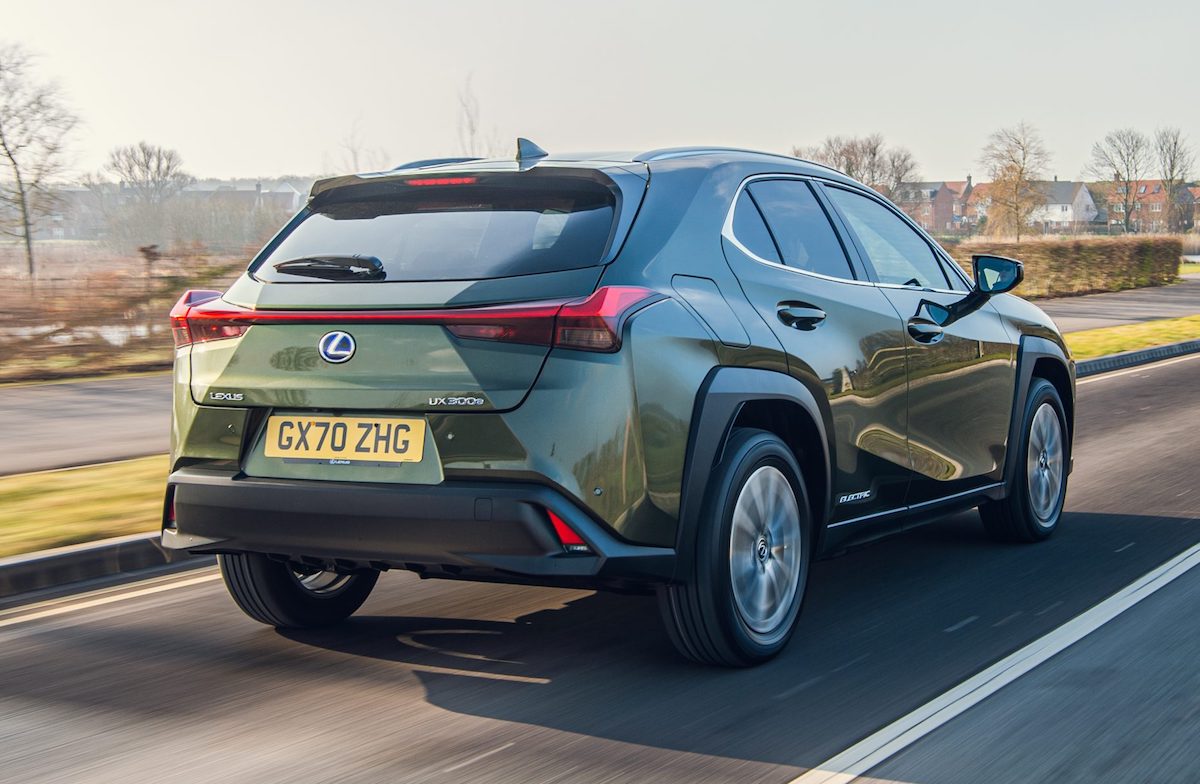
The Lexus UX 300e is the Japanese brand’s first pure electric car despite its long history of championing petrol-electric hybrids. Indeed, the UX300e looks virtually indistinguishable from its UX250h hybrid sibling that preceded it, and you might have expected such a hybrid specialist to split the difference in its push towards further electrification with a plug-in hybrid, but instead, Lexus has gone the whole hog with a purely electric model.
This compact SUV has a 201bhp electric motor that drives the front wheels, and is powered by a 54kWh battery that gives it an official WLTP range of 196 miles (or a little less if you go for a high spec model with big wheels and tyres).

Practicality
How practical is it?
Think of the UX 300e as a posh, raised crossover car that’s a similar size to a family hatchback rather than bigger family SUVs, and you’ve got it spot on. There’s plenty of room in the front seats for a tall driver to get comfortable behind the steering wheel, and the standard electrically adjustable seats that you get on every UX 300e make it really easy to find a natural-feeling position. Just don’t expect a high-set, SUV-like view down the road since the UX 300e is quite low even by crossover standards and you don’t sit much higher than you do in a normal hatchback.
You’ll get a couple of average-sized adults in the rear seats of the UX 300e but leg- and headroom is quite tight by the standards of this class so any tall passengers will feel very hemmed in. Boot space is quite poor, too, totally just 367 litres with the rear seats upright, which is below-average for the class. Even though the UX 300e actually gets quite a bit more boot space than its hybrid sibling, the UX 250h, it’s still a much smaller boot than you can get in almost any rival – electric, hybrid, or otherwise.
In short, the electric UX is really a style-led urban car that majors on comfort and compact size, so if interior space and versatility is any kind of priority you should look instead to similarly-priced alternatives such as the Ford Mustang Mach-E, Volkswagen ID.4, Audi Q4 e-tron, Volvo XC40 Recharge Pure Electric or Mercedes EQA. Even the Tesla Model 3 (which isn’t an SUV but is a similarly compact executive electric car in the same price range as the UX 300e) is more practical since it offers similar rear passenger space to the UX 300e and has much more luggage space. Or, save a fortune and go for a non-premium rival such as the Hyundai Kona Electric, Kia e-Niro or Peugeot e-2008.

Driving
What's it like to drive?
While the UX 300e’s official range is on a par with much cheaper alternatives like the Peugeot e-2008, most of those premium rivals that we already mentioned offer much longer range options; the Audi Q4 e-tron 40 will do 316 miles, for instance, yet costs the same as a mid-spec Lexus UX300e.
When it comes to how it drives, the Lexus UX 300e is perfectly adequate but nothing more. Ride comfort is appealingly squishy and relaxed. There is a heavy thump and quite a lot of wheel rebound from the rear axle over big intrusions, but otherwise the UX 300e is one of the more comfortable electric cars.
There are a few driving modes to choose from but even in Sport the UX 300e feels like a car that you just want to chill in rather than drive with any serious intent, and the way it spins its front wheels up under even moderate acceleration in damp conditions also doesn’t encourage hearty use. Nonetheless, the powertrain has enough oomph to make you feel comfortable merging onto the motorway, and the steering is precise yet light enough to make it feel wieldy around town. Certainly, a Tesla Model 3 or Ford Mustang Mach-e promises much better performance and handling for a similar price.

Tech and equipment
Technology, equipment & infotainment
Where the UX 300e does excel over the many alternatives is in its equipment levels. Even the entry-level UX 300e gets 17-inch alloys, LED headlights with auto high beam, adaptive cruise control, climate control, reversing camera, front and rear parking sensors.
You have to go for mid-specification Lexus UX 300e Premium Pack to get heated and ventilated seats, leather upholstery, wireless phone charging and keyless entry. Top-spec Takumi Pack gets a head-up display, sunroof, Mark Levinson sound system, powered tailgate and blind spot monitor but it’s way too expensive to be recommendable.
Every Lexus UX 300e gets an infotainment system with Apple CarPlay and Android Auto, but you have to go for that extortionately pricey Takumi model to get sat-nav built in and a bigger 10.3-inch infotainment screen. The rest of the range makes do with a 7.0-inch screen that’s got quite dated, grainy-looking graphics, and a fussy touchpad interface that’s a pain to use. We're not usually fans of touchscreens, but this setup makes them feel like the last word in user-friendliness.

Running costs
Lexus UX 300e running costs
The Lexus UX 300e is, as we’ve said, rather expensive to buy given the range and practicality on offer. Unfortunately, finance deals don’t make it much more attainable and you’ll be lucky to pay less than £500 per month even if you have a healthy deposit or part-exchange.
Still, once you’ve got your hands on it, the Lexus UX 300e will be affordable to run. Electricity is much cheaper than petrol or diesel, so expect to pay around 4p per mile to ‘fuel’ the Lexus UX 300e if you charge up at home; roughly a third of what an efficient petrol car will cost to run. Insurance is also a tad cheaper than on many rivals, not least since many of them have quite a bit more power.
Servicing is every year or 10,000 miles, which are much more frequent intervals than offered by many alternatives, but each service does come with the added benefit of a free 12 month warranty extension. You can also pay monthly, from £15 per month, to cover servicing costs, or there’s an upgraded £30 per month servicing package for electric Lexus models that includes fluids, brake pads and more.

Lexus UX 300e reliability
If there is any reason that you might buy the Lexus UX 300e over one of its many rivals, it’s the company’s stellar reputation for reliability. Lexus routinely tops the reliability and customer satisfaction surveys, and has done for many years so, while the UX 300e itself is too new to have been included in any customer surveys, there’s no doubt that the brand’s reputation for being bulletproof when it comes to reliability is well deserved.
A three-year, 60,000-mile warranty is standard with the UX 300e, while the lithium-ion battery pack is covered for eight years and 100,000 miles.
However, as we’ve mentioned, having the UX 300e serviced at an official Lexus dealer is well worth it since the brand has now launched its ‘Lexus Relax’ scheme, which means that you get an additional 12 months of full manufacturer warranty with every service, continuing up to 10 years and 100,000 miles. The battery warranty is also extended up to 10 years and a quite remarkable 600,000 miles if you stick to the annual service and battery health checks, which says a lot about Lexus’ confidence in the reliability and durability of its batteries.


What owners say
Three things to know
- The Lexus UX 300e has a peak charging rate of just 50kW, which means far longer rapid charging times that offered by most rivals. It’ll take roughly 45 minutes for a 100 mile top-up, while alternatives like the Audi Q4 e-tron and Tesla Model 3 will do the same in more like 15 minutes (assuming you can find a 150kW rapid charger). More than that, the UX 300e uses a CHAdeMO socket, rather than the CCS socket that almost every other new EV uses. It isn’t difficult to find a 50kW rapid charging point that’s compatible with CHAdeMO, so it’s not a deal breaker, but as the public charging infrastructure grows and evolves, there is no doubting that CCS-compatible cars will be much more convenient to charge on the go. A full charge at a 7kW home wallbox will take under nine hours, and Lexus provides both the Type 2 cable needed for plugging into a most car chargers, as well as a three-pin cable for trickle charging (expect to get around 7 miles of range per hour) at standard domestic sockets.
- As with every electric vehicle, the Lexus UX 300e will go further in between charges when the weather is warmer and the driving conditions slower, while cold weather and motorway speeds will see the real-world range drop more quickly. Expect to get between 150 and 180 miles in the summer, while around 120 miles is realistic for solid motorway miles on a cold day.
- There’s no four-wheel drive version of the pure electric Lexus UX 300h but you can get a four-wheel drive version of the petrol-electric hybrid Lexus UX 250h. If all-weather traction is a consideration for you, don’t forget that Toyota – the parent company for Lexus – offers various hybrid four-wheel drive SUVs including the Toyota Rav4. The UX 300e also isn’t rated for towing at all, so you’ll have to look to alternatives like the Audi Q4 e-tron if you want a posh, electric SUV that’ll tow a light caravan or trailer.
Which one to buy
- If you want the best value: Just go for the entry-level UX 300e, which doesn’t get a trim name but does get plenty of equipment, as we’ve mentioned above. It’s a stretch to say that any Lexus UX 300e is good value, given what you can get for the same money if you look to rival EVs from both premium and more everyday brands, but this is the cheapest UX 300e.
- If you’re a company car driver: If your company car scheme allows it, it’s worth going for the Lexus UX 300e Premium Pack since the price jump makes little difference to the company car tax that you pay. However, the leather upholstery, keyless entry and heated seats in the front and rear are sure to be appreciated.
- If you want the luxury one: You could go for the Lexus UX 300e Takumi Pack, which is lavishly equipped, but at over £50k it is also lavishly priced so we’d still recommend sticking to the Premium Pack. If you really want luxury in a compact electric SUV and are willing to pay some £50,000, look to the Volvo XC40 Recharge Pure Electric, Mercedes EQA or Audi Q4 e-tron, all of which have more performance, more range and generally more going for them if you’re willing to spend this sort of cash on a plush, plug-in SUV. Or, at that price you’re also not far off the brilliant Jaguar I-Pace.

