MINI Clubman Review (2016-2020)
MINI Clubman cars for sale
4.0
Expert review
Pros
Cute retro looks
More roomy than a MINI hatchback
Responsive, lively handling
Cons
Very small boot for an estate car
JCW model will be pricey to fuel and insure
Relatively expensive servicing
The CarGurus verdict
It’s a mistake to consider the MINI Clubman as an estate, even though it is far more practical when compared to the hatchback. It won’t be able to carry big loads, even when the rear seats are folded down, but it does mean that if you want a MINI, but need more carrying ability than you’ll get with the hatchback – for daily family use, for example – then the Clubman will match what’s available in a regular premium hatchback, such as the Audi A3 or BMW 1 Series (with which the Clubman shares its mechanical underpinnings).
There’s no doubt that the Clubman has a lot going for it. That on-road ability is almost unique in its class and if you’re careful selecting the right version for your needs, it can be a thoroughly rewarding car to drive and own. And if you also factor in decent fuel economy figures and that quirky, iconic design, you’ll have a car that will make you smile on a regular basis.

When is an estate not an estate? Arguably when it can’t carry a flat-pack wardrobe from your local Swedish furniture store (other furniture stores are available). Then again, the MINI Clubman is not like other estate cars. There’s a hint in the name of the car brand, for a start. But when you buy a MINI estate, your expectations need to be managed, because this is a ‘load-lugging’ version of a small car and for all the MINI’s qualities, practicality isn’t foremost among them. But we’ll come back to that.
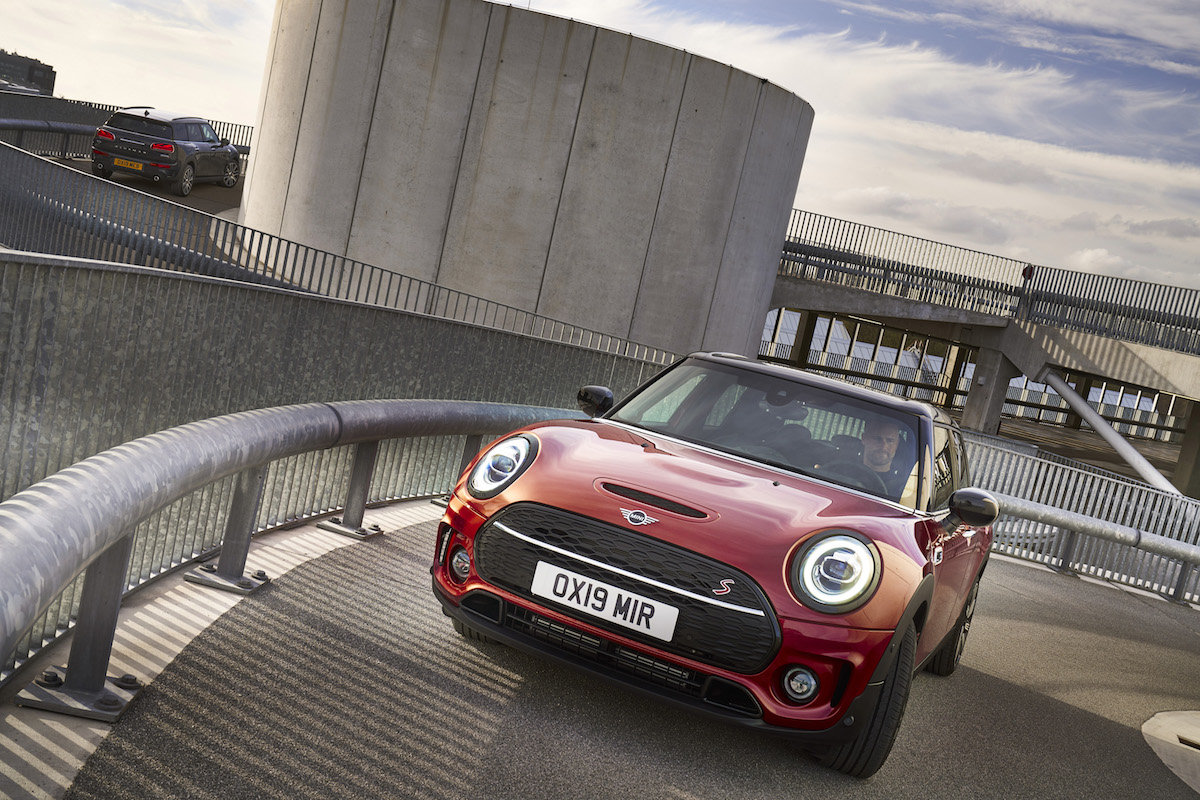
First impressions of the current generation MINI Clubman, launched in 2015 but facelifted in 2019, are that this is a well resolved, but clearly updated version of a much-loved design. There’s not much to say about the look of the MINI that hasn’t already been said, but while this is recognisably a descendant of the Morris Mini Traveller that went on sale in 1960, it is also a world away, in styling terms.
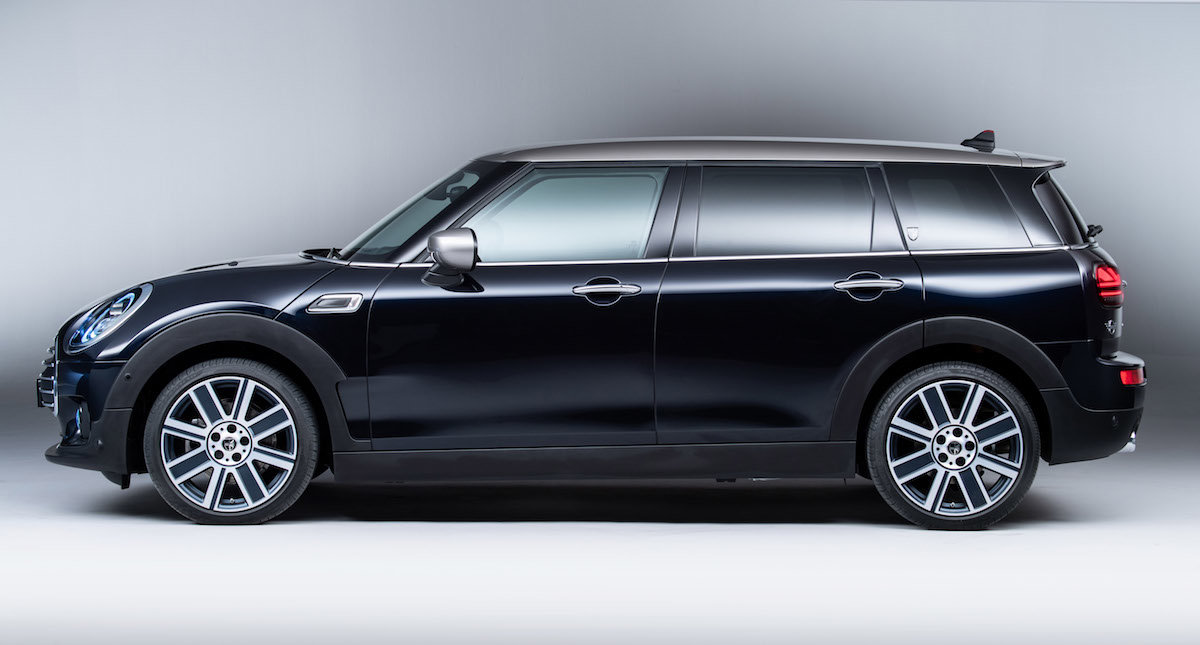
The new Clubman looks like an elegant, slightly elongated hatchback. It still has the cute bug eyes, the turn-down-mouth grille and the proportions that have won favour with design aficionados and consumers alike. It also has the two barn doors at the back but, unlike the first-generation BMW MINI Clubman from 2007, there are now two rear doors, instead of the one half-door.
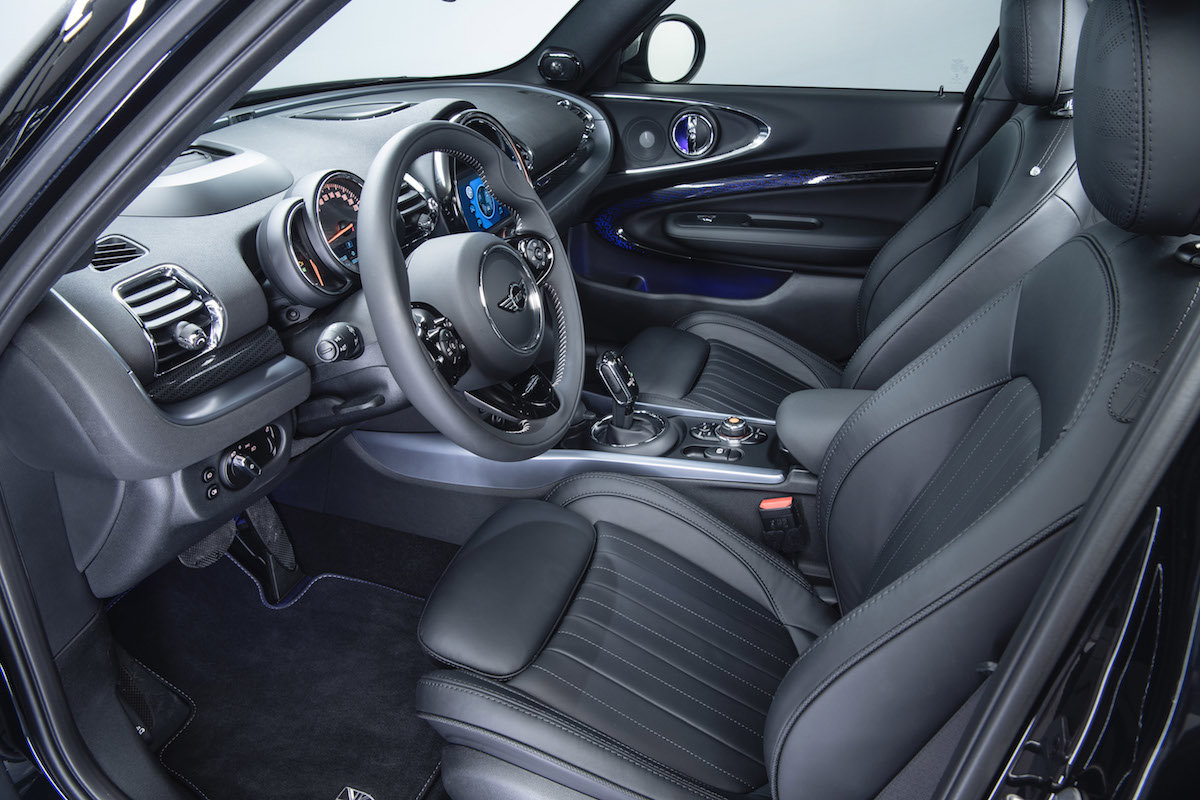
The cabin is again what we’ve come to expect from MINI, with retro trademark features, including the large circular display in the middle of the dashboard and chrome toggle switches. It might not have the conventional upmarket feel of an Audi A3, but its quirky charm is undeniable.
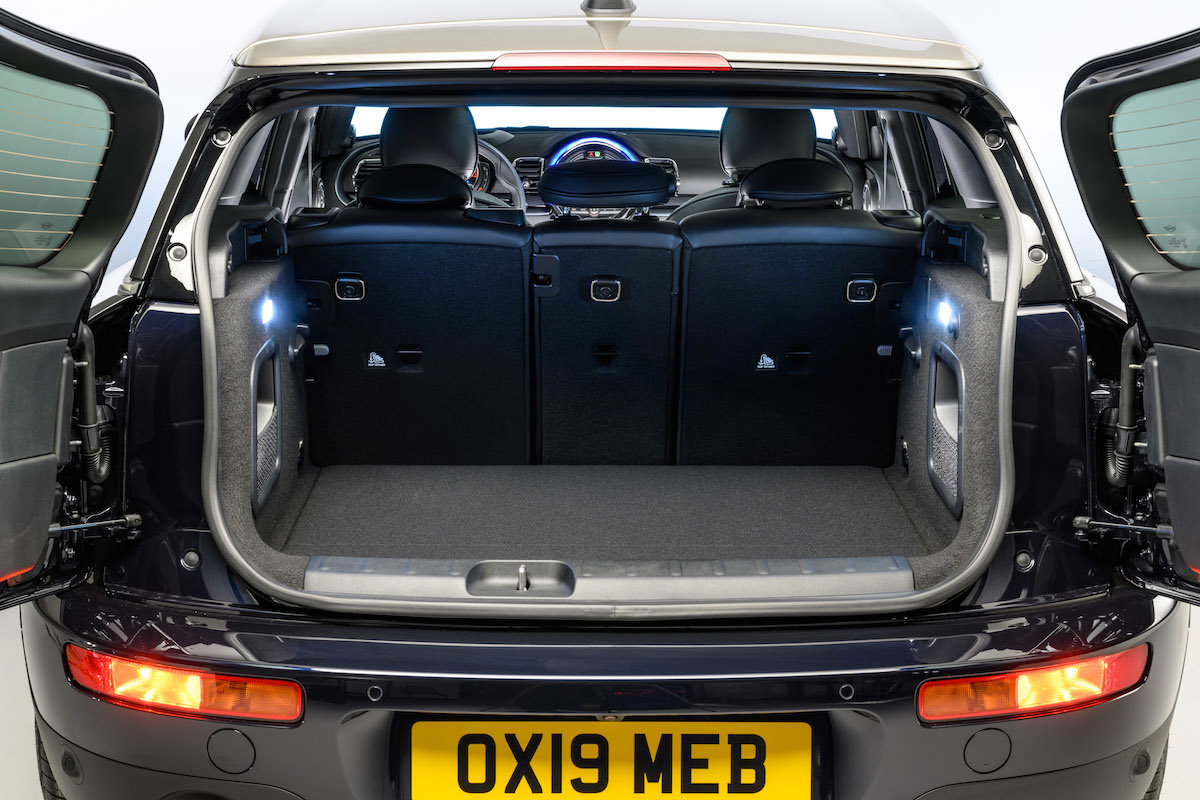
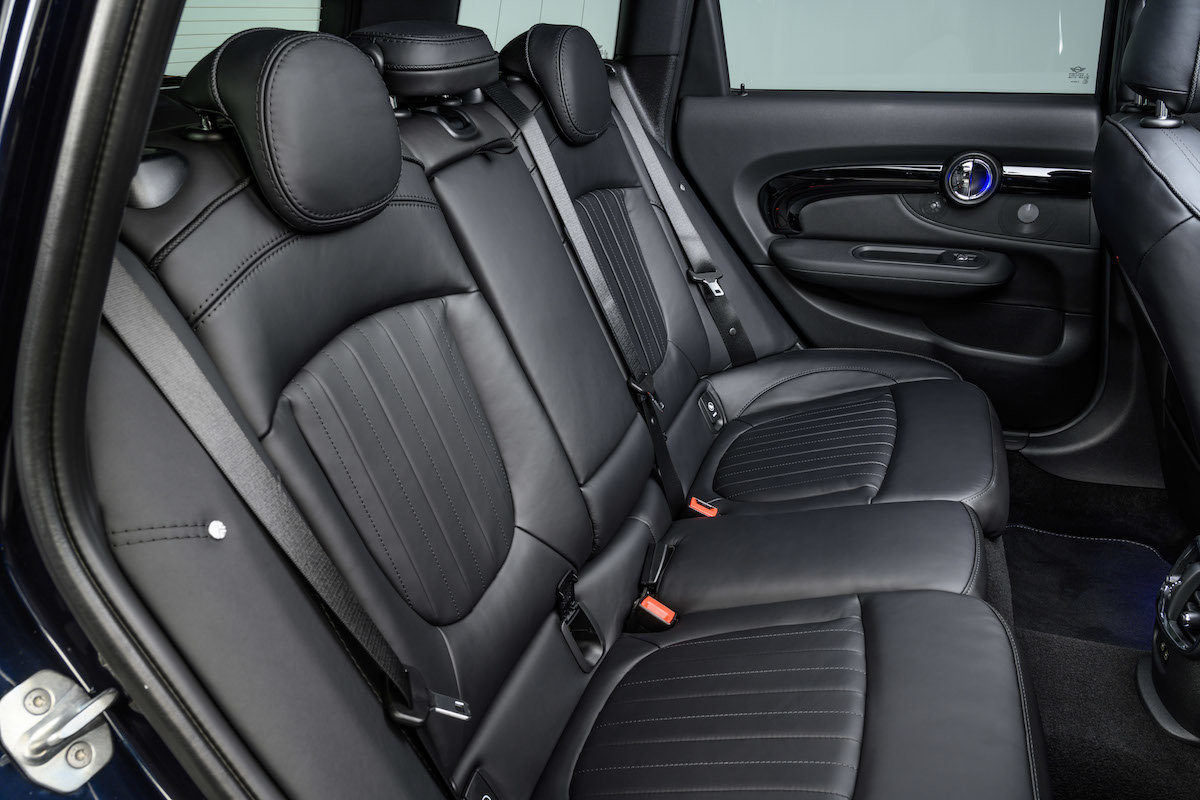
Now, about that flat pack wardrobe that we mentioned. The Clubman isn’t the most capacious load lugger, but it’s certainly a more useful family car than the MINI hatch, thanks to an extra 73mm of width and almost half a metre in extra length. It has five seats and, although three adults will struggle to get comfortable in the back, a couple of adults should find themselves with a reasonable amount of space.
On the subject of boot space, it actually has a 360-litre capacity, which matches the Audi A3 and Volkswagen Golf. This expands to 1,250 litres when you fold the back seats flat. It might not be estate dimensions, but it’s big enough to be useful, swallowing up a few suitcases or a child’s buggy. You may need to tick the delivery option for the wardrobe, though.
On the road, the MINI is a MINI, all keen, responsive steering and go kart-like dynamics. It feels agile and well balanced, the body is well controlled and doesn’t roll too much in corners. The ride quality is decent enough for British roads (although Cooper S cars are a little firmer) and the overall feeling you get is that this is a fun car to drive.
The engines are all pretty refined units, as befits a premium model, so there’s not a huge amount of intrusive noise from them, unless you rev them hard. The turbo petrol engines that are tuned to produce higher outputs in the Cooper S and John Cooper Works can make the Clubman quite nippy (especially in the John Cooper Works – or JCW – with its 4.9-second 0-62mph), ratcheting up the fun levels.
The facelift in 2019 was largely cosmetic, but it did bring an upgraded infotainment system and a new sports suspension option for the standard cars. But things get more serious if you’re after the hardcore JCW model, as this received a new engine with a substantial increase in power (302bhp up from the old car’s 228bhp).
If you’re buying new, the Clubman range is relatively simple. As before, the first decision is which engine option to go for – Cooper, Cooper S or JCW – and the amount of standard kit varies according to the variant of the Clubman chosen. For example, Cooper S has more kit than Cooper. But beyond that there are now only two main trim specs, Classic and Exclusive.
Classic comes with an 8.8-inch touchscreen infotainment system with DAB radio, satellite navigation and Apple CarPlay (although still no Android Auto). On top of that, you get rear parking sensors, rain sensing headlights, an ambient lighting pack and cloth seats. Exclusive brings leather seats, 18-inch alloys, a Frozen Blue interior and an Anthracite headlining. You can add further options to these trim specs, but they come with pretty much everything included – unlike the previous generation Clubman, where the standard car was relatively basic and buyers were then expected to flesh it out with various option packs and upgrades.
If you’re buying a used example, the pre-facelift cars of this generation are still relatively easy to decipher, but they did have a slightly lower specification with a greater reliance on option packs. It’s estimated that 50% of buyers went for the Chili Pack, which adds cloth/leather upholstery with heated sports seats, a comfort access system, park distance control, automatic air-conditioning, LED headlights and LED fog lights. It’s therefore worth finding out what packs were added to the new car by the original owners in order to understand the equipment that's fitted to the car.
The Clubman has had five engine variants in the time it’s been on sale, with two diesels and three petrol units.
The variant with the best fuel economy was the One D diesel, introduced in 2016 but withdrawn form sale in 2018, due to lack of demand. The other diesel-powered cars are badged Cooper D and are fitted with a 2.0-litre 147bhp engine that has still manages to record a fuel economy figure in excess of 60mpg, although as with any of these official figures, the reality is likely to be somewhat lower in daily driving. A more powerful 2.0-litre Cooper SD diesel was also available from launch, until it was phased out after a few years. Performance of this model was nearing hot hatch territory, but it still returned 62.8mpg.
The entry-level petrol engine in the Cooper is a 1.5-litre, three-cylinder unit that offers a fuel economy figure of up to 47.1mpg (it varies slightly, depending on wheel size and the exact specification).
The sportier Cooper S Clubman has a 2.0-litre four-cylinder engine under its bonnet, with official figures of 43.5 to 44.8mpg. However, as the Cooper S does exude an infectious sense of fun when driving, a driver’s enthusiasm is likely to mean that real-world figures will be closer to 30mpg.
The John Cooper Works has the same 2.0-litre petrol engine, but tuned to produce a 302bhp output, so the official (and optimistic) fuel consumption figure is 35.8 to 38.2mpg.
CO2 figures, which may determine just how much car tax you pay, are reasonable, but not especially low. Most Clubman models fall into the post-2017 VED system, which means you’ll pay the same flat rate of £165 from the second year onwards (the first year’s payment being included in the purchase price if you’re buying new). If you do find a 2016 or early 2017 example, the annual VED amount will depend on the CO2 rating. A standard Cooper, for instance, would cost just £20 a year based on its CO2 emissions of 109g/km, whereas a Cooper S with the larger 18-inch wheels and the All4 system would take that up to 170g/km of CO2 and £265.
Insurance premiums for the MINI Clubman shouldn’t be too onerous, as the different Cooper variants sit in groups 12 to 18, with the Cooper S in group 26 and the John Cooper Works in a high group 40 (out of 50).
As the Clubman is a premium product, from a premium manufacturer (MINI is owned by BMW), servicing costs won’t be low. However, you can buy a service plan online, paid for monthly, which includes two services, an MOT test, health checks, fluid top-ups and satnav updates.
The MINI Clubman doesn’t sell in large enough volumes to always register on customer satisfaction surveys, but its hatchback sibling usually appears mid-table in terms of reliability. Owners experience some minor niggles around electrics, but there are no reports of consistent problems.
There have been a couple of recalls for this second-generation Clubman. Cars powered by the 1.5-litre petrol engine were recalled to deal with excessive crankshaft bearing wear, a serious problem that could lead to engine damage if not fixed.
The other recall, in 2020, concerned a potentially defective rollover detection sensor inside the airbag control unit, so in the event of a crash in which the vehicle rolls on to its roof, the airbag might not properly deploy, increasing the risk of injuries to the passengers. Clubman models affected by this recall were manufactured in March 2020.
The Clubman, like the other MINI models, has a three-year unlimited-mileage warranty, which is common to cars from parent company BMW. It is slightly better than some rivals, which tend to have a mileage limit on warranty cover.
- Part of the appeal of the revived MINI is the heritage connection with an iconic car. The retro feel of the car and the connection to the Swinging 60s is very much a part of the Clubman’s identity. The Clubman name was first used in 1969 for the revised Mini Traveller and survived until 1980, but even without the original model’s wooden trim on the bodywork, the shape of the modern Clubman is a clear reference to the cars of the 60s and 70s, making a connection that consumers recognise and respond to.
- For those buyers who regularly face challenging road conditions, there’s a Clubman variant with four-wheel drive, too. The Clubman All4 joined the line-up in 2016 and features the All4 all-wheel drive system previously only offered on MINI Countryman models. The system is connected to a Driving Dynamics System that continuously calculates the ideal power distribution between the front and rear wheels. An Electronic Differential Lock Control (EDLC) also improves traction when accelerating out of bends, a useful feature on roads that tend to be wet and/or slippery.
- The Clubman performed relatively well in safety tests, but its four-star Euro NCAP safety rating does lag behind some rivals. It scored a very respectable 90% for adult occupants, although a 68% child occupant score is less than you might expect in a family-orientated vehicle.
- If you’re looking for a MINI Clubman that would suit a young family, the Cooper should be your pick. The petrol engine is reasonably efficient and has pretty low CO2 emissions, so it's affordable to run. Add the most comfortable suspension set-up in the range and you have a well-targeted package for families.
- For a bit of driving fun that isn’t too hardcore, the Cooper S should be your pick of the range. The car is more taut, more focused, more sporty than the Cooper, so the ride is little firmer and there’s more power on tap, so you can have a bit of fun with it.
- If you want a version that is all about the performance, though, there is only one real option: the MINI Clubman John Cooper Works. The JCW is especially performance-oriented, with power increased to 302bhp, while the 0-62mph time is just 4.9 seconds.
- If you’re buying a used Clubman and anticipate covering a lot of motorway miles, the diesel engined variants are well worth investigating. Since dropped from the range, they offer a good blend of performance, economy and refinement. The most frugal of all was the base spec One D, which was officially rated at an impressive 74.3mpg (think mid 60s in the real world). This model also emitted just 99g/km of CO2, meaning that the earliest examples – registered before the tax laws changed on 1st April 2017 – pay no Vehicle Excise Duty (VED).

