MINI Aceman Review (2024-present)
MINI Mini Aceman cars for sale
4.0
Expert review
Pros
Fun to drive
Cheerfully modern design
Half-decent electric range
Cons
Over-reliance on complicated touchscreen system
Not very practical
Firm ride will be too much for some

The CarGurus verdict
The MINI Aceman certainly isn’t a car without its flaws, but somehow, it manages to feel like more than the sum of its parts. For instance, you might well be bamboozled by the complexity of its infotainment system, irritated by the contrived sights and sounds of its various drive modes, and you may find the ride too uncomfortable and the interior too cramped.
However, you might also be won over by its perky performance, its neat handling, its cheerful character, its quirky interior and its very decent list of standard equipment. Yes, the foibles in this small electric SUV are plentiful, and in some cases, pretty serious. But overall, the Aceman is a likeable car that wins you over regardless.
What is the MINI Aceman?
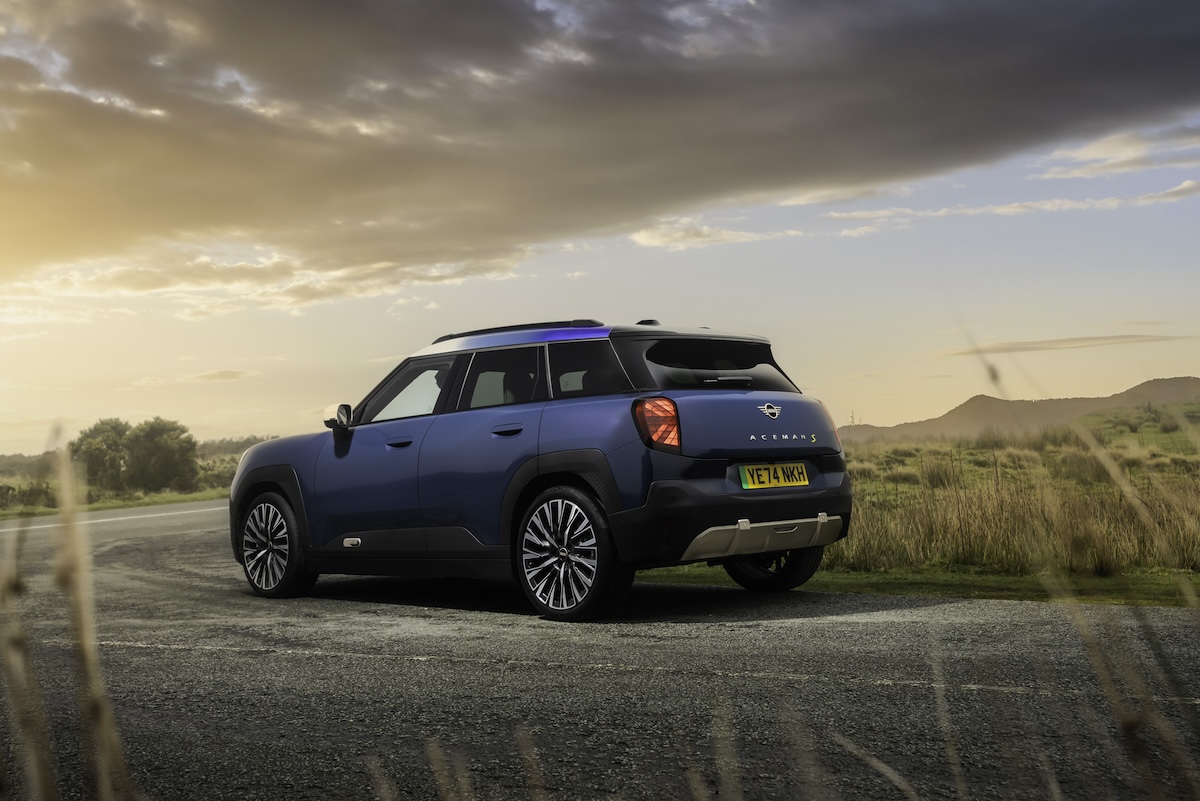
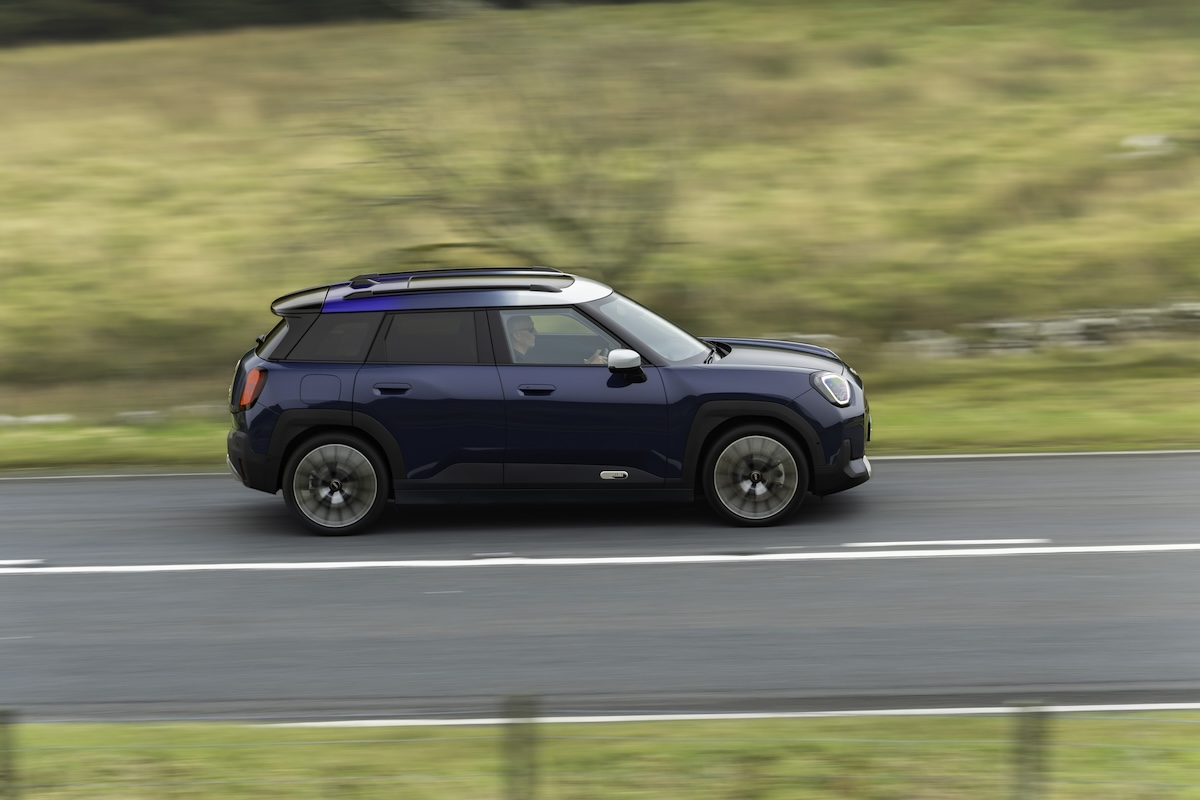
The MINI Aceman is a small electric crossover that’s about as fashionable as it’s possible to get.
For many years, the BMW-derived MINI brand has been achingly trendy thanks to its retro styling and desirable image, and these are things that endure on MINI’s products to this day, the new MINI Aceman included. With the Aceman, however, these attributes are wrapped up into a teeny SUV-style package with a super-small footprint not dissimilar to that of the contemporary MINI Cooper Hatchback - actually, think of it as a MINI Cooper Hatch with a slightly jacked-up body and you’re not far off the mark. Chuck in the fact that it comes exclusively with fashionable all-electric powertrains, and it feels like this is a car that should be trundling down the catwalk at London Fashion Week, rather than along a congested London street.
Of course, the fact that small electric SUVs are so fashionable is no secret, and so the MINI Aceman has a vast number of rivals to compete with, with more joining the fray all the time. The new car will have to fend off challenges from models like the Kia EV3, Volvo EX30, Peugeot e-2008 and the Renault 4.
How practical is it?
If you’re expecting the practicality levels of a typical SUV, then it’s time to radically recalibrate those expectations. The Aceman might have SUV styling, but as what is essentially a jacked-up MINI hatchback, it’s still a very small car.
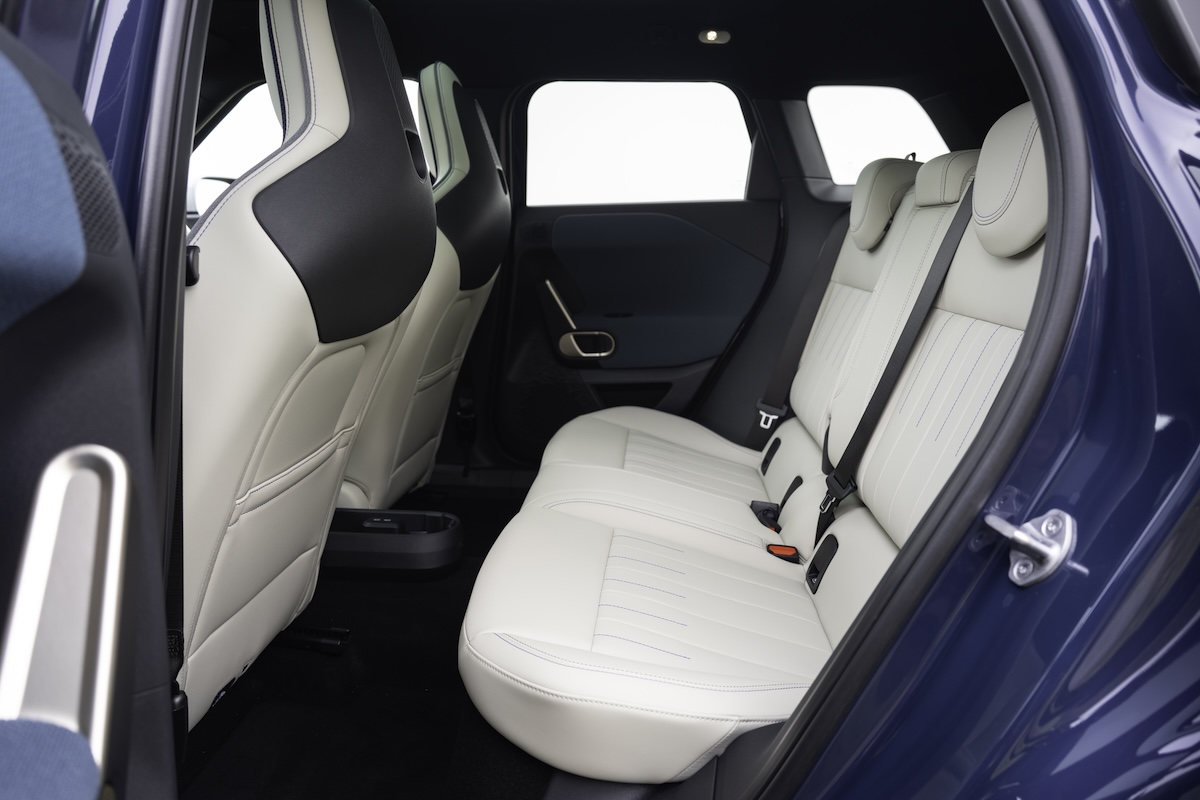
Space is fine up front, but in the back, it’s tight on both headroom and legroom. Smaller children will be okay in the rear seats, but anyone in their teenage years will feel hemmed in, and anyone older or bigger might struggle to get comfortable.
There is a middle seatbelt, but the actual seat it serves is pretty much useless because its way too narrow for a person to sit in. You may as well abandon all hope of putting a passenger in it, then, and use the space as extra shoulder room for those sitting either side, which might serve as some small compensation for the shortage of headroom and legroom they’re experiencing.
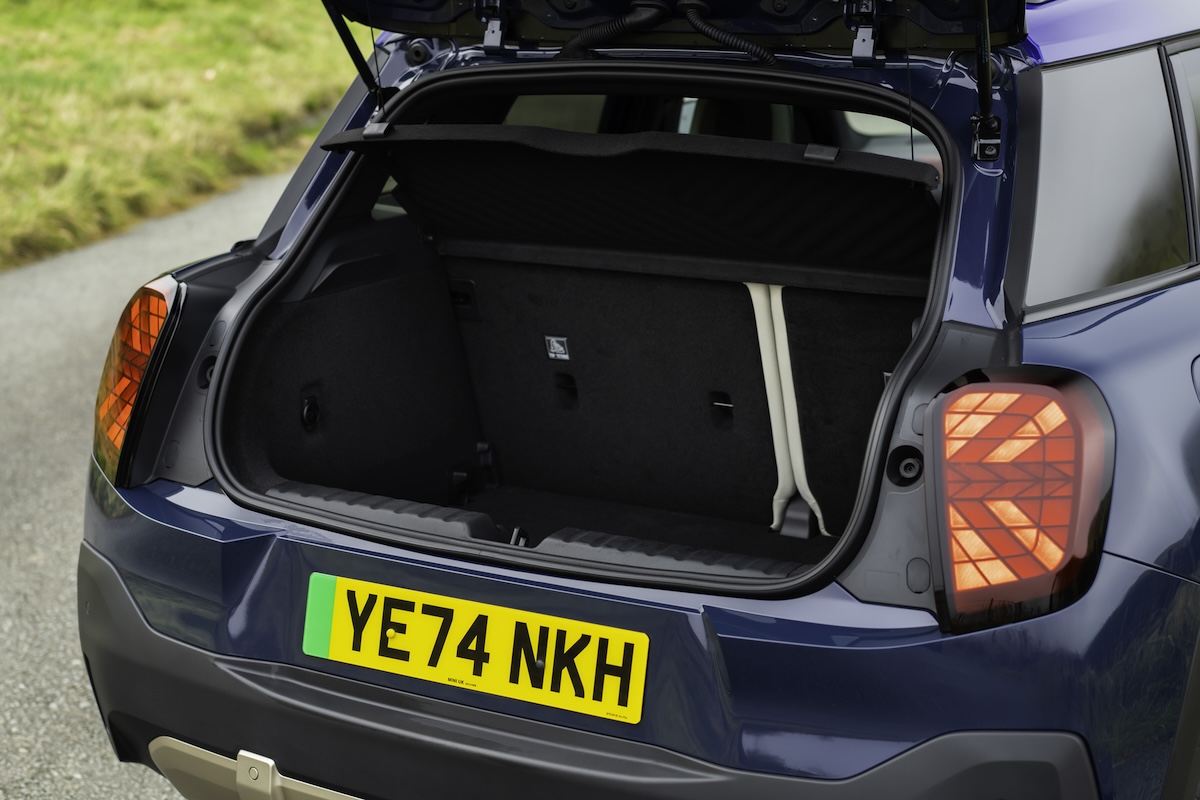
The boot space is a half-decent size at 300 litres, which is big enough for a weekly shop, but other small SUVs provide more space. There’s a large lip at the boot entrance, too, which can get in the way when loading heavy items. This can be reduced by installing the moveable boot floor to its upper position, but it doesn’t get levelled off completely. Putting the boot floor in that position does, however, level off the step up to the rear seatbacks when you fold those down for more cargo space, leaving you with a flat load area. Even so, this isn’t an EV that you’d want to use as your only family car.
As is the fashion these days, the cabin design is very - if you’ll pardon the pun - minimalist. We’ll talk more about the effect of this in the Infotainment section a little later on: stick around, because we’ve got plenty to say.
In terms of quality, things look appealingly quirky, with a knitted-effect textile covering on the dashboard and door trims, giving plenty of colour and texture. Find some of the various exposed plastic panels dotted around, however, and you might be a little surprised by how hard the finish is, especially in a MINI.
What’s it like to drive?
The Aceman is available in two all-electric versions. The entry-level E version comes with a 181bhp electric motor driving the front wheels, fed by a 38.5kWh (usable capacity) battery pack. This gives you a 0-62mph time of 7.9 seconds and a driving range of 192 miles, according to official WLTP figures.
The SE, meanwhile, ups the power output of its electric motor to 215bhp, trimming the 0-62mph time to 7.1 seconds. However, it also has a bigger 49.2kWh battery, extending the range to 251 miles.
The performance numbers look rather modest on paper, but the Aceman feels brisker in real life than those numbers suggest. Even in the Aceman E, the pickup feels strong and eager off the line, and it gains pace pretty readily when you’re going along, too. The SE’s performance advantage can be felt, but more in its on-the-move acceleration than its off-the-mark pace. Ultimately, though, there isn’t all that much difference between the pair for outright pace, so the SE’s longer range is likely to be more of a factor in your decision to make the upgrade.
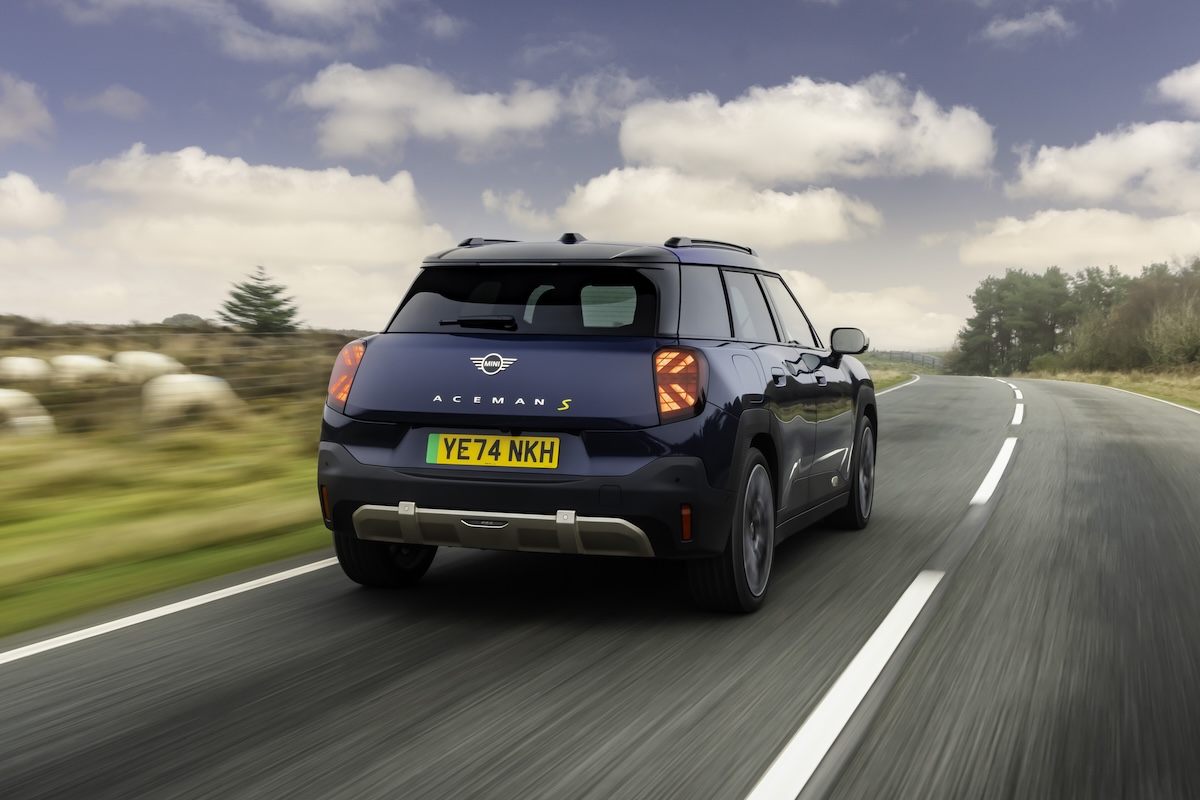
And like you’d expect from any MINI, the way the Aceman drives is characterised most by its handling. There’s strong grip and tight body control, along with really quick and responsive steering, which stops on just the right side of feeling too twitchy. This all combines to make the car feel pointy and nimble, delivering an appealing level of fun. The whole ‘go-kart feel’ thing is bit of a cliche that’s used all too often in MINI car reviews, so we won’t be part of the problem, but there’s no denying what a raucous and enjoyable little car this is to fling about.
Yes, this fun does come at the expense of some comfort, because the ride is distinctly firm: it jitters and jolts markedly at all speeds, urban or motorway. Ultimately, it’ll prove too firm for some people, but for others who are more focused on the fun the Aceman brings, the jitteriness will be worth putting up with.
Technology, equipment and infotainment
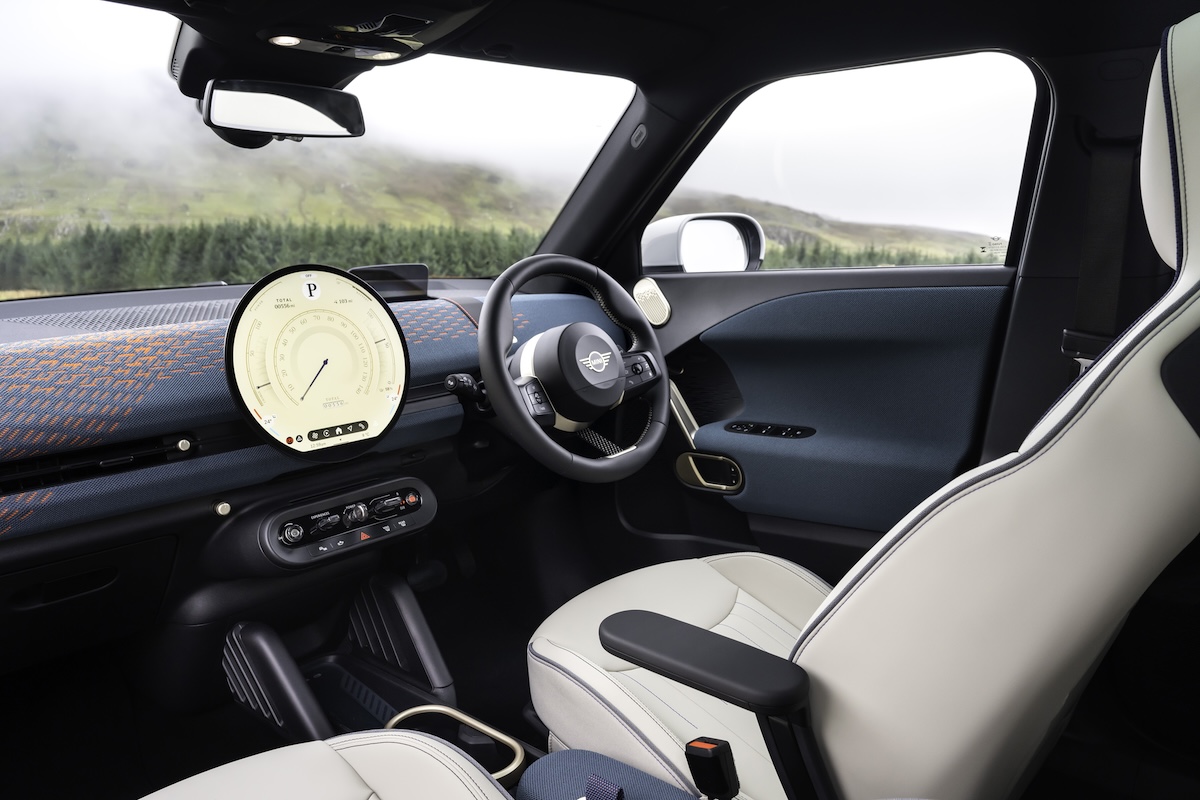
All versions of the Aceman get the same core infotainment system, which centres around something called the MINI Interaction Unit. This is a 24cm circular OLED touchscreen display in the middle of the dashboard, and it supports all the infotainment functionality you expect, including DAB, navigation, voice control personal assistant, Apple CarPlay and Android Auto.
Let’s begin with the positives. Firstly, it looks, well, ace: the fact that the screen is circular immediately gives it an extra level of theatre and novelty, while the graphics are sharp and stylish and the screen transitions are slick.
However, once you actually start trying to use the thing, the wheels start to come off slightly (figuratively, of course, not literally). Remember when we said earlier on that the cabin had a minimalist design? Well, that’s resulted in there being very little physical switchgear in the Aceman, meaning most of the car’s numerous functions have to be operated through the touchscreen. And that makes the system hopelessly complicated. There are so many functions that the screen always looks cluttered, so picking out the on-screen icon you need at a glance is really difficult.
It’s made worse by the fact that there’s no separate display screen behind the steering wheel for your driving information, meaning that information on things like your speed, charge level, etc, must also be displayed on the central screen, exacerbating the clutter (things are made slightly better in versions that get a head-up display - which beams your key driving info onto the windscreen in front of you - meaning you don’t have to look at the central screen quite so often). This stuff is always positioned at the top of the screen, while the car’s climate controls are always displayed at the bottom, which makes life slightly easier, but there’s still too much going on for you to pick out the icon you want accurately and reliably.
Beside, the climate controls at the bottom only allow you to change the temperature: doing anything more complicated than that requires the use of yet another submenu.
The Aceman does have trim levels - Classic, Exclusive and Sport - but unlike with other cars, these alter the look of your car rather than the amount of equipment it gets.
All cars in the line-up get the same basic equipment list, which includes LED exterior lighting, alloy wheels, roof rails, dual-zone climate control, rain-sensing wipers, rear parking sensors, a reversing camera, and powered and heated door mirrors. From there, you then choose an option pack that hikes your level of equipment.
The Level 1 pack (this comes as standard on the Aceman SE, but you have to pay for it on the E) brings adaptive LED headlights with automatic high-beam, keyless entry, power folding door mirrors, heated front seats, the head-up display, an auto-dimming rearview mirror, and wireless phone charging.
Level 2 adds a Harman Kardon surround sound audio system, a panoramic glass sunroof, and darkened rear windows. Level 3 (not available on E) brings a powered driver’s seat with massaging function, adaptive cruise control, electric memory seats, an interior camera, augmented reality navigation, and 360-degree cameras.
MINI Aceman running costs
The Aceman starts at around £32,000 for the E model, rising to around £36,000 for the SE. That makes it a bit more expensive than rivals such as the Jeep Avenger Electric, but not outrageously so, and puts it on a par with the Fiat 600e.
Like we said earlier, the E’s usable battery capacity totals 38.5kWh, while the SE’s battery size is 49.2kWh. Do as most owners will do and plug into a 7.4kW home wallbox charger, and your battery will be fully replenished from empty in around six hours for the E and eight hours for the SE. If your domestic power is charged at the UK’s national average, then this charge will cost you approximately £11 on the E, and £14 on the SE. However, many EV buyers have a domestic power tariff that allows them to charge overnight on drastically discounted off-peak electricity, and that cuts those costs by a lot more.
If you use public DC rapid charges, expect to pay a lot more for the power you put in. It varies a lot, but around three times that original cost is a pretty good rule of thumb. The Aceman’s DC rapid charging speeds aren’t particularly good, either, the E capable of taking on DC charge at a rate of up to 75kW, while the SE will do it at 95kW. However, because they have small batteries, both will still take on a 10-80% top-up in around half an hour.
MINI Aceman reliability
One look at the latest What Car? Reliability Survey will give you reason to feel very optimistic about the Acema’s reliability. Obviously, the Aceman itself is way too new to have been considered itself, as is the latest MINI Hatch on which its based. As a manufacturer, though, the German firm did the unthinkable and ousted Lexus - the constant incumbent of recent years - from the top of the manufacturer standings (out of 31 brands considered), which is a mighty impressive feat, and that’s all thanks to strong performances from a range of the company’s models.
The MINI Electric was the best-performing model out of 18 in the Electric Car class, while the combustion-engined version placed 5th out of 15 models in the Small Car class. The firm also had two of top ten most reliable models in entire study, in the shape of the Countryman (3rd) and the Convertible (9th).
The warranty package isn’t quite so impressive compared with those you get from some manufacturers, with a three-year, unlimited-mileage agreement, but it’s better than the 60,000-mile limit you get from many manufacturers.
- As standard, the Aceman’s roster of safety kit includes lane keep assist with blind spot detection, forward collision warning with brake intervention, speed limit recognition and speed limit assist. If you want adaptive cruise control, though, you have to add the most expensive Level 3 option pack.
- Like many cars, the Aceman has various drive modes, which slightly alter the car’s dynamic responses. On top of that, though, they also vary the design of the colours, lights and sounds in the cabin as you drive, which is supposed to influence your mood. Some will find this to be a novel way of injecting character into the car. Others will dismiss it as a frightful gimmick, and turn it off immediately.
- In due course the Aceman range will be extended to include the racy JCW (John Cooper Works) version. This will have 254bhp, trimming the 0-62mph time down to 6.4 seconds.
- If you don’t do many miles: save yourself a few quid and stick with the cheaper E model. It’s hardly any slower than the SE in the real world, and although it has a shorter range, this won’t matter if all your journeys are short ones. It’s better for the environment, too, as having a big-battery car when you don’t use the range it has to offer is a waste of the resources used to make them.
- If you do more miles: The MINI Aceman SE’s range of over 250 miles is not too bad, and much better than MINI’s electric car efforts of old. Still, don’t bank on a return of much more than 200 miles in the real world, even in optimum circumstances.
- If you’re a company car driver: Benefit-in-Kind company car tax bills are so low on EVs right now - and will be for a while longer yet - that there won’t be much of a difference in monthly bills between a bog-standard E variant and a fully-loaded SE version. So, you may as well go nuts and get the posh version, especially when somebody else is footing the bill for the car’s purchase price.


