Mazda CX-3 Review (2015-2021)
Mazda CX-3 cars for sale
3.0
Expert review
Pros
Attractive looks
Reasonably strong engines
Well equipped as standard
Cons
Not as roomy in the back or boot as some rivals
Doesn't drive with the verve you'd expect of a Mazda
A Skoda Kamiq has a more comfortable ride
The CarGurus verdict
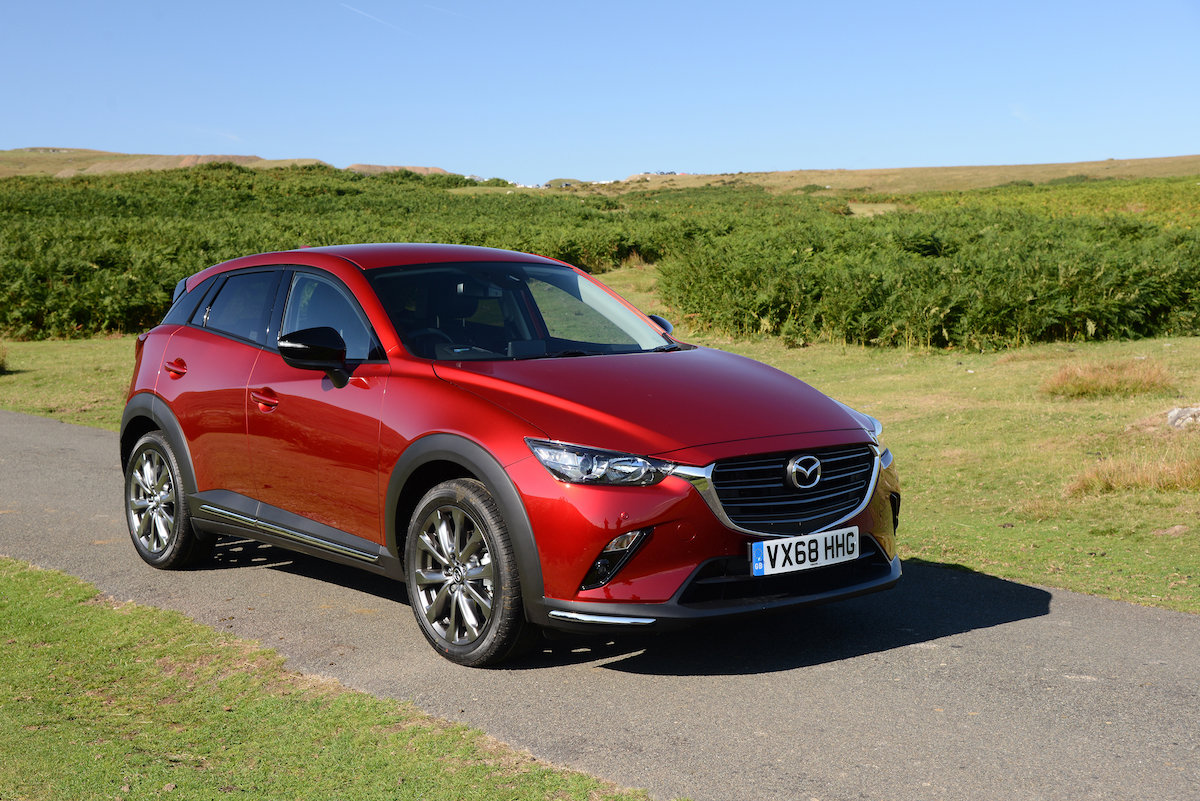
The Mazda CX-3 has a lot of promise as a compact SUV. It comes from a manufacturer with a good reputation for not only building reliable cars, but also ones that are sporty and enjoyable to drive. It lives up to those expectations, although the Skoda Kamiq is better in terms of its ride quality.
It’s not, however, the most practical of small SUVs, particularly when it comes to rear passenger space. In a competitive segment, where there are lots of alternatives, that could send buyers elsewhere.

What is the Mazda CX-3?
The small crossover SUV market has exploded, and manufacturers have responded with the launch of countless models that are more affordable to buy and run than the large 4x4s that started the conventional SUV trend.
The Mazda CX-3 was on sale between 2015 and 2021 (it was replaced by the CX-30, which was already on sale before the CX-3's demise), joining a compact SUV segment with no shortage of popular models, such as the Renault Captur, the Nissan Juke, and the Peugeot 2008. It was soon joined by other strong candidates, including the Volkswagen T-Cross, the Seat Arona, the Ford Puma, the Hyundai Kona, the Honda HR-V, and the Citroen C3 Aircross – so there’s plenty of choice.
The CX-3 stands out from the crowd with its sleek exterior, although the cabin isn’t quite as appealing. It’s smart enough, and some of it is made from higher-quality materials than are found in rivals such as the T-Cross, but there are some cheaper plastics and the overall impression is that it’s all rather… well, dull.
How practical is it?
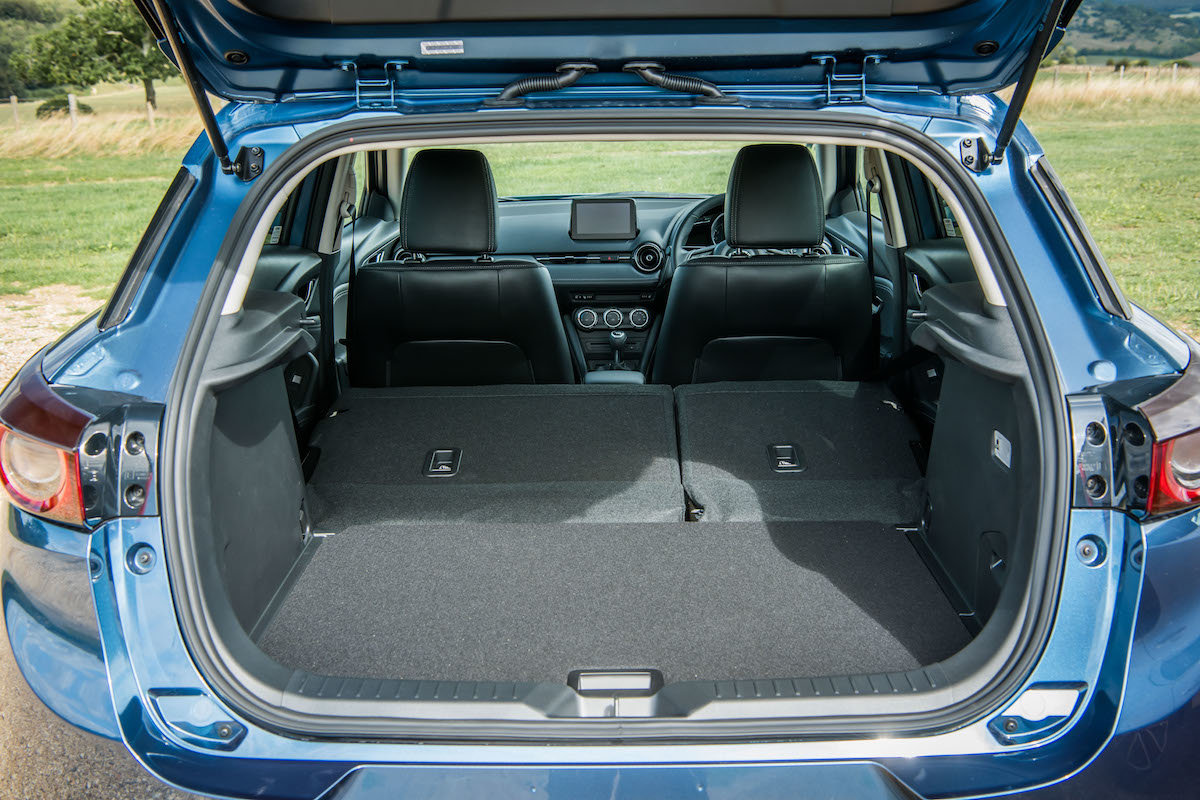
The CX-3’s interior isn’t as spacious or as practical as some of its rivals, with the rear in particular suffering from a shortage of headroom. In fact, it’s a lot more cramped in the back than in an Arona, for example, and it doesn’t help that the rear seats don’t slide back and forth, to change the balance of space in the boot and the rear of the car – which you can do in the Captur.
The 350-litre boot is about average for the class, but the Skoda Kamiq, for example, offers 400 litres. The CX-3’s luggage capacity expands to 1,260 litres when you fold down the rear seats, and it also has a moveable boot floor to create a more secure space underneath.

What's it like to drive?
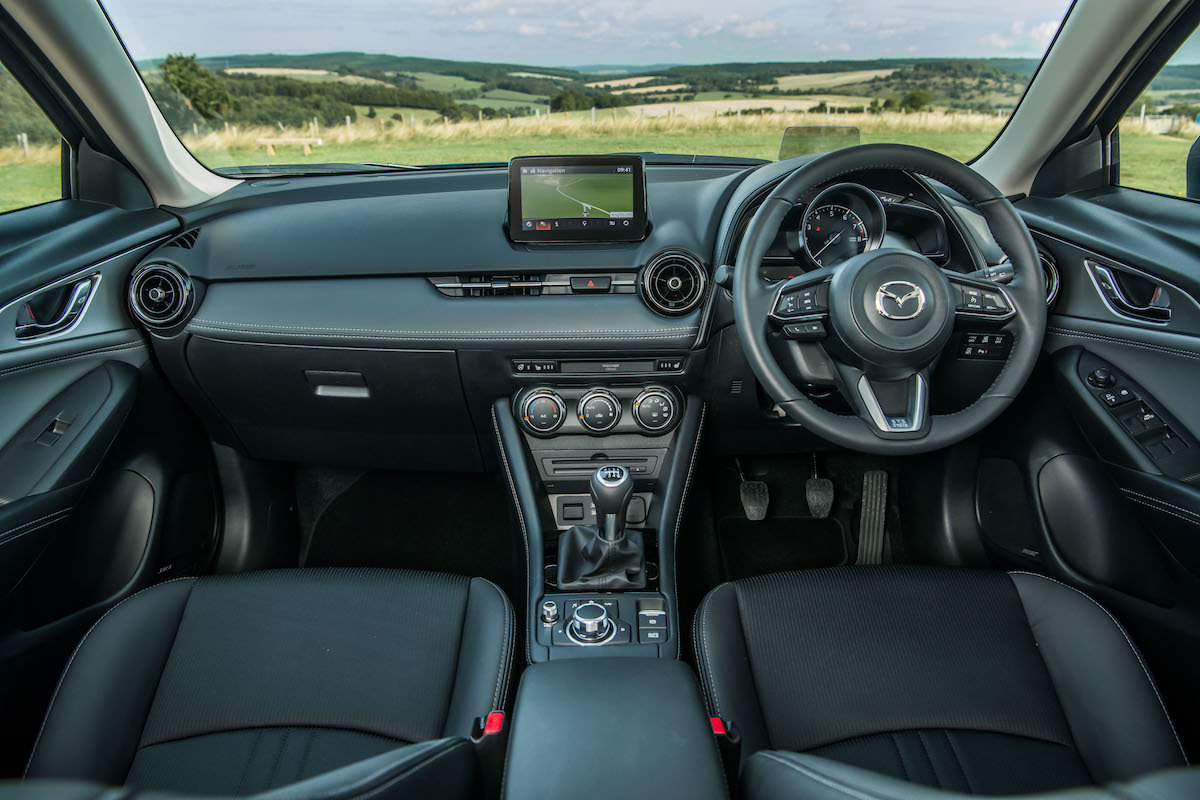
The driving position is very adjustable, but visibility isn’t great, and the shallow rear screen is the main culprit. The driver has easy access to all the necessary information, thanks to the single binnacle display beyond the steering wheel, while the dashboard is also well laid-out and features a seven-inch touchscreen infotainment system.
The high hopes one usually has when getting behind the wheel of a Mazda are slightly dashed by a car that is less involving than one might expect. The steering is accurate enough, but there’s less feedback than we expect from a Mazda. It has plenty of grip, but the body rolls a lot. The ride quality is equally disappointing, with wheels thumping over bumps and potholes. A suspension update in 2018 has made some improvements, but again it’s no match for rivals, such as the Arona or the Kamiq.
The three engines available with the CX-3 are all decent performers. The one diesel, a 1.8-litre SkyActiv-D, isn’t the most refined unit, but has plenty of power. There are also two versions of the 2.0-litre SkyActiv-G petrol, with the higher-powered 147bhp version only available with four-wheel drive, which dulls its edge slightly, so it’s no faster than the lower-powered 118bhp variant.
Refinement is another area in which the CX-3 is slightly disappointing, with wind and road noise apparent at motorway speeds, while engine noise also intrudes into the cabin, irrespective of whether there’s a petrol or diesel under the bonnet.
Technology, equipment & infotainment
The CX-3 has a simple hierarchy of trim levels, starting at SE, before moving upwards through SE-Nav, SE-L Nav and Sport Nav. The entry-level SE trim has a good standard specification, with features including cruise control, air-conditioning, a DAB radio, Bluetooth, hill-hold assist, and 16-inch alloy wheels.
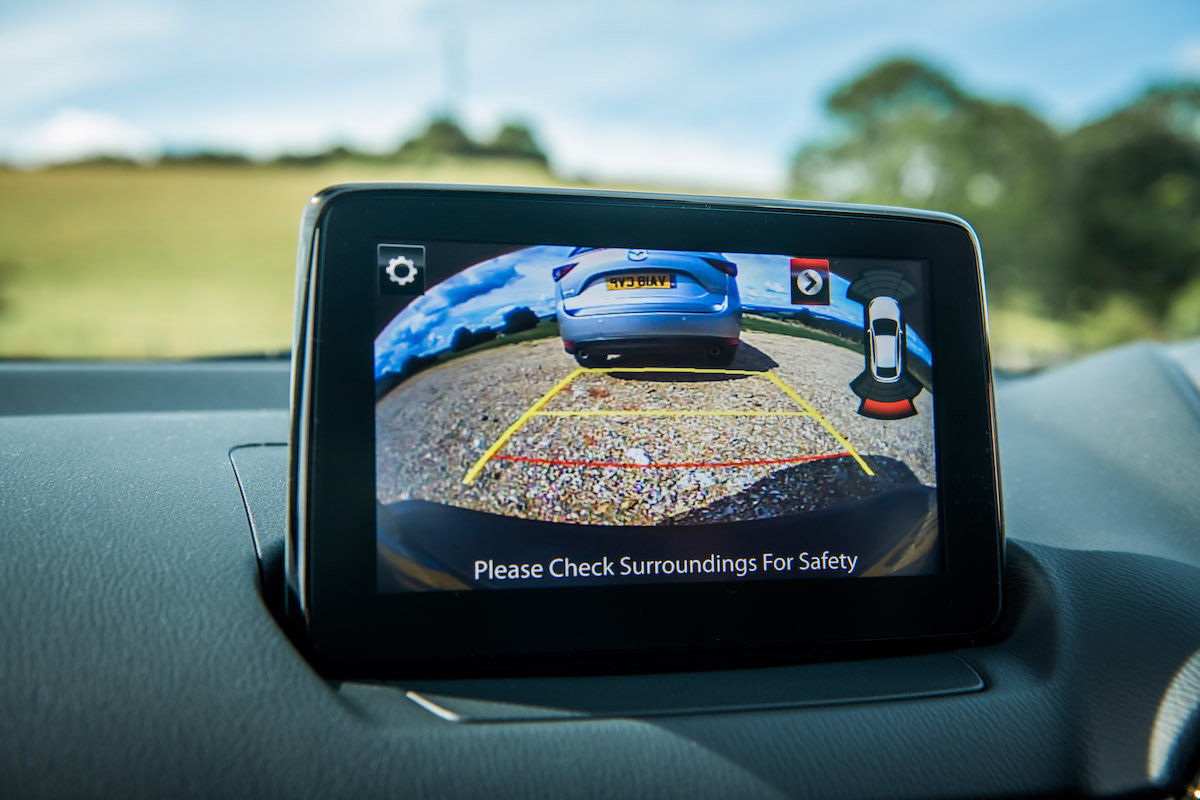
SE Nav adds satnav, as the name implies, while SE-L Nav models include climate control, automatic lights and wipers, lane departure warning, and autonomous emergency braking. The range-topping Sport Nav steps up to 18-inch alloy wheels and adds adaptive LED headlights, keyless entry, a Bose sound system, heated front seats, a head-up display, and a reversing camera. In 2018, the trim line-up was simplified further to SE Nav+, SE-L Nav+, and Sport Nav+.
The infotainment system isn’t the easiest of its kind to use, and even a wheel with shortcut buttons doesn’t make up for the slightly clunky action or the diminutive display. The upside is that Apple CarPlay and Android Auto are available for smartphone integration.
Mazda CX-3 running costs
Mazda’s range of fuel-efficient measures, grouped together under the umbrella of SkyActiv, ensure that the CX-3 can hold its own alongside its rivals in the compact SUV class.
The 1.8-litre SkyActiv-D diesel engine (which replaced the 1.5-litre engine in 2018) returns the best official fuel consumption figure in the CX-3 range, as you’d expect. With tests indicating that it can hit 64.2mpg – likely nearer 55mpg in the real world – the diesel version of the CX-3 can hold its own among competitors.
The two 2.0-litre petrol units are impressively frugal, with the 118bhp version, when mated with an automatic gearbox, returning a claimed 46.3mpg, and manual gearbox versions at a marginally lower 45.6mpg. The 147bhp petrol engine with all-wheel drive, sees economy fall to 40.4mpg (manual) and 42.2mpg (automatic). Again, these figures are theoretically devised in tests, so real-world consumption is likely to be lower.
Insurance premiums for the Mazda CX-3 are affordable because it falls into groups 13 to 18. It needs to be serviced every 12,500 miles or once a year, whichever comes first, but Mazda offers fixed-price service plans that cover the first three years and 37,500 miles. A plan that allows owners to pay monthly and spread the cost of servicing over the year is also available.
Mazda CX-3 reliability
Mazda has a more than solid reputation of reliability with the marque consistently scoring well in customer satisfaction surveys. It came eighth out of 30 manufacturers in the 2021 What Car? reliability survey and, jointly with the Honda HR-V, the CX-3 topped the small SUV class in the same survey with a score of 100%.
There are reports of minor issues with non-engine electrics – for example, satnav systems and climate control – but all of these problems were fixed under warranty within a week.
Speaking of the warranty, the CX-3 has industry-standard three year/60,000-mile cover, which is nothing special. Rivals Hyundai and Kia offer five and seven years respectively, while Toyota will cover cars for up to 10 years if you have them serviced at a franchised dealer annually.
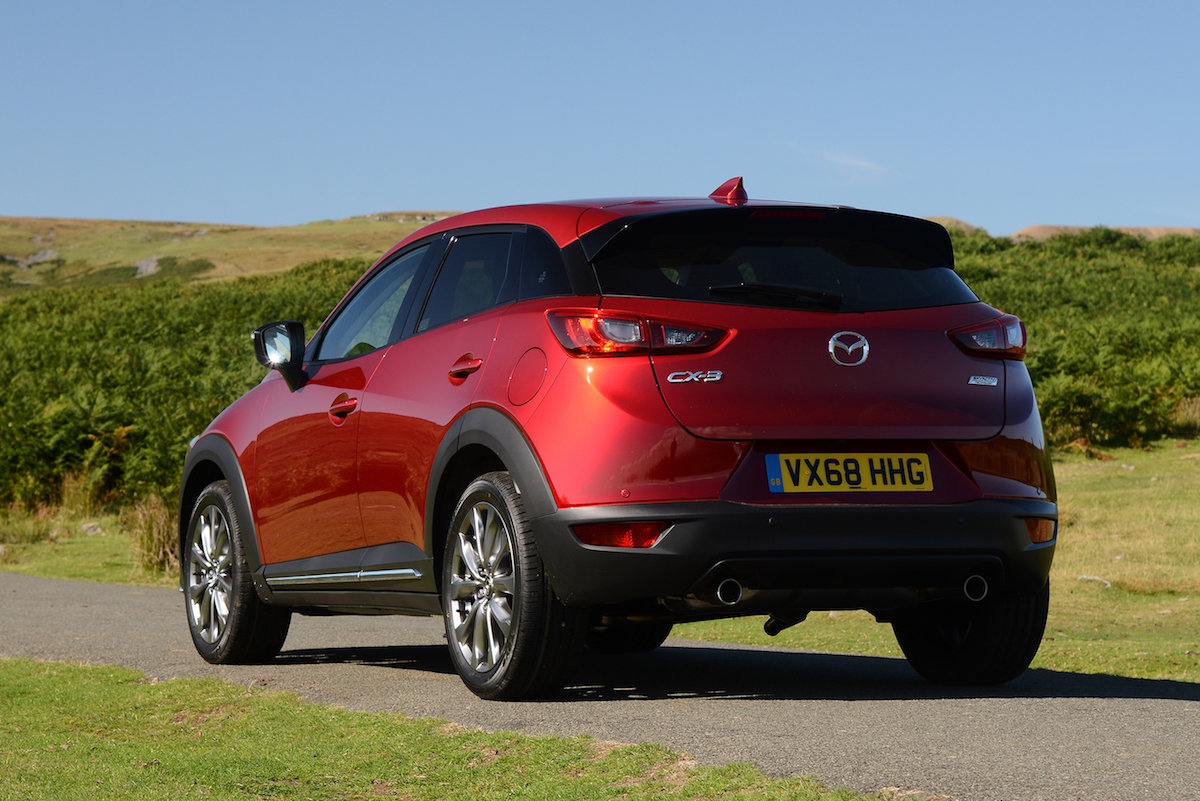
- One of the most obvious elements that differentiates the CX-3 from many of its rivals is the exterior, which is an example of Mazda’s Kodo design philosophy. The sleek, swept-back lines and set-back cabin make for a curvy and handsome car, but you can also see echoes of the Mazda2 supermini, of which the CX-3 is essentially a jacked-up version.
- Both petrol and diesel engines take the name ‘SkyActiv’, which is Mazda’s catch-all term for any of its technologies that are aimed at saving fuel and increasing efficiency. These measures don’t include turbocharging – which many other manufacturers use to help make their engines more efficient – but Mazda’s are naturally aspirated. The SkyActiv measures do work, though, if official fuel consumption figures are any guide.
- The Mazda CX-3’s safety rating isn’t as impressive as some of its rivals because it was awarded a disappointing four stars by Euro NCAP. The adult occupant score of 85% and child occupant score of 79% are okay, but competitors such as the Captur, the Arona, the Kamiq and the Citroen C3 Aircross all have five-star ratings – and higher scores for adult and child occupancy protection.
- If you want all-wheel drive: This is only available with the higher-powered 2.0-litre petrol engine and with the range-topping Sport Nav (or, since 2018, Sport Nav+) trim, so seek out one of those.
- The cheapest to run: The most efficient CX-3, unsurprisingly, is the diesel with the 1.5-litre SkyActive-D engine (this was upgraded to a 1.8-litre unit in 2018). The 103bhp unit isn’t the quietest, but its 0-62mph time of 10.3 seconds is respectable. Fuel economy was recorded as 70 mpg under the old NEDC testing system, but the more realistic new WLTP system records it as 47.9mpg.
- The best all-rounder: We reckon the pick of the CX-3 range is a 2.0-litre petrol in SE trim, provided you’re happy not to have in-built satnav and use a maps app via your smartphone. If you want navigation, SE Nav or the updated SE Nav+ offer good levels of equipment.

