Mercedes-Benz C-Class (2014-2020) review | A smart and accomplished saloon
Mercedes-Benz C-Class cars for sale
4.0
Expert review
Pros
Top-notch comfort and luxury
Wide choice of engines and specifications
AMG models deliver spectacular performance
Cons
Not as rewarding to drive as a BMW 3 Series
Plug-in hybrid won't suit drivers with nowhere to charge
Wallet-wilting running costs of the AMG models

The CarGurus verdict
Although this version of the C-Class set a new benchmark for how agile a Mercedes-Benz could feel, those looking for a particularly sporty executive car should look towards its immediate rivals. In typical Mercedes fashion, the C-Class is geared around long-distance comfort and effortless ease of use.
With such a wide range of petrol and diesel engines there’ll be a variant that suits you. Just be aware that while the plug-in hybrid looks enormously economical on paper, it will only get the most miles per gallon if you can charge it at home or work, and you drive mostly short distances. Finally, the C63 S will be costly to run, but if you crave noise and performance, that outlay will be worth it.
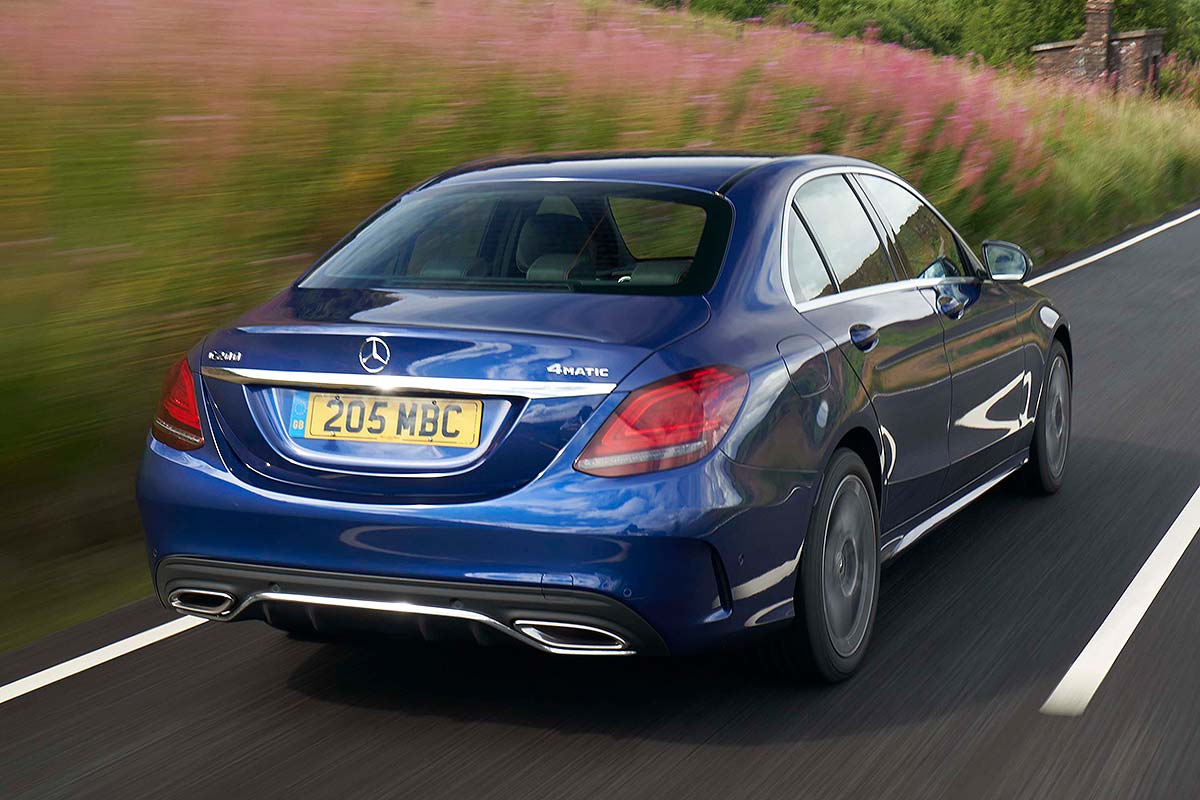
What is the Mercedes-Benz C-Class?
The Mercedes-Benz C-Class is a compact saloon car. The rivalry between Mercedes, Audi and BMW is longstanding and legendary, and nowhere is it fiercer than in this market. For all three brands, their compact executive offerings represent some of their biggest sellers, so the stakes are high and the margins tight. As a result, each car has to do things a little differently to stand out from the rest and attract buyers.
With the Audi A4, for instance, Audi set out its stall with slinky styling, a sporty character and plush cabin quality. The BMW 3 Series, meanwhile, goes for an even sportier approach, with a largely rear-wheel drive chassis that stays true to the company’s historic ‘Ultimate Driving Machine’ ethos. Then there’s the Mercedes C-Class, which also goes its own way, dialling down the sportiness to concentrate on comfort, refinement and civility.
This is the fourth-generation Mercedes-Benz C-Class, known to three-pointed star enthusiasts as the ‘W205’. Although available as a saloon, it was also sold as an estate, coupe and cabriolet, in an attempt to appeal to a broad range of customers.
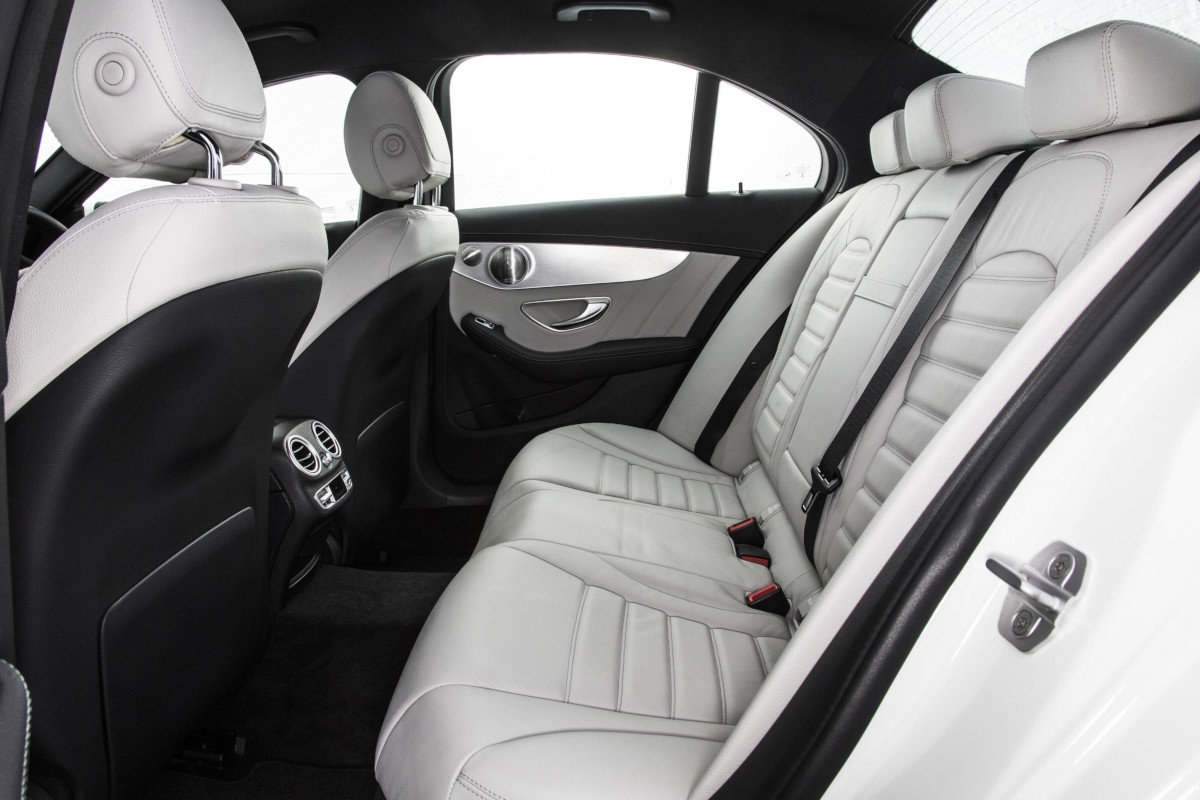
How practical is it?
The fourth-generation C-Class saloon can play the family car role with great distinction. There’s plenty of room in both the front seats and the rear – just as much as its German rivals and a shade more than other competitors, such as the Alfa Romeo Giulia and Jaguar XE – and the boot is big enough for a family’s clutter. While there are variations by model year and by engine, most saloons built before the 2019 facelift have 480 litres of boot space, while post-update cars offer 455 litres (hybrid models and the AMG C63 have less).
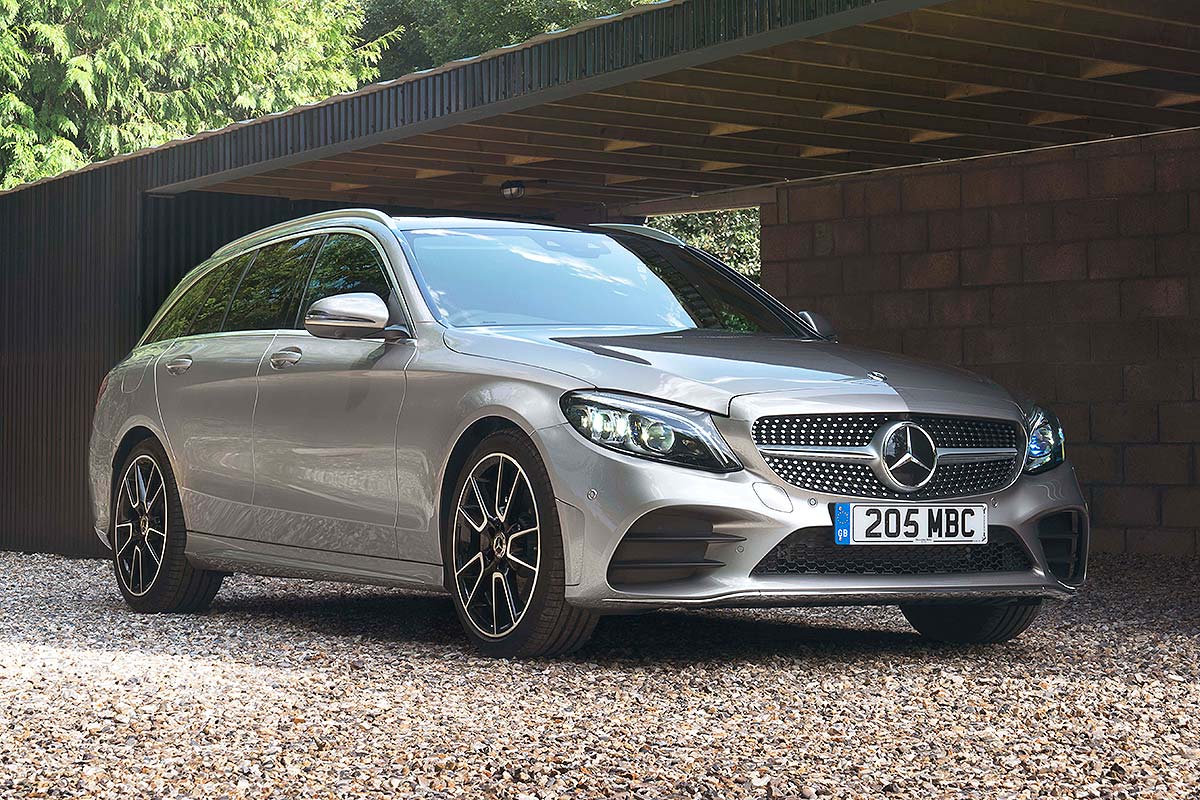
For ultimate space and practicality, though, it’s the C-Class Estate you need. Not only is there more headroom for both those in the front and rear seats, but the boot is significantly larger, at 490 litres with the rear seats up and 1,510 litres with them folded. Those numbers fall to 460 and 1,480 litres respectively for post-facelift examples, although that is still plenty of room to play with.
For those who value glamour over practicality, Mercedes-Benz also sold coupe and cabriolet versions of the fourth-generation C-Class. As you’d expect, these are a lot less spacious, with around 400 litres of boot space in the coupe and 335-360 litres in the cabriolet. That’s the price you pay for style.
Towing capacities also vary by powertrain and model year, but the most common numbers you’ll see are 750kg unbraked and 1,800kg braked. If you need to tow regularly, be sure to check the exact capacity for the vehicle you are looking at. Sadly you can’t tow with the AMG C63, but its V8 is thirsty enough without hauling a caravan or horsebox as well.
As for accessories, Mercedes offered a modest range of goodies over the W205’s lifetime. There were roof bars, ski and snowboard racks, bicycle carriers, roof boxes, snow chains, child seats, fold-out tables to attach to the back of the rear seats, boot storage nets, rubber floor mats and a robust plastic boot liner with multiple sections. If you’re looking at a used C-Class, there’s a chance the seller might include any accessories they have with the car. If not, you can find plenty of used examples online for a relatively modest outlay. Roof boxes and bicycle racks are likely to cost you the most. as they’re generally quite sought-after items.
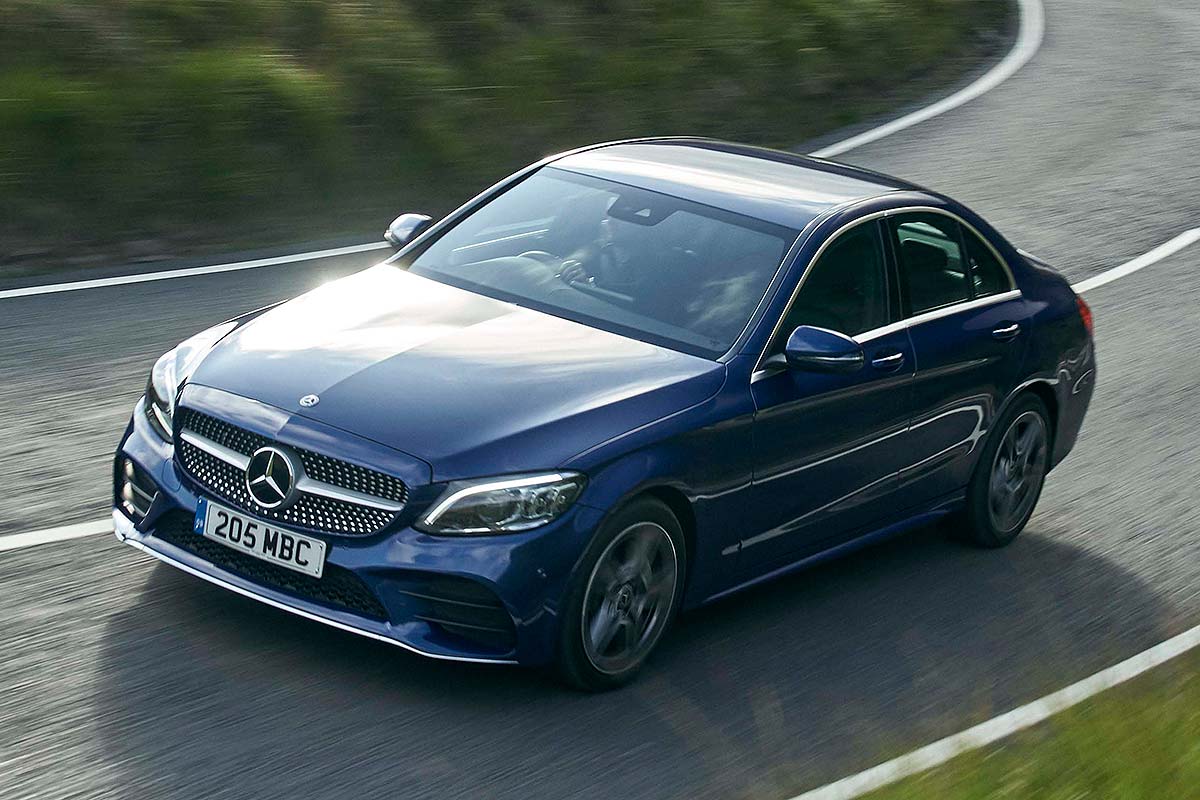
What's it like to drive?
The C-Class’s remit to put comfort to the fore means you will notice suspension that is soft and forgiving, steering that is slow and light, and an overall driving experience that feels more relaxed than its rivals. For many buyers, this Mercedes is all the better for that.
It doesn’t mean the C-Class can’t impress when the road turns twisty, either. This fourth-generation car is much lighter than the W204 C-Class it replaced – by up to 100kg, depending on the model – thanks to the extensive use of aluminium in its body. It is also significantly more rigid, so while it doesn’t feel as sharp as a 3 Series of the same vintage, it’s still the best-handling C-Class yet – and by some distance. And when the road straightens out or slows down, the plush ride keeps things settled and civilised.
Worth noting is the inclusion of Airmatic suspension on some models. From a central position, this can drop the car by 15mm at speed, or raise it by 25mm to boost ground clearance. It was standard on 350e plug-in hybrid models, but also available as an option on a handful of other cars towards the end of the fourth-generation model’s life. You’ll get a seriously plush ride, but you’ll also pay more to get it fixed if anything goes wrong.
There are exceptions to the comfort-first approach, those being the sprightly C43 AMG and bonkers C63 AMG and C63 AMG S performance models. The AMG C43 4Matic entered the scene in 2016 as a junior sibling to the C63, and used a potent 362bhp or 385bhp twin-turbo V6 (power output depended on the model year) to drive all four wheels. It would manage 0-62mph in 4.8 or 4.7 seconds, depending on the body style, and reach a top speed of 155mph.
As for the C63 and C63 S, these models used a 4.0-litre twin-turbo V8 with either 470bhp or 503bhp, with subsequent 0-62mph times of 4.1 or 4.0 seconds. With all of their power going to the rear wheels, they’re an absolute riot to drive.
Those versions aside, the fourth-generation C-Class range includes engines that major on fuel-sipping economy or strong, muscular performance, and everything in between. By far the best-sellers were the four-cylinder diesels (lots of folk chose them as company cars), meaning these are most plentiful on the used market.

Technology, equipment & infotainment
It isn’t just driving manners that help the fourth-generation C-Class deliver a sense of class and sophistication. The car’s interior really nails an upper-class feel, making the gap from C-Class to the flagship Mercedes-Benz S-Class feel smaller than ever.
Climb inside and the materials are thoughtfully chosen and immaculately finished, while the high standard of fit and finish makes the car feel solid and substantial, if not quite in the same league as an Audi. Then there is the technology, of which you will find a lot.
Early cars featured two analogue dials ahead of the steering wheel, A 5.5-inch display was nested between them, plus a 7.0-inch central screen on the dashboard. The latter could be bumped up to an 8.4-inch screen with higher-spec trim levels or packages. In post-facelift models there was the same 5.5-inch screen ahead, but a 12.3-inch digital instrument display – something that makes the C-Class feel modern even now. On the dashboard, you could have either a 7.0- or 10.25-inch infotainment screen.
For the ins and outs of every piece of tech the fourth-generation C-Class has to offer, you’ll need to check the spec sheet of the example you are looking at. It’s also worth thoroughly scanning brochures to get a feel for what was included on which trim levels and when, as the standard features changed almost every year. But every car should be fitted with rain-sensing wipers, two-zone climate control, attention assist, a reversing camera, cruise control, a DAB radio, electric folding mirrors, heated front seats and leather-effect upholstery. Other features, such as wireless phone charging, Parktronic (a system that can park the car for you) and a 360-degree camera were available as options or included with higher trim levels, depending on the model year.
Mercedes-Benz C-Class running costs
Given the enormous breadth that characterises the C-Class lineup – from parsimonious four-cylinder turbodiesel to roaring twin-turbo petrol V8 – it should be no surprise that running costs can vary significantly. Mercedes claimed the entry-level C200d, with its modest 1.6-litre turbodiesel engine, would return more than 60mpg in mixed driving, although owners reported real-world fuel economy of around 50mpg. Meanwhile, the thumping Mercedes-AMG C63 S might manage only 15mpg when driven like it should be, were you interested in picking one up used.
The C350e plug-in hybrid is capable of a staggering 135mpg according to the official figures, but that says more about the way these things are measured than the efficiency of the car in question. If you can recharge it regularly and cover only short distances, the C350e will prove exceptionally affordable to run. However, if you can’t charge the electric motor's battery and you tend to drive longer journeys, the plug-in hybrid simply won’t work for you.
When it comes to servicing, an official Mercedes-Benz dealership will quite happily look after your C-Class should you want them too, but there will be savings to be had at an independent Mercedes specialist. The savings don’t mean a poor service, however, so work out what’s more important to you.
Any premium-market vehicle such as a Mercedes will invariably cost more to run than something like a Ford or a Toyota, but a C-Class shouldn’t prove ruinous. Unless, of course, you choose the AMG V8 model and roast its rear tyres on a regular basis. All in all, be sure to check any used car’s service history thoroughly and don’t feel bad about walking away if a car doesn’t feel like ‘the one’.

Mercedes-Benz C-Class reliability
Premium brands such as Mercedes-Benz tend to have a reputation for quality, but this isn’t necessarily reflected in reliability surveys. In fact, the C-Class does have a number of known faults that prospective buyers should be aware of, albeit none that might prove catastrophic.
Existing and former owners have reported sunroof and door seals that make a loud and irritating creaking sound, while the Command infotainment system can freeze, requiring the car to be restarted. A permanent fix will need a trip to the dealership. In addition, some owners have reported issues with systems as diverse as the exhaust, brakes, gearbox, clutch, steering and suspension.
Recalls have been issued on the W205, for the steering and airbags in particular, although any car being sold by a main dealer or a reputable independent should have had these issues put right. We'd advise asking the salesperson to demonstrate to you that all necessary recall work has been carried out. There was a separate recall for diesel models, incidentally, aimed at reducing NOx emissions.
In the most recent WhatCar? Reliability Survey the fourth-generation C-Class secured 15th spot out of 22 in the executive car class, which isn’t fantastic. But the Audi A4 that was on sale at the same time only managed 14th, while the BMW 3 Series grabbed fifth place.
All the same used car buying advice applies to the C-Class, so ensure any car has a full and correct service history, Inspect the bodywork and alloy wheels for signs of damage (imperfections should be used to negotiate a better deal rather than be reasons to walk away entirely) and make sure the tyres are in good order and, particularly in the case of high-performance variants – and that all four tyres match.
- You can have a manual gearbox in your fourth-generation C-Class if you look really hard, but it’ll be a true mission; fewer than five percent of W205 C-Class were sold with one. Most cars used either a seven-speed automatic or a nine-speed auto ’box.
- Air suspension was an option, called ‘Airmatic’, and on the used market it would be a very useful find if you’re planning to tow as it includes a self-levelling function. The air springs also help to improve the car’s body control and ride quality, although the ride on standard steel springs is already good anyway. Nevertheless, if you want your C-Class to be as comfortable as it can be, it's worth seeking out an example with air suspension fitted.
- There were three hybrid versions of the fourth-gen C-Class in the UK: the C300e, C300h and C300d EQ Power. The former is a petrol plug-in hybrid, which could manage up to 35 miles on all-electric power. Similarly, the C300d EQ Power was a plug-in hybrid but a diesel one that could manage up to 34 miles of silent motoring courtesy of its battery. The C300h, however, was a regular diesel hybrid, and while the electric motor and battery weren’t enough for it to cover any meaningful distance on pure battery power, it did allow the car to manage 78mpg on the combined cycle.
- For motorway driving: If you spend your time hacking up and down the country’s motorways, look no further than the C220 Bluetec diesel. With plenty of power and a mighty 295lb ft of torque, it’ll reach 62mph in a brisk 8.1 seconds, but return upwards of 50mpg on long runs. That said, the 2.1-litre engine was rather noisy and rough, so if you can afford it, go for a C220d built after the 2018 facelift, which replaced the 2.1 with a new 2.0-litre engine that was smoother, quieter and more powerful.
- For the city: Introduced in 2015, the C350e is a plug-in hybrid with an electric-only range of 35 miles, depending on the model year. That’ll be adequate for school runs and supermarket trips, saving you money on fuel and easing your conscience when driving in a polluted city environment.
- For cost-conscious petrolheads: The Mercedes-AMG C43 is plenty quick enough thanks to its 362bhp or 385bhp V6 (depending on the model year), but it won’t saddle you with steep fuel bills like the full-fat, V8-powered AMG. All-wheel drive, called 4Matic, also makes the C43 more stable in wet weather than the rear-driven C63.
- For true petrolheads: If massive straight-line performance, a thunderous soundtrack and lively rear-wheel-drive handling are overwhelmingly important, and fuel bills a trivial concern, the 4.0-litre twin-turbo V8 C63 by AMG is the C-Class to have. You can choose between C-Class Coupe, C-Class Cabriolet convertible, C-Class Saloon and C-Class Estate bodystyles, too, which can add extra style or practicality depending on whether you need a swish runabout, a family car or something in between.


