Mercedes-Benz CLS-Class (2011-2017) review | A classy German cruiser
Mercedes-Benz CLS-Class cars for sale
4.0
Expert review
Pros
Coupe style combined with surprising practicality
Shooting Brake has lots of luggage space
Comfortable and refined to drive
Cons
Less practical than an E-Class
Not the most exciting car to drive
AMG models cost a fortune in fuel

The CarGurus verdict
The CLS is an elegant, luxurious machine that, while slightly less practical than an E-Class, makes up for it with extra style and presence. In Shooting Brake form especially, it’s still capable of lugging a family and their belongings over long distances.
While there are more exciting cars to drive, the CLS range is comfortable and solid on the road, just like a Mercedes should be. It’s a classy choice.
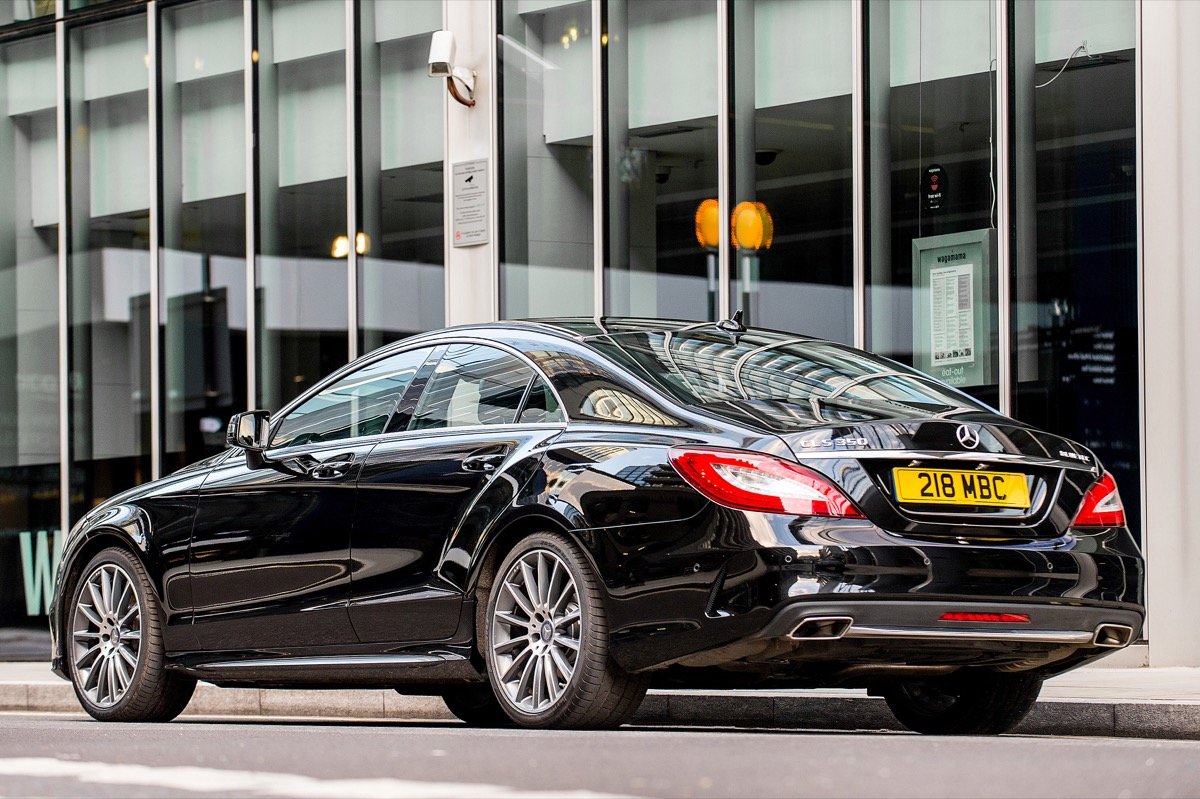
What is the Mercedes-Benz CLS-Class?
Imagine your head wants a practical and luxurious saloon car, but your heart secretly yearns for a swish coupe. You’re not alone, and Mercedes-Benz knew it when the CLS was launched back in 2004. The German manufacturer created a car that combined the practicality of a four-door saloon with the style of a coupe, all while retaining the elements of premium luxury that Mercedes buyers expect. It called the CLS, originally enough, a 'four-door coupe'.
This is the second generation of Mercedes-Benz CLS, introduced in 2011 and sometimes known by the codename C218. While it doesn’t have quite the visual punch of the first car, it’s still a svelte-looking machine and objectively a better piece of engineering than the first-generation CLS.
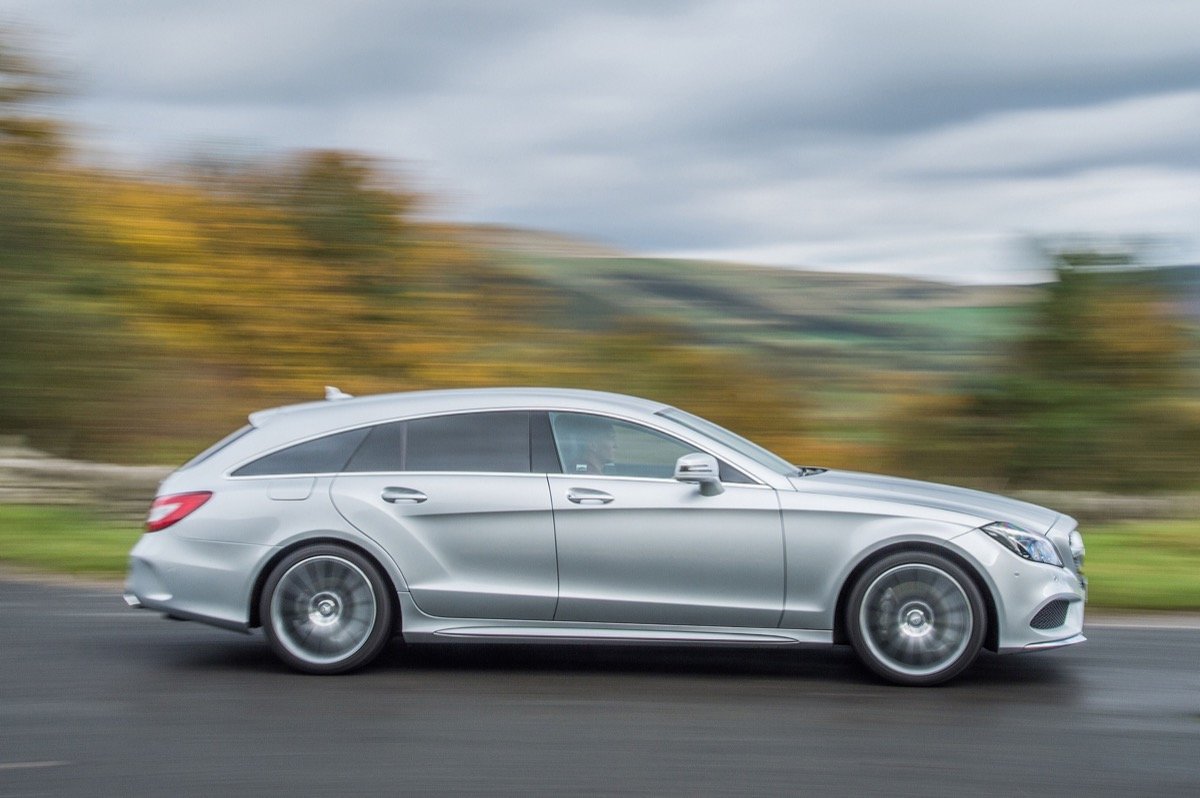
As well as the saloon model, which Mercedes somewhat cheekily referred to as the CLS Coupe, the company introduced an estate in 2012 called the CLS Shooting Brake. With added practicality but the same swoopy, sporty look, it’s an attractive proposition even today. What’s more, Mercedes catered to a wide range of buyers, selling both regular petrol and diesel examples alongside some very spicy AMG versions.
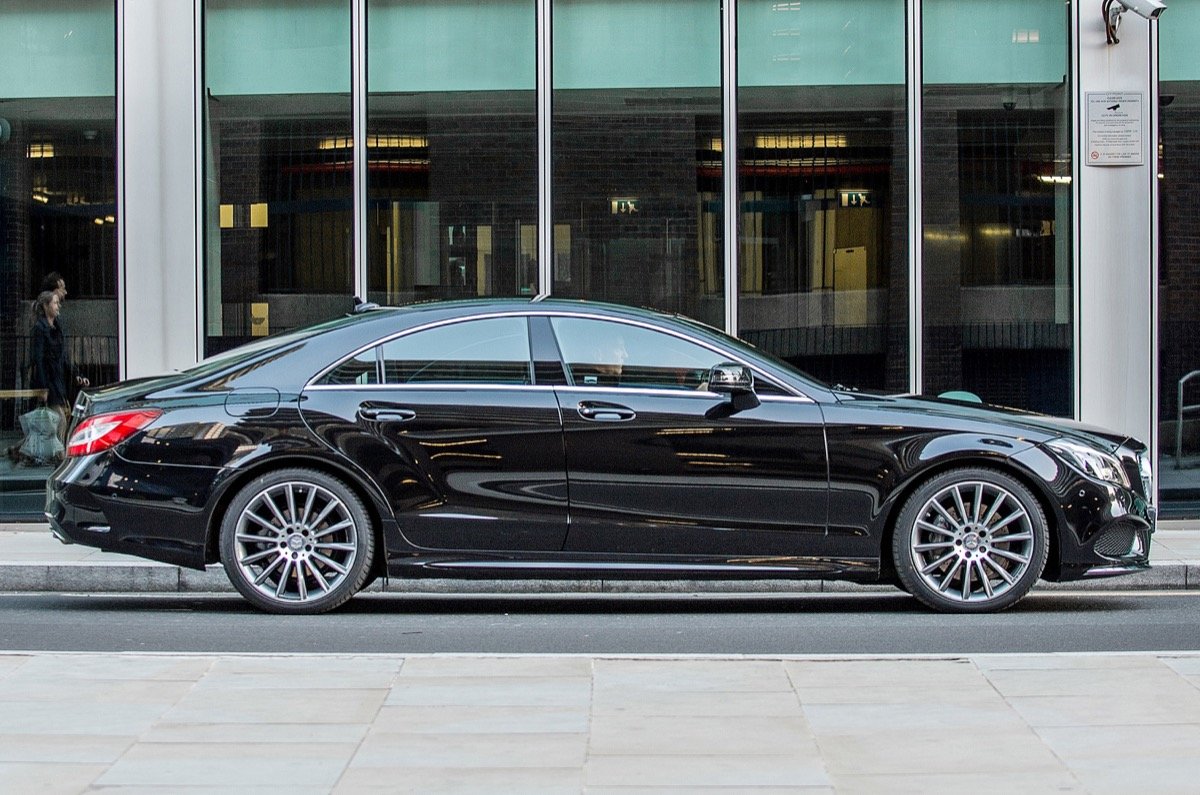
How practical is it?
Although it was based on the contemporary E-Class, you paid extra for the pizazz of the CLS. That also translates to the used market, where the car’s desirability and relative exclusivity mean you can expect to pay a premium for one.
Inside, you’ll find a very nicely made interior, with lots of leather and classy-feeling plastics. Depending on the version you’re looking at, wooden or carbon fibre trim adds to the upmarket ambiance.
The car’s sloping roofline means you sacrifice some rear headroom for style, so taller adults might struggle to keep their hairstyle intact compared to an E-Class of the same period. However, this is still a large Mercedes, so you won’t feel like you’ve been crammed inside a tin can.
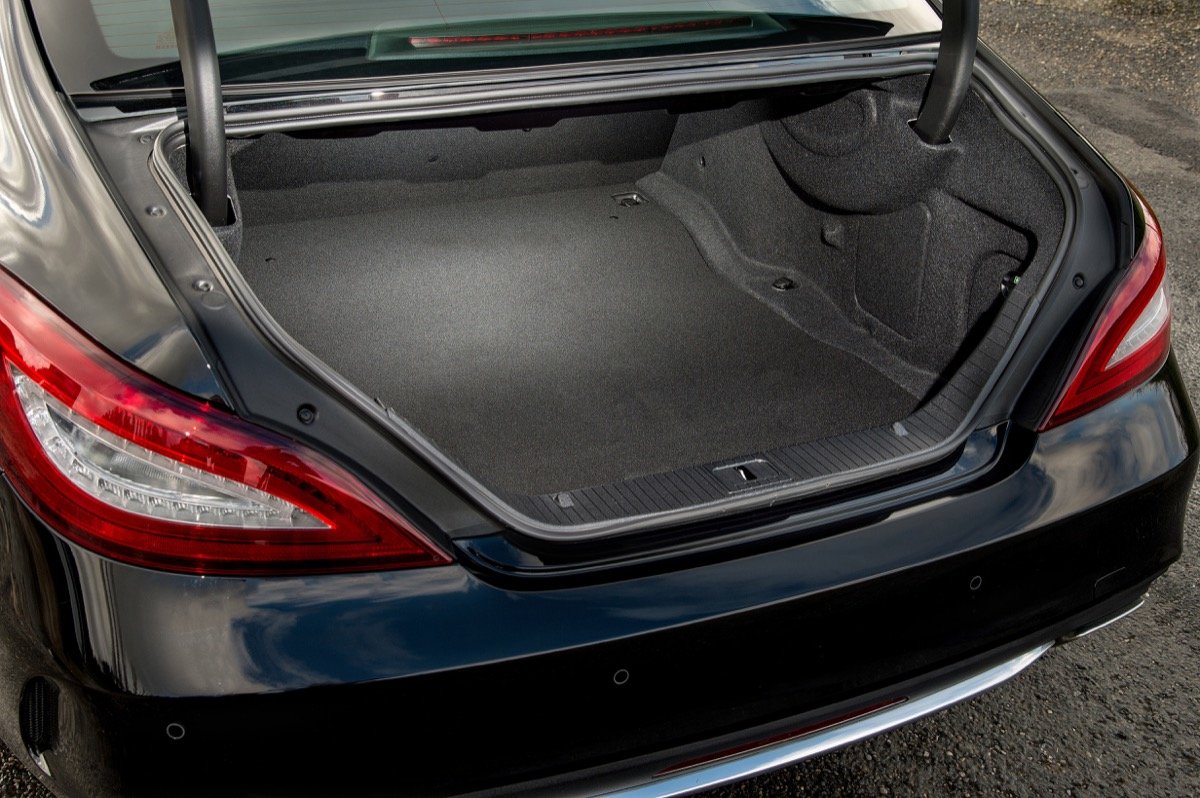
The boot measures 520 litres, plenty for most everyday activities, but for that little extra capacity you’ll need to look towards the CLS Shooting Brake.. Here, you’ll find 590 litres of storage capacity, more than enough to swallow suitcases and bags for a cross-country adventure. Another benefit of the Shooting Brake is an additional 5cm of headroom, which isn’t much but may help anyone with a particularly large quiff.
Furthermore, the CLS was available with ‘Easy-Pack Quickfold’ seats, which were standard on the Shooting Brake and optional on the regular CLS. These upped the total storage volume to 1,550 litres for the Shooting Brake. Be mindful, however, that the storage capacity of some models was reduced, specifically 220d and 350d coupes from 2015 onwards, which had a 475-litre boot.
Mercedes-Benz offered a comprehensive range of accessories throughout the CLS’ life, so there’s a good chance you’ll find a used vehicle with some of these fitted – or pre-loved examples for sale individually online. Useful add-ons included ski and bicycle carriers, child seats, roof boxes of various capacities, rubber boot mats, coat hangers and storage dividers.
What's it like to drive?
To drive, the CLS is set up as a comfortable, waftable executive car with a slight hint of sportiness. Long distances are a breeze, with road and wind noise kept to a minimum.
The feeling of comfort is especially notable in cars fitted with air suspension, which was optional when new (although self-levelling air suspension was standard at the rear for post-facelift Shooting Brake models). The regular suspension was called Sport, and is slightly on the firm side, so we’d recommend avoiding it if possible. The Comfort suspension is, as you’d expect, a bit softer, but a better bet if you can’t find an air-equipped CLS.
The engine line-up didn’t change massively over the life of the second-generation CLS, with a mix of diesel and petrol options. On the diesel front, at launch you could have a CLS 250 CDI or a 350 CDI, the former a 2.1-litre four-cylinder, the latter a 3.0-litre V6. On the petrol side, Mercedes offered a CLS 350 with a 3.5-litre V6. Sadly the CLS 500, offered elsewhere in the world and powered by a glorious 402bhp 4.6-litre V8, wasn’t sold in the UK.
The 250d was dropped for the 2015 model year facelift, replaced by a 220d with less power and torque. The 350d also saw its power output decrease, but not by an amount you’d notice from behind the wheel. In 2015, Mercedes also introduced the CLS 400 petrol, replacing the old 350 and upping the level of power and torque. This is how the engine line-up remained for the remainder of the car’s production life.
For ultimate punch, 2012 saw the introduction of the CLS 63, which had much more than a hint of sportiness, thanks in no small part to its 5.5-litre, twin-turbo V8 engine. It dished up 518bhp, or 549bhp if you opted for the Performance Package Plus in either 2012 or 2013. That 549bhp output then became standard for 2014 before the 2015 facelift saw the introduction of the 577bhp CLS 63 S.
A seven-speed automatic transmission was standard for all cars pre-facelift, though the seven-speed ’boxes of the AMG models were specific to those cars. Post-facelift, diesels retained the seven-speed gearbox, but petrol cars – with the exception of AMG models – gained a new nine-speeder.
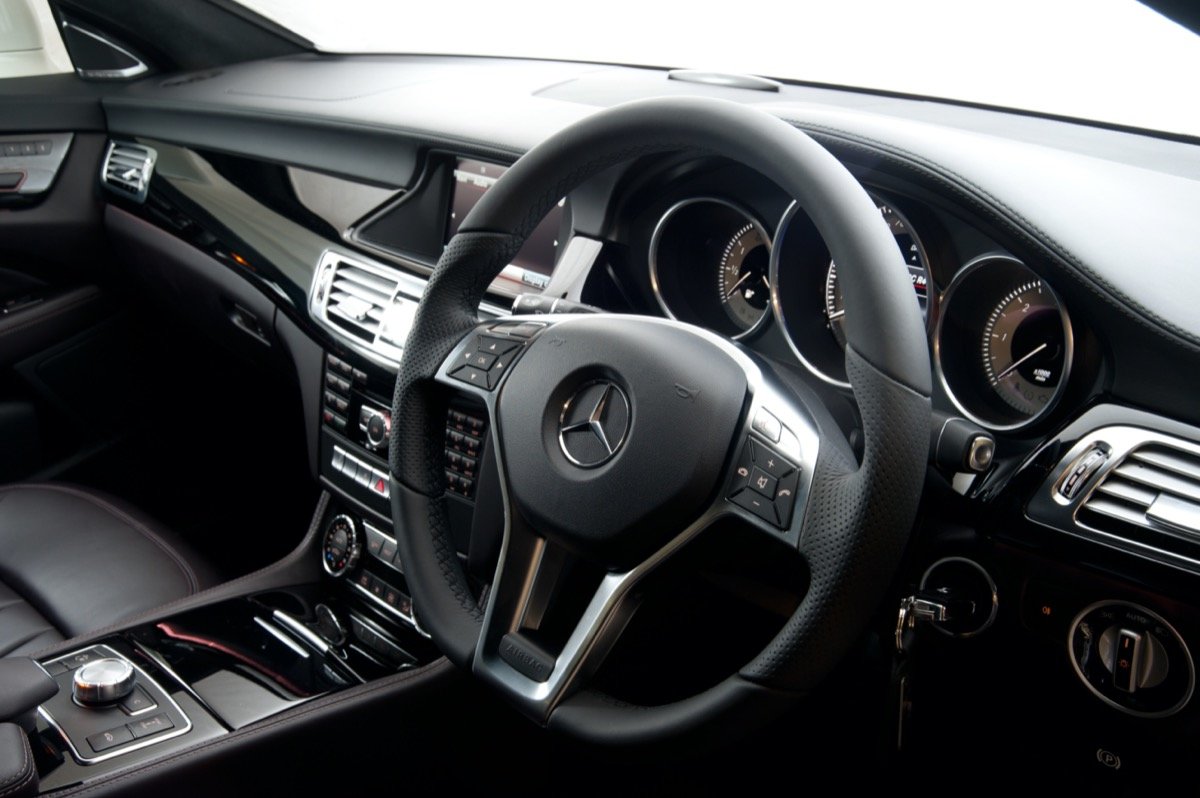
Technology, equipment & infotainment
If you’re in the market for a CLS, it’s relatively straightforward to work out which one you might want. The facelift in 2014 brought updates to the infotainment system and a bigger screen, up from 5.8 or 7.0 inches screen to an 8.0-inch display. But there’s still value to be found in pre-facelift examples, even if you don’t get the most modern tech.
Pre-facelift cars were offered in two trim levels: standard and AMG Sport. Standard cars had 18-inch alloy wheels and navigation, while the AMG Sport model had bigger 19-inch rims and a sportier bodykit, as well as Sport suspension.
After the facelift, there was only one trim level outside of the AMG model, called AMG Line. This gave the CLS 19-inch alloy wheels and sportier bumpers and side skirts. All models got LED headlights, heated seats and a DAB radio, too. You could add Premium or Premium Plus packs, which included features such as an electric sunroof and an upgraded infotainment system.
Older models may have features that seem almost quaint today, such as a six-CD auto changer, a built-in DVD player and a night vision system. DVD players were also offered as part of an accessory package for rear-seat occupants. But plenty of features we see on cars today, including lane keep assist, blind spot assist and autonomous emergency braking were either optional or included as standard, depending on the model, along with more basic features such as heated seats and a heated windscreen.
Audiophiles will be happy to hear that premium sound systems were offered across the range, including a 14-speaker Harman Kardon system and a 14-speaker Bang & Olufsen setup.
The performance-orientated CLS 63 AMG also got its own specification, with revised bodykit, louder exhaust and extra AMG styling bits inside. The 63 also had big 360mm brake discs up front with six-piston calipers. Carbon-ceramic brakes were optional, with a weight saving of 40 percent.
Mercedes-Benz CLS-Class running costs
The CLS is at the posher end of the range from an already-premium car manufacturer, so you will likely pay a bit more for one than an equivalent E-Class.
If you want to keep a handle on fuel costs, a diesel is your friend. The later 220d is the most efficient model available and should give you around 50mpg in the real world, while you should still manage mid-40s in the 350d. Opt for a pre-facelift model, you could realistically hope for 45mpg or so from the 250 CDI, or 40mpg from the 350 CDI.
On the petrol side, you’ll be looking at fuel economy figures in the mid-30s for the pre-facelift 350, while the post-facelift CLS 400 will likely return something in the low 30s.
Whether petrol or diesel, coupe models will be slightly more efficient than the Shooting Brake. Admittedly that’s unlikely to sway your decision, but if economy is a crucial factor and you absolutely must have a second-generation Mercedes CLS, the coupe will drink slightly less fuel. The AMG models will be immense fun to drive, and you’re guaranteed to have a smile on your face for at least a second or two on every single journey. But that smile will evaporate when it comes to the petrol pumps, as you’ll be doing well if you can manage 20mpg on a regular basis.
Insurance costs won’t be cheap for any CLS, with the most wallet-friendly model falling into group 43 (out of 50 groups in total). When it comes to servicing, intervals vary depending on how you use the car, with a handy message popping up on the dashboard when one is due. Budget for one every 12 months or 10,000 miles at a minimum, and if you’re driving an AMG model, do yourself a favour and aim for twice a year if at all possible. Although that isn’t essential, with a used performance engine of this age, regular maintenance will help you spot potential issues early and keep everything running sweetly.
Mercedes-Benz offers a servicing plan called ServiceCare, which covers the cost of parts and labour for up to four services, and also includes items like brake fluid, spark plugs, air filters, fuel filters and screen wash. It’s highly unlikely a CLS of this vintage will be eligible, but it’s certainly worth checking if you know the registration of the car you hope to purchase.
If a Mercedes service plan isn’t an option, it might be worth looking at Mercedes specialists rather than a franchise dealer. They’re likely to be cheaper and have more in-depth knowledge of older models, including this second generation CLS.
One further word of warning when it comes to the CLS AMG models. New tyres, brakes, wheels, oils, filters – everything, basically – will be more expensive than for non-AMG cars. Replacing the carbon-ceramic brake discs, for example, is likely to cost a small fortune as they were a £7,090 option when new. Steel replacements will be much more reasonable.
Mercedes-Benz CLS-Class reliability
Mercedes-Benz as a brand doesn’t have the best reputation for reliability, and often sits at or near the bottom of independent dependability studies.
That said, horror stories about the CLS specifically seem to be few and far-between. We’ve heard tales of owners having issues with the infotainment system, specifically with connecting newer smartphones to it. There was a recall for the 250 CDI in 2012, following issues with fuel injectors, so make sure these have been replaced before you buy.
In addition, there was another recall in 2017 to update the car’s software in a bid to reduce emissions on diesel models. Check potential recalls before you buy, and if work should have been carried out, inspect the service history of the car to ensure it has been completed.
- The 2014 facelift didn’t just tweak the styling, it also saw the engine lineup change completely across the CLS range. Later engines were more efficient and in some cases more powerful, so they’re the ones to look out for if either of those attributes are priorities for you. However, the newer cars will also be more expensive to buy, so factor that into your decision.
- If you want a CLS Shooting Brake but don’t really want a diesel, your only options are the very powerful AMG models: the CLS 63 pre-facelift, or the CLS 63 S post-facelift. ‘Normal’ petrol engines weren’t available in the Shooting Brake in the United Kingdom. Don’t get us wrong, we think the AMG models are brilliant, but they’re a big step up from the regular cars in terms of performance and price.
- If you’ve got five people to transport, then the CLS Coupe isn’t for you, as it only has two seats in the back. The CLS Shooting Brake has three, plus extra headroom as well. It will be a very tight squeeze for five adults, though, as the middle seat is on the small side.
- If you want fuel efficiency: The post-facelift CLS 220d diesel will provide the best fuel economy, particularly if you opt for the saloon model. With careful use of your right foot, you should be able to get 50mpg. If your budget doesn’t quite stretch that far, the earlier 250 CDI is worth a look as well.
- If you want performance: The AMG CLS models are the ones to go for if horsepower is your bag. A 5.5-litre, turbocharged V8 under the bonnet will give you between 518bhp in the CLS 63 or 577bhp in the post-facelift CLS 63 S, depending on the model. But be prepared to pay for it, in both purchase price and running costs.
- If you want extra space: The CLS Shooting Brake has more space, both for the heads of rear-seat passengers and also in the boot. Don’t be afraid to look at a regular E-Class Estate, either, as while they don’t look as fancy, they’re generally more practical and cheaper to buy.
- If you want to tow stuff: You’ll have to go for a Shooting Brake model, because the CLS Coupe wasn’t designed with towing in mind, and wasn’t type-approved for it. The Shooting Brake version, however, can haul up to 2,100kg (braked) or 750kg unbraked.


