Mercedes-Benz EQA Review (2021-present)
Mercedes-Benz EQA cars for sale
4.0
Expert review
Pros
Comfy and luxurious interior
Smooth, swift and relaxing to drive
Great-looking infotainment system
Cons
Let down by a small boot
Expensive compared with a Ford Mustang Mach-E
Range could be better

The CarGurus verdict
The Mercedes EQA is the classiest electric car in its price range, and that is likely to be its chief USP. Having said that, it’s lovely to drive, finance deals are surprisingly competitive thanks to solid residual values, and you don’t have to go for a high-spec car to get the equipment and comforts that you expect in a premium executive family SUV. Our biggest gripe is that the boot size lets it down, and there’s no getting away from the fact that others offer more range, more performance and more practicality for the money, not least the Ford Mustang Mach-E.
But, if the EQA’s hi-tech yet boutique finish is what you’re after then it does everything else you’d expect of an electric family SUV in a slick, likeable and accomplished package.

The new Mercedes-Benz EQA is a mid-sized electric SUV crossover that takes on EVs such as the Audi Q4 e-tron, Volkswagen ID.4, Kia e-Niro, Tesla Model Y and more. It’s based on the Mercedes GLA, and is currently only offered with a 79.8kWh battery pack (66.5kWh usable capacity), and a WLTP range of between 252- and 264 miles. It can be had with a 188bhp electric motor on the front wheels in the EQA 250, or there are two four-wheel drive models with either 225bhp or 288bhp, badged the EQA 300 4Matic and EQA 350 4Matic.
As for real-world range, expect to see around 220 to 250 miles in the summer, and well under 200 miles in winter conditions, especially if you’re doing solid motorway miles, which will always drop the potential driving range of an electric car.
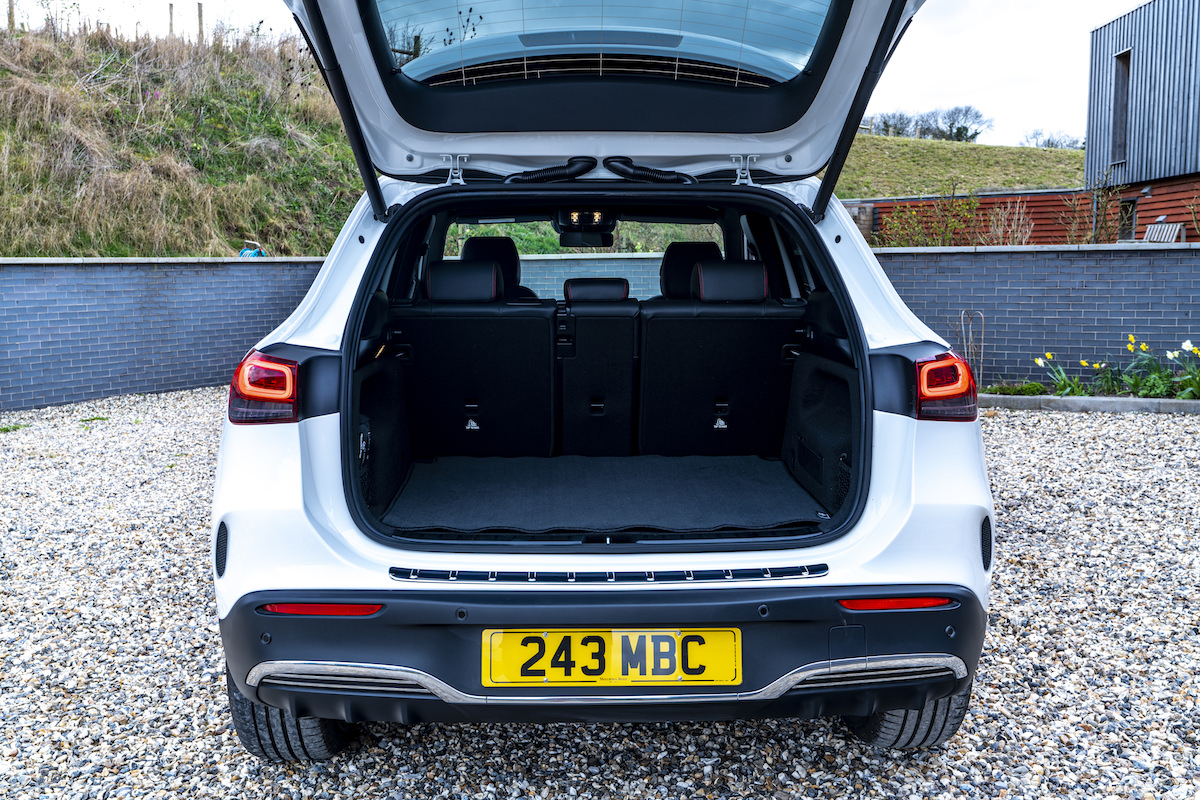
The Mercedes EQA is a five-seat SUV that, for some context, is similar in size to popular family 4x4s such as the Volkswagen Tiguan. Smaller than its big sibling, the Mercedes EQC, but still big enough to satisfy most family motoring needs.
Mind you, there are more practical options at this sort of price. The 340-litre boot space is quite small compared to the boot you get in the VW ID.4, Skoda Enyaq, Audi Q4 e-tron and Ford Mustang Mach-E, and there’s no storage space in the nose of the car (which is often a useful feature in other electric cars). Sure, the loadbay will just about take a chunky buggy or big dog, but if you have more awkward needs than that then you’ll want to look to one of those more spacious family SUVs.
Still, there’s space in the rear seats for a couple of adults - even if headroom is a fraction tight for taller ones - and up front, the Mercedes EQA is roomy enough even for a leggy driver and also has one of the best interior finishes of any compact SUV, electric powertrain or otherwise. The materials are plush enough to belong in a much more expensive luxury car, and everything feels classy and tactile, more so than in the Audi Q4 e-tron and Tesla Model 3.
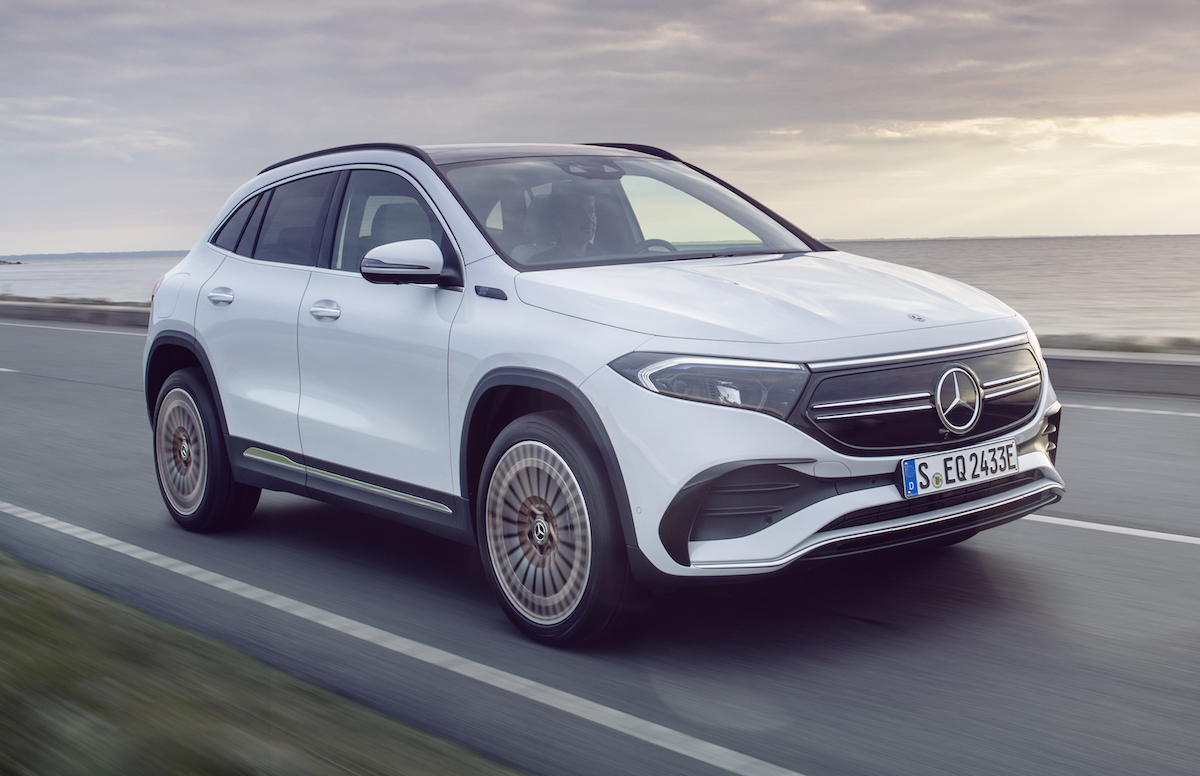
It’s peachy to drive, too. We’ve only driven the entry-level Mercedes EQA 250, but you really don’t need more than that. It’s fast enough; a 0-62mph of 8.9sec is hardly going to deliver shock and awe, but it feels punchier than most comparable petrol and diesel cars up to 40mph or so, and there’s always plenty of response when you want it. If it really doesn’t sound fast enough for you, check out the 4Matic models, both of which get more power and snappier acceleration.
It’s smooth and predictable, of course; it’s a single-speed automatic so acceleration is seamless and easy to modulate. Braking can be a touch less easy to judge, but with familiarity it’s easy to drive the EQA precisely even in sluggish town traffic.
The regenerative braking on the Mercedes EQA is also slick. There’s an auto mode, where the car senses a car or junction ahead and applies the regenerative braking of its own accord, simultaneously gathering energy to help extend the car’s range. You can turn off the auto mode and just have set levels of regenerative braking ranging from mild to heavy (but not one-pedal driving) if you prefer.
With nicely weighted, intuitive steering response and tidy body control, the EQA is confident and fun to drive on a good road while also being relaxing on the motorway.

Inside, the MBUX infotainment system is one of the better in the class. Rather than just the straightforward touchscreen interface, the Mercedes EQA gets a large touchscreen that can also be controlled a touchpad between the front seats, via touchpads on the steering wheel and via voice command. You’ll struggle to find better graphics on any other system, the menus are fairly logical unless you’re deep in the settings submenus. You get all the equipment you’d want including nav, Apple CarPlay, Android Auto and a nine-speaker sound system.
There are three trim levels – Sport, AMG Line and AMG Line Premium - and even the cheaper Sport model is well equipped with heated seats, alloy wheels, LED headlights, leatherette upholstery, reversing camera, a 10-inch digital driver’s readout, climate control and more. AMG Line gets mostly style upgrades, while AMG Line Premium gets wireless phone charging, keyless entry and go, a sound system upgrade and panoramic sunroof.
The Mercedes EQA is more expensive to buy, lease or pay for on monthly PCP than the non-premium alternatives like the Kia e-Niro and Skoda Enyaq iV, but that’s the price of any premium badge and high class finish. Next to similarly posh EV alternatives, it’s competitively priced and even offers some keen finance offers that see it undercutting rivals like the Audi Q4 e-tron.
Fuelling the Mercedes EQA will be cheap since electricity is much more affordable than petrol or diesel. Expect to pay around 5p per mile for electricity if you’re charging at home on a standard domestic electricity tariff, which is around a third of the cost of fuelling a petrol car doing 40mpg, and using cheap overnight electricity tariffs can dramatically cut charging costs still further.
Insurance groups are on a par with the Audi Q4 e-tron, if quite a bit higher than those for the Tesla Model 3. The EQA has variable servicing intervals and will warn you when a service is required by beaming a message onto the driver’s display, but you should expect to need a trip to the dealer every 12 months or 15,000 miles. Fixed price servicing, with flexible payment options, is available.
The Mercedes EQA is too new to have been included in any recent reliability or customer satisfaction surveys, but it does come with a three-year warranty, and an eight-year, 100,000-mile warranty to cover the battery.
Generally, electric cars are more reliable than petrol and diesel cars as they have far fewer moving parts. That’s not to say that they’re infallible, as you can still have issues with charging hardware, electricals and more, but statistically they are usefully more reliable. Battery degradation has proven to be better than most predicted. Expect to lose roughly 10 – 15% of the car’s maximum range over ten years and 100,000 miles, and you can help to maintain the battery’s performance by keeping it topped up between 20-80% when you don’t need the full driving range, and not using rapid charging unless you need to. Regardless, you needn’t worry about the cost of a replacement battery since the durability and reliability of modern batteries is now well proven and they often last longer than the car.
As a brand, Mercedes has middling results when it comes to reliability rankings. It came 13th out of 29 brands included in the Driver Power survey 2021, while the What Car? 2021 Reliability Survey ranked Mercedes 22nd out of 30 brands.
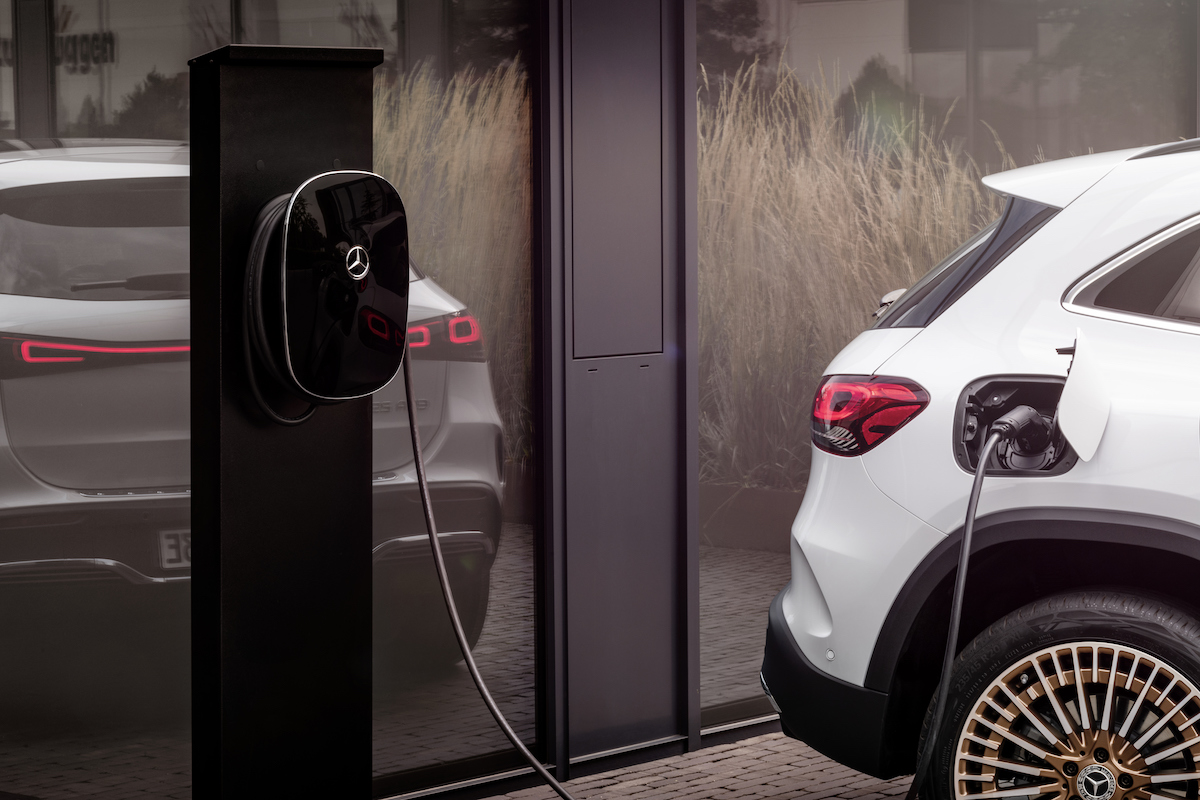
- Charging the Mercedes EQA is easy, if not as quick as with the Audi Q4 e-tron and Tesla Model 3. With rapid charging speeds of 100kW, it’s a touch slower than those executive EV alternatives, but you’ll still get 100 miles of range in around 20 minutes provided you can find a powerful enough charger that’s compatible with the Mercedes EQA’s CCS charging socket. Plug into a 7kW home wallbox using the Type 2 socket and charging cable provided as standard, and you’ll get a full battery in under 11 hours. Be careful when you look at the Mercedes EQA’s official information since Mercedes states faster home charging rates of 11kW, which the Mercedes EQA does support, but the vast majority of UK domestic properties don’t as they only have single-phase electrics. You need three-phase electrics to charge at those rates, which are normally only found in industrial sites.
- Frustratingly, adaptive cruise control is only standard on AMG Line, but you can add it to the Mercedes EQA Sport by adding the Driving Assistance Package for around £1500. This adds adaptive cruise control, active steering assist and active lane-keep assist that all combine for a semi-autonomous driving function. Autonomous emergency braking, which senses an imminent collision and brakes for you, lane keep assist, blind spot assist and traffic sign recognition is all standard on every EQA.
- Towing is not typically a strong point with electric cars, but both of the Mercedes EQA 4matic four-wheel drive models are rated to tow a braked trailer of up to 1800kg. £750 gets you an upgraded ESP system with trailer assist function and an electronically retractable tow bar (which can also be useful for mounting bike racks). Roof rails are standard on every EQA, too, which can also be useful for strapping outdoor equipment or roof boxes to the car.
- If you’re on a budget: The Mercedes EQA 250 Sport is our pick of the range for most people. If you can stretch to it, adding the Driving Assistance Pack is worth it, but even without adding any options, the equipment levels are good and the Mercedes EQA is a very complete car.
- If you’re after the luxury one: Go for the AMG Line Premium, which does feel a significant step up in comfort and ambience thanks to the glass roof, keyless entry, wireless phone charging and more.
- If you want the sporty one: The Mercedes EQA 350 is the sportiest option in the range. It gets 288bhp and will do 0-62mph in 6.0sec and, while we haven’t yet driven it, it promises to be seriously rapid. It is worth pointing out that you can get alternatives including the Ford Mustang Mach-E, which offer more performance for usefully less cash.
- If you’re a company car driver: Electric cars make a lot of sense for company car drivers, as they fall into very low Benefit in Kind tax rates and are therefore very cheap on company car tax. If your company is generous enough to let you go for a high spec car, you may as well go for top-spec EQA 350 AMG Line Premium. If they want a more modest list price or leasing cost, however, you’re still getting a great car with the entry-level EQA 250 Sport.


