Mercedes-Benz GLC-Class (2015-2022) review | A premium SUV to suit every taste
Mercedes-Benz GLC-Class cars for sale
4.0
Expert review
Pros
The cabin is as classy as it is roomy
Good to drive
Optional air suspension improves comfort
Cons
Some owners report reliability issues
Fully loaded models are expensive
Plug-in hybrid won't match official economy figures unless it is recharged regularly

The CarGurus verdict
Such is the variety of the GLC lineup that it offers something for just about every high-end SUV customer. It’s stylish, practical and drives well, and you’ll always feel you’re in a car deserving of that famous Mercedes-Benz badge. Furthermore, the GLC is new enough to still feel relevant, but there are standalone petrol and diesel versions alongside two hybrid powertrains, whereas some premium SUVs nowadays are hybrid or electric only.
Do make sure you check out the opposition, though, because there are plenty of good cars of this type, and each one offers something slightly different. The Audi Q5 feels refined and premium, but in slightly different ways to the GLC, while a used Jaguar F-Pace is a less common and more dynamic choice. The BMW X3 provides a better driving experience, too.
There are a few concerns about reliability, so check any potential purchase carefully, making sure it has a full service history. Do your homework, though, and you should end up with a car that gives you all the premium SUV experience you’d rightly expect.
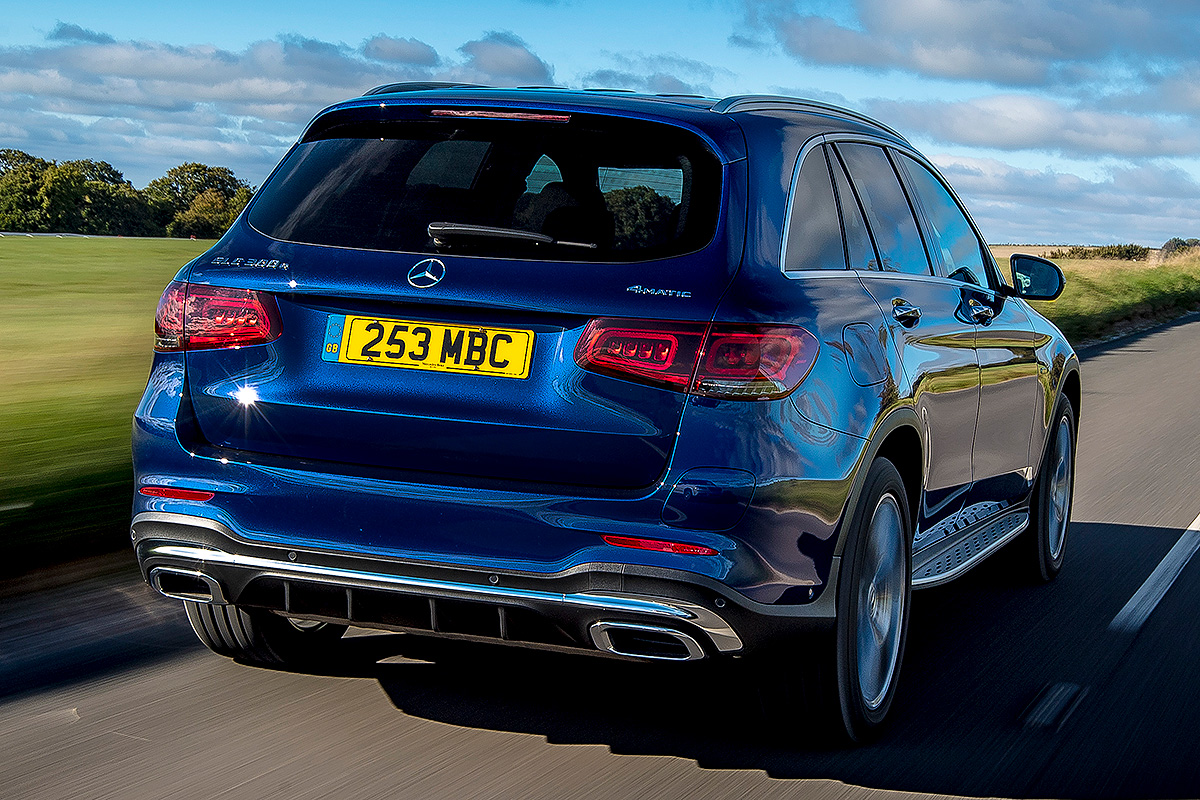
What is the Mercedes GLC-Class?
Mercedes-Benz introduced the GLC-Class into its SUV lineup in 2015, as premium mid-sized SUVs became increasingly popular around the world.
Like many other cars in the Mercedes range, it was available in a wide variety of specifications. Indeed, when the GLC was new, prices between models varied by as much as £50,000. You could opt for a conventional, family-orientated SUV, all the way up to a fire-breathing performance car courtesy of AMG.
Today, several years after production of the first-generation GLC ended, there are plenty of used examples to choose from. Whichever version you go for, you’ll get a smart, well-built machine that should tick all the boxes you’d expect from a used Mercedes-Benz. That said, you need to study the specification of any pre-owned car carefully, as there were numerous trim levels, engines and options to choose from over the course of the GLC’s life, along with a mid-life facelift for the 2020 model-year.
If you’re interested in a brand-new mid-size Mercedes SUV, the second-generation GLC-Class arrived in 2023 and is still on sale. You can read our review of that car here.
How practical is it?
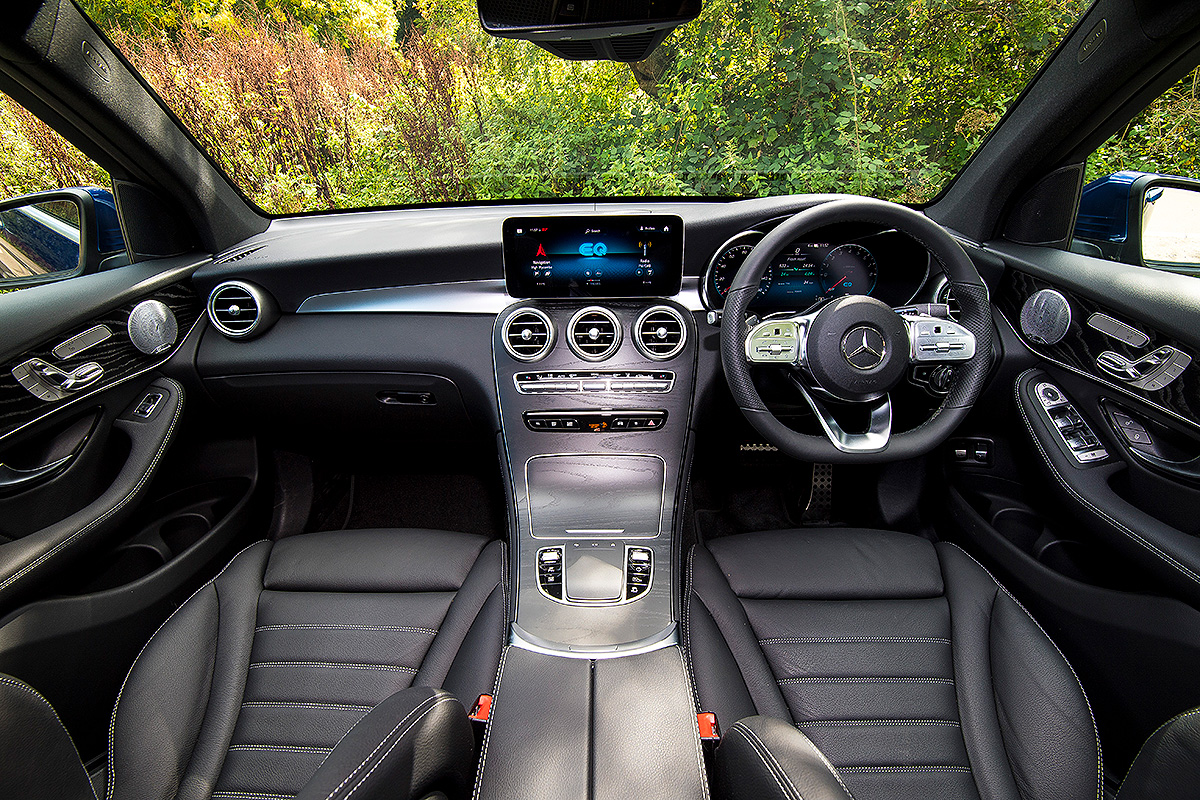
Whichever first-generation GLC you go for, you’ll find a sleek, solid interior filled with useful technology. Build quality is excellent and the materials all feel suitably luxurious to the touch. Post-facelift models (more on these in a moment) get a slicker-looking infotainment system, but the original setup still passes muster. It’s controlled by a dial between the two front seats, which makes it easier to change settings on the move compared to poking around at a touchscreen. What’s more, this version of the GLC was born at a time when there were plenty of physical buttons to press and turn, unlike modern Mercedes interiors, which are very touchscreen-heavy.
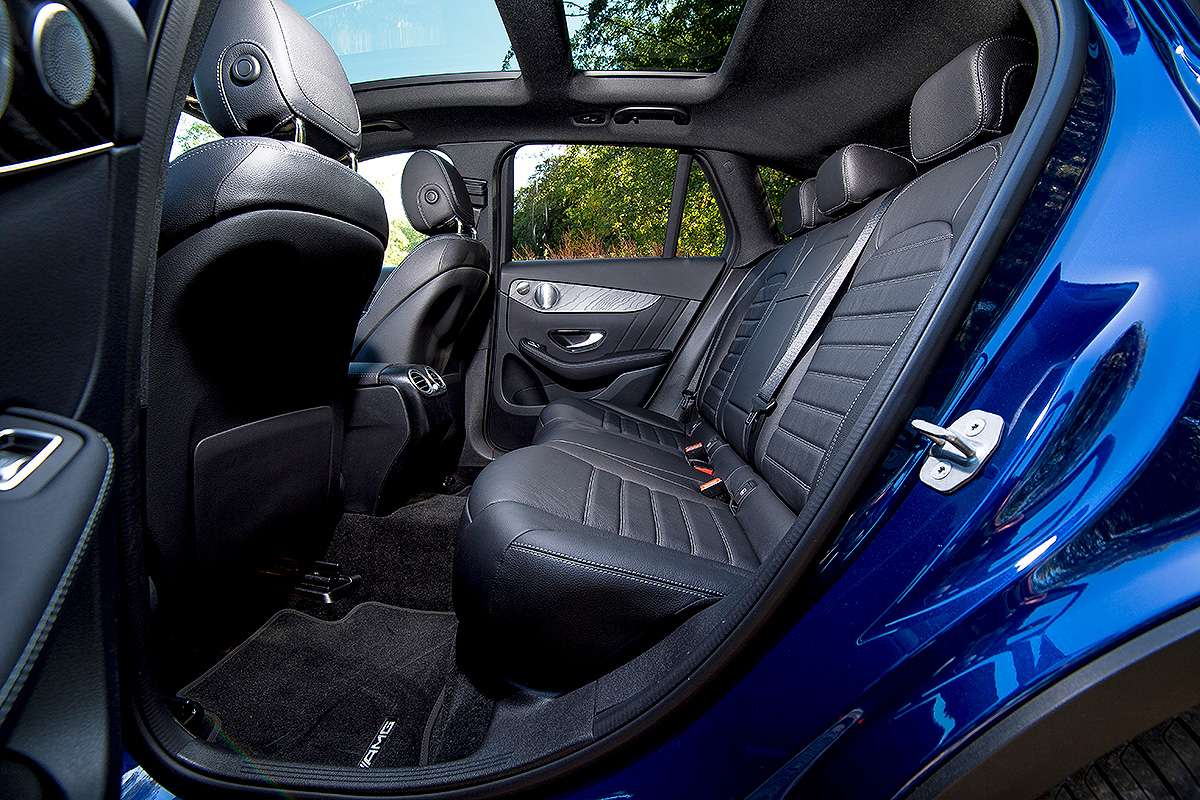
There were two body styles for the GLC: an SUV and a four-door Coupe with a lower roofline. Whichever one you go for, there’s a lot of space for passengers, with good headroom and legroom in the back. The GLC seats five people, with a slightly slimmer middle seat in the back row. Naturally, there is a slight compromise with the Coupe compared to the SUV. In the front row of the Coupe, for example, you lose 20mm of headroom, while in the rear it’s 30mm.
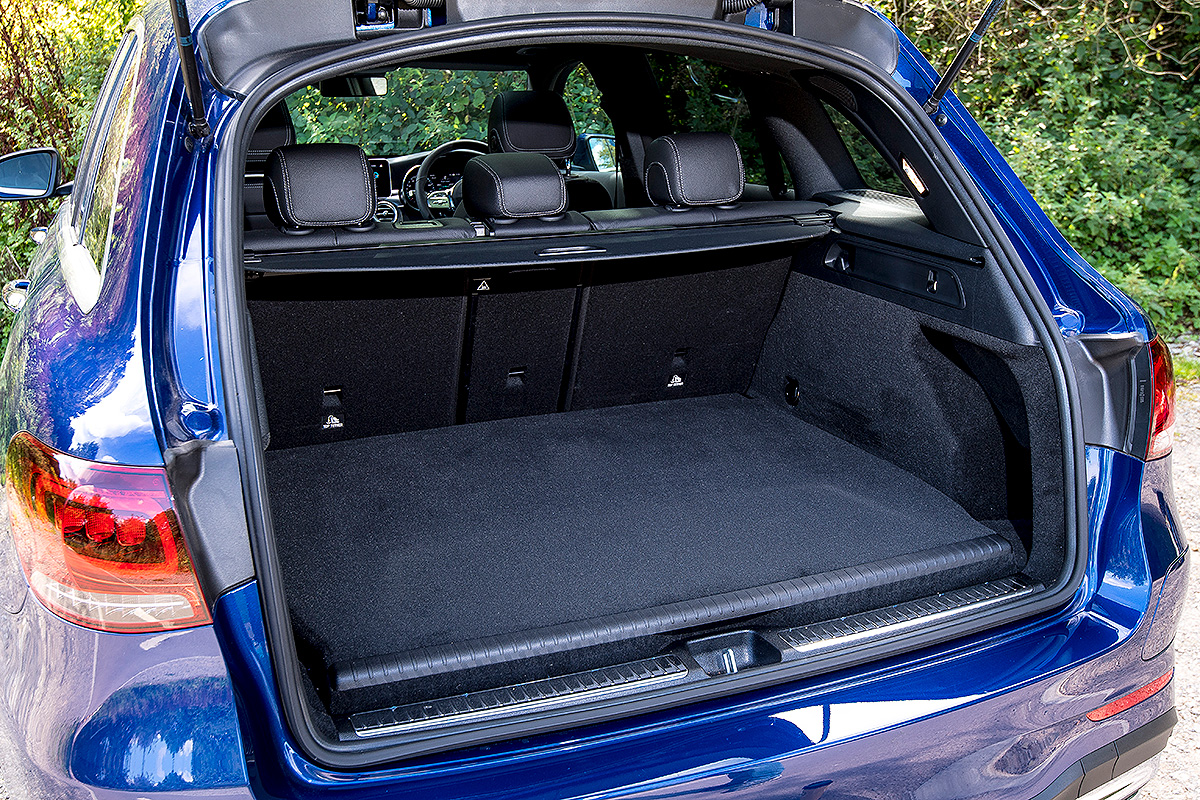
The boot is a good size overall, with 550 litres in the SUV or 1,600 litres if you fold the rear seats down. The former figure is better than Volvo’s XC60 from the same period, but smaller than a Jaguar F-Pace. With the Coupe, you must make do with 500 and 1,400 litres respectively, which isn’t bad by any means, but is certainly worth being aware of if you need plenty of luggage space.
Towing capacities vary by powertrain, not by whether you choose an SUV or a Coupe. However, the powertrain lineup evolved over time, so you’ll need to research the specifics via a Mercedes dealer if you want to avoid buying a car with insufficient towing capacity. A post-facelift GLC 220d 4Matic (all-wheel drive in Mercedes-speak) can tow 750kg unbraked and 2,500kg braked, for example, while an AMG GLC 63 S from the same period is limited to 2,200kg braked. Similarly, a pre-facelift AMG GLC 43 has a maximum braked capacity of 2,460kg.
Mercedes-Benz offered a decent if not mind-blowing array of accessories with the first-generation GLC, including various child seats, roof boxes and rails, bicycle carriers, rubber boot liners and more. You may find a used car with these included. If not, check online and you’ll likely find second-hand extras for much less than the original retail price.
What's it like to drive?
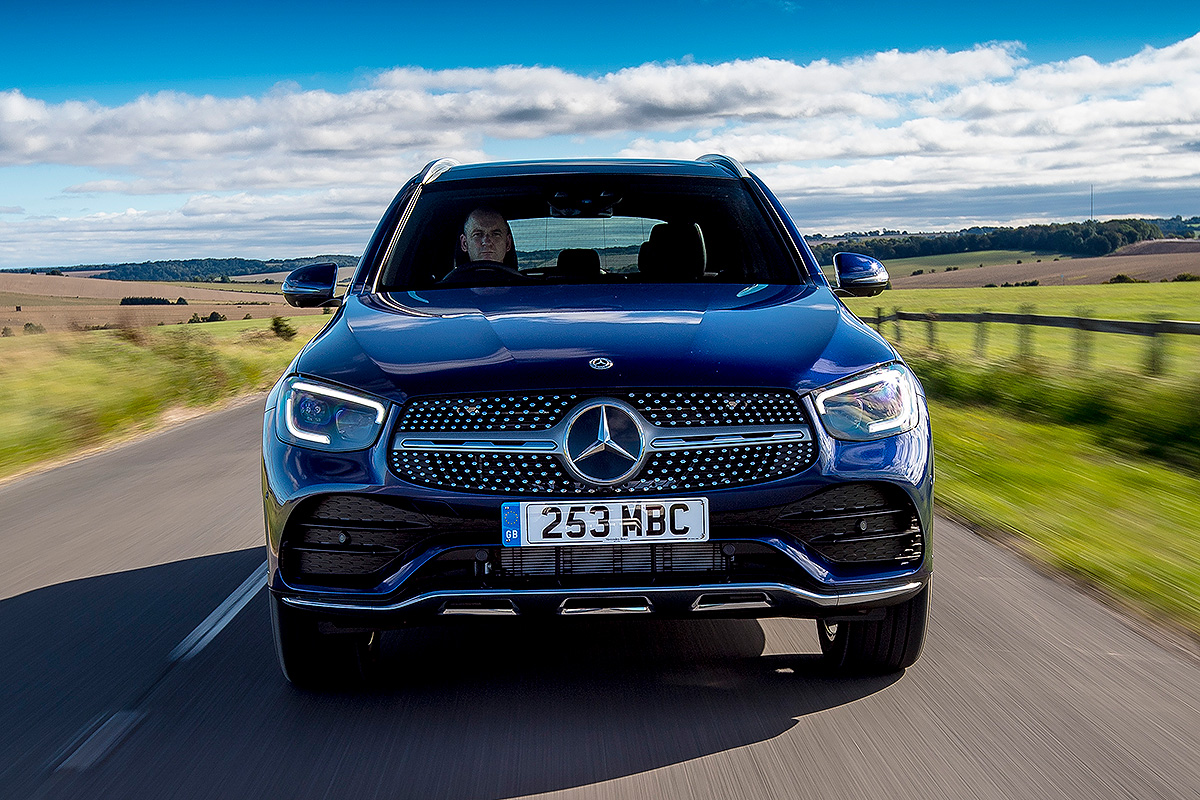
On the move, the Mercedes-Benz GLC is a comfort-focused cruiser, in contrast to the sporty pretensions of a BMW X3 or Jaguar F-Pace. It still drives well, however, resisting body-roll through corners and delivering a good amount of heft through its steering. Still, if you want any real excitement you will need an AMG model. These mix brutish power with more sophisticated and agile handling characteristics.
All GLC models came with all-wheel drive, a system referred to as ‘4Matic’ by Mercedes-Benz. They’ll have no problems with light off-road duties, from a gravel car park to the muddy entrance to a hillside campsite. Just be sure to fit the correct tyres if you’re going to encounter slippery conditions, as even all-wheel drive can’t perform miracles if the wheels are shod with the wrong rubber.
Engine choices started in 2015 with two 2.1-litre four-cylinder diesels, the 168bhp 220d and the 201bhp 250d, followed later by a 3.0-litre V6 diesel with 254bhp called the 350d. The first AMG performance version arrived later as well: the GLC 43 AMG, fitted with a 362bhp, twin-turbocharged 3.0-litre V6. This was followed in 2017 by two more sporty models: the 470bhp GLC 63 and the 503bhp GLC 63 S. Both had 4.0-litre, twin-turbo V8s, but while the 63 would hit 62mph in 4.0 seconds exactly, the 63 S could do the same sprint in 3.8 seconds, then go on to 174mph rather than a limited 155mph (you could pay extra to boost this to 167mph, if you wanted to). The first non-AMG petrol variant arrived in 2018, as the 2.0-litre, 208bhp GLC 250. All cars were fitted with a nine-speed automatic gearbox.
The V6 diesel 350d was dropped in 2018, then the post-facelift engine range was given a further shake-up. The recently launched petrol GLC 250 was dumped, as was the AMG 43 and 250d, leaving the 220d, the AMG 63 models and a new 300d. But tweaks meant the 220d had more power, up to 191bhp, while the new 300d made 242bhp. A plug-in hybrid diesel arrived in 2020 in the form of the 302bhp GLC 300de, which Mercedes claimed could manage 27 miles of pure electric driving from a full battery. The GLC AMG 43 also made a return, now with 385bhp, while Mercedes also launched the petrol-powered, 255bhp GLC 300. One year later, in 2021, the ‘regular’ AMG 63 was lost, but Mercedes finally introduced a petrol plug-in hybrid: the 316bhp GLC 300e, with an EV range of 29 miles.
None of the engines are bad, and whichever one suits you depends on how much you prioritise power over fuel efficiency. We think the diesels suit the car better, as while they could be quieter, they’re strong at low revs and will effortlessly pull you along, especially the 3.0-litre V6 models. Good as the petrol engines are, they will drink more fuel and, for cars registered before April 2017, cost you more in annual road tax (VED). All things considered, our money would likely go on a diesel GLC.
Technology, equipment & infotainment
All GLCs, from the earliest examples to the latest off the production line, were stuffed with safety equipment and technology. In older versions, standard features included a remote boot release, DAB radio, attention assist, autonomous emergency braking, keyless go, rain-sensing wipers and climate control air-con. Post-facelift examples, meanwhile, had LED headlights and daytime running lights, LED tail lights, heated front seats, a reversing camera and an automated parking system called ‘Parktronic’ from the get-go. Other niceties, like Apple CarPlay and Android Auto connectivity, wireless phone charging, a 360-degree parking camera, drive modes and a panoramic sunroof were all available, depending on the model and year.
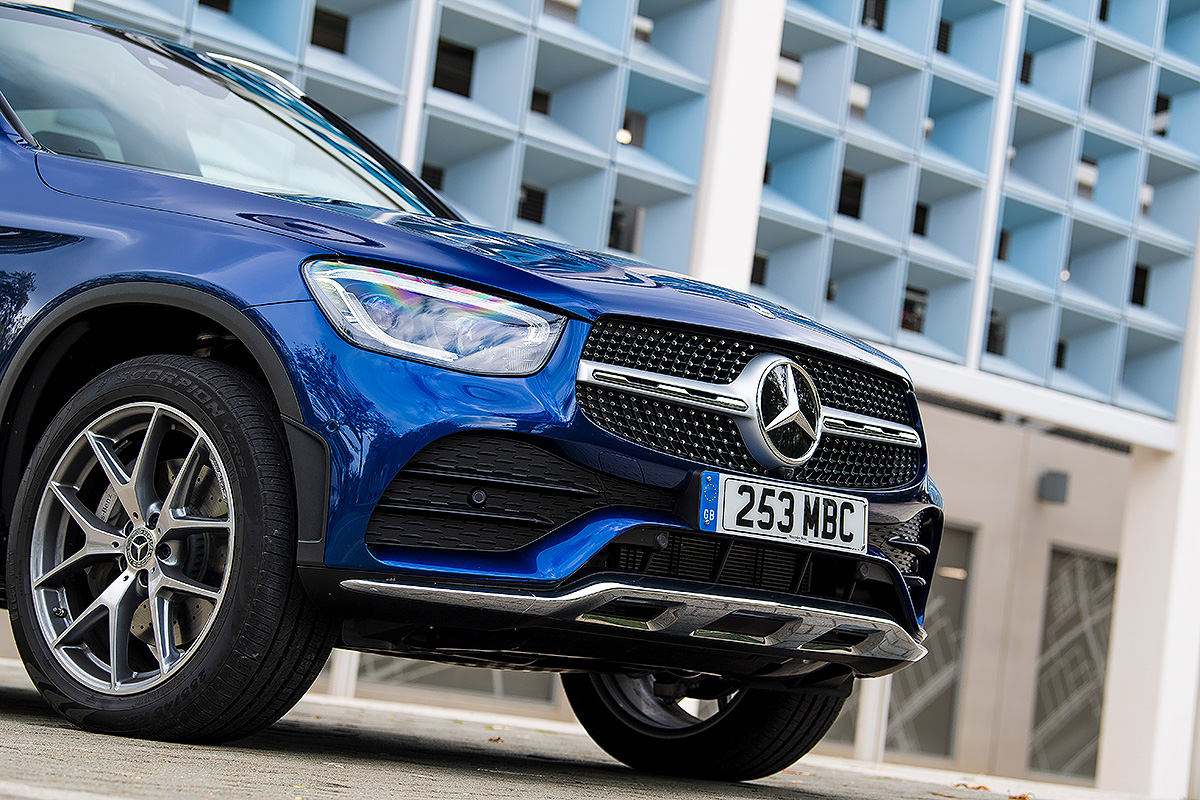
Mercedes gave the GLC a facelift in 2019, with a few visual tweaks to its headlights and bumpers, plus some fresh tech including the excellent MBUX infotainment system. These cars will be more expensive on the used market, but for some the entertainment and navigation enhancements will be worth it. These include one of the best voice assistants available in cars today; just say “Hey Mercedes” and you can ask the car for traffic information, to plot a navigation route, to make a phone call, and countless other things. As a general guide, pre-facelift cars had a 5.5-inch display in the instrument cluster and a 7.0-inch central display, while post-facelift cars had either a 5.5-inch display in the instrument cluster or a 12.3-inch digital instrument cluster, combined with a 10.25-inch central screen.
One curious point to note is that pre-facelift models, with the exception of the short-lived Urban Edition, were all available with Mercedes ‘Air Body Control’ air suspension. Post-facelift cars only had this fitted if they were AMG Line Ultimate cars or actual AMG versions, while everything else had traditional springs and dampers with either Comfort (lower spec) or Sport (higher spec) setups. Although it will cost you more money to fix, buying a pre-facelift model with air suspension could open up a world of supreme, cross-country comfort, something that would no doubt pair brilliantly with a frugal diesel engine.
Mercedes GLC-Class running costs
Fuel costs will vary dramatically in the GLC, depending on which model you’re looking at. The plug-in hybrids will consume the least fuel if you use them in a suitable manner, but will cost more to buy as they were only available in later model years and were expensive to begin with. Conversely, the performance-focused AMG cars will guzzle fuel like there’s no tomorrow, and will also be the most expensive to buy. When it comes to the ‘regular’ cars, diesels will give the best fuel economy, with official consumption figures of up to 56mpg (we’d expect mid-40s in the real world). The non-AMG petrols will officially return between 28 and 34mpg, which is why a diesel looks rather appealing.
You will need to service your GLC every year or 15,500 miles, whichever comes first. Services alternate between major and minor, and will cost you somewhere in the region of £300 for the former and £400 for the latter at a Mercedes-Benz dealer. You may decide to take your car to an independent Mercedes specialist, where the services will likely be cheaper, but in doing so you might put off future buyers who prefer official dealer stamps in the service record. You’ll also lose the remarkable 30-year roadside assistance cover that Mercedes offers, called Mobilo, which relies on a continuous main dealer service history.
Mercedes provided service plans for the GLC and you can continue with those if you take your car to a main dealer, but costs will vary depending on the age of the vehicle, its mileage and so on.
From a road tax point of view, prices vary depending on the age of your car. Those registered before 1 April 2017 will be charged according to their CO2 emissions, which means diesels will be cheaper and AMG models very expensive. But cars registered after that date attract a flat rate of £150 per year.
It will come as little surprise the AMG models cost the most to insure, as they’re considerably more powerful – and more expensive to fix if involved in an accident.
Mercedes GLC-Class reliability
Mercedes-Benz doesn’t have the best reputation for reliability, which seems surprising given how many 40-year-old E-Class estates are still pottering around, but that’s also true for several of its rivals.
In the latest What Car? Reliability Survey, Mercedes ranked joint 22nd with Audi out of 30 car manufacturers. But in the category of family SUVs aged up to five years old, the GLC specifically took joint 27th place alongside the Kia Niro, 11 spots back from the GLB, but five and seven places ahead of the GLA and EQA respectively. This is out of a total of 76 cars, which makes the GLC look pretty decent.
Furthermore, it secured sixth position out of 23 in the ‘premium SUVs aged up to five years old’ category. All in all, we wouldn’t be too worried about buying a used GLC, provided it had been looked after and there was a solid service history. Common problems reported by owners have included scrubbing tyres when the steering is at full lock and axle alignment problems. The chances are that such issues will have been fixed by now, but it’s worth checking through the receipts to see.
There have been a number of recalls issued for the GLC since 2015. Issues included the car’s emergency call system (which alerts the authorities automatically if you have an accident), manufacturing faults with seatbelt buckles, electrical problems and emissions-related software glitches. Again, most of these should have been fixed, but it’s always worth checking with the seller and a Mercedes-Benz dealer to make sure the work has been carried out.
Although the car’s original three-year, unlimited mileage warranty will have expired by now, if a used example has an extended warranty you can carry this on if you’re buying directly from Mercedes. Even if you buy a car privately, you can take on the warranty if the previous owner had signed up for one.
- The GLC’s standard suspension is a steel spring set-up, which is perfectly acceptable in terms of comfort. But buyers of pre-facelift models could specify optional air suspension (standard on AMG cars), which is worth having, as it improves both ride comfort and handling. There’s also mid-point suspension with regular springs but adaptive dampers, and a lower, stiffer version of the standard suspension found on AMG Line models.
- You can get the GLC in standard form or as a GLC Coupe, introduced in 2016, which sacrifices some practicality in the name of style with a lower, swooping roofline. This impacts a little on rear headroom, which is worth considering if you plan to carry taller adults.
- Mercedes didn’t introduce a hybrid GLC until 2020, with the 302bhp GLC 300de: a plug-in hybrid diesel that could do a claimed 27 miles on battery power alone. Then in 2021, the company revealed the GLC 300e, a petrol plug-in hybrid with 316bhp and an EV range of 29 miles.
- If you want the best fuel economy: The plug-in hybrids deliver the best on-paper fuel economy when combined with the SUV body style. The 350de manages a claimed 148.7mpg, while the 300e is capable of 122.8mpg. However, as with all plug-in hybrids, how close you get to that figure depends on how you use the car. You’ll need to lean on the electric motor more than the engine in either case, which means shorter journeys and regular charges to keep the battery full. Once the battery runs out, you are just hauling around heavy electric components, which will actually increase fuel consumption.
- If you want the best all-rounder: We’d go for the mid-range diesel option, the 250d, which delivers a good amount of grunt without guzzling fuel. Pre-facelift cars will be cheaper, too, so unless you’re set on the swankier infotainment system, we think they’re a better deal. Trim-wise, AMG Line models provide slightly better handling if you can put up with a firmer (but not uncomfortable) ride. Otherwise, Sport has most of the equipment you will need.
- If you want all the toys: The most fully-loaded GLC, outside of the dedicated AMG models, is the later AMG Line Premium Plus Ultimate trim, which comes packed with pretty much every feature going. This includes 20-inch wheels, air suspension, a Burmester sound system and a panoramic sunroof on the regular SUV, or a sliding sunroof on the GLC Coupe. These will be quite pricey on the used market, mind you.
- If you want the most fun: It’s got to be the AMG-powered GLC 63 S. It might not be the most scalpel-like SUV when it comes to sharp handling, but it’s very nimble on its feet considering its size. Mostly, though, it’s all about the twin-turbo V8 engine, which is intoxicating to unleash. Be prepared to melt your credit card at the petrol pumps.


