Mercedes-Benz GLC 2026 review | Smart and upmarket family SUV
Mercedes-Benz GLC-Class cars for sale
3.0
Expert review
Pros
High quality cabin
Well equipped as standard
PHEV has huge electric-only range
Cons
Expensive, even by the standards of the class
Adaptive cruise control costs extra
PHEV versions have a small boot
The CarGurus verdict
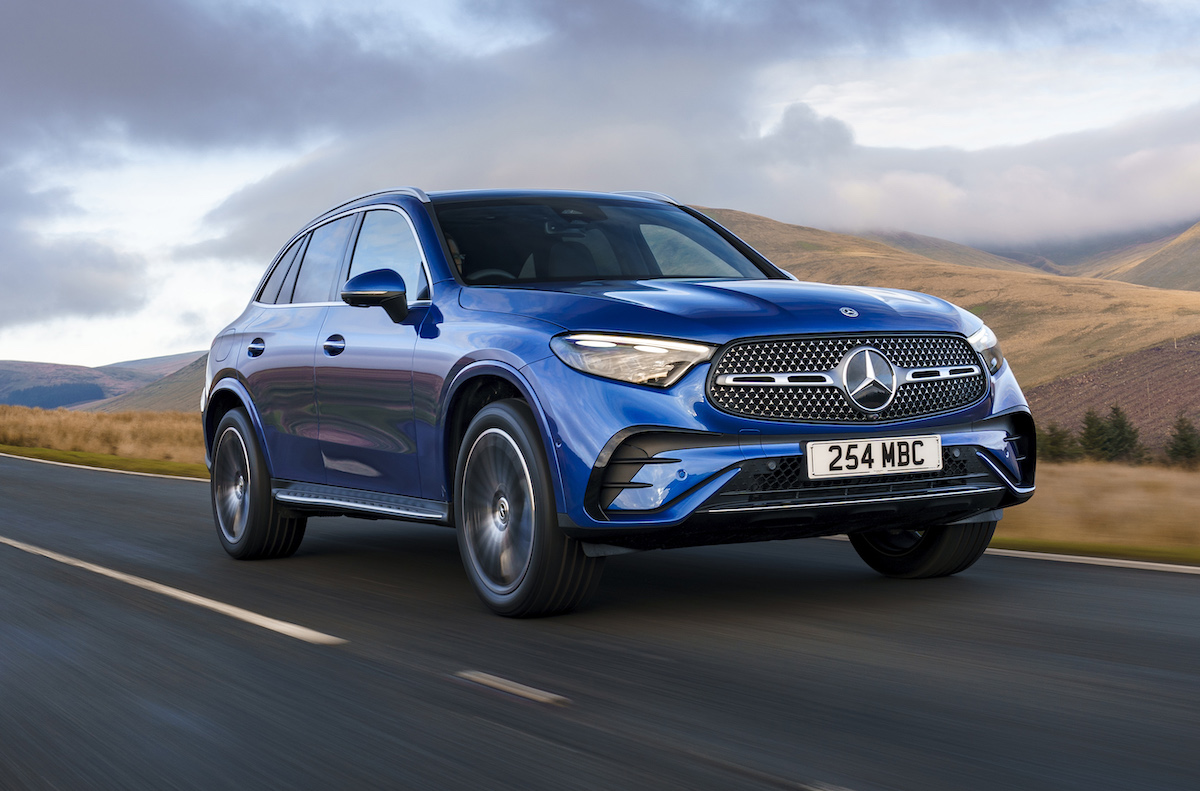
The Mercedes-Benz GLC is a consummate family SUV. It’s refined, comfortable, classy and spacious, with impressively long-range plug-in hybrid technology and one of the slickest infotainment systems in the class. For company car drivers in particular, the GLC PHEVs make enormous sense, combining strong performance with very low tax liabilities and useful electric range.
For private buyers, the picture is more nuanced. The GLC remains highly desirable, but its list prices are on the high side and key features can quickly push you towards more expensive trim levels. That said, the quality, comfort and badge appeal here are hard to ignore. If you can secure a competitive finance deal or find a nearly-new example at the right price, the GLC is one of the most rounded premium SUVs available. Just be aware that rivals can offer similar space and performance for less money.

What is the Mercedes-Benz GLC?
The Mercedes-Benz GLC is a five-seat, mid-sized family SUV that sits between the smaller Mercedes-Benz GLA and larger GLE in the German marque’s SUV line-up. Its default rivals are the Audi Q5, BMW X3 and Volvo XC60, but the Range Rover Velar also veers into this premium SUV price bracket, as do the Land Rover Defender, Lexus NX, Tesla Model Y, Genesis GV70 and Porsche Macan.
A sleeker, more style-led GLC Coupe is also available, trading a little practicality for a lower roofline and sportier styling.
This is the third generation of GLC and, while the design changes are subtle compared to earlier versions, the differences under the skin are more significant. It sits on a heavily updated version of Mercedes-Benz’s rear-wheel-drive platform, which is longer, stiffer and designed from the outset to support electrification. It’s 60mm longer overall than its predecessor, improving interior space, and every version is electrified in some way. There are 48V mild-hybrid petrol and diesel engines, alongside plug-in hybrids with either a 2.0-litre petrol or 2.0-litre diesel engine.
Those PHEVs are among the most capable in the class, with a WLTP-tested electric range of up to 78 miles thanks to a 25.3kWh battery. That makes them genuinely usable as electric cars for many daily journeys. Unusually, Mercedes continues to offer a diesel plug-in hybrid in the form of the GLC 300de, making it one of the very few manufacturers combining diesel engine economy with meaningful electric range.
If you want something more performance-focused, the range-topping Mercedes-AMG GLC 63 S E Performance pairs a 2.0-litre petrol engine with an electric motor for a combined 671bhp, although its electric-only range is a modest seven miles. The GLC 43 sits just below it, using a 2.0-litre turbocharged mild-hybrid engine to deliver 416bhp. It still offers strong pace, albeit without the headline-grabbing numbers of the AMG 63.
As for an electric version, there isn’t one in the current line-up – but Mercedes-Benz has already revealed the new GLC with EQ Technology. This shares its name with the regular GLC, although it isn’t related to it.

How practical is it?
The Mercedes-Benz GLC is a really spacious and seriously classy SUV. The perceived quality and general ambience you will experience in the front is one of its biggest selling points, with a lovely combination of tactile materials and contrasting finishes. Even with the high standards set by Audi, BMW, Volvo and Lexus, the GLC is right up there for interior design and material finish.
It's spacious, too, with plenty of cubbies and a driver’s seat that offers generous electric adjustment and four-way lumbar support as standard. People of almost any shape or size should be able to get comfortable behind the wheel, and the fairly high-set, classic SUV driving position and good all-round visibility will suit most buyers.
There’s also masses of headroom and legroom in the back seats, so two tall adults will be fine – although the centre seat is narrower and firmer than the outer pair. If you regularly carry three in the back, you may be better off with something like the Mercedes-Benz GLB or Land Rover Discovery Sport, or even a used example of a full-size seven-seat SUV such as the Volvo XC90.
Boot space in mild-hybrid GLC SUV models is good, with a capacity of 620 litres, which makes it one of the most spacious cars in this class. The plug-in hybrids lose a significant chunk of that space because of their larger battery and associated hardware, dropping to 470 litres and doing away with useful underfloor storage.
The GLC Coupe is inevitably less practical. In mild-hybrid form it offers up to 545 litres of luggage capacity, but that falls to 390 litres in the plug-in hybrids, making it noticeably less accommodating than the regular SUV. Rear headroom is also tighter in the GLC Coupe, so tall passengers might find it a bit of a squeeze.

What’s it like to drive?
The plug-in hybrid GLCs are arguably the most appealing of the mainstream powertrains on paper. The Mercedes-Benz GLC 300e petrol plug-in hybrid combines a 2.0-litre turbocharged four-cylinder petrol engine with a 134bhp electric motor for a total system output of 313bhp.
The diesel GLC 300de PHEV uses the same electric motor and battery, paired to a 2.0-litre turbocharged diesel engine for a combined 333bhp. Both plug-in models hit 62mph in comfortably less than seven seconds, so neither feels short of performance.
Non-plug-in options include the GLC 220d and 300d diesels, both using a 2.0-litre turbocharged mild-hybrid engine with 197bhp or 269bhp respectively. The mild-hybrid petrol GLC 300 serves up 258bhp. All versions use a nine-speed automatic transmission combined with 4Matic four-wheel drive.
The first GLC we sampled was the 300e petrol plug-in hybrid, and it really is lovely to drive, especially in electric mode. Naturally, you get all the drive modes you want, including an automatic mode that shuffles between petrol or electric as the car sees fit depending on how it’s being driven (it’ll also take your nav route into account if you have one programmed in). You can also choose to manually select electric driving, or save your battery charge for later in the journey: a good plan if you want the best efficiency and to preserve your battery power for slower roads, where it’s most efficient (also running the petrol engine on the motorway, where it’s most economical).
With the petrol engine off, refinement is brilliant and there’s a pleasant, uninterrupted stream of power that is easy to modulate. More than that, you can very happily get up to motorway speeds without waking the engine, then you’ve got that class-leading electric range to get you as far as possible on battery power. When it does get involved, the engine helps to deliver fun, hearty acceleration, settling to a quiet thrum when you want it to. However, it can be a bit noisy when you accelerate, and throttle response as the car flicks from pure electric to hybrid power is a bit inconsistent. The same can be said of the brake response, which can make it a bit tricky to stop smoothly.
The biggest downside with the plug-in hybrid GLCs is their weight. At around 2.3 tonnes, they’re noticeably heavier than the mild-hybrid cars, which sit closer to two tonnes. You feel that mass in tighter bends, where there’s a fair amount of body-lean if you change direction quickly. The steering is accurate and builds weight naturally, so it’s still enjoyable enough on a decent road, but the BMW X3 in particular feels sharper and more agile if driving enjoyment is your priority.
Ride comfort is decent rather than outstanding. At low speeds it can feel a touch firm over broken surfaces, although it settles down nicely at motorway pace. The plug-in hybrids get self-levelling rear air suspension as standard, but full Airmatic air suspension is optional on other versions, rather than being completely unavailable.
We’ve also driven the entry-level diesel, which feels broadly similar from behind the wheel. Its engine is smooth and quiet under normal driving, with plenty of low- and mid-range torque, although the nine-speed automatic can occasionally hesitate if you demand a sudden burst of acceleration.
We haven't tried the high-performance variants. The GLC 43 uses a 2.0-litre mild-hybrid set-up producing 415bhp, while the GLC 63 S E Performance pairs a turbocharged four-cylinder engine with an electric motor for a combined 671bhp. On paper at least, the latter’s performance figures are suitably dramatic for something wearing a 63 badge.

Technology, equipment and infotainment
The Mercedes-Benz GLC range now includes the Urban Edition, a well-equipped model that bundles in a generous amount of standard kit. It isn’t necessarily the cheapest GLC, but it does offer strong value thanks to features such as 20-inch alloy wheels, an electric tailgate, LED headlights, AMG Line exterior styling, ambient interior lighting, dual-zone climate control, a 12.3-inch digital instrument cluster, an 11.9-inch infotainment system, heated sports seats, wireless phone charging and a suite of driver assistance systems. Engine choices are limited to the 300e petrol and 300de diesel.
AMG Line spec adds a wider choice of engines and broadly the same specification, but with 19-inch alloy wheels, sports suspension, an enhanced ambient lighting package, memory function for the front seats, more USB ports and AMG Night package exterior styling.
Most will choose to step up to the AMG Line Premium, which gets 20-inch alloy wheels, a panoramic sliding sunroof, heat- and noise-insulating acoustic glass, keyless entry and start, a heated steering wheel, park assist, a 360-degree camera and augmented reality tech for the head-up display. AMG Line Premium Plus adds the likes of ventilated front seats and a Burmester surround-sound audio system.
All trim levels get old-fashioned cruise control, a speed limiter, lane-departure warning and good crash safety as standard, but you have to add the optional Driving Assistance Package Plus package for adaptive cruise control and a semi-autonomous driving mode. All the more frustrating, as it’s only available on higher trims and selected Mercedes-AMG models.
Every Mercedes-Benz GLC SUV comes complete with an 11.9-inch touchscreen infotainment system, and while the ‘MBUX’ interface needs familiarisation to learn where some of the functions and menus are, it doesn’t take long to get to grips with it. We’d say that BMW’s rotary controller is easier to use while driving, but the graphics, screen response and voice control are all very good in the Mercedes.
Wireless Apple CarPlay and Android Auto connectivity is standard, as is an in-built navigation system and online function for music streaming.
Mercedes-Benz GLC running costs
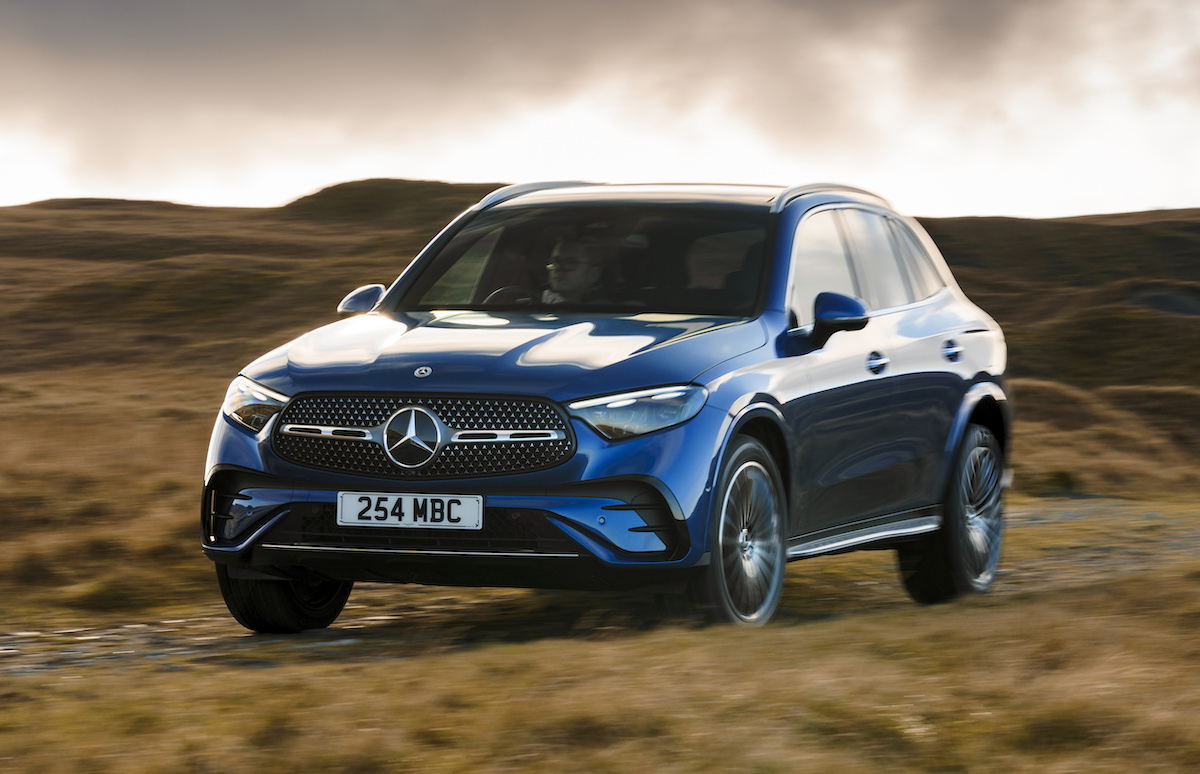
The Mercedes-Benz GLC isn’t cheap, even by the standards of its key rivals, the Audi Q5 and BMW X3, both of which undercut it depending on specification. The gap widens further when you look at plug-in hybrid versions. Mercedes does justify some of that extra cost with strong standard equipment and a very upmarket interior, but the GLC remains one of the pricier options. And that applies whether you’re buying outright, financing through PCP or leasing.
The GLC has historically held its value well on the used market, so that helps offset a higher list price. Even so, it remains an expensive car to run in absolute terms compared with some rivals.
The plug-in hybrids make a persuasive case as company cars. Benefit-in-Kind tax rates are based on exhaust emissions and official electric range, and because the GLC PHEVs offer one of the longest electric-only ranges in this segment, they fall into lower tax brackets than many competing plug-in SUVs. That could make a meaningful difference to your monthly income, particularly if you can also maximise electric driving.
Fuel economy is competitive across the range. The diesel engines return official figures in the region of 50mpg, although in everyday driving you’re more likely to see somewhere in the 40-45mpg region. The petrol GLC 300 4Matic manages close to 40mpg officially. The PHEVs quote extremely high combined figures that don’t reflect real-world use, so it’s better to consider how much of your driving can be done on electric power. Charging at home on a standard tariff could cost around 13-15p per mile, or significantly less on a cheap overnight rate. That compares with roughly 17-25p per mile for the mild-hybrid petrol and diesel versions.
Insurance groups typically fall between 40 and 50 across the range, which is broadly in line with rivals in the premium mid-size SUV class.

Mercedes-Benz GLC reliability
Considering its premium positioning and pricing, Mercedes-Benz doesn’t have the strongest reputation for reliability. In the 2025 What Car? Reliability Survey, the brand finished a disappointing 22nd out of 30 manufacturers, behind several mainstream rivals. There is slightly better news for the GLC itself, which placed 27th out 76 models in the family SUV category for cars up to five years old – a result that covered both the previous-generation GLC and the current model.
Mercedes-Benz provides a three-year, unlimited-mileage warranty and roadside assistance as standard, with the option to extend cover for additional cost. The high-voltage battery in the plug-in hybrid models is covered for six years or 62,000 miles, which is shorter than the battery warranties offered by some rival PHEVs.
Overall, Mercedes-Benz’s warranty provision is broadly competitive, but some competitors are more generous. Genesis offers a five-year warranty with free servicing, for example, while Lexus provides cover for up to 10 years if the car is serviced within its dealer network.
- The Mercedes-Benz GLC is a strong choice if you tow regularly. Most versions can haul up to 2,500kg, including the GLC 300de diesel plug-in hybrid, making it one of the most capable electrified SUVs in this class for owners with a caravan or horsebox. The petrol-electric GLC 300e PHEV is rated at up to 2,000kg. That combination of serious towing ability and a long electric-only range makes the GLC unusually versatile for buyers who want lower running costs day-to-day, but still need proper pulling power.
- The plug-in hybrid variants of the Mercedes-Benz GLC can be charged at any Type 2 AC charging point, which includes virtually all home wallboxes and public AC chargers. A Type 2 cable is supplied as standard, though a three-pin domestic charging cable costs extra. On a 7kW home wallbox, a full charge takes around six hours, while the GLC can accept up to 11kW AC charging, reducing that time to roughly four hours with a suitable charger. Charging from a standard household socket will take considerably longer – typically 15 hours or more.
- Real-world range from the GLC PHEVs is impressive for cars of this size. We covered a variety of faster dual-carriageways and country roads, plus some town driving, and managed an indicated 70 miles of pure electric range despite the cold weather. Expect that figure to be more like 50-60 miles on a steady motorway journey in very wintery weather, but summer conditions and slower speeds could well see you get close to the claimed 78-mile range.
- If you want the best value: The Mercedes-Benz GLC 220d 4Matic in AMG Line trim remains one of the most sensible ways into the range. Urban Edition models are also worth a look if the bundled specification suits you, but the 220d AMG Line keeps purchase costs relatively contained. If you can stretch to AMG Line Premium spec, you’ll gain usefully more equipment and stronger resale appeal, but the standard AMG Line covers the essentials – provided you can live without keyless entry and a 360-degree parking camera.
- If you want the best company car: Go for the Mercedes-Benz GLC 300e. Its low CO2 output and very long electric range translate into significantly lower Benefit-in-Kind tax for company drivers, while businesses can benefit from favourable capital allowances on long-range plug-in hybrids and EVs. If you rarely do long journeys, it’s also worth considering a pure-electric alternative such as the Tesla Model Y, BMW iX3, Mercedes-Benz EQE SUV or the new GLC EQ Technology, as full EVs offer even stronger tax advantages.
- If you want the best high-mileage commuter: The Mercedes-Benz GLC 220d AMG Line Premium Plus makes for a great long-distance companion. It offers decent economy, a comparatively sensible purchase price for the class and excellent interior comfort. Adding the optional Driving Assistance Package Plus brings adaptive cruise control and traffic jam assist, which will take the strain out of motorway journeys.
- If you want the best family car: If most of your journeys are short and you can charge regularly, the plug-in hybrid GLCs make a lot of sense. The quietness, low running costs and ability to run emissions-free in built-up areas are all especially appealing in a family SUV. If the jump to a PHEV feels too steep, the GLC 220d remains a very capable all-rounder, particularly in AMG Line Premium trim (which adds useful comfort features without pushing the price too far into flagship territory).