Mercedes-Benz Vito review (2015-present) | Classy and premium-feeling mid-size van
Mercedes-Benz Vito cars for sale
4.0
Expert review
Pros
Wide choice of body lengths and drivetrains
Premium image
Comfortable and relaxing to drive
Cons
All-electric version is expensive
Lacks a high-roof variant
The Ford Transit Custom has a greater load area and payload

The CarGurus verdict
The Mercedes-Benz Vito is a flexible, customisable van that drives well and is comfortable by medium van standards. Its appeal is increased further by its upmarket appearance and strong equipment levels, particularly in higher grades, while the eVito makes sense for operators who want a zero-emissions urban delivery solution. That said, the electric version is expensive, so the diesel option will still suit many businesses better.
Otherwise, aside from some ergonomic and capacity gripes, the most obvious issue with the Vito is the lack of a high-roof variant. This might prove restrictive for some buyers, who may need to look at alternatives such as the Ford Transit Custom. If that’s not a problem, and you want a mid-sized van with some premium appeal that’s easy and pleasant to drive, then the Mercedes-Benz Vito is a worthwhile option.
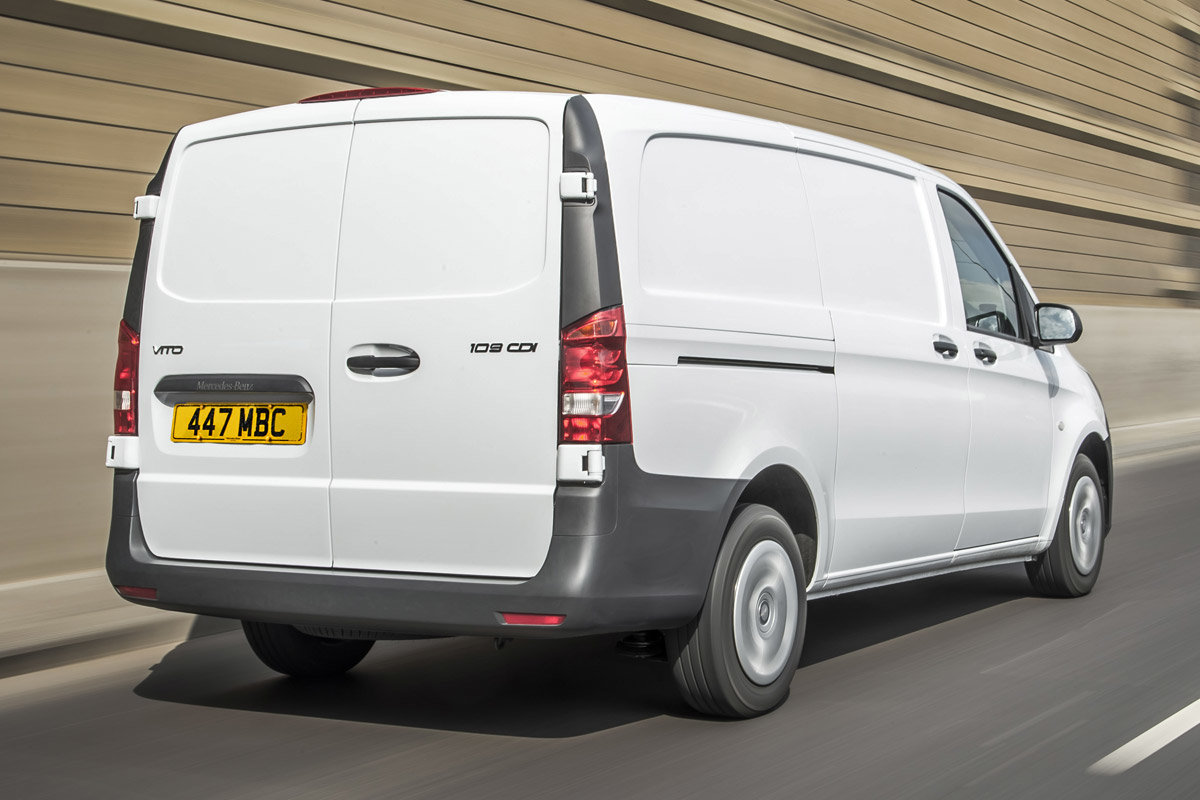
What is the Mercedes-Benz Vito?
If you want a medium-sized van then you’re in luck, because there are plenty of capable options to choose from. The Ford Transit Custom is the obvious one, while the Volkswagen Transporter, Renault Trafic, Peugeot Expert and Vauxhall Vivaro are all familiar names in builders' merchants across the UK.
Buyers wanting something with a bit more cachet and premium appeal, however, may well be considering the Mercedes-Benz Vito. It sits between the smaller Citan and larger Sprinter in the Mercedes-Benz van range, giving businesses a more manageable alternative to a full-size van without dropping down to something too small for serious work.
The Vito range is flexible, too. Current versions include the three-seat panel van, six-seat crew van and passenger-carrying Tourer, while the eVito offers an electric option for businesses ready to make the switch. That breadth means the Vito can work as anything from a delivery van to a shuttle, mobile workshop or crew carrier, which is what many operators need from a van of this size.

How practical is it?
The Mercedes-Benz Vito has been around for a while now, but this third-generation model was unveiled in 2014 and subsequently offered to UK buyers in 2015. The range initially consisted of the practical panel van, the crew van and the people-carrying Tourer, with options often including three wheelbase/body lengths and three weight variants. That made for quite a variation in terms of load length and load space, all key factors in a van’s level of practicality.
Customers could also pick from a choice of two turbodiesel engines in five power outputs, and from front-wheel drive or rear-wheel drive in some models. Later versions moved to rear-wheel drive only.
The standard 1.6-litre diesel Vito, in 2.8-tonne gross vehicle weight (GVW) configuration and with front-wheel drive, could carry a payload of 955kg. The rear-wheel-drive, 2.1-litre diesel Vito, however, offered a maximum payload of 1,255kg in 3.2-tonne GVW configuration.
Following the 2024 facelift, the range was slimmed down. Current panel van and crew van models have a three-tonne GVW, two body lengths and two trim levels: Pro and Select. The panel van has three seats, while the crew van adds a second row to carry up to six people.
One of the major criticisms some have of the Vito is that, while rivals offer a variety of body heights, the Vito offers only one. Load capacity isn’t as vast as in some rival vans, and payload figures trail behind the best, too. Still, in the area of practicality, the Vito remains competitive, if not class-leading.

What's it like to drive?
In early Vitos, customers could pick from a choice of two turbodiesel engines – a 1.6 and a 2.1 – in five power outputs, and also from front-wheel drive or rear-wheel drive in some models (later models were rear-drive only). The entry-level vans could struggle a bit, especially when loaded up to the nines, but the more powerful versions made for rather easier progress.
Later on, these were ditched in favour of new 2.0-litre units, offered in three outputs of 134bhp, 161bhp and 187bhp. The first one comes with a six-speed manual gearbox, while the others get a nine-speed automatic. Of these, we've only tried the most powerful one, and it does a good job, feeling brawny and eager from low down in the rev range and remaining settled and unstrained at higher speeds.
The automatic transmission shifts gears smoothly, too, but it could be a little more responsive in the way it does so. Push the accelerator for more pace and the gearbox is hesitant to kick down a gear, so you push the pedal a little further to provoke the gearchange. And so, when the gearbox finally does respond, the engine is made to work harder than it needs to.
Otherwise, the Vito is calm and competent on the road. Its ride is a little firmer than some will expect, but never to the point of being uncomfortable, and it's generally a van that feels stable and assured at all times. The steering is light enough to make low-speed manoeuvres a doddle, and it's even pretty quick, so your arms don't have to work too hard in the process.
Technology, equipment & infotainment
On early versions of the Vito, equipment included standard-fit features such as cruise control and Bluetooth connectivity, while every model came with a range of safety equipment including hill-start assist, crosswind assist, tyre pressure monitoring, ESP stability control and daytime running lights. However, only two front airbags were standard on all models; side and curtain airbags were optional.
Mercedes-Benz subsequently introduced a better-equipped Vito Sport model, as well as a Vito Taxi variant, and in January 2019 the trim lines were overhauled to improve the array of standard kit. Entry-level Pure models, for example, benefited from parking sensors, parking assistance and heated electric exterior mirrors, which made them better value and more appealing. Sport models, meanwhile, gained built-in sat-nav and alloy wheels.
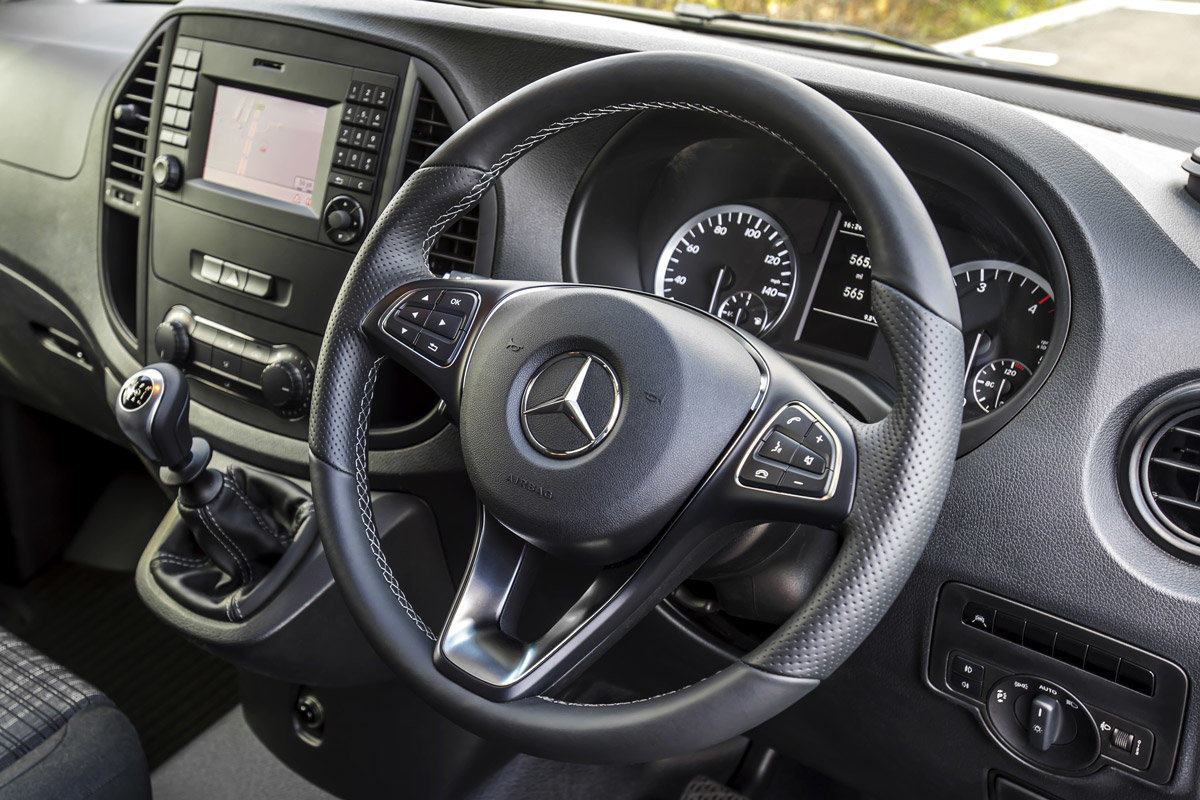
As with most vans, various facelifts and updates are applied periodically to keep things competitive over a typically long shelf-life, and a major one took place in 2024. One of the biggest changes was the new infotainment system, a version of the MBUX setup found in Mercedes-Benz’s passenger cars. It operates through a 10.25-inch central touchscreen, and supports functions like Bluetooth, DAB radio and Apple CarPlay/Android Auto phone connectivity. If you want native sat-nav, though, it’s an optional extra across the board, as is wireless phone charging.
The system is pretty easy to find your way around, although some of the more peripheral functions can be a little difficult to locate within the menu structure, and the voice control system isn’t as good as in other applications of MBUX.
The facelift also saw the existing trim levels replaced with two new ones: Pro and Select. The precise level of kit you get with each varies depending on whether you’re talking about the panel van or the crew van.
On the panel van, the Pro gets air conditioning, cruise control, a multifunction steering wheel, and a reversing camera. Select versions look a little sharper from the outside with alloy wheels, body-coloured bumpers, metallic paint and some additional chrome trim, while you also get electric-folding door mirrors, and LED headlights with automatic high beam. The interior also gets a leather steering wheel and interior ambient lighting.
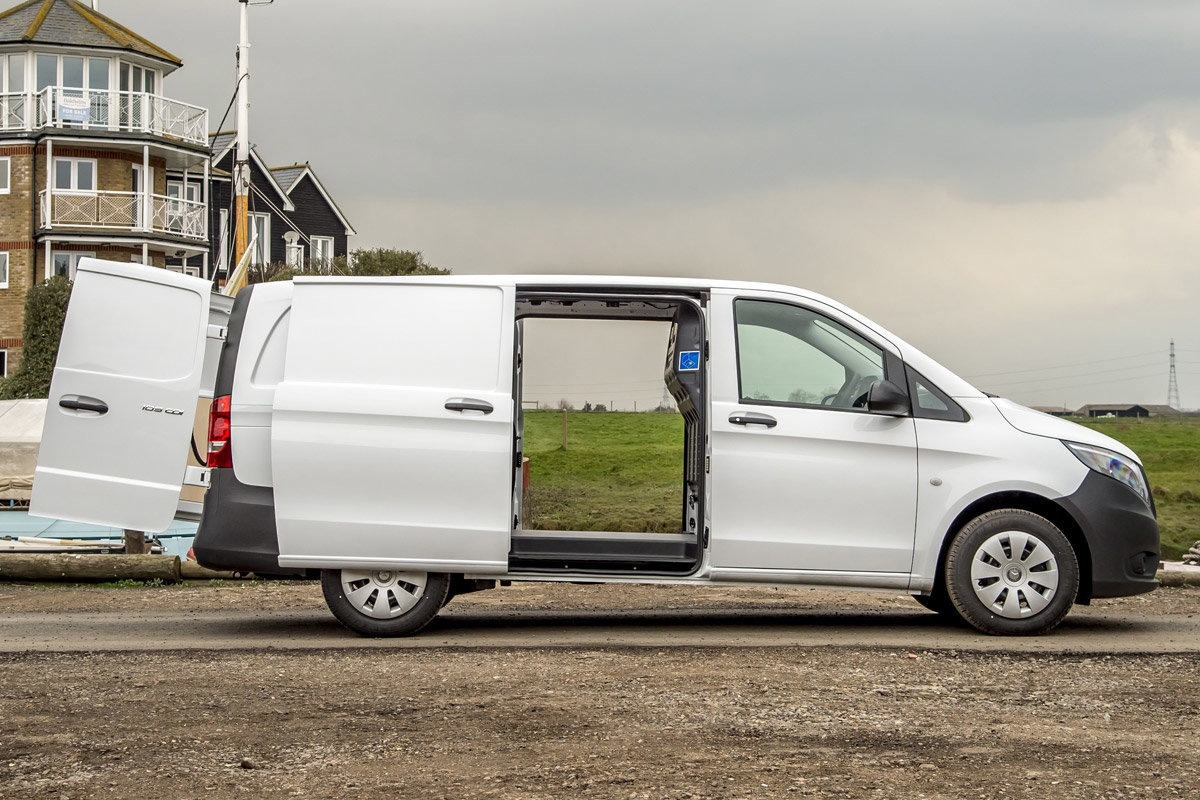
Crew van models are broadly similar, except Pro models already get alloy wheels and body-coloured bumpers and a smarter cabin finish. They also get a tailgate at the rear instead of twin rear doors, while twin sliding doors are standard on all current Vitos.
Mercedes-Benz Vito running costs
The Mercedes-Benz Vito is a premium van, but that doesn’t necessarily mean it commands a premium when it comes to servicing. The on-board ASSYST system will indicate when a service is required, and a Vito’s service intervals can stretch up to 25,000 miles or two years, depending on use.
Mercedes-Benz servicing is also relatively transparent, which should help you get a quick and accurate picture of what to expect in terms of running costs. Customers can check common servicing prices online, so it’s easier to estimate what you might have to pay over time.
Mercedes-Benz also offers a range of servicing options, including pay-as-you-go servicing and maintenance plans that allow operators to spread the cost. Fleet users can also look at more business-focused servicing arrangements, which may help keep operating costs predictable.
Getting your Vito serviced by Mercedes-Benz from new is a good idea, because it can help maintain access to MobiloVan roadside assistance. It should also help protect the van’s residual value, which matters because the Vito isn’t the cheapest medium van to buy in the first place.
Fuel economy is competitive rather than class-leading, but the Vito’s strong image and good resale values should help keep whole-life costs under control. The eVito can reduce day-to-day running costs further if your business has reliable charging access and predictable routes, although it won’t suit every operator.
Mercedes-Benz Vito reliability
A new Mercedes-Benz Vito comes with a three-year, unlimited-mileage warranty. A Ford Transit Custom, for comparison, comes with a three-year warranty that’s only valid up to 100,000 miles, while the Volkswagen Transporter also gets a three-year, 100,000-mile warranty.
Mercedes-Benz also includes MobiloVan cover with new vans. If your van is serviced by Mercedes-Benz according to the correct intervals, this can be renewed at each service for up to 30 years from first registration. The assistance package covers a wide range of situations, including breakdowns and driver mishaps, and could prove useful for operators looking to minimise downtime and hassle.
The Vito has a solid reputation, and Mercedes-Benz commercial vehicles tend to perform well for durability, but used buyers should still take the usual precautions. Look for a full service history, evidence of regular maintenance, clean oil, healthy brakes and suspension, and signs that the van hasn’t been overloaded or abused. On crew vans and Tourer models, check the seats, sliding doors and interior trim carefully, because passenger-carrying vans can have hard lives, too.
The process is simpler if you go for a Mercedes-Benz Approved Used Van, which should be no older than six years, have fewer than 150,000 miles on the clock, come with a comprehensive multi-point check, and be eligible for a 12-24 month warranty option. That won’t make a used Vito immune from problems, but it should provide some peace of mind.
- The Vito was launched in 2015 and was initially offered in three lengths, three weights, a range of trims, a variety of payload ratings and load volumes, and with a choice of two diesel engines in a selection of power outputs. Both front-wheel-drive and rear-wheel-drive Vitos were offered, but these days, the Vito is rear-wheel drive only.
- Customers can currently choose between panel van, crew van and Tourer versions. The panel van has three seats up front, while the crew van has six, with an additional row behind the front seats. The current panel van and crew van ranges are offered in two lengths and two trim levels: Pro and Select. The Vito Tourer is the passenger-carrying version; if you picture a V-Class MPV, but quite a bit less posh, then you’re about right.
- Panel van versions of the Vito get a pair of side-hinged rear doors that can open up to 180 degrees for better access to the load space. Crew van versions, meanwhile, get a massive top-hinged tailgate instead, which could prove more awkward to get open if your work is taking place in a tight space. All current Vitos get a pair of sliding side doors, but on crew van variants, these are more for access to the rear seats than for access to the load bay.
- The cheapest used option: You’ll want a Vito 110 CDI Progressive L1 if keeping costs to a minimum is key. Its diesel engine produces 101bhp and 270Nm of torque, and Mercedes-Benz claims average fuel economy of 37.7mpg on the WLTP test cycle. Standard equipment includes cruise control, heated mirrors, a reversing camera, double locks and the Mercedes Attention Assist system.
- The cheapest new option: You'll want a 114 L2 in Pro trim. This has a 134bhp version of Mercedes-Benz’s 2.0-litre diesel engine and comes with a six-speed manual gearbox, although the 9G-Tronic Plus automatic is available as an option. Standard equipment is generous enough to be getting on with, and crucially, air conditioning is provided as standard.
- For zero-emissions haulage: Customers have been able to opt for an all-electric version of the Vito, called the eVito, since early 2020. Early versions had a claimed range of up to 93 miles, while later versions improved on that considerably. The current eVito panel van has a 60kWh battery and an official range of up to 160 miles. It can also charge from 10-80 percent in 35 minutes using a suitable DC rapid charger, making it far more useful for urban delivery work than the earliest examples.