Mitsubishi L200 Review (2020-2021)

Pros and cons
What we like
Range-topping models have lots of standard kit
The diesel engine is fuel-efficient
Easier to drive around town than bigger pickups
What to consider
Some rivals offer more power and performance
A SsangYong Musso is better value
The Ford Ranger has a bigger load bed
The CarGurus verdict
The Mitsubishi L200 Series 6 is a capable pickup, but it doesn't break new ground in the way the Series 5 did. It's more of a comprehensive update on the old model rather than an all-new vehicle. There's just the one engine variant, which won't be a problem for most pickup buyers. The 148bhp diesel is strong enough to cope with heavy loads. The trouble is, rivals like the Ford Ranger and Toyota Hilux have engines that do better than cope, and feel more at home when fully loaded or while towing a heavy trailer. The L200's payload figures and load bed dimensions are there or thereabouts compared with the competition, but it's not outstanding in either area.
On the other hand, being slightly smaller than some rivals has its benefits. The L200 is easier to guide through busy urban streets than larger pickup trucks like the Volkswagen Amarok, and the tight turning circle makes the L200 more wieldy than most double-cab pickups. Keen pricing and a long list of standard equipment also help the L200 remain in contention with the best modern pickups.
out of 5 expert review
Go back a few years, and your average pickup truck was pretty rough and ready. Tough but unsophisticated suspension made for a bouncy ride unless the load space was heavily loaded, engines were noisy and thirsty, and safety standards were very basic.
The L200 Series 5 was one of the first pickup trucks to change that template, with economical engines and a much more pleasant driving experience. The Series 6, which launched in 2019, took all the Series 5's qualities and smoothed over a few more rough edges.
The first thing you notice about the latest L200 is the styling. The Series 6 is one of the most striking pickups on the road, with a front end that looks like Judge Dredd's helmet. Behind the lantern-jawed face you'll find most L200 models are double-cabs, with four doors and room for five in two rows of seats. Some of the more affordable models are club-cabs, with two doors and a cramped second row intended for occasional use. There's no single cab (one row of seats) version offered like there is with some rivals.
Not long after the latest L200 was launched, Mitsubishi announced plans to pull out of the UK market, so you can no longer buy a brand new example. However, the company still offers the same servicing facilities, warranty support and aftersales care, making the L200 a canny used buy.
Practicality
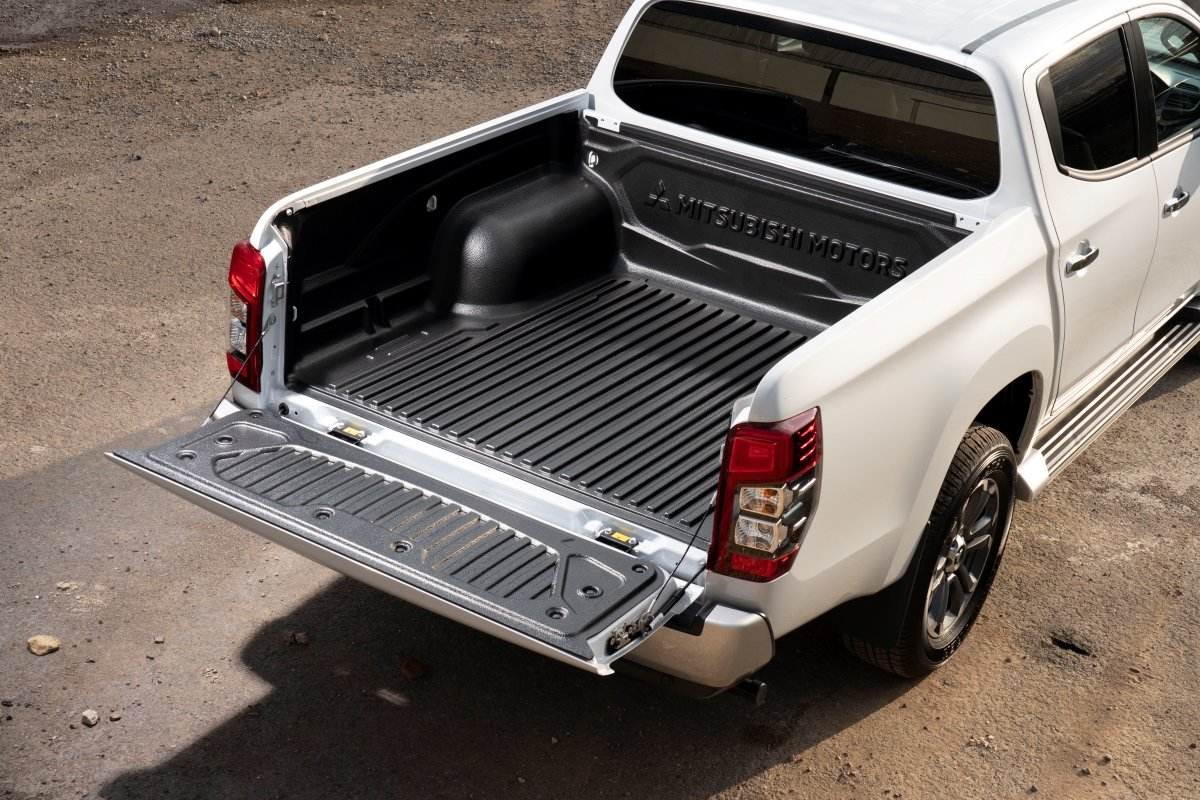
With the sixth-generation L200, Mitsubishi focused on making its pickup cleaner, greener and more comfortable to drive, but that didn’t come at the expense of practicality. In fact, the Series 6 has a higher payload than its predecessor, with a maximum of up to 1080kg. That compares with the Ford Ranger's 1140kg maximum, and a limit of up to 1135kg for the Nissan Navara. So while the L200 is competitive, it's not class-leading.
The same is true of the L200's loadbay dimensions. The Ranger and Navara both have taller, longer and wider load spaces. In particular, the Ranger has a lot more room in the back for supplies.
Should you need to tow a trailer, the L200's towing capacity is 3.5 tonnes, which matches most rivals'. However, it's worth keeping in mind that this only applies if the trailer has three axles, otherwise the limit drops to 3.1 tonnes. All versions also come with trailer stability assist to help prevent whatever you're pulling from swaying about.
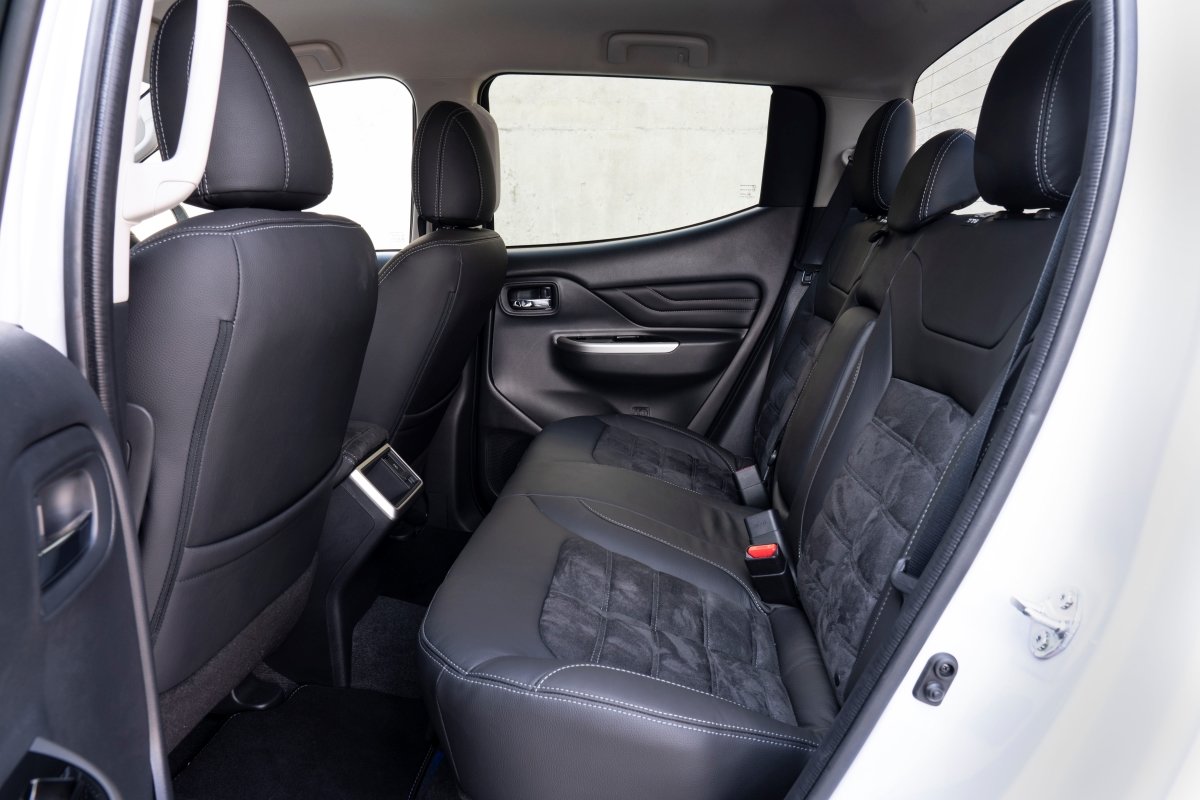
As for passengers, there’s bags of space in the front, although the back of the double cab is tighter than some alternatives. You do get plenty of storage space, though, including map pockets on the backs of the front seats, generous door bins and cupholders in the rear arm rest. Grab handles for front and rear occupants and side-steps make it easier to get in and out.
Driving
From the driver's seat, the L200 is good rather than great. The engine is noisy and gruff, there's lots of road noise and the heavy-duty suspension is a little uncomfortable unless there's a heavy load in the back to calm things down. What's more, the L200 can be upset by mid-corner bumps. It's much better than pickups from a decade ago, but anyone expecting the Series 6 to be car-like to drive will be disappointed.
On the plus side, the L200 has a small turning circle for a pickup and it's narrower than most rivals. These two qualities combine to make the L200 less intimidating to drive than the giants of the pickup class, like the Volkswagen Amarok.
Every L200 Series 6 uses the same turbodiesel engine, a 2268cc diesel with AdBlue to reduce harmful emissions. It has 148bhp and 295lb ft of torque, enough to cope, even with a load of one tonne or more in the loadbed.
However, some rivals offer more power. The Ford Ranger's 2.0-litre turbodiesel has 210bhp and 369lb ft of torque, significantly more muscle than the L200. Top-spec versions of the latest Toyota Hilux have 201bhp.
L200 buyers have the choice of a six-speed manual or a six-speed automatic gearbox. The previous generation L200 was available with a five-speed auto, and the extra cog helps minimise emissions and improve economy while keeping noise down while cruising on the motorway. All L200s have a stop-start system to turn the engine off while stationary and save a bit more fuel.
It may not be the best pickup to drive, but the L200 is good value. Although not as cheap as a SsangYong Musso, it's keenly priced compared with the Ford Ranger or Nissan Navara.

Tech and equipment
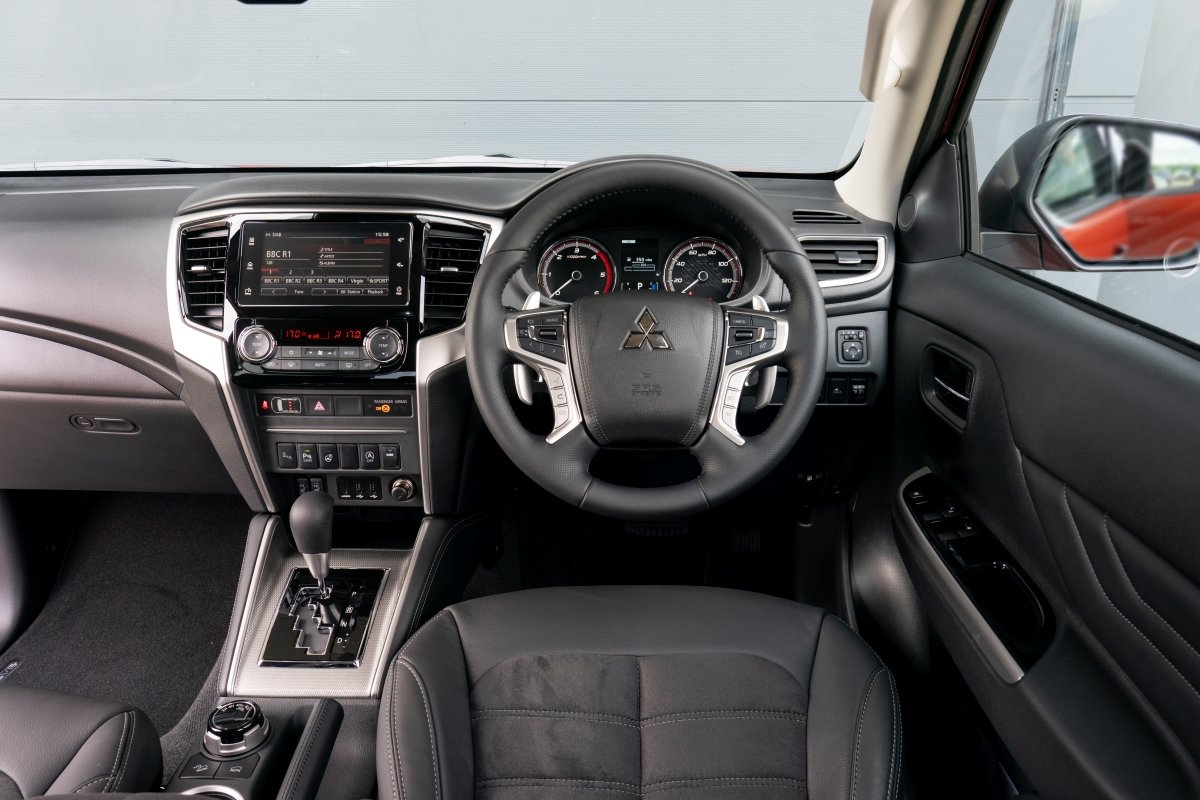
There were no less than six different trim specs available for the L200 Series Six. These began with the 4Life, which came in Club Cab and Double Cab specs, offering Bluetooth and USB connectivity, manual air-conditioning and front electric windows. We’d suggest aiming for at least the third-tier Trojan model, which adds DAB radio, climate control and the uprated Super Select four-wheel drive system.
Android Auto and Apple CarPlay support come in from Warrior level upwards, along with a rear parking camera, dual zone climate control and nicer interior trim. Barbarian adds heated leather front seats along with a suite of off-road features, while Barbarian X is the top-spec model with upgraded interior trim, a Safety Pack comprising various driver assistance systems, and automatic transmission as standard.
Running costs
There's just the one engine, so fuel bills will depend largely on your choice of gearbox. The six-speed manual offers better mpg figures, achieving 32.1mpg on the combined cycle. The six-speed auto returns 29.1mpg, so the difference is quite large.
How does that compare with the L200's rivals? Well, the Toyota Hilux with a 148bhp 2.4-litre diesel and a manual gearbox achieves 27.9-30mpg with a manual gearbox, so the L200 should be slightly cheaper to fuel.
Just be careful when comparing fuel figures. The L200 Series 6 was tested to the more realistic WLTP standard, whereas some rivals of a similar era still quoted the older and less representative NEDC figures.
The 4Life is in insurance group 42, whether you opt for a club cab or double cab body style. Choose the Warrior, Trojan, Barbarian or Barbarian X double cab, and that drops to group 37. The Barbarian Plus is in group 38. That's broadly similar to the Ford Ranger, which has insurance ratings from group 37 to 39.
The L200 Series 6 needs servicing every 12,500 miles or once a year, whichever comes first. That means Mitsubishi owners will need to shell out for servicing more often than Nissan Navara drivers, who can wait 18,000 miles or two years between visits to the dealer. On the plus side, the L200's AdBlue tank is a whopping 21 litres, which Mitsubishi says should be enough for 12,000 miles between fill-ups.
Mitsubishi offered a fixed-price service plan on new L200s. These can no longer be purchased, but the company will honour existing contracts on vehicles up to three years old.
The Mitsubishi L200 Series 6 is still a relatively new vehicle, but as it shares much with the earlier L200 Series 5, we have a reasonable indication of how reliable it will be.
The mechanical parts should be robust, although like any diesel vehicle with a diesel particulate filter (DPF), the 2.3-litre engine won't take kindly to a life of short, stop-start trips. The odd longer drive at higher speeds should be enough to allow the DPF to clean itself without an unscheduled trip to the dealer.
Not much changed with the interior when the Series 5 was replaced with the Series 6, so the same reservations remain about the steering wheel soon showing signs of wear, and the plastics being easy to mark.
From new, the L200 Series 6 came with a five-year/62,500-mile warranty. That's an improvement on the three-year/60,000-mile package Ford gives Ranger buyers, but it's not quite as generous as the five-year/100,000-mile warranty Toyota supplies with the Hilux. As with the optional service plans, Mitsubishi will still honour the warranty on existing cars.

What owners say
Very good pick up , very good engine 10/10
15 December 2024I loved my Mitzy L200 Barbarian. Spacious, large boot & great to drive
13 April 2026Features are ok but for that price they need to get the tailgate fixed??
19 April 2026What owners say
Very good pick up , very good engine 10/10
15 December 2024I loved my Mitzy L200 Barbarian. Spacious, large boot & great to drive
13 April 2026Features are ok but for that price they need to get the tailgate fixed??
19 April 2026Its great all-round 4x4 pickup. Lots of features, good engine which gives good performance. Reliable. Stylish looks. Good value for money and holds its value relatively well. One of the best in its sector.
11 June 2023Fantastic truck but the interior plastics are very basic
22 May 2021I’ve had one before and they’re great vehicles. Lots of fun to drive.
11 March 2021Forth L200 that Ive had. Cant go wrong with these if your change the oil and filters every 6000 miles.
22 March 2021Three things to know
- Every Mitsubishi L200 pickup has four-wheel drive, but there are two different systems used depending on which model you choose. The entry-level 4Life has the comparatively simple Easy Select 4x4 system and a rear differential lock. All other models have the Super Select 4x4 system. Drivers can change from rear-wheel drive to all-wheel drive at speeds of up to 62mph. There's also a low-range transfer case giving lower gears for greater control off road, especially when tackling steep slopes. Barbarian and Barbarian X models are the most capable away from the tarmac, thanks to off-road modes for the drivetrain and driver aids, and hill descent control.
- Mitsubishi offers several high-tech driver aids and safety systems to L200 buyers. Forward Collision Mitigation uses camera and laser systems to detect a vehicle or pedestrian up ahead, and will apply sound a warning if a collision is likely. If the driver still doesn't respond, the system will apply the brakes. It's standard on Warrior spec and above. Rear Cross Traffic Alert uses a microwave radar sensor inside the rear bumper to detect vehicles or people approaching from the rear and to the side while reversing. It sounds a warning and flashes a message on the dash if a vehicle is detected. It's fitted to the high-spec Barbarian X model. A blind-spot monitoring system is also standard on the Barbarian X.
- A 7.0-inch touchscreen display is standard on Warrior, Barbarian and Barbarian X specifications. All models have Bluetooth connectivity, steering wheel-mounted controls and a USB port. All but the most basic trim level also have an HDMI input for smartphones and tablets that use this type of connector. Wireless smartphone charging is standard on the Barbarian and Barbarian X for owners with a compatible smartphone.
Which one to buy
- If you want a pure workhorse: choose the L200 4Life Club Cab. You may lose some passenger space by choosing this bodystyle, but you gain extra load space. The length of the load bed increases from 1520mm to 1850mm. The Club Cab is the most basic model, but that's reflected in the most affordable price.
- If you want all the toys: pick the L200 Barbarian X. This model is fully loaded with leather upholstery, a 360-degree camera system, LED front foglights, a heated steering wheel, interior mood lighting, front- and rear parking sensors, powered adjustment of the driver's seat, dual-zone climate control, cruise control, a DAB radio, a 7.0-inch touchscreen infotainment system and a host of driver aids.
- If you want a well-equipped allrounder: go for the L200 Warrior. This mid-spec model is kitted out with the sophisticated Super Select 4WD system, touchscreen infotainment, 18-inch alloys, dual-zone climate control and a lot more. It may not have quite so many toys and gadgets as the Barbarian and Barbarian X, but it's significantly cheaper to buy and just as capable.
- If you want a luxurious spec and a hard top for the load bed: pick the L200 Barbarian Plus. This model comes with a GST Plus II hard top to keep whatever's in the back secure and dry. It locks centrally from the key fob, has pop-out tinted side windows for ventilation and an interior light should you need to clamber through the tailgate to rummage around in the dark.


Pricing trends
Starting RRP
£21,200
Current avg. market price
£17,607
Trending down by 3.3% this month
April 2026 - October 2026

