Nissan Juke Mk2 Review (2020-present)


Pros and cons
What we like
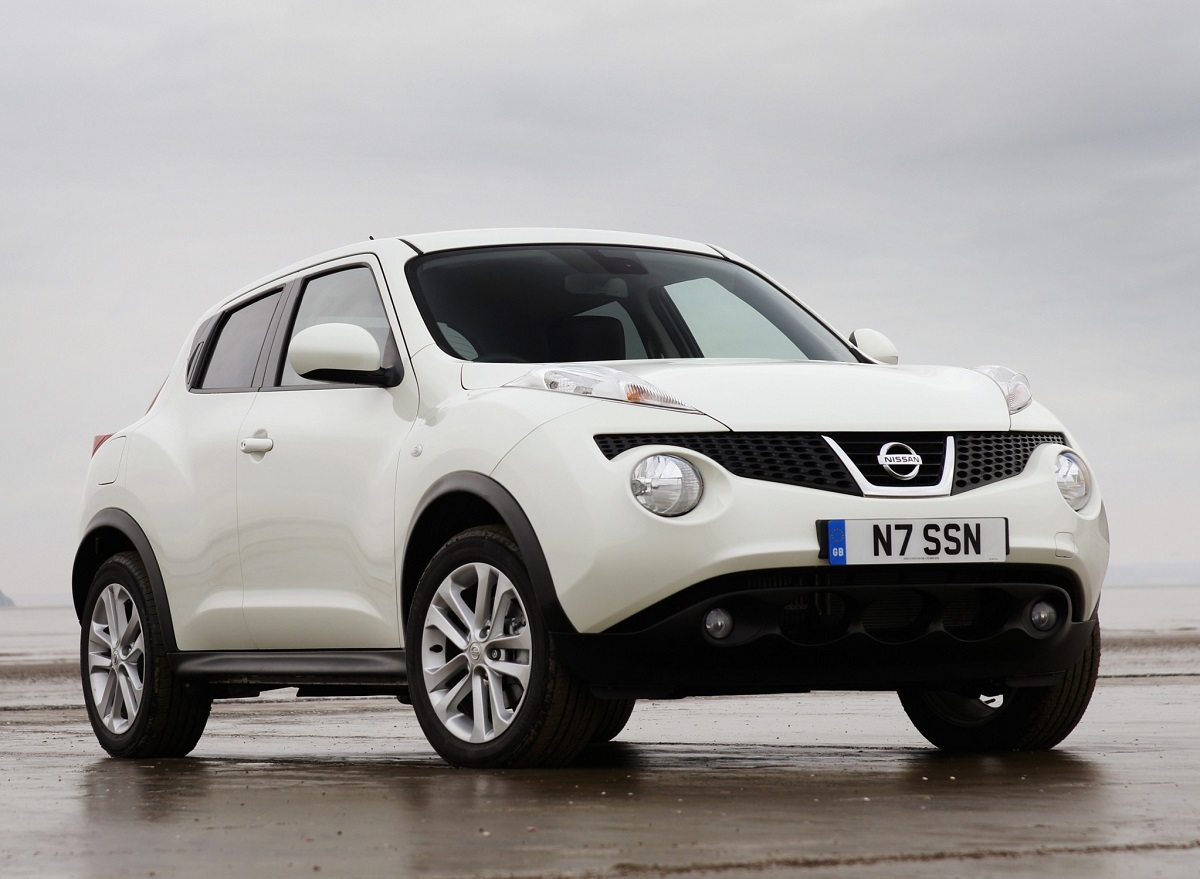
Distinctive looks
Classy-feeling interior
Competitive boot space
What to consider
Limited powertrain options
Rear headroom slightly tight
Patchy reliability record
The CarGurus verdict
Taken on its own merits the Juke is a very decent small car, but it sits in a very crowded section of the market and has plenty of impressive rivals. Few, if any of them, can match the Juke for visual punch – it’s a very noticeable car – and whether that’s a plus for you will depend on your personal preferences. This second-generation Juke is a big improvement on the previous Juke, with a nicer interior and a better driving experience.
We’d recommend that you do try some of the other small SUVs on the market, though, as there are several others that are just as good, if not better. But we suspect that if you’re sold on the looks, you’ll be really happy with the Juke.
out of 5 expert review
What is the Nissan Juke?
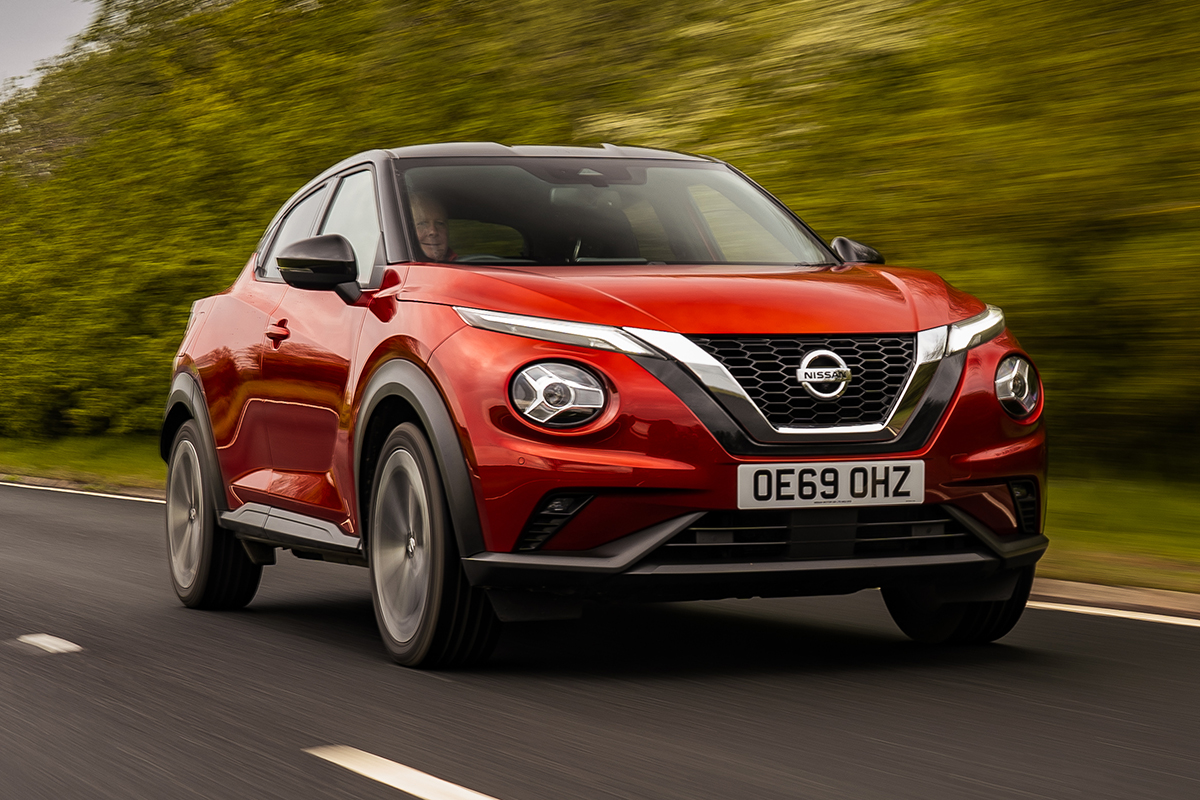
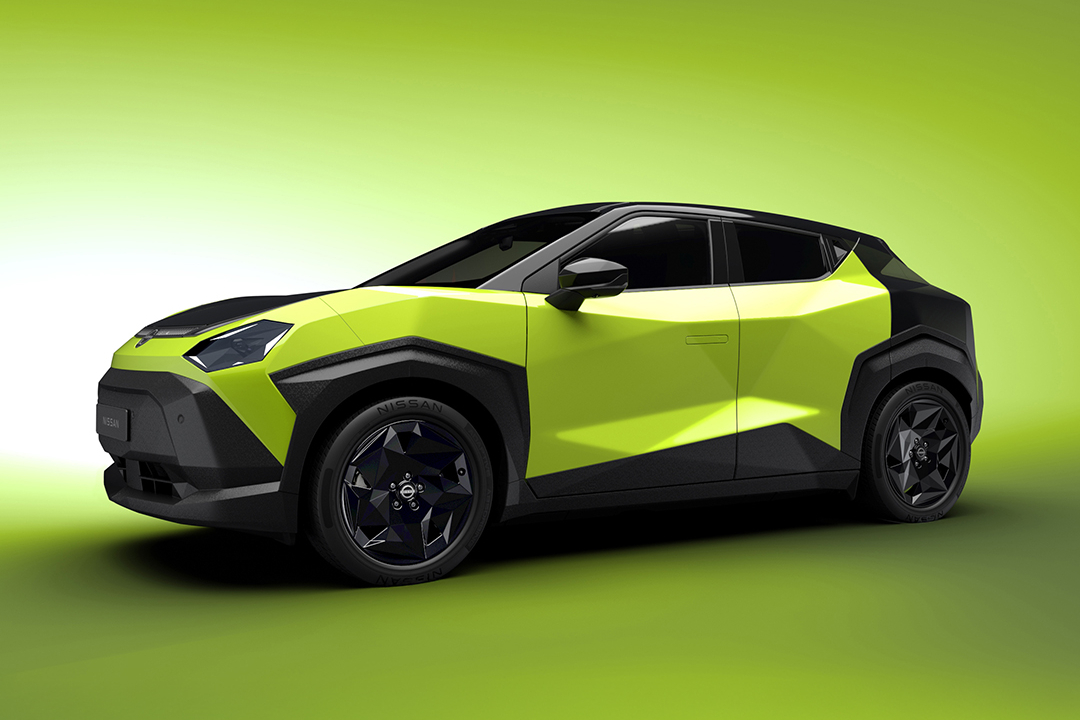
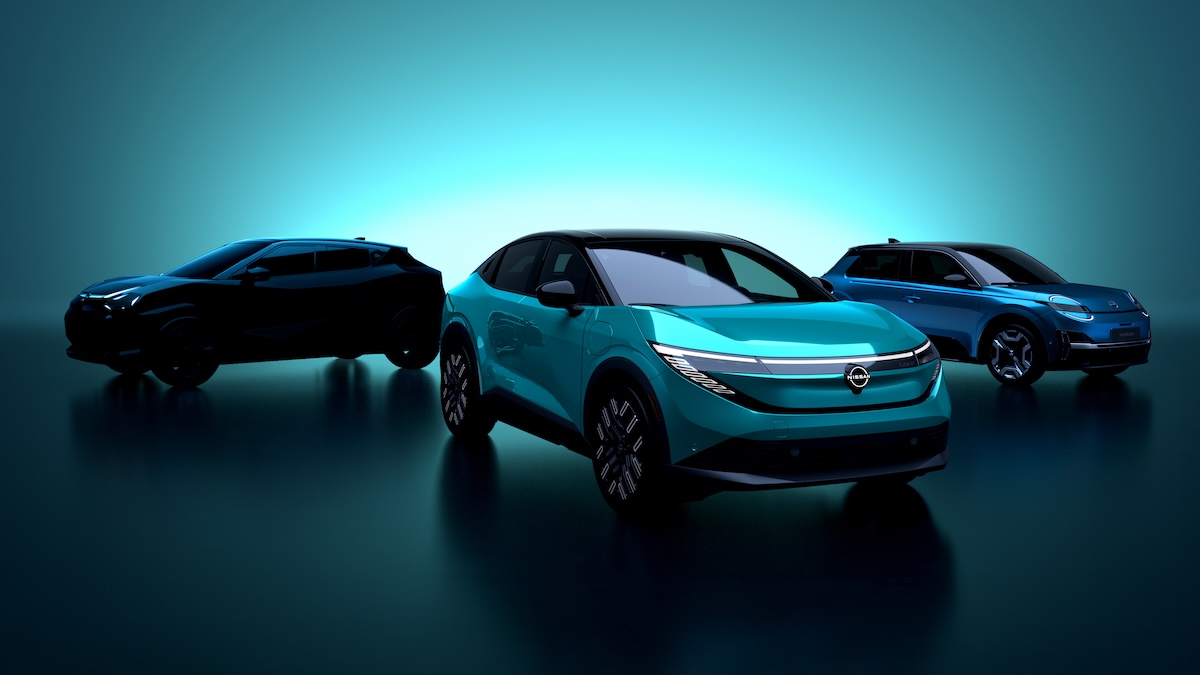
When the first-generation Nissan Juke was unveiled in 2010, jaws hit the floor. It was one of those rare cars that took a big risk with its styling, and while some hated it, plenty loved it, and it sold by the bucketload. This is the second-generation model, on sale since 2019, and while it might not be quite so outlandish by modern standards – perhaps due to the similarly-styled rivals that the original spawned – it’s still an eye-catching machine.
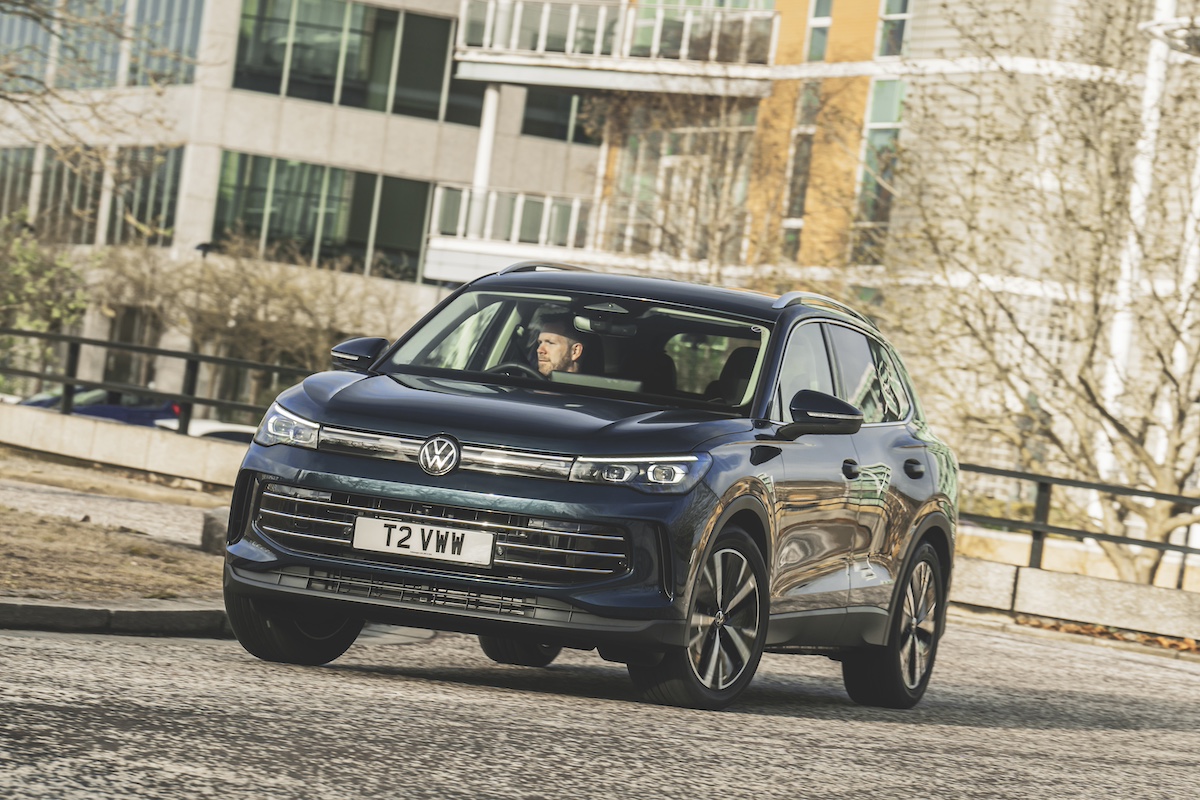
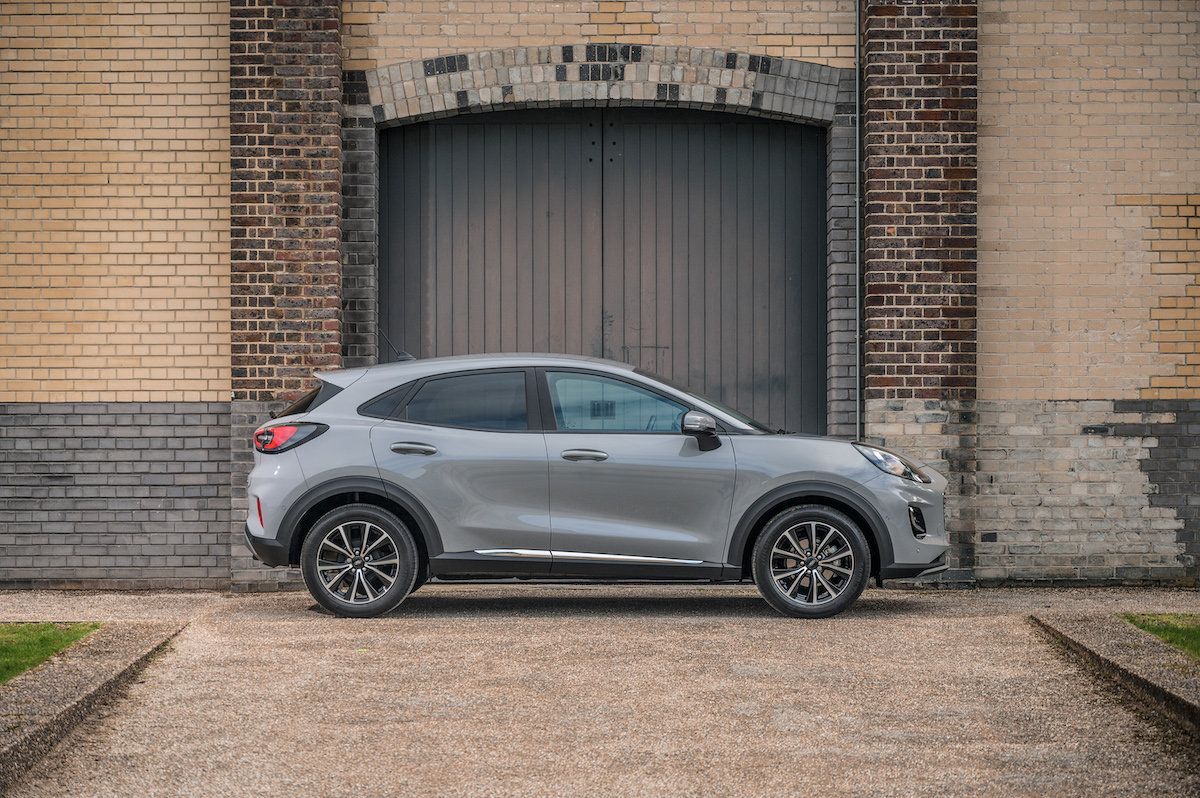
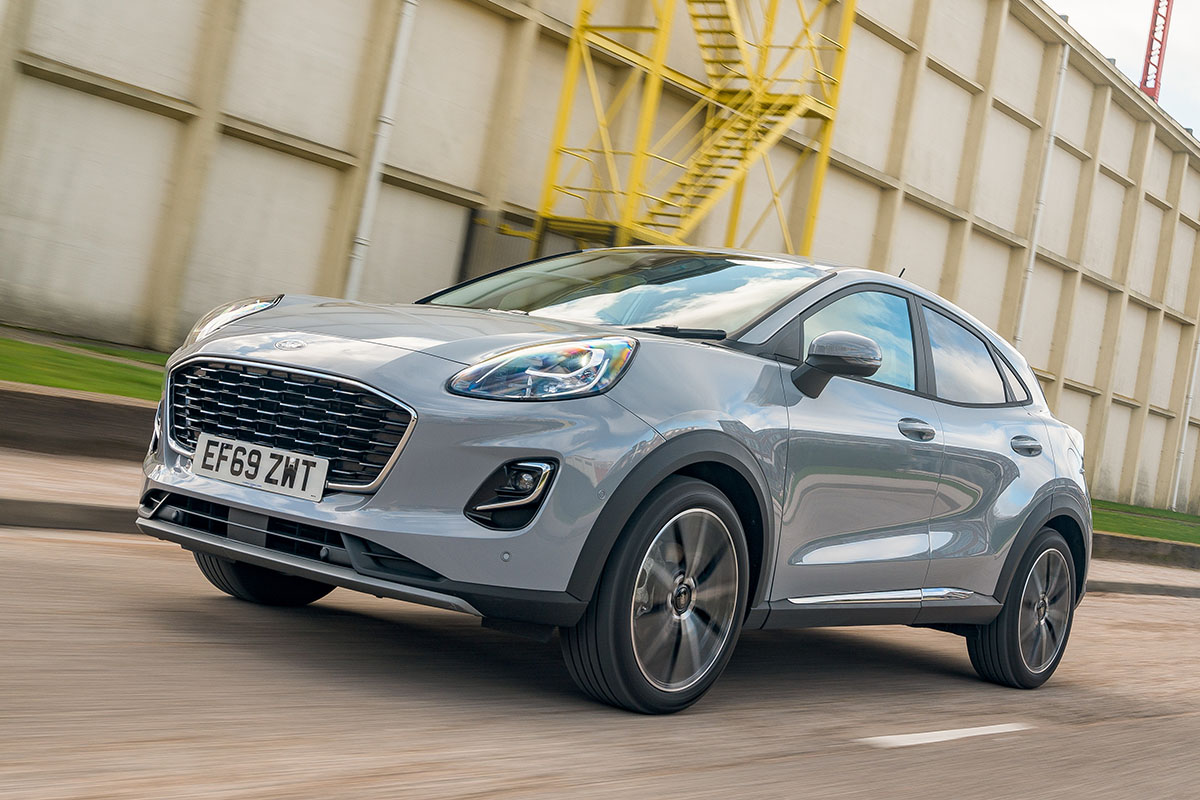
This newest Juke is still a small crossover-style SUV, and counts as its rivals cars such as the Renault Captur, Ford Puma and the Volkswagen T-Cross to name just a few. This is an area of the market that’s increasingly popular, and plenty of new machines are joining the fight for customers’ attention all the time.

Practicality
How practical is it?
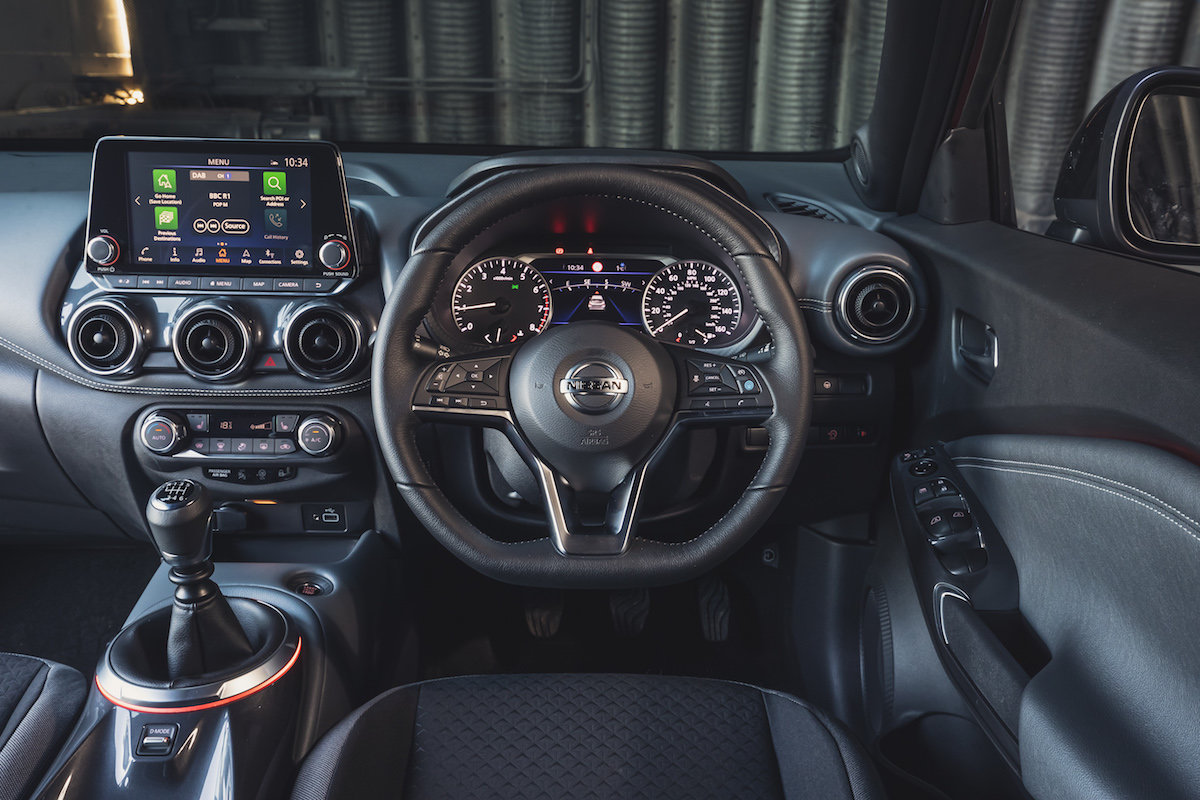
The Juke is a nice car to look at when you’re inside it as well as when you’re outside it. It has a well-made, premium-feeling interior made up of solid plastics and lots of soft-touch bits. This was improved further by a 2024 update that introduced some even plusher cabin materials.
Your driving position has plenty of adjustment, with rake and reach adjustment on the steering column – something the Mk1 Juke didn’t have – and a lever to crank your seat up and down. The tiny back window does hamper your rear view, though.
There’s more room inside than the previous Juke, especially when it comes to legroom, which is now very reasonable. Headroom isn’t quite so plentiful, so passengers much over six feet tall might find themselves scooching down in their seat to fit, but everyone else will be fine. If you regularly carry rear passengers, though, you might want to consider one of the Juke’s roomier rivals, of which there are plenty.
Carrying three people across the rear bench is a bit of a squeeze due to the narrow cabin, and what’s more, the rear side windows are rather small, which limits the amount of natural light you get in the rear seats.
The boot’s a good size at around the 420-litre mark, but a Volkswagen T-Cross or Skoda Kamiq is a bit roomier still. And also, do bear in mind that if you go for the hybrid version, the boot is around 70 litres smaller because the hybrid batteries have to live under the boot floor. Still, at least the space is a good square shape, and the rear seats can fold down to extend the loadbay if needs be.

Driving
What's it like to drive?
The entry-level engine in the Juke is a 1.0-litre, three-cylinder petrol unit. That might, on paper, sound small and weedy if you’ve not bought a new car in a while, but thanks to modern turbocharging technology, it’s got quite a bit of pep, with 113bhp. That’s enough to zip around town with ease. You can choose between a six-speed manual gearbox or a seven-speed automatic, and all models are front-wheel drive.
If you’ve got a bit more to spend on your car and you fancy spending less on fuel, you can also have the Juke with a self-charging hybrid drivetrain, which was introduced halfway through 2022. It combines a naturally aspirated 1.6-litre petrol engine and a couple of electric motors to give just over 140 horsepower. When you first fire up the car, it always starts in electric-only mode, each and every time, and the system defaults to using electric-only power as often as it possibly can.
It also has the e-Pedal function pioneered by the Leaf electric car. Engage this function, and when you lift off the throttle, you feel reasonably heavy engine braking as the car recycles kinetic energy back into the battery as electricity, and once you’re used to it, you barely have to use the brake pedal at all. However, you do have to press the brake pedal to stop completely.
The hybrid Juke system uses a very unconventional kind of gearbox, which generally manages to switch around the gears relatively smoothly. However, in order to keep the car in electric-only mode, you have to keep your throttle inputs very light indeed, and picking up speed with even moderate pace will cause the petrol engine to cut in. And even when it does, your progress is still pretty leisurely, even when you work it hard. And because the engine often has to work hard to achieve fairly modest road speeds, there’s also a fair bit of noise emanating from under the bonnet.
The ride is perhaps a shade firmer and lumpier than many will expect in an SUV, and while it’s comfortable enough most of the time, can feel a tiny bit jittery and unsettled on poor surfaces, particularly at low speeds. And despite that firmness, you still feel a fair amount of body roll in bends. However, that aside, the Juke does actually handle fairly neatly. It is very grippy, the steering has a nice weight to it, and there’s even a decent amount of feedback to be felt through the wheel.
Tech and equipment
Technology, equipment & infotainment
Buy an early second-generation Juke on the used market, and you’ll have a variety of trim levels to choose from, and all have a very reasonable level of equipment, with every model sporting bright LED headlights, alloy wheels and a DAB radio. The entry-level Visia is the most spartan, and lacks the touchscreen infotainment screen of the rest of the range, but upgrade to Acenta and you’ll get that, plus 17-inch wheels, and Apple CarPlay and Android Auto for smartphone integration. Oh, and a rear-view camera. We reckon that for a lot of people, this will be the sweet spot between cost and features.
N-Connecta adds satnav from TomTom, although it’s not a particularly slick system, while Tekna gives you big 19-inch wheels and a Bose sound system, as well as heated front seats. The top-of-the-range Tekna+ has two-tone metallic paint and some extra splashes of colour, inside and out.
Things changed a bit with a minor facelift in 2024. Entry-level Visia trim was withdrawn due to low sales, making Acenta Premium the new entry-point, while a new N-Sport trim was added at the top of the range. In all versions, the central touchscreen was upgraded from 8.0 inches to 12.3 inches, while all but the Acenta Premium also got an additional 12.3-inch screen behind the steering wheel to replace the 7.0-inch item there previously.
The Acenta Premium gets conventional analogue dials, and also misses out on the wireless phone charger, Amazon Alexa voice control and extra USB ports that the rest of the range gets. It does, however, get upgrades such as wireless Apple CarPlay/Android Auto, a higher-resolution rear-view camera, and a bigger glovebox.
The new digital dials work well, and the new central infotainment screen looks great, with sharp graphics and slick animations. However, it can still be quite distracting and confusing to use due to some complex menu layouts and some rather ambiguously designed on-screen icons.
Running costs
Nissan Juke running costs
If you’re someone that does a lot of miles, you may be disappointed that there’s no diesel Juke, as diesel engines usually return better mpg figures than petrol on long journeys. If you do fall into that category, plenty of rivals are available with diesel power. But if you’re set on the Juke, you have the choice of either pure petrol or petrol-electric hybrid power.
Go for the former, and you’ll get an official WLTP fuel economy figure of around 48mpg if you go for the manual gearbox, or 47mpg if you go for the automatic. Hybrid buyers, meanwhile, get an official average of around 59mpg. Do bear in mind, though, that these are lab test figures, so buyers of the petrol cars should expect low 40s for real-life mpg, while hybrid buyers can expect around 50mpg, maybe a shade more if you do most of your driving in urban areas.
When it comes to purchase price, the value depends on which version you go for, and whether you’re buying new or used. New, lower-end trims represent pretty good value for money but the swankier trim levels are thousands of pounds more expensive, meaning comparisons against slightly more upmarket machines such as the Volkswagen T-Cross.
The figures for residual values on the Juke are fairly indistinguishable from those of rivals, so it’ll provide equally strong protection for your initial investment. Insurance costs will also be very similar. The Juke did require a service every year or 12,500 miles, while that figure was pushed out to 18,000 miles on later cars. Nissan offers fixed price servicing on its cars, which will protect you from inflation in future prices.
Nissan Juke reliability
Nissan hasn’t performed all that well in the various reliability surveys doing the rounds in recent years, but things appear to be on the up lately, and the Japanese firm is at least clawing its way back to mid-table respectability.
For example, in the 2023 What Car? Reliability Survey, the Juke placed 12th out of 22 models in the Small SUV class, while in the manufacturer standing, Nissan placed 19th out of 32 carmakers considered in the study. Not great, but not terrible, either.
Nissan’s warranty isn’t up to much, though, being a very bog-standard three-year, 60,000-mile arrangement. Rivals from Hyundai and Kia get five- or seven years worth of cover, while the Toyota Yaris Cross’ cover can last for 10 years provided certain criteria are met.


What owners say
"Overall, the Nissan Juke has garnered positive feedback from owners across various model years. Drivers appreciate its stylish design, enjoyable driving experience, and good value for money, especially when it comes to features and fuel efficiency. Many also like the reliability and sound system offered in different models. On the downside, some drivers express concerns about limited rear passenger space and dated interior design in older models. Additionally, issues with the gearbox have been noted in earlier versions."
The lock button on the drivers door doesn’t seem to work
12 January 2025The car is great value. The only things does not have is boot hands free close. Also front and back dash board cameras
30 November 2024This car is really beautiful, of course it needs some minor repairs or improvements but I am happy with it and I think it is worth the price. Thank you very much.
6 March 2026What owners say
The lock button on the drivers door doesn’t seem to work
12 January 2025The car is great value. The only things does not have is boot hands free close. Also front and back dash board cameras
30 November 2024This car is really beautiful, of course it needs some minor repairs or improvements but I am happy with it and I think it is worth the price. Thank you very much.
6 March 2026Definitely good value for money and great on fuel to drive from wales to Cornwall and gage hardly moved
9 July 2025Car came with a hole in bodywork, covered with a piece of duct tape, behind offside passenger door in the middle of a shallow gouge from partway on the back door and pasted the hole by at least a foot which didn't show in the pictures of the car
10 December 2025For a more mature model of car the parking camera is a great feature. Handling is very smooth and she is a nippy little car.
27 June 2025This older shape Juke was and is the most characteristic design and as every model car looks best in a certain colour this Juke is best in yellow. 2017 saw the end of yellow which was a shame, the new yellow on the modern shape is not the same.
9 March 2025High spec inside the car, its got everything i need. Drives well. No complaints so far
8 August 2021The Nissan Juke is a great SUV. Wonderful features, comfortable driving position and overall visibility is good. Im very pleased with the car.
26 November 2023Brilliant car. Great on fuel. 6 speaker system is amazing. Absolutely love it. Lots of fun.
15 July 2022Three things to know
- Safety levels for the Juke are high across the range, with all models getting automatic emergency braking and a lane departure warning system, which will alert you if you inadvertently drift out of your lane. They all have a traffic sign recognition system that shows the most recent signs on the dashboard, just in case you lose track of the current speed limit.
- If you get a Tekna or Tekna+ model, you’ll have some autonomous driving features that let the car drive itself, to a certain level. It’ll accelerate, brake and steer for you on motorways, although you still have to keep your hands on the wheel. Automatic models let the car brake to a standstill by itself, which could be very appealing if you’re often caught in slow moving traffic. The system is optional on other models.
- The Nissan Juke scored the maximum five-star safety rating from Euro NCAP when it was tested way back in 2019. However, these tests get harder and harder to ace each year to encourage ever-improving safety standards, so if the Juke were to be tested again today by the latest standards, there’s no guarantee it’d still be a five star car.
Which one to buy
- If you’re on a budget: If you’re buying used, the entry-level model on early Jukes was called the Visia, and it’s well kitted out for a ‘bare bones’ machine, with 16-inch alloy wheels, LED lights, Bluetooth and a DAB radio. That’ll be enough for some budget-focused buyers.
- The best all-rounder: For our money, the Acenta Premium model offers the best balance of features versus cost. You’ll get 17-inch alloys that look cool without making the ride too firm, and you’ll also get the fancy infotainment system with smartphone connectivity and the various online services. You will miss out on the in-built satnav, but we reckon some free smartphone navigation apps are better anyway.
- If fuel economy is a prime consideration: Go for the hybrid. The official WLTP average fuel economy of around 59mpg is around 12mpg up on that of the entry-level engine, and the deficit is even larger if that entry-level engine is paired with the automatic gearbox.
- If safety is a priority: All the Jukes received five stars from safety organisation EuroNCAP, but Tekna models and upwards get the Advanced Safety Shield Pack as standard. As well as the semi-autonomous features, this includes a blind spot warning system and lane-keep assist. This pack is also available as an option on other grades.


Pricing trends
Starting RRP
£23,650
Current avg. market price
£13,748
Trending down by 6.0% this month
May 2026 - October 2026
More on the mk2 Nissan Juke (2020 - 2026)
Compare 2026 Nissan Juke Trims
The 2026 Nissan Juke offers a range of trims from budget-friendly options to hybrid models, catering to diverse preferences and needs.
- Starting at £15,330
- Most Popular: 1.6 Hybrid N-connecta 5dr Auto
Trim Overview
Prices updated weekly from CarGurus listings.
| 1.0 Dig-t Acenta Premium 5dr | 1.0 Dig-t N-connecta 5dr | 1.0 Dig-t N-connecta 5dr Dct | 1.0 Dig-t Tekna 5dr | 1.0 Dig-t Tekna 5dr Dct | 1.6 Hybrid N-connecta 5dr Auto (Most Popular) | 1.6 Hybrid Tekna 5dr Auto | 1.6 Hybrid Tekna+ 5dr Auto | |
|---|---|---|---|---|---|---|---|---|
| Starting MSRP | £23,650 | £25,650 | £27,150 | £27,150 | £28,650 | £29,335 | £30,835 | £31,935 |
| Avg. Market Price | £15,330 | £17,477 | £18,250 | £19,095 | £20,534 | £20,209 | £22,745 | £22,795 |
| Positioning | Best value | Standard | Standard | Standard | Standard | Standard | Standard | Fully loaded |
| Standout Features | Apple CarPlay, Bluetooth, Backup Camera | Parking Assist, Apple CarPlay, Android Auto | Bluetooth, Parking Assist, Apple CarPlay | Android Auto, Parking Assist, Apple CarPlay | Parking Assist, Apple CarPlay, Bluetooth | Apple CarPlay, Parking Assist, Bluetooth | Parking Assist, Android Auto, Apple CarPlay | Apple CarPlay, Parking Assist, Bluetooth |
| Drivetrain | FWD | FWD | FWD | FWD | FWD | FWD | FWD | FWD |
| Listings Available | 37 | 122 | 73 | 65 | 46 | 202 | 86 | 36 |
Quick Compare Table
Listing prices sourced from CarGurus — updated weekly. OEM specs from manufacturer data.
| 1.0 Dig-t Acenta Premium 5dr | 1.0 Dig-t N-connecta 5dr | 1.0 Dig-t N-connecta 5dr Dct | 1.0 Dig-t Tekna 5dr | 1.0 Dig-t Tekna 5dr Dct | 1.6 Hybrid N-connecta 5dr Auto | 1.6 Hybrid Tekna 5dr Auto | 1.6 Hybrid Tekna+ 5dr Auto | |
|---|---|---|---|---|---|---|---|---|
| AI Summary | Best value entry point for budget shoppers | Good mix of features and price | Similar features with automatic transmission | Well-equipped with tech features | Enhanced tech with automatic transmission | Popular choice with hybrid efficiency | Premium features with hybrid efficiency | Fully loaded with luxury features |
| Avg. Market Price | £15,330 | £17,477 | £18,250 | £19,095 | £20,534 | £20,209 | £22,745 | £22,795 |
| MSRP | £23,650 | £25,650 | £27,150 | £27,150 | £28,650 | £29,335 | £30,835 | £31,935 |
| Engine | 999.0cc 114.0 hp I3 | 999.0cc 114.0 hp I3 | 999.0cc 114.0 hp I3 | 999.0cc 114.0 hp I3 | 999.0cc 114.0 hp I3 | 1598.0cc 143.0 hp I4 | 1598.0cc 143.0 hp I4 | 1598.0cc 143.0 hp I4 |
| Drivetrain | FWD | FWD | FWD | FWD | FWD | FWD | FWD | FWD |
| Apple CarPlay | ✓ | ✓ | ✓ | ✓ | ✓ | ✓ | ✓ | ✓ |
| Bluetooth | ✓ | ✓ | ✓ | ✓ | ✓ | ✓ | ✓ | ✓ |
| Backup Camera | ✓ | ✓ | ✓ | ✓ | ✓ | ✓ | — | — |
| Cruise Control | ✓ | — | ✓ | — | — | ✓ | — | — |
| Android Auto | ✓ | ✓ | ✓ | ✓ | ✓ | ✓ | ✓ | ✓ |
| DAB Radio | ✓ | ✓ | ✓ | ✓ | ✓ | ✓ | ✓ | ✓ |
| AUX/USB connectivity | ✓ | ✓ | ✓ | ✓ | ✓ | ✓ | ✓ | ✓ |
| isofix | ✓ | ✓ | — | ✓ | ✓ | — | ✓ | ✓ |
| Air Conditioning | ✓ | — | — | — | — | — | — | — |
| Alarm/Immobiliser | ✓ | — | — | — | — | — | — | — |
| Stop/Start System | ✓ | — | — | — | — | — | — | — |
| Parking Assist | ✓ | ✓ | ✓ | ✓ | ✓ | ✓ | ✓ | ✓ |
| Privacy glass/Tinted windows | — | ✓ | ✓ | ✓ | ✓ | ✓ | ✓ | ✓ |
| Navigation System | — | ✓ | ✓ | ✓ | ✓ | ✓ | ✓ | ✓ |
| Climate control | — | ✓ | ✓ | — | — | ✓ | — | ✓ |
| Keyless Entry/Start system | — | — | — | ✓ | ✓ | — | — | — |
| Leather Seats | — | — | — | — | — | — | ✓ | — |
| Heated Seats | — | — | — | — | — | — | ✓ | ✓ |
| Active Listings | 37 | 122 | 73 | 65 | 46 | 202 | 86 | 36 |
Missing data displayed as "—".
Trim Deep Dives
1.0 Dig-t Acenta Premium 5dr — "Who It's For"
The 1.0 Dig-t Acenta Premium is the pick for shoppers who want essential features without paying for higher trims. It's the most budget-friendly option in the lineup.
- Avg. market price: £15,330 (updated weekly)
- Inventory: 37 listings — lower availability; may limit negotiating room
- View 1.0 Dig-t Acenta Premium listings
1.0 Dig-t N-connecta 5dr — "Who It's For"
The 1.0 Dig-t N-connecta is ideal for buyers seeking a balance of features and affordability without stepping up to pricier trims.
- Avg. market price: £17,477 (updated weekly)
- Inventory: 122 listings — lower availability; may limit negotiating room
- View 1.0 Dig-t N-connecta listings
1.0 Dig-t N-connecta 5dr Dct — "Who It's For"
The 1.0 Dig-t N-connecta 5dr Dct is for those who prefer an automatic transmission while enjoying a well-equipped standard trim.
- Avg. market price: £18,250 (updated weekly)
- Inventory: 73 listings — lower availability; may limit negotiating room
- View 1.0 Dig-t N-connecta 5dr Dct listings
1.0 Dig-t Tekna 5dr — "Who It's For"
The 1.0 Dig-t Tekna is suited for shoppers wanting advanced tech features without going for the top-tier options.
- Avg. market price: £19,095 (updated weekly)
- Inventory: 65 listings — lower availability; may limit negotiating room
- View 1.0 Dig-t Tekna listings
1.0 Dig-t Tekna 5dr Dct — "Who It's For"
The 1.0 Dig-t Tekna 5dr Dct is perfect for those who want the convenience of an automatic transmission with premium features.
- Avg. market price: £20,534 (updated weekly)
- Inventory: 46 listings — lower availability; may limit negotiating room
- View 1.0 Dig-t Tekna 5dr Dct listings
1.6 Hybrid N-connecta 5dr Auto — "Who It's For"
The 1.6 Hybrid N-connecta is for buyers looking for a hybrid option with a solid feature set and good availability.
- Avg. market price: £20,209 (updated weekly)
- Inventory: 202 listings
- View 1.6 Hybrid N-connecta listings
1.6 Hybrid Tekna 5dr Auto — "Who It's For"
The 1.6 Hybrid Tekna is ideal for those wanting a premium hybrid experience with additional luxury features.
- Avg. market price: £22,745 (updated weekly)
- Inventory: 86 listings — lower availability; may limit negotiating room
- View 1.6 Hybrid Tekna listings
1.6 Hybrid Tekna+ 5dr Auto — "Who It's For"
The 1.6 Hybrid Tekna+ is for shoppers who desire a fully loaded hybrid with all the bells and whistles.
- Avg. market price: £22,795 (updated weekly)
- Inventory: 36 listings — lower availability; may limit negotiating room
- View 1.6 Hybrid Tekna+ listings
Trim Recommendations
Most Popular — 1.6 Hybrid N-connecta 5dr Auto
With 202 active listings, the 1.6 Hybrid N-connecta is the clear volume leader in the lineup.
Browse 1.6 Hybrid N-connecta listings
Best Budget Option — 1.0 Dig-t Acenta Premium 5dr
At £15,330 avg market price — below the lineup median of £19,652 — it's the most accessible entry point.
Browse 1.0 Dig-t Acenta Premium listings
These recommendations are based on CarGurus' proprietary market data from October 22, 2026, CarGurus experts' opinions, and generative AI.

