Nissan Pathfinder Review (2004-2014)
Nissan Pathfinder cars for sale
3.0
Expert review
Pros
Tough and capable off road
Practical cabin
Most examples have seven seats
Cons
Rough and ready on the road
Expensive to run
Some reliability issues
The CarGurus verdict
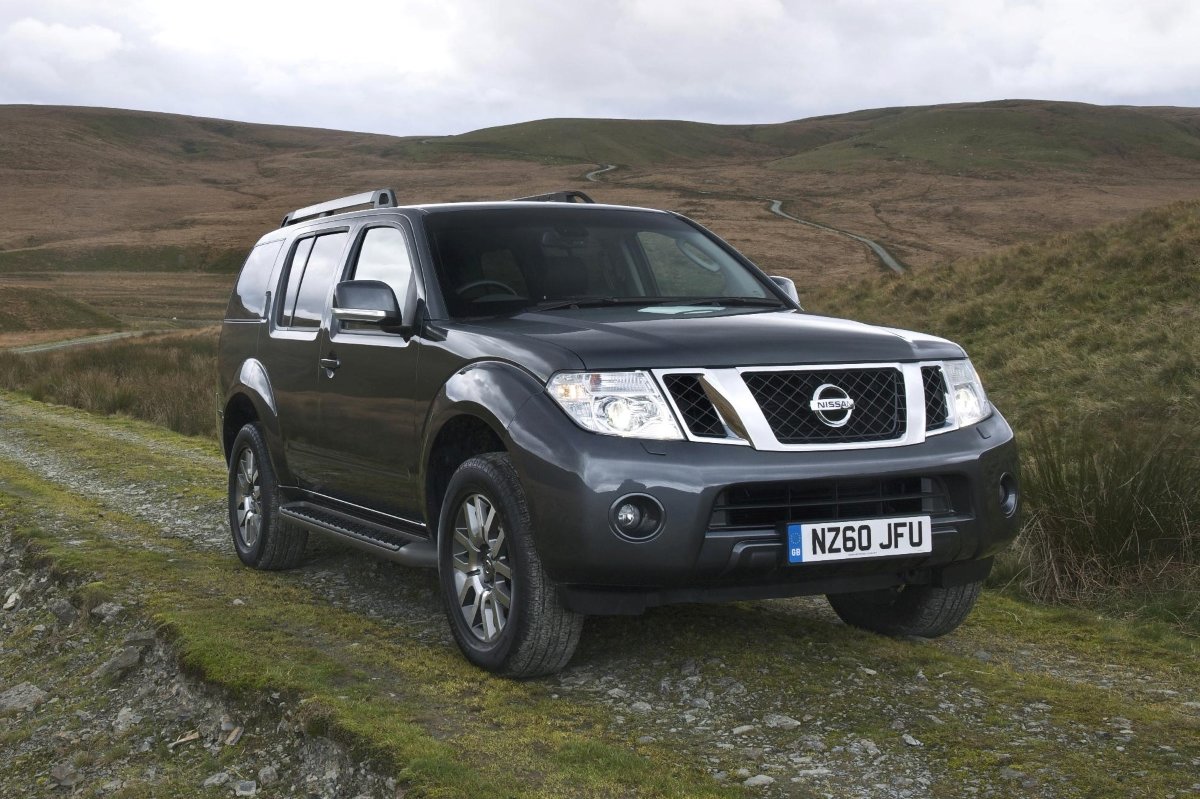
If you want a sophisticated, modern 4x4, look elsewhere. The Pathfinder is a throwback to an older era, when SUVs weren't expected to drive with the poise of an executive saloon.
Instead, the Pathfinder is a cheap, practical, and tough off-roader. All versions are four-wheel drive and take care of themselves off road, and the diesel engines are strong enough to make the big Nissan a capable tow car. It's worth considering as an alternative to the Hyundai Santa Fe or Kia Sorento.
Running costs are quite high, and although the Pathfinder is more reliable than a Land Rover Discovery, it's not absolutely bulletproof.
Even the last Pathfinders are getting on a bit now, so any car you think of buying is likely to have a lot of miles on the clock. It's important to find one that's been well looked after, with a full service history. If the price is right, a good Pathfinder should still have several years of service left in it.
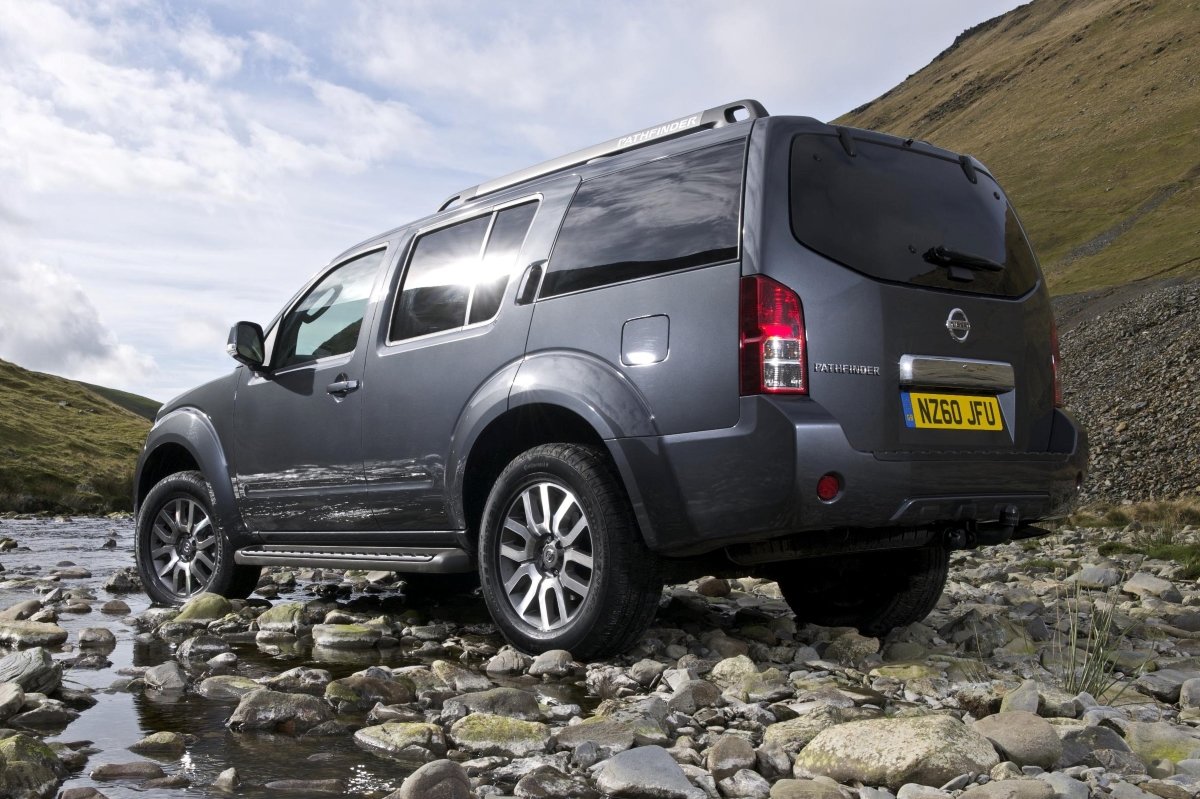
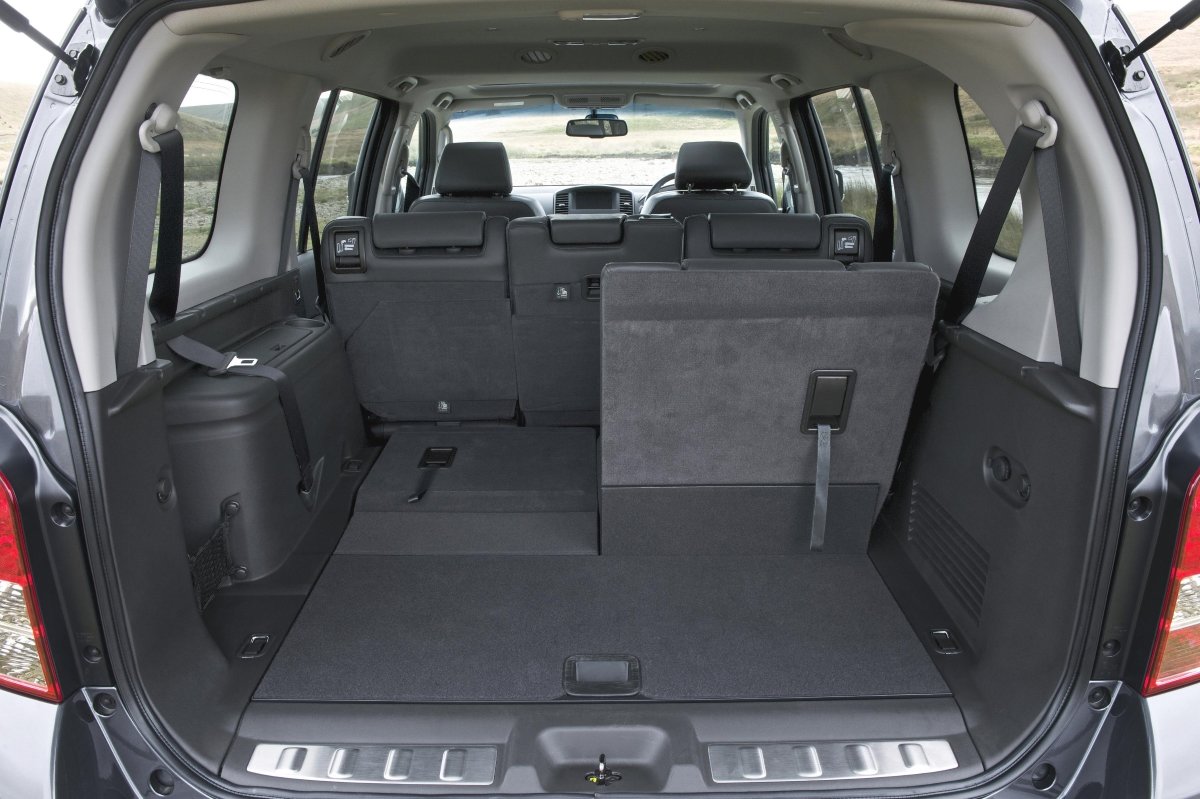
It's a practical car, too. Most versions were sold with seven-seats, and although the third row is suitable for children rather than adults, it's still handy to have the extra versatility. Boot space is tight with the back seats upright, but with the third row folded away, there's lots of room for luggage.
The middle row is a lot less cramped, although the standard of finish underlines that the Pathfinder is really a commercial vehicle in its Sunday best. Up front, the driver sits up high with a clear view of the road. The driving position is very comfortable for long motorway journeys.
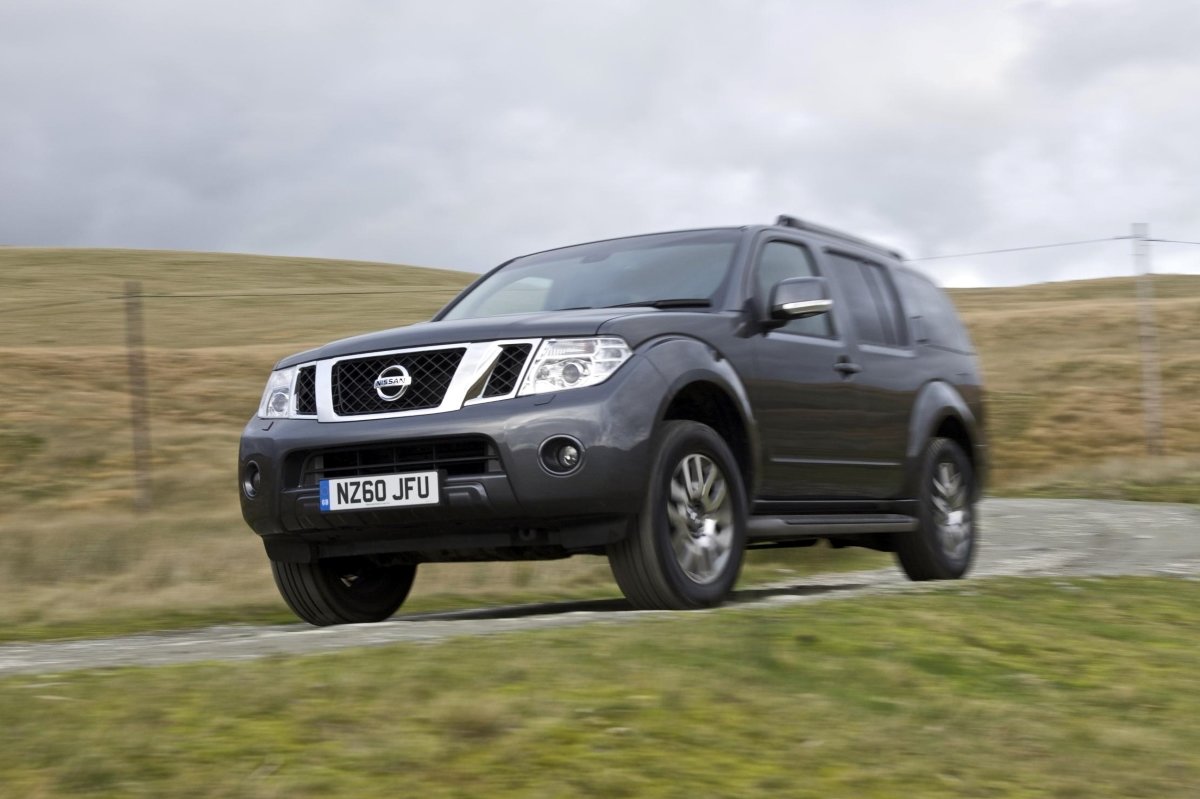
Under the skin the car was closely related to the Navara pick-up truck. This helped Nissan keep the price affordable; the Pathfinder undercut the contemporary Land Rover Discovery by several thousand pounds. However, it did give the Pathfinder a rather rough-and-ready feel, both in terms of the cabin finish and the way it drove. The Pathfinder was always more workhorse than a thoroughbred, and every version has all-wheel drive.
The Pathfinder was offered with a 4.0-litre V6 petrol engine, but this sold in tiny numbers in the UK. You'll have to work really hard to find one, and if you do your reward is an epic thirst for unleaded. Instead, almost all buyers went for the 2.5-litre dCi turbodiesel with a choice of manual or automatic gearboxes.
To start with, the engine produced 169bhp. A facelift in 2010 introduced an uprated 2.5 dCi with more power (188bhp) and torque (332lb ft). Fuel economy also improved, so these leaner and meaner later cars are the ones to go for. A more powerful 3.0-litre V6 also joined the range, although most buyers stuck with the 2.5.
Whether you find a Navara made before or after the facelift, the diesel engines sound a bit coarse. The ride is another weakness that car reviews often highlight, fidgeting over anything other than a perfect surface and shuddering when the car clobbers a big bump. Even for a 4x4, the Pathfinder feels a bit cumbersome on the road. If you want a Nissan 4x4 from this era that's rewarding to drive, track down a Murano.
Leave tarmac behind. though, and the Pathfinder shows an altogether more accomplished side to its character. It's more than tough enough to cope with serious offroading, especially with all-terrain tyres fitted.
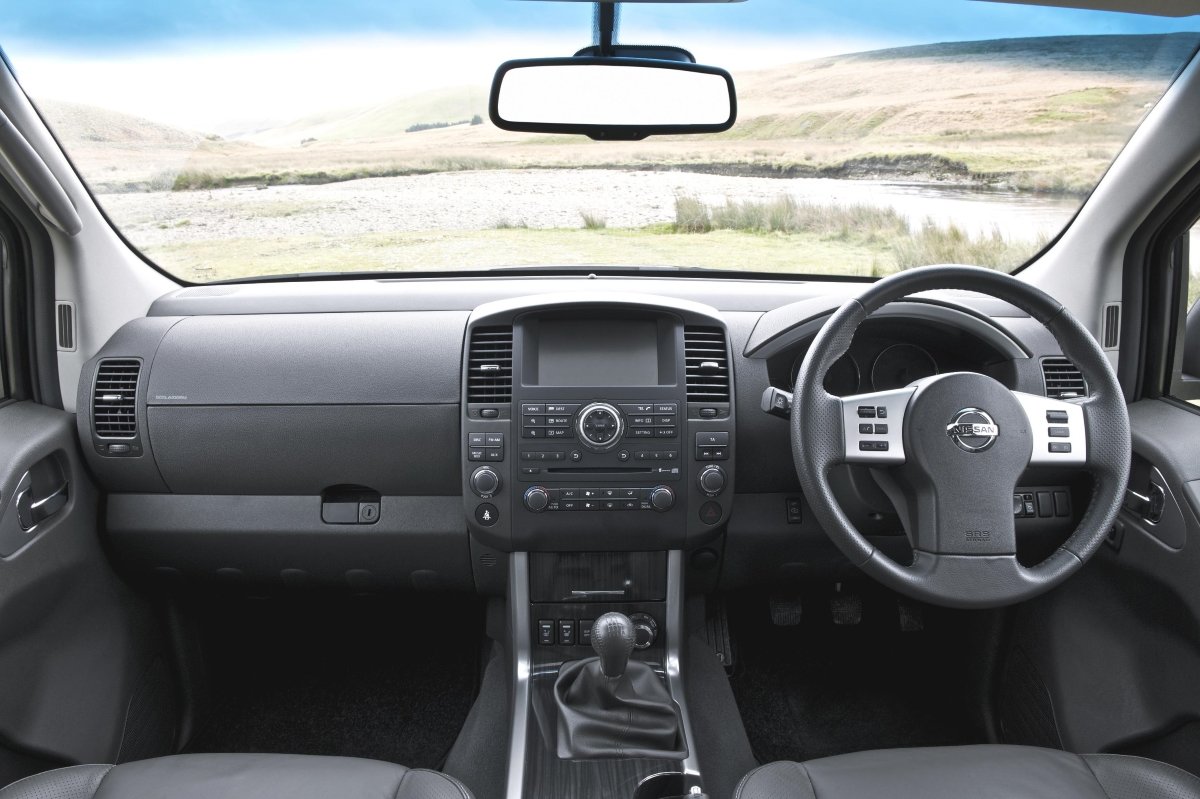
The bottom-of-the-range XE was rather basic, with a CD player and cruise control, but not much else. And the next rungs up the ladder, the SE and SE Off-Road, weren’t actually that much better. No, to get a decent spread of equipment in your Pathfinder, you really had to have one of the two packages, known as Premium and Comfort, which were available only on the SE and SE Off-Road versions.
Premium gave you a Bose audio system with steering-wheel mounted controls and a powered glass sunroof; Comfort, meanwhile, added tri-zone climate control and power-adjustable pedals. To get all the toys, though, you really needed the top-of-the-range LE, which gave you all this plus some faux wood trim and side air bags, plus the option of sat-nav.
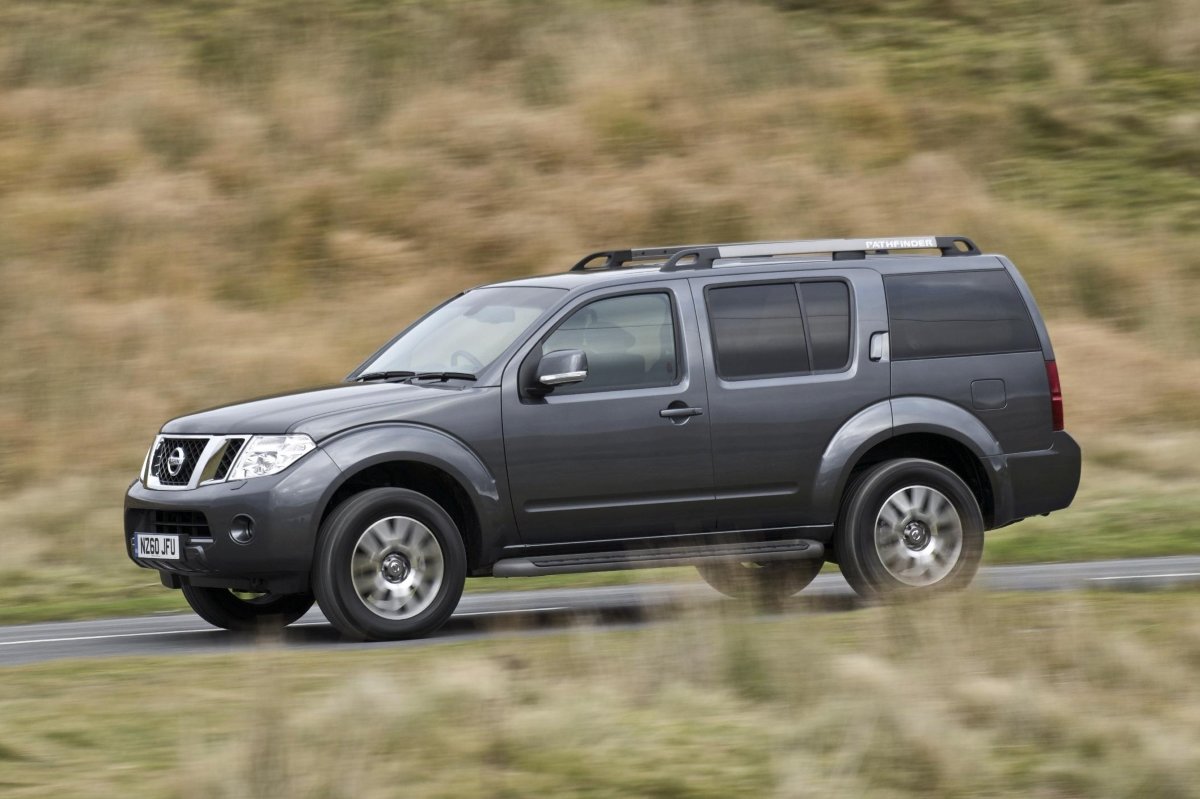
The Pathfinder is a big old-fashioned 4x4 with big old-fashioned 4x4 running costs.
In the unlikely event that you can find a 4.0-litre petrol, and the even more unlikely event that you buy it, brace yourself for awful fuel economy. According to the official combined figure, you can expect 20.9 miles from every gallon. So MPG in the teens is likely.
The diesels are still thirsty, but don't guzzle at the same rate as the petrol. The early 2.5 dCi should return fuel consumption of close to 30mpg with a manual gearbox, dropping to mid 20s with the automatic transmission. The 3.0-litre will get through a gallon quicker still, so only go for this model if you value performance over fuel efficiency.
Insurance costs won't be as steep as fuel bills. The diesels sit in group 27E to 31E (out of 50), depending on the spec. That's broady similar to the group 29E of the entry-level Toyota Land Cruiser of similar age. The petrol is slightly pricier to insure, sitting in group 32E to 33E.
Vehicle Excise Duty bills are stiff. The post facelift 2.5 dCi manual emits 224g/km, giving an annual bill of £340. The earlier model emits another 40g/km, pushing the annual car tax cost to £600. That's another compelling reason to go for a car made from 2010 onwards.
Nissan offers fixed price servicing, so the cost of minor and major services should be the same at dealerships all over the country. It's also possible to spread the cost of servicing over three months with no interest to pay. Even so, it's likely that you'll be able to service and maintain the car for less if you use a good independent dealer rather than a Nissan franchisee.
High-quality all-season tyres get the most of the Pathfinder's go-anywhere ability. Budget on £100-£150 per corner for top-quality tyres.
The Pathfinder doesn't have a completely clean reliability record. We've heard of rusting tailgates, and rapid clutch wear on manual cars. Cracked cylinder heads are not unheard of, and some owners report electrical gremlins.
That said, a Pathfinder should be a much more reliable used car than a Land Rover Discovery of the same age. But it doesn't quite hit the heights of a Toyota Land Cruiser, which sets the standard for a reliable used 4x4.
There are a number of safety recalls to be aware of. One relates to the incorrect installation of the front seat belts, and applies to cars made between 20 August 2013 and 30 September 2013. Another relates to the brakes not operating correctly because of a fault within the brake pedal/brake booster input rod assembly. This applies to cars made from 1 February 2010 to 3 March 2010.
A Nissan dealer should be able to confirm if the necessary work has been carried out. It's easy enough to check for yourself if any recall work is outstanding by entering a car's reg number in the gov.uk recall checker.
If you buy an approved used car from a Nissan dealer it will have a minimum of 12 months warranty cover, which can be upgraded to two or three years of cover at extra cost.
- Although we've only had one generation of the Pathfinder in Britain, 'our' car was actually the third generation. The Pathfinder has been sold in other markets since 1985, so it's been around for well over three decades. Two further Pathfinder models have been developed since the car disappeared from UK showrooms, including hybrid and two-wheel drive versions. Although far from common, a handful of these have been unofficially imported to the UK. Today, every new Pathfinder is built in the US, which has always been one of the car's key markets.
- Under the skin, the Pathfinder is effectively a passenger car version of the Navara pick-up truck. The styling gives the game away, as from the side the Pathfinder looks like a pick-up with a hard-top canopy fitted over the load bed. This approach contributes to the car's toughness, but also means the Pathfinder inherited tough rather than supple suspension and a workmanlike standard of interior finish. This did improve somewhat after the 2010 facelift, but anyone looking for a budget 4x4 with an upmarket cabin had better look elsewhere.
- Nissan offered a wide range of SUVs in the late noughties, including the Murano. This couldn't have been more different from the no-nonsense Pathfinder. Whereas the Pathfinder is at its best off road, the Murano prefers to stay on tarmac, despite being a 4x4. It sits lower to the road than the Pathfinder, with a 3.5-litre V6 giving lively performance, despite being hampered by a CVT gearbox. On today's used market, these are rare cars, but offer a lot of fun for very little money.
- If you want all the toys: Choose the Pathfinder LE, the highest of the trim levels in 2010, or the later Tekna. The top-spec 2010 facelift model came with 18-inch alloy wheels, xenon headlamps, air conditioning for the rear of the cabin, Bluetooth connectivity, cruise control, and a wood finish for the centre console. Satnav and a rear-view camera were popular options on LE models, as was an uprated Bose stereo.
- If you want to tow a trailer: Pick the 3.0-litre V6 diesel. Introduced as part of the Pathfinder's mid-life facelift, this engine produced 228bhp and 406lb ft of torque. These are serious numbers, and a Pathfinder with this much muscle easily tows big trailers and caravans. This model has a legal towing capacity of 3.5 tonnes.
- If you want a petrol: There's only one choice, the 4.0-litre V6. Good luck finding one, though, as these sold in tiny numbers. If you do track one down, it has much livelier performance than one of the 2.5-litre diesels. It was initially sold in T-Spec trim, with leather seats, satellite navigation, a reversing camera, xenon headlights and a five-speed automatic gearbox. The spec level changed to Aventura in 2006.
- If you want the best all-round buy: Go for one of the post-facelift 2.5 dCi cars, preferably an automatic rather than the vague and clunky manual. Although not as quick as the 3.0-litre, these models shift along at a respectable rate. They are also reasonable in terms of running costs, and easier to find than the more obscure versions of the Pathfinder.


